Alabama Last Will and Testament for a Single Person with Minor Children
What this document covers
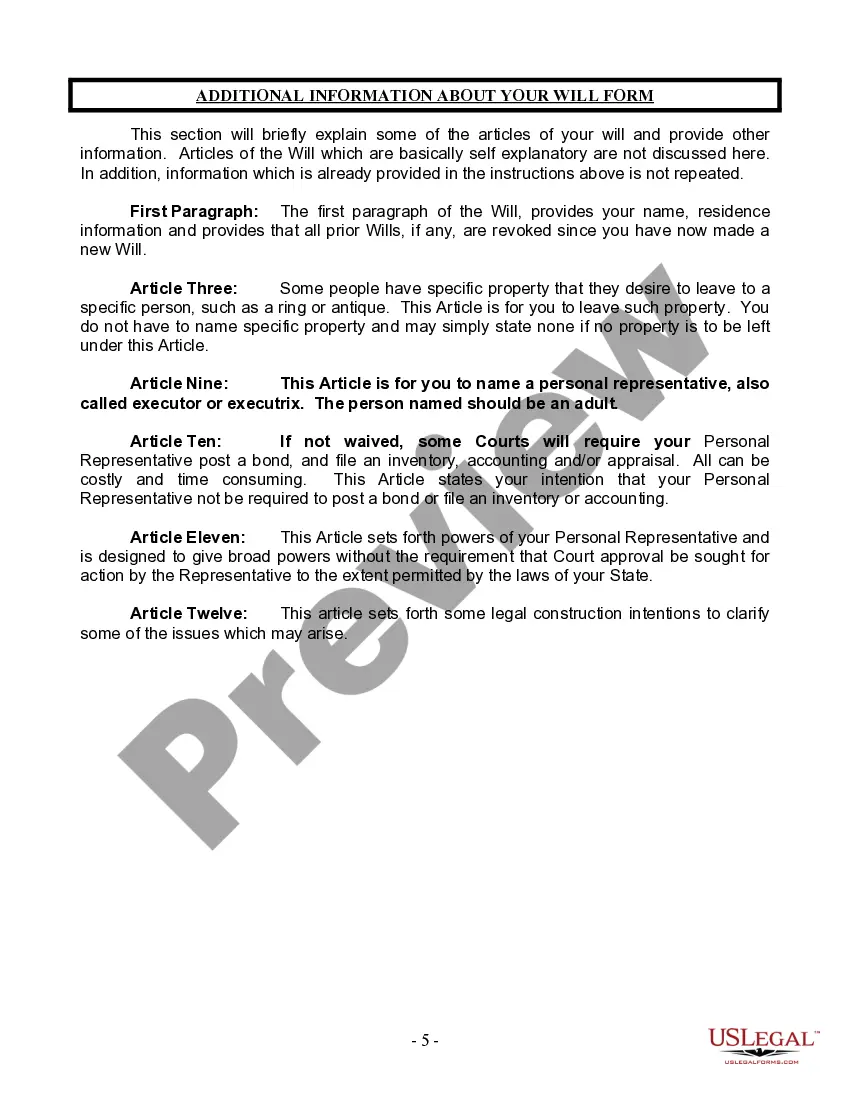
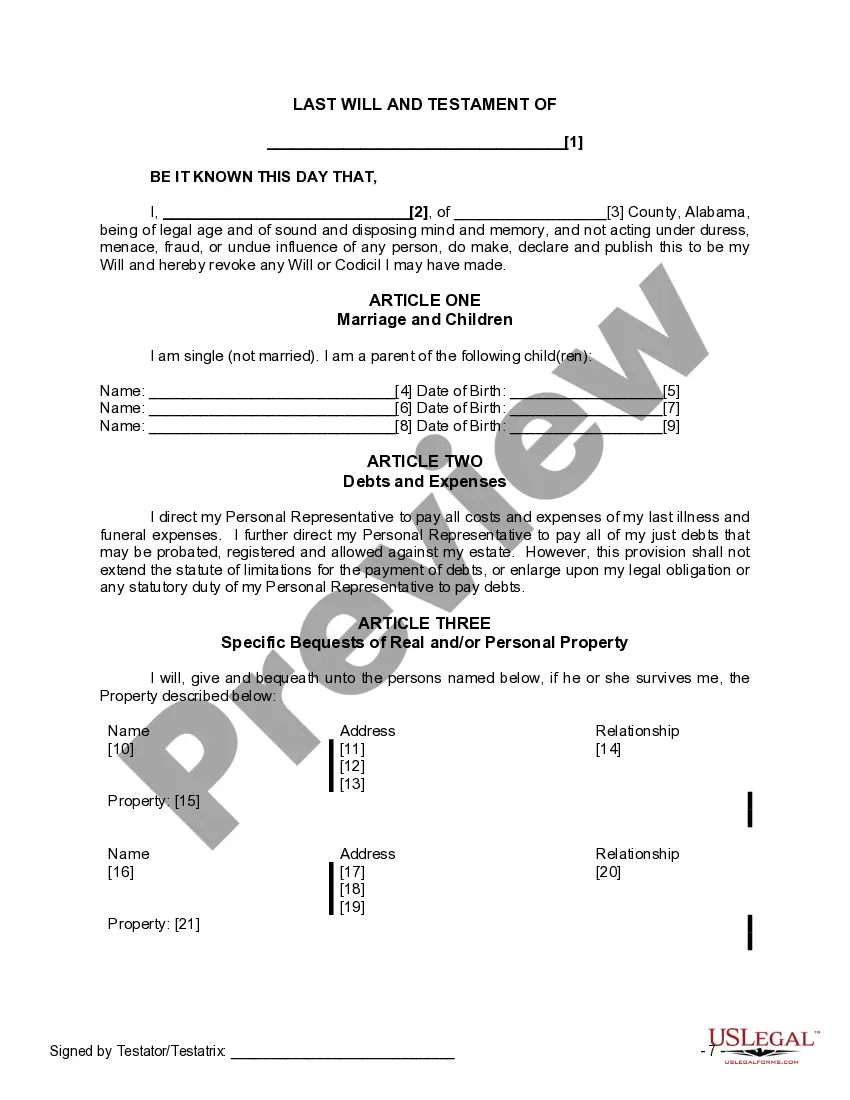
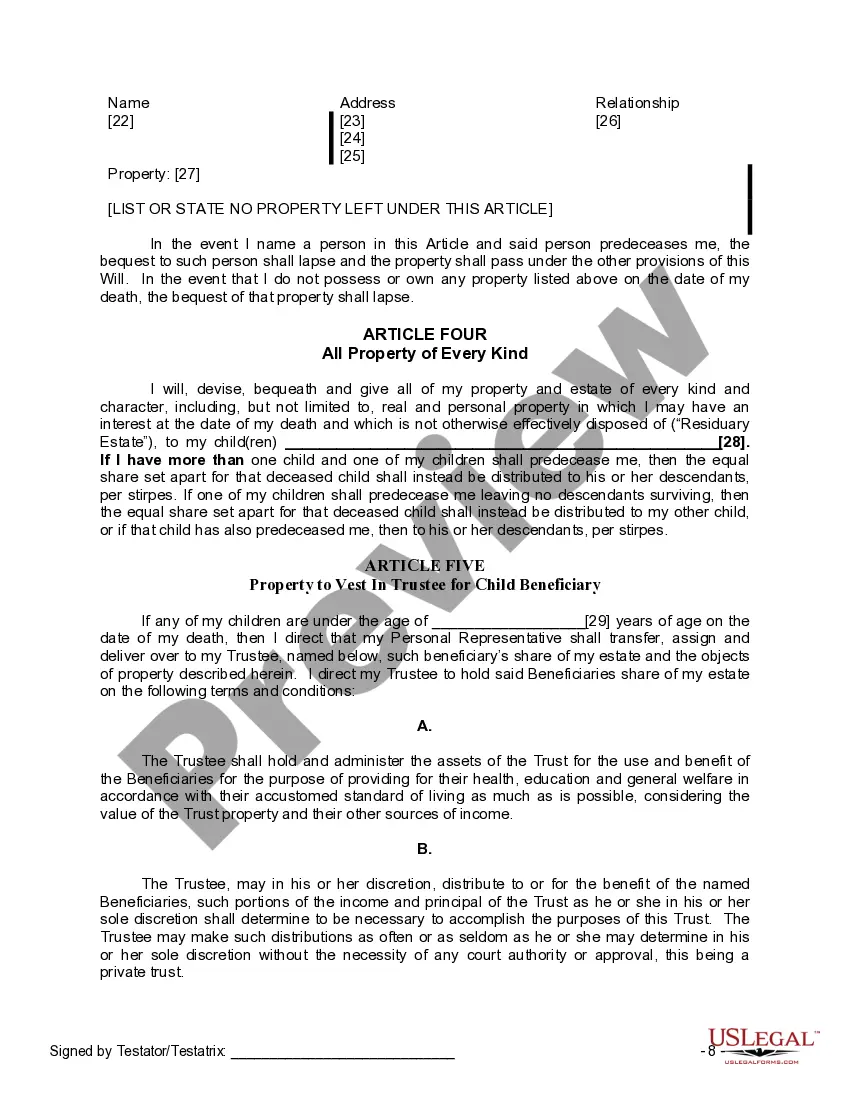
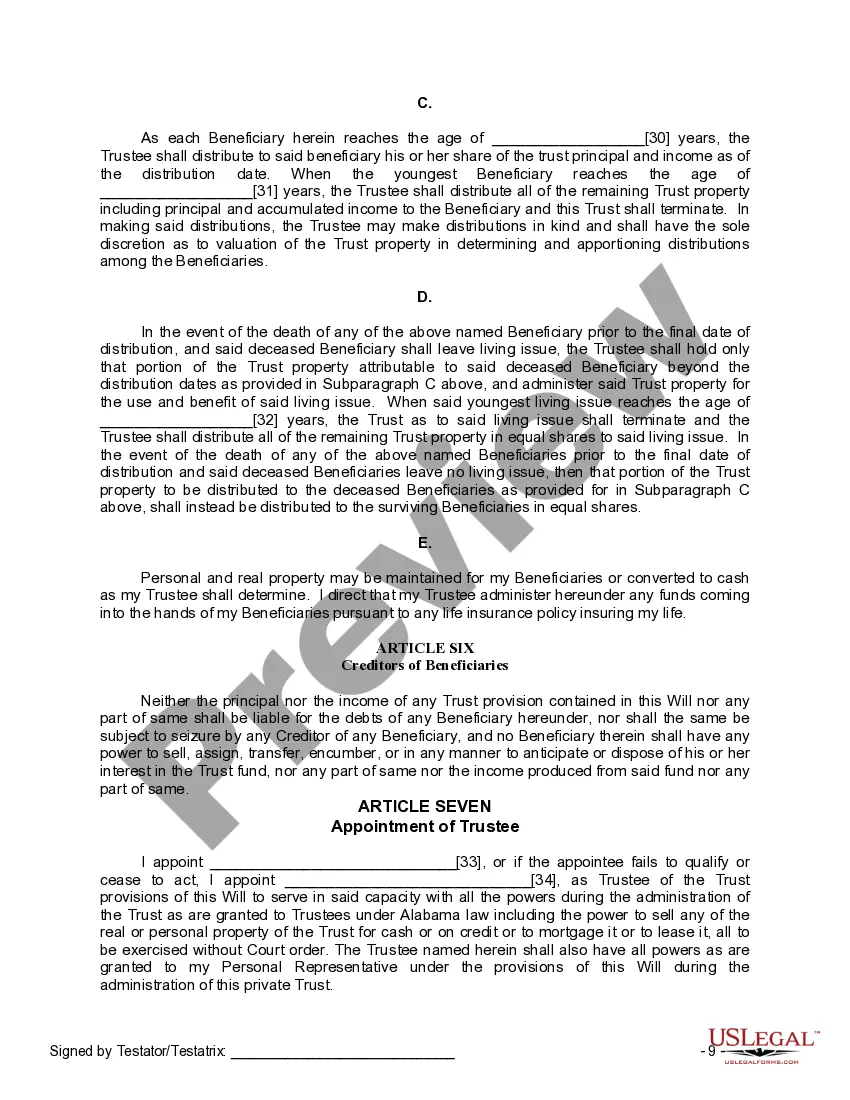
This Last Will and Testament is specifically designed for a single person who has minor children. It outlines how your property will be distributed, names an executor to manage your estate, and provides essential provisions to care for your minor children after your passing. This form also includes provisions for appointing a guardian and trustee for your children, ensuring their financial welfare and upbringing are well managed.
Key components of this form
- Appointment of a personal representative (executor) to manage your estate.
- Designations for who will receive your assets and property.
- Provisions for appointing a guardian for your minor children.
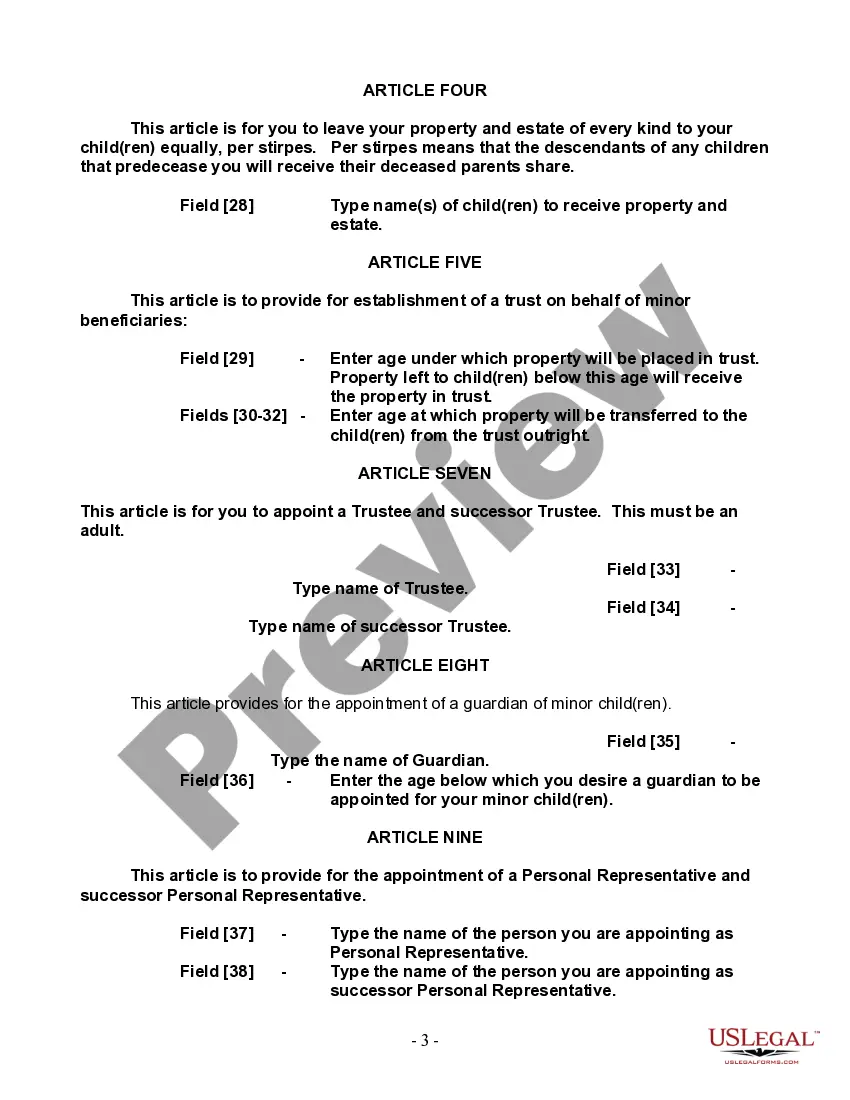
- Creation of a trust for the financial management of minor beneficiaries.
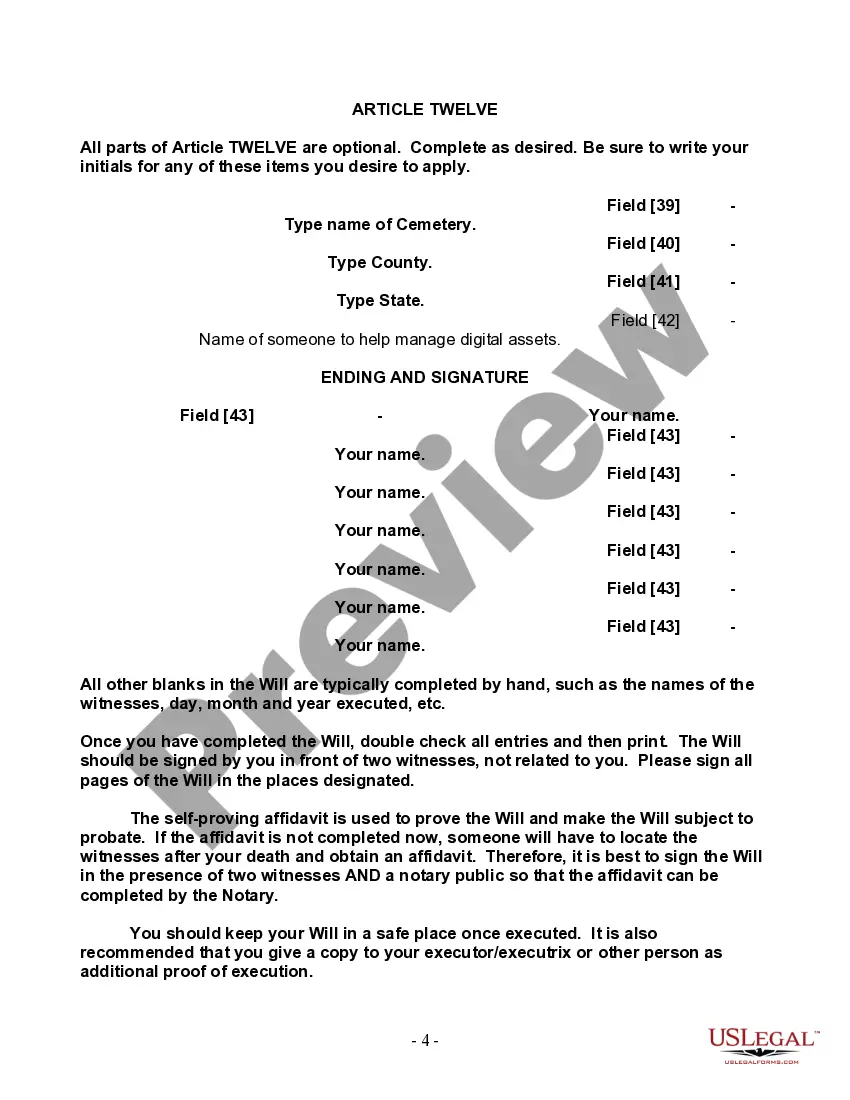
- Instructions for signing the Will in front of witnesses.

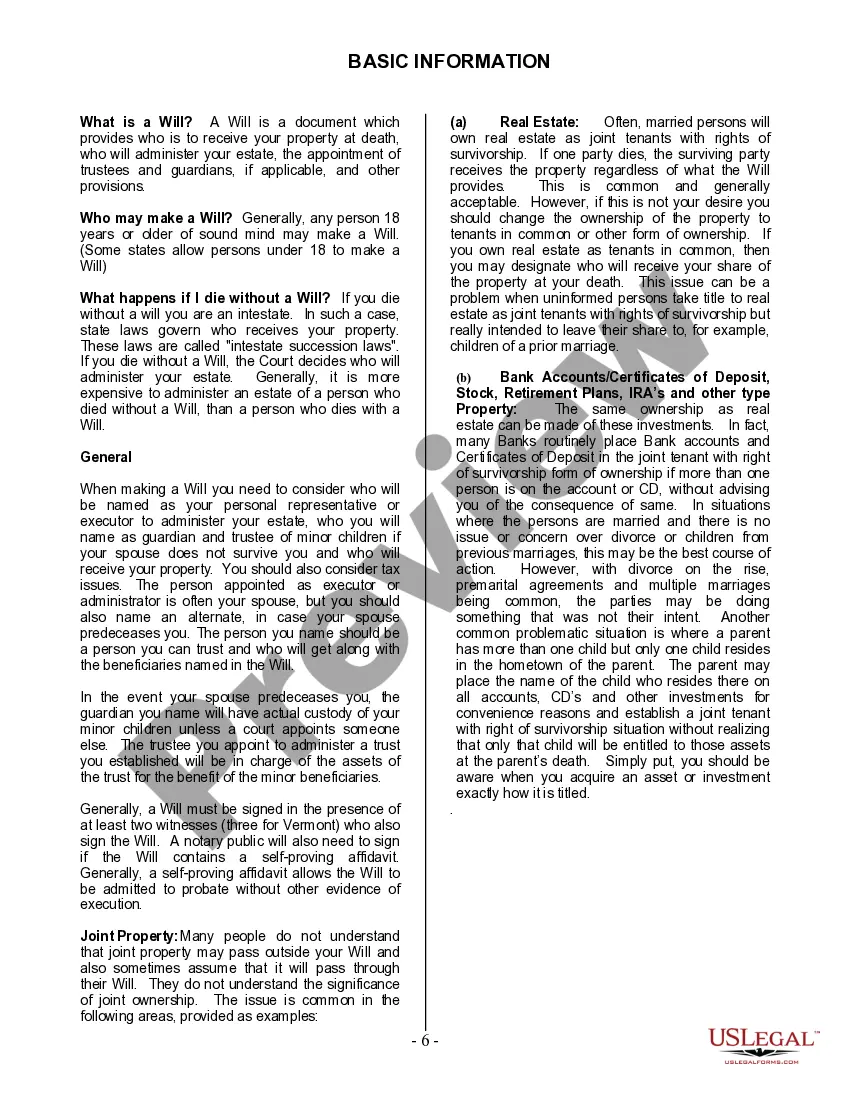





When this form is needed
This form is necessary when a single parent with minor children wishes to specify how their assets will be distributed upon their death. It is essential for ensuring that your wishes are followed regarding the care of your children and the management of their inheritance. If you want to assign guardianship and manage provisions for your children's financial needs, this Will serves that purpose effectively.
Who needs this form
- Single parents with minor children.
- Individuals who want to ensure their children are provided for after their death.
- People interested in naming a guardian and trustee for their minor children.
- Anyone who wishes to specify how their assets should be distributed after passing.
How to prepare this document
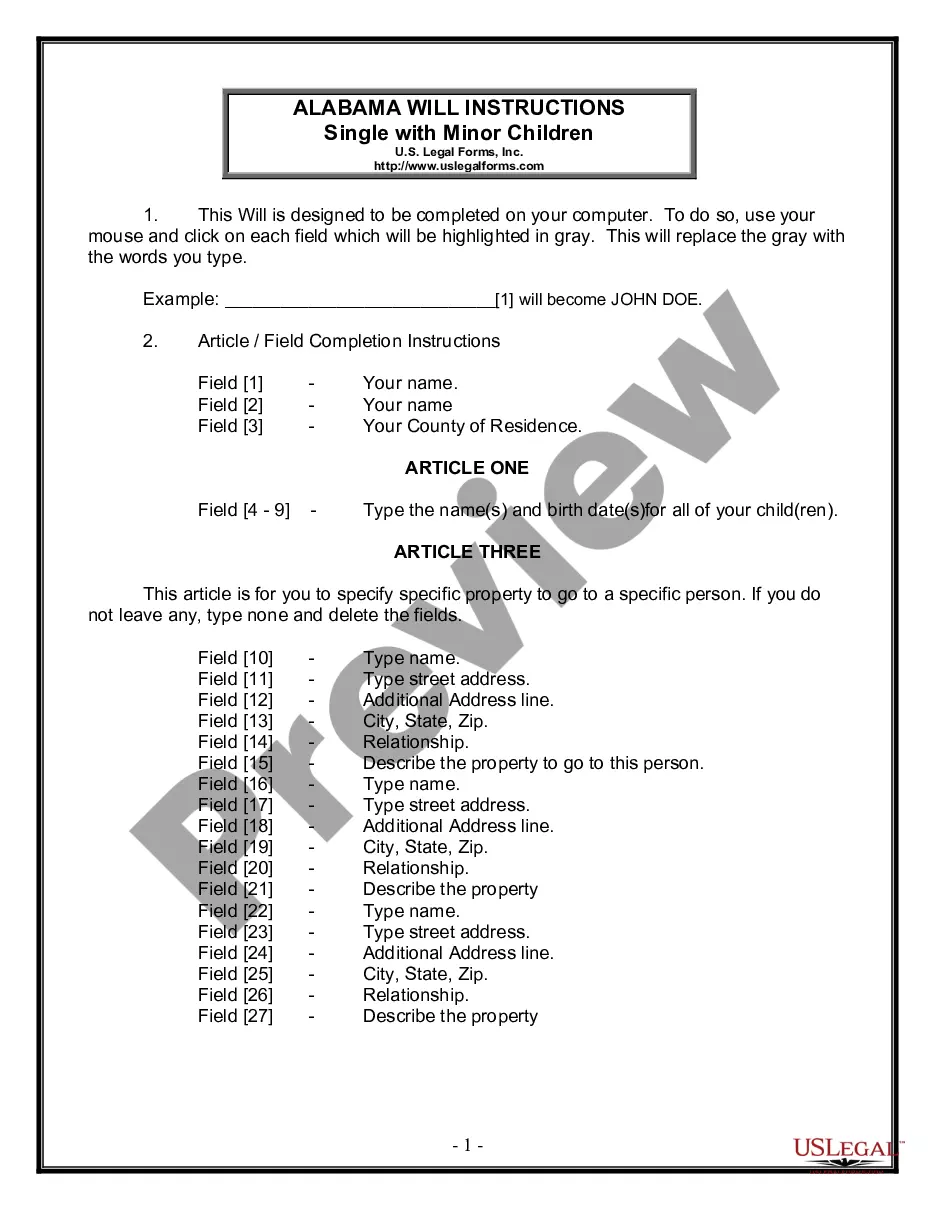
- Identify yourself by typing in your full name and county of residence.
- List the names and birth dates of your minor children.
- Specify any specific gifts or property you wish to allocate to individuals.
- Designate a personal representative and successor to handle your estate.
- Sign the Will in front of two witnesses and ensure it is notarized if required.
Does this document require notarization?
Yes, this form must be notarized to be legally valid. By utilizing US Legal Forms' integrated online notarization service, you can complete the process via a secure video call, ensuring legal compliance without the need for travel.
Get your form ready online
Our built-in tools help you complete, sign, share, and store your documents in one place.
Make edits, fill in missing information, and update formatting in US Legal Forms—just like you would in MS Word.
Download a copy, print it, send it by email, or mail it via USPS—whatever works best for your next step.
Sign and collect signatures with our SignNow integration. Send to multiple recipients, set reminders, and more. Go Premium to unlock E-Sign.
If this form requires notarization, complete it online through a secure video call—no need to meet a notary in person or wait for an appointment.
We protect your documents and personal data by following strict security and privacy standards.

Make edits, fill in missing information, and update formatting in US Legal Forms—just like you would in MS Word.

Download a copy, print it, send it by email, or mail it via USPS—whatever works best for your next step.

Sign and collect signatures with our SignNow integration. Send to multiple recipients, set reminders, and more. Go Premium to unlock E-Sign.

If this form requires notarization, complete it online through a secure video call—no need to meet a notary in person or wait for an appointment.

We protect your documents and personal data by following strict security and privacy standards.
Common mistakes to avoid
- Failing to have the Will signed in the presence of the required number of witnesses.
- Not updating the Will after major life events, such as changes in relationships or financial status.
- Overlooking the need for a self-proving affidavit where applicable.
- Not being clear about who should manage the trust for your children.
Why use this form online
- Convenient access from anywhere at any time.
- Edit the form easily to meet your specific needs.
- Reliable templates drafted by licensed attorneys.
- Quick printing and distribution options after completion.
Legal use & context
- The will must comply with state laws regarding the execution and witnessing of the document.
- This form is recognized as a legal instrument that can be enforced in probate court, provided it meets the necessary requirements.
- Failure to create or update a will can result in state laws governing inheritance, which may not align with your wishes.
What to keep in mind
- A Last Will and Testament is essential for single parents to secure their children's future.
- Proper execution with witnesses and possibly a notary is critical for legal validity.
- This form allows you to outline your wishes concerning property distribution and guardianship.
- Regular updates to your will are important as life circumstances change.
Looking for another form?
Form popularity
FAQ
Yes, you can write your own will and have it notarized in Alabama, but it must comply with specific legal standards to be valid. An Alabama Last Will and Testament for a Single Person with Minor Children can be handwritten, but ensuring it includes essential elements like signatures and witnesses is crucial. Using online services can simplify this process and provide templates to guide you.
No, you don't have to hire a lawyer to create a will in Alabama, as many online resources provide adequate tools for drafting an Alabama Last Will and Testament for a Single Person with Minor Children. These resources walk you through each requirement, making the process straightforward. However, if your situation is unique, consulting a legal professional might help clarify certain aspects.
In Alabama, you do not necessarily need a lawyer to create a will, especially if you use user-friendly online platforms for an Alabama Last Will and Testament for a Single Person with Minor Children. These platforms guide you through the necessary steps and help you comply with state laws. However, consulting a lawyer may be beneficial if you have complex family situations or specific estate planning needs.
Yes, having a child highlights the need for an Alabama Last Will and Testament for a Single Person with Minor Children. A will allows you to specify guardianship for your minor children, ensuring they are cared for according to your wishes. Additionally, it provides a clear plan for the distribution of your assets, giving you peace of mind.
The cheapest and easiest way to create an Alabama Last Will and Testament for a Single Person with Minor Children involves using online legal services that provide straightforward templates. These platforms allow you to fill in your information without needing extensive legal knowledge. They often offer guidance throughout the process, ensuring you meet Alabama’s specific requirements for wills.
In Minnesota, wills do not necessarily need to be notarized, but having a notary can enhance their validity. It’s important to understand that an Alabama Last Will and Testament for a Single Person with Minor Children must follow state laws to be enforceable. Including a notary may offer added assurance, especially in complex situations. USLegalForms provides resources to help ensure your will meets all legal requirements.
One of the biggest mistakes in a will is failing to update it after significant life changes. For example, if you become a single parent or your financial situation changes, it's crucial to revise your Alabama Last Will and Testament for a Single Person with Minor Children. Neglecting this can lead to unintended consequences for your children and your estate. Regular reviews of your will help ensure your wishes remain clear and relevant.
Writing an Alabama Last Will and Testament for a Single Person with Minor Children involves several key steps. Start by listing your assets and liabilities, then discuss your guardianship wishes for your minor children. You can use templates or online services like USLegalForms to streamline the process and ensure you include all necessary components. Finally, sign your will in front of witnesses to validate it.
For a single person with minor children, the best type of will is often a simple testamentary will. This document allows you to name guardians for your children, manage assets, and specify your wishes clearly. Choosing a straightforward format helps you communicate your intentions effectively. Tools like USLegalForms can assist you in creating a tailored will that meets your needs.
To exclude a child from your Alabama Last Will and Testament for a Single Person with Minor Children, you should specifically state your intention in the document. Clearly name the child you wish to exclude and outline your reasoning, if applicable. This approach helps prevent confusion or disputes later. It's best to consult an attorney to ensure your wishes are legally enforceable.