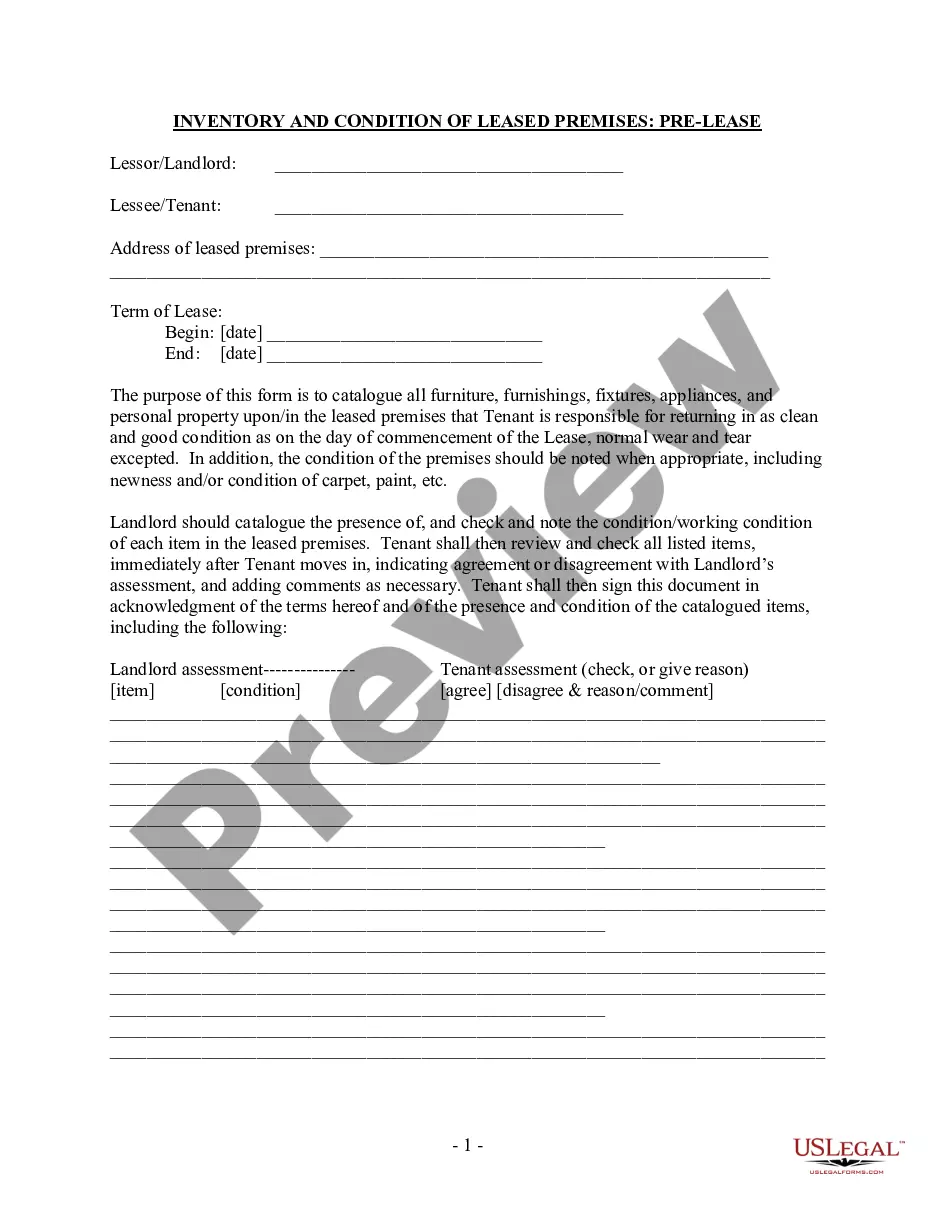
Alabama Inventory and Condition of Leased Premises for Pre Lease and Post Lease
About this form
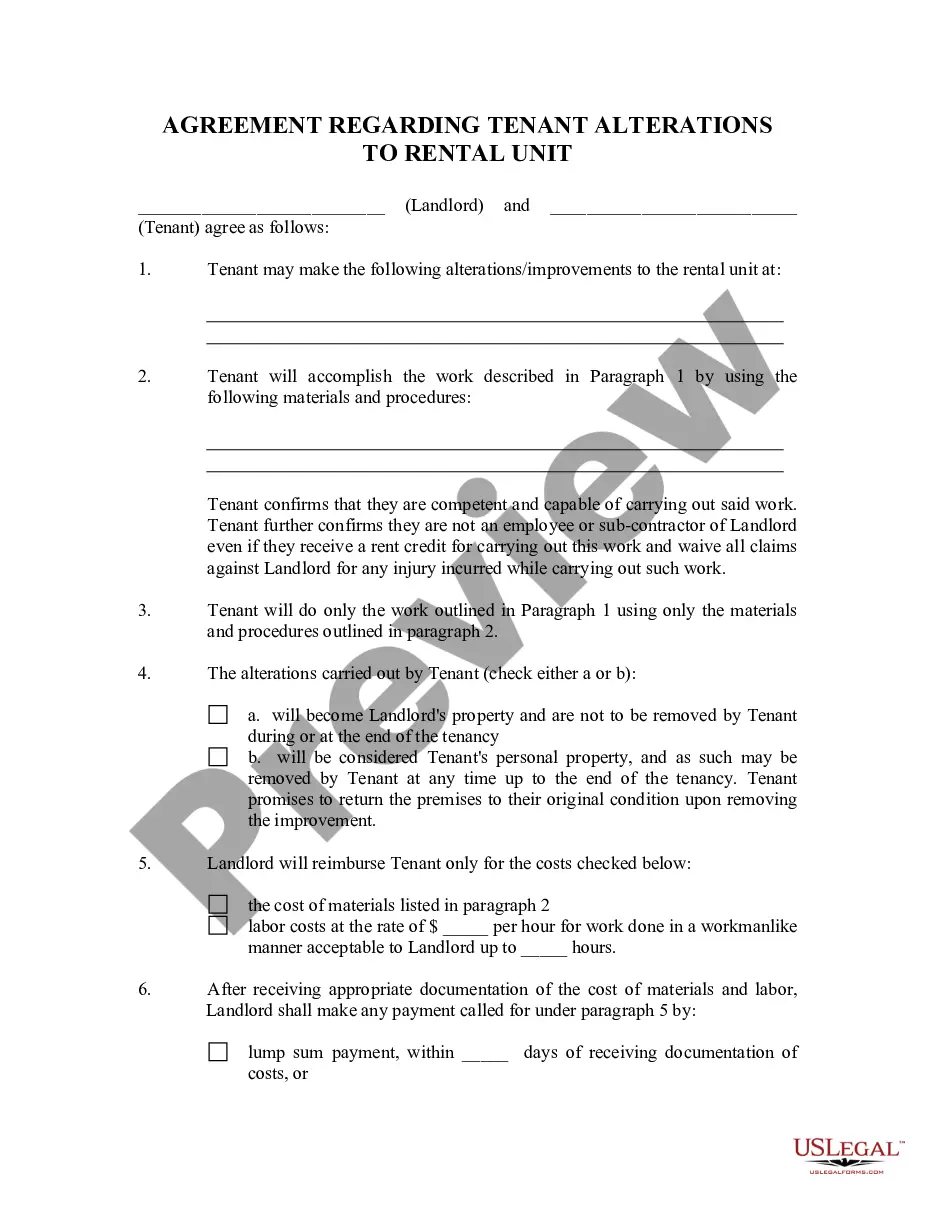
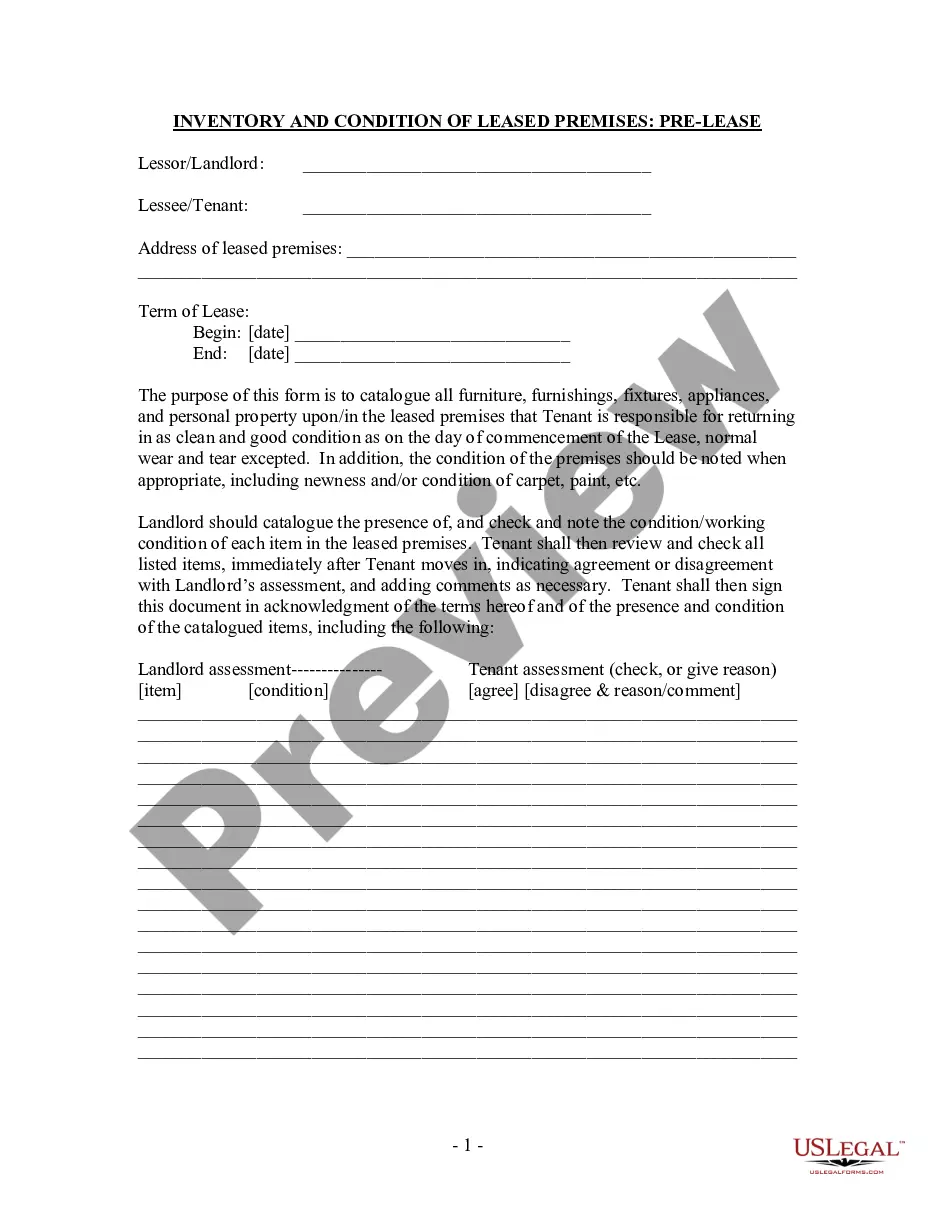
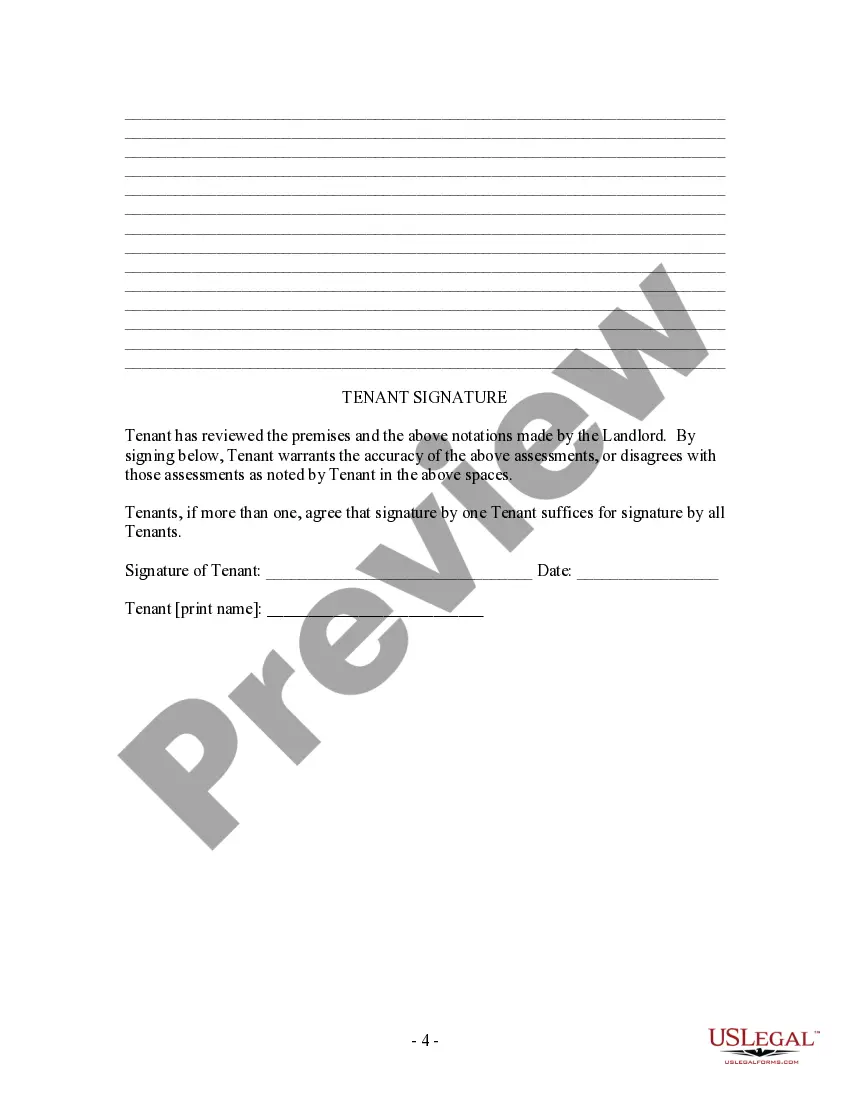
The Inventory and Condition of Leased Premises for Pre Lease and Post Lease is a legal document that allows tenants to record the condition of a rental property before and after their lease term. This form is crucial for ensuring that both landlords and tenants have a clear understanding of the state of the property and any items provided, such as furniture and appliances. It serves to protect both parties from disputes regarding damages and the return of security deposits.
Form components explained
- Identification of the landlord and tenant, including their signatures.
- Address of the leased premises.
- Lease term details, including start and end dates.
- Inventory of all items in the leased premises with condition assessments.
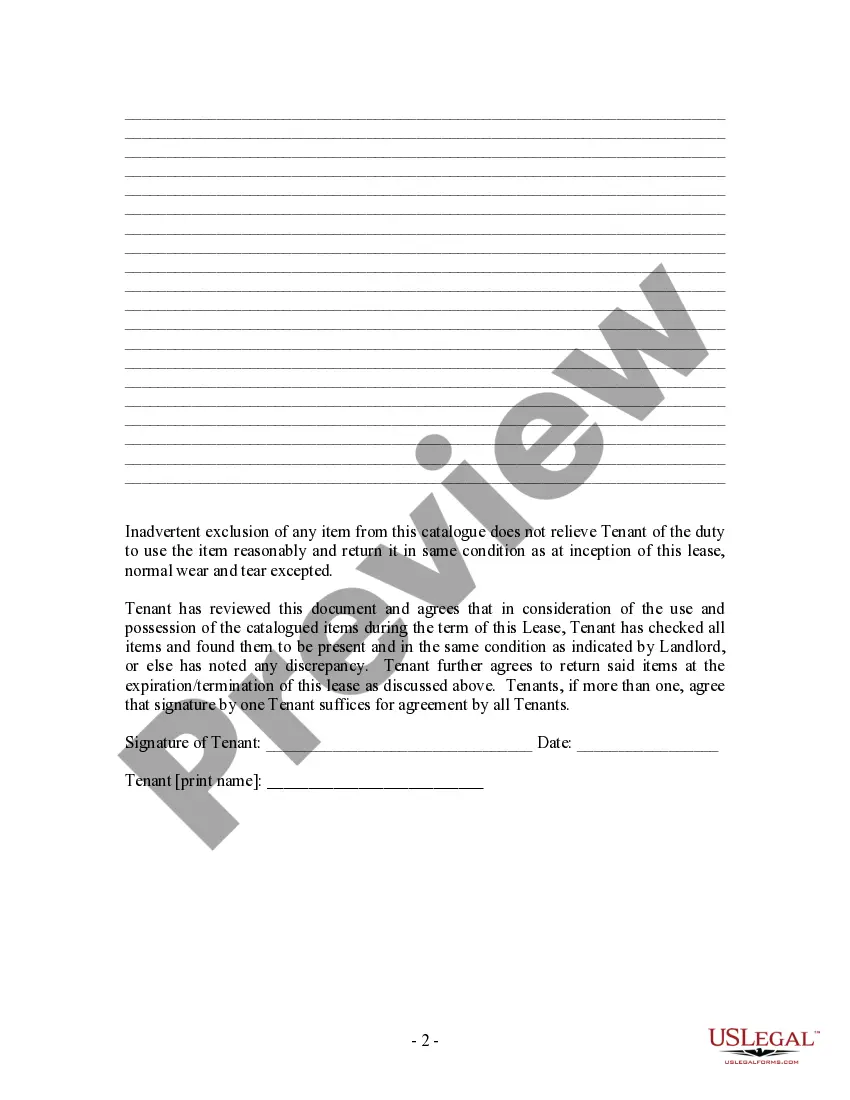
- Agreement or disagreement options for the tenant on each itemâs condition.
- Space for comments regarding any discrepancies noted by the tenant.
Situations where this form applies
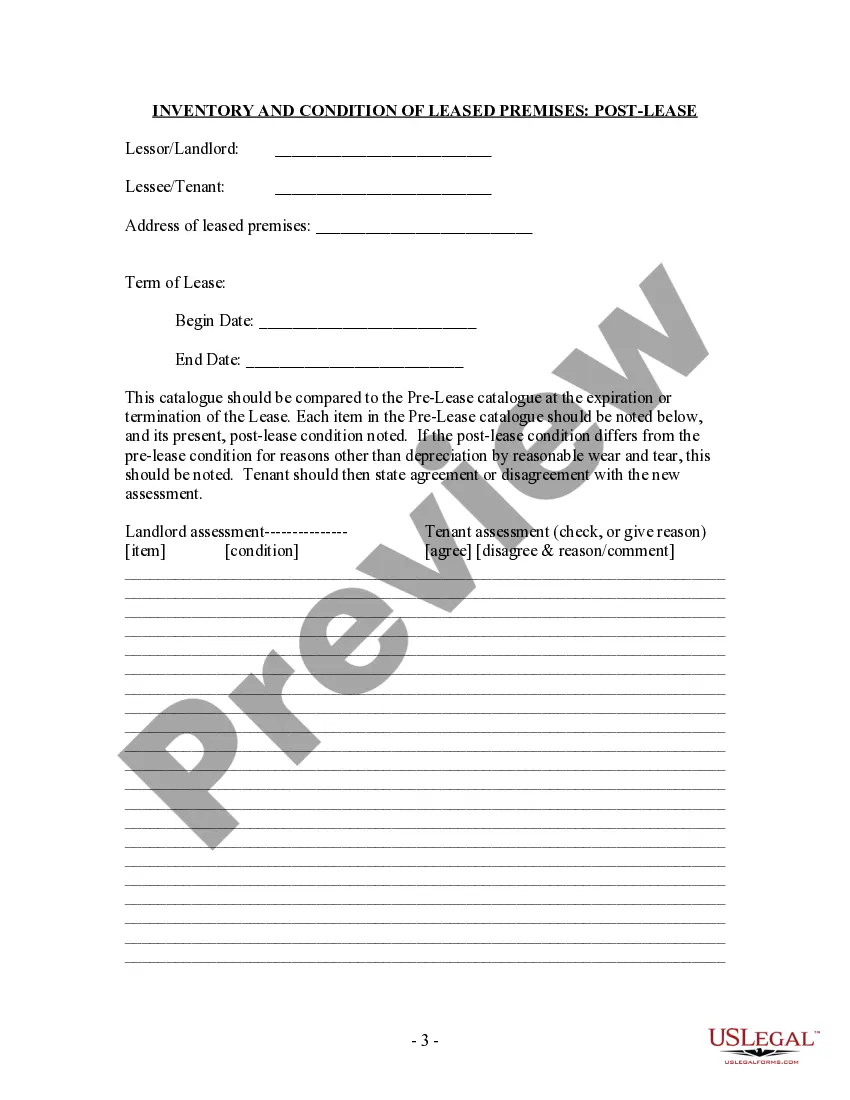
This form should be used at the beginning of a lease term, when the tenant moves into the rental property, to document the condition of all items and installations. It is also utilized at the end of the lease to compare the initial condition assessment with the state of the property upon vacating. This ensures clarity on any damages that may affect the return of the security deposit.
Who needs this form
- Tenants entering into a rental agreement who want to document the condition of the property.
- Landlords who wish to ensure transparency and avoid disputes over property condition with tenants.
- Real estate agents who manage rental properties on behalf of landlords.
Instructions for completing this form
- Identify the parties involved by entering the names of the landlord and tenant.
- Specify the address of the leased premises.
- Enter the start and end dates of the lease term.
- List all furnishings and appliances, noting their condition and whether the tenant agrees with the landlordâs assessment.
- Have the tenant sign the document to acknowledge the condition of the items.
- Repeat the process post-lease to document any changes in condition.
Does this document require notarization?
This form does not typically require notarization unless specified by local law. It is recommended to consult local regulations to confirm any specific requirements.
Get your form ready online
Our built-in tools help you complete, sign, share, and store your documents in one place.
Make edits, fill in missing information, and update formatting in US Legal Forms—just like you would in MS Word.
Download a copy, print it, send it by email, or mail it via USPS—whatever works best for your next step.
Sign and collect signatures with our SignNow integration. Send to multiple recipients, set reminders, and more. Go Premium to unlock E-Sign.
If this form requires notarization, complete it online through a secure video call—no need to meet a notary in person or wait for an appointment.
We protect your documents and personal data by following strict security and privacy standards.

Make edits, fill in missing information, and update formatting in US Legal Forms—just like you would in MS Word.

Download a copy, print it, send it by email, or mail it via USPS—whatever works best for your next step.

Sign and collect signatures with our SignNow integration. Send to multiple recipients, set reminders, and more. Go Premium to unlock E-Sign.

If this form requires notarization, complete it online through a secure video call—no need to meet a notary in person or wait for an appointment.

We protect your documents and personal data by following strict security and privacy standards.
Mistakes to watch out for
- Failing to document all items present within the rental property.
- Not comparing the pre-lease and post-lease condition assessments carefully.
- Neglecting to get both partiesâ signatures on the form.
- Not providing comments or explanations for disagreements with the landlordâs assessments.
Why complete this form online
- Convenience of downloading and filling out the form at any time.
- Ability to easily edit and customize the form to fit specific situations.
- Access to legal expertise through properly drafted templates by licensed attorneys.
Summary of main points
- This form serves to document the condition of a rental property before and after the lease.
- Thorough completion and mutual agreement on all items can prevent disputes later.
- Both landlords and tenants should retain copies for their records, ensuring legal protection for all parties involved.
Looking for another form?






Form popularity
FAQ
An overall score of not less than 70% on written exams. Pass the first aid exam with a score of not less than 70%. Pass the legal issues exam with a score of not less than 70%. Pass the physical agility/ability test at the beginning of the course. Pass SSGT Student Practical Test.
North Carolina: 903 hours. Florida: 620 hours. Alabama: 520 hours. Tennessee: 501 hours. South Carolina: 480 hours. Georgia: 408 hours. Mississippi: 400 hours.
The Northeast Alabama Law Enforcement Academy (LEA) offers three (3) basic training courses per year. Each Basic Course covers 560 hours of training over fourteen(14) weeks. During this time, students are provided with the entry level knowledge and skill needed to begin their careers in law enforcement.
The Police Academy is a 27-week academic, physical and practical training program, which introduces recruits to a career in law enforcement.
The POST-certified Regular Basic Course (basic academy) is the training standard for police officers, deputy sheriffs, school district police officers, district attorney investigators, as well as a few other classifications of peace officers.
The Northeast Alabama Law Enforcement Academy (LEA) offers three (3) basic training courses per year. Each Basic Course covers 560 hours of training over fourteen(14) weeks. During this time, students are provided with the entry level knowledge and skill needed to begin their careers in law enforcement.
Basic Academy Class- 520 Hours APOSTC minimum standard. Departmental Classes (MPD Only)- 640 Hours. Lateral / Refresher Classes - 95 Hours APOSTC minimum standard.
The cost to attend Northeast Alabama Law Enforcement Academy ranges from $3,000 to $9,500 depending on the qualification, with a median cost of $3,000.
Costs usually total less than $5,000, and some police departments will reimburse a percentage of that tuition upon employment. After receiving your certification, you can then apply to become a police officer in that state. However, you may be asked to complete an additional training course.