Alabama Warranty Deed from two Individuals to LLC
About this form
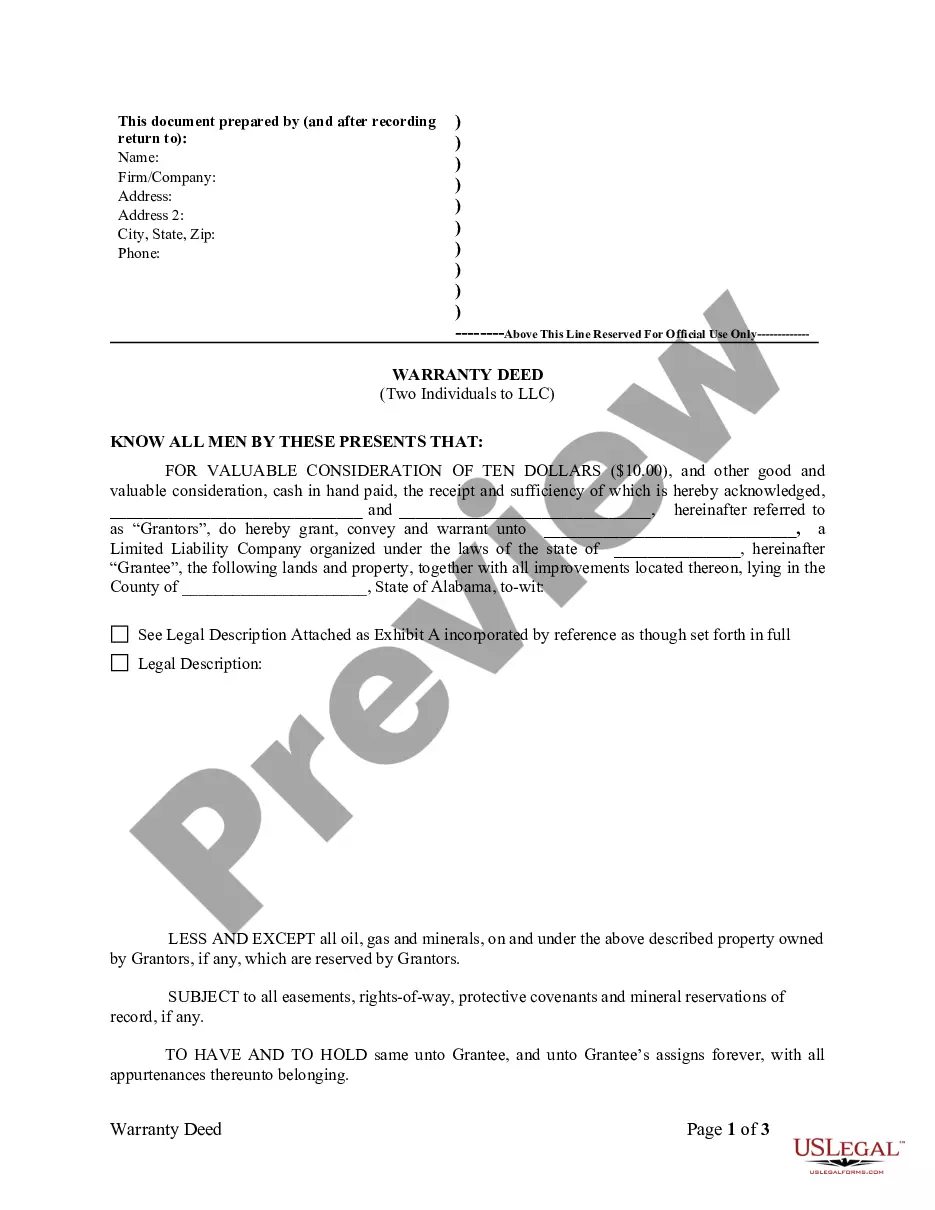
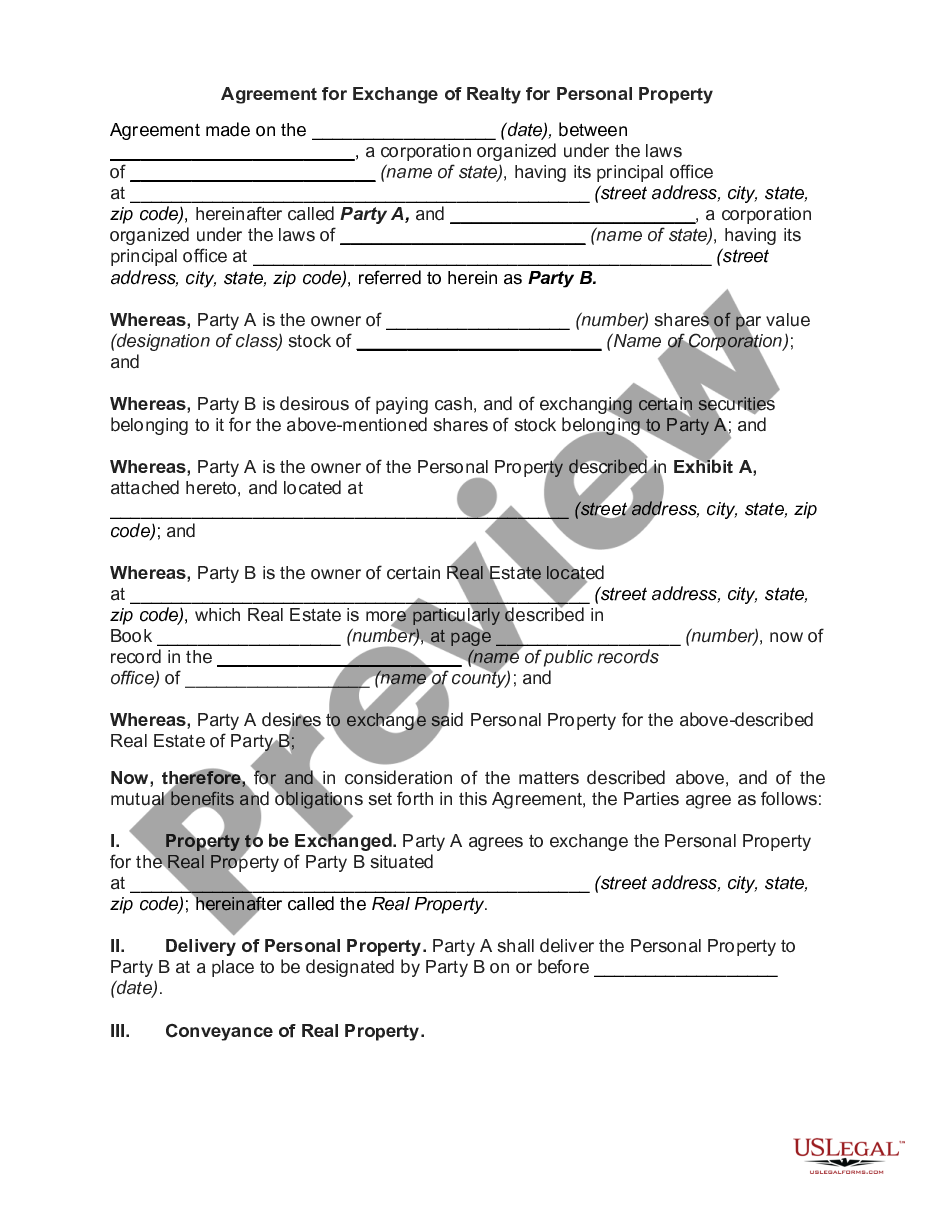
The Warranty Deed from two Individuals to LLC is a legal document used to transfer property ownership from two individuals, the Grantors, to a limited liability company (LLC), the Grantee. This deed ensures that the property is conveyed without encumbrances (unless specifically noted), providing protection against future claims. Unlike other forms of property transfer, such as a quitclaim deed, this warranty deed guarantees that the Grantors hold clear title to the property and will defend that title if necessary.
What’s included in this form
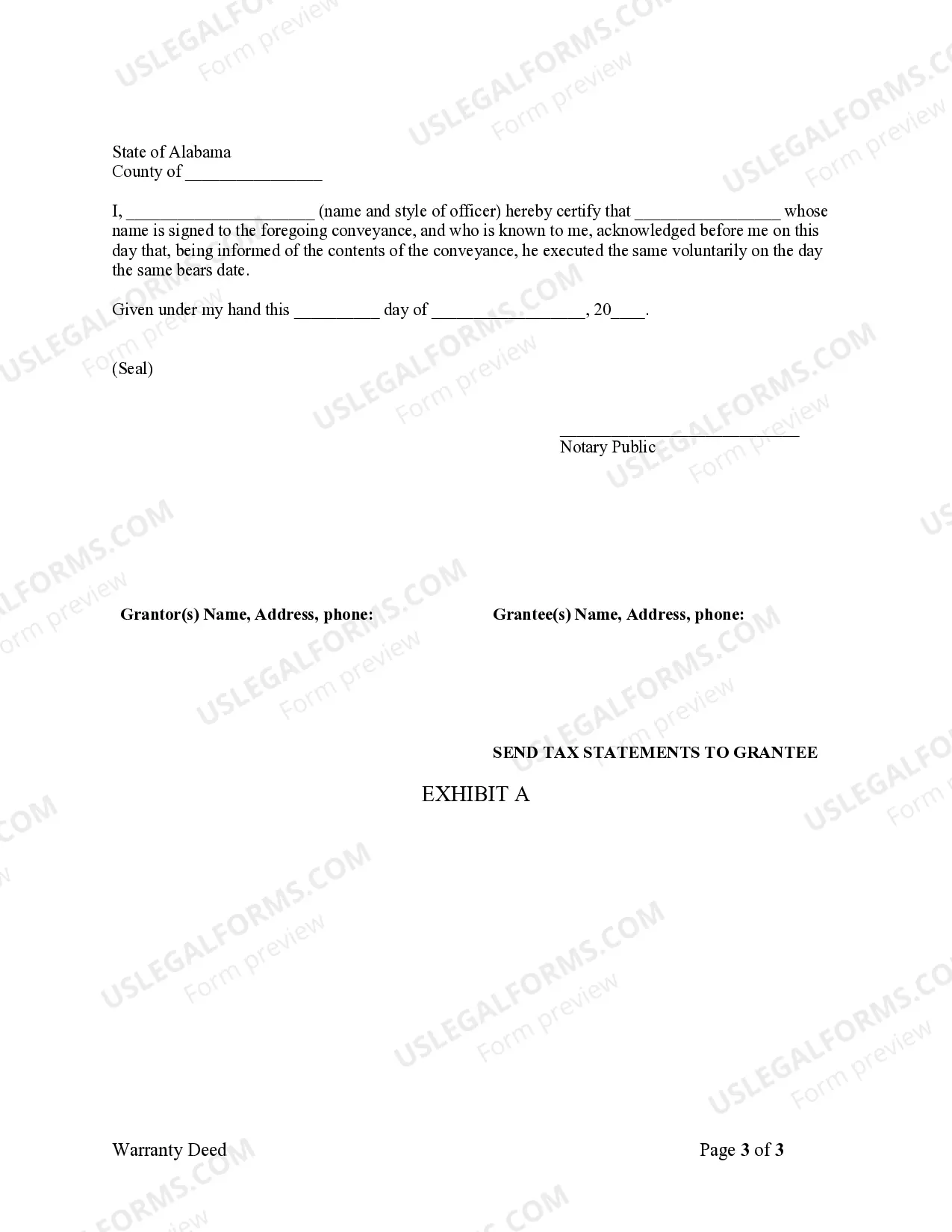
- Legal description of the property being conveyed.
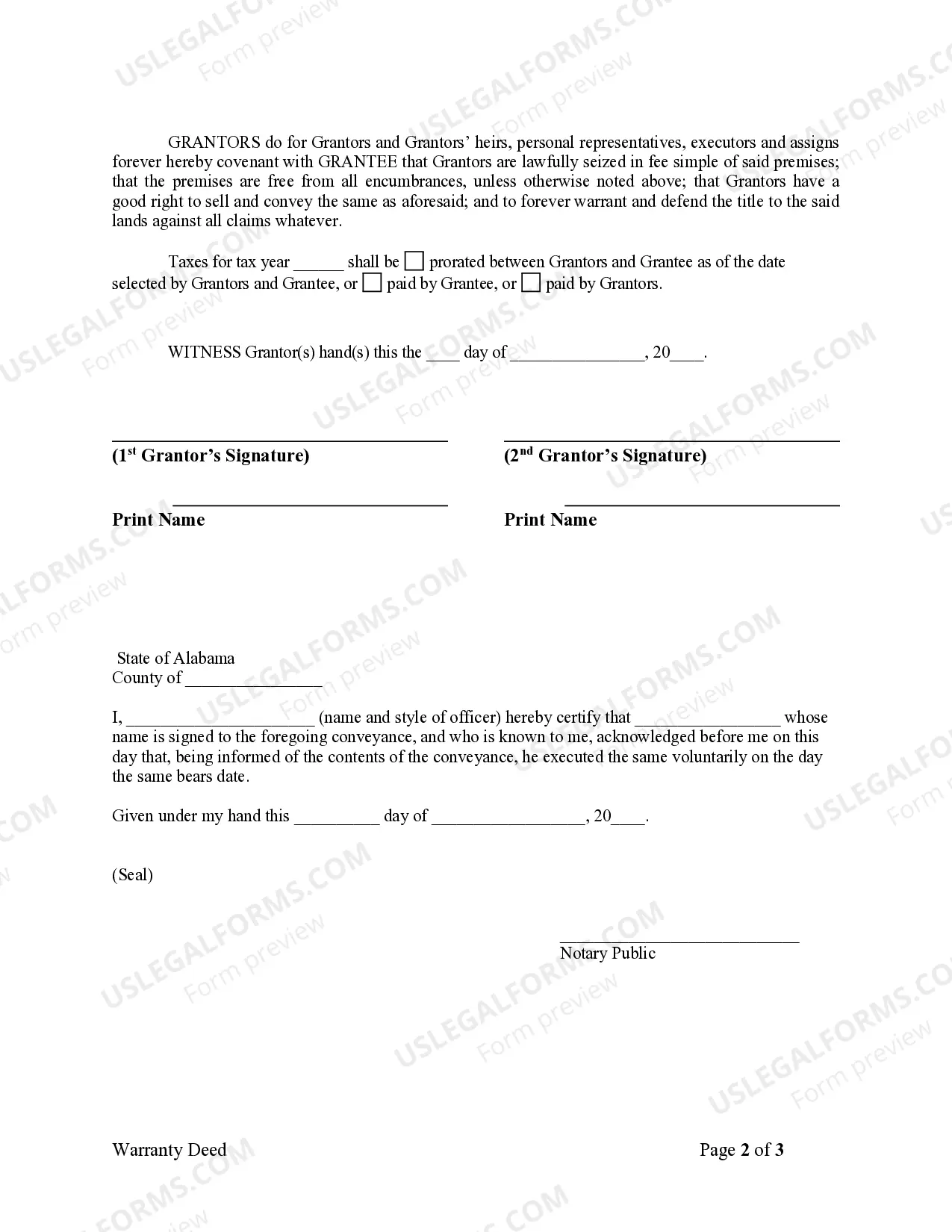
- Covenant by Grantors affirming they are the lawful owners of the property.
- Warranties against encumbrances unless specified otherwise.
- Provisions for prorating taxes for the specified tax year.
- Signatures of both Grantors and notarization by a public notary.




Situations where this form applies
This form is used when two individuals wish to transfer property ownership to an LLC. It is particularly useful in real estate transactions where the individuals want to ensure that the property title is legally secure and free of claims. Common scenarios include property investment ventures, business partnerships, or estate planning where assets are being consolidated into an LLC for management purposes.
Intended users of this form
- Two individuals who are Grantors wishing to transfer property to an LLC.
- Partners in a business who need to formalize property holdings within their LLC.
- Real estate investors looking to manage property through a corporate structure.
Completing this form step by step
- Identify the parties involved: the two individuals as Grantors and the LLC as Grantee.
- Provide the legal description of the property in the designated section or attach as Exhibit A.
- Fill in the details regarding the proration of taxes as agreed upon by both parties.
- Have both Grantors sign and date the form in the presence of a notary public.
- Ensure the notary public completes their section, including their signature and commission expiration date.
Does this form need to be notarized?
Yes, this form must be notarized to be legally valid. A notary public will verify the identities of the Grantors and witness their signatures, ensuring that the transaction is executed correctly and adhering to legal standards.
Get your form ready online
Our built-in tools help you complete, sign, share, and store your documents in one place.
Make edits, fill in missing information, and update formatting in US Legal Forms—just like you would in MS Word.
Download a copy, print it, send it by email, or mail it via USPS—whatever works best for your next step.
Sign and collect signatures with our SignNow integration. Send to multiple recipients, set reminders, and more. Go Premium to unlock E-Sign.
If this form requires notarization, complete it online through a secure video call—no need to meet a notary in person or wait for an appointment.
We protect your documents and personal data by following strict security and privacy standards.

Make edits, fill in missing information, and update formatting in US Legal Forms—just like you would in MS Word.

Download a copy, print it, send it by email, or mail it via USPS—whatever works best for your next step.

Sign and collect signatures with our SignNow integration. Send to multiple recipients, set reminders, and more. Go Premium to unlock E-Sign.

If this form requires notarization, complete it online through a secure video call—no need to meet a notary in person or wait for an appointment.

We protect your documents and personal data by following strict security and privacy standards.
Avoid these common issues
- Failing to provide a complete and accurate legal description of the property.
- Neglecting to have the document notarized, which can invalidate the form.
- Ignoring the need to specify tax proration details, potentially leading to disputes.
- Not reviewing local laws that may require additional terms or clauses.
Benefits of using this form online
- Convenience of accessing and downloading the warranty deed template from anywhere.
- Editability allows for customization to meet specific transaction needs.
- Reliability of forms drafted by licensed attorneys to ensure legal compliance.
Quick recap
- This Warranty Deed facilitates the transfer of property from two individuals to an LLC.
- It includes essential legal assurances regarding the property title.
- Proper completion and notarization are crucial for the deed's legal effectiveness.
Looking for another form?
Form popularity
FAQ
The only way to forcibly change the ownership status is through a legal action and the resultant court order. However, if an owner chooses to be removed from the deed, it is simply a matter of preparing a new deed transferring that owner's interest in the property.
The Alabama statutory warranty deed form provides a limited warranty of title. With a statutory warranty deed, the person transferring the property guarantees that he or she has done nothing that would cause title problems, but makes no guarantees about what might have happened before he or she acquired the property.
A warranty deed is a document often used in real estate that provides the greatest amount of protection to the purchaser of a property. It pledges or warrants that the owner owns the property free and clear of any outstanding liens, mortgages, or other encumbrances against it.
A warranty deed, also known as a general warranty deed, is a legal real estate document between the seller (grantor) and the buyer (grantee). The deed protects the buyer by pledging that the seller holds clear title to the property and there are no encumbrances, outstanding liens, or mortgages against it.
Retrieve your original deed. Get the appropriate deed form. Draft the deed. Sign the deed before a notary. Record the deed with the county recorder. Obtain the new original deed.
Quit Claim Deeds in Alabama So not only is the grantor not guaranteeing that there are no liens or encumbrances on the property, they aren't even guaranteeing they own the property. Our local property deed attorneys are currently charging $250 to prepare your quit claim deed for you to record yourself.
Find the most recent deed to the property. Create the new deed. Sign and notarize the deed. Record the signed, notarized original deed with the Office of the Judge of Probate.
Adding someone to your house deed requires the filing of a legal form known as a quitclaim deed. When executed and notarized, the quitclaim deed legally overrides the current deed to your home. By filing the quitclaim deed, you can add someone to the title of your home, in effect transferring a share of ownership.