Alabama Warranty Deed from Individual to a Trust

What is this form?
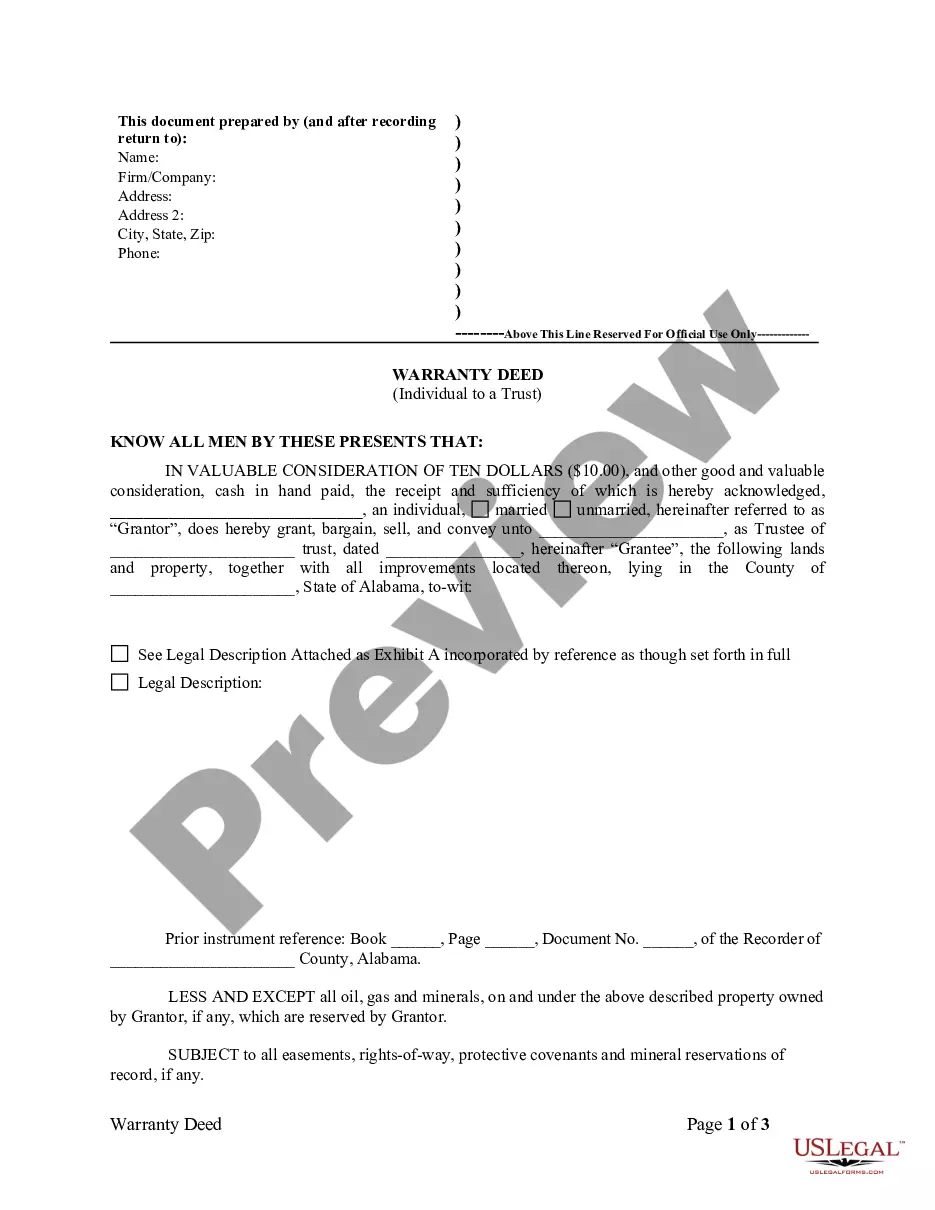
A Warranty Deed from Individual to a Trust is a legal document in which an individual (the Grantor) transfers ownership of property to a trust (the Grantee). This deed guarantees that the Grantor holds clear title to the property and has the right to convey it, while also affirming that the property is free from encumbrances, except as noted. This form is distinct from other types of deeds, as it specifically involves a trust as the recipient of the property, which can be an essential part of estate planning and asset management.
Key parts of this document
- Grantor's full name and capacity to convey the property.
- Trust name and trustee details as the Grantee.
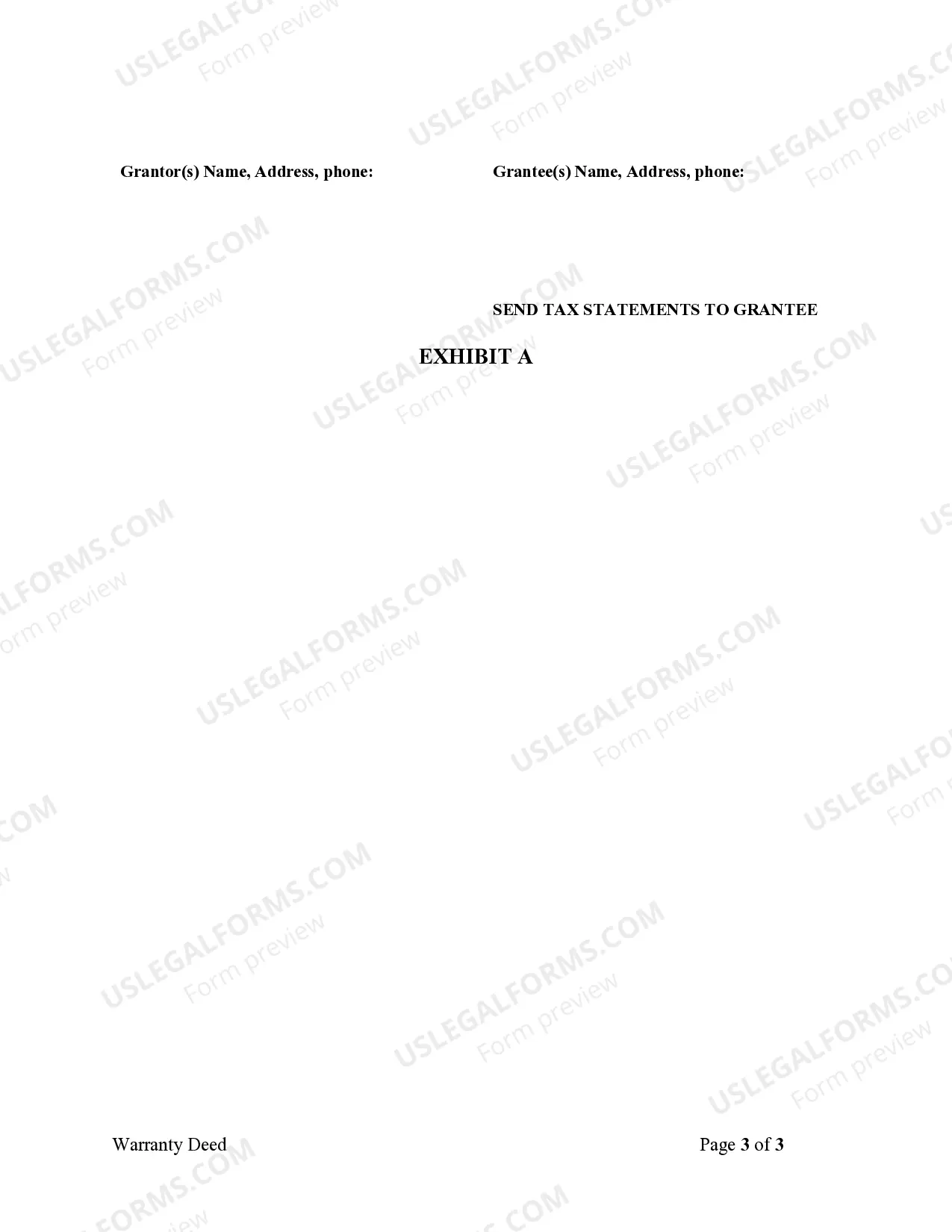
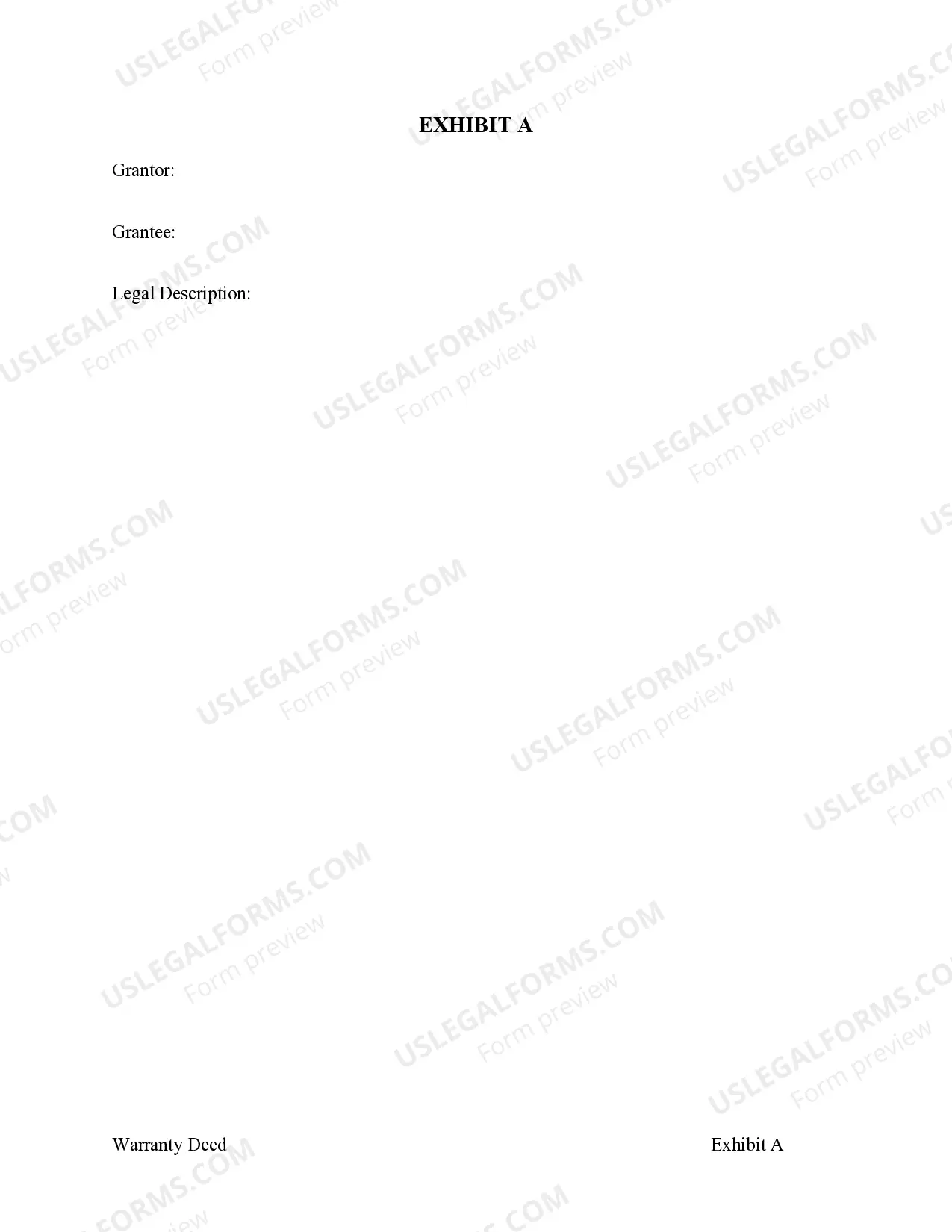
- Legal description of the property being transferred.
- Reservation of oil, gas, and mineral rights by the Grantor.
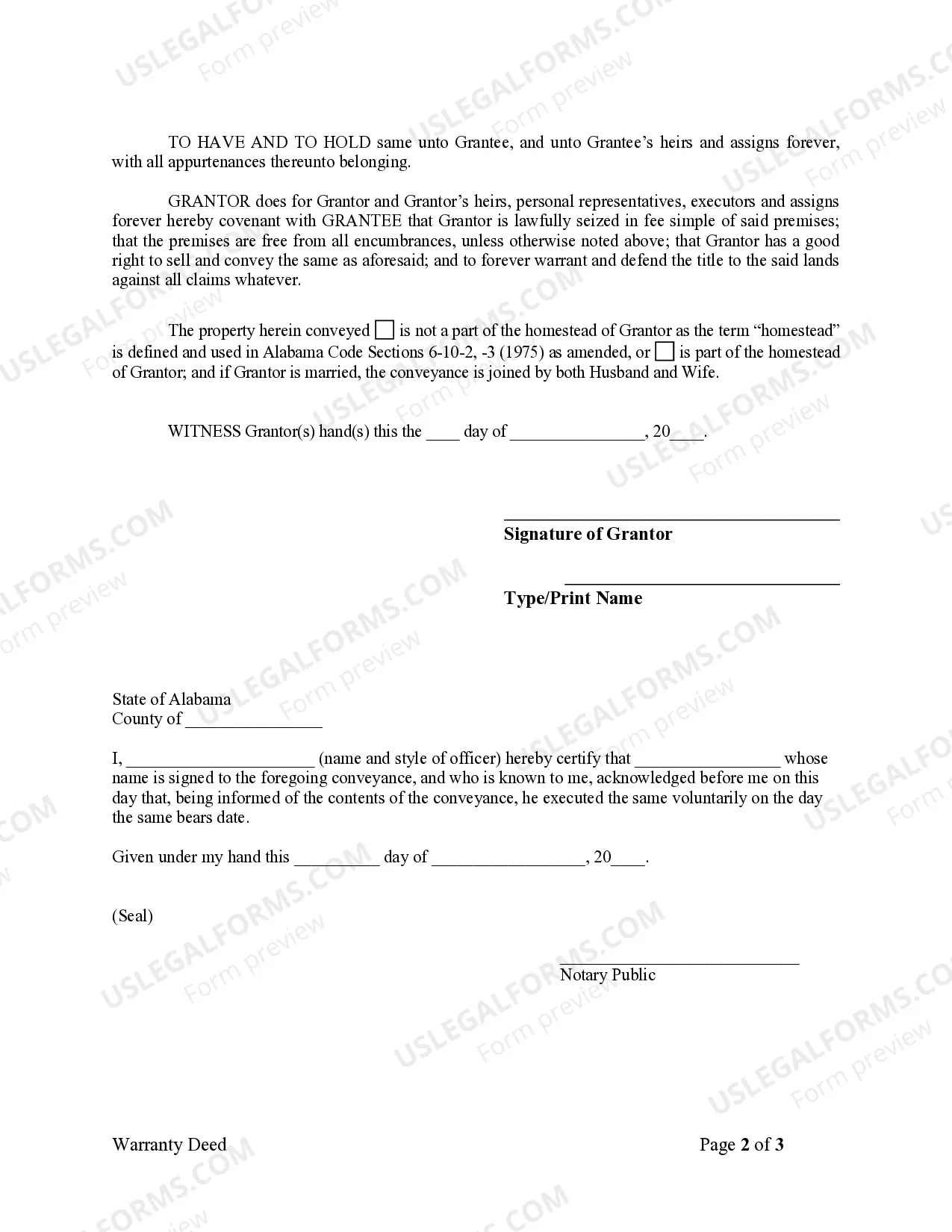
- Covenant assuring the Grantee of clear title and freedom from encumbrances.
- Notary acknowledgment to ensure the validity of the transfer.





Common use cases
You should use this form when an individual wishes to transfer real estate to a trust, typically for estate planning purposes, asset protection, or to facilitate the management of the property. It can be beneficial in scenarios where the Grantor wants to ensure the property is held within the trust for the benefit of heirs or other beneficiaries, particularly when avoiding probate is a goal.
Who can use this document
This Warranty Deed should be used by:
- Individuals looking to convey their property to a trust they have established.
- Trustees acting on behalf of a trust to receive property as part of estate planning.
- Estate planners who are advising clients on the transfer of real property into a trust.
Instructions for completing this form
- Identify the parties involved: the Grantor (property owner) and the Grantee (the trust).
- Provide the legal description of the property being conveyed.
- Note any reservations, such as mineral rights, that the Grantor wishes to retain.
- Have both parties sign the deed in the presence of a notary public.
- File the completed deed with the appropriate county or state office, following local recording requirements.
Does this document require notarization?
Yes, this form must be notarized to be legally valid. This adds a layer of authenticity and legal recognition to the transfer. To facilitate this process, US Legal Forms offers an integrated online notarization service, available 24/7 through secure video calls, ensuring you can complete the process without the need for in-person meetings.
Get your form ready online
Our built-in tools help you complete, sign, share, and store your documents in one place.
Make edits, fill in missing information, and update formatting in US Legal Forms—just like you would in MS Word.
Download a copy, print it, send it by email, or mail it via USPS—whatever works best for your next step.
Sign and collect signatures with our SignNow integration. Send to multiple recipients, set reminders, and more. Go Premium to unlock E-Sign.
If this form requires notarization, complete it online through a secure video call—no need to meet a notary in person or wait for an appointment.
We protect your documents and personal data by following strict security and privacy standards.

Make edits, fill in missing information, and update formatting in US Legal Forms—just like you would in MS Word.

Download a copy, print it, send it by email, or mail it via USPS—whatever works best for your next step.

Sign and collect signatures with our SignNow integration. Send to multiple recipients, set reminders, and more. Go Premium to unlock E-Sign.

If this form requires notarization, complete it online through a secure video call—no need to meet a notary in person or wait for an appointment.

We protect your documents and personal data by following strict security and privacy standards.
Avoid these common issues
- Failing to include the legal description of the property.
- Not specifying any reservations clearly, particularly regarding mineral rights.
- Omitting the notary acknowledgment, which is essential for legal validity.
Why use this form online
- Convenience of downloading and filling out the form at any time.
- Editability allows for customization based on specific needs.
- Reliability of having the document drafted by licensed attorneys.
Quick recap
- The Warranty Deed from Individual to a Trust is crucial for transferring property ownership while ensuring legal protections.
- Accurate completion and notarization of this form are essential to its validity and effectiveness.
- This form serves both estate planning and asset protection goals, simplifying future property transfers.
Looking for another form?

Form popularity
FAQ
Retrieve your original deed. Get the appropriate deed form. Draft the deed. Sign the deed before a notary. Record the deed with the county recorder. Obtain the new original deed.
A trustee deed offers no such warranties about the title.
Take the signed and notarized quitclaim deed to your county recorder's office to complete the transfer of title into your revocable trust. Check in two to four weeks to ensure it has been recorded. Include the address of the property on the asset list addendum attached to your trust.
Locate your current deed. Use the proper deed. Check with your title insurance company and lender. Prepare a new deed. Sign in the presence of a notary. Record the deed in the county clerk's office. Locate the deed that's in trust. Use the proper deed.
Quit Claim Deeds in Alabama So not only is the grantor not guaranteeing that there are no liens or encumbrances on the property, they aren't even guaranteeing they own the property. Our local property deed attorneys are currently charging $250 to prepare your quit claim deed for you to record yourself.
The only way to forcibly change the ownership status is through a legal action and the resultant court order. However, if an owner chooses to be removed from the deed, it is simply a matter of preparing a new deed transferring that owner's interest in the property.
In the context of a California mortgage transaction, a trust deed also transfer ownership. Only this time, the title is being placed in the hands of a third-party trustee, who holds the property on behalf of the lender and the homeowner-borrower until the mortgage is paid.
To transfer assets such as investments, bank accounts, or stock to your real living trust, you will need to contact the institution and complete a form. You will likely need to provide a certificate of trust as well. You may want to keep your personal checking and savings account out of the trust for ease of use.
Find the most recent deed to the property. Create the new deed. Sign and notarize the deed. Record the signed, notarized original deed with the Office of the Judge of Probate.