Alaska Last Will and Testament for Married person with Adult Children from Prior Marriage
What is this form?
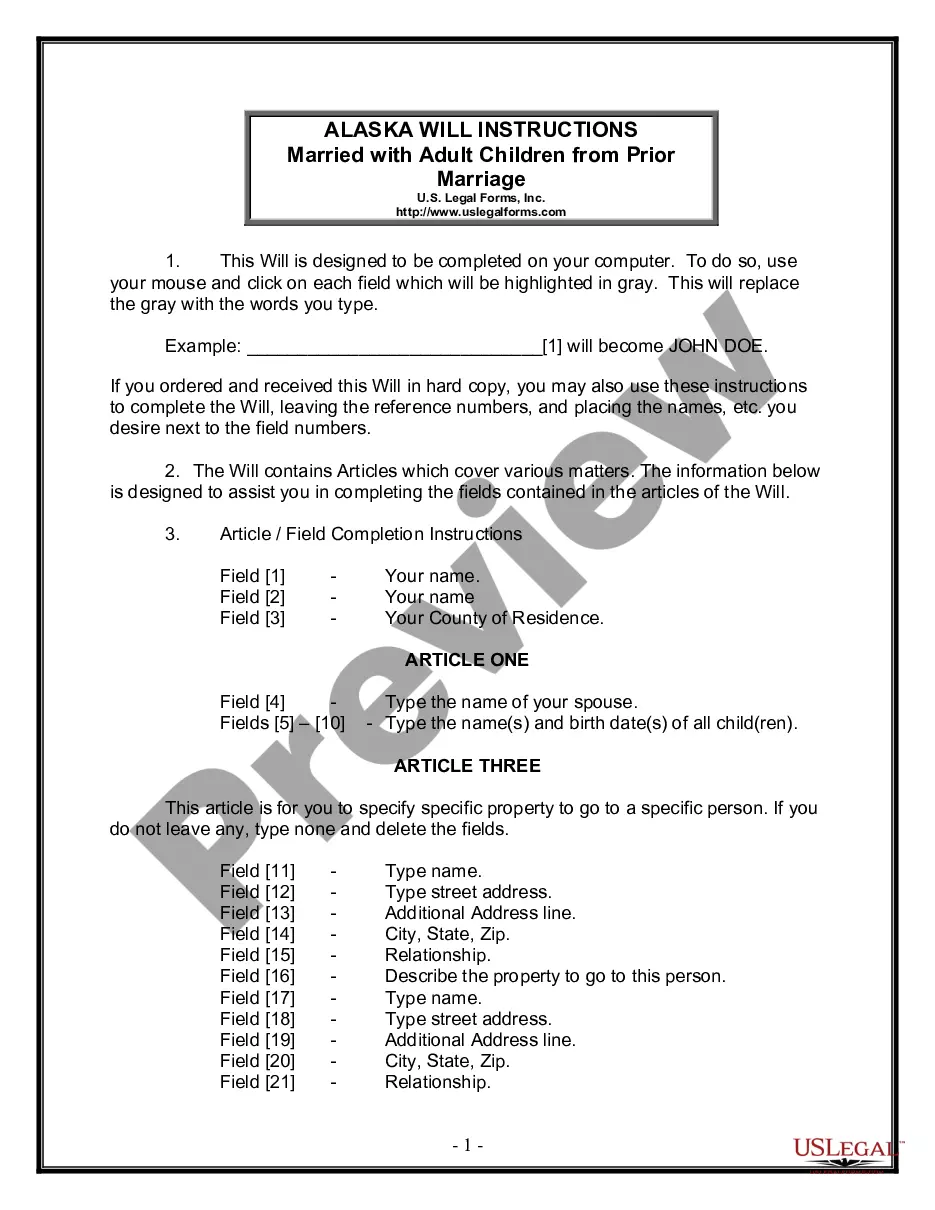
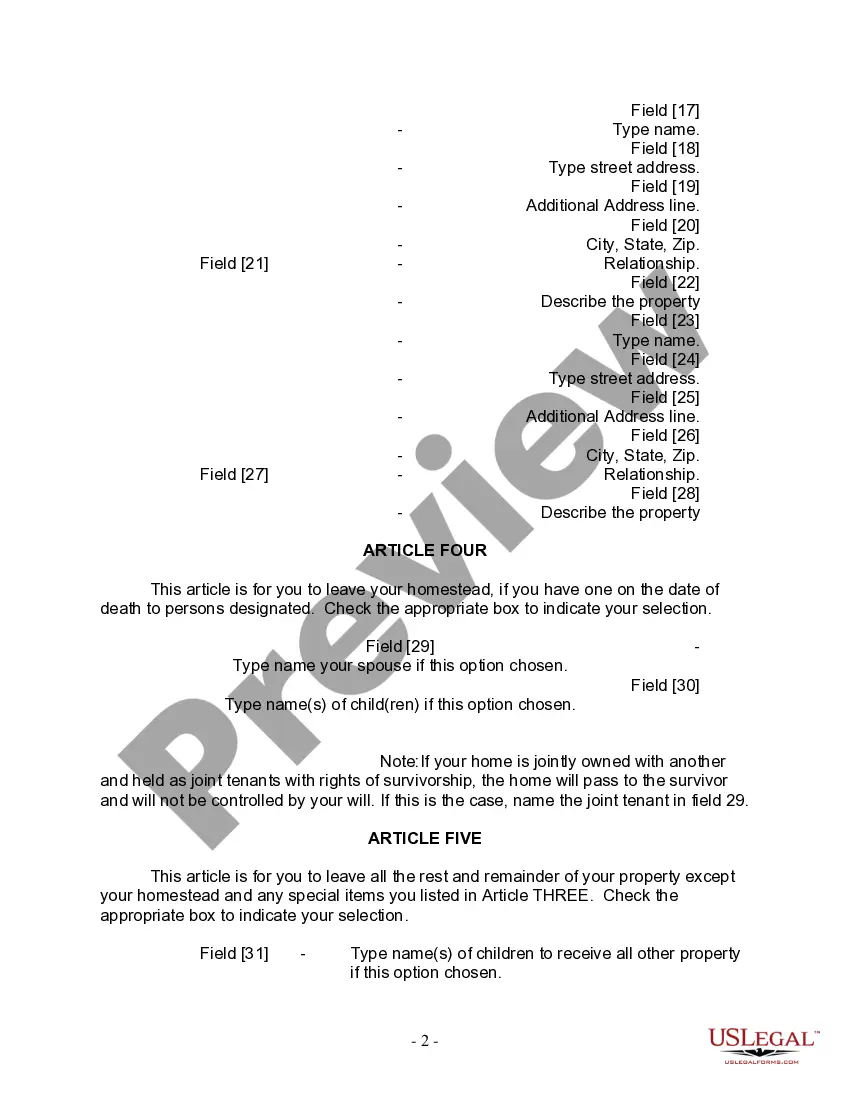
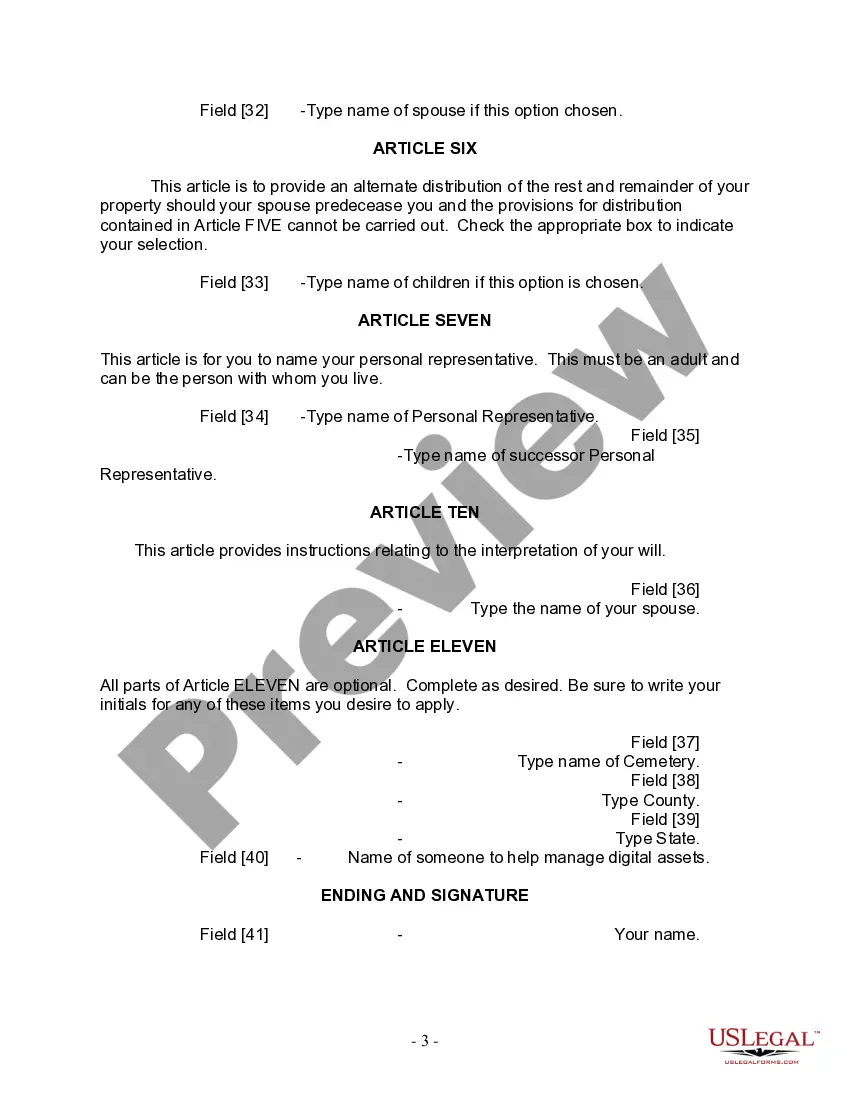
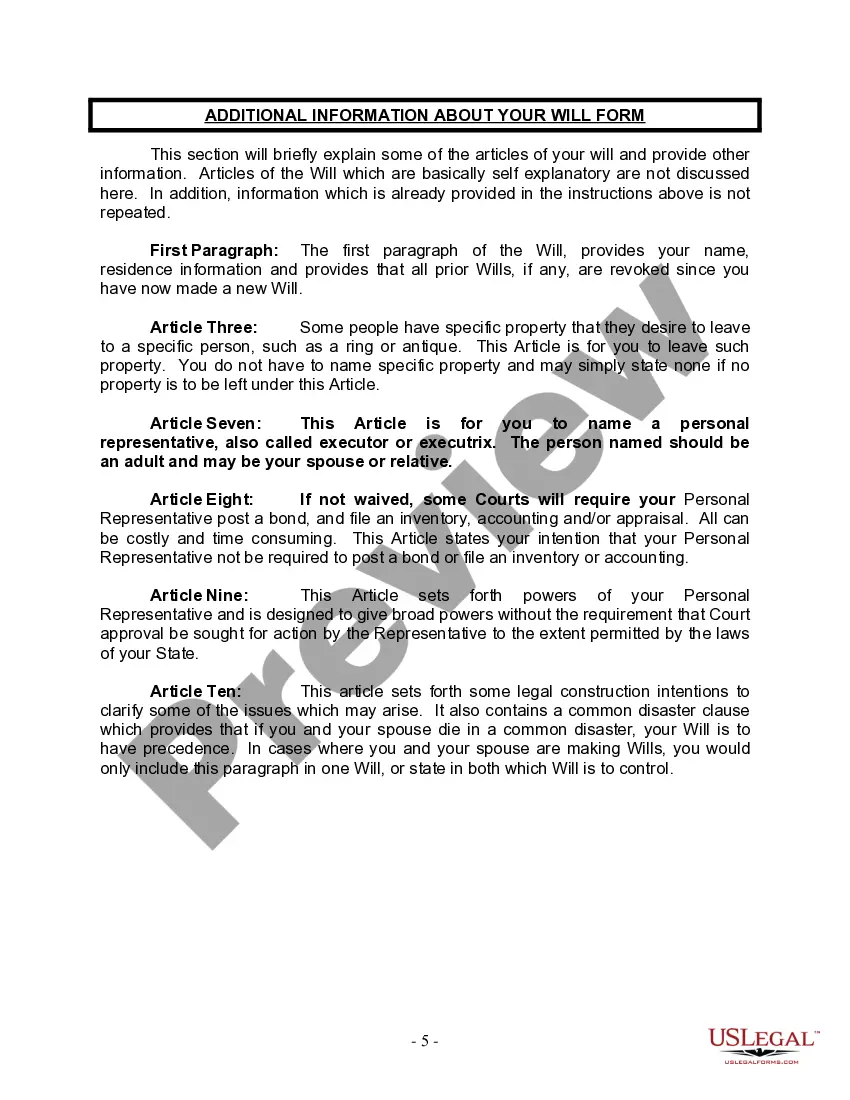
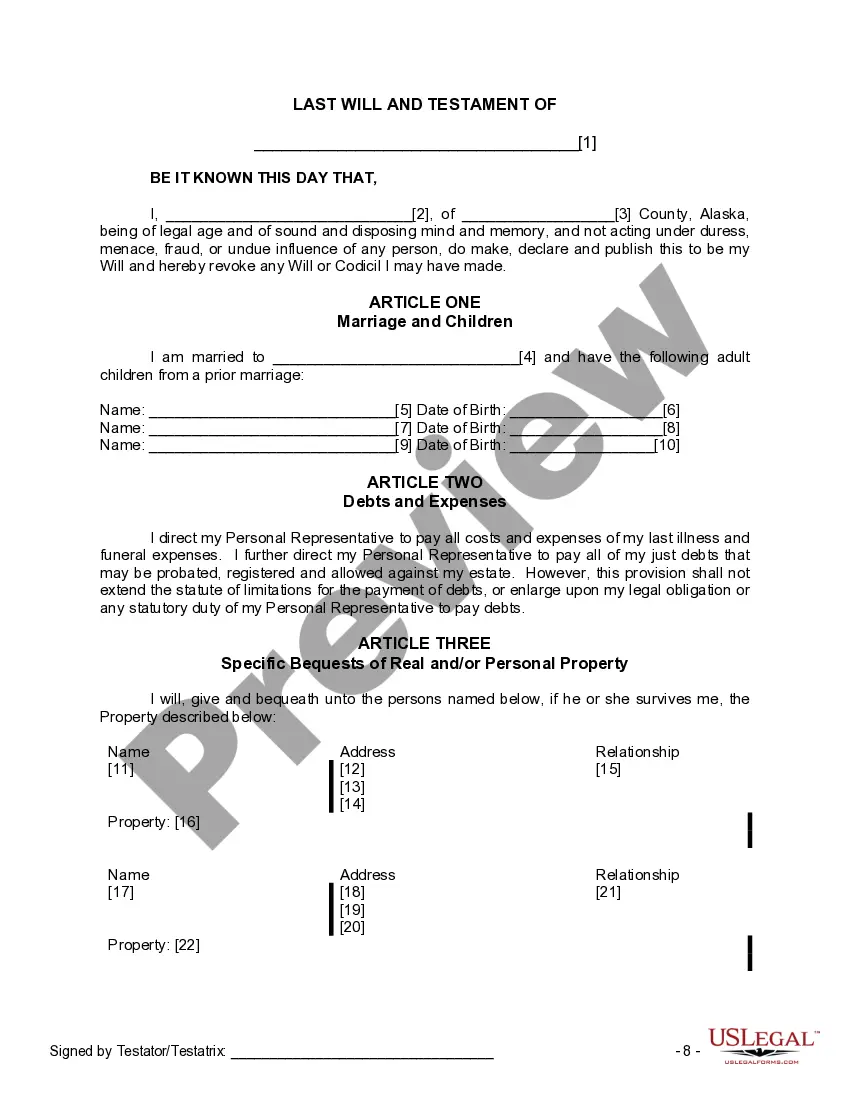
This Last Will and Testament is specifically designed for a married person with adult children from a prior marriage. It outlines how your assets will be distributed after your death, identifies a personal representative to manage your estate, and makes specific provisions for your adult children. This form is essential for ensuring your wishes are legally documented and can help avoid potential disputes among heirs.
Key components of this form
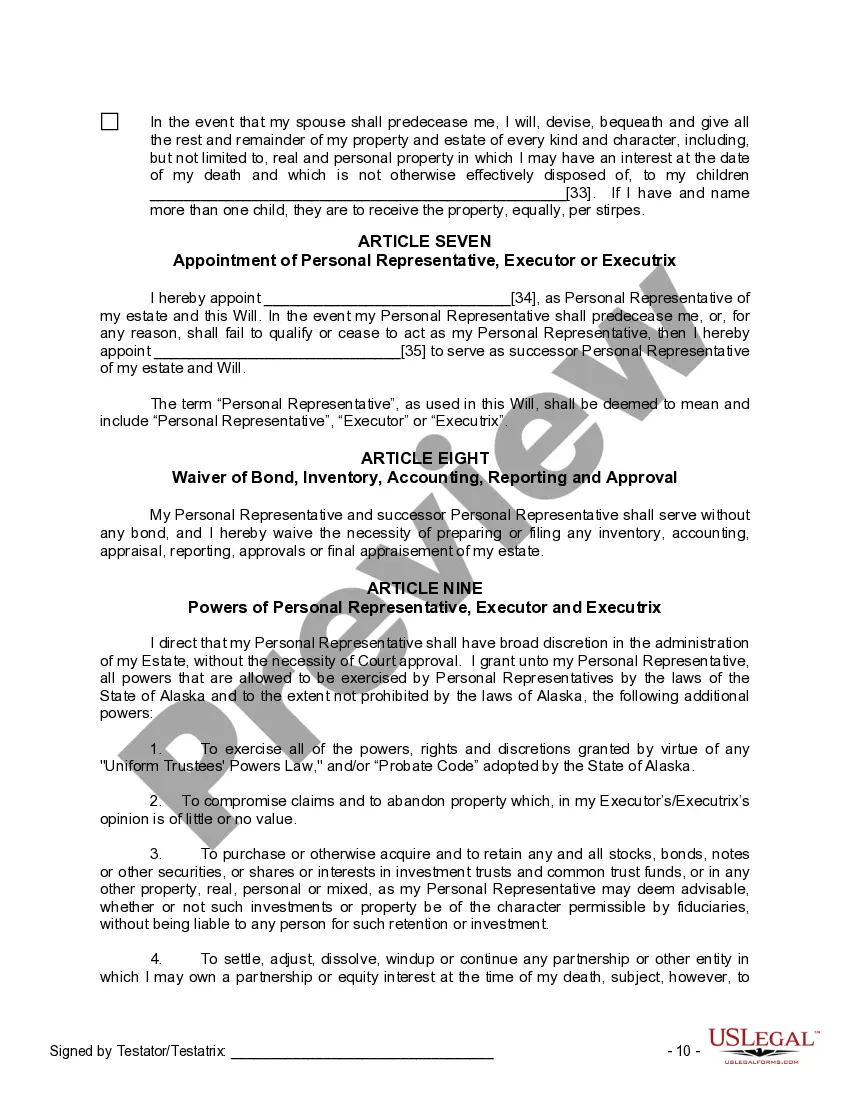
- Personal Representative: Designation of an adult to manage your estate.
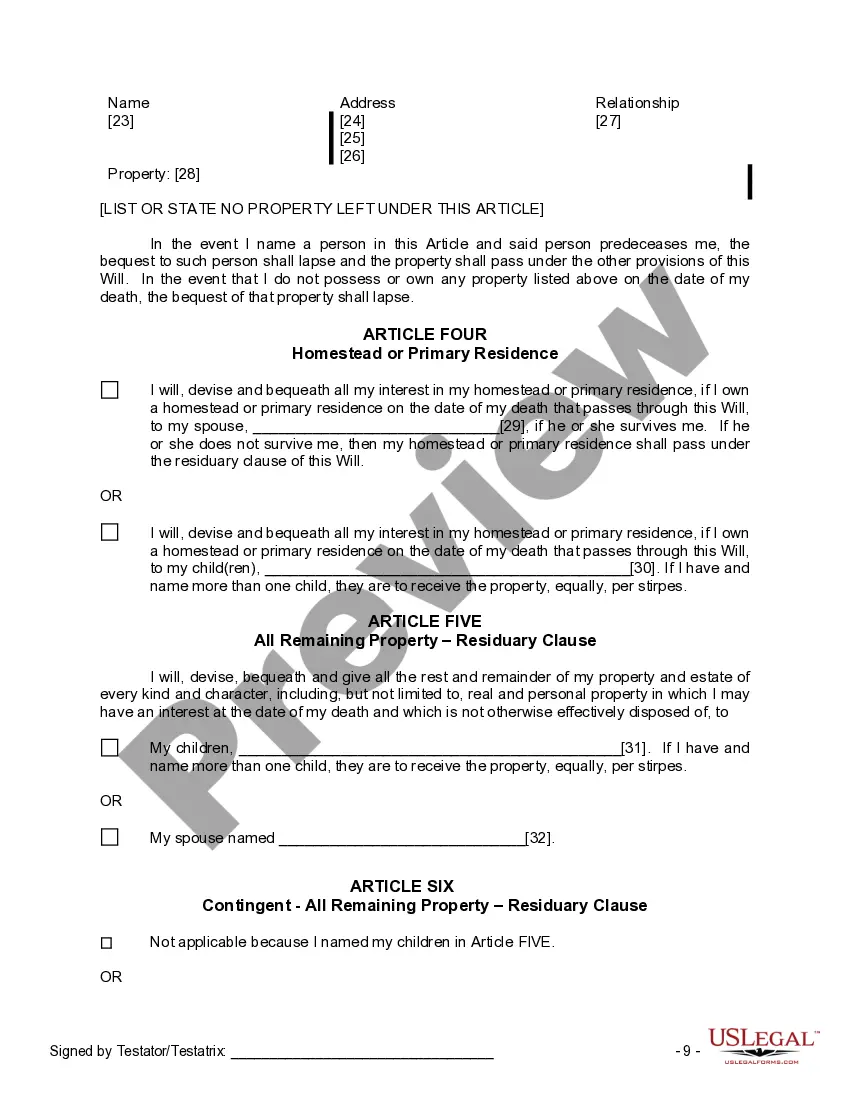
- Specific Bequests: Instructions on who receives specific property or assets.
- Residue Clause: Defines how remaining assets are to be distributed after specific bequests are fulfilled.
- Homestead Distribution: Provisions for the distribution of your primary residence.
- Witness Requirements: Information on the need for witnesses during signing.




When to use this form
This form should be used when you wish to formalize your estate plan as a married individual who has adult children from a previous marriage. It is particularly important if you want to address the needs and rights of your children while also ensuring your spouse is provided for. Utilizing this form can help avoid confusion and legal complications after your passing.
Who should use this form
- Married individuals with adult children from a prior marriage.
- People who want to outline specific wishes for their estate.
- Anyone seeking to provide clarity on asset distribution among heirs.
- Individuals wanting to designate a responsible personal representative for their estate.
Steps to complete this form
- Enter your full name and county of residence at the top of the form.
- List your spouse's name and the names and dates of birth of your adult children from your prior marriage.
- Specify any specific bequests or assets you wish to leave to identified individuals.
- Designate your personal representative, providing their full name.
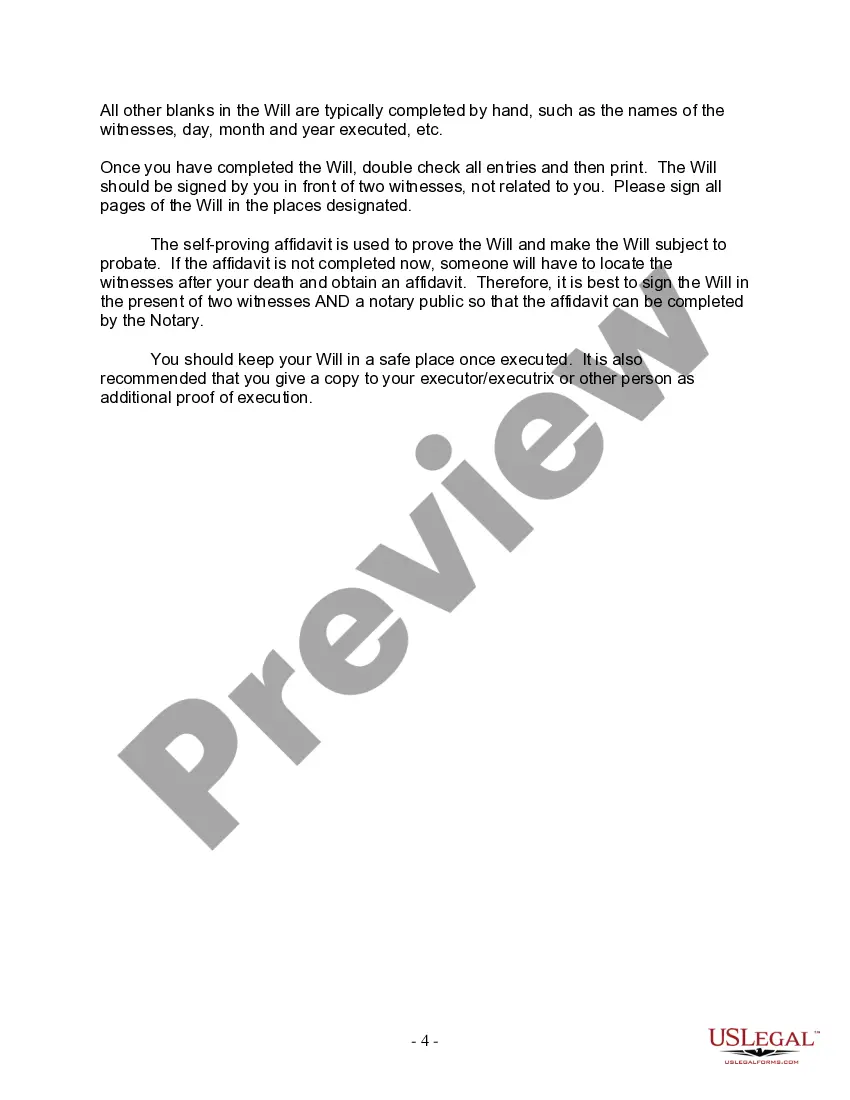
- Ensure the document is signed in the presence of two witnesses who are not beneficiaries in your will.
Is notarization required?
Yes, this form must be notarized to be legally valid. It is advisable to sign the will in the presence of a notary public to fulfill the requirements for a self-proving affidavit, which can simplify the probate process later. US Legal Forms provides easy access to online notarization for your convenience.
Get your form ready online
Our built-in tools help you complete, sign, share, and store your documents in one place.
Make edits, fill in missing information, and update formatting in US Legal Forms—just like you would in MS Word.
Download a copy, print it, send it by email, or mail it via USPS—whatever works best for your next step.
Sign and collect signatures with our SignNow integration. Send to multiple recipients, set reminders, and more. Go Premium to unlock E-Sign.
If this form requires notarization, complete it online through a secure video call—no need to meet a notary in person or wait for an appointment.
We protect your documents and personal data by following strict security and privacy standards.

Make edits, fill in missing information, and update formatting in US Legal Forms—just like you would in MS Word.

Download a copy, print it, send it by email, or mail it via USPS—whatever works best for your next step.

Sign and collect signatures with our SignNow integration. Send to multiple recipients, set reminders, and more. Go Premium to unlock E-Sign.

If this form requires notarization, complete it online through a secure video call—no need to meet a notary in person or wait for an appointment.

We protect your documents and personal data by following strict security and privacy standards.
Mistakes to watch out for
- Failing to sign the will in front of the required witnesses.
- Not specifying who will inherit particular items or property.
- Overlooking the need to update the will after major life changes, such as marriage or divorce.
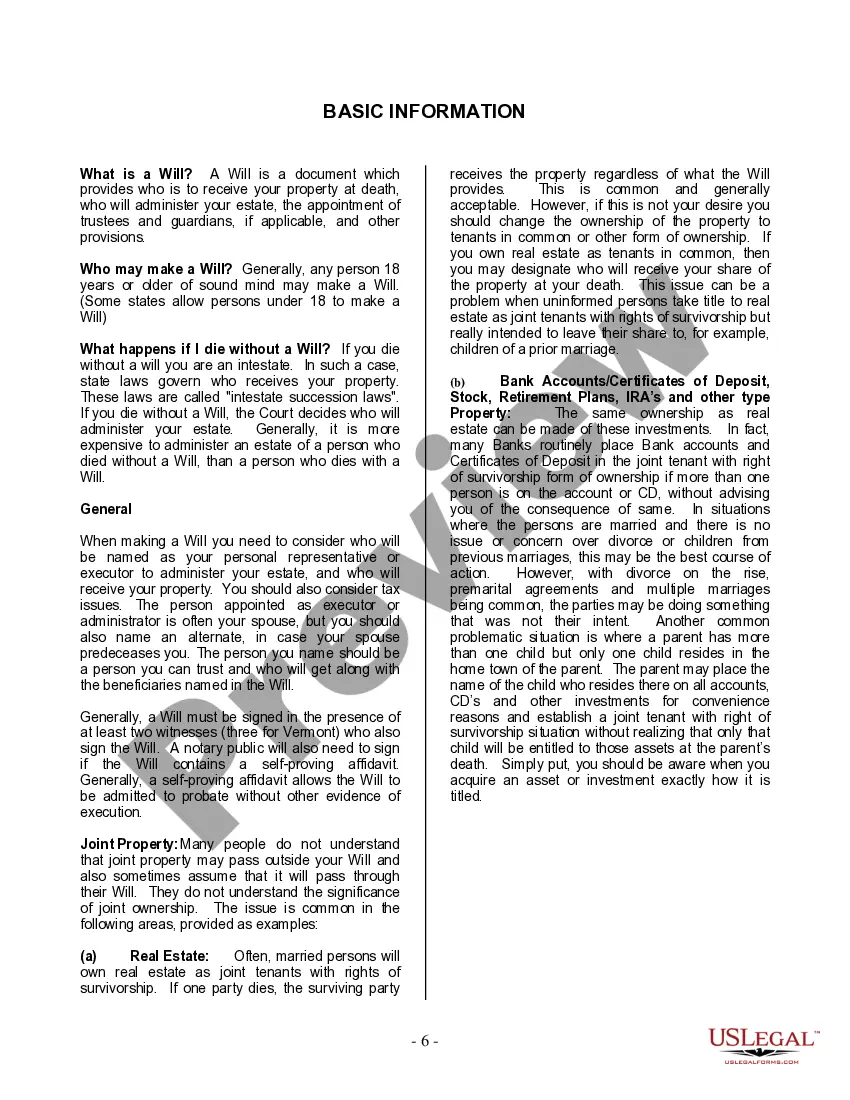
- Assuming joint property will be distributed as outlined in the will.
Why complete this form online
- Convenient: Complete the form from your home at your own pace.
- Editability: Easily make changes as your circumstances and wishes evolve.
- Reliable: Forms are drafted by licensed attorneys to ensure legal compliance.
- Secure: Your data is protected throughout the completion process.
Main things to remember
- This Last Will and Testament is particularly designed for married individuals with adult children from prior marriages.
- It outlines how assets should be distributed, ensuring clarity and reducing the potential for disputes.
- Proper execution, including notarization, is crucial to ensure the will's validity.
Looking for another form?







Form popularity
FAQ
Create the initial document. Start by titling the document Last Will and Testament" and including your full legal name and address. Designate an executor. Appoint a guardian. Name the beneficiaries. Designate the assets. Ask witnesses to sign your will. Store your will in a safe place.
A joint will is a legal document executed by two (or more) people, which merges their individual wills into a single, combined last will and testament. Like most wills, a joint will lets the will-makers name who will get their property and assets after they die. Joint wills are usually created by married couples.
Decide what property to include in your will. Decide who will inherit your property. Choose an executor to handle your estate. Choose a guardian for your children. Choose someone to manage children's property. Make your will. Sign your will in front of witnesses. Store your will safely.
Create the initial document. Start by titling the document Last Will and Testament" and including your full legal name and address. Designate an executor. Appoint a guardian. Name the beneficiaries. Designate the assets. Ask witnesses to sign your will. Store your will in a safe place.
A will is a legal document that explains how your property will be distributed after you die.Self-written wills are typically valid, even when handwritten, as long as they're properly witnessed and notarized, or proven in court. A handwritten will that is not witnessed or notarized is considered a holographic will.
In Alaska, a handwritten Will, also called a holographic Will, can be valid and enforceable. The same rules apply to handwritten Wills as apply to typed Wills, except with respect to the witness requirement.
Include personal identifying information. Include a statement about your age and mental status. Designate an executor. Decide who will take care of your children. Choose your beneficiaries. List your funeral details. Sign and date your Last Will and Testament.
A. You don't have to have a lawyer to create a basic will you can prepare one yourself. It must meet your state's legal requirements and should be notarized.A do-it-yourself will that's poorly drafted can save you money but create a mess for your heirs when you're gone.
For example, California requires that all sections of the will necessary to make the will valid must be written entirely by hand and that the person writing the will must sign it. If these state rules aren't followed, the holographic will won't be valid.