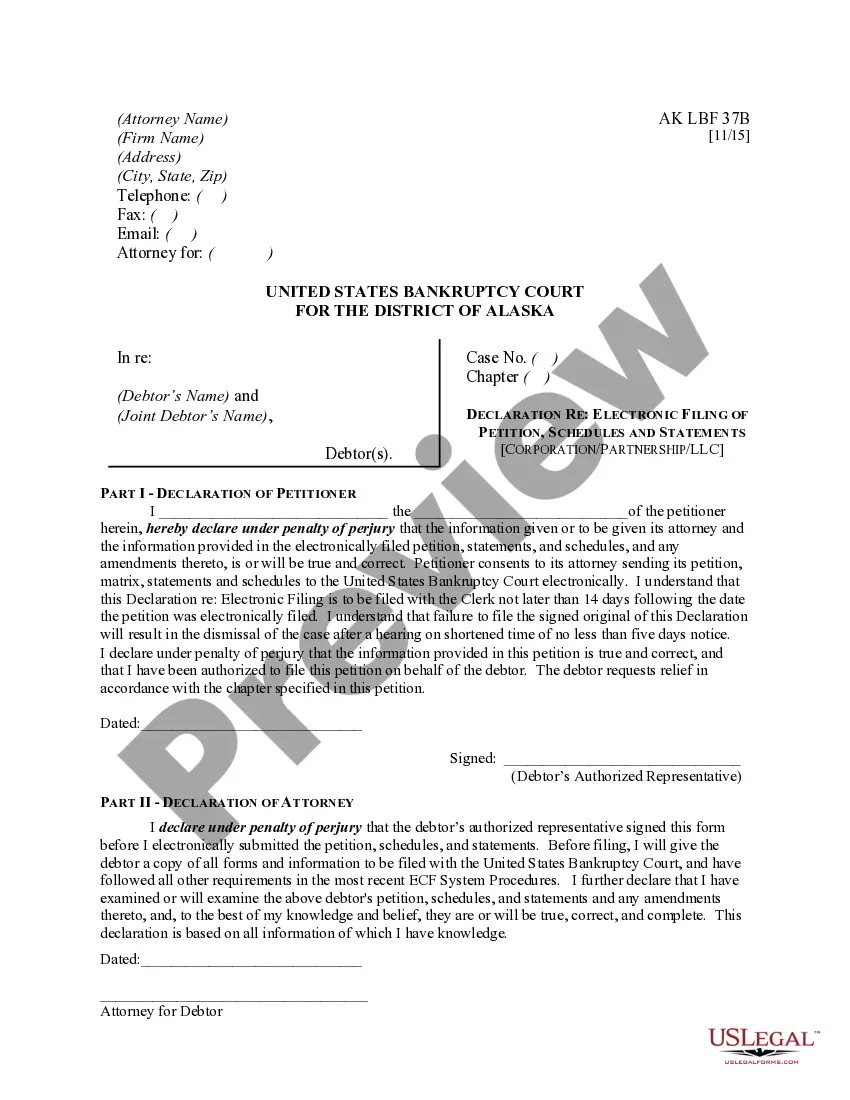
Alaska Letter from Landlord to Tenant for Failure to use electrical, plumbing, sanitary, heating, ventilating, air conditioning and other facilities in a reasonable manner
About this form
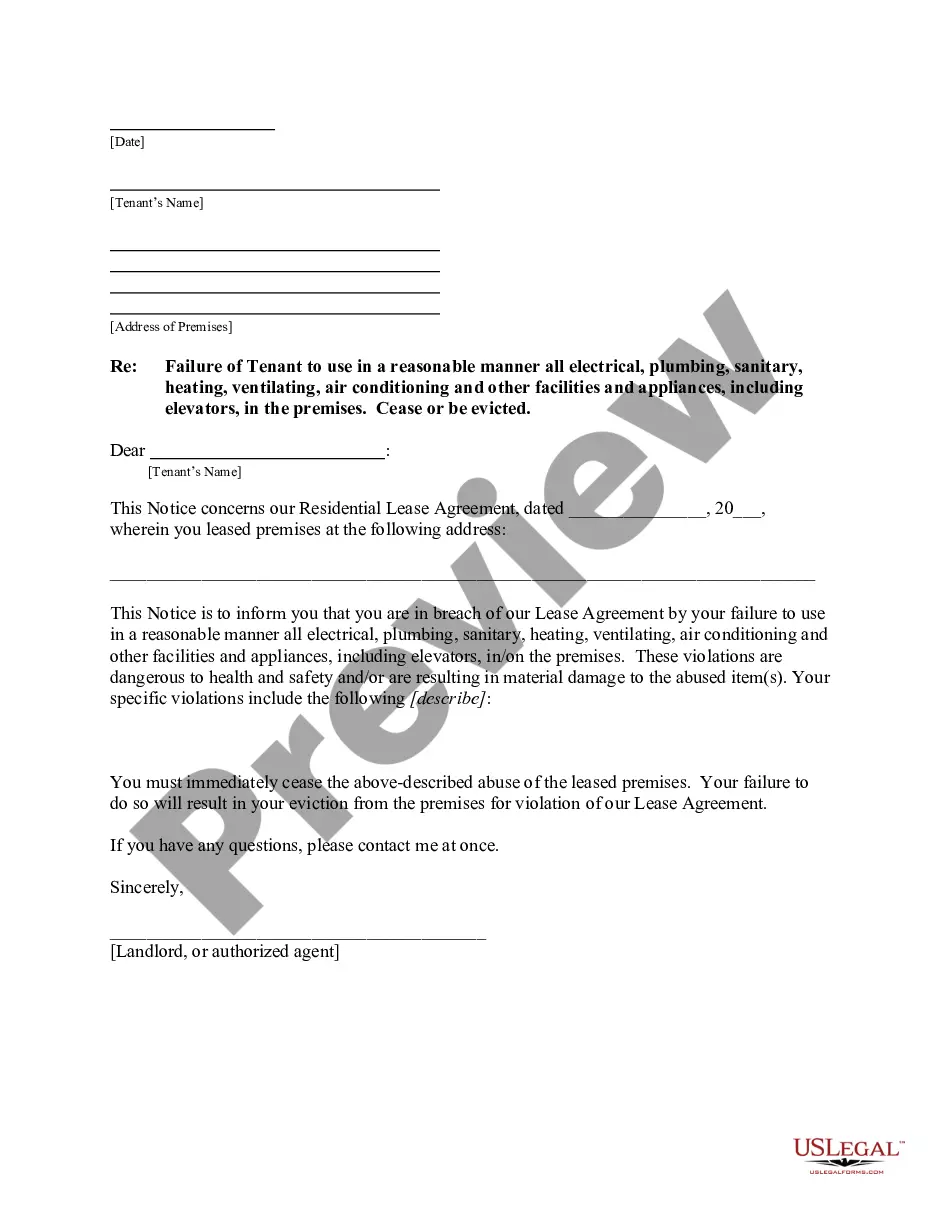
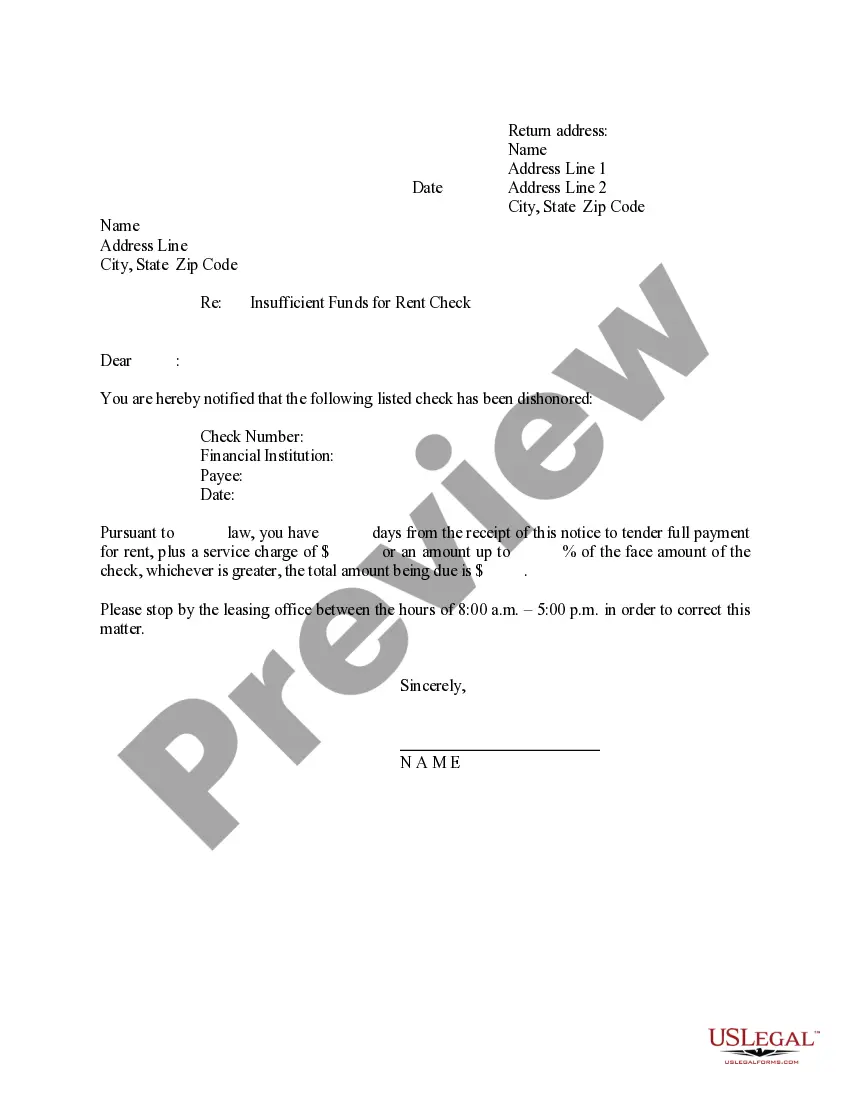
This form is a notice from a landlord to a tenant addressing the tenant's failure to properly use essential utilities and facilities, such as electrical, plumbing, and heating systems. It serves as a warning that continued improper use may lead to eviction. Unlike regular notices for lease violations, this form specifically targets misuse of facilities and appliances required for safe living conditions.
What’s included in this form
- Identifying information: Includes the landlord's name and contact details, and the tenant's name and address.
- Description of the issue: Specifies the failures in using utilities and facilities in a reasonable manner.
- Notice period: Provides a timeline for the tenant to rectify the issue before further action is taken.
- Consequences of continued failure: Clearly states that repeated misuse may lead to eviction.
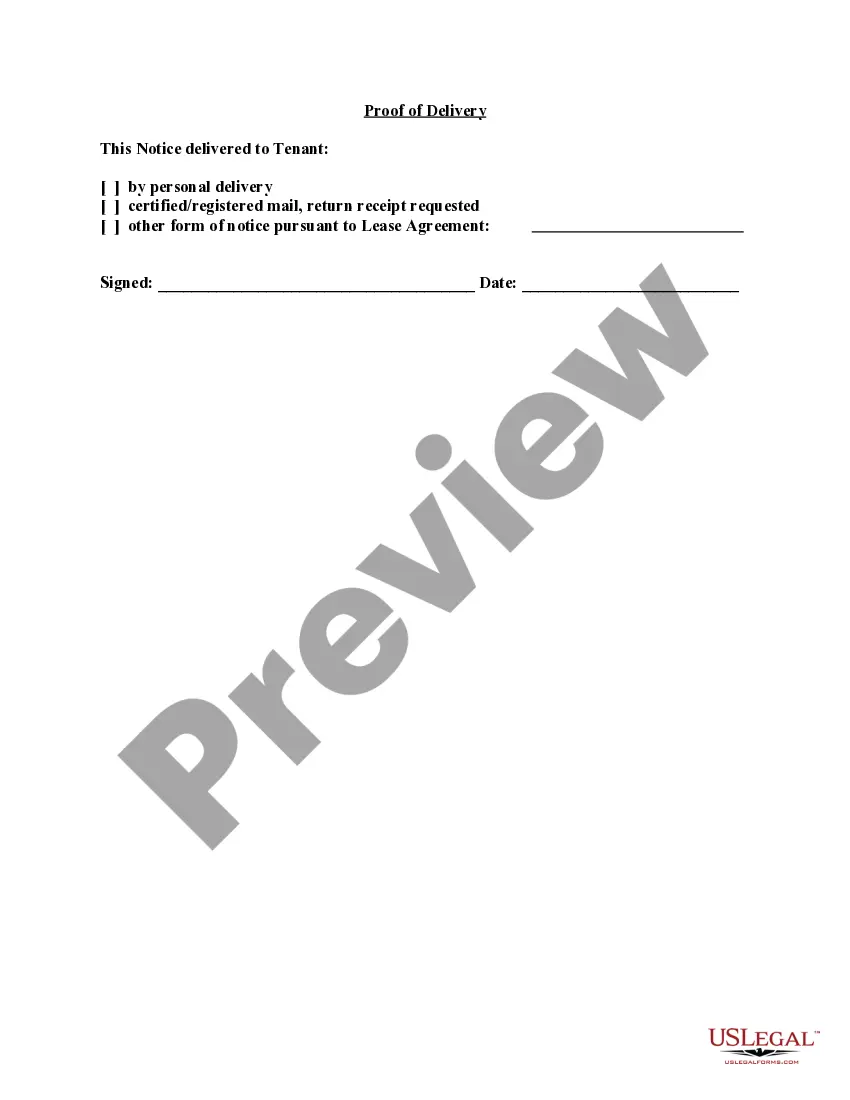
- Proof of delivery: Documents the method of delivering the notice to ensure proper communication.


When to use this document
This form should be used when a tenant fails to use essential utilities and facilities appropriately, as outlined in the lease agreement. Common scenarios include excessive disruptions caused by neglecting heating or plumbing systems or improper usage of electrical appliances that could lead to damage or safety hazards. If a landlord has previously addressed the issue informally and wishes to take formal action, this form serves as a necessary next step.
Who this form is for
- Landlords who have tenants renting a residential property.
- Property managers acting on behalf of landlords.
- Legal representatives assisting landlords in managing lease agreements.
- Individuals who own rental properties and require tenants to adhere to terms of use for utilities and facilities.
How to complete this form
- Identify the parties: Enter the names and contact information of the landlord and tenant.
- Describe the issue: Clearly state the specific failures in the usage of facilities and appliances.
- Specify the notice period: Indicate how long the tenant has to rectify the situation before further actions occur.
- Sign the document: The landlord or authorized agent should sign and date the form to validate it.
- Document delivery: Choose the method of notice delivery, either personal delivery or certified/registered mail.
Does this document require notarization?
Notarization is generally not required for this form. However, certain states or situations might demand it. You can complete notarization online through US Legal Forms, powered by Notarize, using a verified video call available anytime.
Get your form ready online
Our built-in tools help you complete, sign, share, and store your documents in one place.
Make edits, fill in missing information, and update formatting in US Legal Forms—just like you would in MS Word.
Download a copy, print it, send it by email, or mail it via USPS—whatever works best for your next step.
Sign and collect signatures with our SignNow integration. Send to multiple recipients, set reminders, and more. Go Premium to unlock E-Sign.
If this form requires notarization, complete it online through a secure video call—no need to meet a notary in person or wait for an appointment.
We protect your documents and personal data by following strict security and privacy standards.

Make edits, fill in missing information, and update formatting in US Legal Forms—just like you would in MS Word.

Download a copy, print it, send it by email, or mail it via USPS—whatever works best for your next step.

Sign and collect signatures with our SignNow integration. Send to multiple recipients, set reminders, and more. Go Premium to unlock E-Sign.

If this form requires notarization, complete it online through a secure video call—no need to meet a notary in person or wait for an appointment.

We protect your documents and personal data by following strict security and privacy standards.
Common mistakes
- Failing to provide complete identifying information for both parties.
- Not clearly articulating the specific instances of improper use.
- Overlooking the notice period requirement specific to the jurisdiction.
- Neglecting to sign the document before delivery.
- Using an incorrect method of delivery, which may affect the notice's legal standing.
Benefits of using this form online
- Convenience: Easily fill out and download the form from any device.
- Editability: Customize the document to fit specific circumstances of the lease agreement.
- Reliability: Access templates drafted by licensed attorneys, ensuring compliance with legal standards.
Legal use & context
- This form serves as documentation of the landlord's notice to the tenant.
- It can be used as evidence in court if the eviction process becomes necessary.
- Failure to properly issue this notice may impact the enforceability of eviction proceedings.
Main things to remember
- This form allows landlords to formally address tenant misuse of essential facilities.
- It specifies the consequences of continued failure to comply with rental terms.
- Complete and accurate completion is essential to enforceability.
Looking for another form?


Form popularity
FAQ
Indiana. Indiana laws allow landlords to hold on to security deposits for 45 days to give them time to determine any damages caused by tenants. Colorado. Colorado is one of few states that allow landlords to access the rental property without an advance notice requirement. Georgia.
Vermont ranked first among the renter-friendly states, followed closely by Delaware and Hawaii who were tied for second place. Rhode Island, Arizona, D.C., Maine and Alaska Statutes also seem to take good care of their renters according to our analysis.
In some circumstances, a tenant can break a fixed-term agreement early without penalty. A tenant can give 14 days' written notice to end an agreement early without penalty if: they have accepted an offer of social housing (e.g. from DCJ Housing)
When there is no lease agreement (like in the case of weekly rentals), you can instead use the Alaska Notice to Vacate to inform the other party in advance that you wish to end the tenancy agreement and vacate the premises.
Indiana. Indiana laws allow landlords to hold on to security deposits for 45 days to give them time to determine any damages caused by tenants. Colorado. Colorado is one of few states that allow landlords to access the rental property without an advance notice requirement. Georgia.
Alaska state law limits how much a landlord can charge for a security deposit (two months' rent, unless the monthly rent exceeds $2,000), when it must be returned (within 14 days after a tenant moves if the tenant has given proper notice to end the tenancy or 30 days if the tenant has not), and sets other restrictions
In all states, a landlord can enter the property in an emergency without notice or permission.Even if your landlord gives you notice, he or she must have a good reason to enter the property. In most cases, your landlord can enter your home: In an emergency.
Fails to pay rent; Violates a clause in the lease or rental agreement; Violates a responsibility imposed by law.
Give the landlord/agent a written termination notice and vacate move out and return the keys according to your notice, and/or. apply to the NSW Civil & Administrative Tribunal (NCAT) for a termination order.