Washington Partial Release of Property From Deed of Trust for Individual
About this form
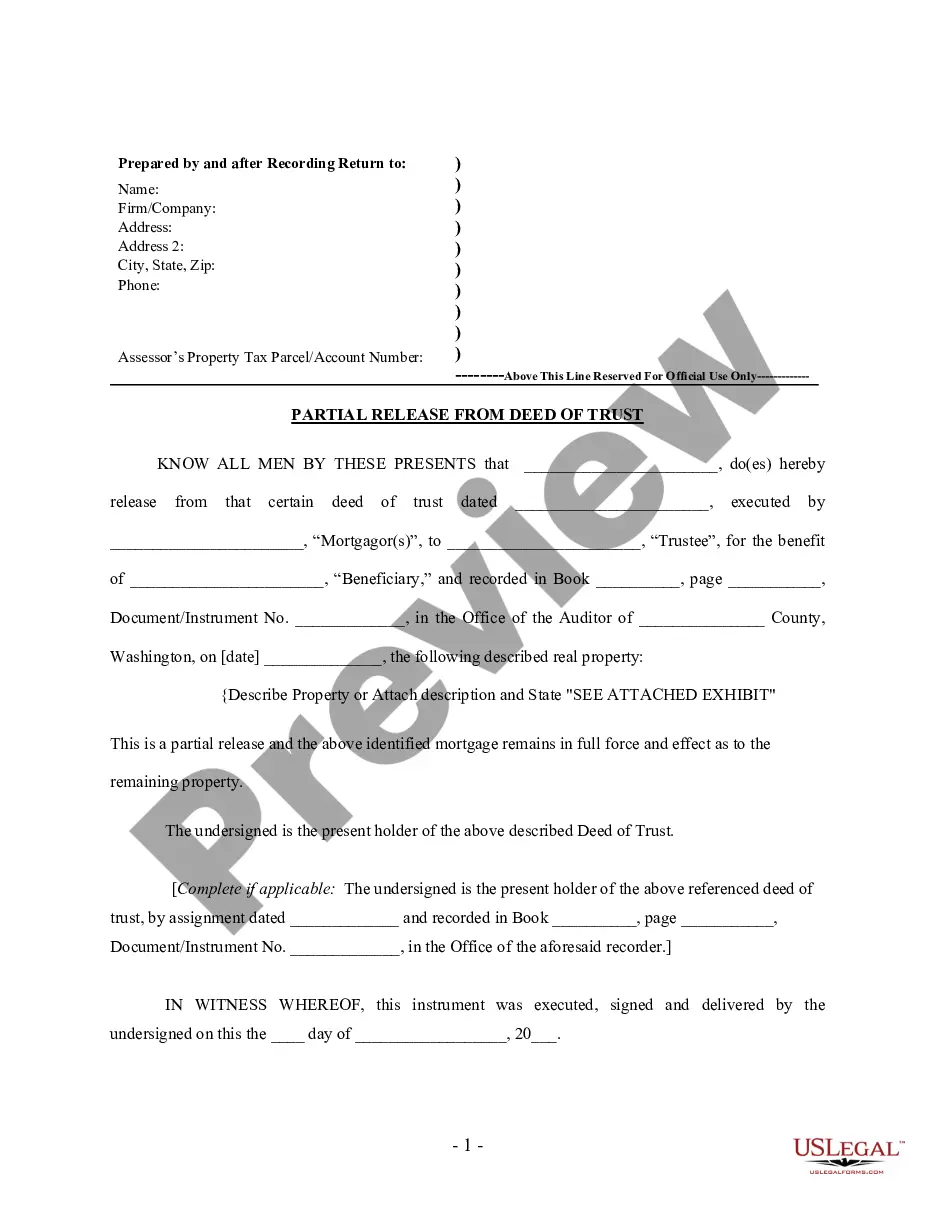
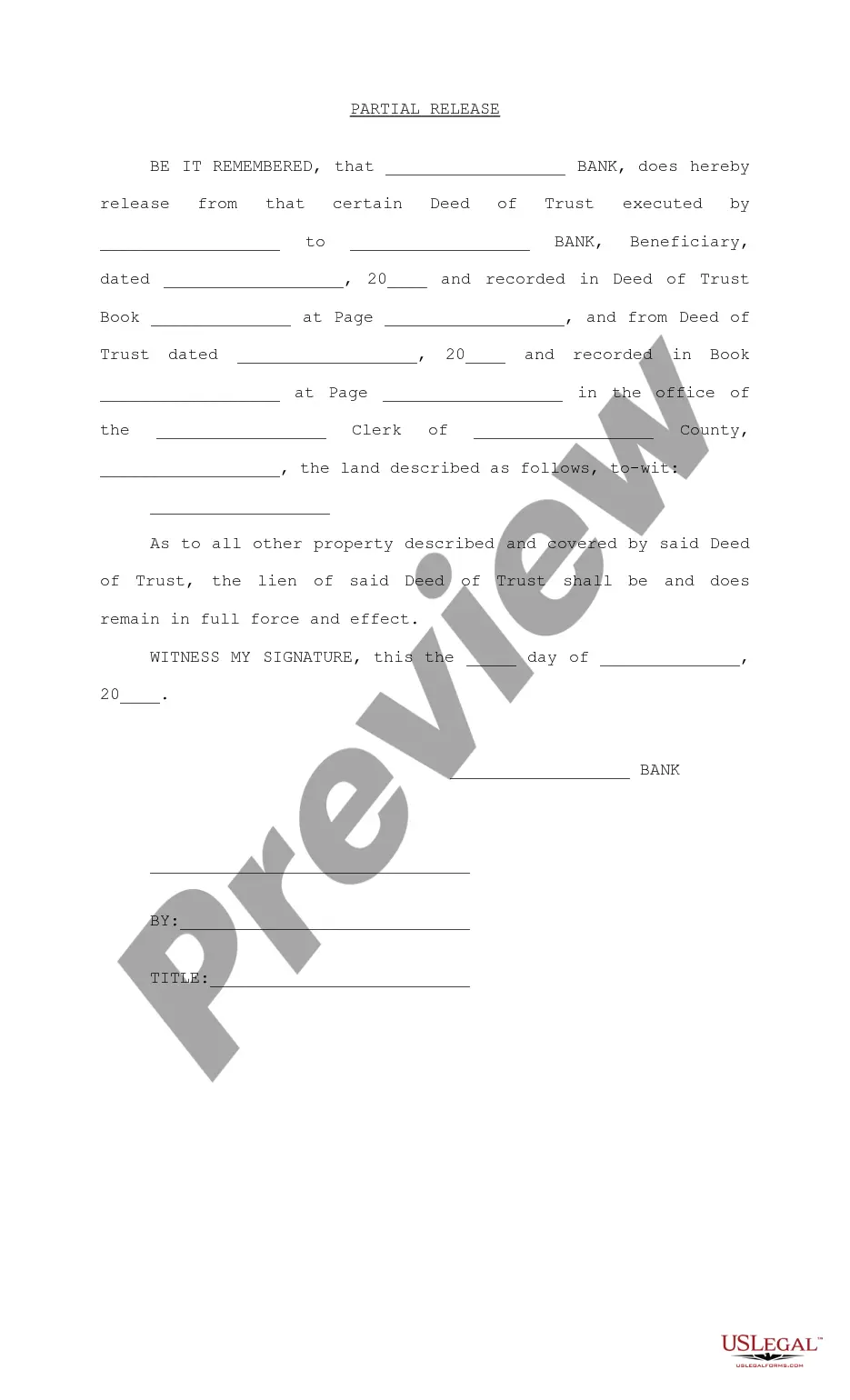
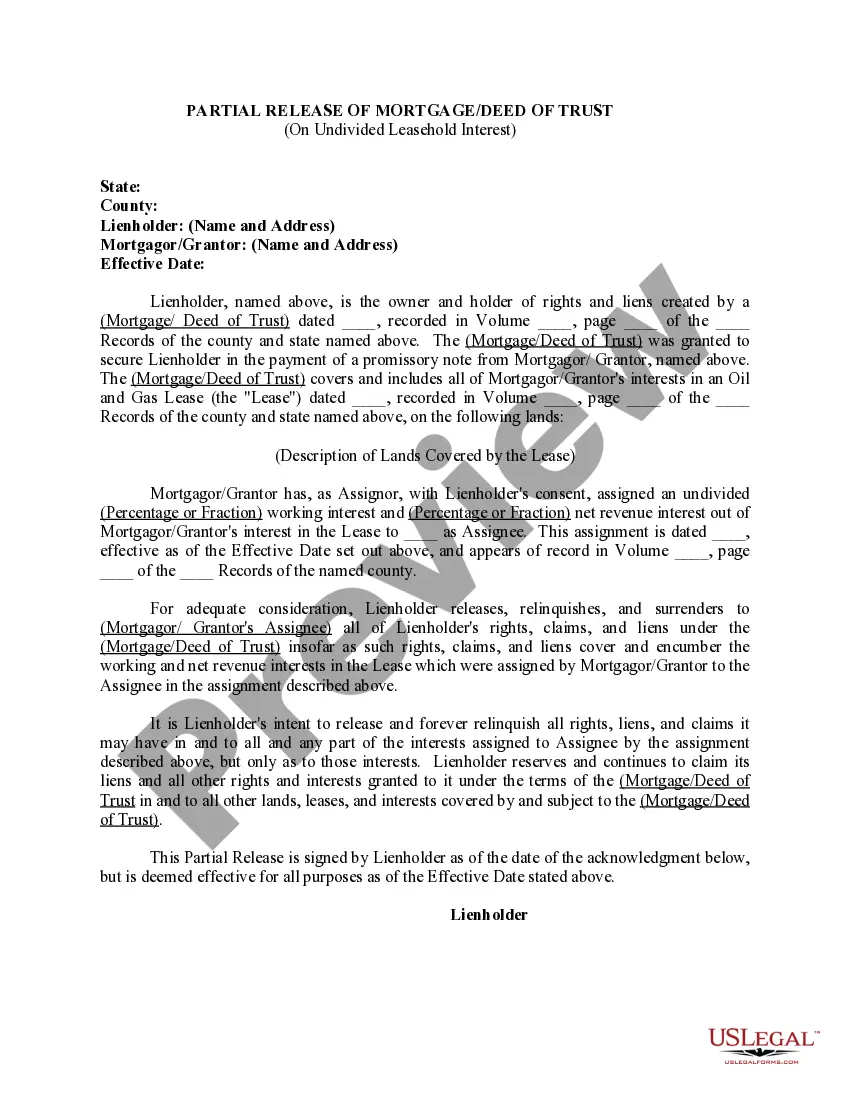
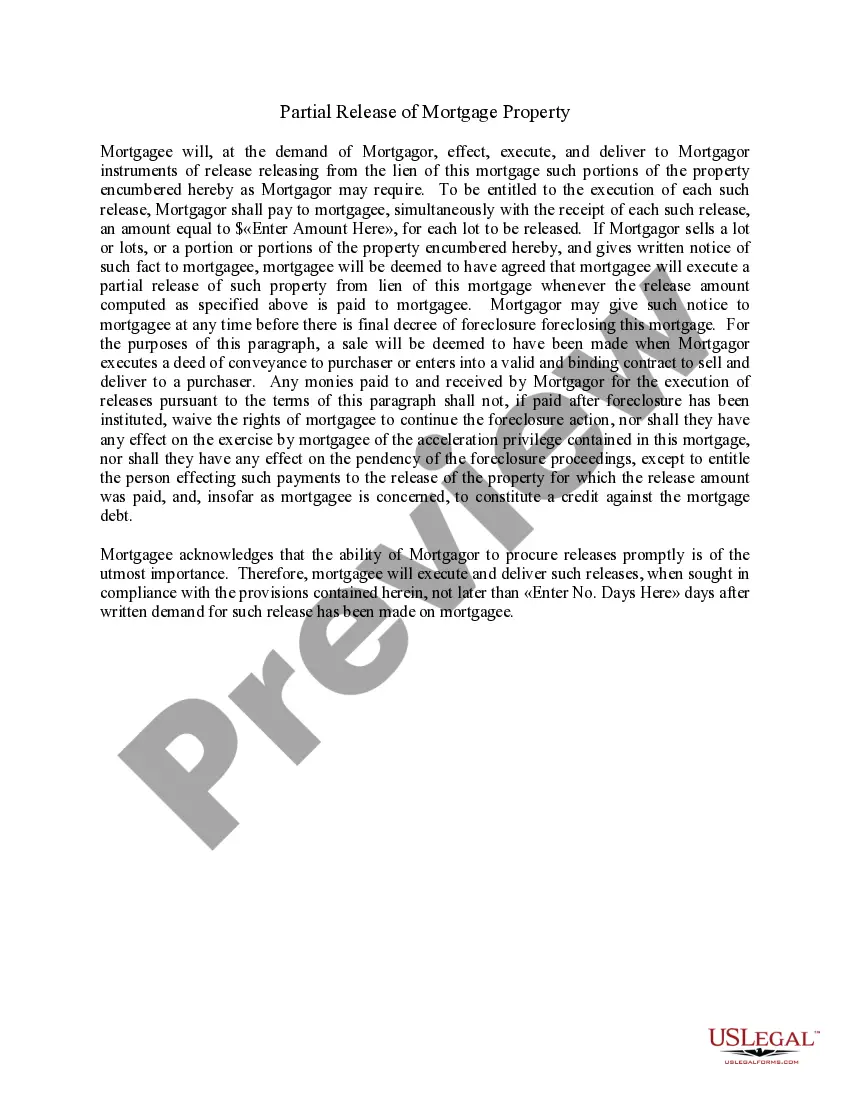
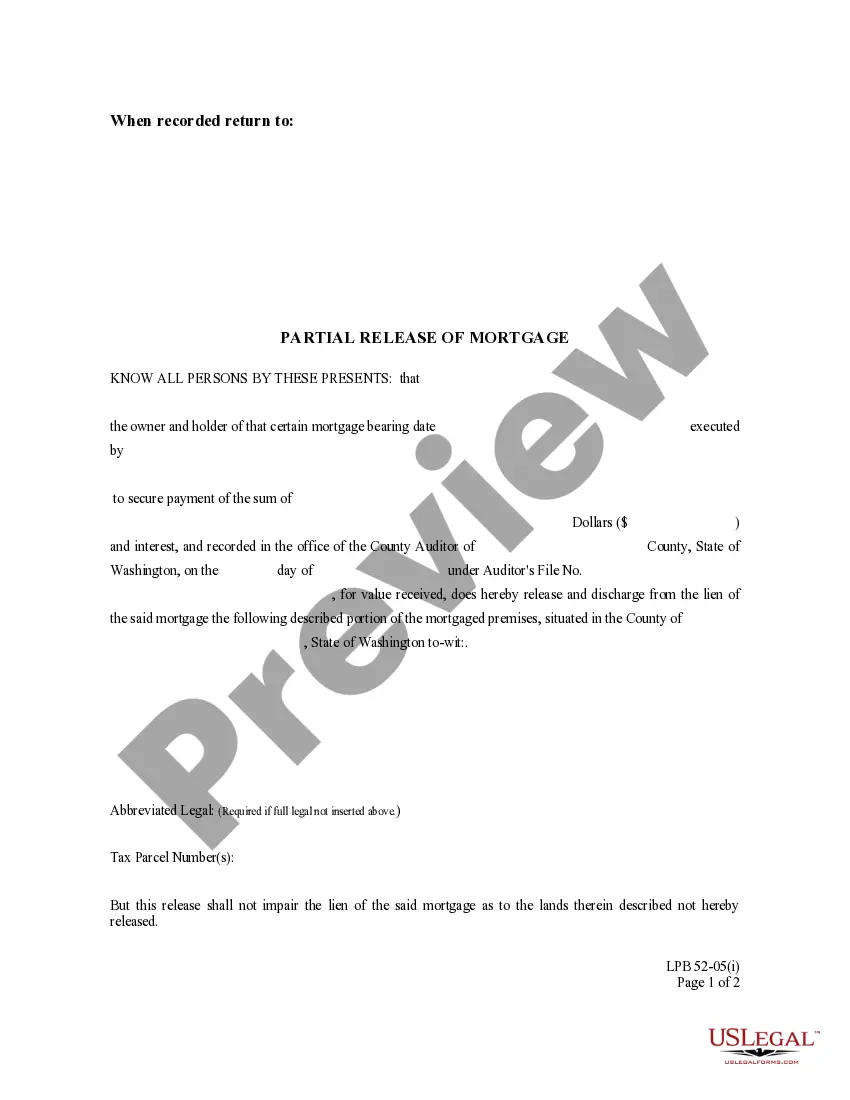
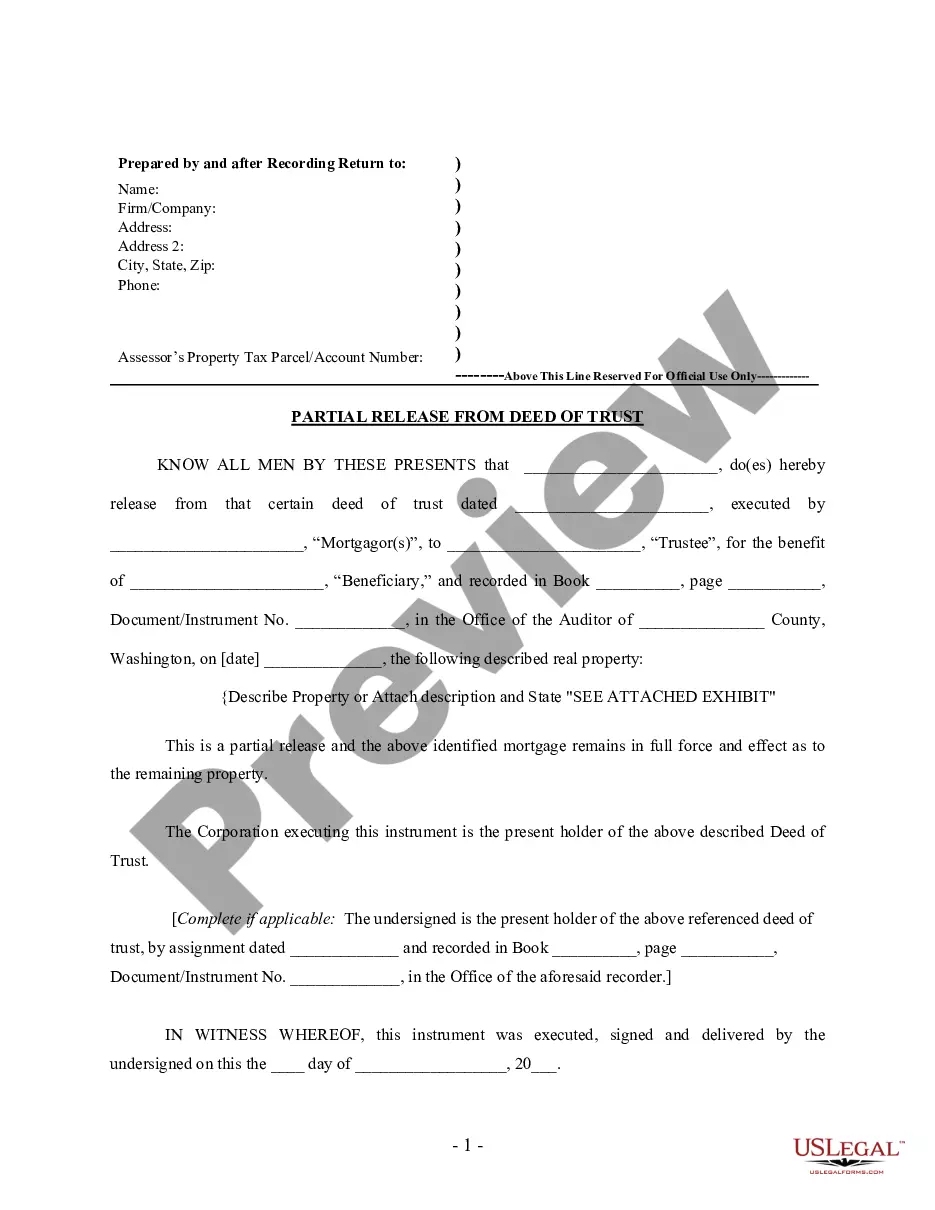
This Partial Release of Property From Deed of Trust for Individual form allows a holder of a deed of trust or mortgage to release a portion of the property that was originally secured. This process asserts that the original deed of trust or mortgage will still remain effective for the rest of the property, distinguishing it from a full release, which would discharge the entire obligation.
Key components of this form
- Property description section: Specify the real property being released or attach a detailed description.
- Statement of partial release: Affirms that the mortgage remains effective for the unreleased property.
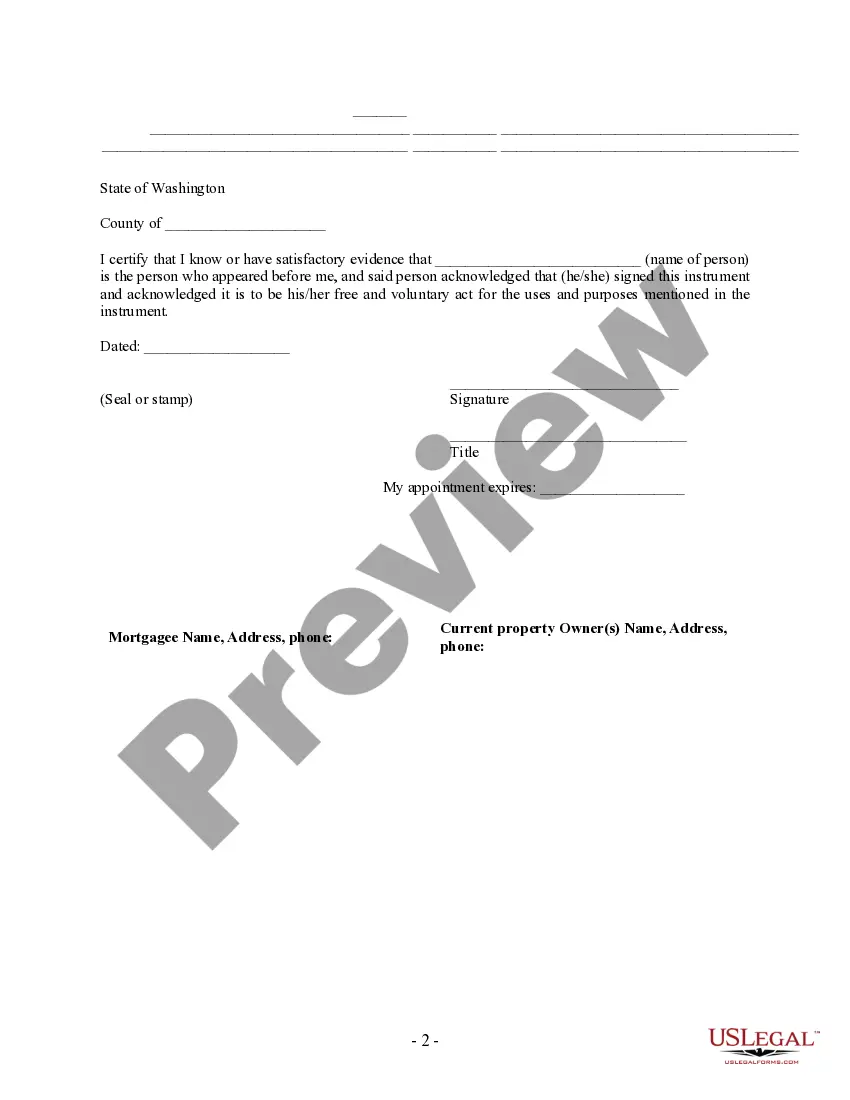
- Signature block: Area for the current holder of the deed of trust to sign and date the document.
- Notary acknowledgment: Verification that the signer is who they claim to be, done in the presence of a notary public (if applicable).
When to use this document
This form is used when the holder of a mortgage or deed of trust wishes to release part of the secured property but maintain the lien on the remaining property. Situations include a homeowner selling part of their land, refinancing a portion of their mortgage, or during a property division in a divorce.
Who this form is for
- Mortgage holders looking to release a portion of property.
- Homeowners wanting to sell a part of their land.
- Individuals involved in property division proceedings.
- Real estate professionals assisting clients with partial property releases.
Steps to complete this form
- Identify the property: Clearly describe the property being partially released or attach an exhibit.
- State the remaining mortgage: Confirm that the deed of trust remains effective for the remaining property.
- Complete holder information: Fill in details regarding the current holder of the deed of trust, including any assignment references.
- Sign the document: Ensure the holder signs and dates the form in the appropriate section.
- Notarize if necessary: Have the form notarized to confirm the identity of the signer, if required by law.
Is notarization required?
This form does not typically require notarization unless specified by local law. However, notarization may enhance the document's credibility and enforceability.
Get your form ready online
Our built-in tools help you complete, sign, share, and store your documents in one place.
Make edits, fill in missing information, and update formatting in US Legal Forms—just like you would in MS Word.
Download a copy, print it, send it by email, or mail it via USPS—whatever works best for your next step.
Sign and collect signatures with our SignNow integration. Send to multiple recipients, set reminders, and more. Go Premium to unlock E-Sign.
If this form requires notarization, complete it online through a secure video call—no need to meet a notary in person or wait for an appointment.
We protect your documents and personal data by following strict security and privacy standards.

Make edits, fill in missing information, and update formatting in US Legal Forms—just like you would in MS Word.

Download a copy, print it, send it by email, or mail it via USPS—whatever works best for your next step.

Sign and collect signatures with our SignNow integration. Send to multiple recipients, set reminders, and more. Go Premium to unlock E-Sign.

If this form requires notarization, complete it online through a secure video call—no need to meet a notary in person or wait for an appointment.

We protect your documents and personal data by following strict security and privacy standards.
Common mistakes to avoid
- Failing to provide an accurate description of the property being released.
- Not including the required signatures or dates.
- Overlooking notarization requirements, if applicable.
- Neglecting to verify that the correct deed of trust reference is included.
Advantages of online completion
- Convenience: Easily download and complete the form from home.
- Editability: Fill out the form digitally, reducing the risk of errors.
- Reliability: Access professionally drafted templates created by licensed attorneys.
Summary of main points
- This form allows for the partial release of a property from a deed of trust.
- It is essential for maintaining the integrity of the remaining collateral.
- Proper completion ensures legal enforceability of property transactions.
Looking for another form?
Form popularity
FAQ
Sign the deed of trust form in the presence of a notary. You'll have to provide your identification to the notary with a federally issued photo ID such as a Washington driver's license or military ID card. Once you sign the deed in front of the notary, the notary will then notarize the form.
Whether you have a deed of trust or a mortgage, they both serve to assure that a loan is repaid, either to a lender or an individual person. A mortgage only involves two parties the borrower and the lender. A deed of trust adds an additional party, a trustee, who holds the home's title until the loan is repaid.
Party information: names and addresses of the trustor(s), trustee(s), beneficiary(ies), and guarantor(s) (if applicable) Property details: full address of the property and its legal description (which can be obtained from the County Recorder's Office)
Some owners are put off using solicitors duke to the deed of trust cost. Individuals can write out their own, and use someone else as a witness. However, this may have errors or not be a legally binding document. The investment of getting a deed of trust when buying a property is often worth it in the long term.
A deed of trust acts as an agreement between youthe homebuyerand your lender. It states not just that you'll repay the loan, but that a third party called the trustee will hold legal title to the property until you do. A deed of trust is the security for your loan, and it's recorded in the public records.
In financed real estate transactions, trust deeds transfer the legal title of a property to a third partysuch as a bank, escrow company, or title companyto hold until the borrower repays their debt to the lender. Trust deeds are used in place of mortgages in several states.
When you are ready to sign a deed of trust, the parties will need to sign in the presence of a notary public.The deed of trust must then be recorded with the county where the property is located, and each of the parties (the trustor, trustee, and lender) should keep a copy of the recorded document.
As you stated in your question, it is recorded among the land records, and your lender keeps the original. When you pay off the loan, the lender will return the deed of trust with the promissory note. This document is rather lengthy and quite legalistic.
A deed of trust (DOT), is a document that conveys title to real property to a trustee as security for a loan until the grantor (borrower) repays the lender according to terms defined in an attached promissory note. This process is called a Trustee Sale.