Virginia 30 Day Notice of Material Noncompliance - 21 Days to Remedy - Residential
Understanding this form
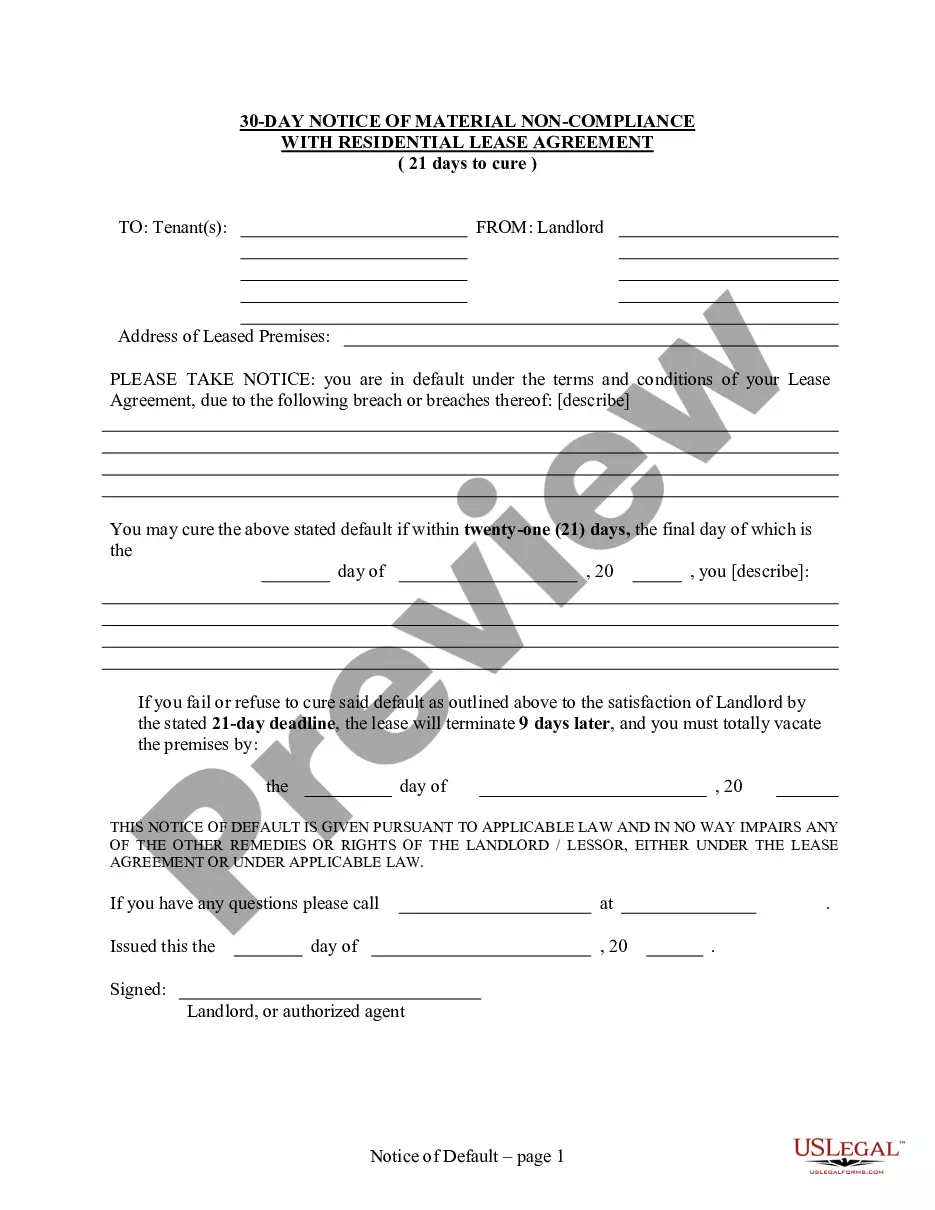
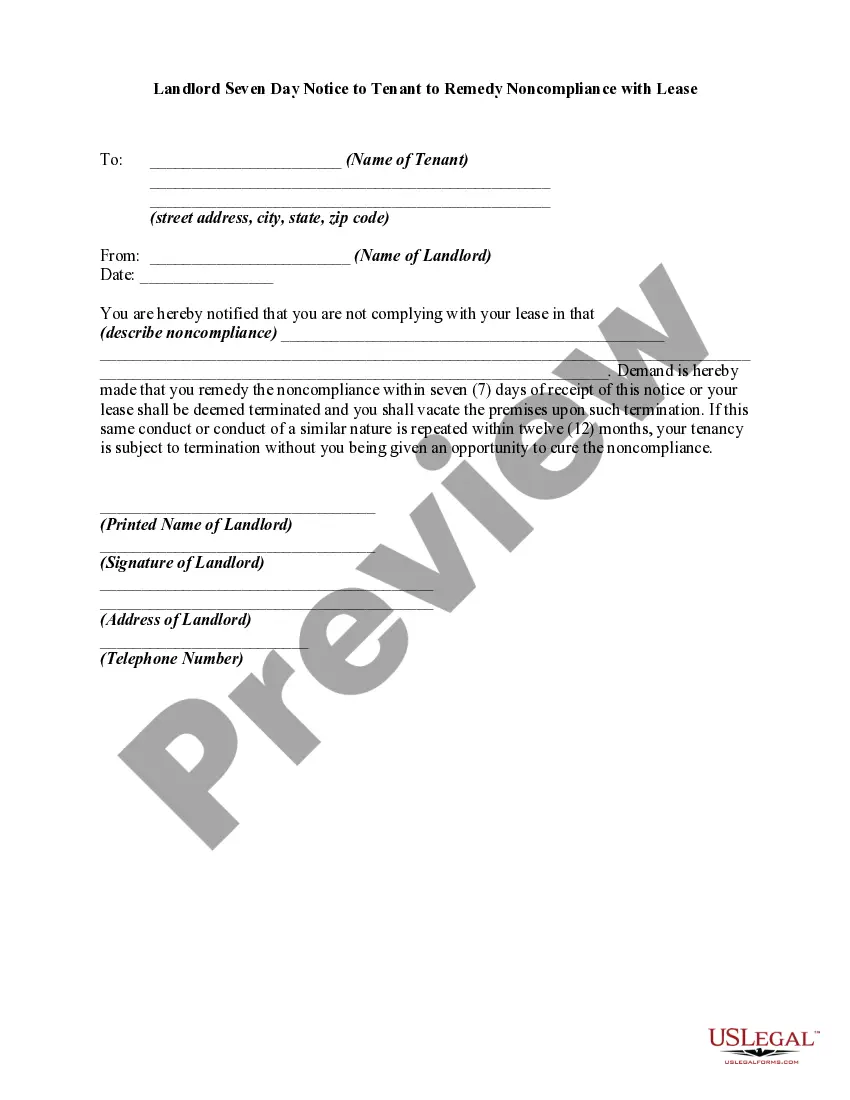
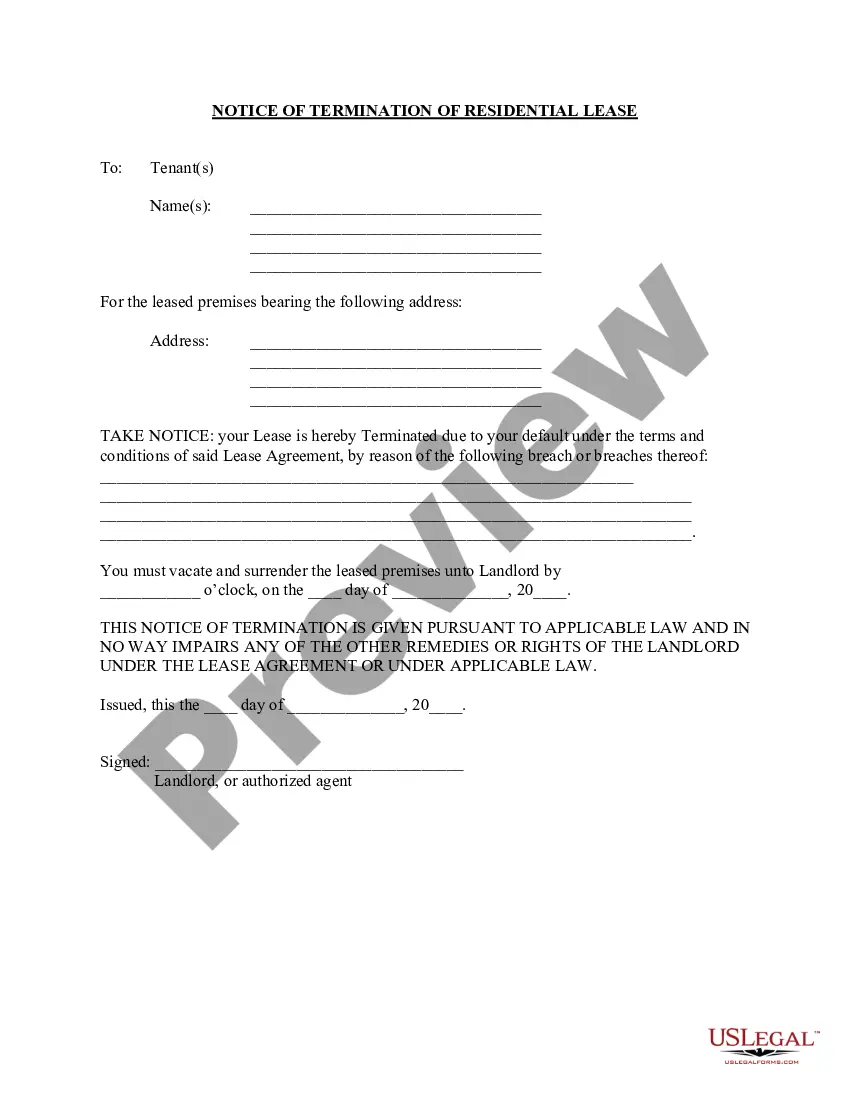
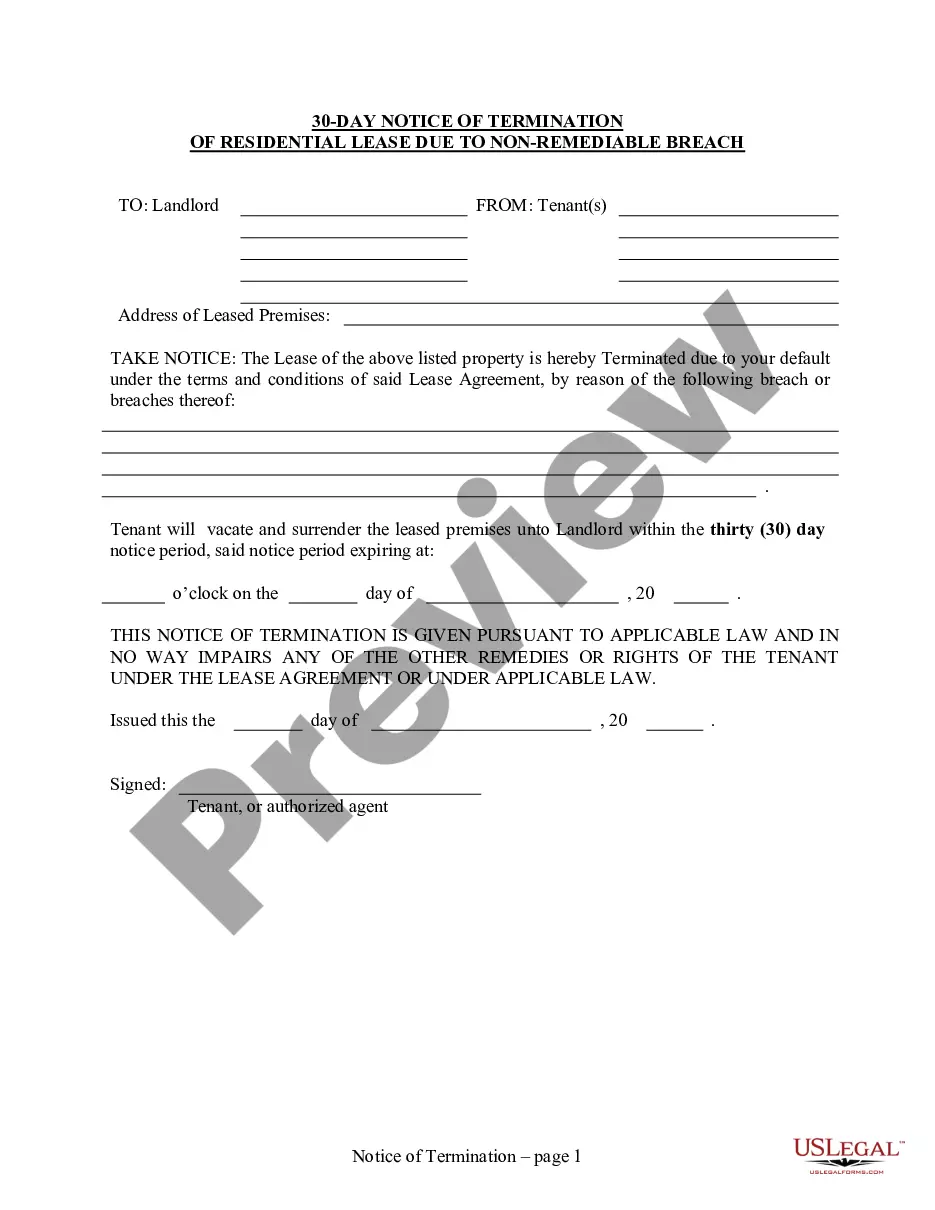
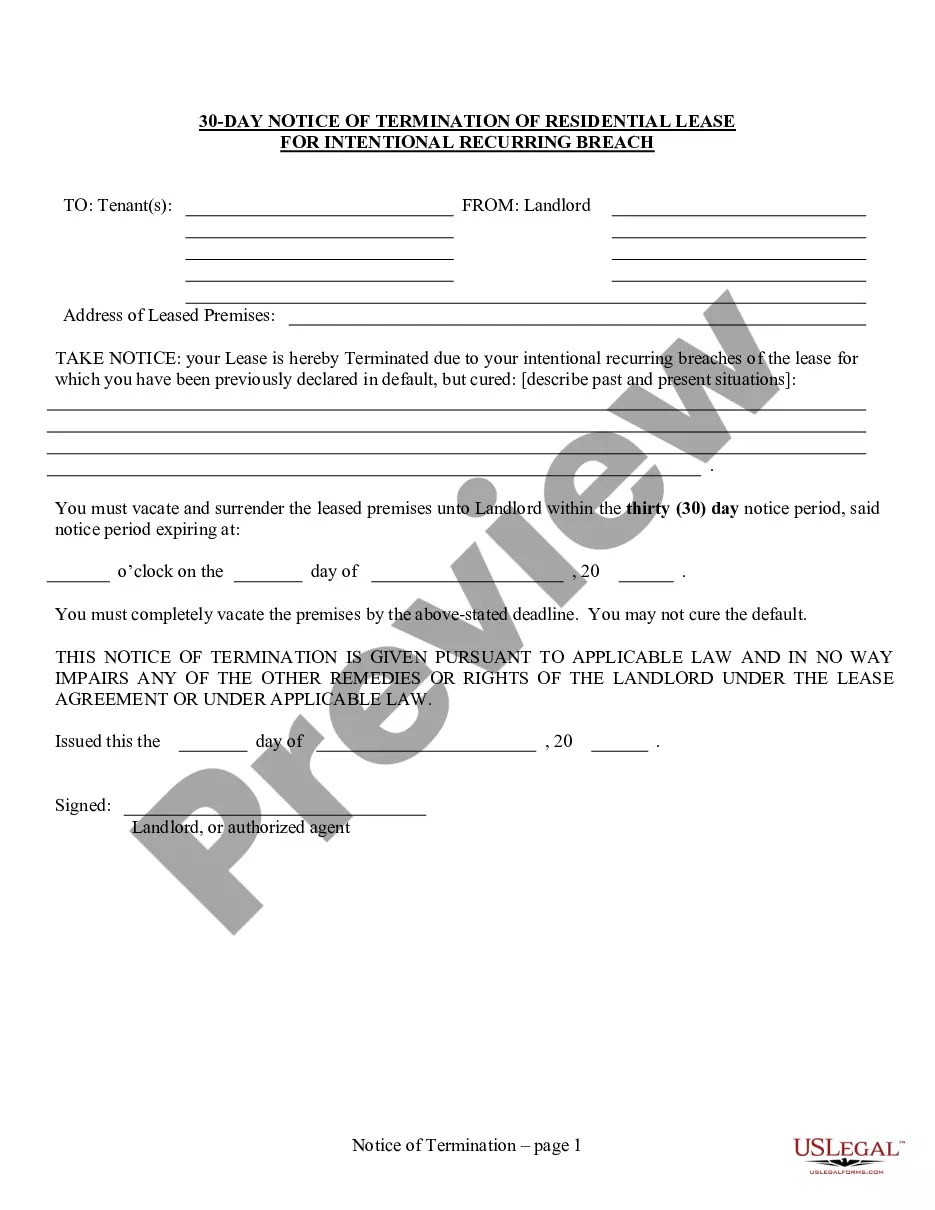
The 30 Day Notice of Material Noncompliance is a legal document used by landlords to inform tenants of a breach of their residential lease agreement. This notice provides tenants with 21 days to remedy the breach addressed. If the tenant fails to correct the issue within this timeframe, they are required to vacate the rented property within a total of 30 days from receipt of the notice. This form is specifically designed for use in residential settings such as houses, apartments, or condos, distinguishing it from other lease termination forms that may not have the same requirements or timelines.
Main sections of this form
- Identification of the tenant(s) and landlord
- Description of the specific breach of lease terms
- Timeline for remedying the breach (21 days)
- Deadline for vacating the premises if the breach is not cured (9 additional days)
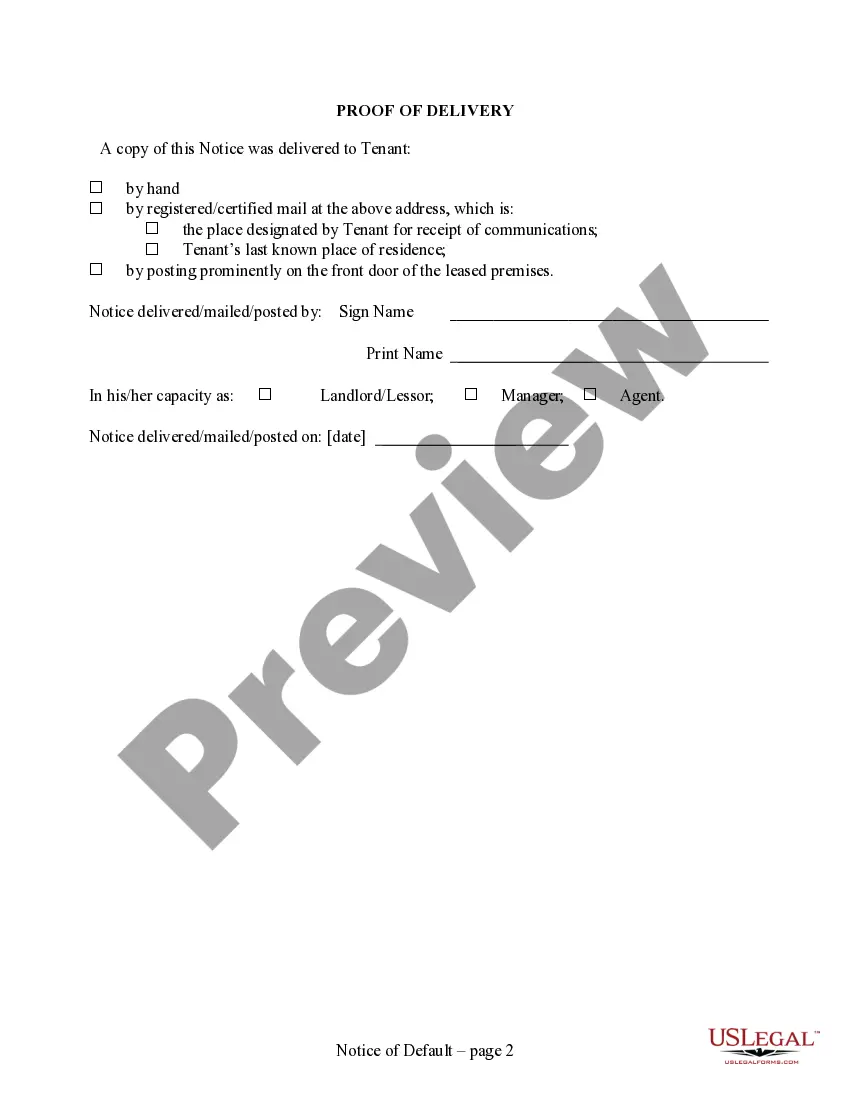
- Proof of delivery section to confirm notice has been properly served
Situations where this form applies
This form should be used when a landlord discovers that a tenant has not complied with the terms of their lease agreement. Situations may include failure to pay rent, unauthorized pets, or property damage. It enables the landlord to formally notify the tenant of the breach, establish a timeframe for corrections, and initiate the process to terminate the lease if necessary.
Who should use this form
- Residential landlords seeking to enforce lease terms
- Property managers managing rental units
- Landlords dealing with non-compliant tenants in rental agreements
How to complete this form
- Identify the parties involved: Enter the names and addresses of the landlord and tenant.
- Specify the property: Clearly indicate the address of the leased premises.
- Describe the breach: Provide details on the specific violation of the lease agreement.
- Set deadlines: Fill in the dates for the remedy period (21 days) and vacating the premises (30 days total).
- Sign and date: The landlord or authorized agent must sign and date the document to make it valid.
Notarization requirements for this form
Notarization is not commonly needed for this form. However, certain documents or local rules may make it necessary. Our notarization service, powered by Notarize, allows you to finalize it securely online anytime, day or night.
Get your form ready online
Our built-in tools help you complete, sign, share, and store your documents in one place.
Make edits, fill in missing information, and update formatting in US Legal Forms—just like you would in MS Word.
Download a copy, print it, send it by email, or mail it via USPS—whatever works best for your next step.
Sign and collect signatures with our SignNow integration. Send to multiple recipients, set reminders, and more. Go Premium to unlock E-Sign.
If this form requires notarization, complete it online through a secure video call—no need to meet a notary in person or wait for an appointment.
We protect your documents and personal data by following strict security and privacy standards.

Make edits, fill in missing information, and update formatting in US Legal Forms—just like you would in MS Word.

Download a copy, print it, send it by email, or mail it via USPS—whatever works best for your next step.

Sign and collect signatures with our SignNow integration. Send to multiple recipients, set reminders, and more. Go Premium to unlock E-Sign.

If this form requires notarization, complete it online through a secure video call—no need to meet a notary in person or wait for an appointment.

We protect your documents and personal data by following strict security and privacy standards.
Typical mistakes to avoid
- Failing to clearly describe the breach, which can leave room for dispute.
- Not providing adequate proof of delivery to the tenant, potentially invalidating the notice.
- Neglecting to specify the correct timelines for remedying the breach and vacating the premises.
Benefits of using this form online
- Instant access to a legally compliant document prepared by licensed attorneys.
- Easy editing options to customize the form according to specific circumstances.
- Secure downloading options without the need for in-person visits or delays.
Looking for another form?
Form popularity
FAQ
You are not required to provide your landlord with notice of your intention to move out on the last day of a fixed term tenancy.If you wish to move out before the fixed term tenancy is over, you will still be required to pay rent until the end of the fixed term unless the landlord agrees to another arrangement.
If you decide to simply skip out on your lease, the landlord will, in most cases, not bother actively trying to get the remainder of the lease payment from you, but will most likely put a valid black mark on your credit report if you abandon your lease and refuse to pay your obligation.
If you do not give notice, the landlord could make you pay rent for another lease period. Your lease says the number of days' notice you must give. Most leases say you have to give notice 30 days before the last day of the lease.
If you leave your apartment without notice, you could be sued in small claims or housing court for the unpaid rent and any other damages. If you want to leave right away and don't want to pay a breakage fee, you can forfeit your security deposit and leave without notice. The legal term for this is abandonment.
Leaving without giving notice Your landlord can get a court order to make you pay the rent you owe. You'll usually have to pay the court costs as well as the rent you owe.
When a landlord fails to meet these standards despite reasonable requests by the tenant, he or she may be sued for "material noncompliance." This article covers the basics of material noncompliance, which is essentially a breach of contract in the context of landlord tenant law.
Under the terms of a verbal agreement, most states allow the landlord to make changes by giving written notification to the tenant.In other words, a month-to-month verbal lease would require the landlord to provide 30 days' written notice to the tenant for changes such as rent increases and notices to vacate.
In general, you are only required to give a 30-day notice to quit to someone who is a tenant. You are usually not required to give a guest a 30-day notice, no matter how long that person has lived in your home.
Get an Injunctive Order from the Court to Stop the Behavior: A tenant can go to court to get a legal order from the court for the landlord to stop the harassing behavior. 12feff Sue the Landlord: A tenant could also sue the landlord for damages due to the harassment.