Virginia 30 Day Notice of Termination for Intentional Recurring Breach - Residential
Overview of this form
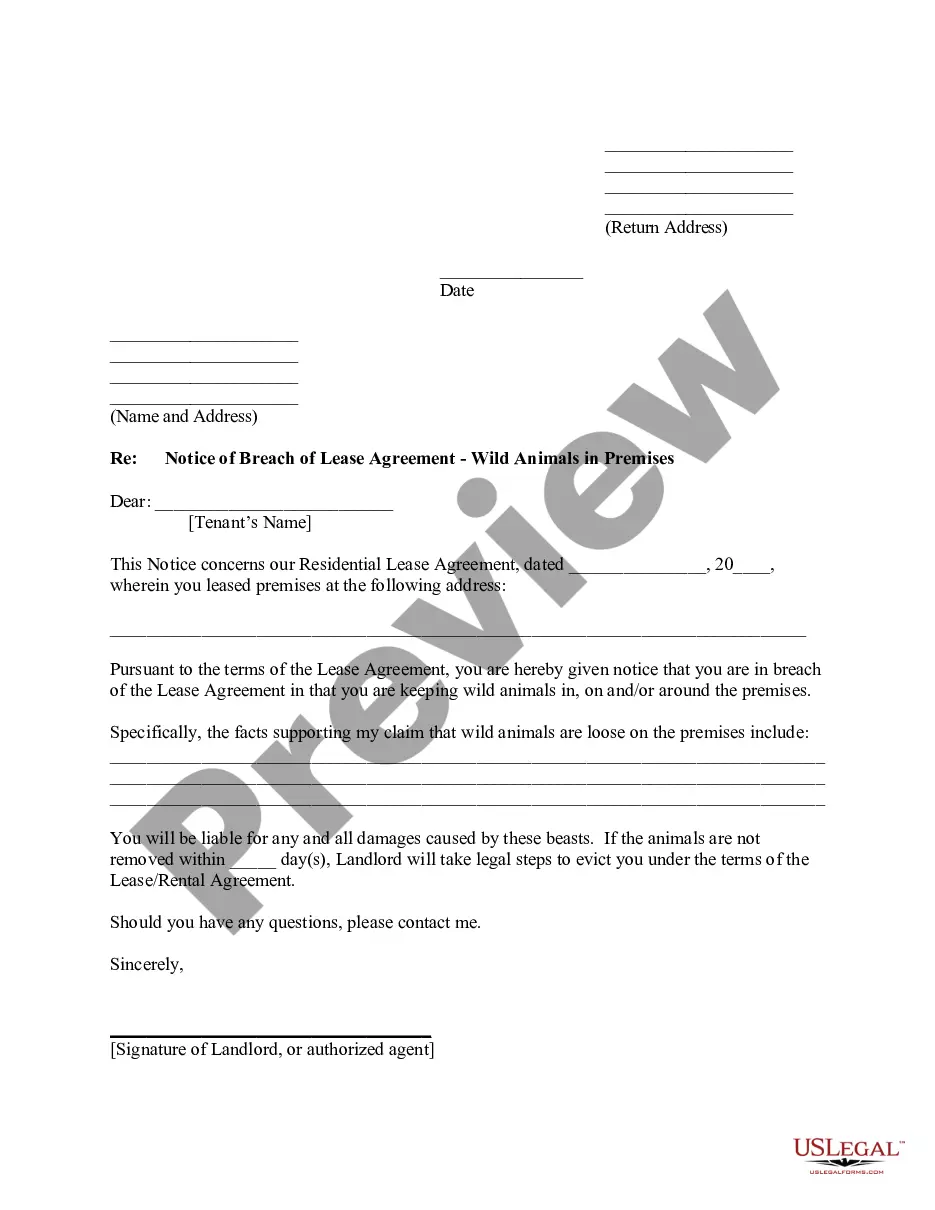
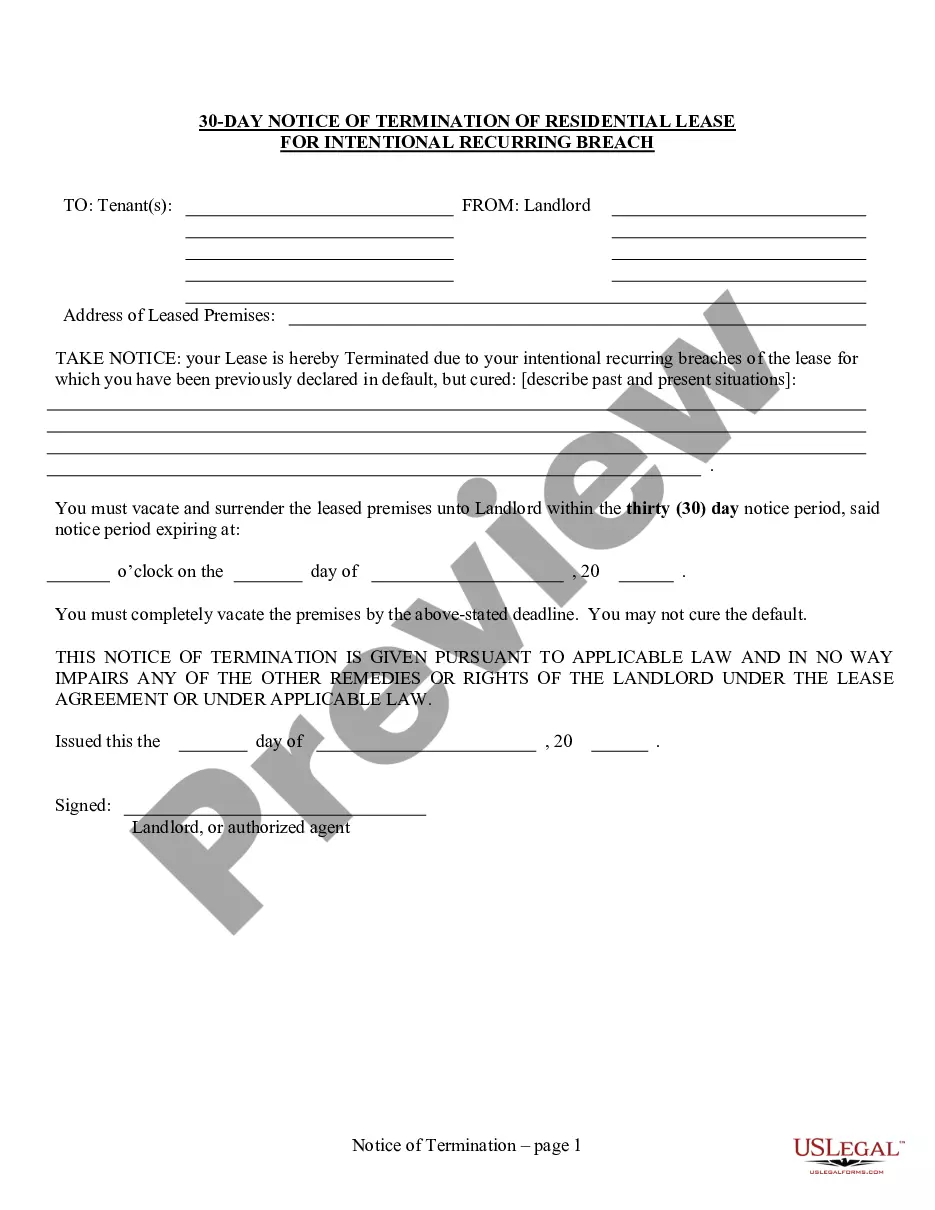
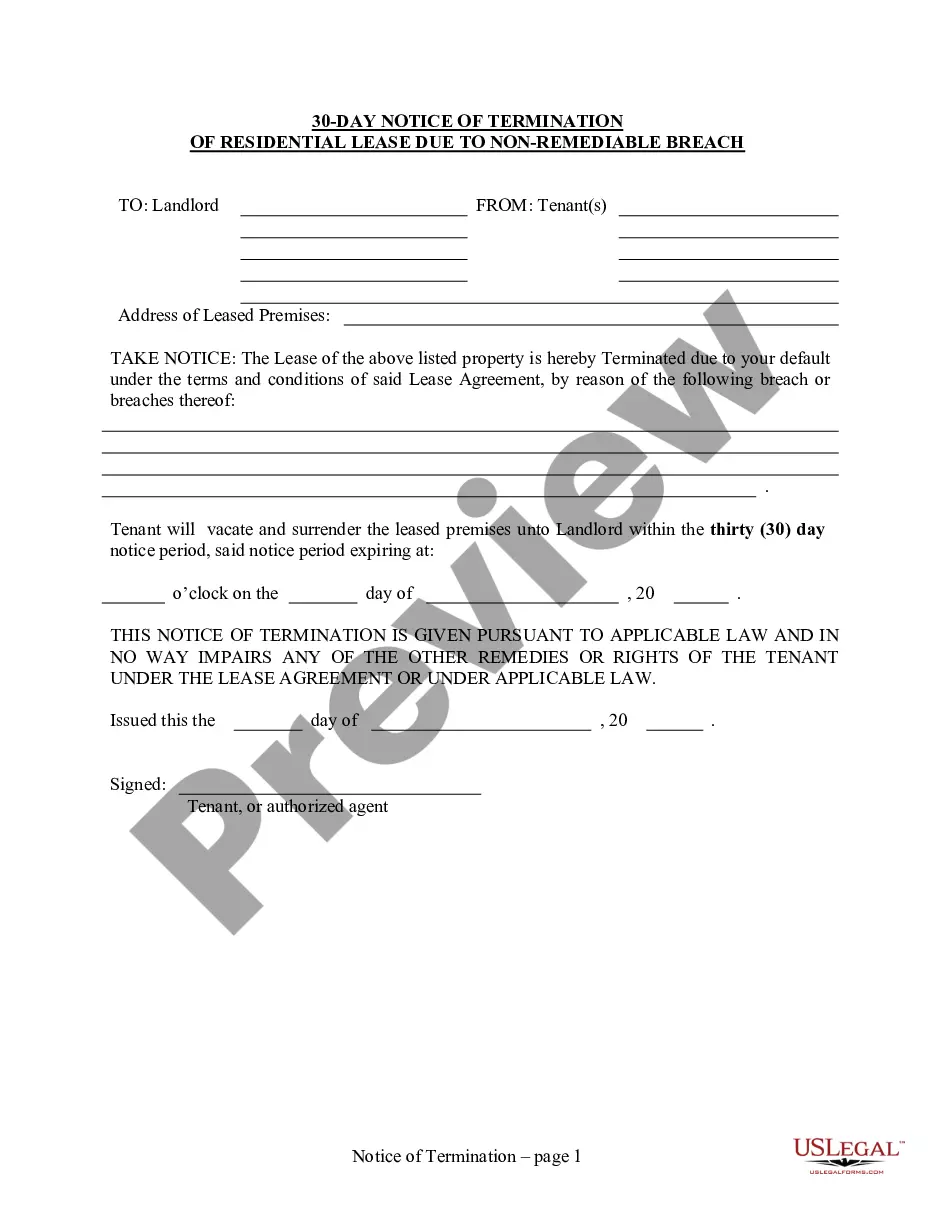
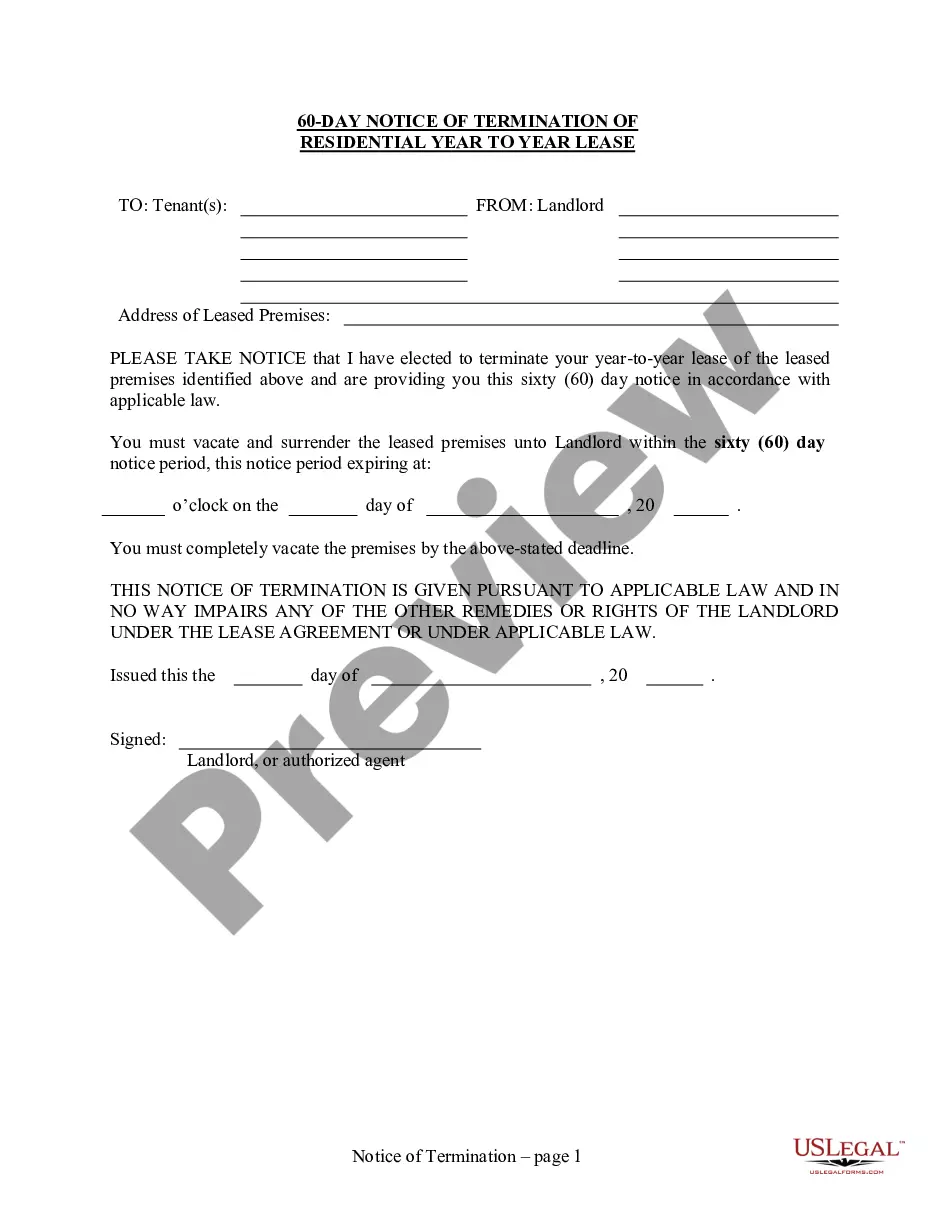
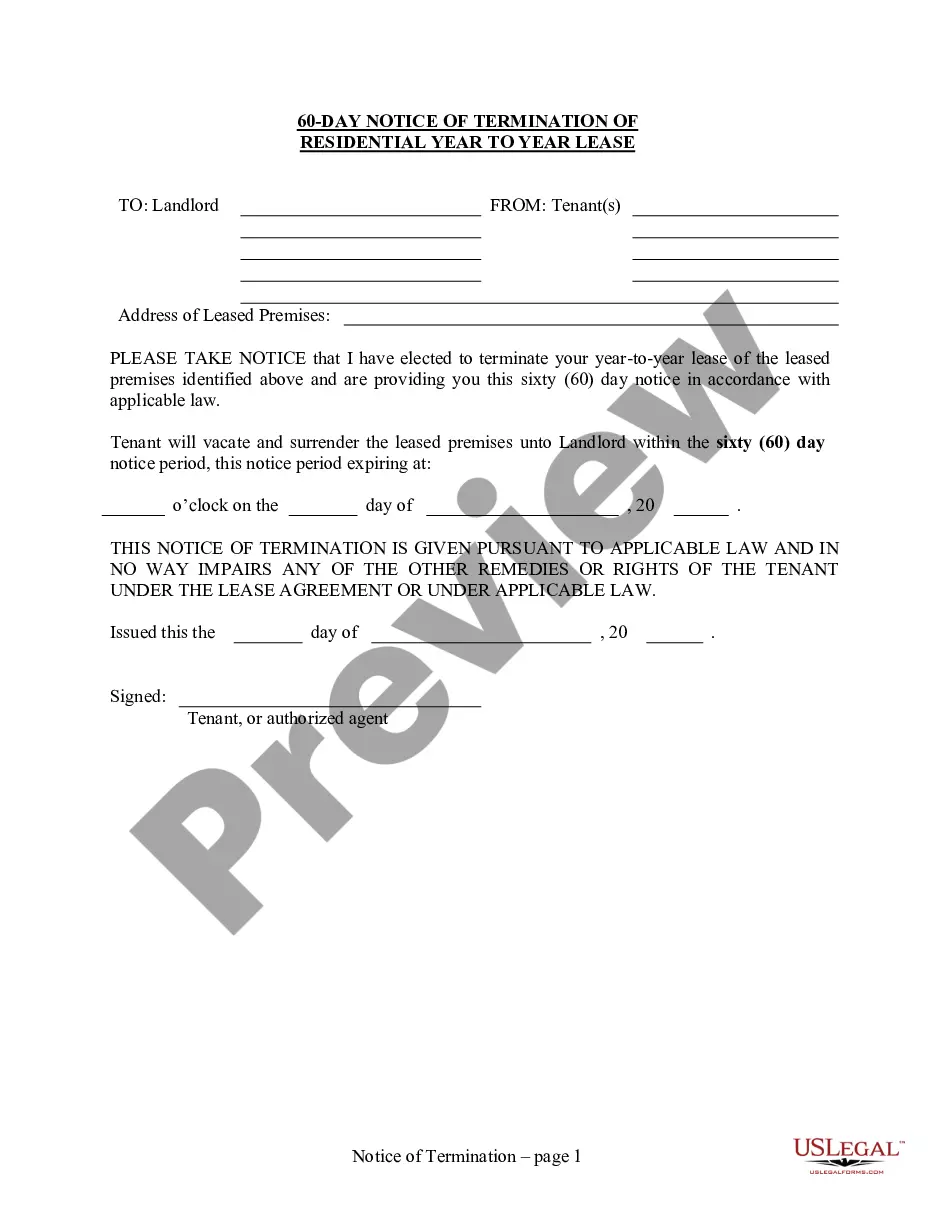
The 30 Day Notice of Termination for Intentional Recurring Breach is a legal document used by landlords to formally terminate a residential lease agreement due to the tenant's intentional, repeated breaches of the lease. This form is essential when a landlord has already allowed the tenant to correct previous defaults but now seeks to end the lease without allowing further opportunities for correction. Unlike other termination notices, this one specifically addresses recurring breaches and requires the tenant to vacate within 30 days without the option to cure the lease violations.
Form components explained
- Identification of the landlord and tenant, including addresses.
- Description of the intentional recurring breaches prompting termination.
- Specific deadline for the tenant to vacate the premises.
- Notification regarding the lack of opportunity to cure the breach.
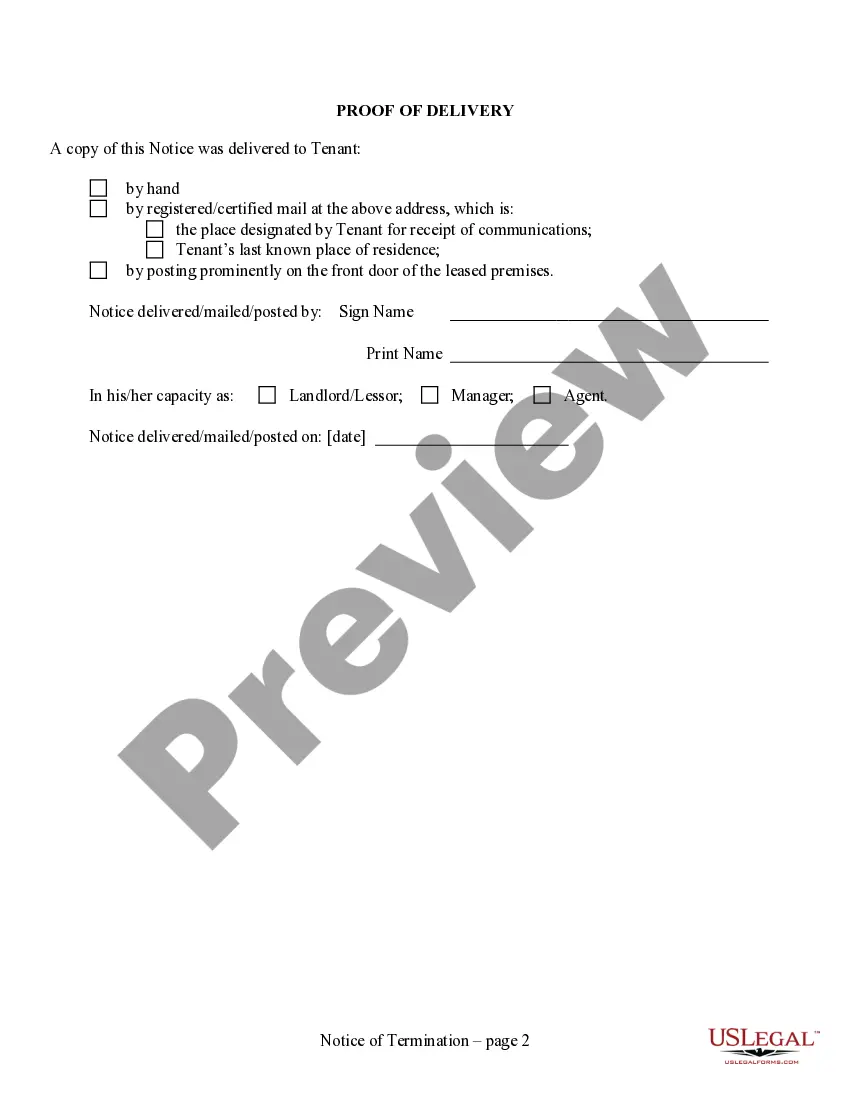
- Proof of delivery section detailing how the notice was delivered to the tenant.

When to use this document
This form should be used in situations where a landlord has permitted a tenant to remedy past breaches of the lease, but the tenant continues to violate the terms intentionally. It is applicable when the landlord decides to terminate the lease agreement without offering another chance for the tenant to correct their behavior. Examples include repeated late payments, unauthorized pets, or other lease violations that have not been resolved satisfactorily.
Intended users of this form
- Residential landlords seeking to terminate a lease due to intentional breaches by tenants.
- Property managers acting on behalf of landlords in residential rental agreements.
- Landlords in states where this form is acceptable for intentional lease breaches.
How to complete this form
- Identify the parties involved by entering the names and addresses of the landlord and tenant.
- Clearly describe the intentional recurring breaches that have led to this termination notice.
- Specify the date and time by which the tenant must vacate the premises.
- Sign the notice to affirm its validity and indicate your authority as the landlord.
- Document the method of delivery to the tenant in the proof of delivery section.
Is notarization required?
This form does not typically require notarization unless specified by local law. Always check local regulations to confirm if notarization is necessary in your jurisdiction.
Get your form ready online
Our built-in tools help you complete, sign, share, and store your documents in one place.
Make edits, fill in missing information, and update formatting in US Legal Forms—just like you would in MS Word.
Download a copy, print it, send it by email, or mail it via USPS—whatever works best for your next step.
Sign and collect signatures with our SignNow integration. Send to multiple recipients, set reminders, and more. Go Premium to unlock E-Sign.
If this form requires notarization, complete it online through a secure video call—no need to meet a notary in person or wait for an appointment.
We protect your documents and personal data by following strict security and privacy standards.

Make edits, fill in missing information, and update formatting in US Legal Forms—just like you would in MS Word.

Download a copy, print it, send it by email, or mail it via USPS—whatever works best for your next step.

Sign and collect signatures with our SignNow integration. Send to multiple recipients, set reminders, and more. Go Premium to unlock E-Sign.

If this form requires notarization, complete it online through a secure video call—no need to meet a notary in person or wait for an appointment.

We protect your documents and personal data by following strict security and privacy standards.
Mistakes to watch out for
- Failing to provide a complete and accurate description of the tenant's breaches.
- Not including the specific deadline for vacating the premises.
- Neglecting to sign the notice or fill out the proof of delivery section properly.
Why complete this form online
- Convenient access to a professionally drafted legal document anytime.
- Editable format allows for customization to fit specific situations.
- Instant download for immediate use, saving time and effort.
- This notice is legally enforceable if handled in compliance with local laws and regulations.
- Landlords must provide clear documentation of the tenant's prior breaches to support the termination.
- Failure to comply with legal delivery methods may impact the enforceability of the notice.
Key takeaways
- The 30 Day Notice of Termination for Intentional Recurring Breach is a vital tool for landlords dealing with non-compliant tenants.
- Correct usage of this form can expedite the eviction process and mitigate further losses.
- Landlords must ensure all legal processes are followed to maintain the enforceability of the termination.
Looking for another form?
Form popularity
FAQ
In California, a landlord can only evict a tenant for nonpayment of rent, damage to the property or a violation of the lease or rental agreement.In that case, the landlord can evict the tenant with a 30-day or 60-day notice to quit without saying why the tenant must move out.
The name of the tenant. The lease start and end date. The reason for the termination of the lease. A copy of the original lease agreement. A request of the tenant's new address. Instructions on how the tenant should complete the move-out process. Date set for final inspection.
Explain the Situation Tell your tenant in straightforward terms what the problem is, and explain that they cannot stay on the property any longer. Describe the Consequences Calmly explain that they will be evicted with necessary court orders if they remain on the property.
NOTE: Under Virginia law, if you do not have a lease, and you do not pay rent, you are considered a tenant at sufferance. This means you can be evicted for any reason at all, at any time, and no notice needs to be given to you.A periodic tenant is due notice at least one rental period in advance.
Legally Removing People. Send a certified letter asking them to leave in 30 days or less. While a house guest is not technically a tenant, certain tenant-landlord laws still apply to the relationship if they've been with your for more than 30 days. Talk to an attorney who will help you draft and send an eviction notice
I am giving 1 month's notice to end my tenancy, as required by law. I will be leaving the property on (date xxxxx). I would like you to be at the property on the day I move out to check the premises and for me to return the keys. I also need you to return my tenancy deposit of (state amount).
Dear your landlord or property manager's name, I am writing to inform you I will be vacating my rental unit on date you intend to vacate. This letter meets the 30-day notice requirement outlined in my lease agreement.
I am giving 1 month's notice to end my tenancy, as required by law. I will be leaving the property on (date xxxxx). I would like you to be at the property on the day I move out to check the premises and for me to return the keys. I also need you to return my tenancy deposit of (state amount).
Yes, in Virginia, you can evict unwanted family members from your home.However, in most cases, Virginia still considers them to be a tenant. The courts will most likely treat them as a month-to-month tenant even if they have no lease, and pay no rent.