Sample Letter for Correct Warranty Deed
What is this form?
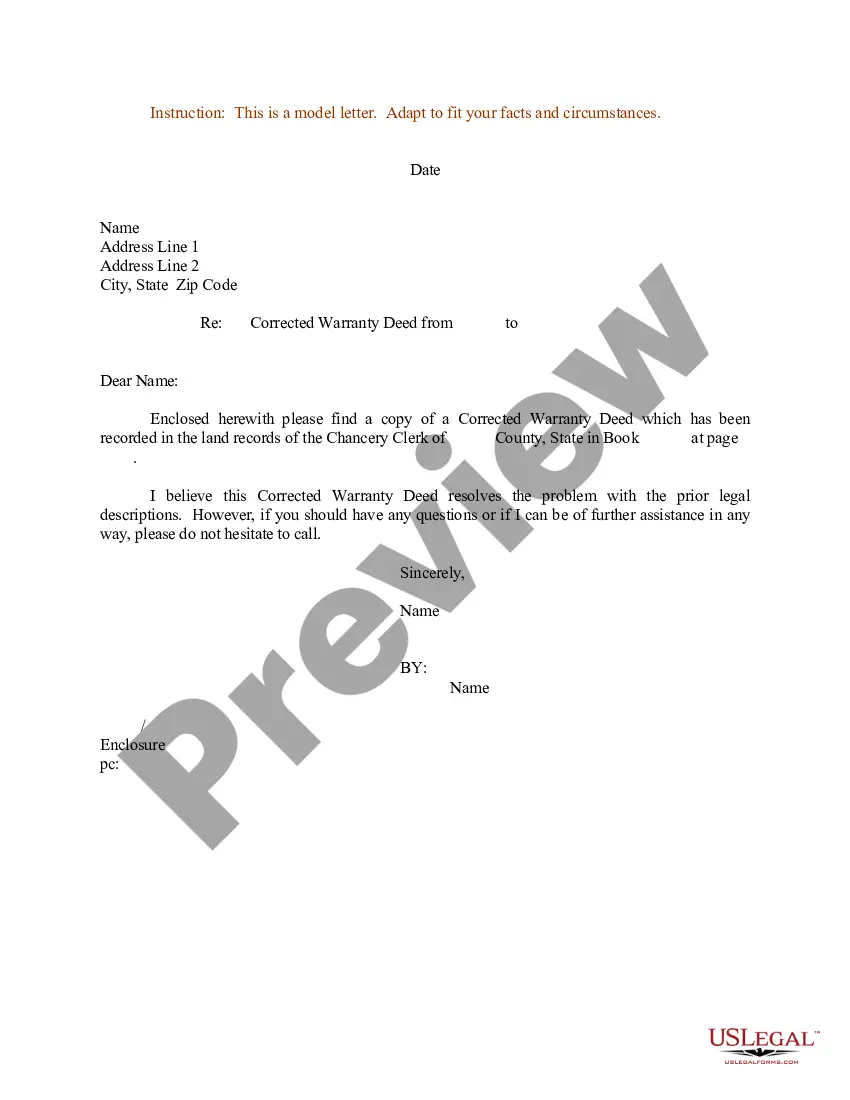
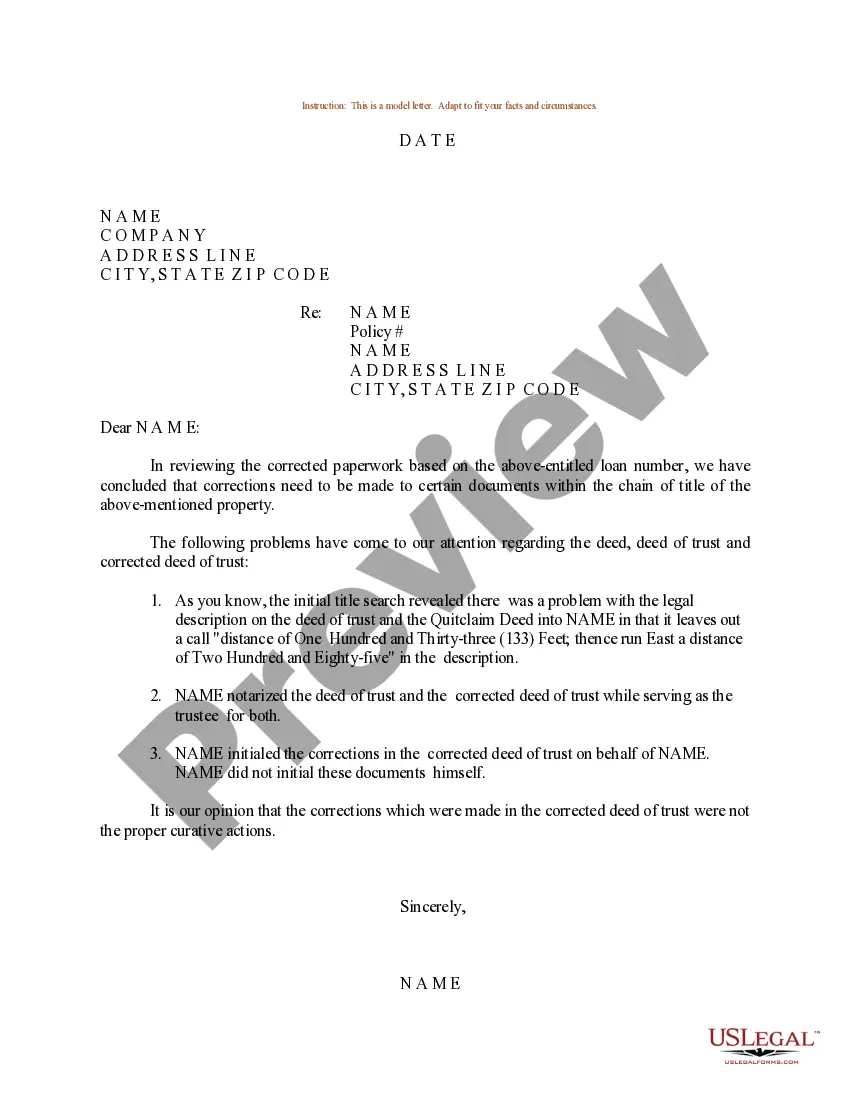
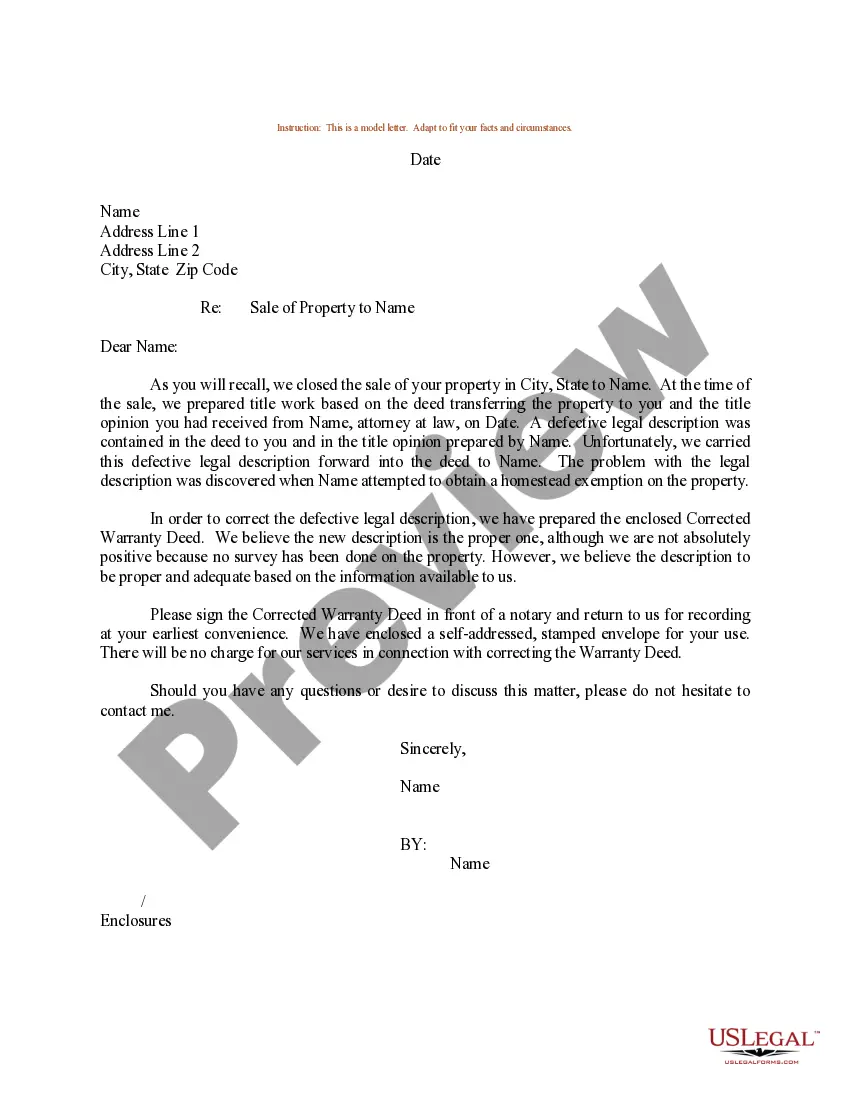
The Sample Letter for Correct Warranty Deed is a document used to notify a party about necessary corrections to a warranty deed. This form is particularly useful for rectifying errors found in property title documents, ensuring that ownership is accurately recorded. It serves as a clear communication tool distinct from other real estate forms, focusing solely on corrections rather than new transactions.
Form components explained
- Date: The date when the letter is written.
- Sender's name and address: The individual or entity sending the correction letter.
- Recipient's name and address: The individual or entity to whom the letter is addressed.
- Details of the correction: A clear explanation of the error and its correction.
- Signature: The senderâs authenticated signature to validate the letter.

When to use this document
This form should be used when you discover an error in a warranty deed, such as incorrect names, property descriptions, or legal descriptions. It is appropriate in situations where prior errors could lead to disputes over property ownership or title clarity. Utilizing this letter helps facilitate the correct information being officially recognized and recorded.
Who should use this form
This form is intended for:
- Property owners who require correction of their warranty deed.
- Real estate agents facilitating transactions on behalf of clients.
- Attorneys representing clients in property law matters.
- Anyone involved in real estate transactions that require accurate documentation of property titles.
Completing this form step by step
- Identify the parties involved: Fill in the names and addresses of the sender and recipient.
- Specify the date: Enter the current date at the top of the letter.
- Detail the correction: Clearly describe the error in the warranty deed and provide the correct information.
- Sign the letter: Add your signature at the end to authenticate the letter.
- Send the letter: Deliver it by mail or electronically, ensuring proper receipt by the recipient.
Is notarization required?
This form does not typically require notarization unless specified by local law. It is always best to check local regulations to ensure compliance.
Get your form ready online
Our built-in tools help you complete, sign, share, and store your documents in one place.
Make edits, fill in missing information, and update formatting in US Legal Forms—just like you would in MS Word.
Download a copy, print it, send it by email, or mail it via USPS—whatever works best for your next step.
Sign and collect signatures with our SignNow integration. Send to multiple recipients, set reminders, and more. Go Premium to unlock E-Sign.
If this form requires notarization, complete it online through a secure video call—no need to meet a notary in person or wait for an appointment.
We protect your documents and personal data by following strict security and privacy standards.

Make edits, fill in missing information, and update formatting in US Legal Forms—just like you would in MS Word.

Download a copy, print it, send it by email, or mail it via USPS—whatever works best for your next step.

Sign and collect signatures with our SignNow integration. Send to multiple recipients, set reminders, and more. Go Premium to unlock E-Sign.

If this form requires notarization, complete it online through a secure video call—no need to meet a notary in person or wait for an appointment.

We protect your documents and personal data by following strict security and privacy standards.
Mistakes to watch out for
- Failing to include all necessary party names and addresses.
- Omitting the date of the letter.
- Not being clear about the specific details of the correction needed.
- Neglecting to sign the letter, which may render it invalid.
Why use this form online
- Convenience: Downloadable format allows for immediate access and use.
- Editability: Customize the letter to fit your specific circumstances easily.
- Reliability: Form crafted by licensed attorneys ensures compliance with legal standards.
Legal use & context
- This letter serves as an official notice of correction, which can help prevent disputes related to property titles.
- Using this form can increase the likelihood that corrections will be accepted and recorded by local authorities.
What to keep in mind
- The Sample Letter for Correct Warranty Deed is essential for correcting errors in property ownership documents.
- It should be clear and concise to ensure the proper correction is understood and implemented.
- Timely submission can help avoid complications in property transactions and ownership disputes.
Looking for another form?
Form popularity
FAQ
You can correct an error on a California deed through a Correction Deed or Corrective Deed. Usually deed errors are as a result of someone attempting to prepare a deed without proper knowledge or professional help.
In order to make the Warranty Deed legally binding, the Seller needs to sign it front of a notary public. Then signed and notarized deed must be filed at the city or county office for recording property documents. Before filing with this office all previously billed property taxes must be paid in full.
Determine if the error is harmless or fatal to the transfer of title. Decide what instrument is best suited to the error. Draft a corrective deed, affidavit, or new deed. Obtain the original signature(s) of the Grantor(s). Re-execute the deed with proper notarization and witnessing.
Draw line through entry (thin pen line). Make sure that the inaccurate information is still legible. Initial and date the entry. State the reason for the error (i.e. in the margin or above the note if room). Document the correct information.
Typically, the lender will provide you with a copy of the deed of trust after the closing. The original warranty deeds are often mailed to the grantee after they are recorded. These are your original copies and should be kept in a safe place, such as a fireproof lockbox or a safe deposit box at a financial institution.
If a deed is to have any validity, it must be made voluntarily.If FRAUD is committed by either the grantor or grantee, a deed can be declared invalid. For example, a deed that is a forgery is completely ineffective. The exercise of UNDUE INFLUENCE also ordinarily serves to invalidate a deed.
Quitclaim Deeds are used when the transfer of ownership in the property does not occur as the result of a traditional sale.Under a warranty deed, if it turns out that the property is not what the seller promised or there's an uncleared lien or other block to the title, the buyer can sue the seller and recover damages.
A rectification deed should be executed after mutual consent of all the parties to the main deed. All parties to the original deed should jointly execute the rectification deed as well. In case the original deed is registered, one should get the rectification deed also registered.