New Mexico Partial Release of Property From Mortgage by Individual Holder
Overview of this form
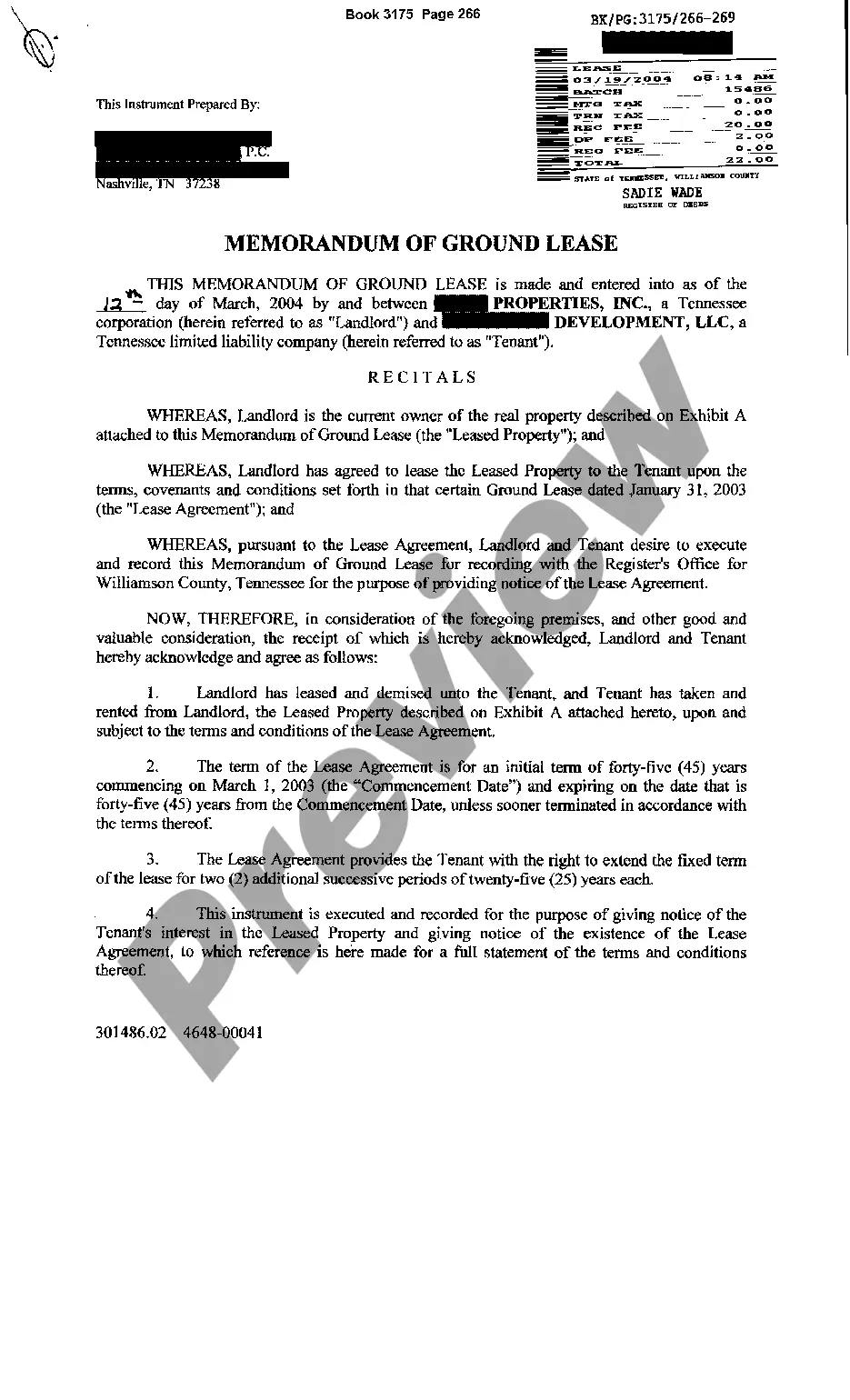
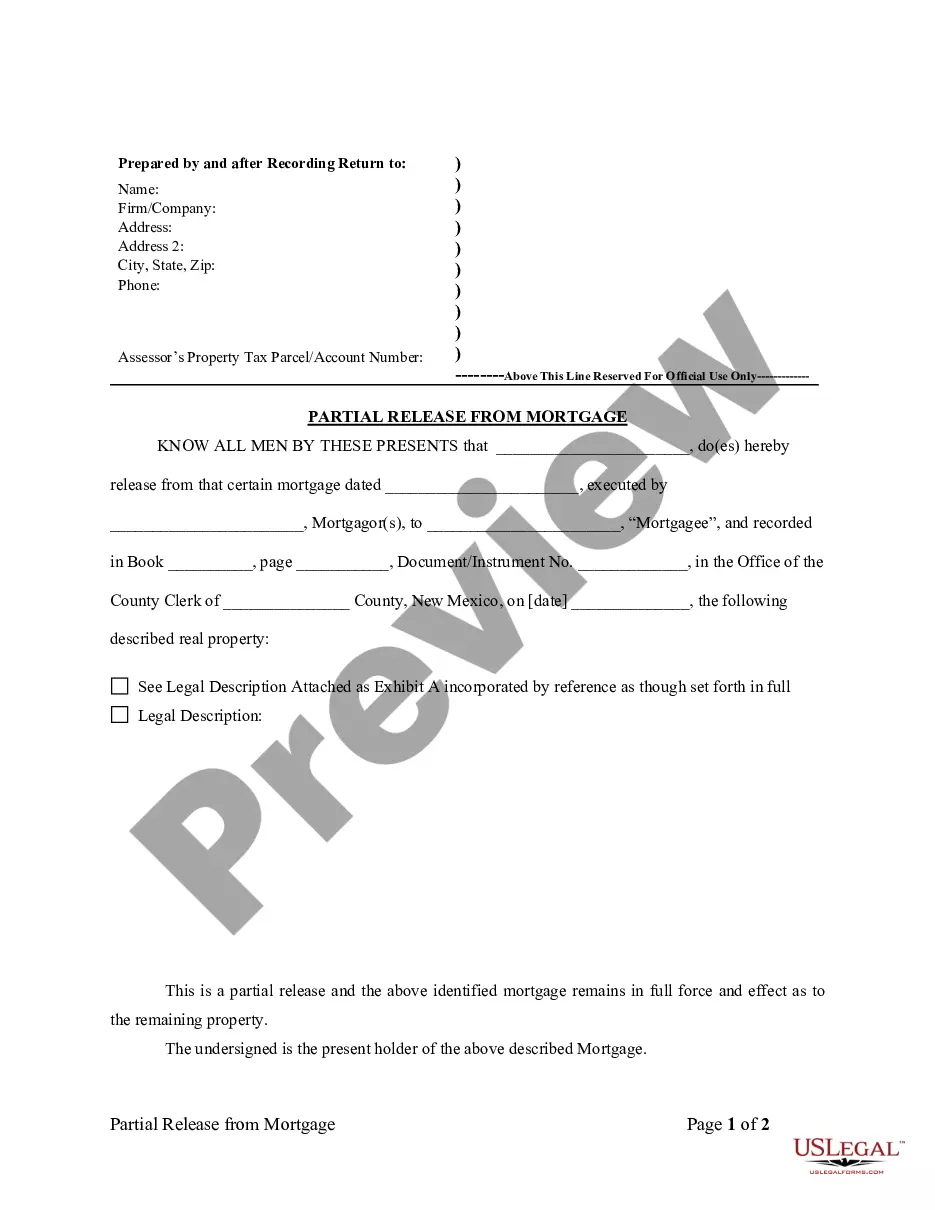
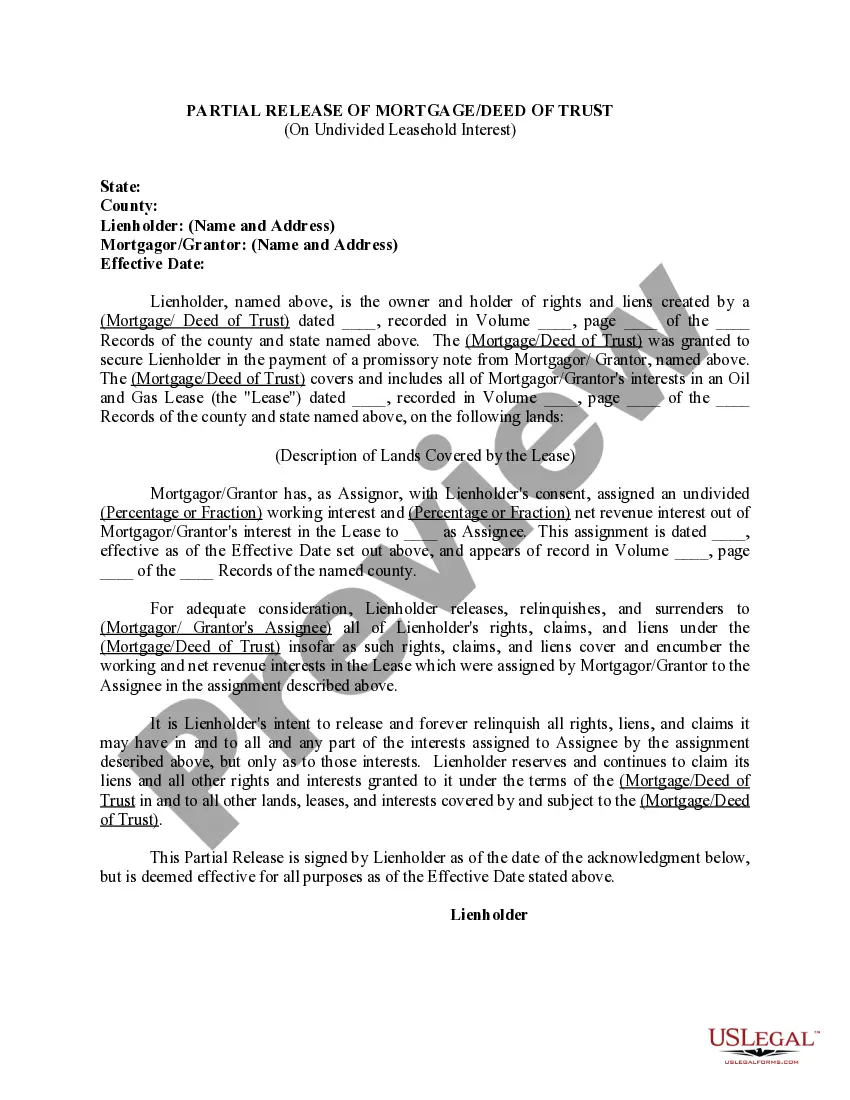
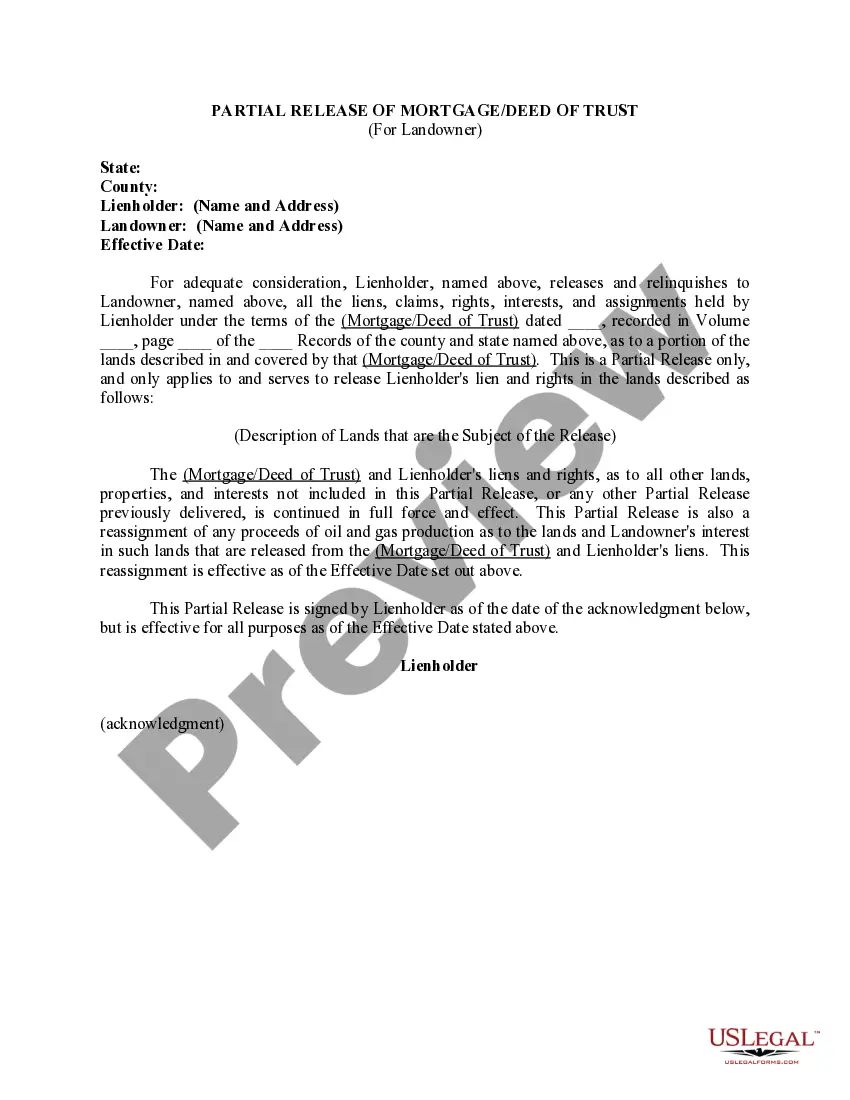
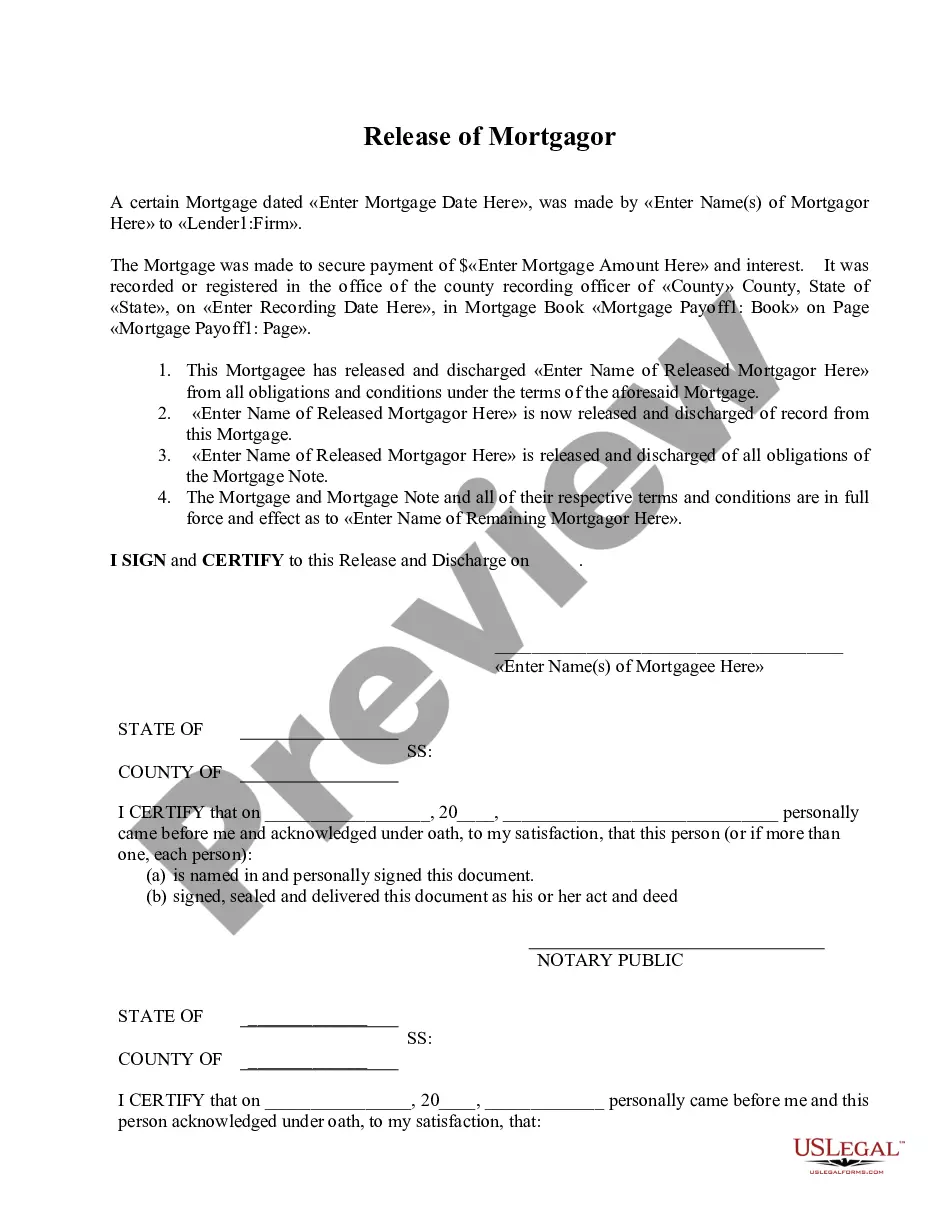
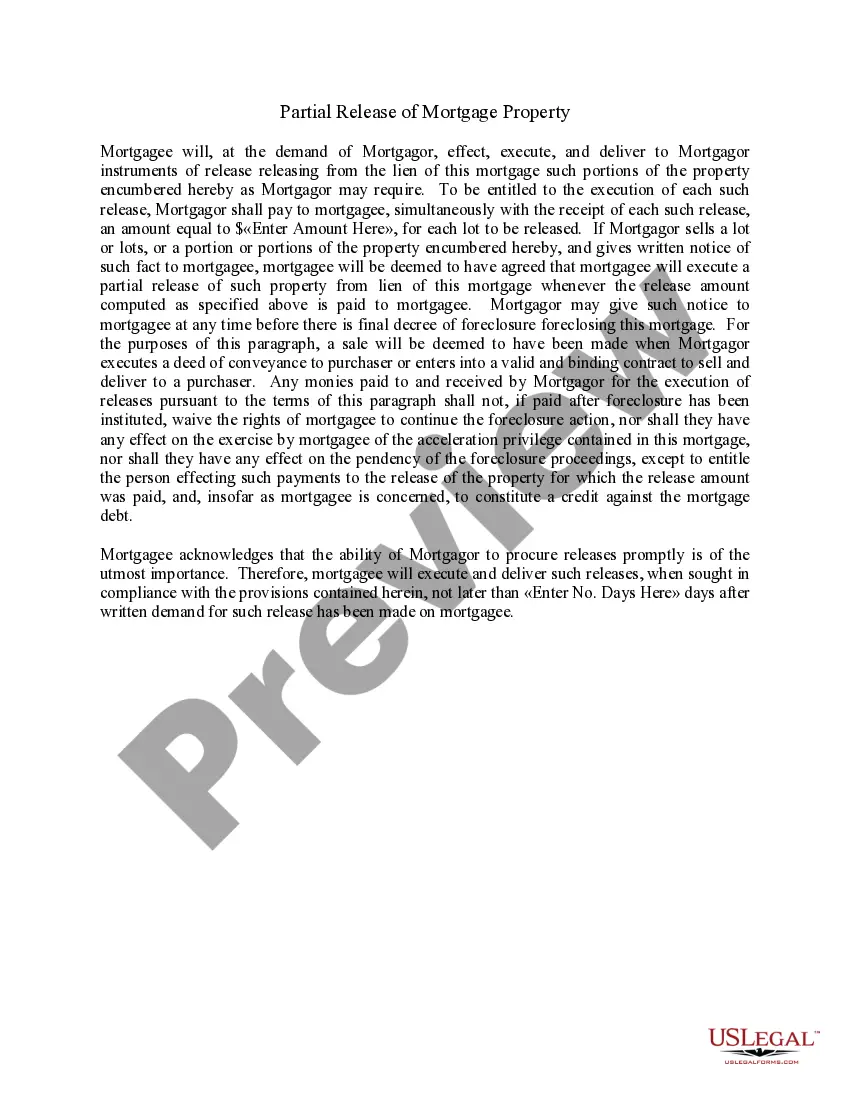
The Partial Release of Property From Mortgage by Individual Holder is a legal document used by a lender to release a specific portion of a property that was secured under a mortgage or deed of trust. This form ensures that while part of the property is released, the remaining property remains subject to the original mortgage terms. This document is distinct from full releases, as it pertains only to a part of the property involved in the mortgage agreement.
What’s included in this form
- Identification of the current holder of the mortgage.
- Details of the deed of trust or mortgage, including recording information.
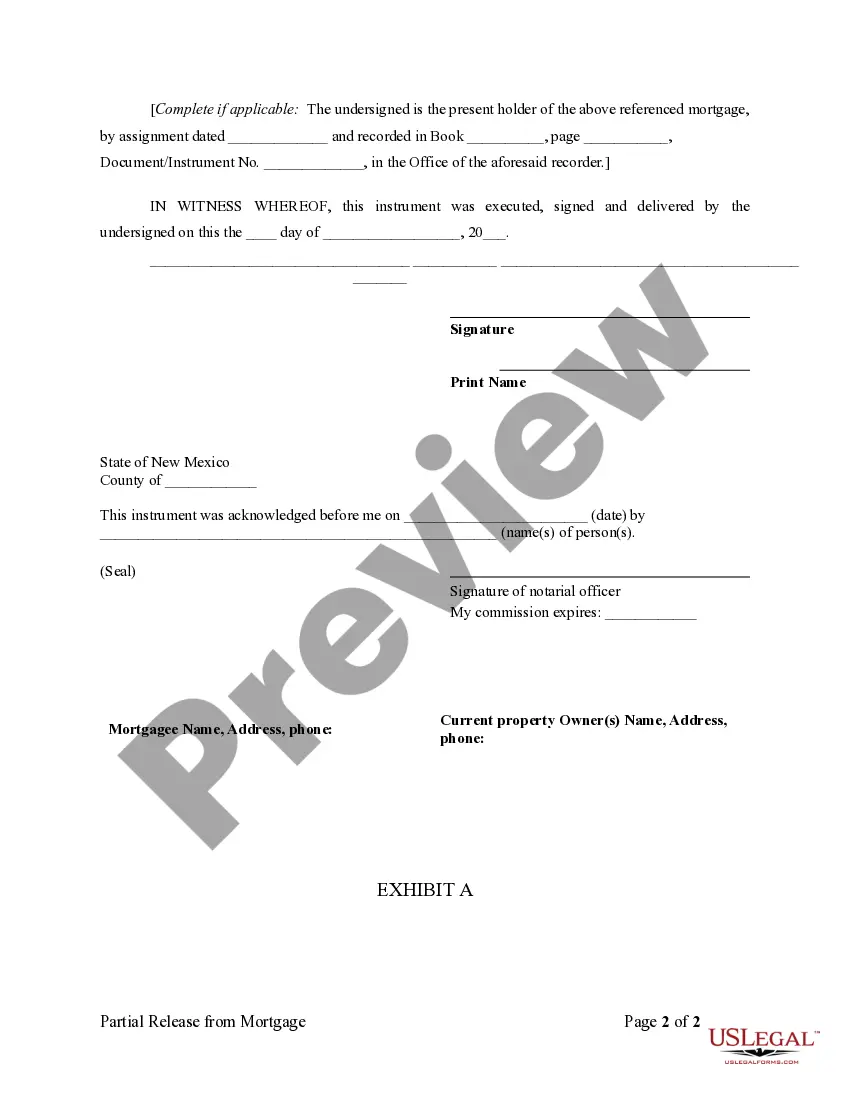
- Specific description of the property being released from the mortgage.
- A declaration that the remaining property continues to be secured by the original mortgage.
- Signature of the mortgage holder affirming the release.

Situations where this form applies
This form is needed when a mortgage holder wishes to remove a portion of real property from the mortgage obligation while keeping the remainder as secured property. Common scenarios include property sales involving only part of the mortgaged property or refinancing situations where a segment of the property is released from security to facilitate another transaction.
Who needs this form
This form is intended for:
- Individuals or entities holding a mortgage or deed of trust.
- Property owners looking to release part of their property from a mortgage.
- Real estate professionals involved in property transactions.
Instructions for completing this form
- Identify the present holder of the mortgage and ensure accuracy.
- Provide the details of the deed of trust or mortgage, including recording references.
- Specify the portion of the property that is being released.
- State that the remaining property is still under the original mortgage.
- Sign and date the document in the appropriate area.
Notarization guidance
Notarization is required for this form to take effect. Our online notarization service, powered by Notarize, lets you verify and sign documents remotely through an encrypted video session, available 24/7.
Get your form ready online
Our built-in tools help you complete, sign, share, and store your documents in one place.
Make edits, fill in missing information, and update formatting in US Legal Forms—just like you would in MS Word.
Download a copy, print it, send it by email, or mail it via USPS—whatever works best for your next step.
Sign and collect signatures with our SignNow integration. Send to multiple recipients, set reminders, and more. Go Premium to unlock E-Sign.
If this form requires notarization, complete it online through a secure video call—no need to meet a notary in person or wait for an appointment.
We protect your documents and personal data by following strict security and privacy standards.

Make edits, fill in missing information, and update formatting in US Legal Forms—just like you would in MS Word.

Download a copy, print it, send it by email, or mail it via USPS—whatever works best for your next step.

Sign and collect signatures with our SignNow integration. Send to multiple recipients, set reminders, and more. Go Premium to unlock E-Sign.

If this form requires notarization, complete it online through a secure video call—no need to meet a notary in person or wait for an appointment.

We protect your documents and personal data by following strict security and privacy standards.
Mistakes to watch out for
- Failing to correctly identify the property being released.
- Omitting necessary recording information of the original mortgage.
- Not including a clear declaration regarding the remaining property.
- Leaving out the holder's signature or date.
Advantages of online completion
- Convenient access to professionally drafted legal forms.
- Edit and customize the document to fit specific needs without legal jargon.
- Immediate downloads allow for timely action on property transactions.
Quick recap
- The form specifically releases a portion of property from a mortgage.
- It asserts that the remaining property is still secured by the mortgage.
- Proper completion and accuracy are essential to ensure legal validity.
Looking for another form?
Form popularity
FAQ
Mortgages and deeds of trust both grant the title for your property to your lender until the loan is paid. A mortgage is an agreement made between you and the lender. A mortgage grants ownership of your home to the lender which will transfer the title back to you after the loan is paid.
In title theory states, a lender holds the actual legal title to a piece of real estate for the life of the loan while the borrower/mortgagor holds the equitable title.
A Mortgage Release is where you, the homeowner, voluntarily transfer the ownership of your property to the owner of your mortgage in exchange for a release from your mortgage loan and payments.Depending on your situation, you may be required to make a financial contribution to receive a mortgage release.
When a borrower prepays their mortgage or makes the final mortgage payment, a satisfaction of mortgage document must be prepared, signed, and filed by the financial institution in ownership of the mortgage. The satisfaction of mortgage document is created by a lending institution and their legal counsel.
The title deeds to a property with a mortgage are usually kept by the mortgage lender. They will only be given to you once the mortgage has been paid in full.
Deed: This is the document that proves ownership of a property. It transfers ownership of the property to the grantee, also known as the buyer.Mortgage: This is the document that gives the lender a security interest in the property until the Note is paid in full.
When you pay off your loan and you have a mortgage, the lender will send you or the local recorder of deeds or office that handles the filing of real estate documents a release of mortgage.On the other hand, when you have a trust deed or deed of trust, the lender files a release deed.
If the mortgage has been registered, then you should take an NOC from registrar's office to get the lien removed. For this both the parties, borrower and representative of the bank need to be present there. In case, the mortgage is not registered, the bank will simply return your documents.
Simply put, yes, you do own your home but your mortgage lender does have interest in the property based on documents signed at closing.Deed of Trust this document lists the legal obligations and rights of you and the lender. It also states the lender's right to foreclose on the home if you default on the loan.