New Mexico Transfer on Death Deed or TOD - Beneficiary Deed for Individual to Individual

What is this form?
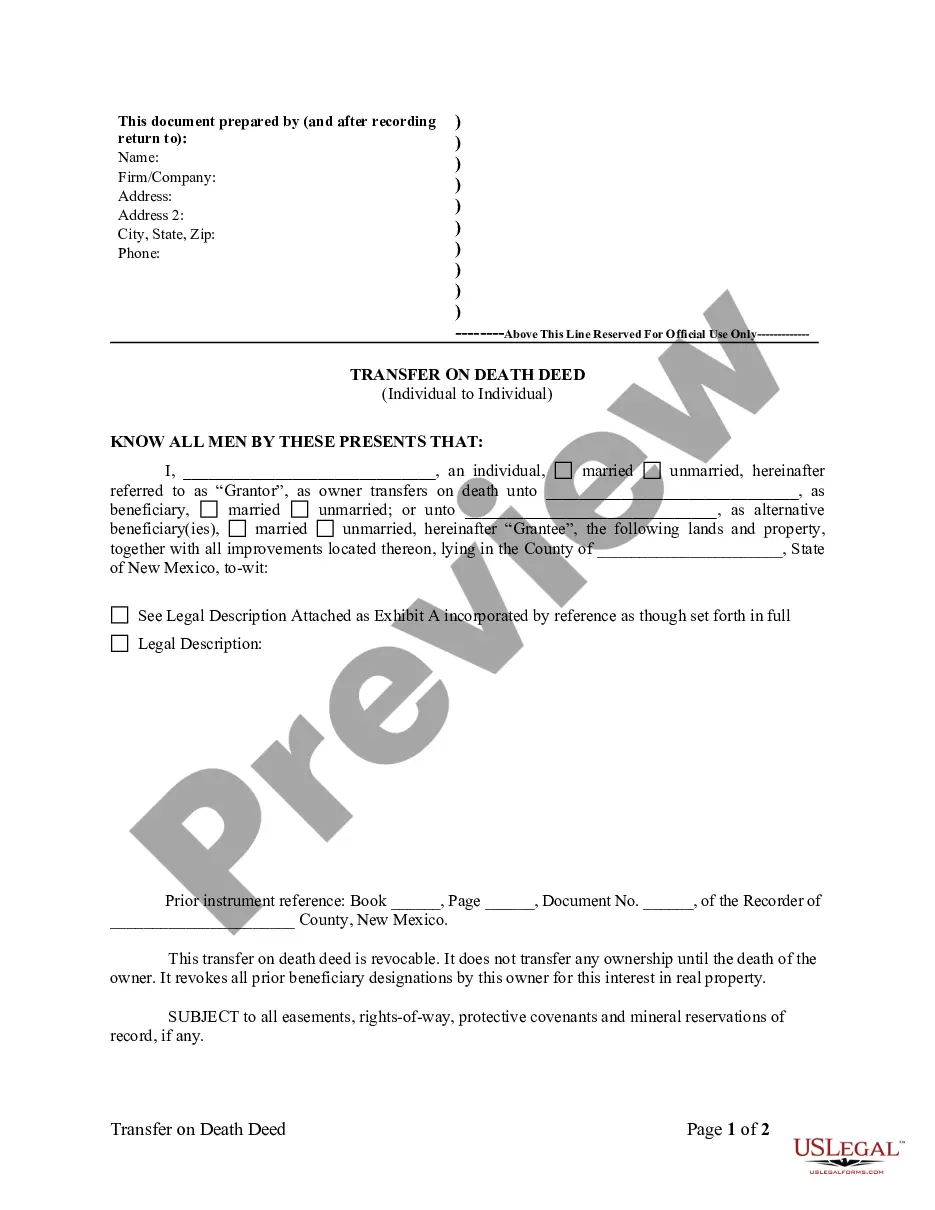
The Transfer on Death Deed or TOD - Beneficiary Deed allows an individual to transfer property directly to a designated beneficiary upon their death, bypassing probate. This form ensures that the intended Grantee automatically receives ownership of the property without any legal delays. It is distinct from a regular deed as it does not transfer ownership until the death of the Grantor, making it a strategic tool for estate planning in New Mexico.
What’s included in this form
- Prior instrument reference to establish the property's history.
- Identification of the Grantor (the person transferring the property).
- Designation of the Grantee (the individual receiving the property).
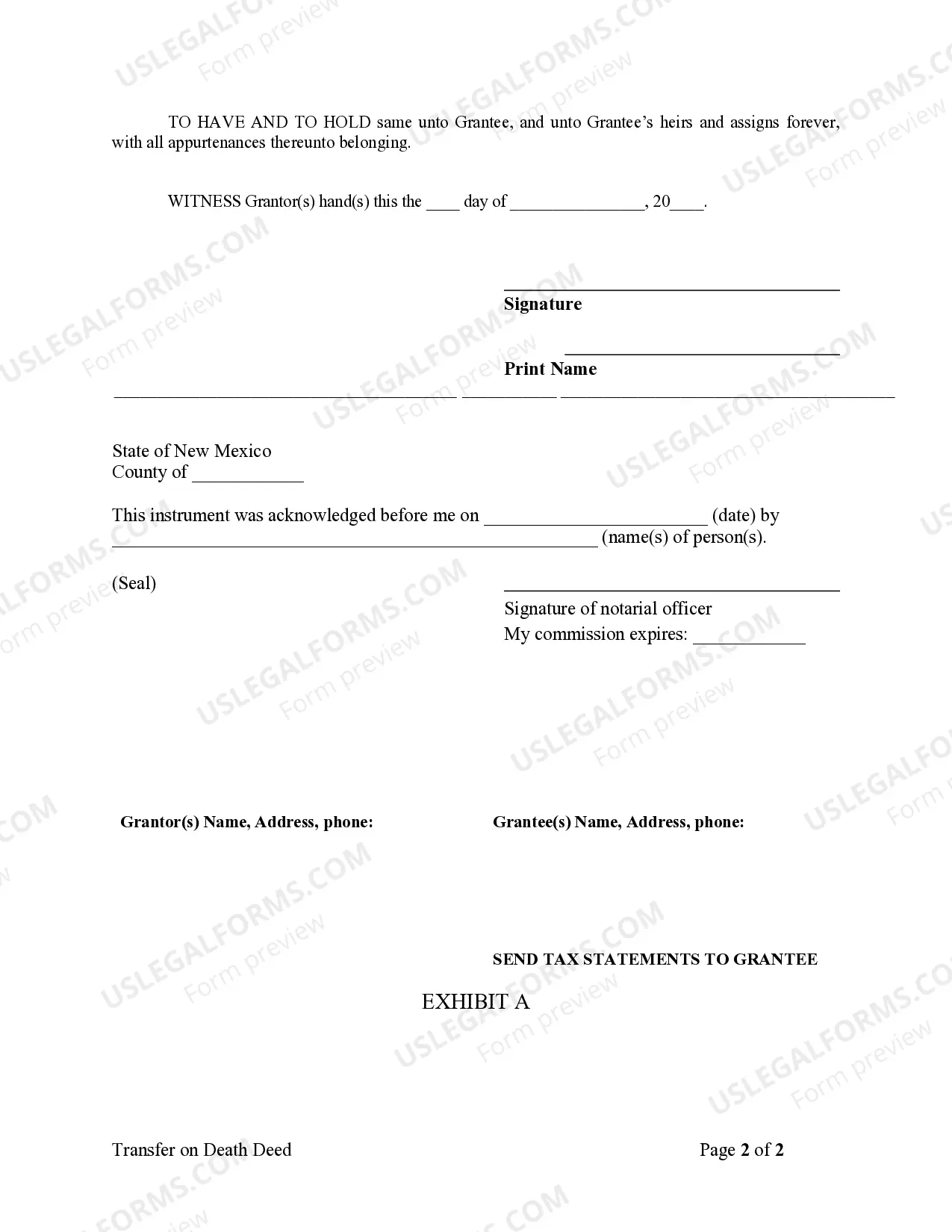
- Revocability clause allowing the Grantor to change their mind.
- Confirmation that the form is subject to any existing easements and rights-of-way.
- Signature line for the Grantor and a section for notarization.




Common use cases
This form is useful when an individual wishes to ensure that their property automatically transfers to another person upon their death. It is particularly relevant for individuals looking to avoid the probate process, simplify estate management, or clarify property ownership for their heirs. This deed can be an essential part of overall estate planning strategies.
Who this form is for
- Individuals who own real estate in New Mexico.
- Property owners who wish to clearly name a beneficiary for their property.
- People looking to streamline the transfer of property upon their death.
- Those wanting to revoke any prior beneficiary designations related to the property.
Instructions for completing this form
- Identify the parties involved: enter the name of the Grantor and Grantee.
- Specify the property: provide the legal description and reference of the prior instrument.
- Enter the date and sign the deed in front of a Notary Public.
- Ensure all fields are filled accurately to avoid any disputes or issues during transfer.
- Keep a copy of the completed deed for personal records.
Notarization requirements for this form
Yes, this form must be notarized to be legally valid. It is imperative for the Grantor to sign the deed in the presence of a Notary Public to ensure authenticity and legal acceptance. US Legal Forms provides integrated online notarization services, allowing you to complete this process securely and conveniently via video call.
Get your form ready online
Our built-in tools help you complete, sign, share, and store your documents in one place.
Make edits, fill in missing information, and update formatting in US Legal Forms—just like you would in MS Word.
Download a copy, print it, send it by email, or mail it via USPS—whatever works best for your next step.
Sign and collect signatures with our SignNow integration. Send to multiple recipients, set reminders, and more. Go Premium to unlock E-Sign.
If this form requires notarization, complete it online through a secure video call—no need to meet a notary in person or wait for an appointment.
We protect your documents and personal data by following strict security and privacy standards.

Make edits, fill in missing information, and update formatting in US Legal Forms—just like you would in MS Word.

Download a copy, print it, send it by email, or mail it via USPS—whatever works best for your next step.

Sign and collect signatures with our SignNow integration. Send to multiple recipients, set reminders, and more. Go Premium to unlock E-Sign.

If this form requires notarization, complete it online through a secure video call—no need to meet a notary in person or wait for an appointment.

We protect your documents and personal data by following strict security and privacy standards.
Common mistakes to avoid
- Failing to properly identify the property or provide an accurate legal description.
- Not signing the deed in front of a Notary Public, which is required for validity.
- Overlooking any existing liens or easements that may affect the property transfer.
- Not making sure that the form is consistent with any previously executed beneficiary designations.
Why use this form online
- Convenience of downloading the form instantly from anywhere.
- Editability allows users to customize the document according to their needs.
- Assurance of utilizing a legally compliant and attorney-drafted form.
- Accessibility of guidance to help complete the form correctly.
Main things to remember
- The Transfer on Death Deed allows for the seamless transfer of property upon death.
- It is essential to complete the deed with accurate information and have it notarized.
- Updating beneficiary designations is crucial to reflect current wishes.
Looking for another form?
Form popularity
FAQ
This form lets a property owner name a beneficiary to receive the property automatically after the owner's death, bypassing probate. The transfer takes effect only at death, not during life, and the designation can be changed or revoked under the revocability clause. It also notes any existing easements and requires the Grantor's signature with a notarization.
Yes. The form is designed for New Mexico real estate owners to designate a beneficiary who will receive the property upon the grantor’s death, bypassing probate. It uses a revocability clause so the grantor can change or revoke the designation, and it requires the grantor's signature and a notarization to be valid.
One disadvantage is that the designation is revocable, so the grantor can change or revoke the beneficiary, potentially undermining estate plans. The transfer occurs only at death, bypassing probate, which may not fit every situation or desire for ongoing control. The form also notes existing easements, which remain in effect and can affect ownership.
The form itself provides a Grantor signature line and a notarization section, showing it can be executed without an attorney. However, filing, recording, and ensuring compliance with New Mexico requirements may benefit from legal advice; consult a licensed attorney for guidance specific to your situation.
The TOD Deed is revocable, so the beneficiary designation can be changed or canceled during the grantor’s lifetime, which may disrupt estate plans. It also only takes effect at death, providing no living transfer or control, and the rights noted in the form (such as existing easements) still apply to the property.
It transfers ownership only at the grantor’s death to a named beneficiary and bypasses probate, unlike a regular deed which transfers ownership during the grantor’s lifetime. This TOD Deed also includes a revocability clause and requires grantor/grantee identification and notarization, reflecting its intent for individual-to-individual transfers in New Mexico.