Mississippi Voir Dire Questions in Medical Malpractice suit
About this form
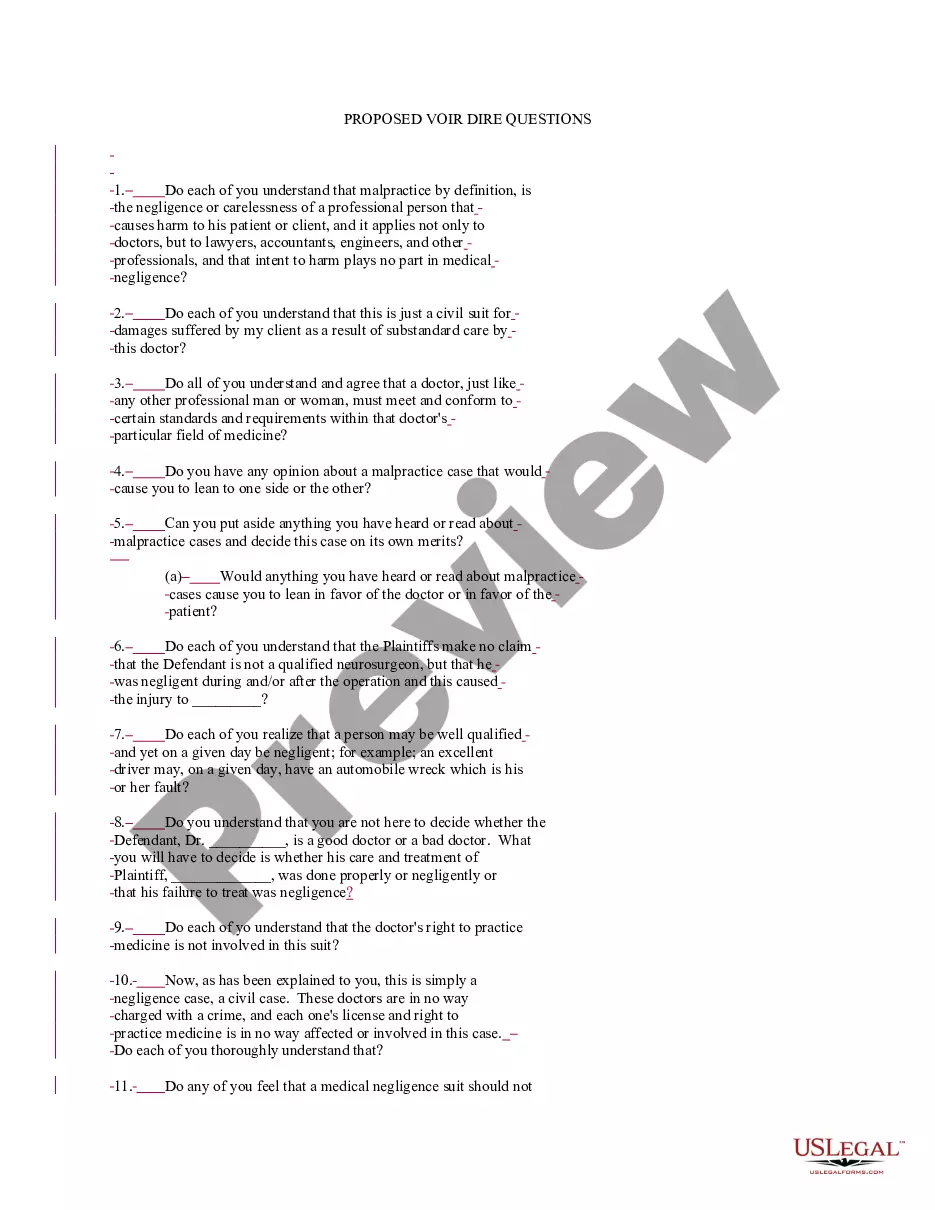
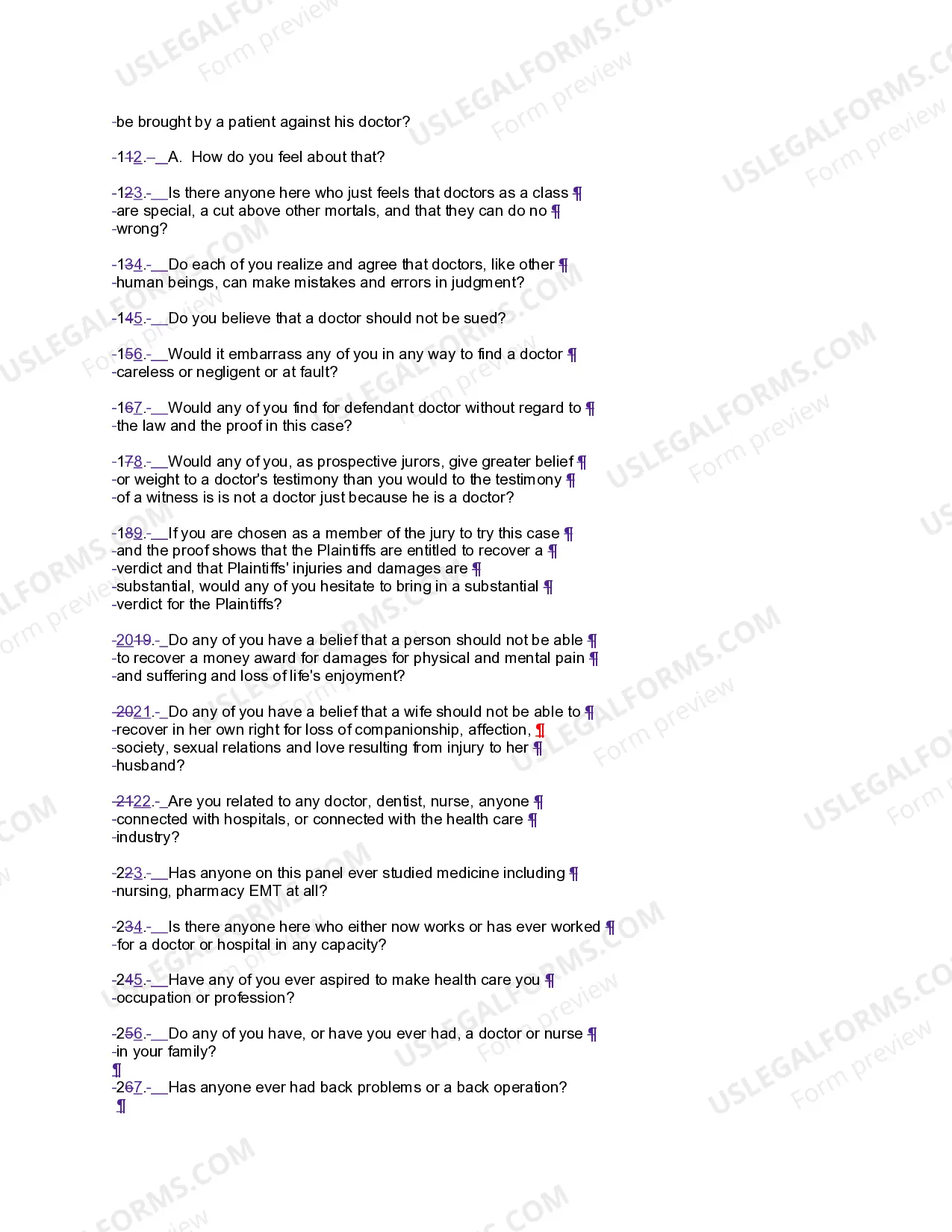
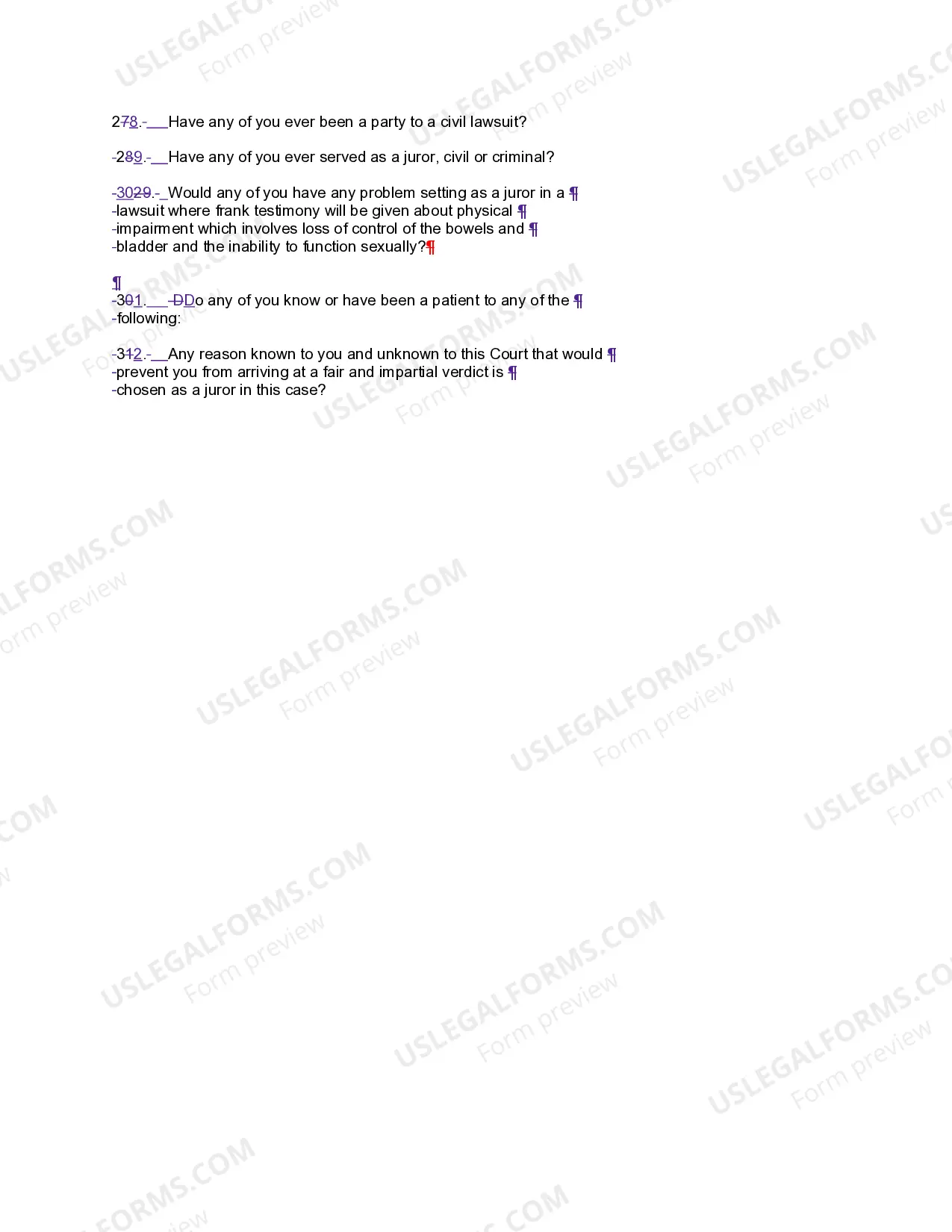
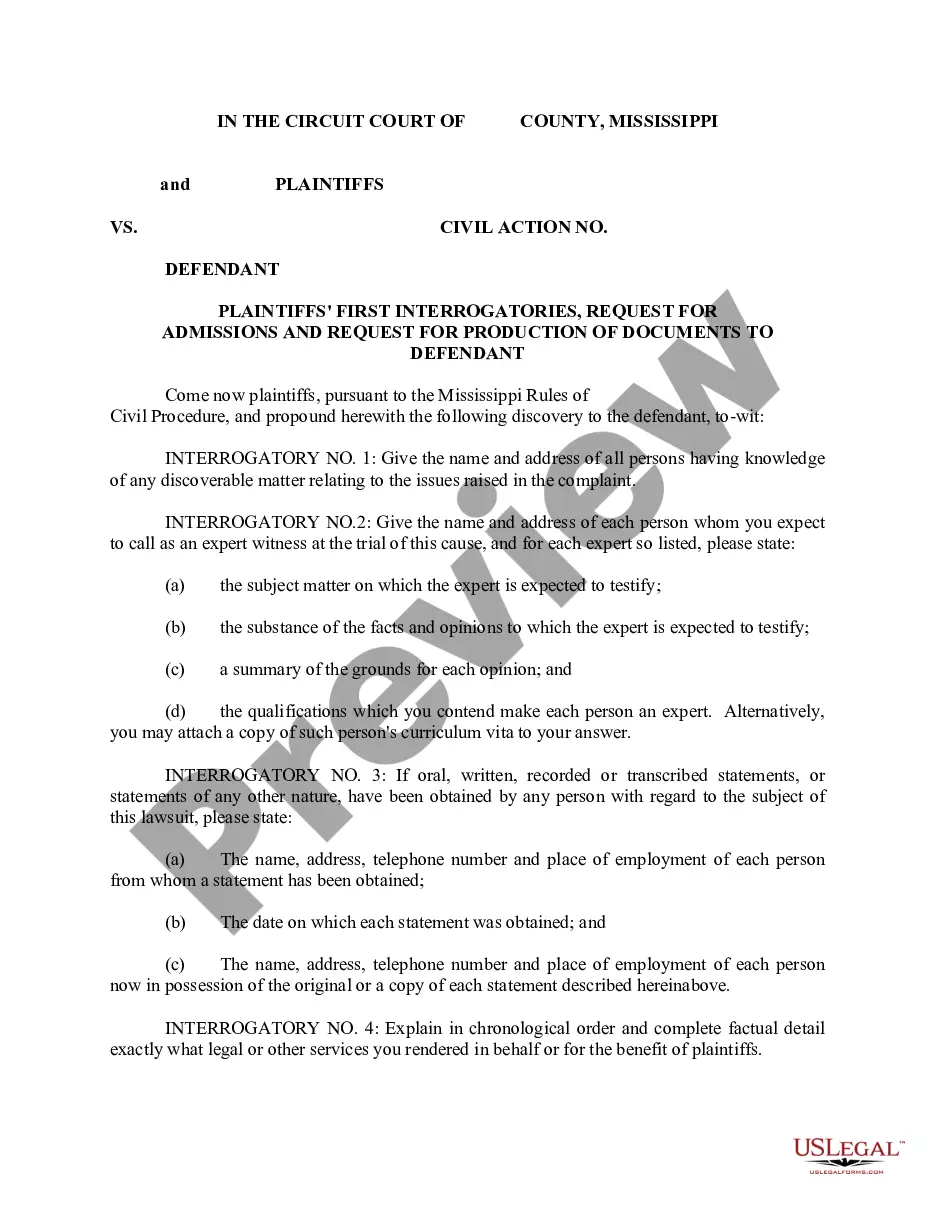
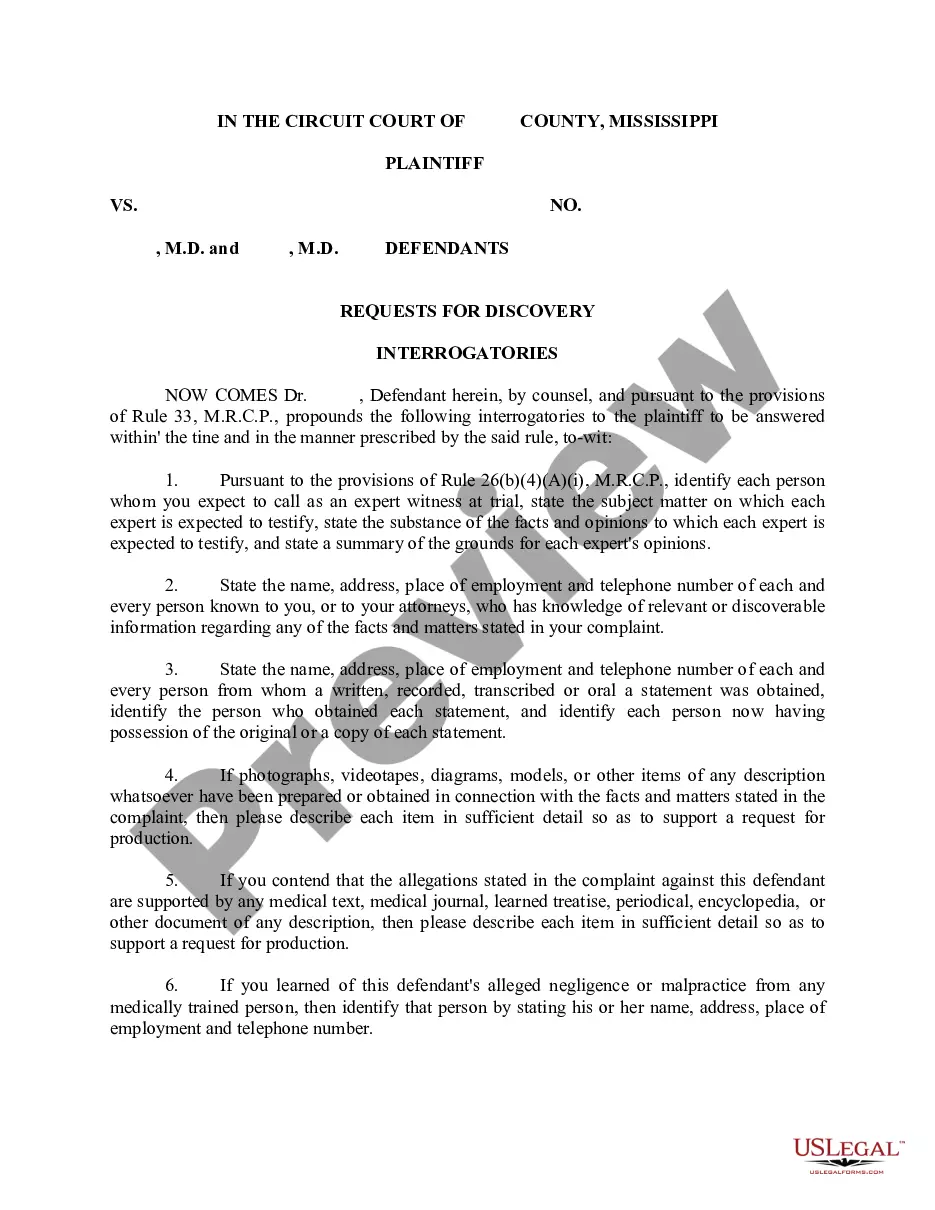
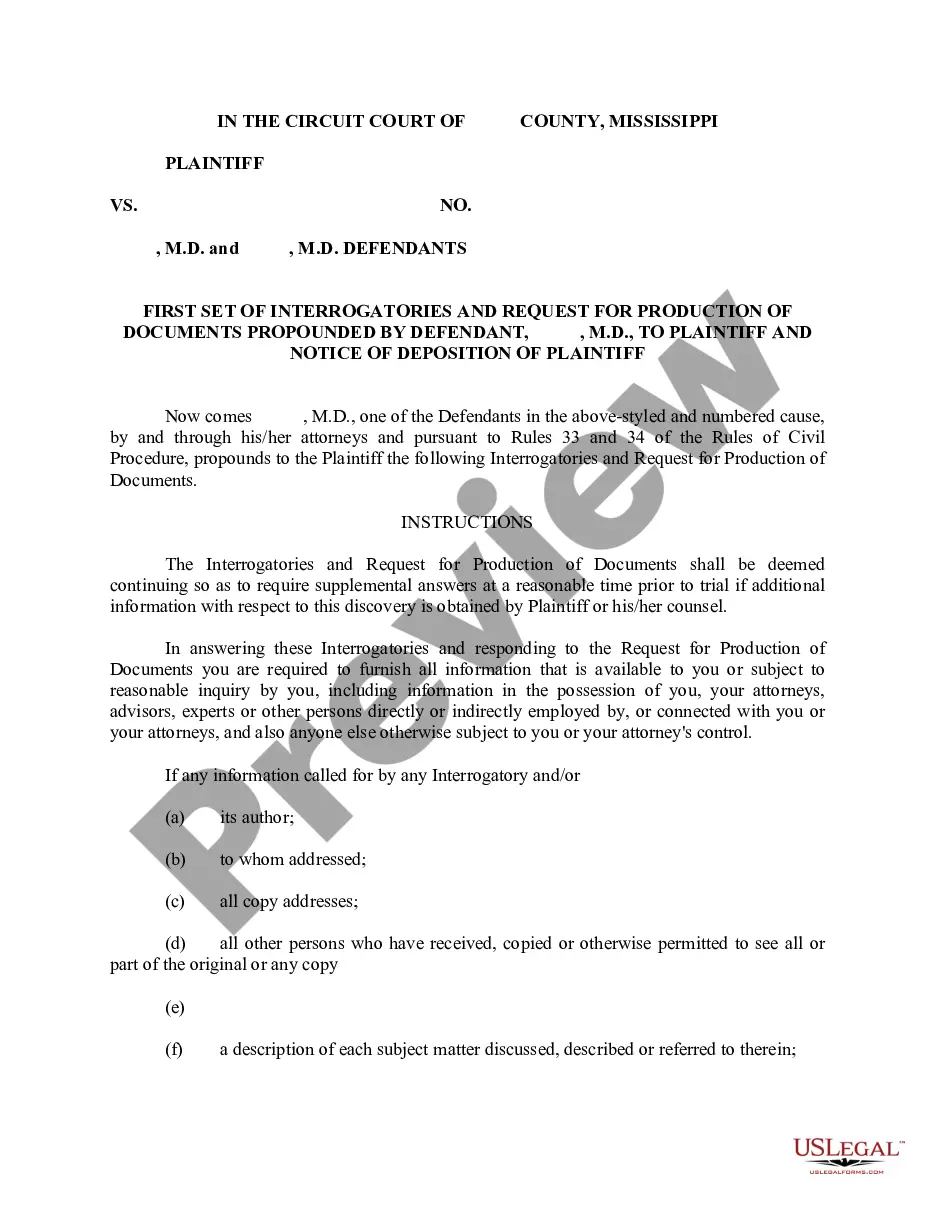
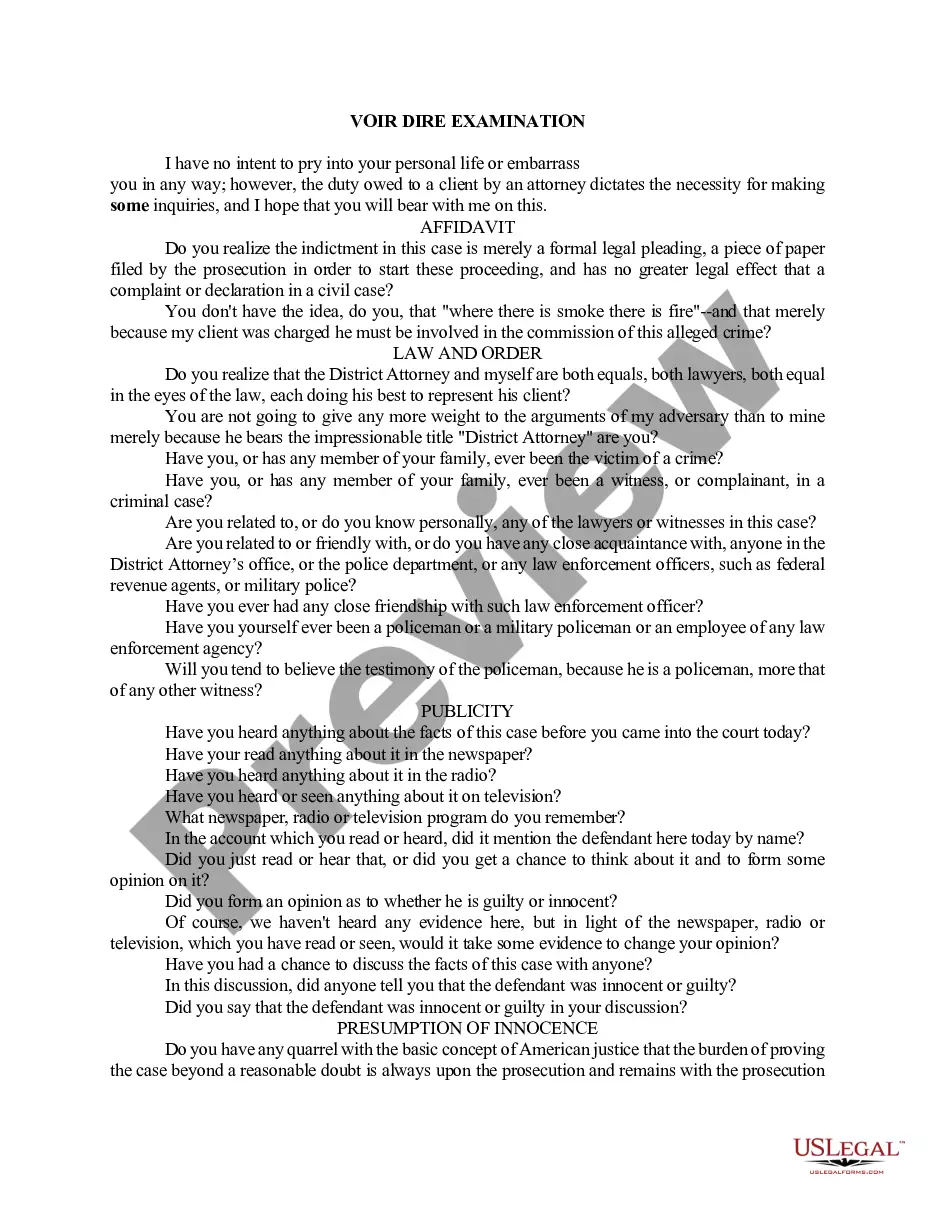
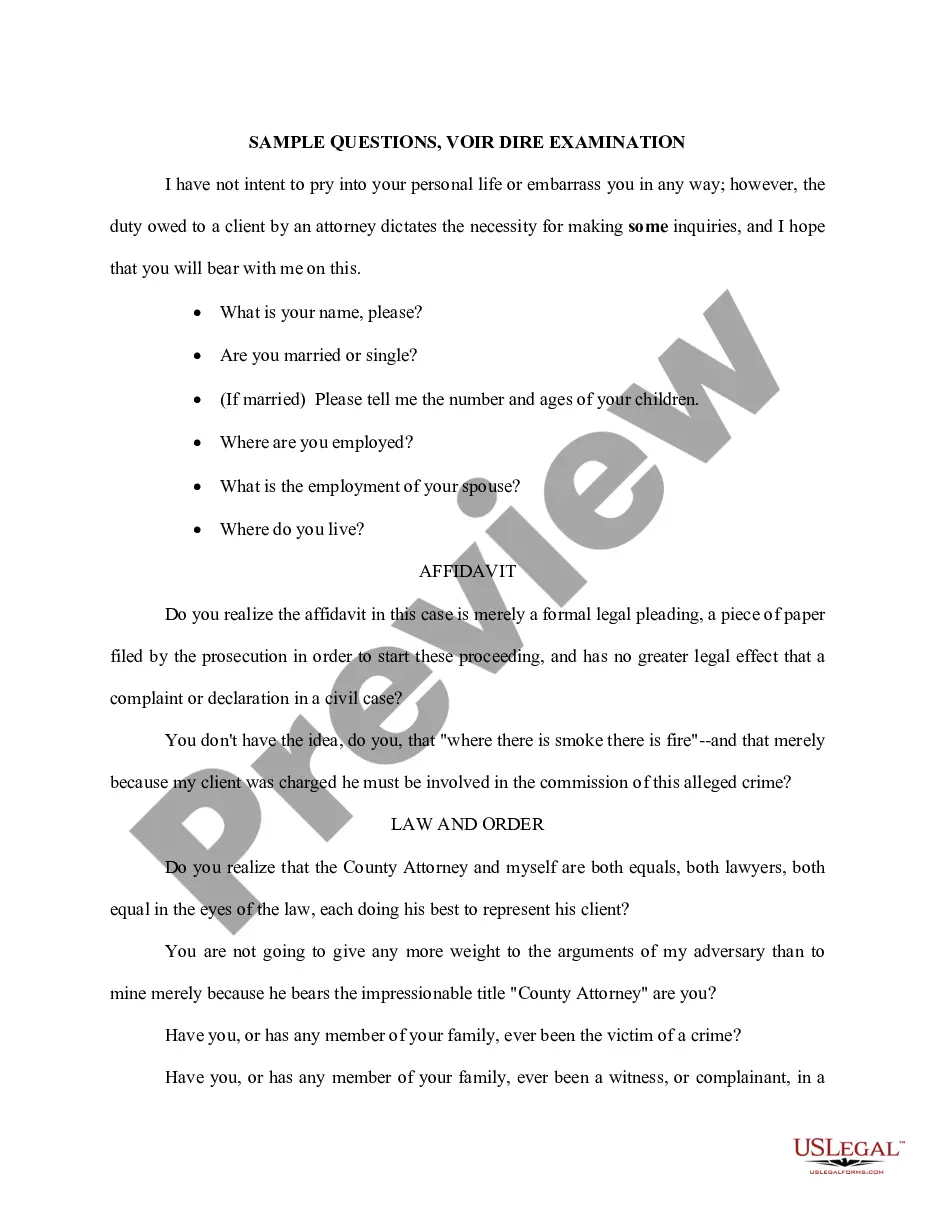
The Voir Dire Questions in a Medical Malpractice suit is a document designed to assist attorneys in selecting jurors for a medical malpractice trial. This form provides a sample set of questions that can be posed to potential jurors to determine their biases, understandings, and opinions regarding medical malpractice. It empowers legal professionals to effectively gauge juror attitudes, ensuring a fair trial process. Unlike general jury selection forms, this document specifically addresses aspects related to medical negligence, making it tailored for cases in the healthcare field.
Main sections of this form
- Understanding of medical malpractice and its implications.
- Clarification of civil versus criminal implications in malpractice cases.
- Assessment of potential biases towards healthcare professionals.
- Exploration of jurors' beliefs regarding patient compensation and doctor accountability.
- Inquiries into jurors' personal connections to the medical field or medical practitioners.
- Identification of any prior experiences or opinions that may affect impartiality.
When to use this document
This form should be used during the jury selection process in medical malpractice cases. It is vital for attorneys to assess juror attitudes towards medical professionals and the concept of negligence. By utilizing these voir dire questions, lawyers can identify potential jurors who may hold biases that could impact the trial's outcome or the fairness of the jury's verdict.
Intended users of this form
This form is intended for:
- Attorneys representing plaintiffs or defendants in medical malpractice cases.
- Legal professionals involved in jury selection or trial preparation.
- Law students or new attorneys preparing for courtroom procedures.
How to prepare this document
- Download the form in Word or Rich Text format.
- Review the list of questions provided within the form.
- Modify the questions to fit the specifics of your case and the individuals involved.
- Prepare to present the questions during the jury selection process.
- Note any responses or juror attitudes that may indicate bias relevant to your case.
Notarization guidance
Notarization is not commonly needed for this form. However, certain documents or local rules may make it necessary. Our notarization service, powered by Notarize, allows you to finalize it securely online anytime, day or night.
Get your form ready online
Our built-in tools help you complete, sign, share, and store your documents in one place.
Make edits, fill in missing information, and update formatting in US Legal Forms—just like you would in MS Word.
Download a copy, print it, send it by email, or mail it via USPS—whatever works best for your next step.
Sign and collect signatures with our SignNow integration. Send to multiple recipients, set reminders, and more. Go Premium to unlock E-Sign.
If this form requires notarization, complete it online through a secure video call—no need to meet a notary in person or wait for an appointment.
We protect your documents and personal data by following strict security and privacy standards.

Make edits, fill in missing information, and update formatting in US Legal Forms—just like you would in MS Word.

Download a copy, print it, send it by email, or mail it via USPS—whatever works best for your next step.

Sign and collect signatures with our SignNow integration. Send to multiple recipients, set reminders, and more. Go Premium to unlock E-Sign.

If this form requires notarization, complete it online through a secure video call—no need to meet a notary in person or wait for an appointment.

We protect your documents and personal data by following strict security and privacy standards.
Typical mistakes to avoid
- Failing to adjust questions to reflect the particulars of each case.
- Overlooking the biases of jurors who have personal connections to the medical field.
- Asking leading or biased questions that could skew juror responses.
- Neglecting to prepare follow-up questions based on jurors' responses.
Why use this form online
- Convenient downloading allows for immediate access and modification.
- Editability of digital formats makes customization easy to fit your case needs.
- Reliability of templates drafted by licensed attorneys for accuracy and comprehensiveness.
Legal use & context
- This form aids in juror selection, ensuring fairness in the judicial process for medical malpractice cases.
- Responses garnered from the questions can significantly impact case strategy.
- Utilizing well-crafted voir dire questions enhances the ability to select impartial jurors.
Summary of main points
- The Voir Dire Questions form is crucial for effective jury selection in medical malpractice cases.
- Customized questions can help attorneys identify juror biases that may influence trial outcomes.
- This form is versatile and applicable in various jurisdictions, but local rules should always be considered.
Looking for another form?



Form popularity
FAQ
Adopt the proper orientation. Set the stage for jurors. Get them talking. Ask open-ended questions. Avoid the Socially Desirable Response Bias. Focus on difficulty vs. Use alternative route to uncover bias. Design questions using bad answers.
Questions to Ask Your Lawyer How does the judge in my case conduct jury selection? Can you do Internet research on potential jurors? Who would make the best juror in my case? What type of juror does opposing counsel want?
Relevant Life Experiences. In selecting (or de-selecting) a potential juror, one important element to consider is the person's previous life experience as it relates to the case at hand. Social Pressure. Online Activity. Legal Opinions. Ability to Be Impartial.
In voir dire, you should ask questions about jurors' attitudes and beliefs. You want to ask about people's views on government regulations, corporations and jury damage awards. Ask questions in such a way that the people who raise their hands are the jurors you who will ultimately disagree with your case.
Lawyers and judges select juries by a process known as voir dire, which is Latin for to speak the truth. In voir dire, the judge and attorneys for both sides ask potential jurors questions to determine if they are competent and suitable to serve in the case.
For instance, sometimes questions in voir dire get very personal. If jurors believe a question is too personal, they can try to refuse to answer on those grounds, let the judge know, and the judge would make the decision.
Section 226, subdivision (d), states that, All challenges to an individual juror, except a peremptory challenge, shall be taken, first by the defendants, and then by the people or plaintiffs. Almost every judge will have the attorneys exercise challenges for cause at sidebar.
Attorneys ask questions of potential jurors to determine juror attitudes, biases, and their ability to truly be an impartial juror. The attorneys will inquire about you personally, and will also ask questions about your friends, families, and acquaintances.
When the plaintiff picks jurors, they're looking for those who are very sympathetic, who are willing to view the prosecution as the victim in the case. Very often, union employees make for good prosecution jurors as they are used to fighting injustice.