Maine Renunciation and Disclaimer of Property received by Intestate Succession
What this document covers
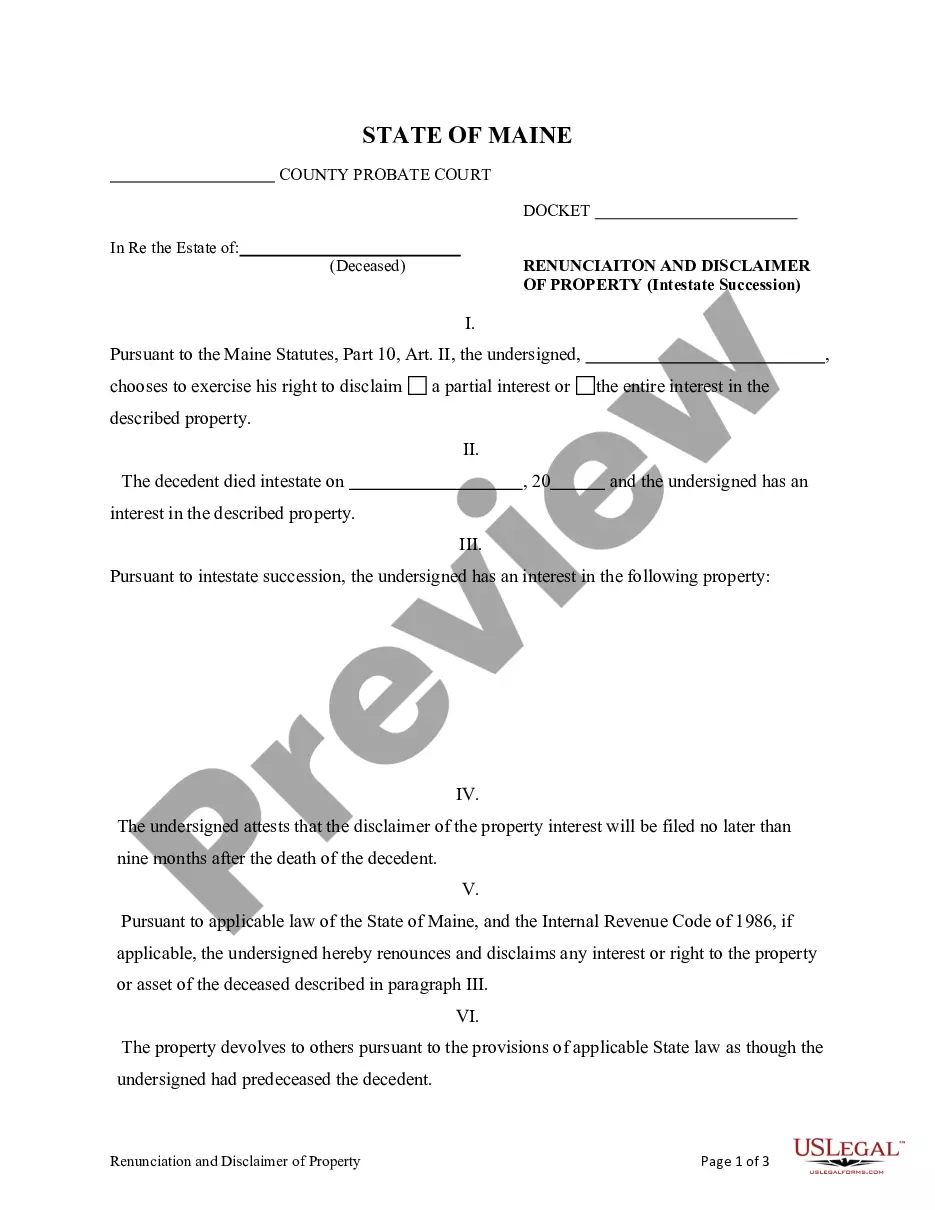
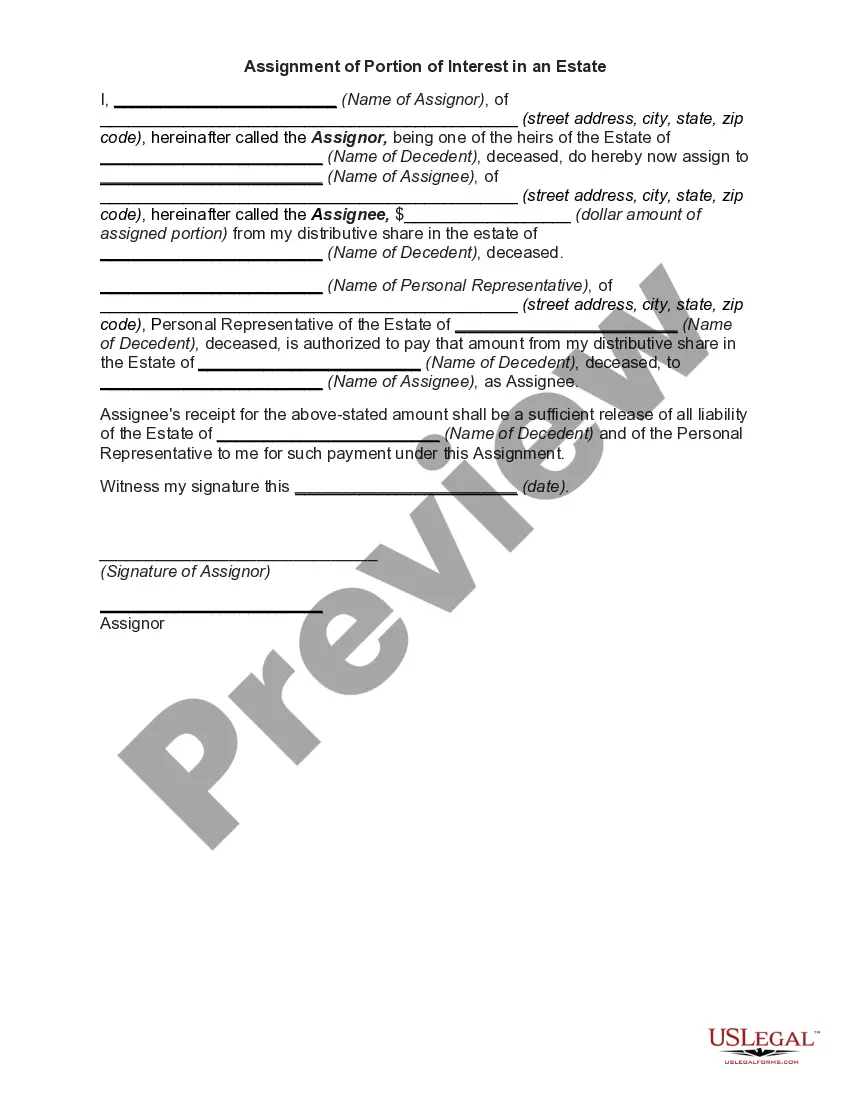
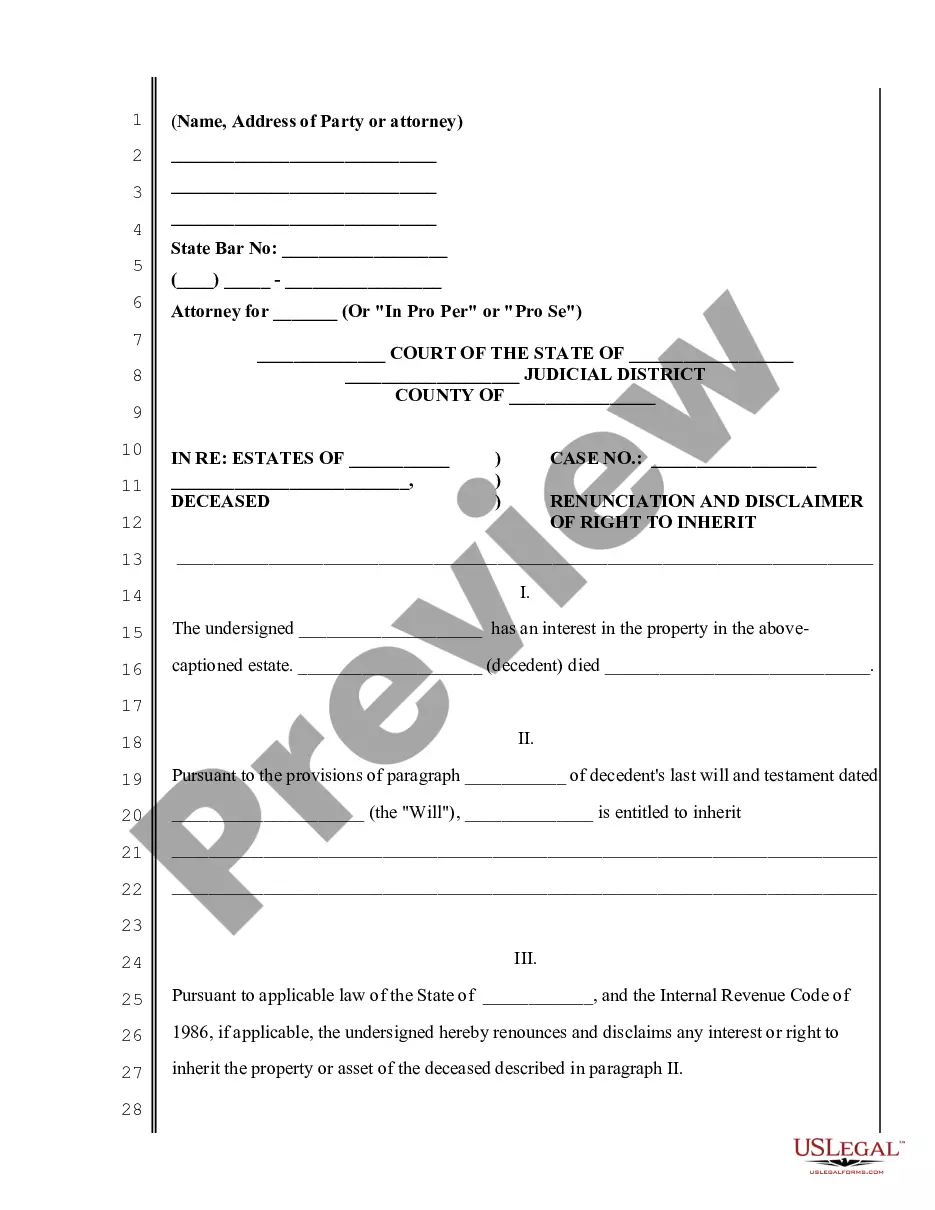
The Maine Renunciation and Disclaimer of Property received by intestate succession is a legal document that allows a beneficiary to formally refuse their inheritance from a decedent who died without a valid will. This form is essential for beneficiaries who wish to renounce their interest in an estate, effectively allowing the property to pass on to other heirs as if they had predeceased the decedent. Unlike basic disclaimers, this form adheres specifically to Maine statutes governing intestate succession.
Key components of this form
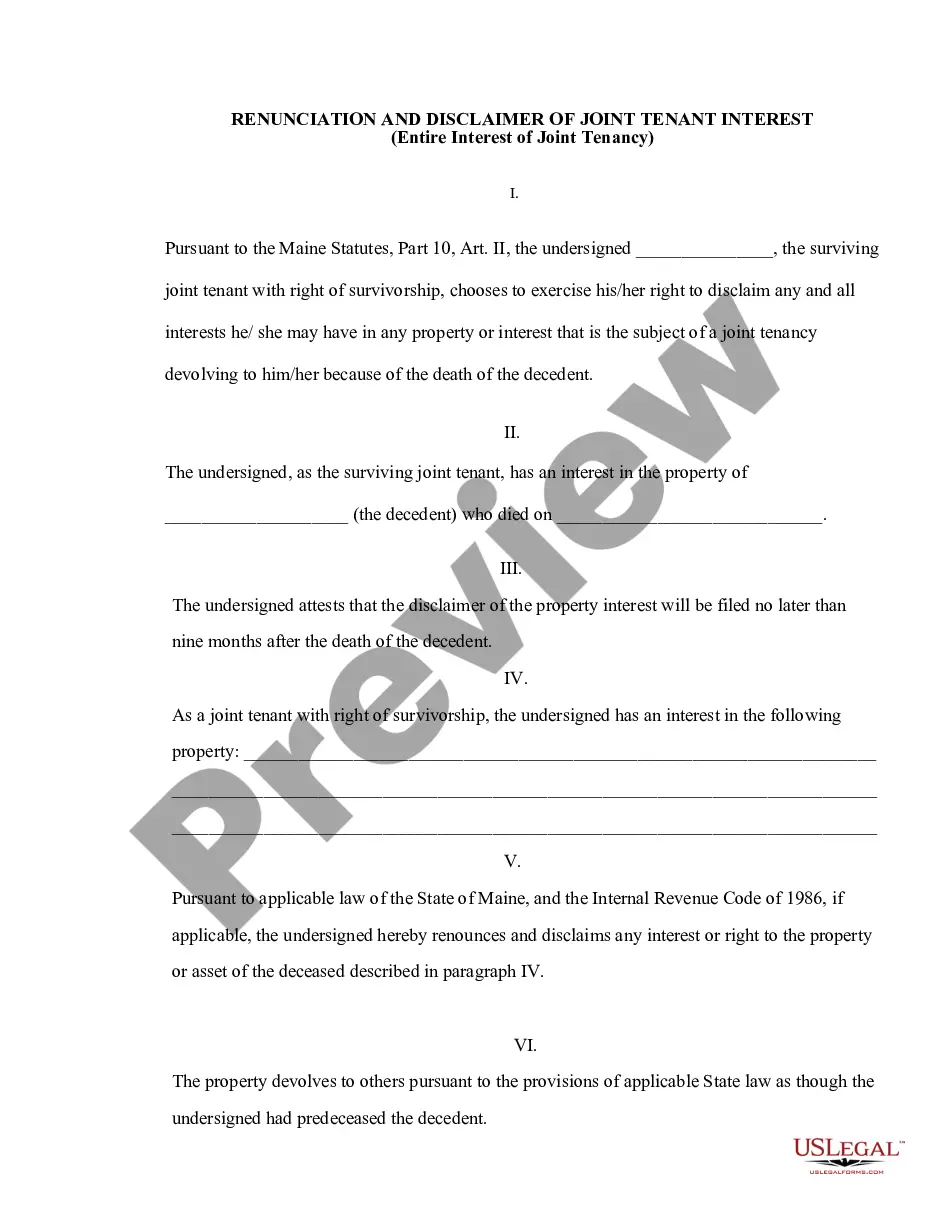
- Section on renouncing specific interests in property or assets.
- Provision indicating that the property will transfer to other heirs as if the beneficiary had predeceased the decedent.
- Irrevocable declaration that the renunciation takes effect from the date of the decedent's death.
- Acknowledgment section specific to Maine State law.
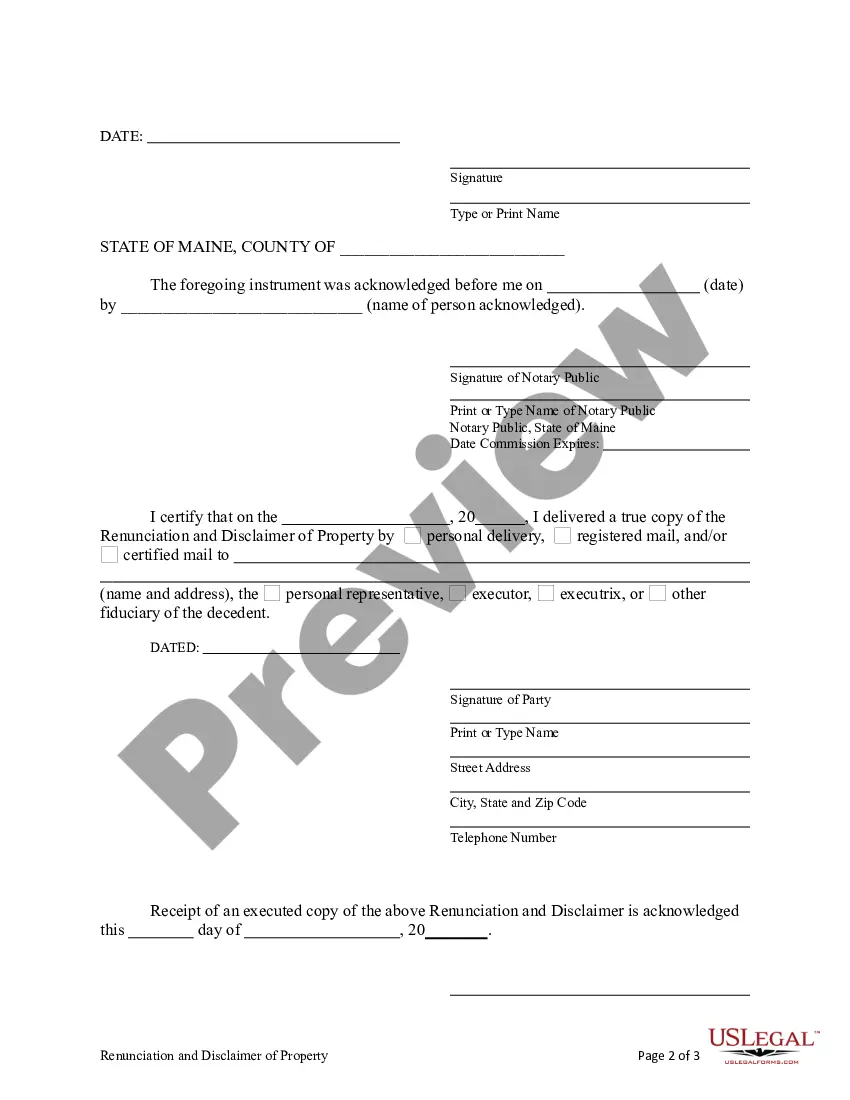
- Certificate of delivery to confirm receipt by the personal representative of the decedent.
When this form is needed
This form is typically used when a beneficiary inherits property from a decedent who did not leave a will, but wishes to deny their entitlement. Situations may include circumstances where the beneficiary does not want to manage the property, wishes to avoid tax implications, or intends for the inheritance to benefit other potential heirs. It is important to file this form promptly after the decedent's death to ensure the renunciation is legally recognized.
Who needs this form
The following individuals may need this form:
- Beneficiaries of an estate in Maine who wish to relinquish their claim to inherited property.
- Individuals aware of heirs who may be more suitable for the management of the property.
- Those who prefer to pass their inheritance to other designated beneficiaries.
- People seeking to comply with Maine inheritance laws and legal requirements.
Completing this form step by step
- Identify the beneficiary and the property being disclaimed.
- Clearly state the intention to renounce any interest in the specified property.
- Confirm that the renunciation is irrevocable and relates back to the date of the decedent's death.
- Sign the form in front of a witness, if required.
- Deliver the completed form to the personal representative or executor of the estate.
Does this document require notarization?
This form does not typically require notarization unless specified by local law. However, having a witness may be necessary to strengthen its validity during the submission process. Always check with local legal guidelines to ensure compliance.
Get your form ready online
Our built-in tools help you complete, sign, share, and store your documents in one place.
Make edits, fill in missing information, and update formatting in US Legal Forms—just like you would in MS Word.
Download a copy, print it, send it by email, or mail it via USPS—whatever works best for your next step.
Sign and collect signatures with our SignNow integration. Send to multiple recipients, set reminders, and more. Go Premium to unlock E-Sign.
If this form requires notarization, complete it online through a secure video call—no need to meet a notary in person or wait for an appointment.
We protect your documents and personal data by following strict security and privacy standards.

Make edits, fill in missing information, and update formatting in US Legal Forms—just like you would in MS Word.

Download a copy, print it, send it by email, or mail it via USPS—whatever works best for your next step.

Sign and collect signatures with our SignNow integration. Send to multiple recipients, set reminders, and more. Go Premium to unlock E-Sign.

If this form requires notarization, complete it online through a secure video call—no need to meet a notary in person or wait for an appointment.

We protect your documents and personal data by following strict security and privacy standards.
Common mistakes to avoid
- Failing to sign the form properly, which can lead to it being deemed invalid.
- Not delivering the form within the required timeframe after the decedent's death.
- Incorrectly identifying the property or assets involved in the renunciation.
- Ignoring specific state guidelines that govern the disclaiming process.
Advantages of online completion
- Convenient access: Download and complete the form at your own pace.
- Editability: Modify the document as needed before finalizing your decision.
- Reliability: The form is drafted by licensed attorneys, ensuring compliance with legal standards.
Looking for another form?
Form popularity
FAQ
Transferring property after a parent's death without a will can be complex. Typically, you may need to go through intestate succession laws to distribute the property according to state guidelines. In Maine, you can utilize the Maine Renunciation and Disclaimer of Property received by Intestate Succession to formally renounce your rights, if desired. For a clear step-by-step process tailored to your situation, US Legal Forms offers a wealth of templates and instructions.
Next of kin meaning In the event of someone's death, next of kin may also be used to describe the person or people who stand to inherit the most. This is usually the spouse or civil partner, but it could also be their children or parents in certain circumstances.
Intestacy refers to the condition of an estate of a person who dies without a will, and owns property with a total value greater than that of their outstanding debts.Typically, property goes to a surviving spouse first, then to any children, then to extended family and descendants, following common law.
Intestate succession specifically refers to the order in which spouses, children, siblings, parents, cousins, great-aunts/uncles, second cousins twice removed, etc. are entitled to inherit from a family member when no will or trust exists.
An heir is a person who is legally entitled to collect an inheritance, when a deceased person did not formalize a last will and testament. Generally speaking, heirs who inherit the property are children, descendants or other close relatives of the decedent.
Children - if there is no surviving married or civil partner If there is no surviving partner, the children of a person who has died without leaving a will inherit the whole estate. This applies however much the estate is worth. If there are two or more children, the estate will be divided equally between them.
If there is no surviving partner, the children of a person who has died without leaving a will inherit the whole estate. This applies however much the estate is worth. If there are two or more children, the estate will be divided equally between them.
Intestate succession specifically refers to the order in which spouses, children, siblings, parents, cousins, great-aunts/uncles, second cousins twice removed, etc. are entitled to inherit from a family member when no will or trust exists.
If you pass away without making one, in legal jargon, you are said to have died intestate. The Irish rules on intestacy will dictate how your estate your assets, money and possessions will be allocated.If one partner dies, they will not automatically inherit from each other unless there is a will.