Kentucky Renunciation and Disclaimer of Property received by Intestate Succession
About this form
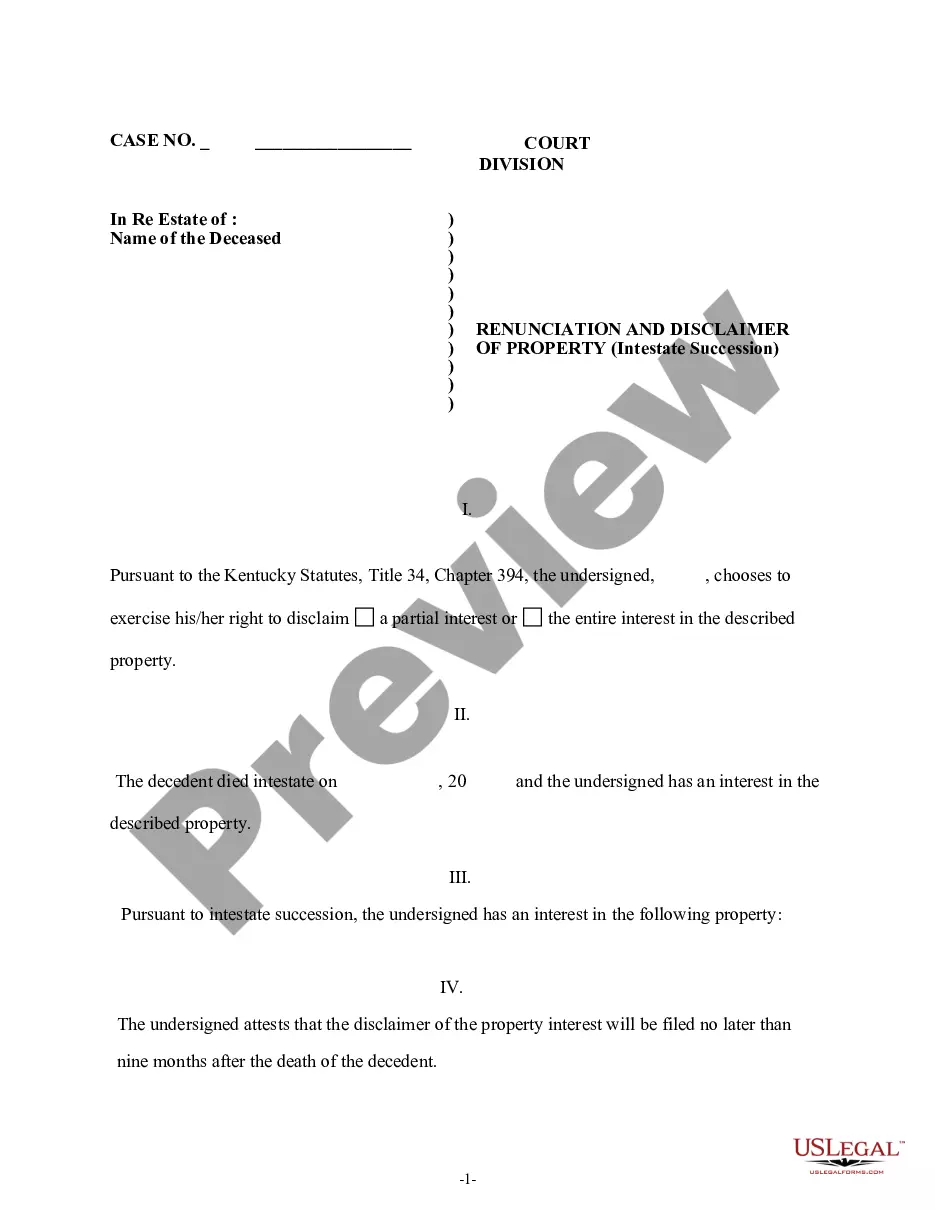
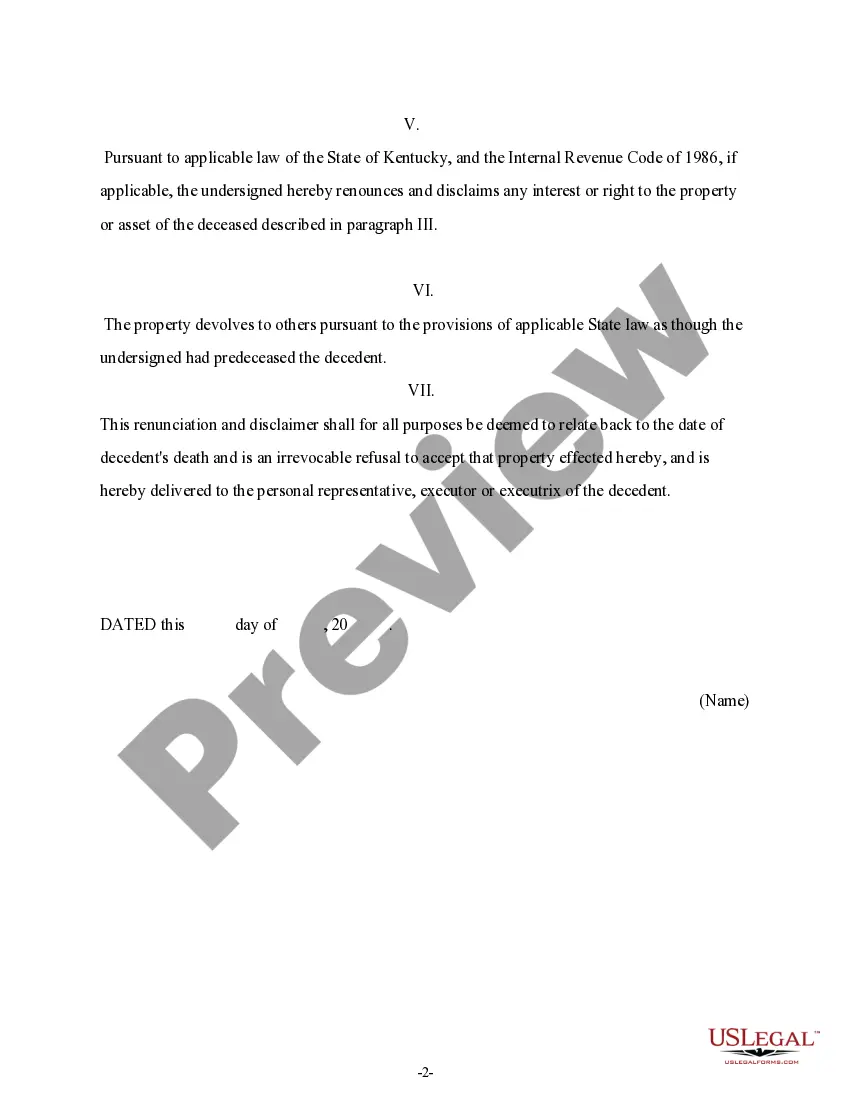
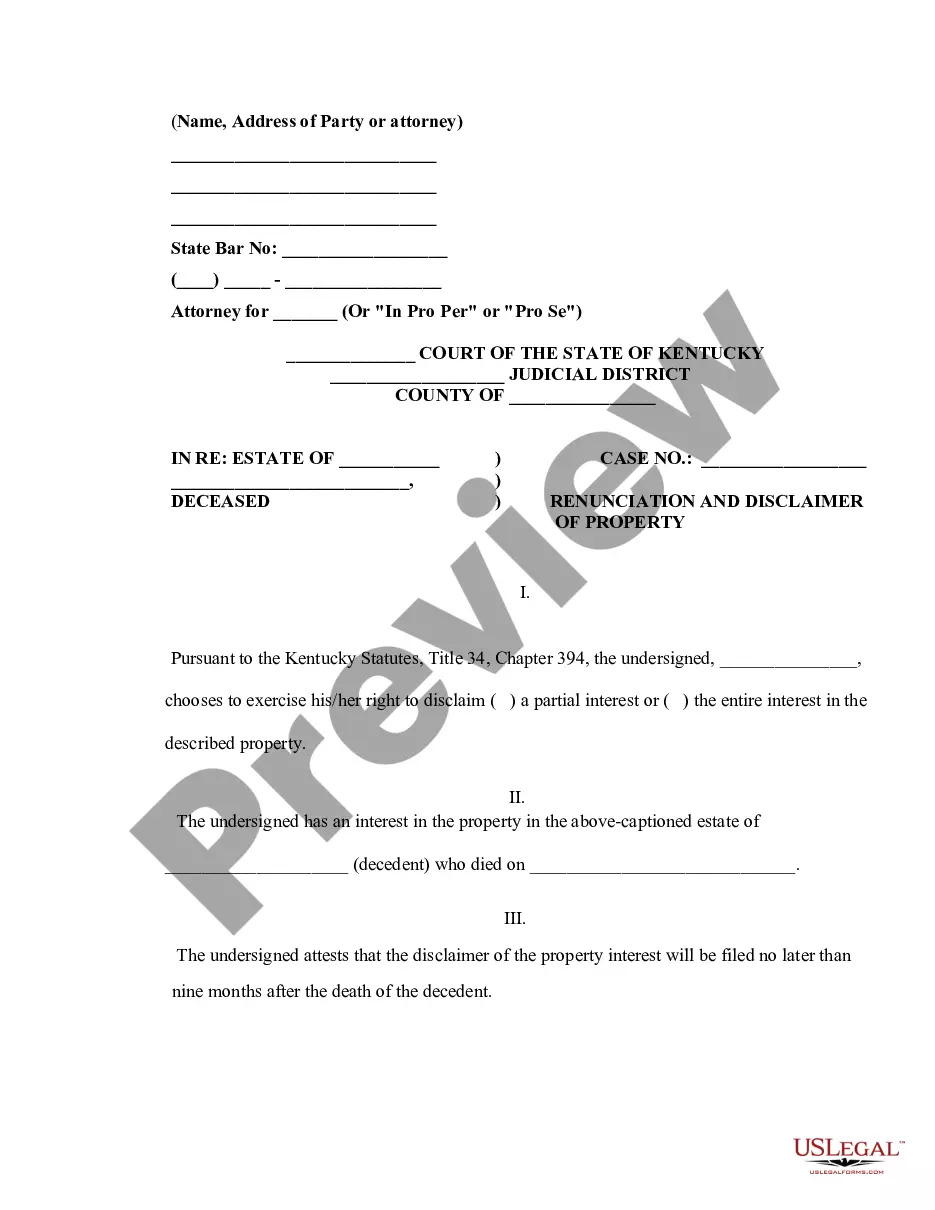
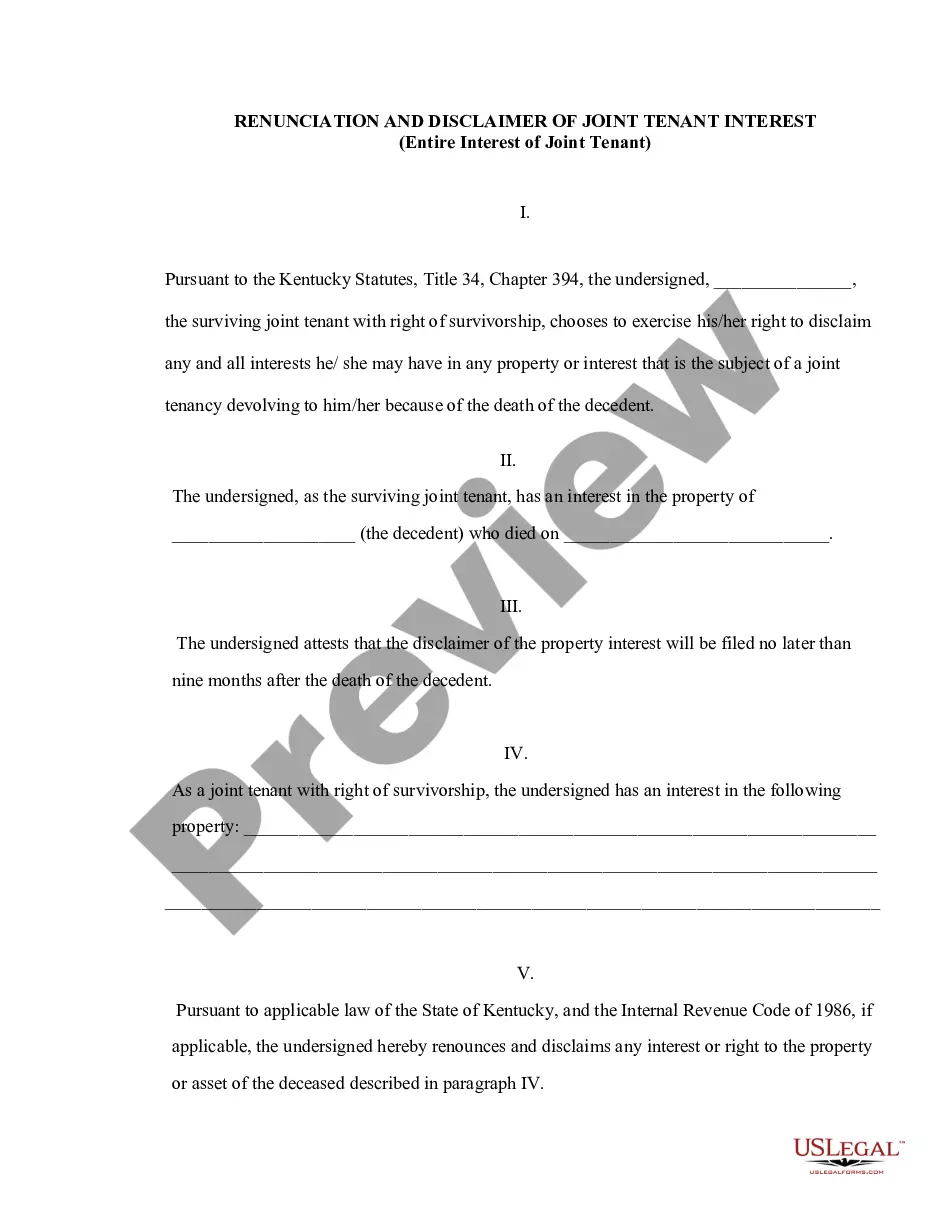
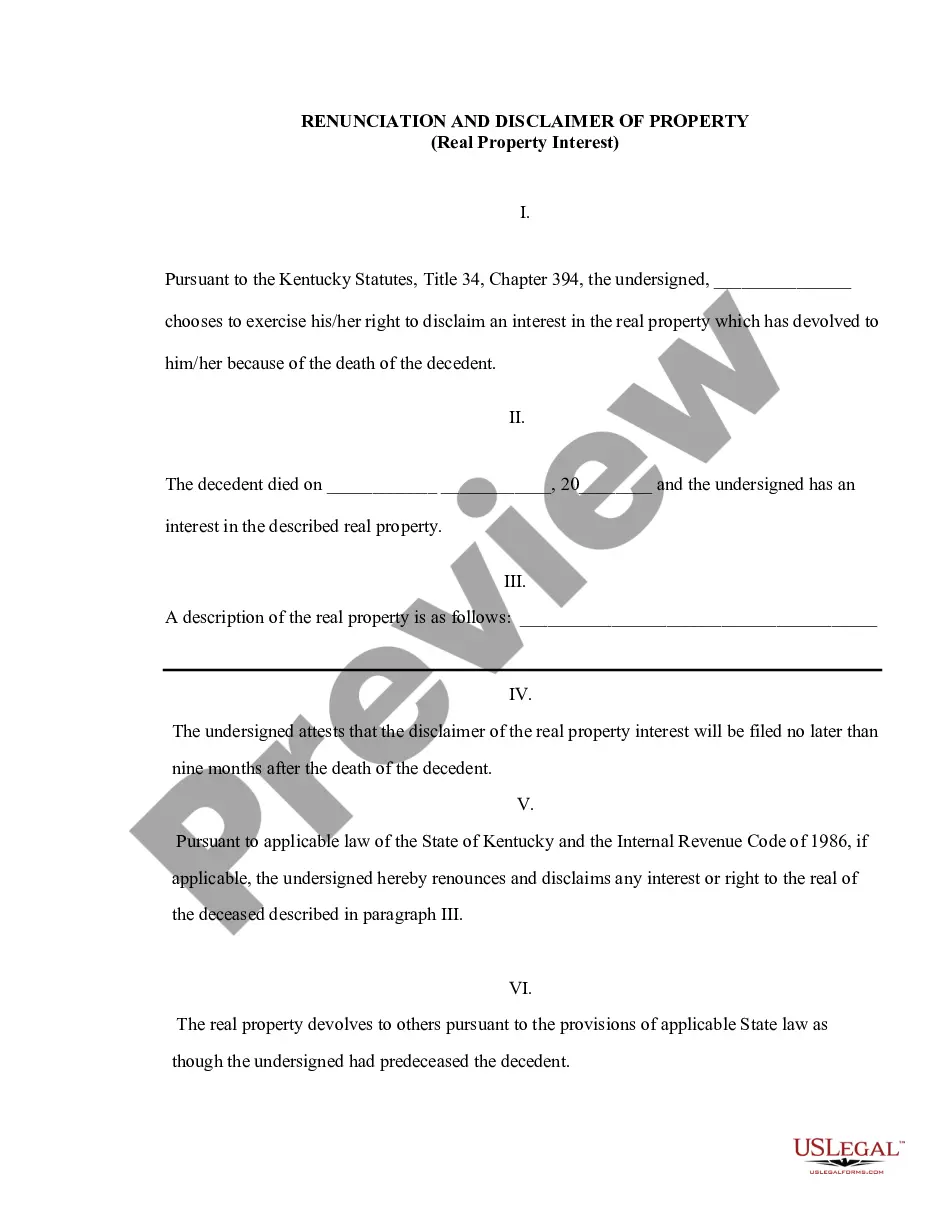
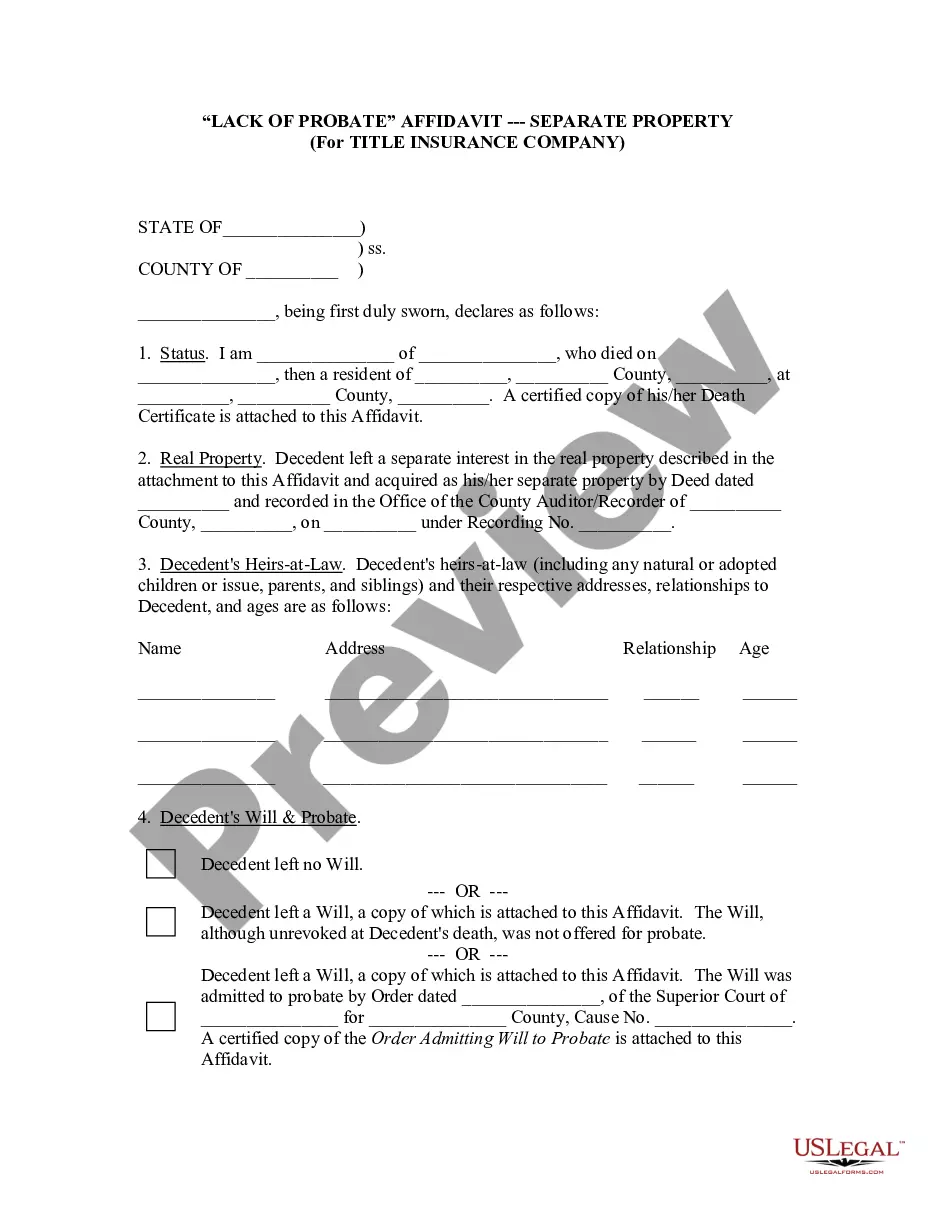
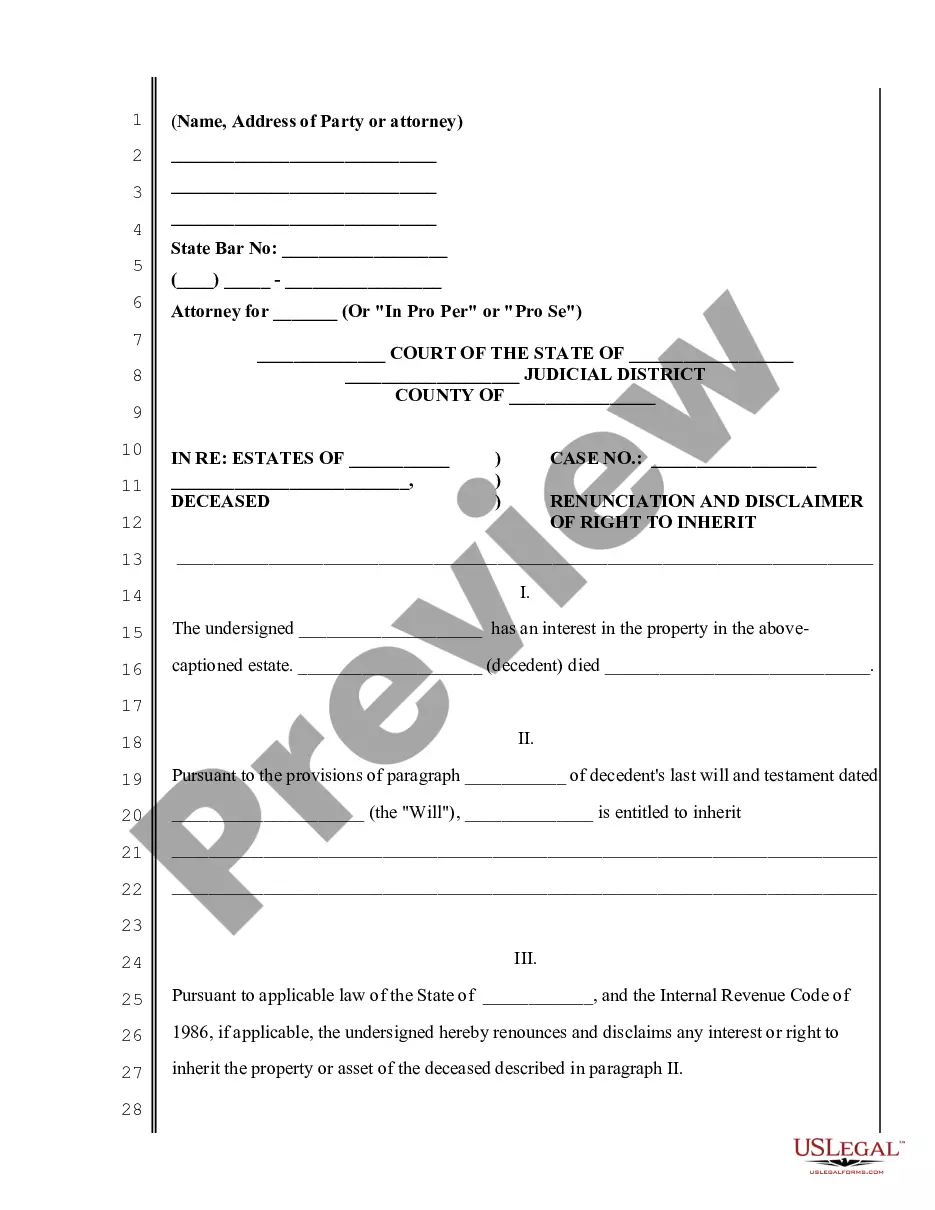
The Kentucky Renunciation and Disclaimer of Property received by Intestate Succession is a legal document that allows a beneficiary to formally refuse their inheritance from a decedent who died without a will. This form is used when the beneficiary decides to disclaim part or all of their interest in the property, ensuring that it passes to other heirs according to Kentucky's intestate succession laws. This form is distinct from other estate planning documents, as it serves a specific purpose of renouncing inherited property rather than transferring or managing it.
Form components explained
- Identification of the decedent and the property involved.
- Statement of the beneficiary's decision to disclaim all or part of their interest.
- Certification of the disclaimer's submission within the required nine-month period.
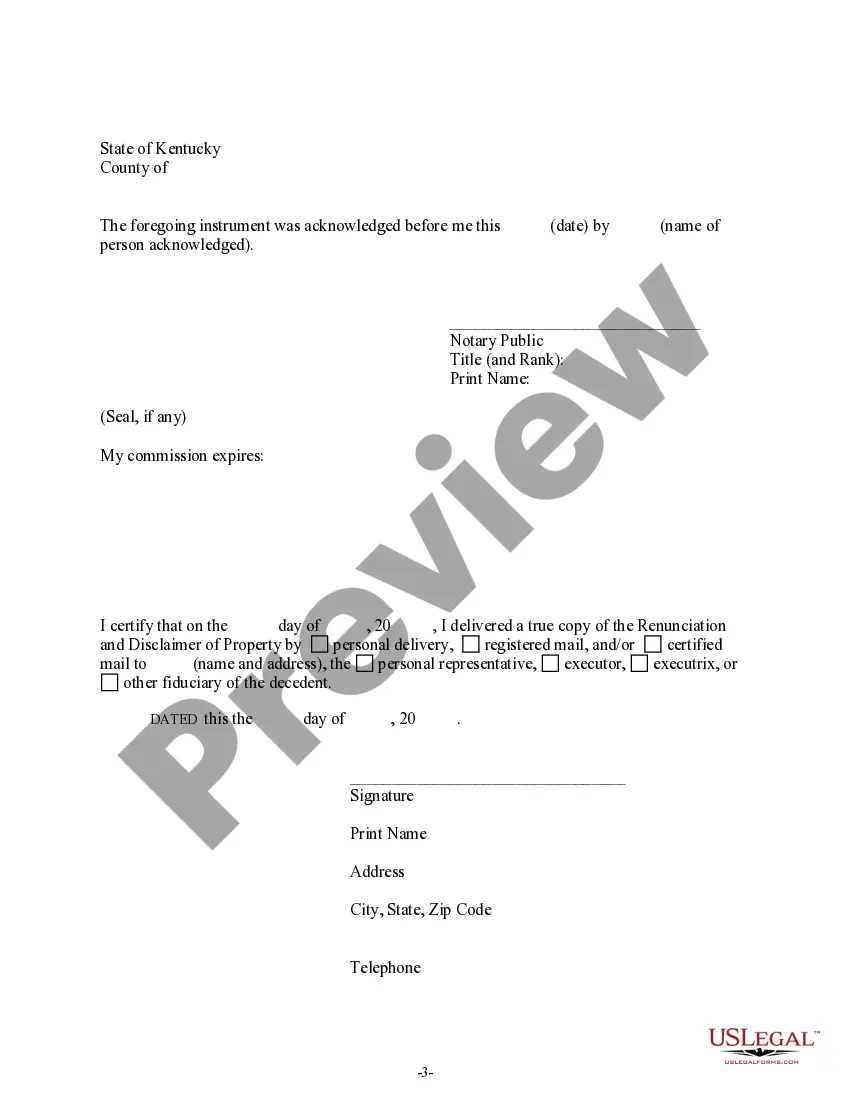
- State-specific acknowledgment to verify understanding of the implications of the disclaimer.
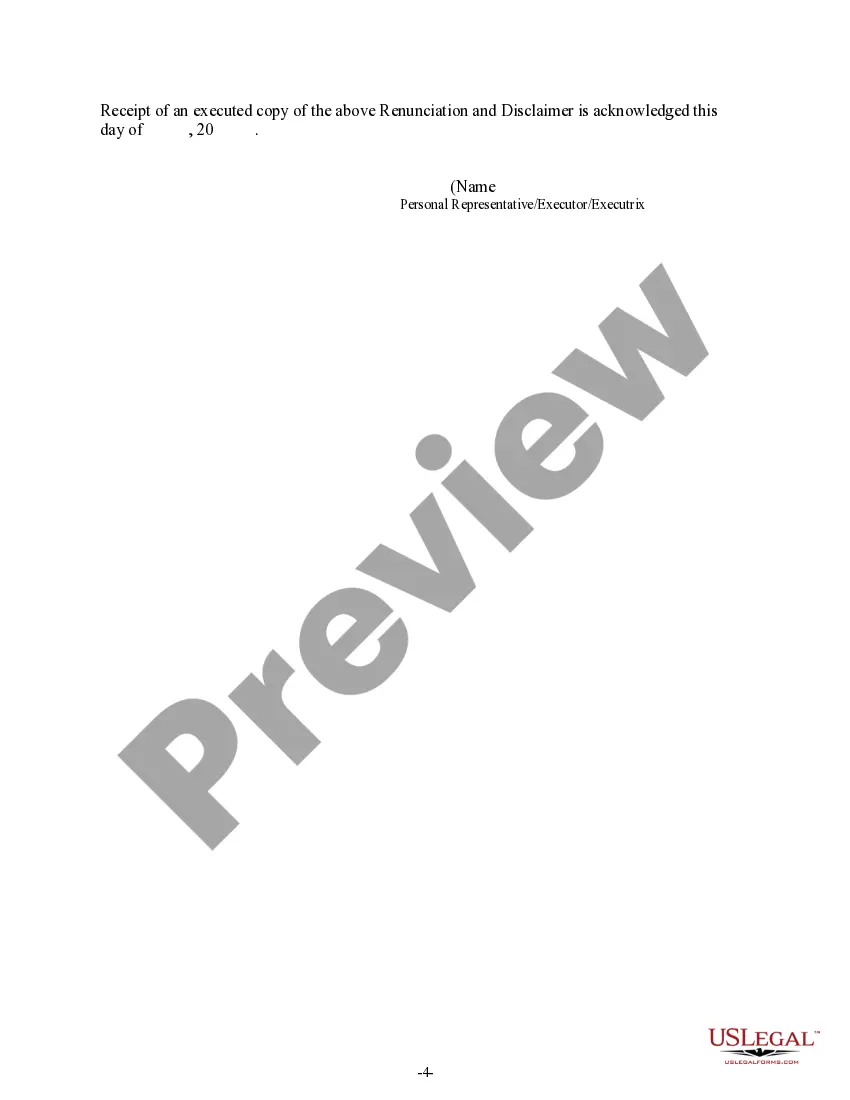
- Certificate of delivery to validate notice to other interested parties.
Situations where this form applies
This form is necessary when a beneficiary inherits property through intestate succession but wishes to refuse it. Scenarios for use include situations where accepting the inheritance may lead to tax liabilities, debts associated with the property, or personal circumstances that make retaining the property undesirable. Filing this form ensures that assets are directed to alternate heirs as per Kentucky law.
Intended users of this form
- Beneficiaries who have received property through intestate succession in Kentucky.
- Individuals who wish to disclaim their share of inheritance for financial or personal reasons.
- Heirs seeking to ensure that their inheritance passes to other designated beneficiaries.
How to prepare this document
- Identify the decedent's full name and date of death.
- Clearly specify the property you are disclaiming.
- Indicate whether you are renouncing all or part of your interest.
- Sign and date the disclaimer within nine months of the decedent's death.
- Ensure that the certificate of delivery is included for record-keeping.
Does this form need to be notarized?
This form does not typically require notarization unless specified by local law. However, make sure to review any additional requirements that may be applicable to your situation.
Get your form ready online
Our built-in tools help you complete, sign, share, and store your documents in one place.
Make edits, fill in missing information, and update formatting in US Legal Forms—just like you would in MS Word.
Download a copy, print it, send it by email, or mail it via USPS—whatever works best for your next step.
Sign and collect signatures with our SignNow integration. Send to multiple recipients, set reminders, and more. Go Premium to unlock E-Sign.
If this form requires notarization, complete it online through a secure video call—no need to meet a notary in person or wait for an appointment.
We protect your documents and personal data by following strict security and privacy standards.

Make edits, fill in missing information, and update formatting in US Legal Forms—just like you would in MS Word.

Download a copy, print it, send it by email, or mail it via USPS—whatever works best for your next step.

Sign and collect signatures with our SignNow integration. Send to multiple recipients, set reminders, and more. Go Premium to unlock E-Sign.

If this form requires notarization, complete it online through a secure video call—no need to meet a notary in person or wait for an appointment.

We protect your documents and personal data by following strict security and privacy standards.
Common mistakes
- Failing to submit the disclaimer within the nine-month timeframe.
- Not clearly specifying which parts of the inheritance are being disclaimed.
- Omitting the required signatures and dates, leading to invalidation of the form.
Benefits of using this form online
- Convenience of downloading the form anytime and from anywhere.
- Editability allows for customization to fit specific inheritance situations.
- Reliability of attorney-drafted templates that comply with Kentucky law.
Key takeaways
- The form allows beneficiaries to renounce property inherited through intestate succession.
- It must be filed within nine months of the decedent's death to be valid.
- The refusal of property can benefit both the renouncing beneficiary and other potential heirs.
Looking for another form?
Form popularity
FAQ
Who Inherits When There's No Will? Intestate succession laws determine how to distribute assets among them when no will is in place. This varies between states. Generally, a spouse receives most of the assets and property, followed by children, parents, grandparents, and other blood relatives of the deceased.
An heir is a person who is legally entitled to collect an inheritance, when a deceased person did not formalize a last will and testament. Generally speaking, heirs who inherit the property are children, descendants or other close relatives of the decedent.
In Kentucky, if you die without a will, your spouse will inherit property from you under a law called dower and curtesy. Usually, this means that your spouse inherits 1/2 of your intestate property. The rest of your property passes to your descendants, parents, or siblings.
Intestate succession specifically refers to the order in which spouses, children, siblings, parents, cousins, great-aunts/uncles, second cousins twice removed, etc. are entitled to inherit from a family member when no will or trust exists.
Children - if there is no surviving married or civil partnerIf there is no surviving partner, the children of a person who has died without leaving a will inherit the whole estate. This applies however much the estate is worth. If there are two or more children, the estate will be divided equally between them.
How Is Next of Kin Determined? To determine next of kin in California, go down the list until someone exists in the category listed.For example, if decedent had no surviving spouse or registered domestic partner, but was survived by adult children, then the adult children would be next of kin.
Children - if there is no surviving married or civil partner If there is no surviving partner, the children of a person who has died without leaving a will inherit the whole estate. This applies however much the estate is worth. If there are two or more children, the estate will be divided equally between them.
This law states that no matter what your will says, your spouse has a right to inherit one-third or one-half (depending on the state and sometimes depending on the length of the marriage) of your total estate. To exercise this right, your spouse has to petition the probate court to enforce the law.