Iowa Letter from Landlord to Tenant as Notice of Default on Commercial Lease
What is this form?
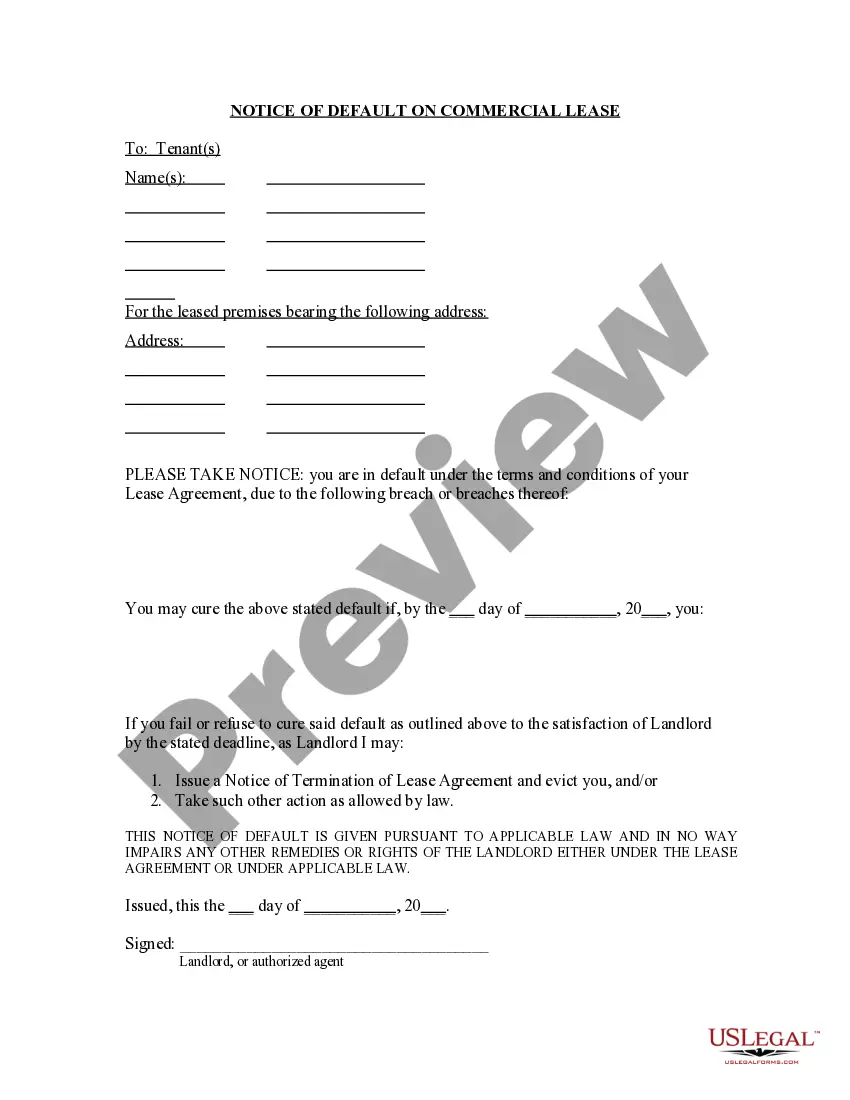
This Letter from Landlord to Tenant as Notice of Default on Commercial Lease is a crucial document in landlord-tenant law. It serves as a formal notification to a tenant that they have breached the lease agreement, typically due to failure to pay rent on time. This notice outlines specific breaches and provides a deadline for the tenant to cure those breaches. If the tenant fails to rectify the situation, the landlord may pursue further legal action, potentially leading to eviction. This form allows landlords to comply with legal requirements and protect their rights.
Key parts of this document
- Identification of the landlord and tenant.
- Details of the lease agreement being referenced.
- Specific breaches of the lease agreement listed.
- A clear deadline for the tenant to cure the breaches.
- Notification of potential actions the landlord may take if the breaches are not cured.
- Date of issuance and signature line for the landlord or authorized agent.
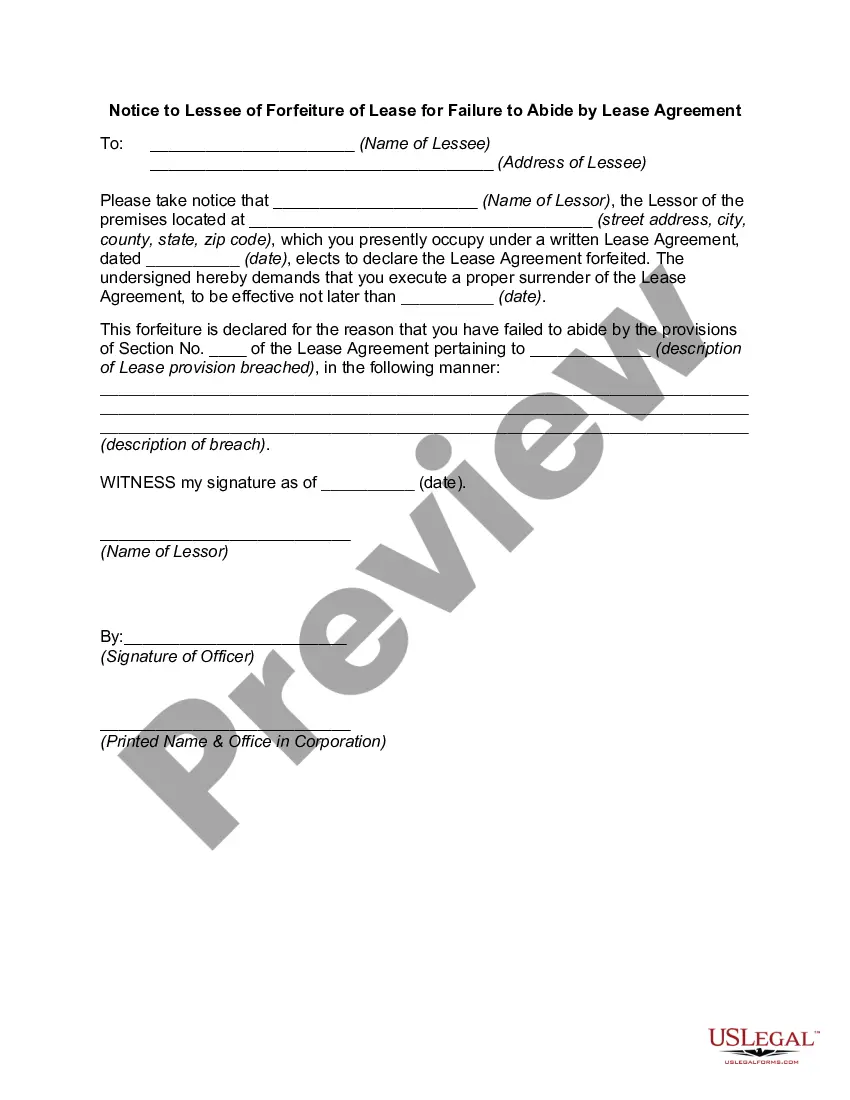
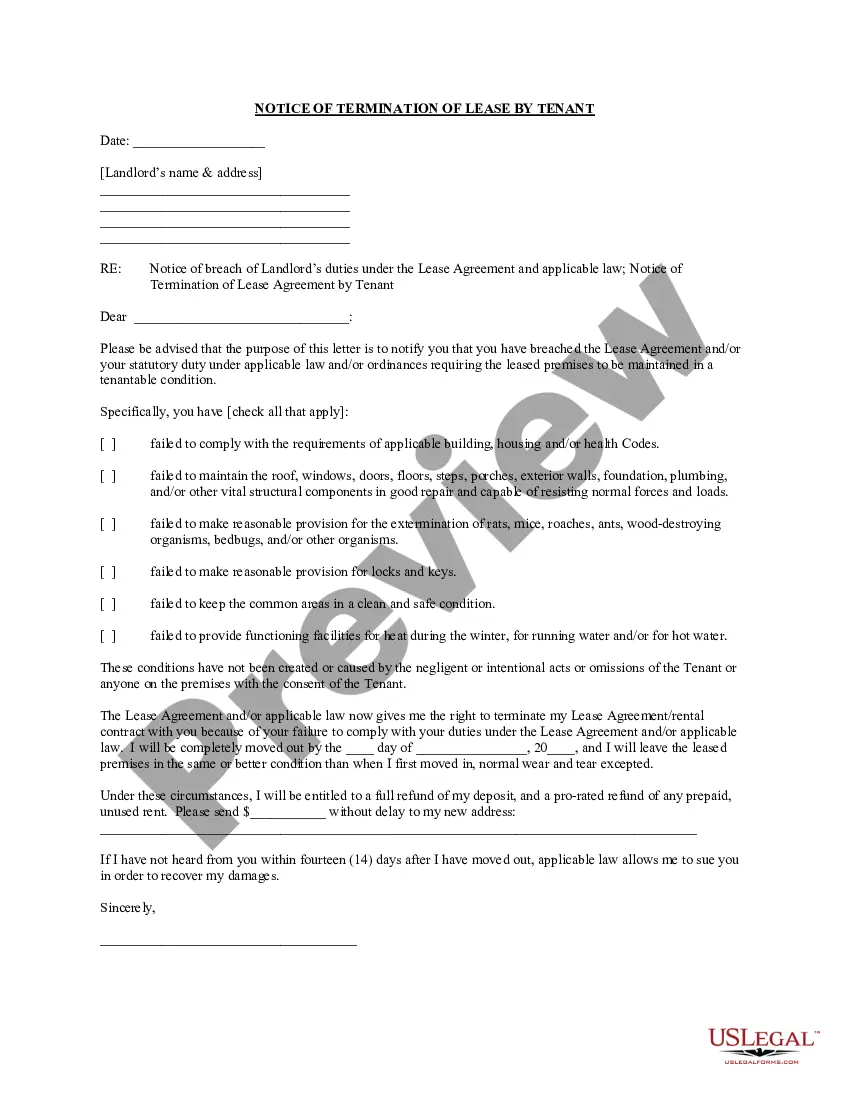
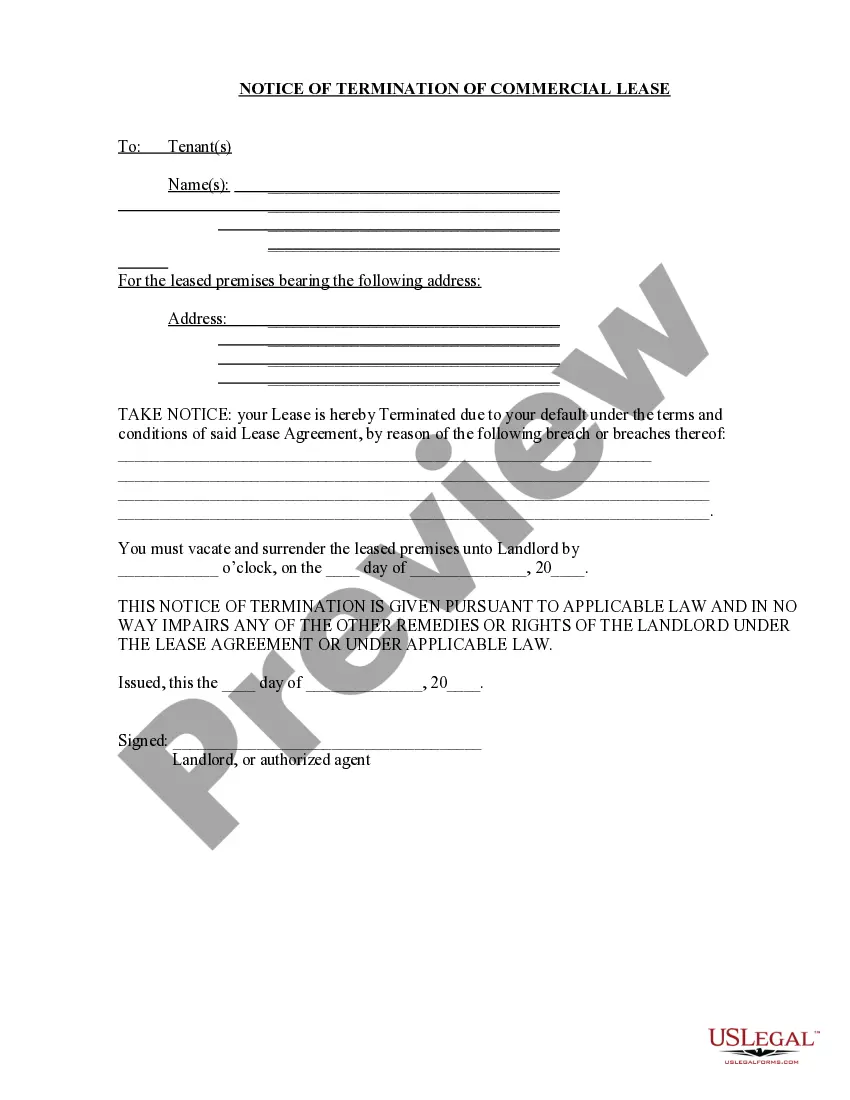
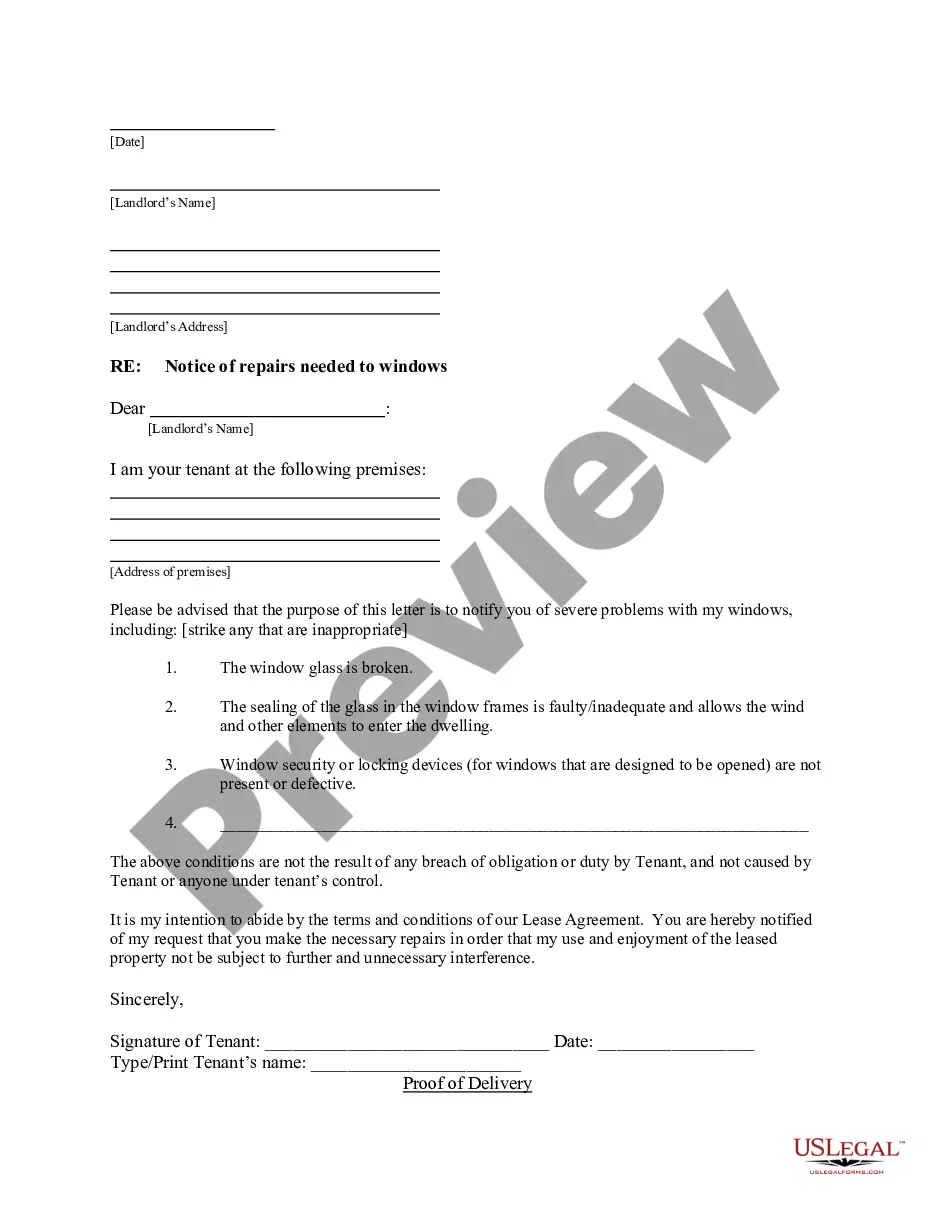
When to use this document
This form should be used when a tenant has failed to meet their obligations under a commercial lease, most commonly for not paying rent. Landlords must provide this notice before initiating eviction proceedings, ensuring legal compliance and granting tenants an opportunity to remedy the situation. It is important to document any breaches formally to protect the landlordâs rights while maintaining a professional relationship with the tenant.
Who can use this document
- Commercial landlords managing rental properties.
- Property managers acting on behalf of landlords.
- Real estate professionals involved in lease agreements.
- Anyone who requires a formal notice to address tenant defaults.
Instructions for completing this form
- Identify the parties involved: the landlord and tenant.
- Specify the lease agreement being referenced, including dates and terms.
- List the specific breaches and violations of the lease.
- Set a clear deadline for the tenant to remedy the breaches.
- Include the date of issuance and sign the form as the landlord or authorized agent.
Is notarization required?
This form does not typically require notarization unless specified by local law. It is always recommended to check specific state requirements to ensure compliance and validity.
Get your form ready online
Our built-in tools help you complete, sign, share, and store your documents in one place.
Make edits, fill in missing information, and update formatting in US Legal Forms—just like you would in MS Word.
Download a copy, print it, send it by email, or mail it via USPS—whatever works best for your next step.
Sign and collect signatures with our SignNow integration. Send to multiple recipients, set reminders, and more. Go Premium to unlock E-Sign.
If this form requires notarization, complete it online through a secure video call—no need to meet a notary in person or wait for an appointment.
We protect your documents and personal data by following strict security and privacy standards.

Make edits, fill in missing information, and update formatting in US Legal Forms—just like you would in MS Word.

Download a copy, print it, send it by email, or mail it via USPS—whatever works best for your next step.

Sign and collect signatures with our SignNow integration. Send to multiple recipients, set reminders, and more. Go Premium to unlock E-Sign.

If this form requires notarization, complete it online through a secure video call—no need to meet a notary in person or wait for an appointment.

We protect your documents and personal data by following strict security and privacy standards.
Typical mistakes to avoid
- Failing to specify the exact breaches of the lease agreement.
- Not providing a reasonable deadline for the tenant to cure the breaches.
- Omitting the date of issuance or signature.
- Using vague language that may lead to confusion or disputes.
Benefits of completing this form online
- Easy access to professionally drafted legal templates.
- Time-saving preparation with instant downloads.
- Ability to customize the form to fit specific scenarios.
- Reliable documentation for legal processes and potential disputes.
Legal use & context
- The notice must adhere to state-specific laws regarding landlord-tenant communications.
- Proper delivery methods, such as certified mail, may be required for legal compliance.
- This notice is a precursor to eviction proceedings and should be taken seriously by tenants.
Quick recap
- This letter serves as an official notice to tenants regarding lease violations.
- Landlords must follow the correct procedure to enforce rights under the lease.
- Providing clear information benefits both landlords and tenants in resolving disputes.
- Using this legally sound template can streamline the process of managing lease defaults.
Looking for another form?
Form popularity
FAQ
A default letter for a commercial tenant outlines specific lease violations and serves as a formal notice of default. This letter is essential for documenting issues such as late payments or breaches of lease terms. When addressing a default, an Iowa Letter from Landlord to Tenant as Notice of Default on Commercial Lease can guide tenants in understanding their responsibilities. By utilizing platforms like uslegalforms, you can easily acquire templates to create effective default letters that meet legal standards.
The most common form of landlord default occurs when a landlord fails to maintain the property or comply with lease terms. This may include neglecting repairs, violating health codes, or failing to provide essential services. In these cases, an Iowa Letter from Landlord to Tenant as Notice of Default on Commercial Lease can formalize the complaint and prompt necessary actions. Such a letter serves as an important step in resolving disputes and protecting the tenant's rights.
An example of a letter of intent to vacate includes your address, the date, and a clear statement of your intention to leave the property. It should also outline any details such as your last day of occupancy and any requests for the return of your security deposit. You might refer to an Iowa Letter from Landlord to Tenant as Notice of Default on Commercial Lease to emphasize legal compliance if applicable. Providing a structured format can enhance the effectiveness of your communication.
To politely ask a tenant to move out, craft a respectful letter that clearly communicates your reasons. Ensure that you maintain a professional tone throughout. Explain the situation regarding the commercial lease and provide ample notice for them to find alternative arrangements. Your approach can foster goodwill and minimize conflict.
When writing to your landlord that you are moving out, begin by stating your current address and the date you plan to vacate. Express gratitude for the time spent in the property and mention any necessary details, such as a final inspection. Also, indicate how you will handle the return of your security deposit. Clarity in your letter helps maintain a positive relationship.
Writing a letter to vacate a tenant involves being clear and direct. Begin with your contact information and the tenant’s details, followed by a statement indicating the lease is being terminated. Specify the last day of occupancy and mention the condition expected when they leave. An Iowa Letter from Landlord to Tenant as Notice of Default on Commercial Lease may also be beneficial in this context.
To write a letter from landlord to tenant to vacate, start with a clear statement of your intention. Include the address of the rental property and the exact date on which the tenant must vacate. It's important to provide a reason for the notice, such as default on a commercial lease. Utilizing a professional format ensures that your communication is taken seriously.
If a landlord defaults on their obligations, such as failure to provide necessary repairs or services, tenants have legal options available. They may issue a complaint to the landlord, and if unresolved, could potentially seek legal remedies. Understanding your rights as a tenant under an Iowa Letter from Landlord to Tenant as Notice of Default on Commercial Lease is essential for protecting your interests.
When you default on a commercial lease, the landlord can take several steps to enforce the lease terms. They may send an Iowa Letter from Landlord to Tenant as Notice of Default on Commercial Lease, giving you a specific timeframe to rectify the situation. Ignoring this notice can result in escalating consequences, such as court action or termination of your lease.
If you default on a commercial lease, the consequences can be severe, including potential legal actions initiated by your landlord. The landlord may issue an Iowa Letter from Landlord to Tenant as Notice of Default on Commercial Lease to officially address the breach and outline required actions. This might lead to eviction or additional financial penalties, making it crucial to address the issue swiftly.