Iowa Renunciation and Disclaimer of Real Property Interest
Understanding this form
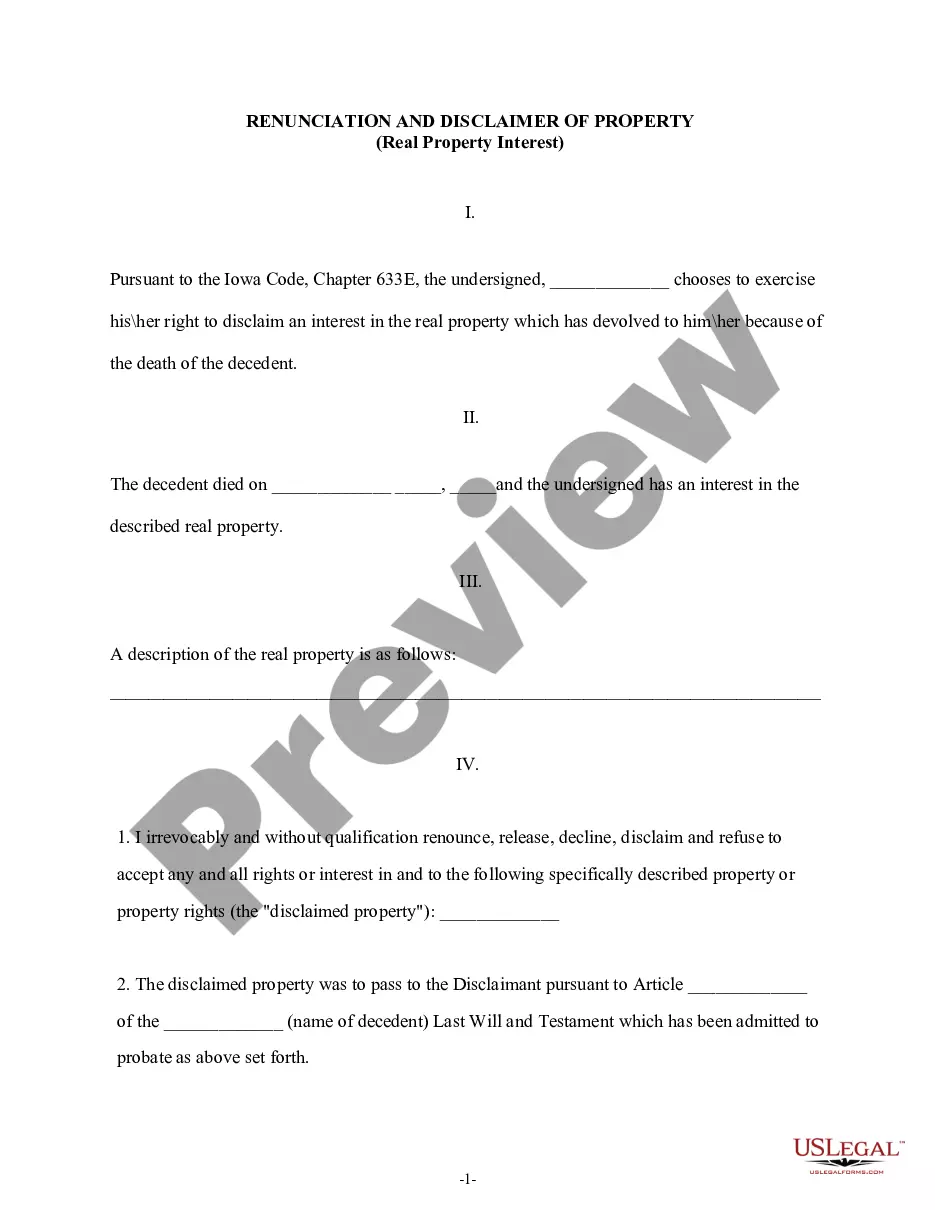
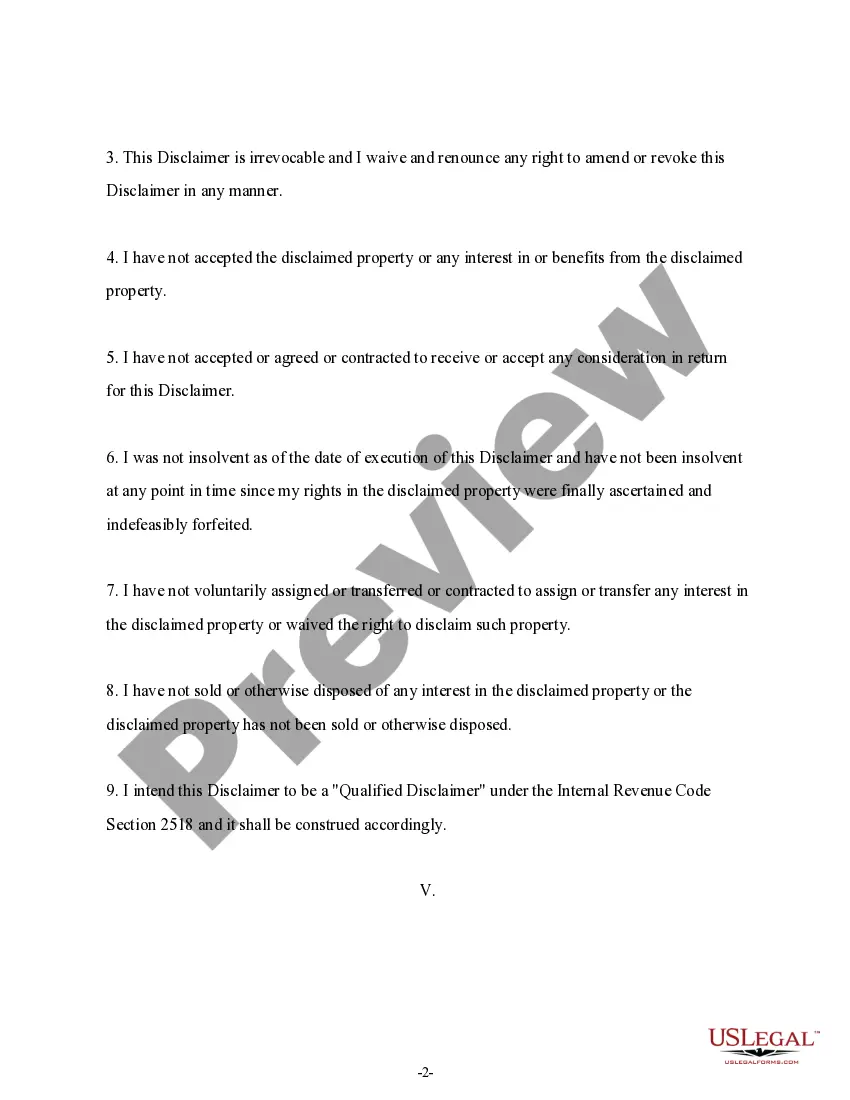
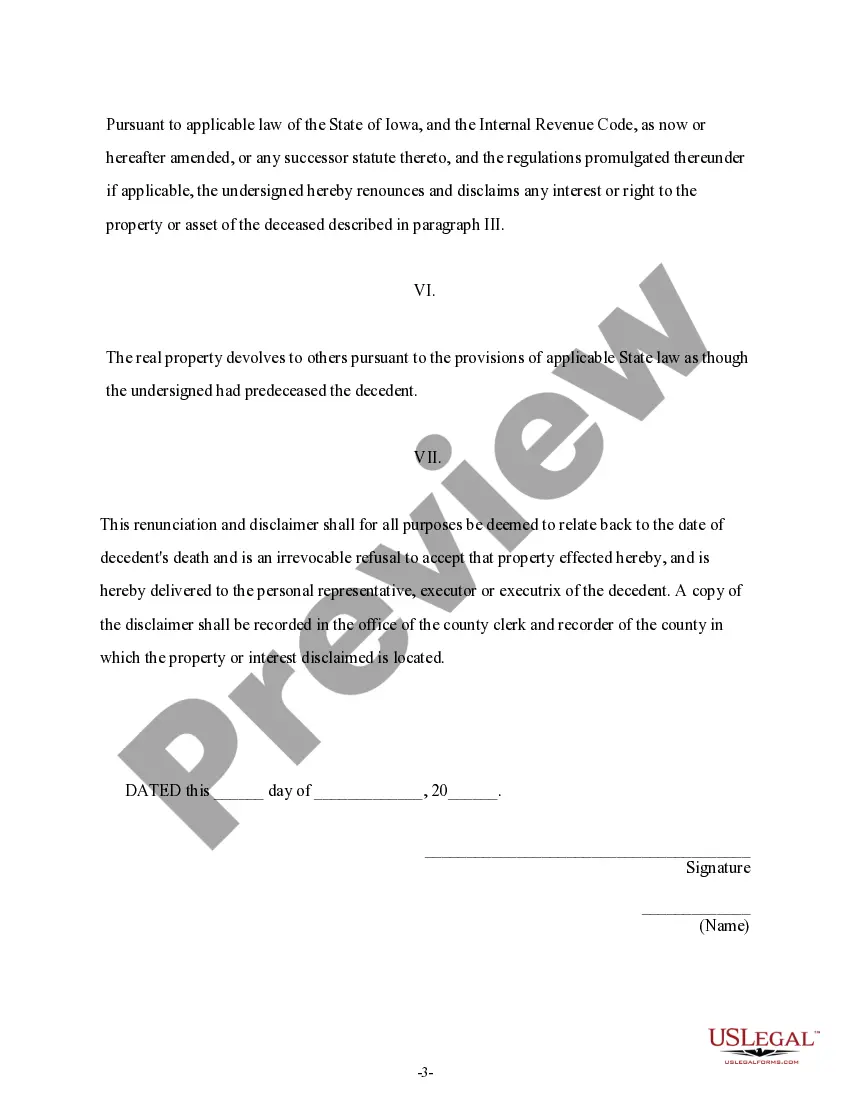
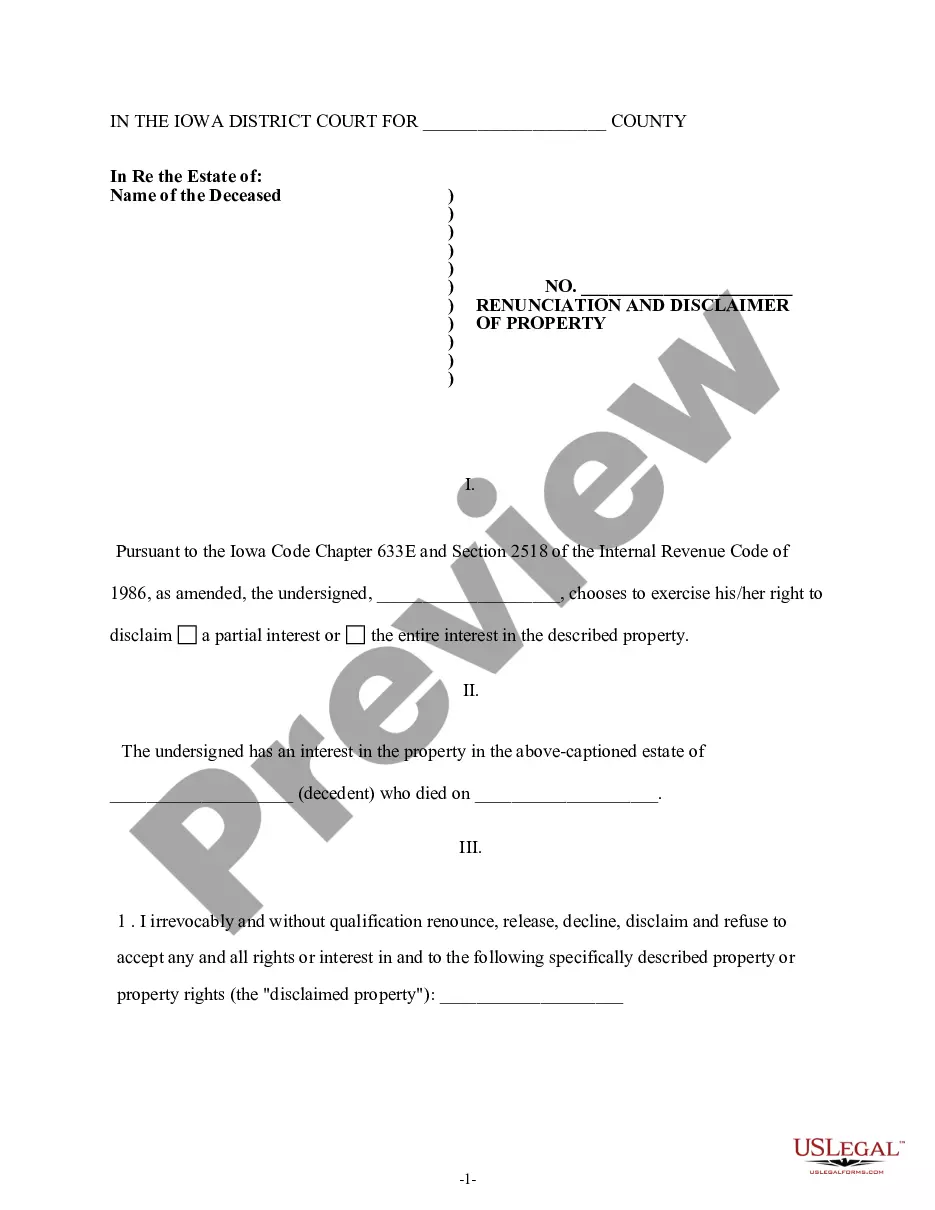
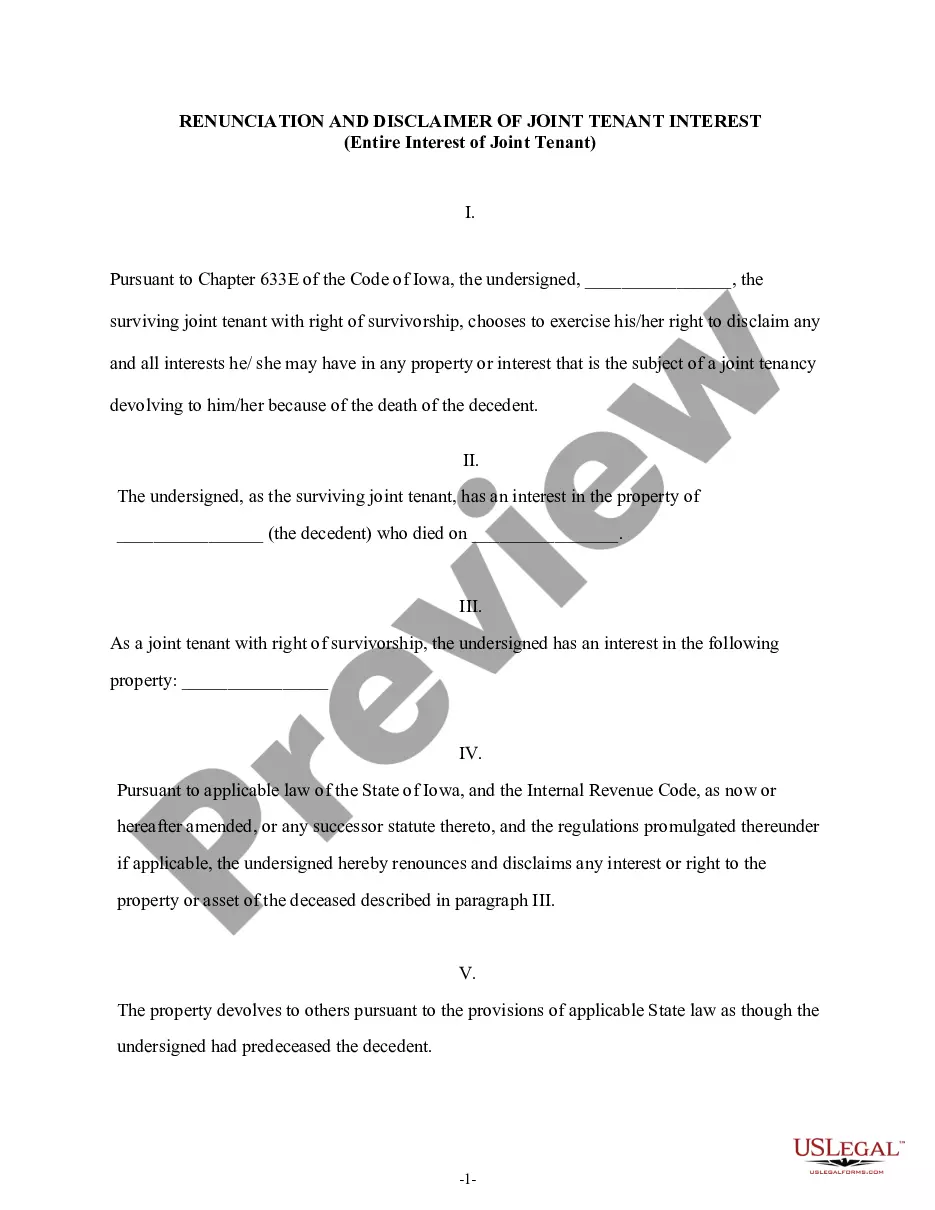
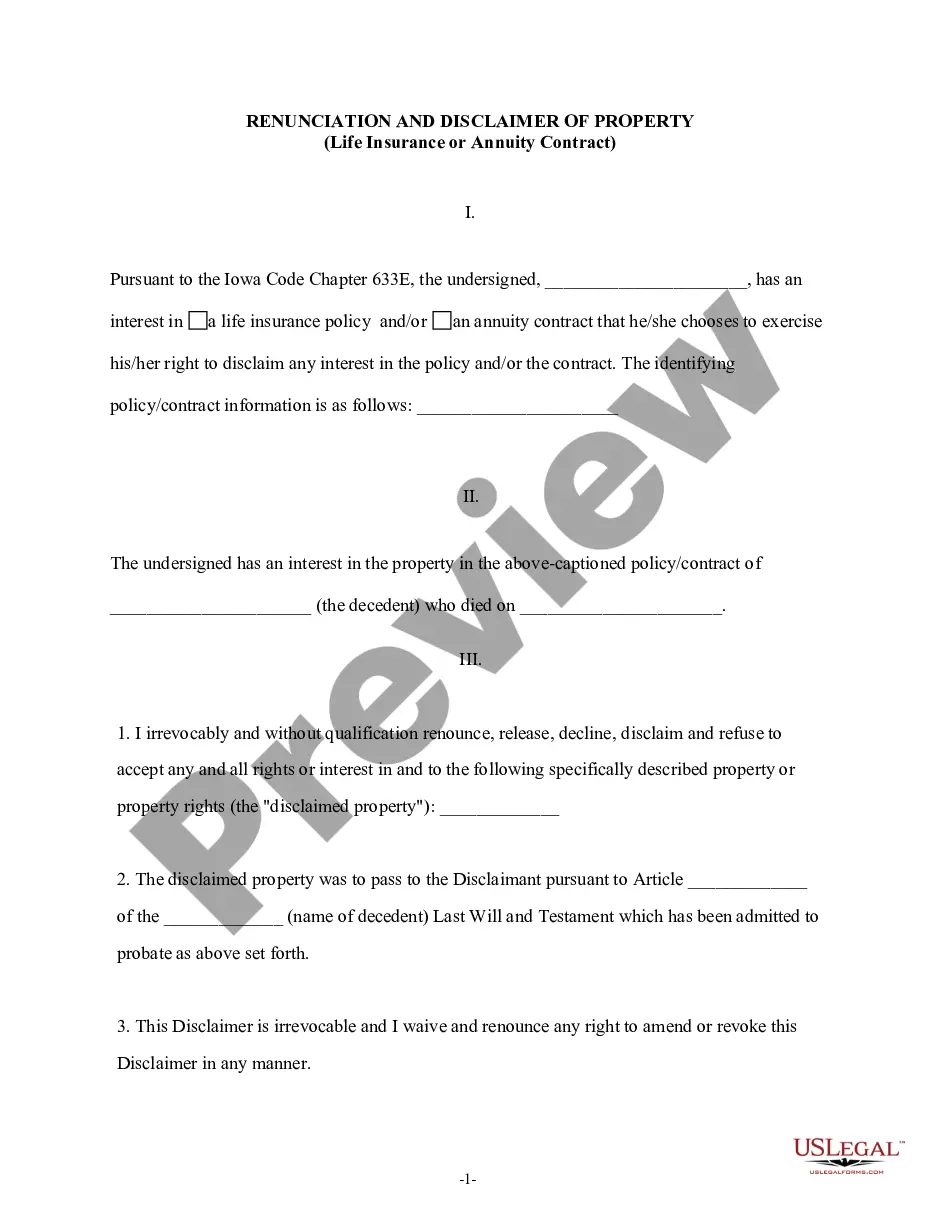
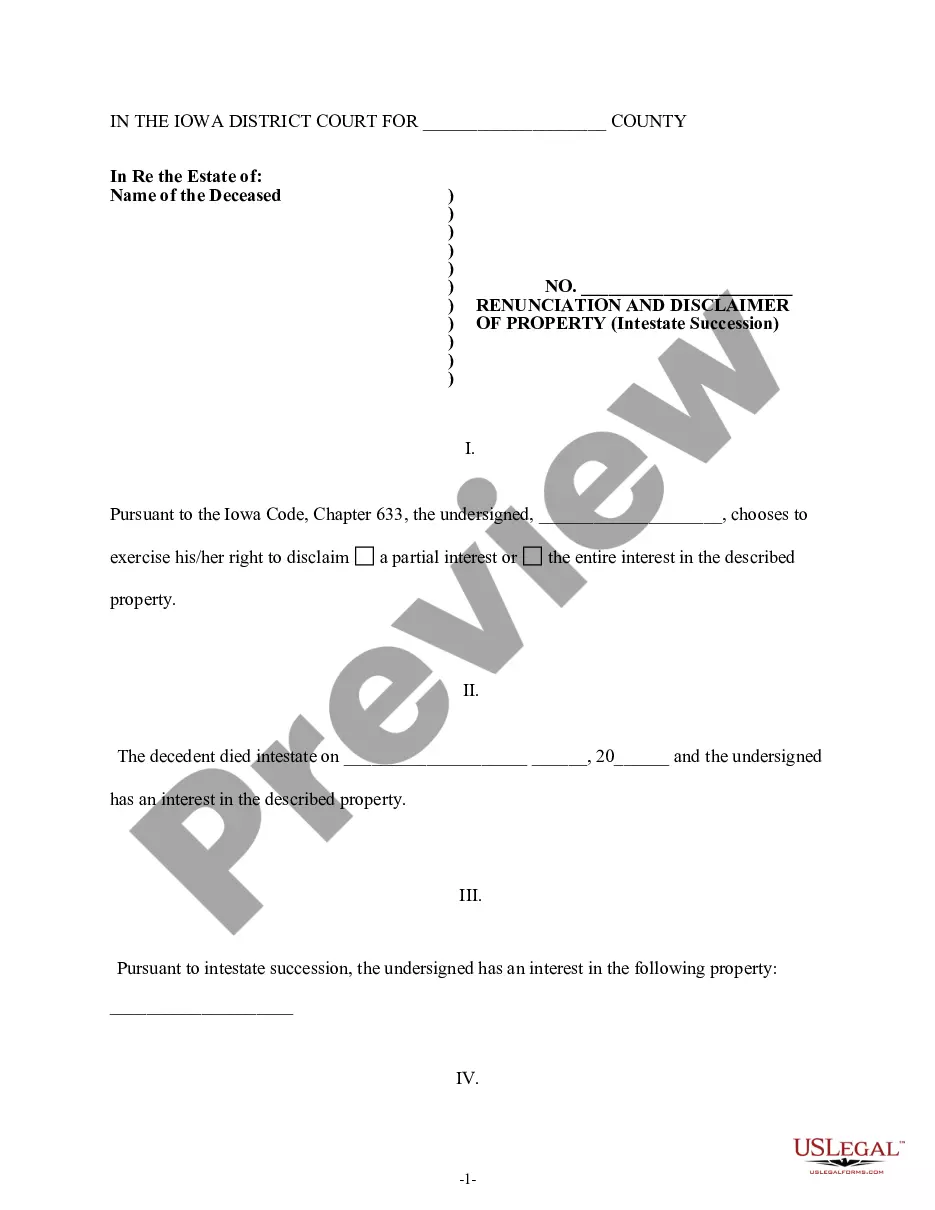
The Iowa Renunciation and Disclaimer of Real Property Interest is a legal document that allows a beneficiary to formally renounce their interest in real property acquired through the death of a decedent. This form is unique as it serves to prevent any future claims on the property by effectively stating that the beneficiary will not accept the inheritance, in accordance with Iowa Code, Chapter 633E. By filing this disclaimer within nine months of the decedentâs death, the beneficiary ensures that the property will pass to other designated heirs without any legal complications.
Main sections of this form
- Identification of the beneficiary and the decedent
- Description of the real property being disclaimed
- Irrevocable declaration of the beneficiaryâs choice to disclaim the property
- Certification that the beneficiary has not accepted any benefits from the property
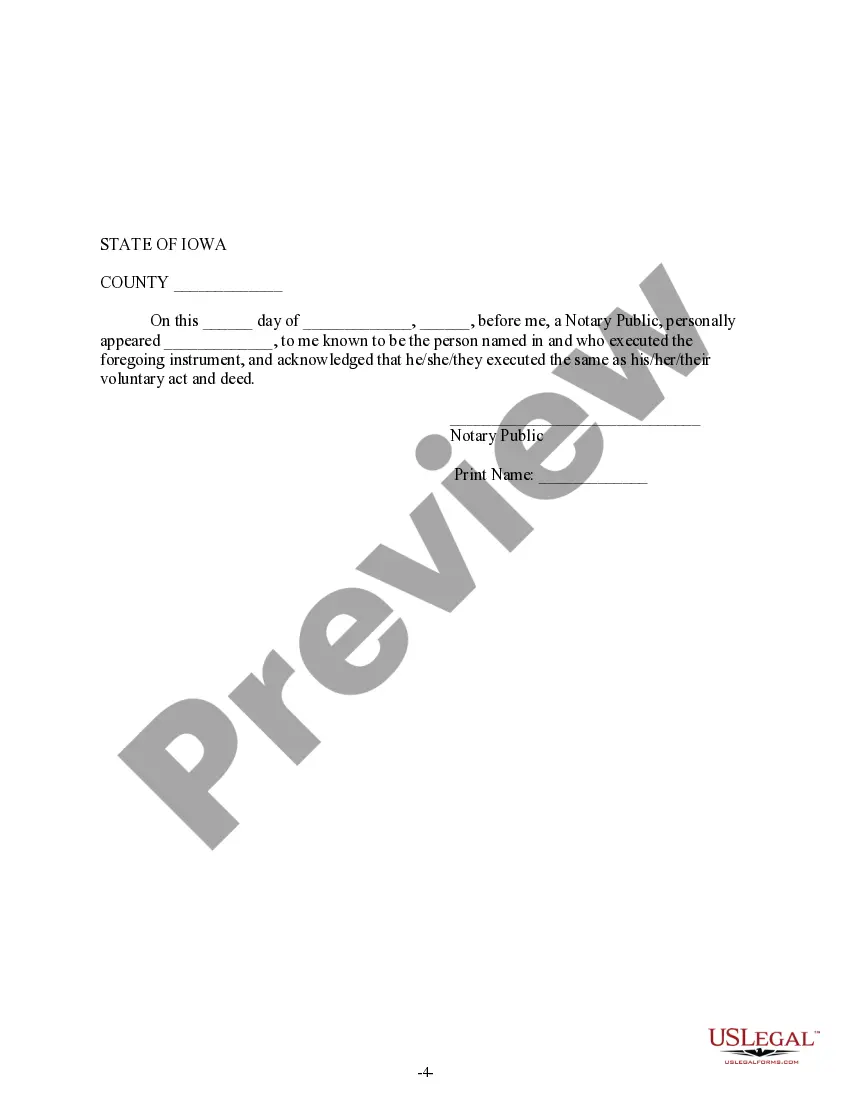
- Notarization section for legal validation
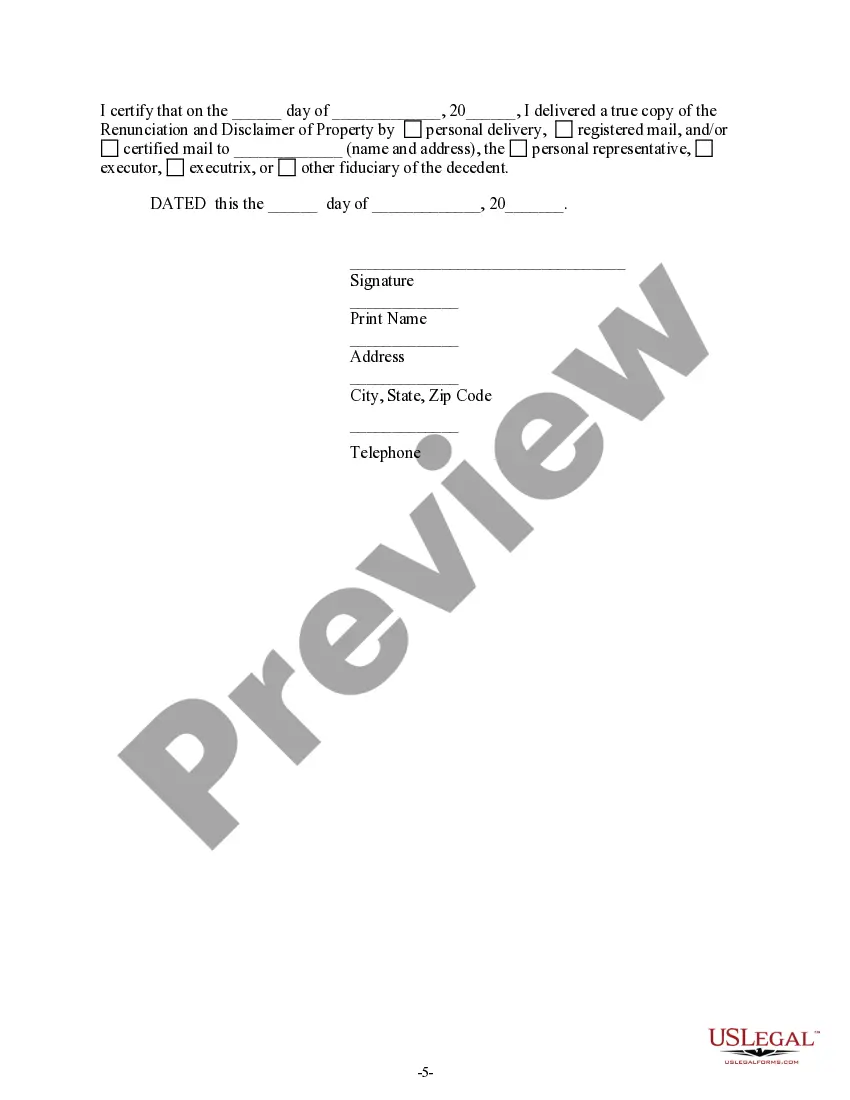
- Certificate of mailing to notify relevant parties of the disclaimer
When to use this form
This form should be used when a beneficiary decides not to accept an inherited interest in real property following a decedent's passing. It is particularly useful when accepting the property could result in tax liabilities or if the beneficiary wishes to allow the property to pass directly to other heirs. Using this form also helps formalize the renunciation, preventing potential legal disputes later on.
Who this form is for
- Beneficiaries who have inherited real property from a deceased relative
- Individuals looking to disclaim property for tax or financial reasons
- Heirs who do not wish to take on any obligations associated with the property
- Executors or personal representatives facilitating the distribution of an estate
Instructions for completing this form
- Identify the beneficiary and the decedent by entering their names.
- Provide the date of death of the decedent.
- Describe the real property being disclaimed in detail.
- Select the specific section of the will under which the property was inherited.
- Sign the document in front of a notary public, ensuring proper acknowledgment.
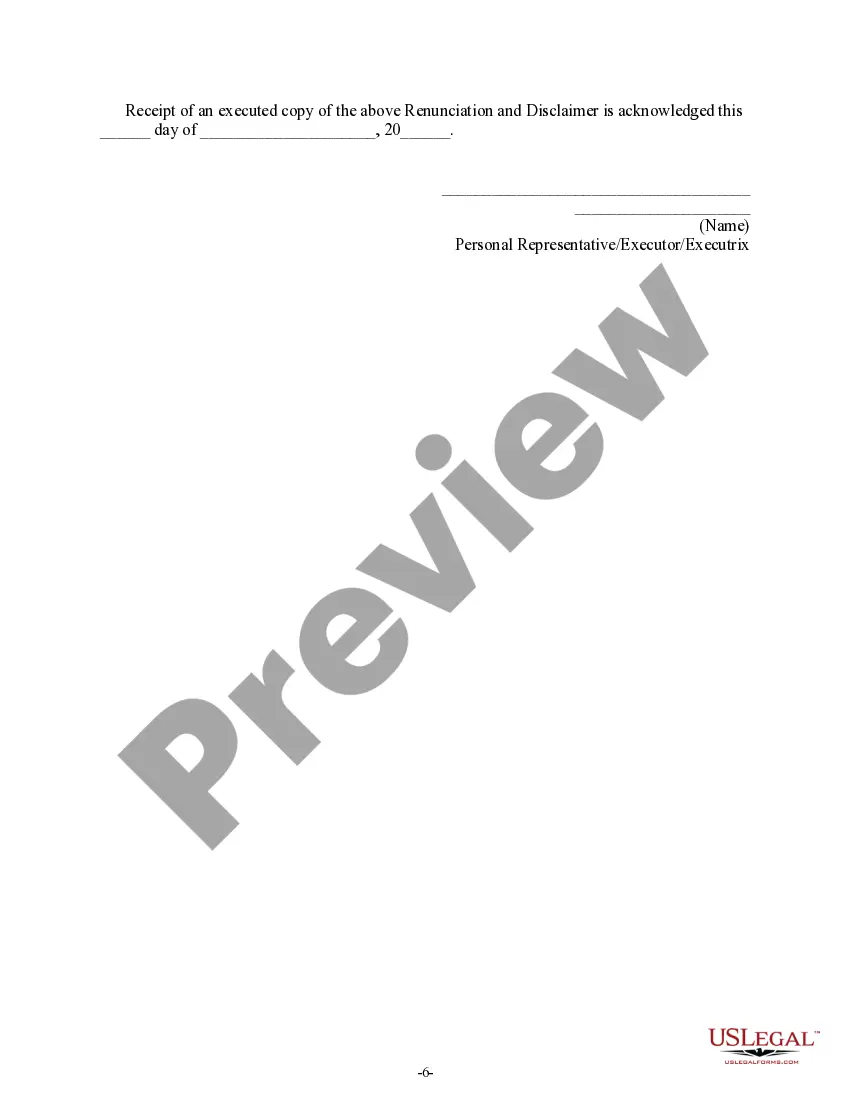
- Deliver a copy of the disclaimer to the personal representative or executor of the estate.
Notarization requirements for this form
Yes, this form must be notarized to be legally valid. Notarization ensures that the identity of the signer is verified and adds an additional layer of authenticity to the document. US Legal Forms offers integrated online notarization services, available twenty-four hours a day, allowing you to complete the process securely from your home.
Get your form ready online
Our built-in tools help you complete, sign, share, and store your documents in one place.
Make edits, fill in missing information, and update formatting in US Legal Forms—just like you would in MS Word.
Download a copy, print it, send it by email, or mail it via USPS—whatever works best for your next step.
Sign and collect signatures with our SignNow integration. Send to multiple recipients, set reminders, and more. Go Premium to unlock E-Sign.
If this form requires notarization, complete it online through a secure video call—no need to meet a notary in person or wait for an appointment.
We protect your documents and personal data by following strict security and privacy standards.

Make edits, fill in missing information, and update formatting in US Legal Forms—just like you would in MS Word.

Download a copy, print it, send it by email, or mail it via USPS—whatever works best for your next step.

Sign and collect signatures with our SignNow integration. Send to multiple recipients, set reminders, and more. Go Premium to unlock E-Sign.

If this form requires notarization, complete it online through a secure video call—no need to meet a notary in person or wait for an appointment.

We protect your documents and personal data by following strict security and privacy standards.
Common mistakes
- Failing to file the disclaimer within the nine-month timeframe
- Not properly documenting the description of the property
- Neglecting to have the document notarized
- Not delivering a copy of the disclaimer to the relevant parties
- Accepting any benefits from the property before filing the disclaimer
Benefits of using this form online
- Convenient access to the form anytime, from anywhere
- Editable templates that allow for customization to fit specific needs
- Reliable legal language drafted by licensed attorneys
- No need for a physical trip to a legal office, saving time and resources
Legal use & context
- This disclaimer is an irrevocable refusal of the right to accept the described property.
- The form ensures that the disclaimed property is treated as if the disclaimant had predeceased the decedent.
- It is essential to follow the procedural requirements set forth by the Iowa Code to guarantee legal validity.
Summary of main points
- The Iowa Renunciation and Disclaimer of Real Property Interest is essential for legally refusing an inherited property interest.
- It is vital to adhere to Iowa's nine-month filing deadline for validity.
- Proper completion and notarization of the form are crucial for legal recognition.
Looking for another form?
Form popularity
FAQ
An example of an estate disclaimer occurs when a person is named as a beneficiary in a will but chooses not to accept their share. By filing an Iowa Renunciation and Disclaimer of Real Property Interest, the beneficiary can decline the inheritance, which will then pass to the next beneficiary in line. This decision can help minimize tax implications and avoid the burden of managing an estate that one does not wish to handle. Understanding how estate disclaimers work can significantly ease estate management for everyone involved.
To disclaim interest in property means to legally refuse any rights or claims one might have to that property. This action is formalized through an Iowa Renunciation and Disclaimer of Real Property Interest. By disavowing interest, the individual effectively relinquishes their ownership or control, allowing the property to transfer to other designated beneficiaries. This process can help streamline estate transitions and reduce potential disputes.
A disclaimer on a property is a legal document that allows an individual to renounce their interest in real estate. This process often involves filing an Iowa Renunciation and Disclaimer of Real Property Interest. By disavowing any claim to the property, the owner ensures that their obligations and potential liabilities associated with it are legally removed. This option can be particularly useful in estate planning or when dealing with inherited property.
A common example of a disclaimer of interest is when someone inherits a property but decides not to accept it. In this case, the person may file an Iowa Renunciation and Disclaimer of Real Property Interest, which legally states their intention to refuse the inheritance. By doing this, the property will pass directly to the next beneficiary as outlined in the will or trust. Essentially, it allows the individual to avoid any responsibilities tied to the property.
Renunciation and disclaimer of interests in an estate refer to the legal process by which an heir chooses to reject their share of an estate. This decision impacts how the estate is distributed, emphasizing the importance of understanding the Iowa Renunciation and Disclaimer of Real Property Interest. The renouncing heir cannot later change their mind, so careful consideration is key. UsLegalForms serves as a valuable resource for individuals navigating this complex situation.
To disclaim property means to formally refuse an interest in that property, thereby relinquishing any rights or claims associated with it. This process is significant as it can have legal and financial implications, especially under the Iowa Renunciation and Disclaimer of Real Property Interest act. Disclaiming property can protect you from unwanted tax burdens or estate complications. Leveraging platforms like UsLegalForms ensures that you handle this process correctly.
To disclaim property, you must complete and file a disclaimer document that communicates your decision not to accept the property interest. This document must meet Iowa's statutory requirements under the Iowa Renunciation and Disclaimer of Real Property Interest. It's essential to file this paperwork within a specific time frame to ensure its validity. UsLegalForms offers easy-to-use templates to help you create your disclaimer efficiently.
A disclaimer of property interest is a legal declaration where an individual refuses to accept an inheritance or interest in a property. This act allows the disclaimant to avoid tax implications or complexities associated with the property. In Iowa, the process follows guidelines outlined in the Iowa Renunciation and Disclaimer of Real Property Interest. Consulting resources like UsLegalForms can provide clarity and templates needed for this process.
To disclaim inherited property in Iowa, you must create a formal renunciation document. This document should clearly state your intention to reject any interest in the property. Be sure to follow Iowa laws regarding the Iowa Renunciation and Disclaimer of Real Property Interest, which may require filing the document in a timely manner. Using a reliable platform like UsLegalForms can help you draft this document accurately.
The rules for disclaiming inheritance in Iowa typically require that you must renounce the property interest in writing. You must file your disclaimer within nine months of the decedent's death. Additionally, the disclaimer should not be conditional or have any attached benefits to comply with the Iowa Renunciation and Disclaimer of Real Property Interest guidelines. Being informed of these regulations can help you navigate the process effectively.