Georgia Letter from Landlord to Tenant as Notice of Default on Commercial Lease
Overview of this form
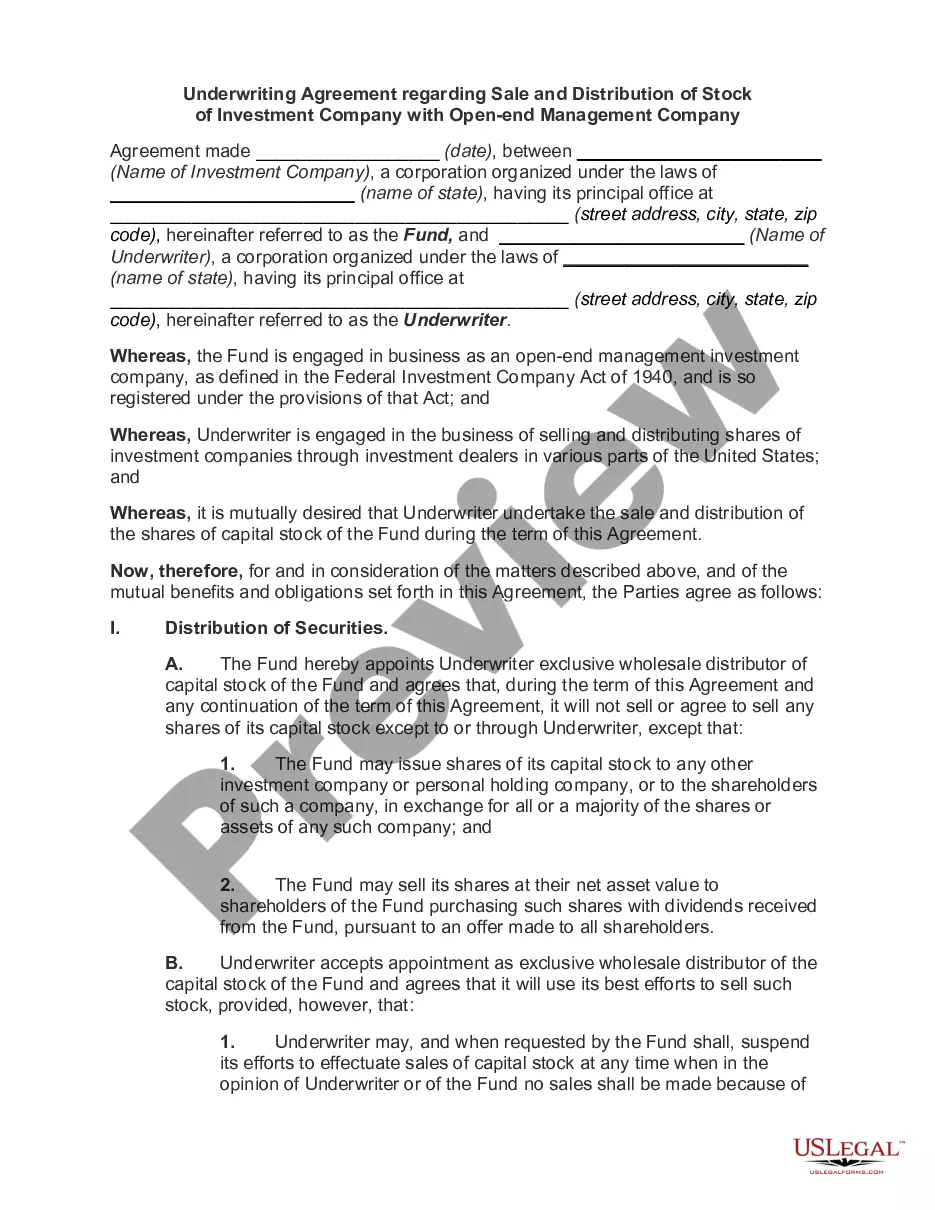
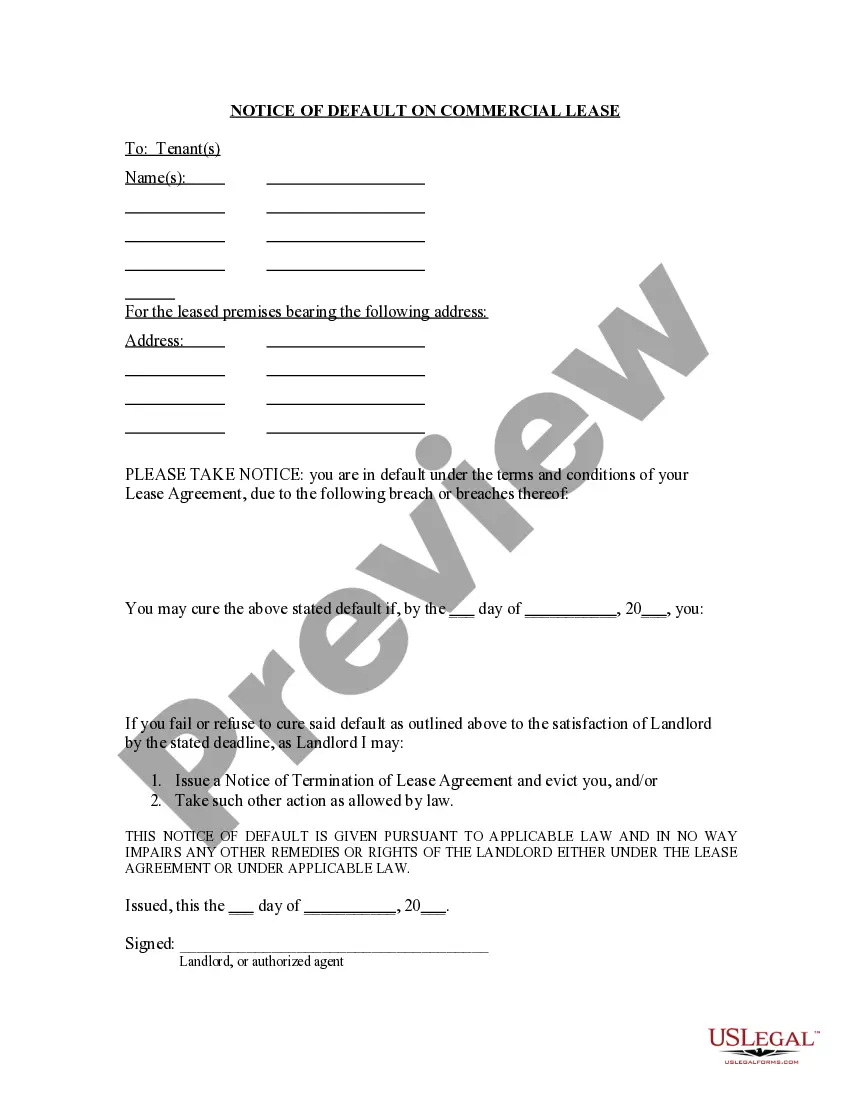
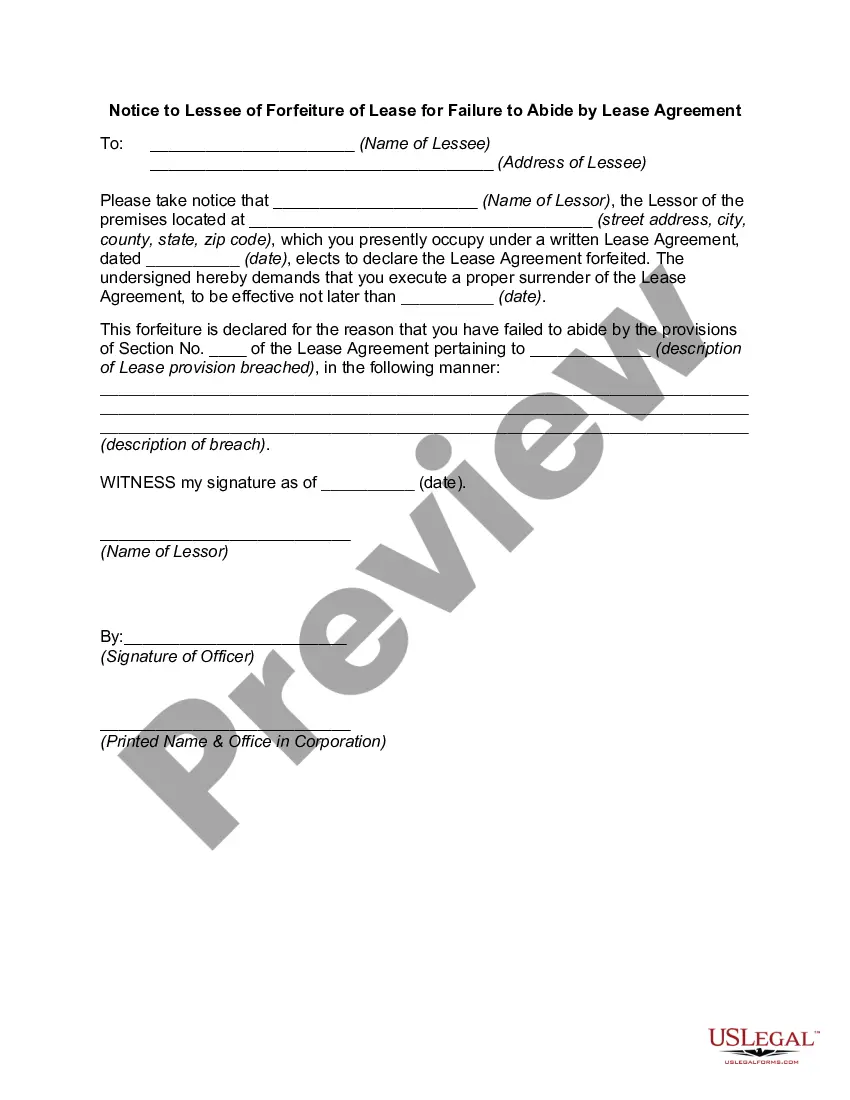
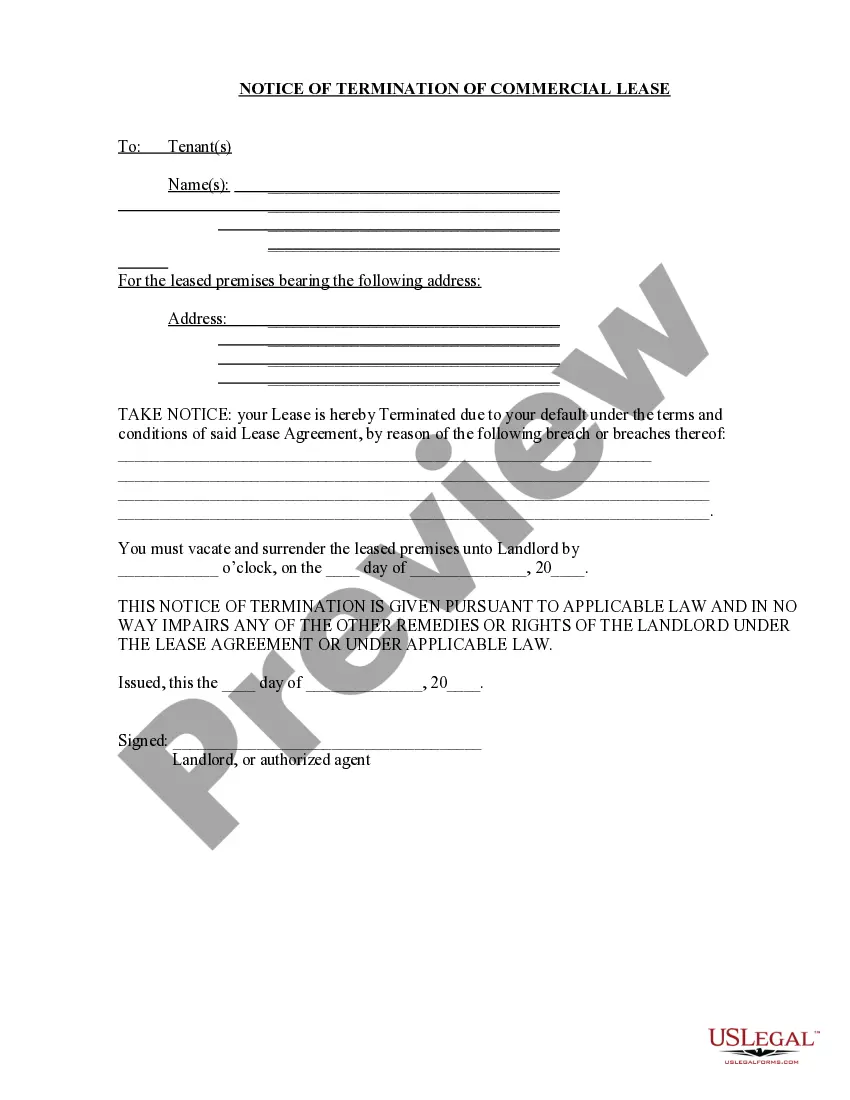
This Letter from Landlord to Tenant as Notice of Default on Commercial Lease is a formal document used by landlords to notify tenants of specific breaches in their lease agreement. It outlines the default, specifies a deadline for remedying the issue, and explains potential consequences if the tenant fails to comply. This form is crucial for landlords seeking to enforce their rights while ensuring compliance with legal requirements before pursuing eviction or using a security deposit.
Key components of this form
- Identification of the landlord and tenant involved in the lease agreement.
- Detailed description of the specific breaches of the lease by the tenant.
- Deadline for the tenant to correct the breaches.
- Statement regarding the landlord's rights under applicable law.
- Signature line for the landlord or authorized agent.

When to use this document
You should use this form when a tenant has failed to fulfill their obligations under a commercial lease, such as not paying rent on time or violating other terms of the agreement. This notice serves as an official alert to the tenant, providing them with an opportunity to cure the default before further legal action is taken.
Who this form is for
- Landlords of commercial properties seeking to enforce lease terms.
- Property managers handling tenant agreements on behalf of landlords.
- Attorneys representing landlords in commercial lease disputes.
Completing this form step by step
- Identify and enter the parties involved (landlord and tenant).
- Specify the breaches of the lease agreement clearly and concisely.
- Set a specific date by which the tenant must remedy the breaches.
- Include a statement regarding the landlord's rights if the tenant fails to comply.
- Sign and date the document at the bottom as the landlord or authorized agent.
Does this form need to be notarized?
This form usually doesn’t need to be notarized. However, local laws or specific transactions may require it. Our online notarization service, powered by Notarize, lets you complete it remotely through a secure video session, available 24/7.
Get your form ready online
Our built-in tools help you complete, sign, share, and store your documents in one place.
Make edits, fill in missing information, and update formatting in US Legal Forms—just like you would in MS Word.
Download a copy, print it, send it by email, or mail it via USPS—whatever works best for your next step.
Sign and collect signatures with our SignNow integration. Send to multiple recipients, set reminders, and more. Go Premium to unlock E-Sign.
If this form requires notarization, complete it online through a secure video call—no need to meet a notary in person or wait for an appointment.
We protect your documents and personal data by following strict security and privacy standards.

Make edits, fill in missing information, and update formatting in US Legal Forms—just like you would in MS Word.

Download a copy, print it, send it by email, or mail it via USPS—whatever works best for your next step.

Sign and collect signatures with our SignNow integration. Send to multiple recipients, set reminders, and more. Go Premium to unlock E-Sign.

If this form requires notarization, complete it online through a secure video call—no need to meet a notary in person or wait for an appointment.

We protect your documents and personal data by following strict security and privacy standards.
Typical mistakes to avoid
- Failing to specify the exact breaches of the lease.
- Not providing a clear deadline for remedying the default.
- Neglecting to sign the form or include the date of issuance.
- Not sending the notice according to state-specific guidelines.
Advantages of online completion
- Convenience of downloading the form instantly.
- Editable template tailored to specific legal requirements.
- Reliable and professionally drafted by licensed attorneys.
- Accessible from any device, anytime.
Legal use & context
- The notice must comply with state laws to be enforceable.
- Failure to give proper notice can hinder eviction proceedings.
- Documenting the breach is necessary to protect the landlord's rights.
Main things to remember
- This form is essential for landlords addressing tenant defaults in commercial leases.
- Specificity in breaches and deadlines is crucial for legal validity.
- Understanding local laws regarding eviction and tenant notices can protect landlords' interests.
Looking for another form?
Form popularity
FAQ
To evict a commercial tenant in Georgia, landlords need to follow legal procedures, starting with a formal notice. Typically, this involves a Georgia Letter from Landlord to Tenant as Notice of Default on Commercial Lease, specifying the lease violation. If the tenant does not remedy the default, the landlord can file for eviction in court. Proper adherence to these steps is crucial to ensure a lawful eviction process.
Writing a commercial lease termination letter involves clearly stating your intent to terminate the lease and the effective date. Include any terms related to your lease and reference your compliance with the lease agreements. You may consider providing a Georgia Letter from Landlord to Tenant as Notice of Default on Commercial Lease if applicable to ensure clarity. This formal notice helps prevent misunderstandings and protects your interests.
No, a landlord cannot change the locks on a commercial property without notice. This action could be considered illegal and may lead to claims of unlawful eviction. Appropriate steps, including issuing a Georgia Letter from Landlord to Tenant as Notice of Default on Commercial Lease, must be followed. Knowing your rights as a tenant can help you avoid unexpected issues.
In Georgia, landlords can lock out a commercial tenant under specific circumstances, such as a lease default. They usually need to send a Georgia Letter from Landlord to Tenant as Notice of Default on Commercial Lease before proceeding with a lockout. Always ensure that this action aligns with state law and the lease agreement to prevent legal complications. It’s advisable to consult with a legal expert for guidance.
Yes, a landlord can lock out a commercial tenant, but they must follow legal procedures. This typically involves providing a Georgia Letter from Landlord to Tenant as Notice of Default on Commercial Lease before taking any action. Landlords must ensure they comply with state laws to avoid potential claims of illegal eviction. Understanding your rights can help you navigate this situation effectively.
When you default on a commercial lease, the landlord may issue a Georgia Letter from Landlord to Tenant as Notice of Default on Commercial Lease. This letter informs you about the default and outlines the steps you need to take to remedy the situation. If you fail to comply, the landlord could initiate eviction proceedings. It’s essential to respond quickly to avoid further legal issues.
While breaking a commercial lease can be difficult, certain legitimate reasons may support your case. Common grounds include significant financial hardship, property damage, or failure to provide a safe working environment. However, to ensure you act within legal boundaries, it's advisable to review your lease terms and consult with a legal professional. Preparing a Georgia Letter from Landlord to Tenant as Notice of Default on Commercial Lease can help facilitate this process.
Defaulting on a commercial lease can lead to significant consequences, including eviction and financial penalties. The landlord may pursue legal action to regain possession of the property, and you may face damages for loss of rental income. It's beneficial to address any issues quickly and directly with your landlord. For clarity on your rights and responsibilities, consider a Georgia Letter from Landlord to Tenant as Notice of Default on Commercial Lease.
A notice of default on a commercial lease serves as a formal warning from the landlord to the tenant regarding a rental payment issue or a breach of lease terms. This document outlines the specific reasons for the default and provides a timeframe for the tenant to remedy the situation. In Georgia, this notice is essential for legal procedures should the issue escalate. Utilizing a Georgia Letter from Landlord to Tenant as Notice of Default on Commercial Lease can ensure compliance with local regulations.
When you default on a commercial mortgage, your lender may initiate foreclosure proceedings. This process allows the lender to reclaim the property to recover their investment. Additionally, a default can negatively impact your credit rating, making it harder to secure financing in the future. To avoid such consequences, it’s vital to communicate with your lender and explore available options.