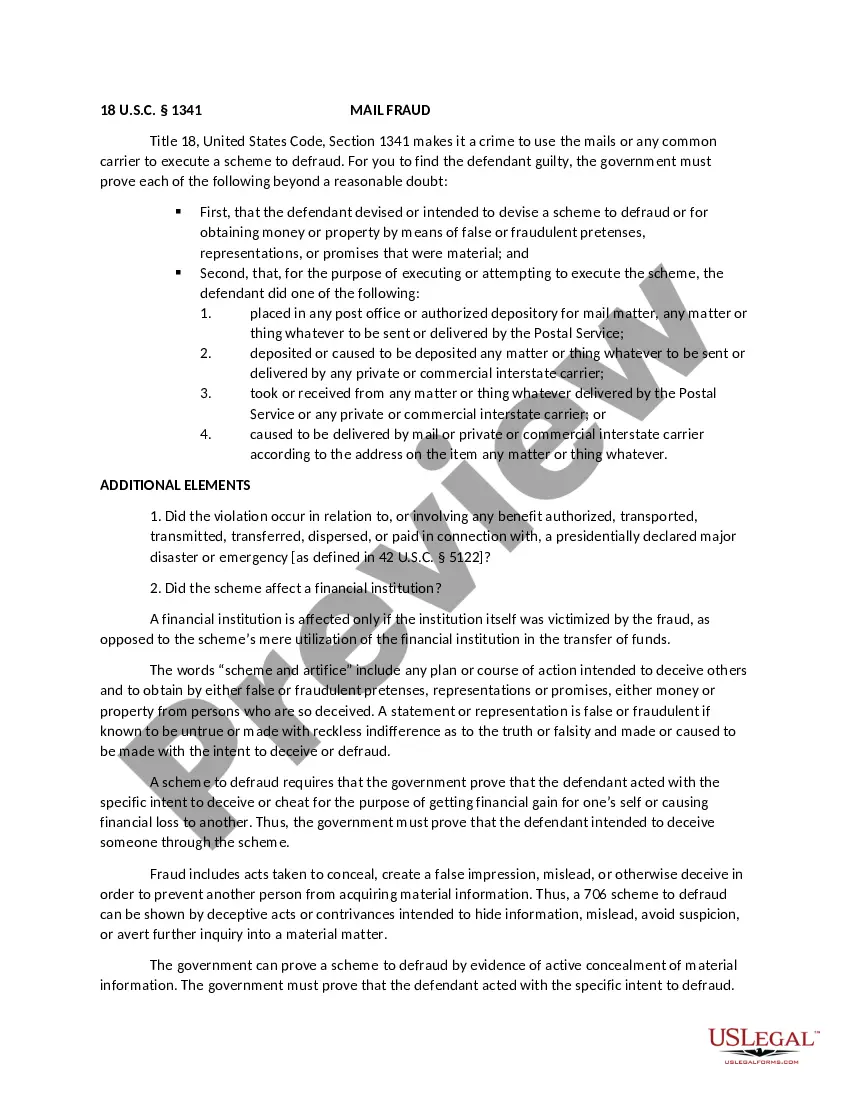
Delaware Notice of Termination for Breach Affecting Health or Safety for Residential from Landlord to Tenant
Overview of this form
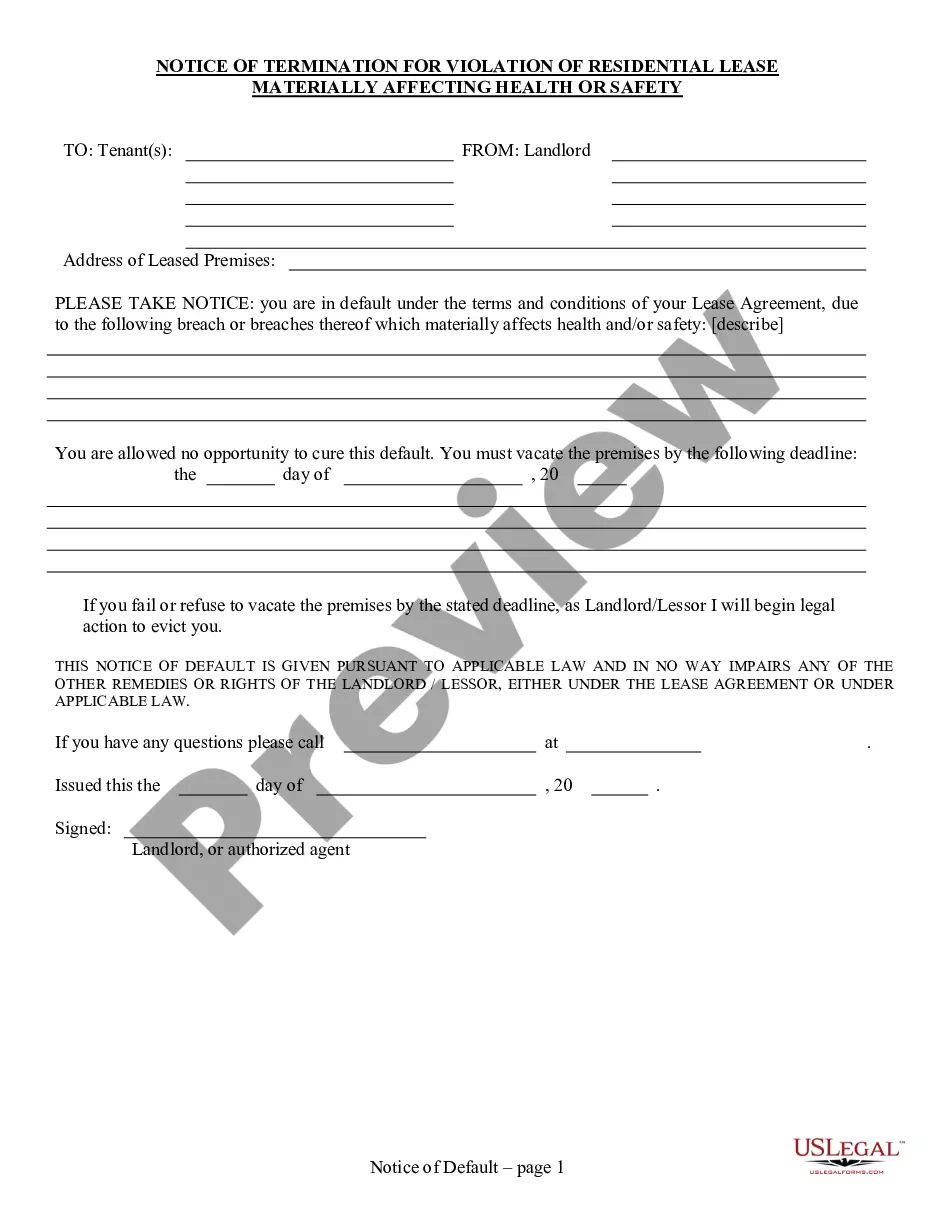
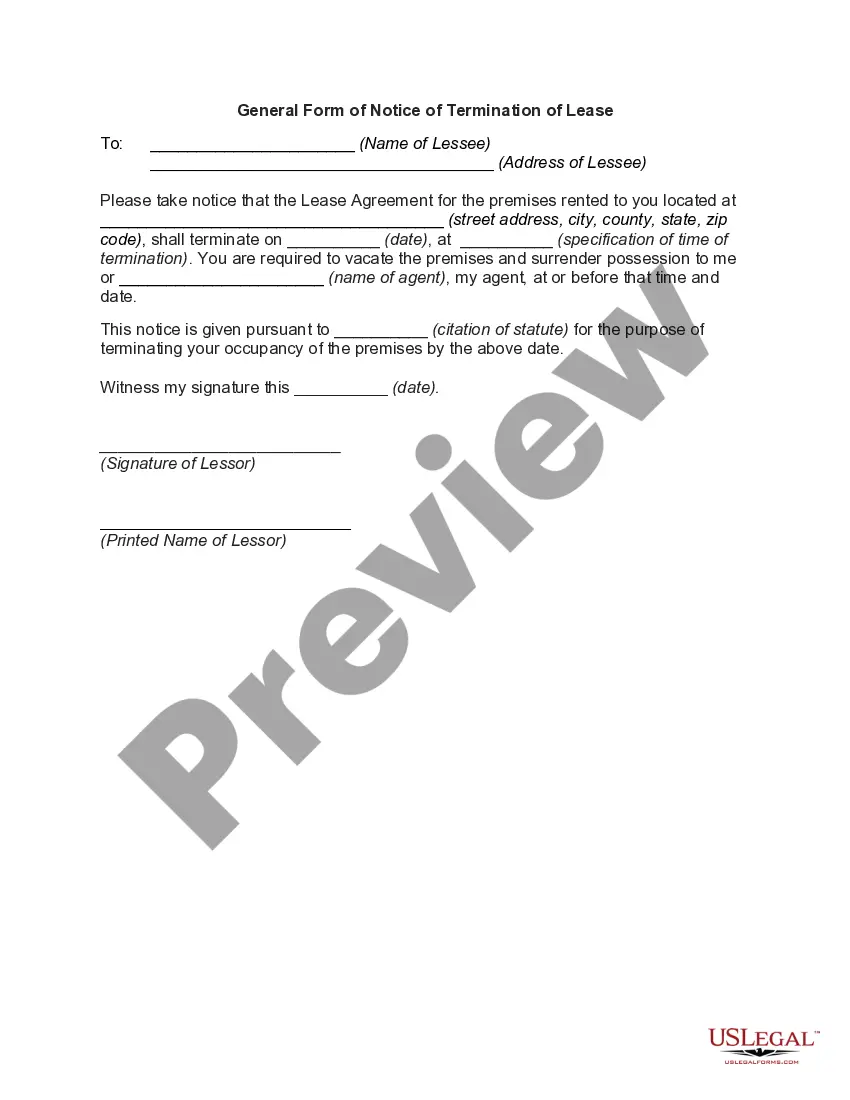
The Notice of Termination for Breach Affecting Health or Safety for Residential from Landlord to Tenant is a legal document used by landlords to terminate a residential lease agreement when there is a breach that significantly impacts the health or safety of tenants. Unlike other lease termination forms, this document does not allow tenants an opportunity to rectify the breach, as the situation is deemed too severe for any cure to be possible. This form provides a straightforward way for landlords to formally notify tenants of the lease termination due to critical health or safety concerns.
Main sections of this form
- Identification of the landlord and tenant parties involved.
- Description of the breach that affects health or safety.
- Deadline for the tenant to vacate the premises.
- Statement indicating that no opportunity to cure is provided.
- Legal basis for the notice and rights of the landlord.
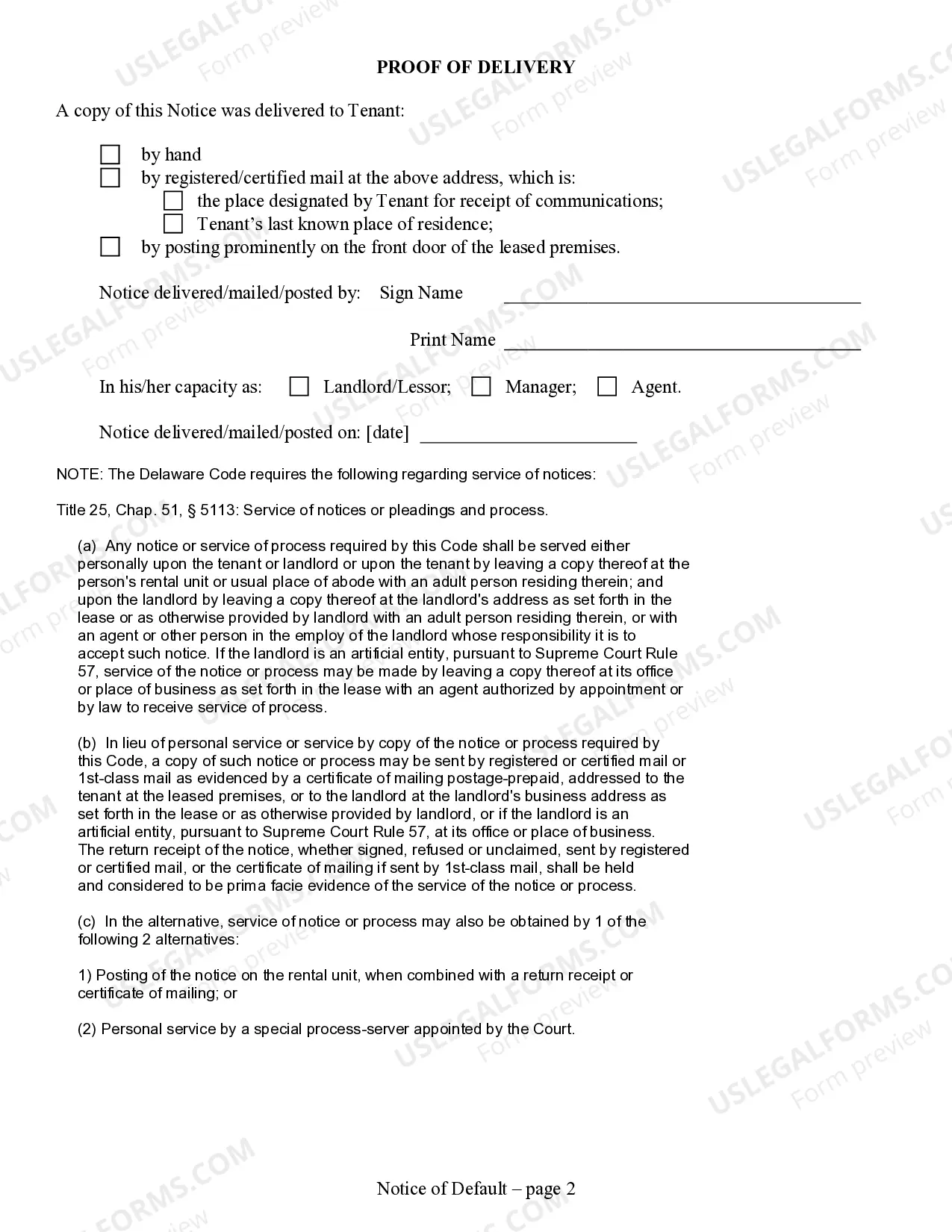
- Proof of delivery section detailing how notice was served.



When this form is needed
This form should be used when a landlord learns of a breach in the lease agreement that poses a serious risk to health or safety, such as severe structural issues, hazardous living conditions, or illegal activity. If the tenant has not remedied the situation, or if the breach is not something that can be fixed, this form is the appropriate method for formally ending the rental agreement.
Who this form is for
- Landlords who have a residential rental property.
- Property managers acting on behalf of landlords.
- Individuals or entities leasing properties that need to terminate a lease for health or safety reasons.
Instructions for completing this form
- Identify and enter the names and addresses of both the landlord and the tenant.
- Clearly describe the breach that materially affects health and/or safety.
- Specify the deadline by which the tenant must vacate the property.
- Sign and date the notice as the landlord or authorized agent.
- Complete the proof of delivery section detailing how and when the notice was delivered to the tenant.
Does this document require notarization?
Notarization is generally not required for this form. However, certain states or situations might demand it. You can complete notarization online through US Legal Forms, powered by Notarize, using a verified video call available anytime.
Get your form ready online
Our built-in tools help you complete, sign, share, and store your documents in one place.
Make edits, fill in missing information, and update formatting in US Legal Forms—just like you would in MS Word.
Download a copy, print it, send it by email, or mail it via USPS—whatever works best for your next step.
Sign and collect signatures with our SignNow integration. Send to multiple recipients, set reminders, and more. Go Premium to unlock E-Sign.
If this form requires notarization, complete it online through a secure video call—no need to meet a notary in person or wait for an appointment.
We protect your documents and personal data by following strict security and privacy standards.

Make edits, fill in missing information, and update formatting in US Legal Forms—just like you would in MS Word.

Download a copy, print it, send it by email, or mail it via USPS—whatever works best for your next step.

Sign and collect signatures with our SignNow integration. Send to multiple recipients, set reminders, and more. Go Premium to unlock E-Sign.

If this form requires notarization, complete it online through a secure video call—no need to meet a notary in person or wait for an appointment.

We protect your documents and personal data by following strict security and privacy standards.
Mistakes to watch out for
- Failing to accurately describe the breach affecting health or safety.
- Not providing a clear deadline for the tenant to vacate.
- Neglecting to sign and date the form before delivery.
- Inadequate proof of delivery, which may result in disputes about whether notice was given.
Benefits of completing this form online
- Convenient access to professionally drafted forms any time.
- Easy editing and customizable to meet specific needs.
- Reliable resource ensuring compliance with legal standards.
Legal use & context
- The form should be executed in accordance with local laws governing landlord-tenant relationships.
- Failure to comply with the notice requirements may delay eviction proceedings.
- This form serves to protect landlords' rights to terminate a lease for valid health and safety concerns.
Main things to remember
- The Notice of Termination is essential for addressing serious breaches affecting tenant health or safety.
- Landlords should use this form to ensure proper legal notice is given.
- Understanding deadlines and proof of delivery is crucial to enforce the notice effectively.
Looking for another form?
Form popularity
FAQ
The most common action landlords take against tenants in breach of contract is issuing a notice of termination or eviction. This process often begins when tenants fail to meet the terms of their lease, such as not paying rent or violating property rules. In Delaware, the Delaware Notice of Termination for Breach Affecting Health or Safety for Residential from Landlord to Tenant is a critical document that landlords may use to communicate serious breaches. Understanding your rights and responsibilities can help you navigate this challenging situation.
In Delaware, there is no statewide limit on rent increases, meaning landlords can increase rent as they see fit. However, landlords must provide a proper written notice to tenants regarding any changes in rental terms. If a tenant believes that the increase violates a legal or contractual agreement, they can utilize the Delaware Notice of Termination for Breach Affecting Health or Safety for Residential from Landlord to Tenant as a protective measure. Always consult local laws for more specific guidelines and advice.
Section 5106 of the Delaware landlord-tenant code outlines the specific responsibilities of landlords regarding tenant safety and health standards. This section emphasizes the landlord's duty to maintain safe and livable conditions. Familiarizing yourself with this section can assist tenants in utilizing the Delaware Notice of Termination for Breach Affecting Health or Safety for Residential from Landlord to Tenant when safety concerns arise.
In Delaware, there is no statewide limit on how much a landlord can raise rent. However, landlords are required to provide proper notice, typically 60 days, before any rent increase takes effect. If you're facing an unexpected increase, understanding the Delaware Notice of Termination for Breach Affecting Health or Safety for Residential from Landlord to Tenant can provide you with necessary insights on your options.
Tenants in Delaware have various rights that protect them throughout the rental process. These include the right to a habitable living environment, protection from wrongful eviction, and the ability to address violations through the Delaware Notice of Termination for Breach Affecting Health or Safety for Residential from Landlord to Tenant. Knowing your rights empowers you to advocate effectively for your living conditions.
To break a lease in Delaware without facing penalties, you must follow specific conditions outlined in the law. For instance, if there are health or safety issues that qualify under the Delaware Notice of Termination for Breach Affecting Health or Safety for Residential from Landlord to Tenant, you have a valid reason to terminate the lease early. Additionally, providing proper notice and documentation can assist in avoiding penalties.
In Delaware, a landlord must provide a tenant with a written notice if they intend to terminate the lease. Typically, this notice must be given at least 60 days before the end of the lease. If the lease is month-to-month, a 60-day notice applies. Understanding the Delaware Notice of Termination for Breach Affecting Health or Safety for Residential from Landlord to Tenant can help you navigate these requirements.
To sue a landlord for a lease breach, begin by documenting any violations and communicating your concerns with them. If resolution is not reached, consider filing a complaint in small claims court. It is important to reference any relevant sections of the Delaware landlord/tenant code, particularly those concerning health and safety, to support your case. Utilizing resources like US Legal Forms can streamline the process of filing the necessary legal documents.
Section 5513 addresses the landlord's responsibility to maintain safe and habitable living conditions. It emphasizes that landlords must rectify health and safety issues to protect tenants. Awareness of this section helps tenants advocate for their rights and ensures they can react appropriately when facing potential termination of their lease.
Section 5514 details the specific grounds for evicting a tenant, including breaches of lease terms that endanger health or safety. This section empowers landlords to terminate leases while ensuring that tenants are informed about their rights. Familiarity with this section helps tenants understand their obligations and what actions may lead to a Delaware Notice of Termination for Breach Affecting Health or Safety for Residential from Landlord to Tenant.