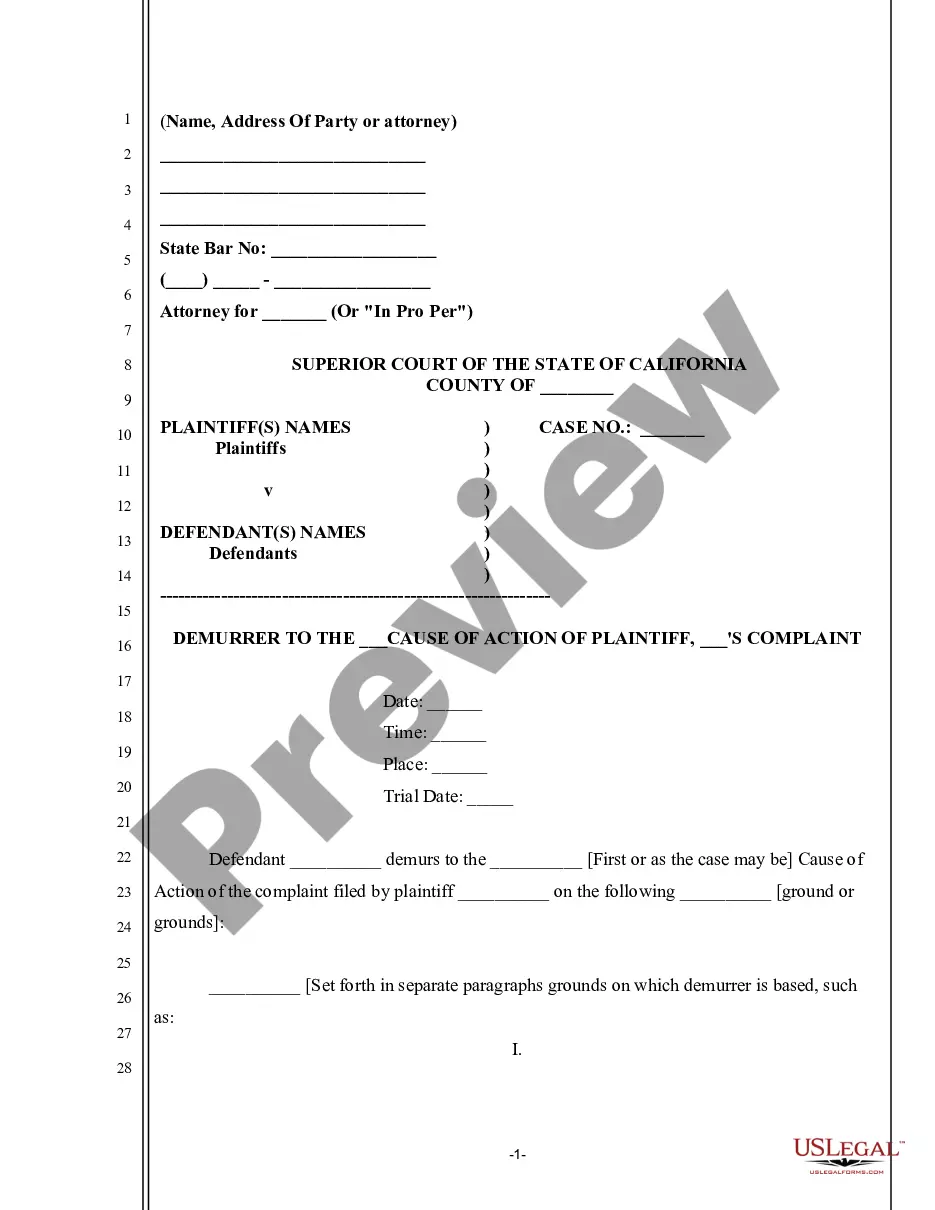
California Demurrer to the Cause of Action of Plaintiffs Complaint
What is this form?
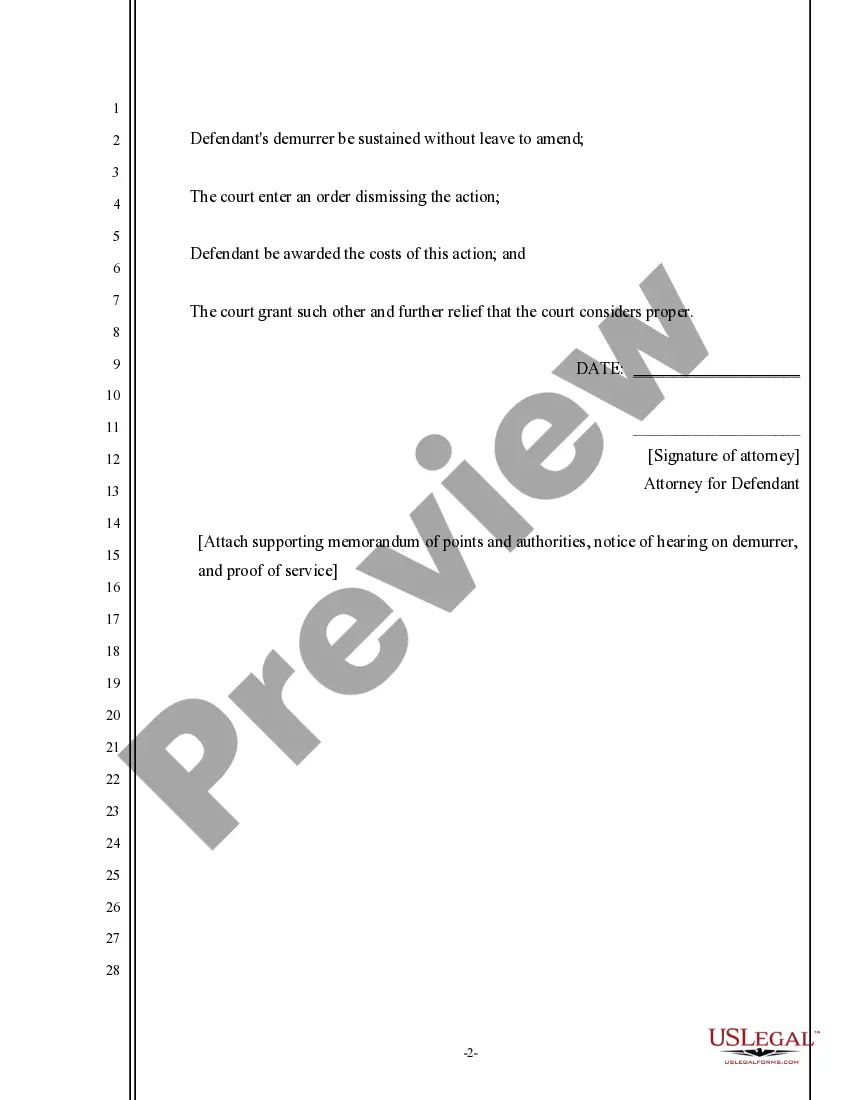
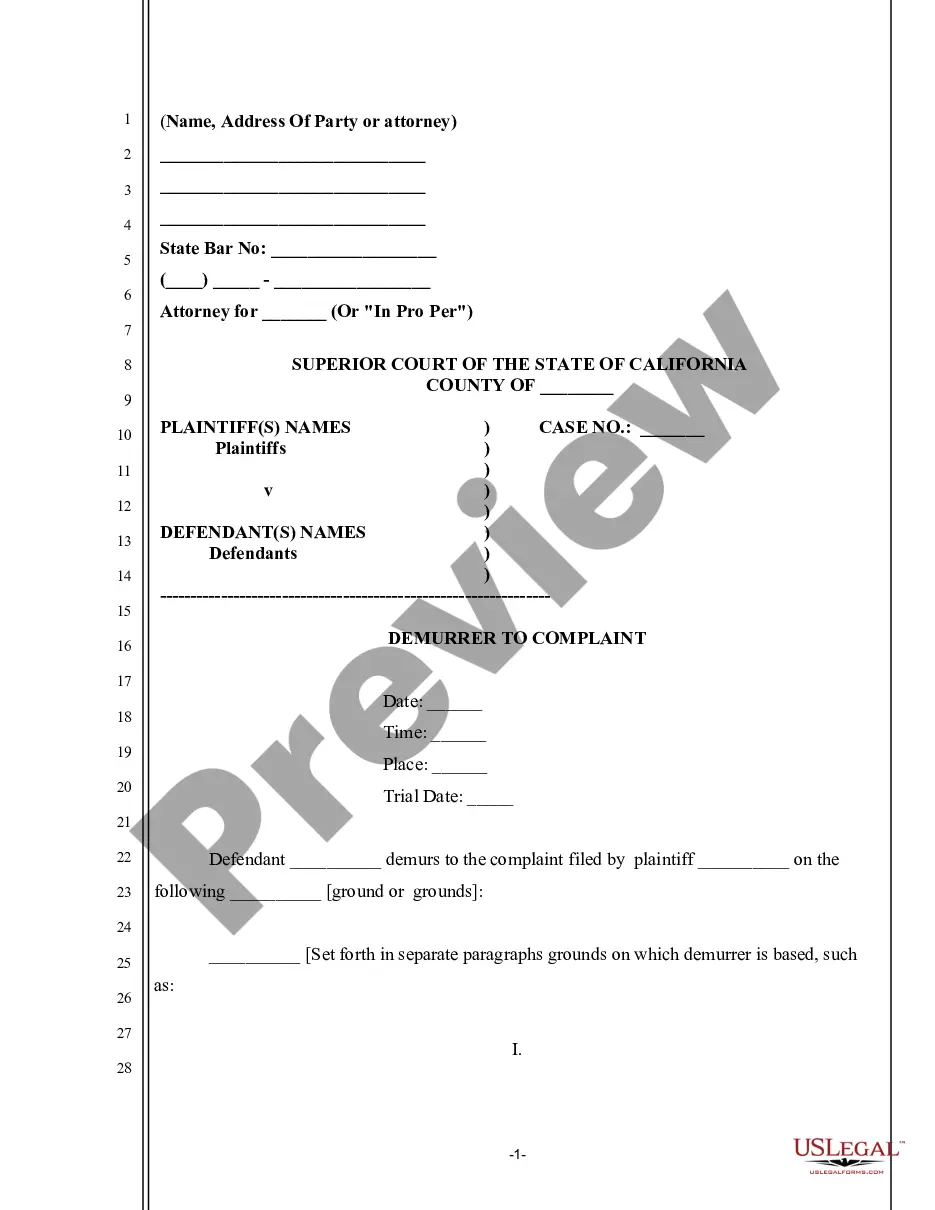
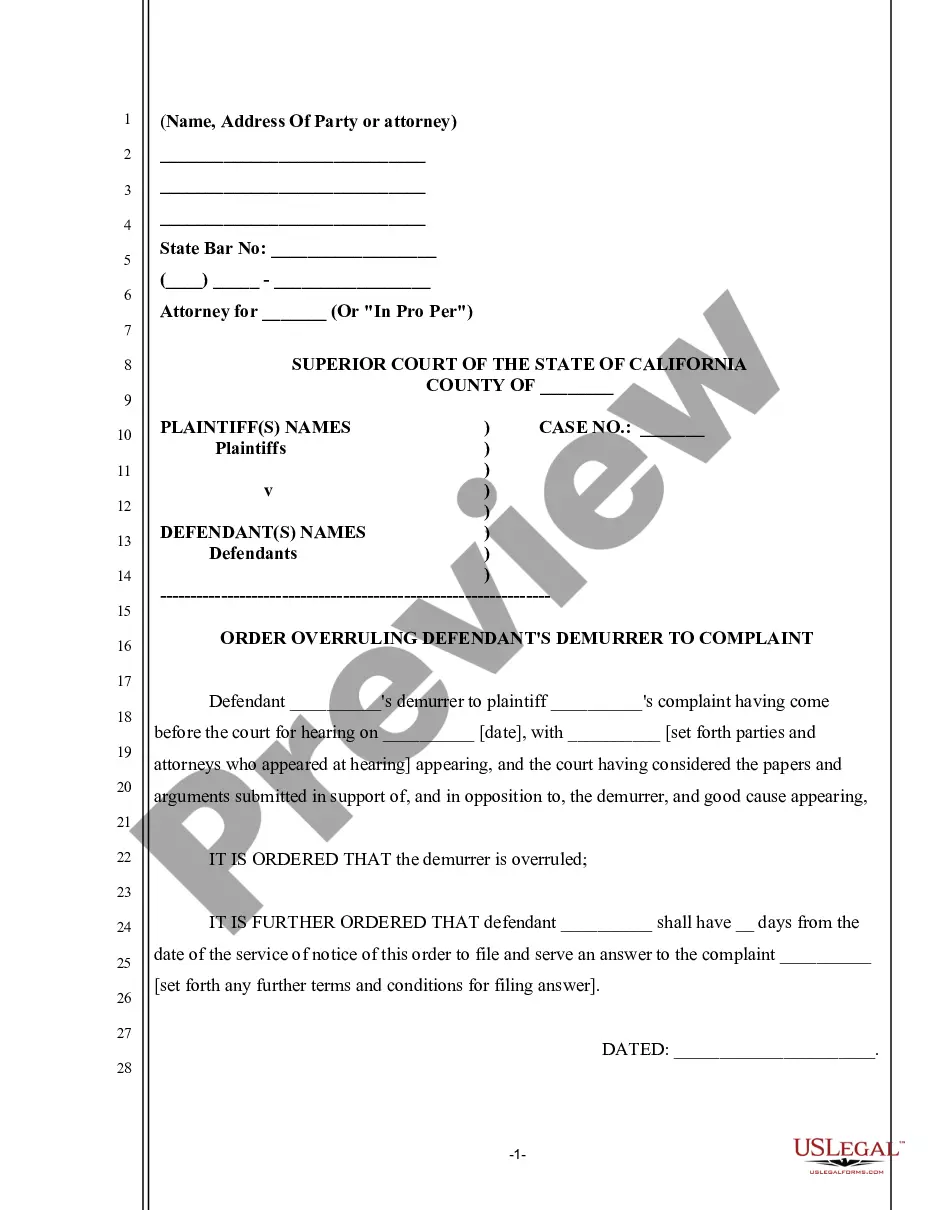
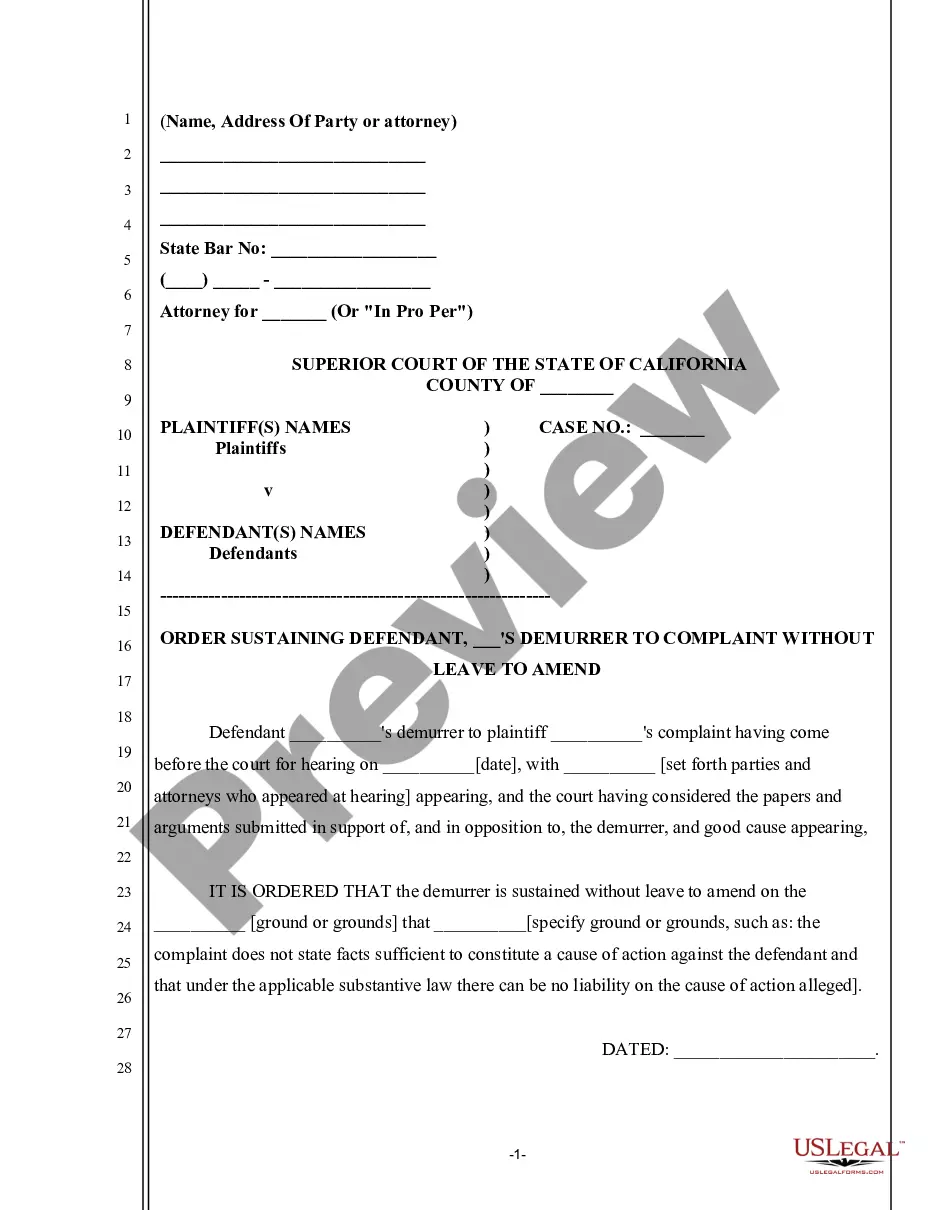
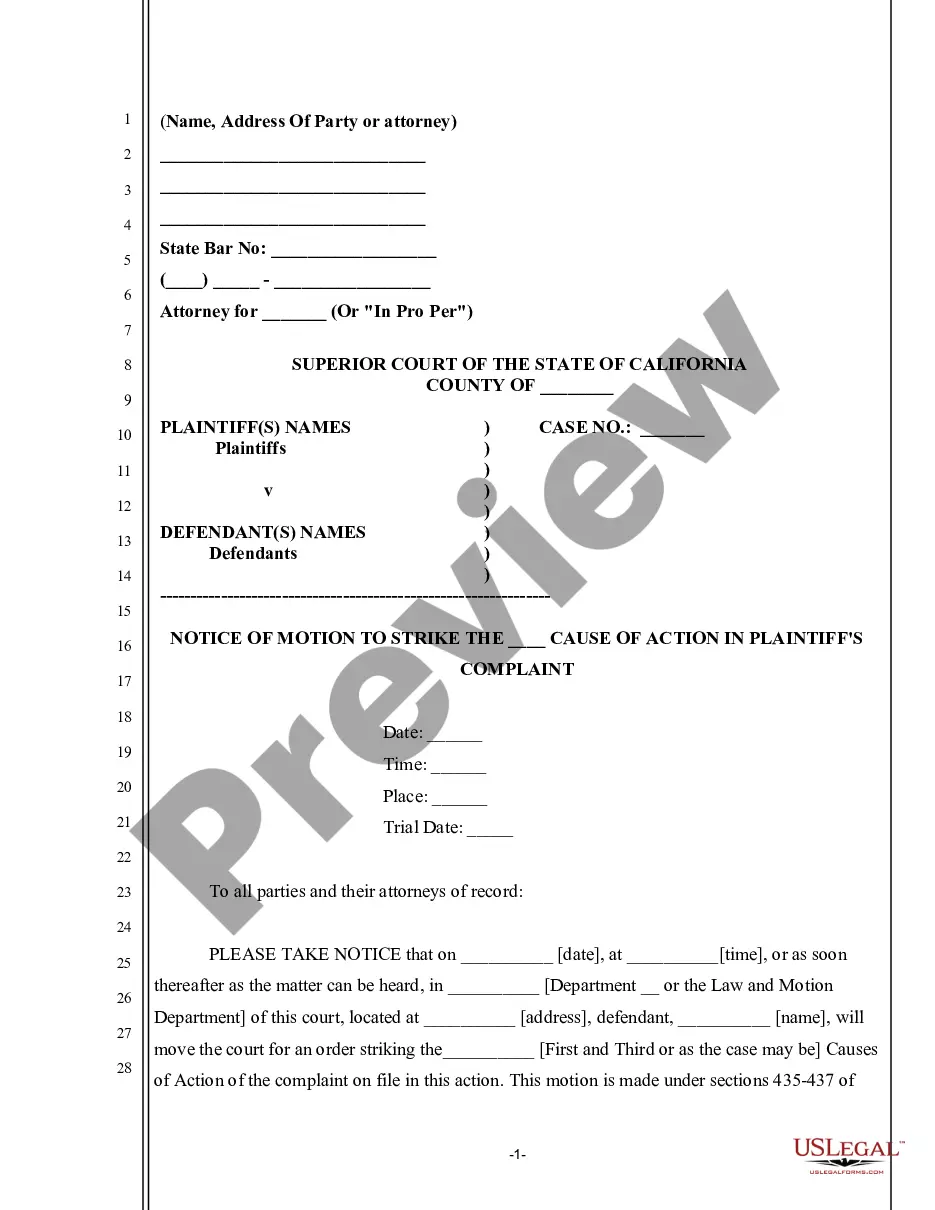
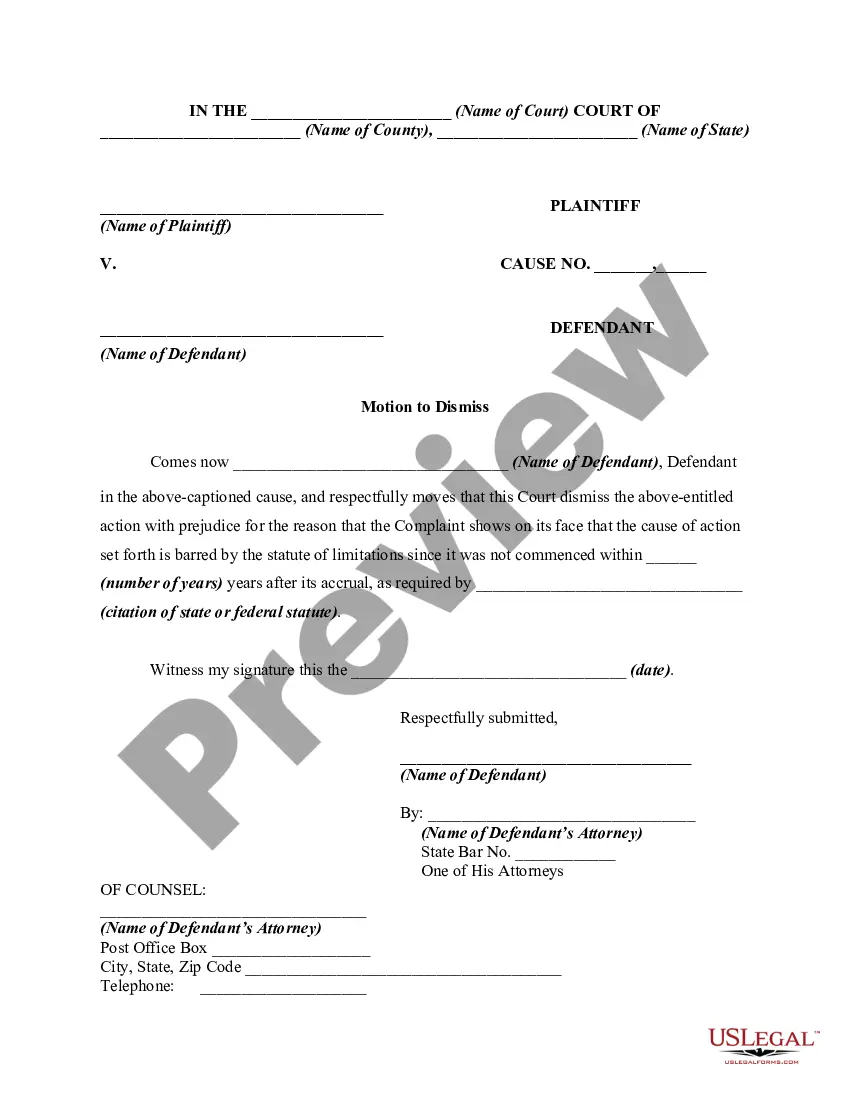
This form is a Demurrer to the Cause of Action of Plaintiff's Complaint. It is used by a defendant to argue that the plaintiff's complaint does not establish a valid legal claim. By filing a demurrer, the defendant requests that the court dismiss the action without allowing the plaintiff to amend their complaint. This form is essential for defendants who believe that the plaintiff has failed to state a claim upon which relief can be granted, thereby differentiating it from other forms that may address different aspects of a lawsuit.
Form components explained
- Name and contact information of the defendant or their attorney
- Details of the court and case number
- Specific grounds for the demurrer
- Request for dismissal and award of costs
- Signature of the attorney representing the defendant
Common use cases
This form is used when a defendant wants to challenge the legal sufficiency of a plaintiff's complaint in a civil lawsuit. It is appropriate to file a demurrer when the plaintiff's allegations do not meet the necessary legal standards or when the court lacks jurisdiction. This form can be crucial for defendants who wish to prevent an unnecessary trial if the complaint is fundamentally flawed.
Who should use this form
- Defendants in civil lawsuits who wish to contest the validity of the plaintiff's claims
- Attorneys representing defendants in legal actions
- Individuals acting in pro per (without an attorney) who are the defendants in a case
Instructions for completing this form
- Enter the names of the parties involved in the lawsuit.
- Fill in the case number and details regarding the court.
- Specify which cause of action you are demurring to and clearly outline the grounds for your demurrer.
- Sign and date the form, providing your name and contact information if you are the attorney, or indicating that you are representing yourself.
- Attach any supporting documents, including a memorandum of points and authorities, as well as proof of service.
Is notarization required?
Notarization is not commonly needed for this form. However, certain documents or local rules may make it necessary. Our notarization service, powered by Notarize, allows you to finalize it securely online anytime, day or night.
Get your form ready online
Our built-in tools help you complete, sign, share, and store your documents in one place.
Make edits, fill in missing information, and update formatting in US Legal Forms—just like you would in MS Word.
Download a copy, print it, send it by email, or mail it via USPS—whatever works best for your next step.
Sign and collect signatures with our SignNow integration. Send to multiple recipients, set reminders, and more. Go Premium to unlock E-Sign.
If this form requires notarization, complete it online through a secure video call—no need to meet a notary in person or wait for an appointment.
We protect your documents and personal data by following strict security and privacy standards.

Make edits, fill in missing information, and update formatting in US Legal Forms—just like you would in MS Word.

Download a copy, print it, send it by email, or mail it via USPS—whatever works best for your next step.

Sign and collect signatures with our SignNow integration. Send to multiple recipients, set reminders, and more. Go Premium to unlock E-Sign.

If this form requires notarization, complete it online through a secure video call—no need to meet a notary in person or wait for an appointment.

We protect your documents and personal data by following strict security and privacy standards.
Common mistakes to avoid
- Failing to clearly specify the grounds for the demurrer, which can lead to dismissal of the demurrer.
- Omitting necessary case details, such as the case number or party names.
- Not signing the form or failing to provide the attorney's license number, if applicable.
- Neglecting to attach supporting documentation or proof of service.
Benefits of completing this form online
- Access to professionally drafted templates that are easy to download and complete.
- Convenience of filling out the form at your own pace and from the comfort of your home.
- Ability to edit the document as necessary before finalizing it.
- Confidence in using reliable legal forms that comply with your jurisdiction's requirements.
Quick recap
- The Demurrer to the Cause of Action is a critical legal tool for defendants in civil lawsuits.
- A timely and properly filed demurrer can save time and resources by potentially dismissing a case before trial.
- It is essential to understand the specific grounds for your demurrer and to follow all procedural requirements to ensure its validity.
Looking for another form?
Form popularity
FAQ
A motion to dismiss in California seeks to terminate a case at an early stage, typically based on procedural issues or lack of jurisdiction. In contrast, a demurrer specifically challenges the legal sufficiency of the allegations within the complaint. Understanding this distinction is essential when forming a legal strategy regarding a California Demurrer to the Cause of Action of Plaintiffs Complaint, as each serves different purposes in the litigation process.
In California, parties must meet and confer before filing a demurrer to attempt to resolve issues informally. This step is designed to promote cooperation and may lead to the withdrawal of the demurrer or an amended complaint. Engaging in this process is particularly important concerning a California Demurrer to the Cause of Action of Plaintiffs Complaint, as it fosters a more efficient legal procedure.
To file a demurrer in California, you must prepare a written document outlining your legal arguments against the plaintiff's complaint. After drafting the demurrer, you file it with the appropriate court and serve the plaintiff with a copy. This process is critical in the context of a California Demurrer to the Cause of Action of Plaintiffs Complaint, as it formally contests the legal validity of the allegations presented.
The bases for demurrer in California include insufficient pleadings, failure to allege essential elements of a cause of action, and an absence of jurisdiction. These legal grounds set the stage for addressing potential flaws in a plaintiff's case. Understanding these bases is vital when navigating a California Demurrer to the Cause of Action of Plaintiffs Complaint, ensuring that your legal stance is strong and credible.
Filing an amended complaint can moot a pending demurrer in California. When a plaintiff amends their complaint, it effectively overrides the previous version, which the demurrer addressed. Therefore, the defendant may need to reassess the California Demurrer to the Cause of Action of Plaintiffs Complaint in light of the amended allegations, as this can lead to new opportunities for legal defense.
A demurrer to a plaintiff's complaint is a formal response indicating that the complaint is legally insufficient. This action does not contest the facts but rather focuses on the legal theory presented. By filing a California Demurrer to the Cause of Action of Plaintiffs Complaint, a defendant can seek dismissal or amendment, which is essential to maintaining an efficient legal process.
Grounds for a general demurrer in California typically include lack of jurisdiction, failure to state a cause of action, or ambiguity in the complaint. These grounds allow a defendant to dispute the legal framework of the plaintiff's case. When addressing a California Demurrer to the Cause of Action of Plaintiffs Complaint, it is crucial to identify these grounds clearly to ensure proper legal representation.
A general demurrer in California challenges the legal sufficiency of a complaint without addressing the facts in detail. Essentially, it asserts that even if all allegations are true, they do not establish a valid legal claim. This is an important step in the legal process, particularly regarding a California Demurrer to the Cause of Action of Plaintiffs Complaint, allowing the court to dismiss the case without examining its merits.
To write a demurrer in California, start by clearly stating the specific reasons for challenging the plaintiffs' complaint. Ensure to articulate how the California Demurrer to the Cause of Action of Plaintiffs Complaint addresses legal insufficiencies or vagueness in the claims. Crafting a well-structured demurrer can be complex, so utilizing resources like uslegalforms can provide templates and guidance to help navigate the process effectively.
Demurrers can be successful, but the outcome often depends on the specifics of each case. Generally, if a California Demurrer to the Cause of Action of Plaintiffs Complaint addresses significant legal flaws, the court may grant the demurrer and dismiss the claim. However, courts often give plaintiffs opportunities to amend their complaints, meaning that success rates can vary widely based on the circumstances.