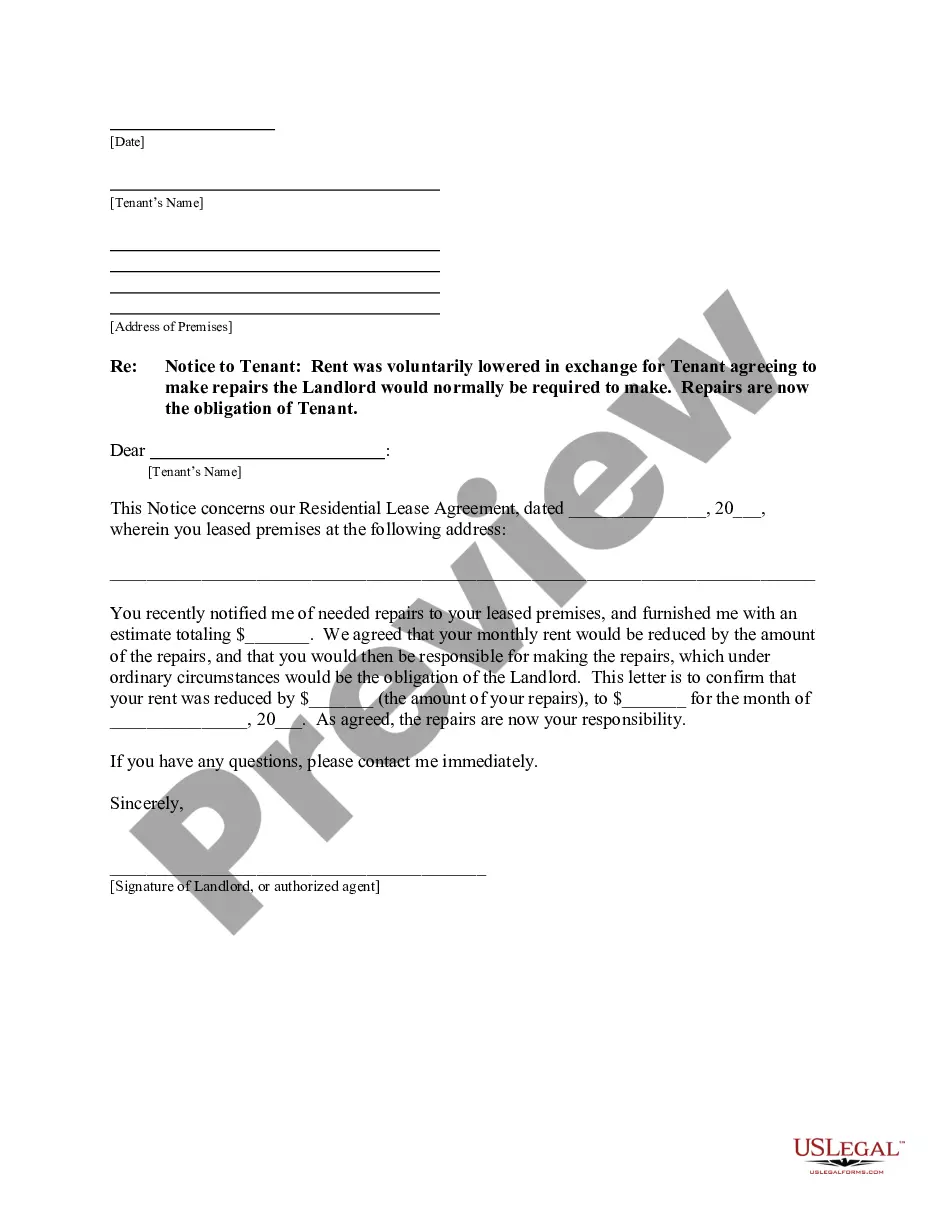
Wyoming Written Revocation of Will
About this form
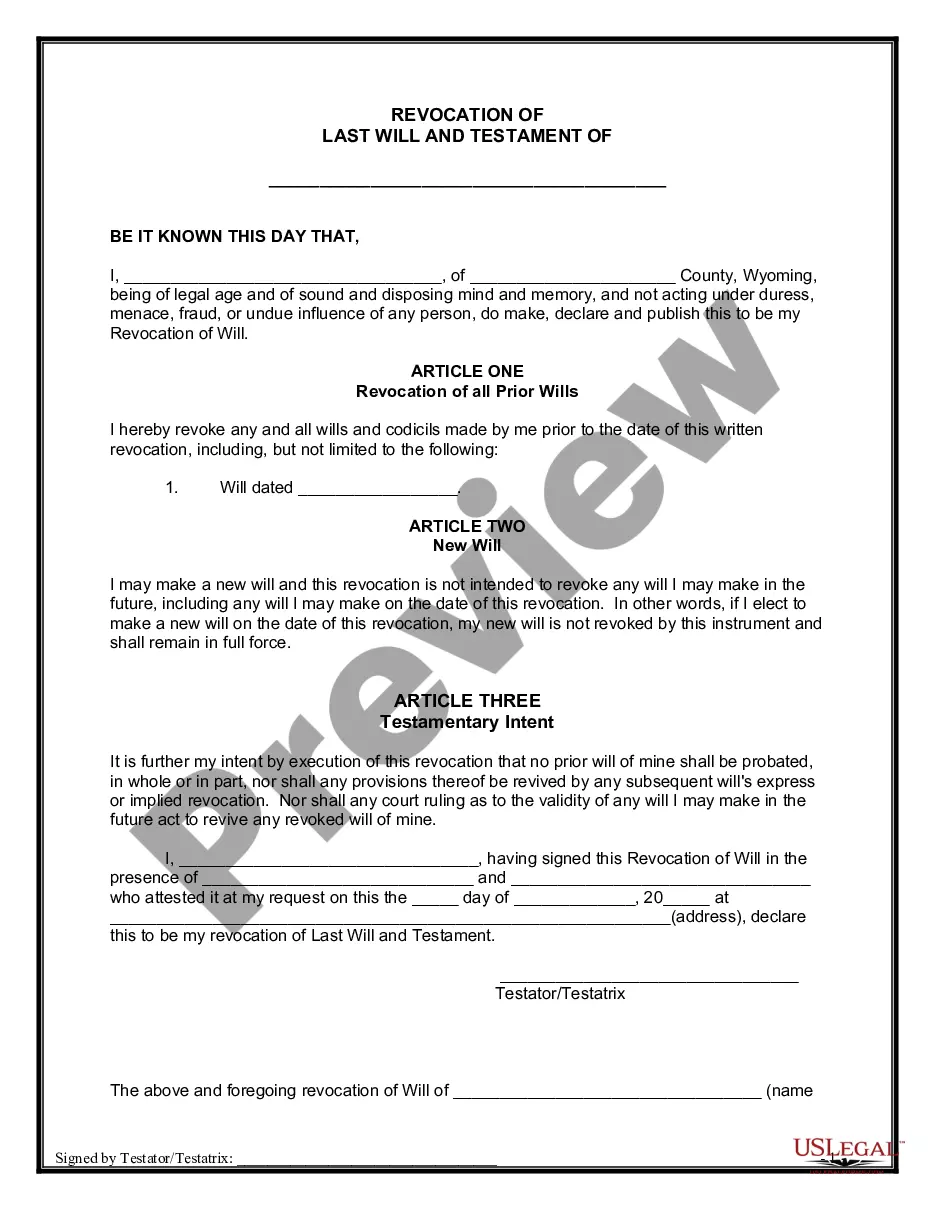
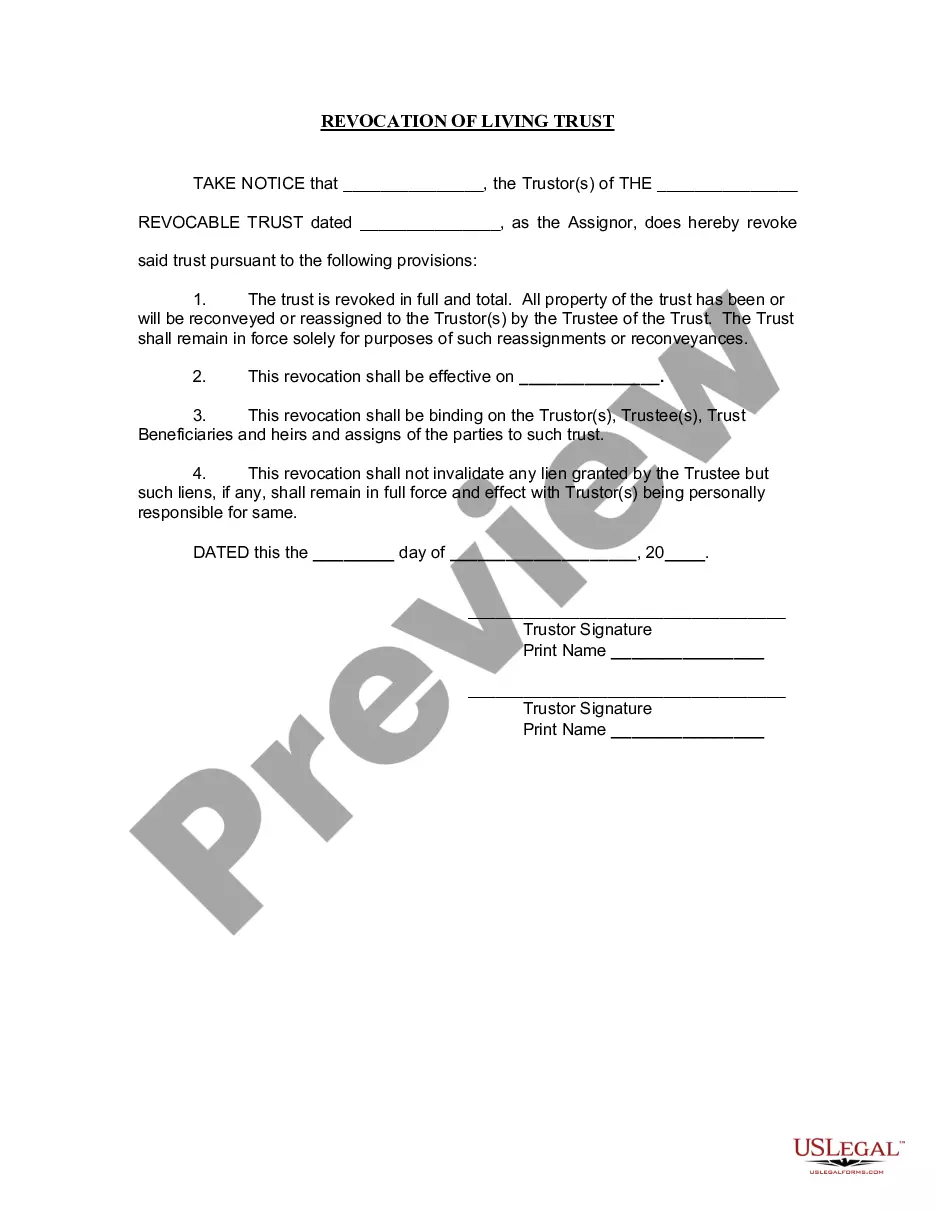
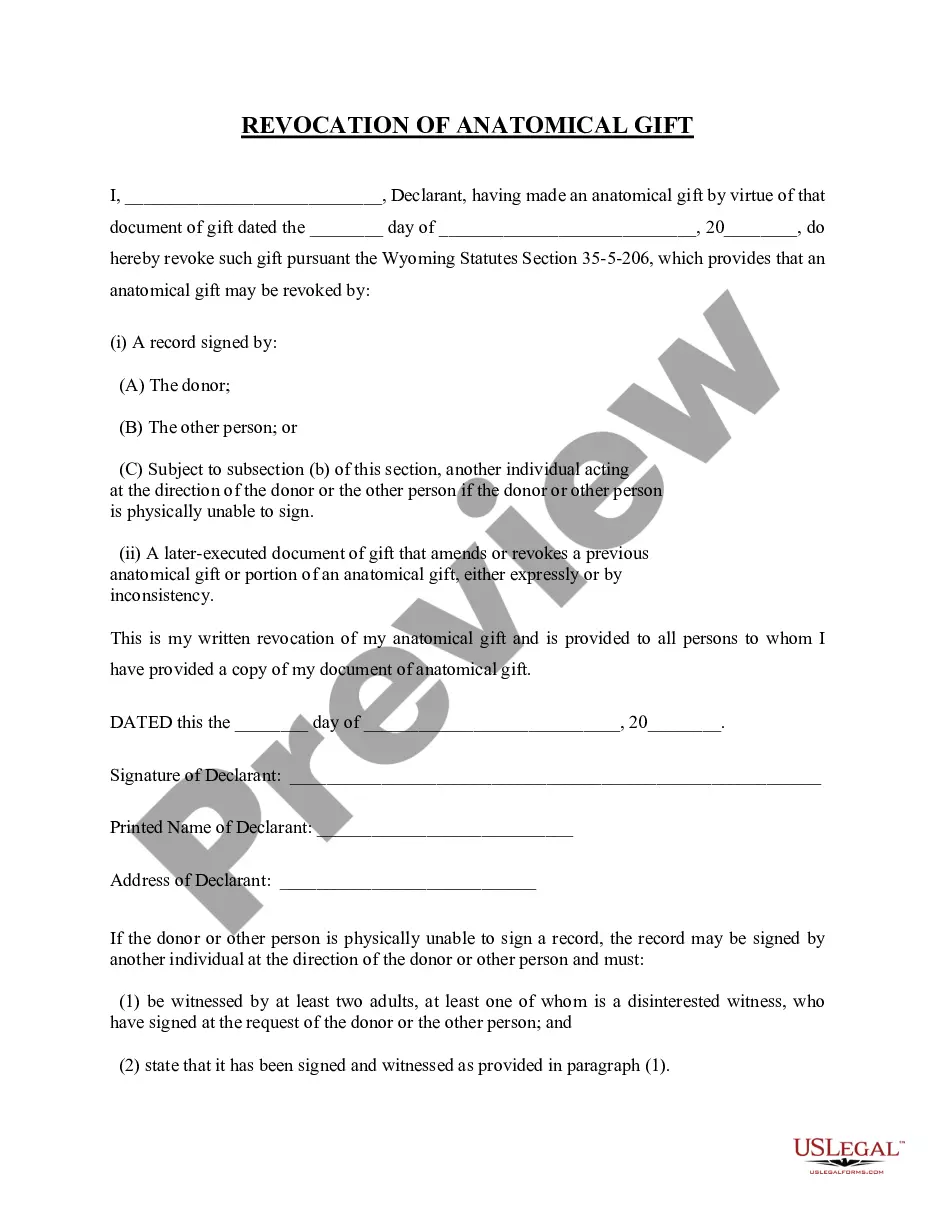
The Written Revocation of Will is a legal document that formally revokes any prior wills made by an individual. It serves to clarify the intent of the testator to ensure that their most current intentions regarding the distribution of their estate are honored. Unlike a new will that may include a revocation clause but may not be accepted by heirs, this revocation document eliminates any ambiguity about which will should be probated after the testator's death.
Form components explained
- Revocation of all prior wills: Confirms that all previous wills are invalidated.
- New will clause: Affirms that the revocation does not affect any future wills that may be created.
- Testamentary intent declaration: Ensures that no prior wills will be probated.
- Signature of the testator: Required to validate the revocation.
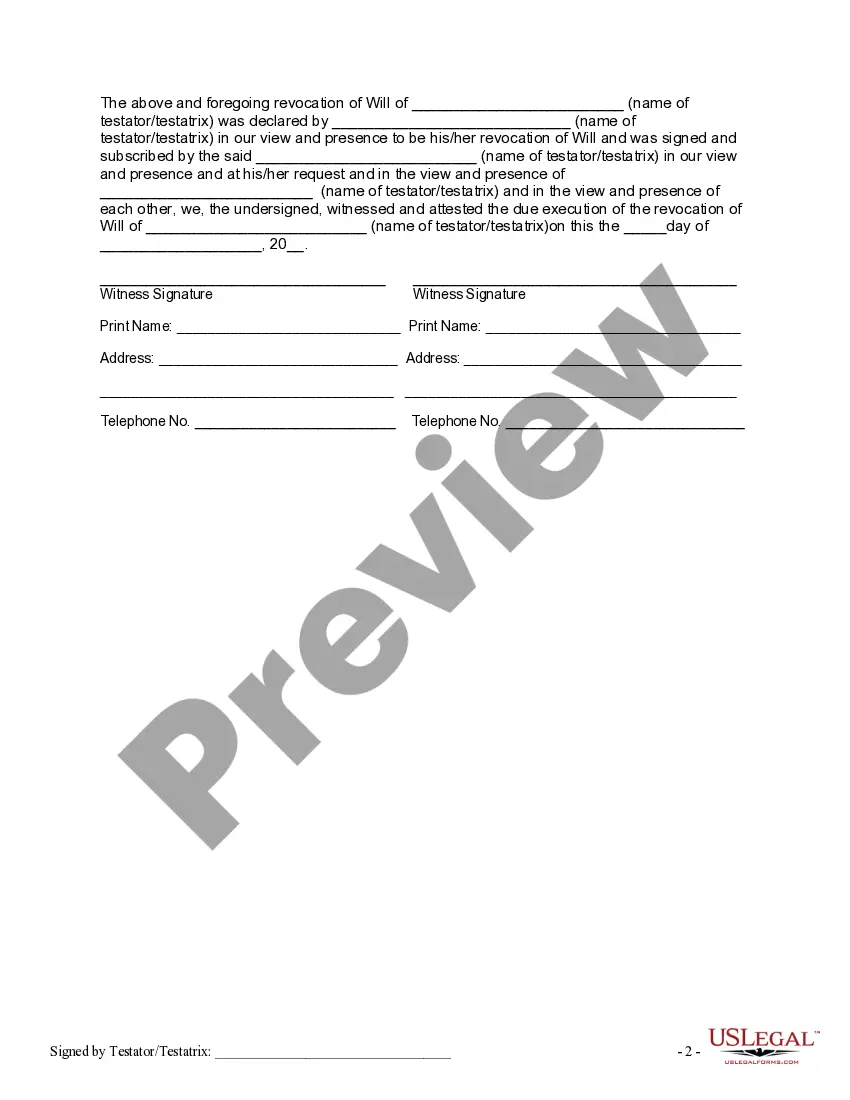
- Witness signatures: At least two witnesses must confirm the signing of the document.

When to use this document
This form is typically used when an individual wishes to revoke an earlier will without creating a new one immediately. It is particularly helpful in situations where a changed circumstance, like changes in relationships or financial status, prompts the need to clarify intentions about asset distribution. This document ensures that previous wills are not recognized, which can prevent potential conflicts among heirs.
Intended users of this form
This form is suited for individuals who have previously created a will but wish to revoke it without drafting a new one right away. It is particularly useful for:
- Individuals experiencing significant life changes, such as divorce or remarriage.
- Those who wish to eliminate confusion over unintended beneficiaries.
- Estate planners ensuring that their latest wishes are respected by heirs.
How to prepare this document
- Enter the full name of the testator and their county of residence at the top of the document.
- List the date of the will(s) being revoked under the revocation clause.
- Ensure the testator signs the document in the presence of at least two witnesses.
- Have the witnesses sign and print their names and addresses to validate the document.
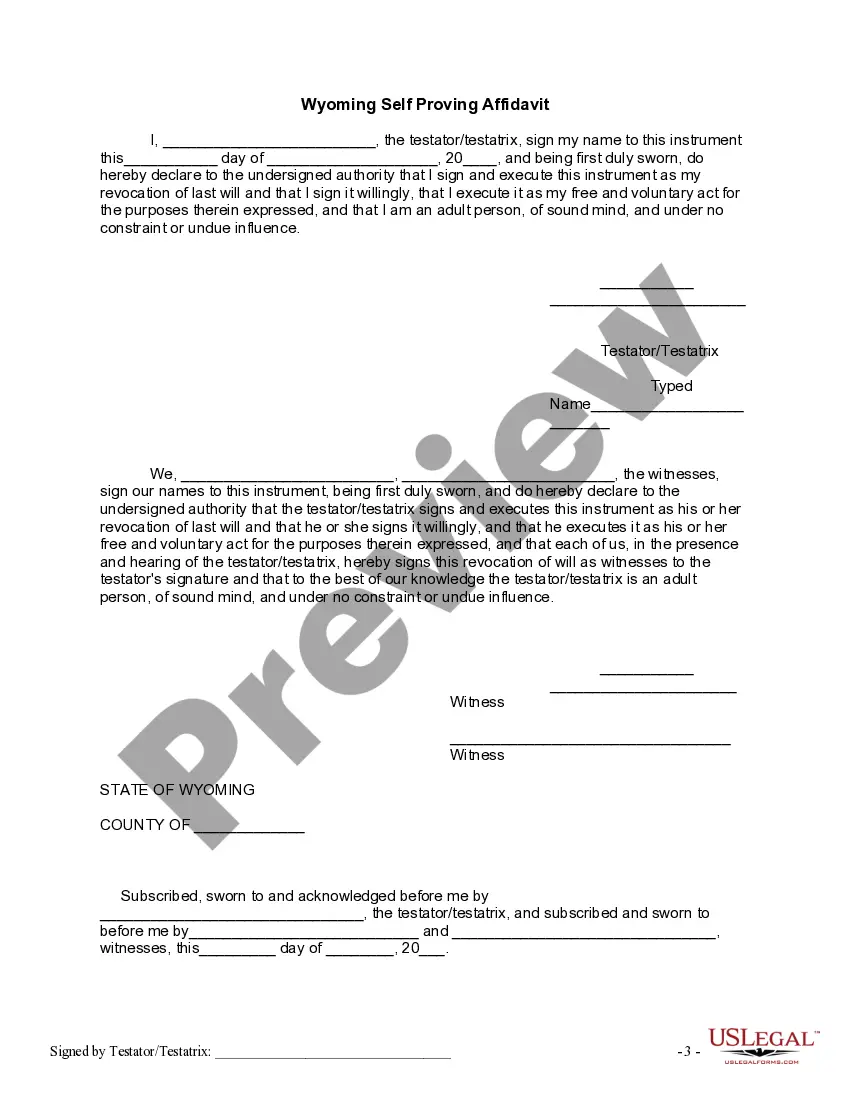
- If applicable, complete the self-proving affidavit with signatures and dates.
Is notarization required?
This form must be notarized to be legally valid. US Legal Forms provides secure online notarization powered by Notarize, allowing you to complete the process through a verified video call.
Get your form ready online
Our built-in tools help you complete, sign, share, and store your documents in one place.
Make edits, fill in missing information, and update formatting in US Legal Forms—just like you would in MS Word.
Download a copy, print it, send it by email, or mail it via USPS—whatever works best for your next step.
Sign and collect signatures with our SignNow integration. Send to multiple recipients, set reminders, and more. Go Premium to unlock E-Sign.
If this form requires notarization, complete it online through a secure video call—no need to meet a notary in person or wait for an appointment.
We protect your documents and personal data by following strict security and privacy standards.

Make edits, fill in missing information, and update formatting in US Legal Forms—just like you would in MS Word.

Download a copy, print it, send it by email, or mail it via USPS—whatever works best for your next step.

Sign and collect signatures with our SignNow integration. Send to multiple recipients, set reminders, and more. Go Premium to unlock E-Sign.

If this form requires notarization, complete it online through a secure video call—no need to meet a notary in person or wait for an appointment.

We protect your documents and personal data by following strict security and privacy standards.
Common mistakes
- Failing to properly sign and date the revocation document.
- Not having enough witnesses sign the document, which may invalidate it.
- Using the revocation form without fully understanding the implications for any existing wills.
Why complete this form online
- Convenience of downloading the form at any time.
- Editability to tailor the document to specific needs.
- Reliability in ensuring that the form complies with legal standards.
Looking for another form?








Form popularity
FAQ
One document that is explicitly written to supersede a will is a codicil, which is a separate document that amends the latest version of a last will and testament. The codicil must control distribution of the assets it references and supersede certain sections of the latest document.
Yes, an executor can override a beneficiary's wishes as long as they are following the will or, alternative, any court orders. Executors have a fiduciary duty to the estate beneficiaries requiring them to distribute estate assets as stated in the will.
Alberta Wills can be changed at any time simply by visiting your lawyer.In some situations, wills are automatically revoked, such as when you get married. Consider making an entirely new will when you need to make major changes and using a codicil for small changes.
Generally, you can revoke a will by (1) destroying the old will, (2) creating a new will or (3) making changes to an existing will. In some circumstances, simply giving away all or your property and assets before you die can have the effect of revoking a will (subject to estate tax penalties).
Generally, you can revoke a will by (1) destroying the old will, (2) creating a new will or (3) making changes to an existing will. In some circumstances, simply giving away all or your property and assets before you die can have the effect of revoking a will (subject to estate tax penalties).
Wyoming recognizes holographic (handwritten) wills so long as the document is entirely in the handwriting of the testator and signed by the hand of the testator himself. A Wyoming holographic will does not need to be witnessed.
A will can also be declared invalid if someone proves in court that it was procured by undue influence. This usually involves some evil-doer who occupies a position of trust -- for example, a caregiver or adult child -- manipulating a vulnerable person to leave all, or most, of his property to the manipulator instead
It's possible you have already designated who receives certain assets in documents requiring the naming of beneficiaries, such as life insurance policies or retirement accounts. Accounts and property held jointly often pass to the surviving owner. These designations supersede your will.
Under probate law, wills can only be contested by spouses, children or people who are mentioned in the will or a previous will. When one of these people notifies the court that they believe there is a problem with the will, a will contest begins.