Wyoming Warning of Default on Residential Lease
About this form
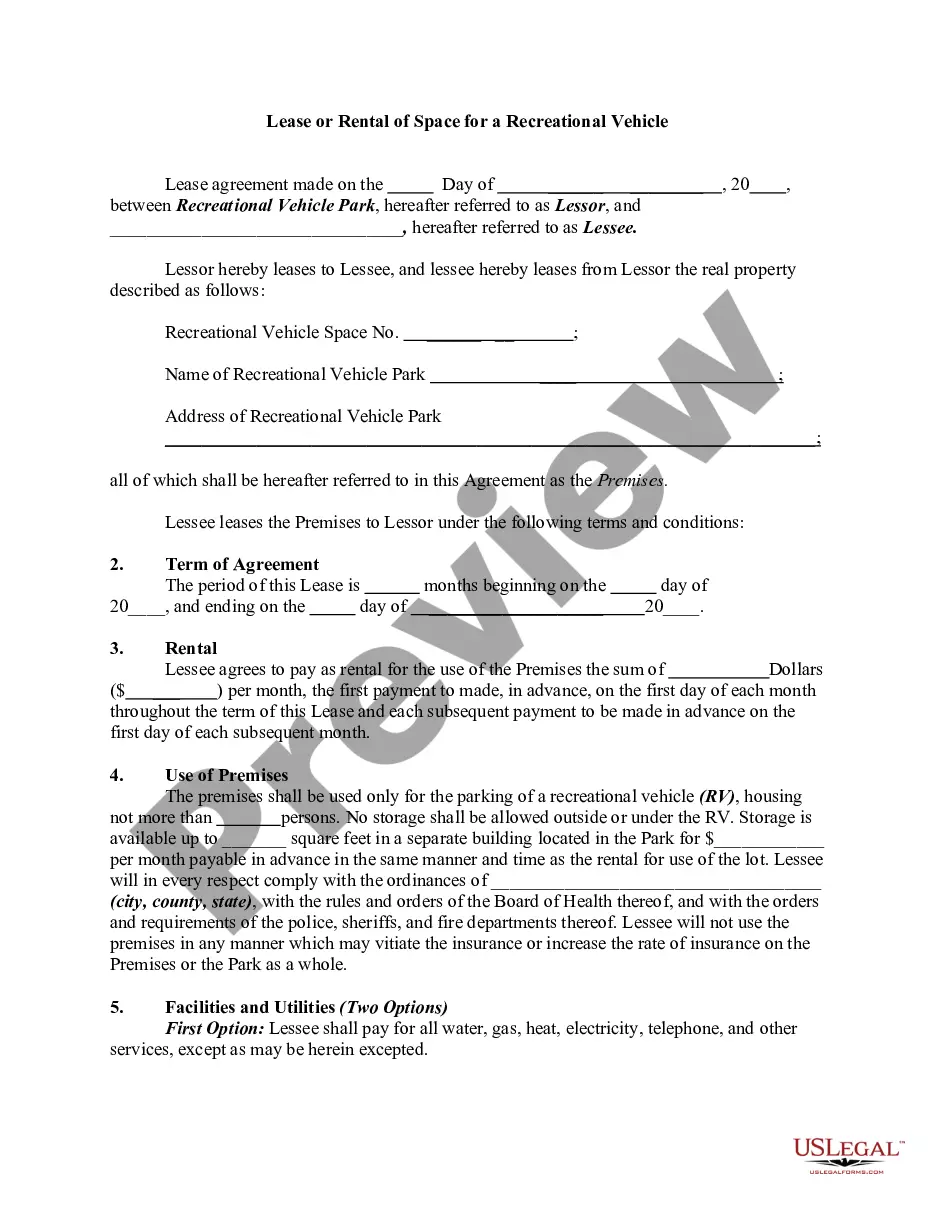
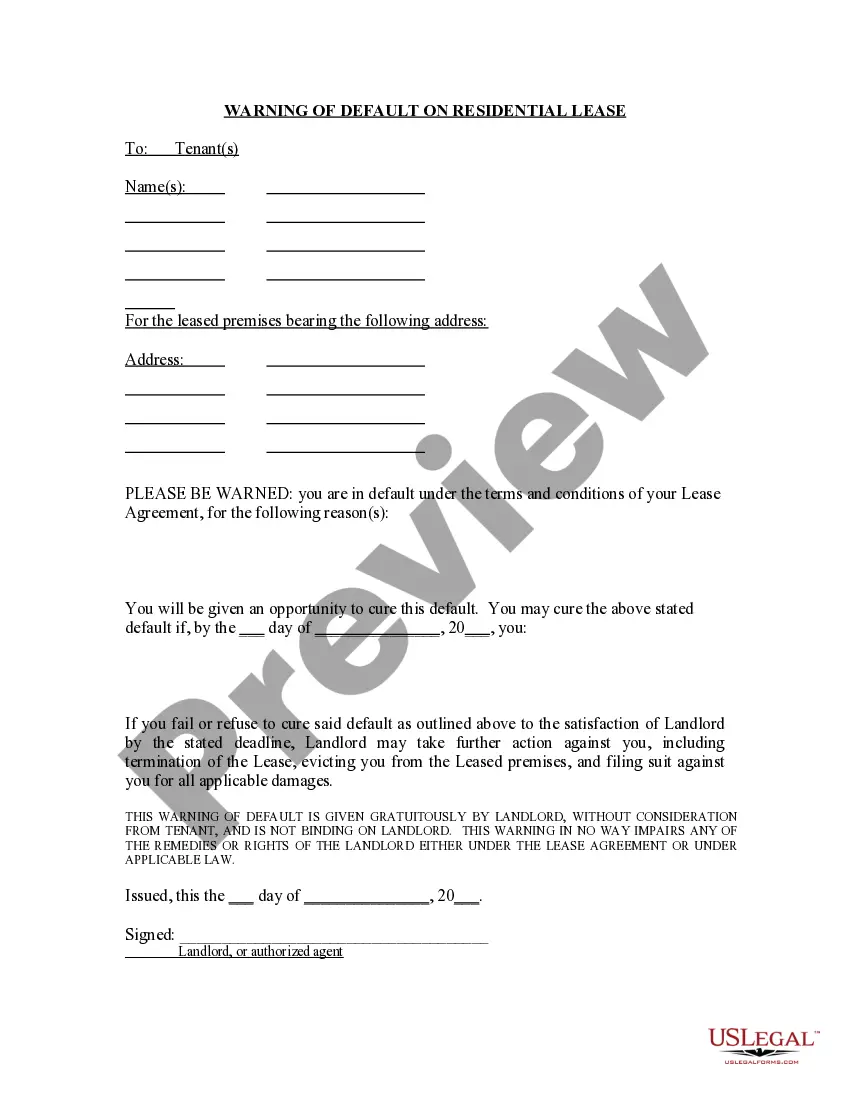
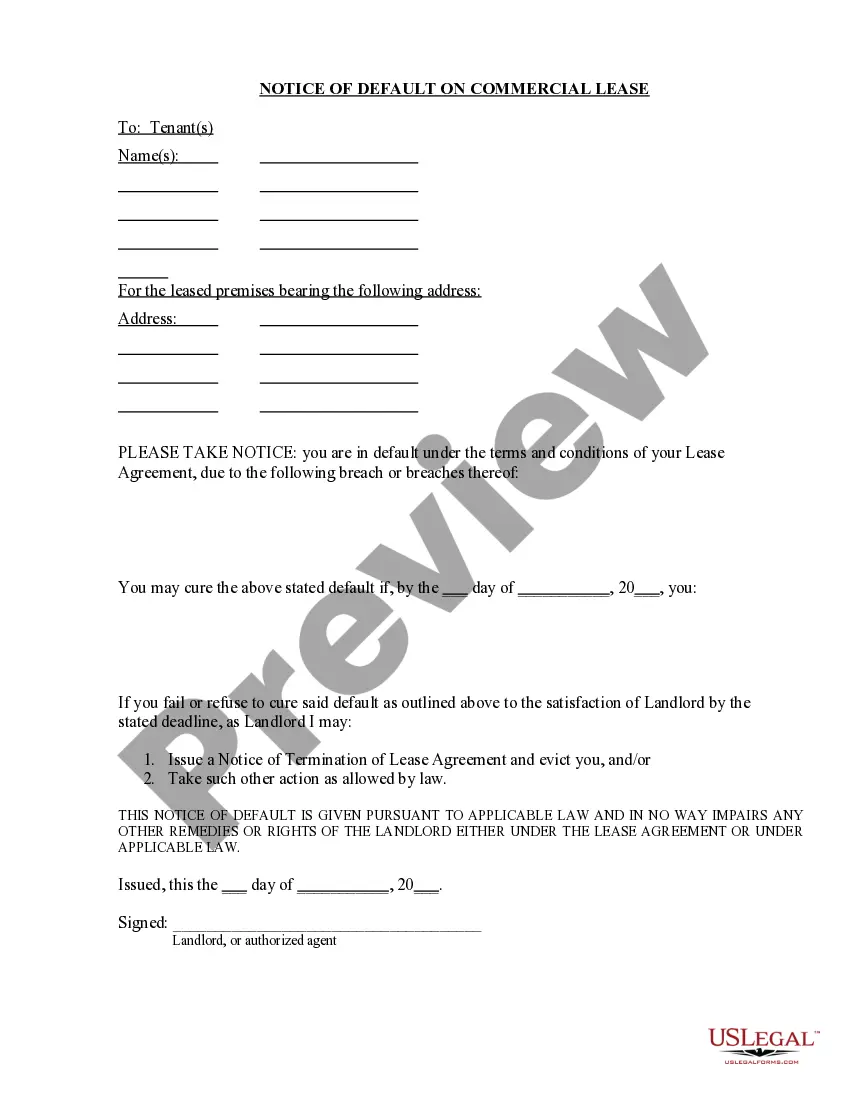
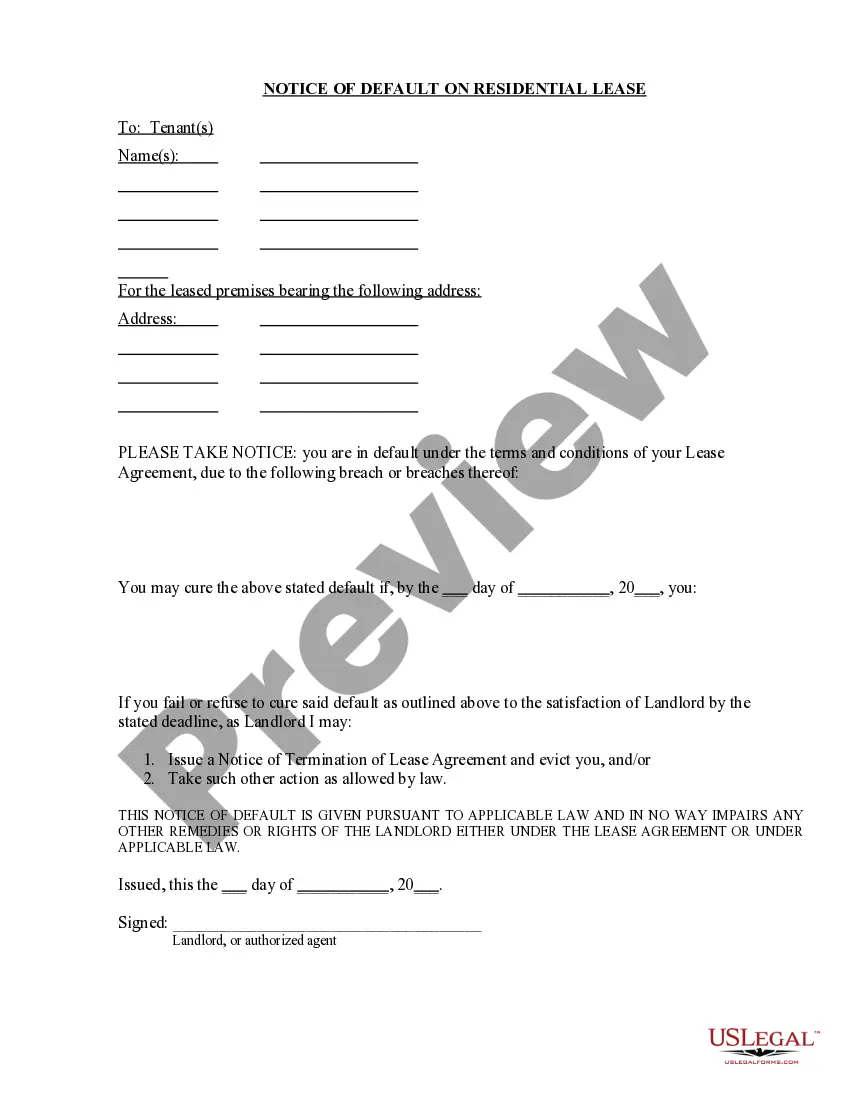
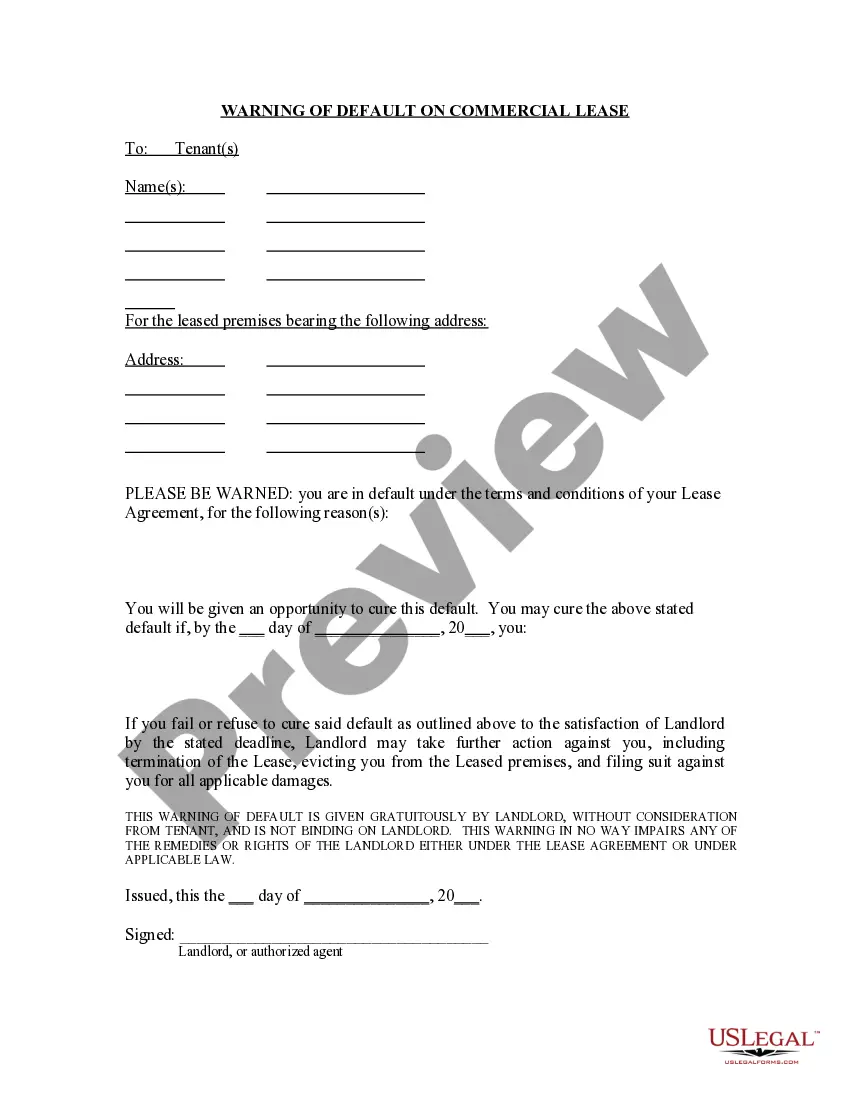
The Warning of Default on Residential Lease is a legal document that serves as a notice from a landlord to a tenant. It expresses the landlord's concern regarding the tenant's potential default under the lease agreement if specific conditions are not addressed. This form helps protect the landlord's rights while ensuring the tenant is aware of any issues that need attention. It is specifically designed for use in residential lease situations, differentiating it from other types of notices or forms that may pertain to different legal contexts.
Main sections of this form
- Date of issuance
- Landlord's signature
- Notice of default terms and conditions
- Statement of non-binding nature of the warning
- Identification of the tenant
Situations where this form applies
This form should be used when a landlord wishes to notify a tenant of a potential default under their lease agreement. Common scenarios for issuing this warning include non-payment of rent, violations of lease terms, or failure to maintain the property as agreed. It serves to formally document the issue and provide the tenant with an opportunity to rectify the situation before further legal action may be necessary.
Who this form is for
- Residential landlords concerned about tenant defaults
- Property managers responsible for rental agreements
- Tenants wishing to understand their rights and obligations
- Legal professionals advising landlords or tenants
Completing this form step by step
- Enter the date of issuance at the top of the form.
- Clearly identify the tenant by name and lease specifics.
- Detail the specific conditions that are leading to the warning of default.
- Have the landlord or authorized agent sign the document.
- Deliver the completed warning letter to the tenant in accordance with local laws.
Does this document require notarization?
This form usually doesn’t need to be notarized. However, local laws or specific transactions may require it. Our online notarization service, powered by Notarize, lets you complete it remotely through a secure video session, available 24/7.
Get your form ready online
Our built-in tools help you complete, sign, share, and store your documents in one place.
Make edits, fill in missing information, and update formatting in US Legal Forms—just like you would in MS Word.
Download a copy, print it, send it by email, or mail it via USPS—whatever works best for your next step.
Sign and collect signatures with our SignNow integration. Send to multiple recipients, set reminders, and more. Go Premium to unlock E-Sign.
If this form requires notarization, complete it online through a secure video call—no need to meet a notary in person or wait for an appointment.
We protect your documents and personal data by following strict security and privacy standards.

Make edits, fill in missing information, and update formatting in US Legal Forms—just like you would in MS Word.

Download a copy, print it, send it by email, or mail it via USPS—whatever works best for your next step.

Sign and collect signatures with our SignNow integration. Send to multiple recipients, set reminders, and more. Go Premium to unlock E-Sign.

If this form requires notarization, complete it online through a secure video call—no need to meet a notary in person or wait for an appointment.

We protect your documents and personal data by following strict security and privacy standards.
Typical mistakes to avoid
- Failing to include specific details of the alleged lease violations.
- Not providing adequate time for the tenant to remedy the situation.
- Inaccurately identifying the tenant or property.
- Neglecting to sign the document, which can render it invalid.
Benefits of completing this form online
- Convenient access to legally vetted templates at any time.
- Easy editability to customize based on specific situations.
- Reliable format that complies with legal standards.
- Quick download for immediate use and implementation.
Legal use & context
- This form is used in the context of residential lease agreements.
- It serves as a preliminary step before pursuing further legal action for eviction or breach of contract.
- Inclusion of this warning helps protect the landlord's rights and provides documented evidence of the tenant's default.
Quick recap
- The Warning of Default on Residential Lease is a critical tool for landlords to communicate issues with tenants.
- Proper completion and delivery of this form can help prevent escalation to eviction.
- Understanding state-specific requirements is essential for legal compliance.
Looking for another form?









Form popularity
FAQ
A Notice to Quit is the first step a landlord must take to evict tenants from the property. A notice to quit asks the tenant to quit, leave, and vacate the premises. This does not mean the lease is automatically terminated. Rather, a notice to quit gives the landlord the right to go to court.
The big take-away is that in most circumstances a landlord cannot enter a property without agreement from the tenant. And If the landlord ignores the law and enters the property without permission, the tenant may be able to claim damages or gain an injunction to prevent the landlord doing it again.
Give the landlord/agent a written termination notice and vacate move out and return the keys according to your notice, and/or. apply to the NSW Civil & Administrative Tribunal (NCAT) for a termination order.
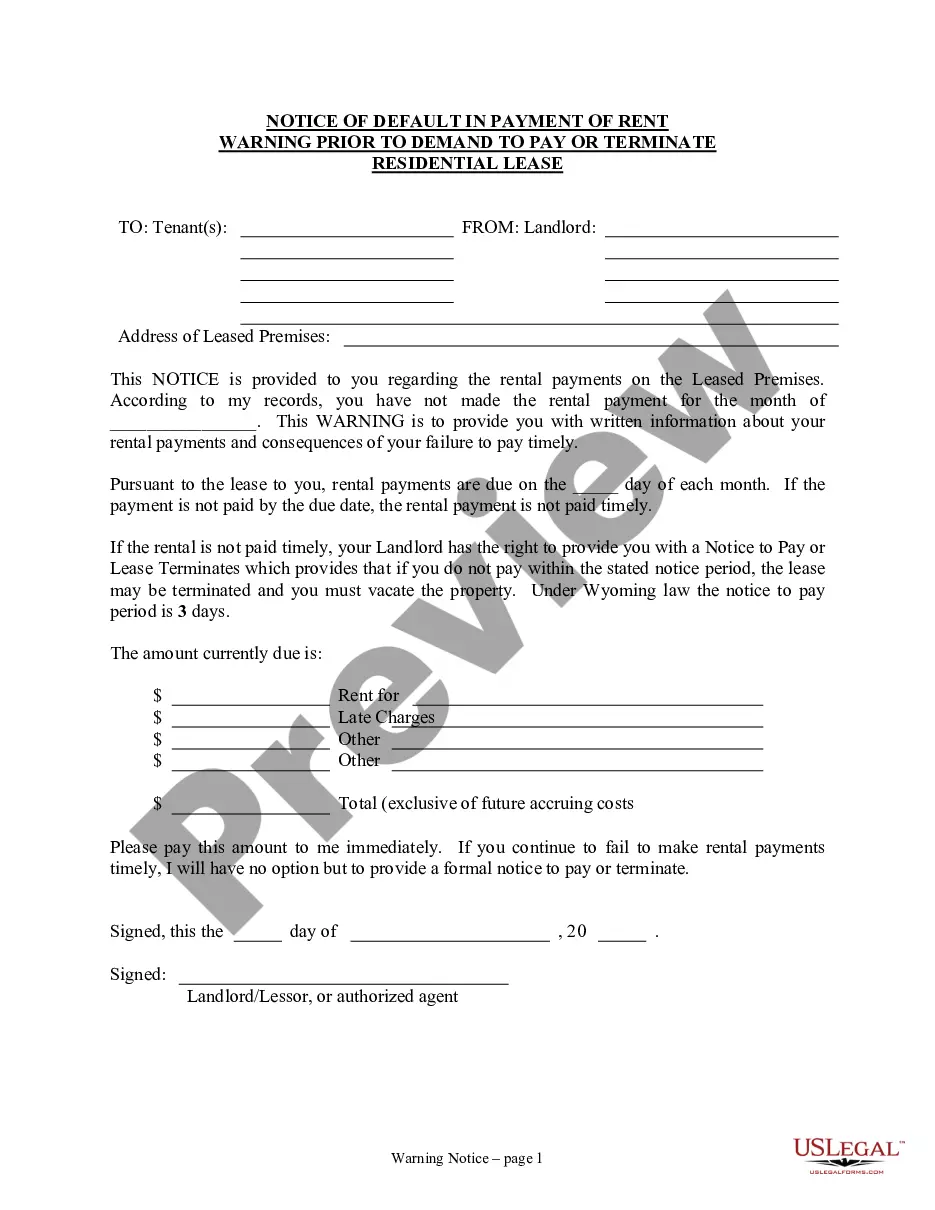
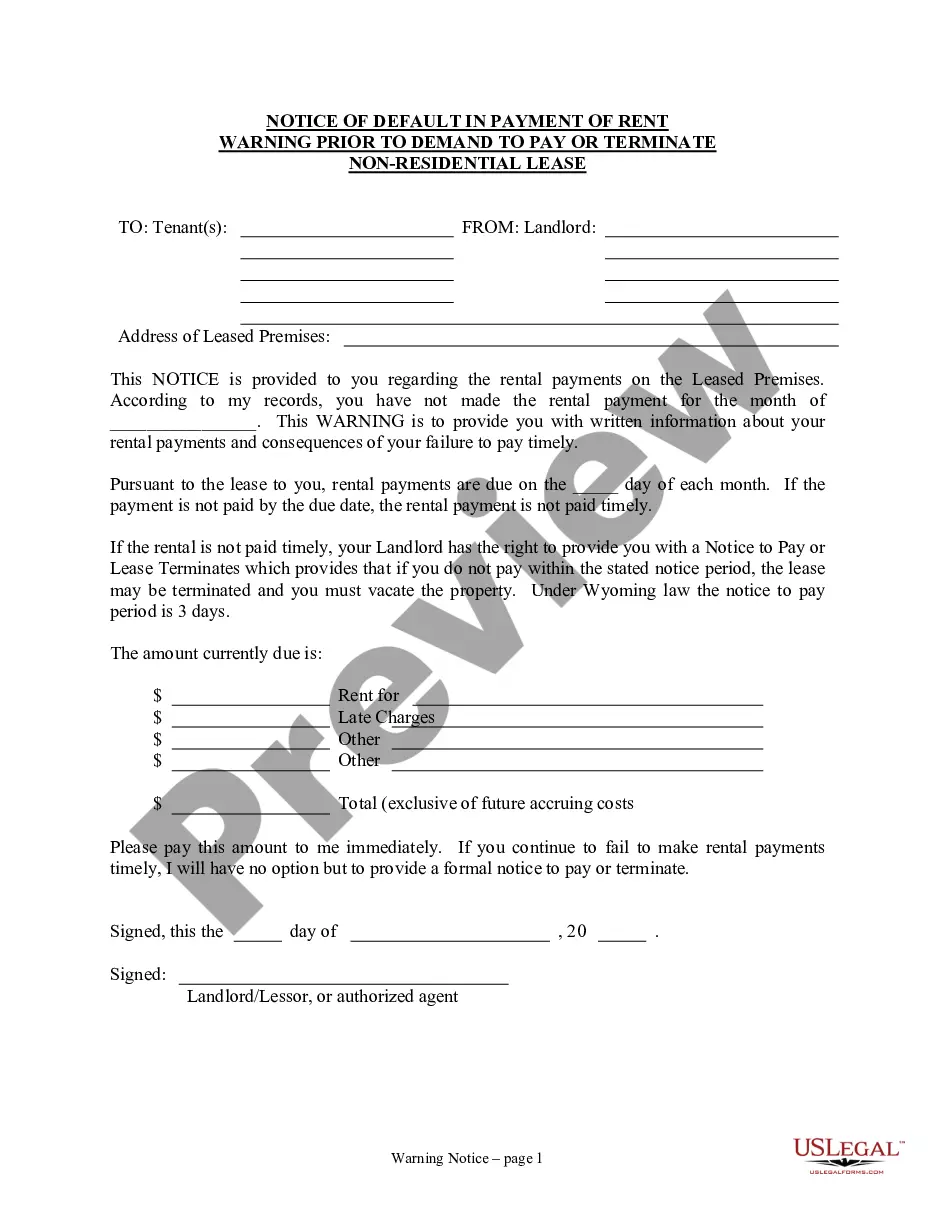
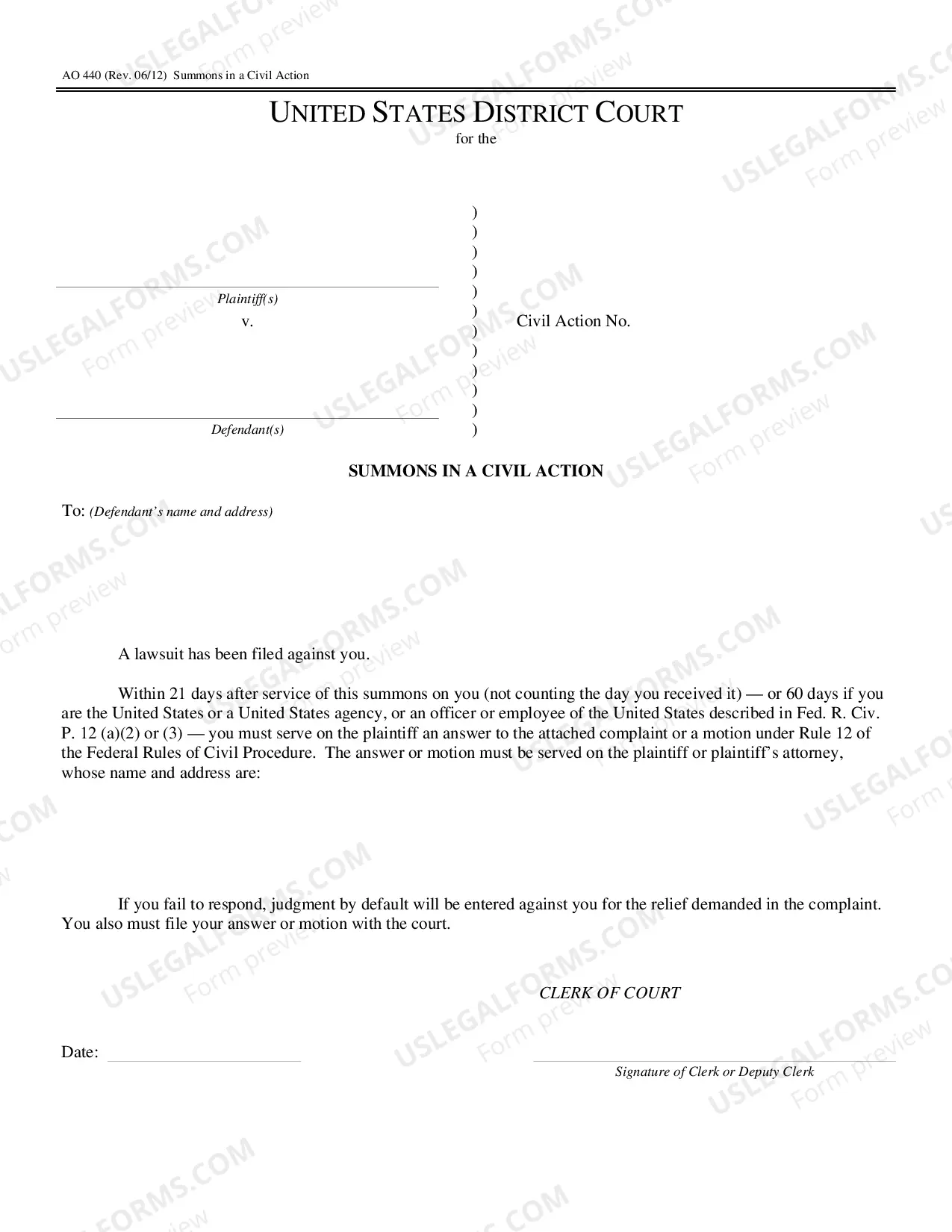
In landlord-tenant law, default refers to the failure of a tenant to timely pay rent due.In general, the landlord is required to give the tenant notice of the default before bringing eviction proceedings or applying security deposit proceeds to the payment in default.
In some circumstances, a tenant can break a fixed-term agreement early without penalty. A tenant can give 14 days' written notice to end an agreement early without penalty if: they have accepted an offer of social housing (e.g. from DCJ Housing)
Entry Allowed with Notice for Maintenance and Repairs (non-emergency): Yes. In general, tenants are prohibited from unreasonably denying access to the rental unit or refusing a landlord entry (Wyo. Stat. § 1-21-1205).
Fails to pay rent; Violates a clause in the lease or rental agreement; Violates a responsibility imposed by law.
Wyoming is a landlord-friendly state, that doesn't mess around when it comes to late rent. Landlords have the right to enter a tenant's apartment without notice if the tenant is more than three days late on the rent, and landlords can terminate a lease after three days of nonpayment of rent.
When you rent a property from a landlord it becomes your home. They should only enter the property without you being present, if you have given permission for them to do so, or in a genuine emergency.