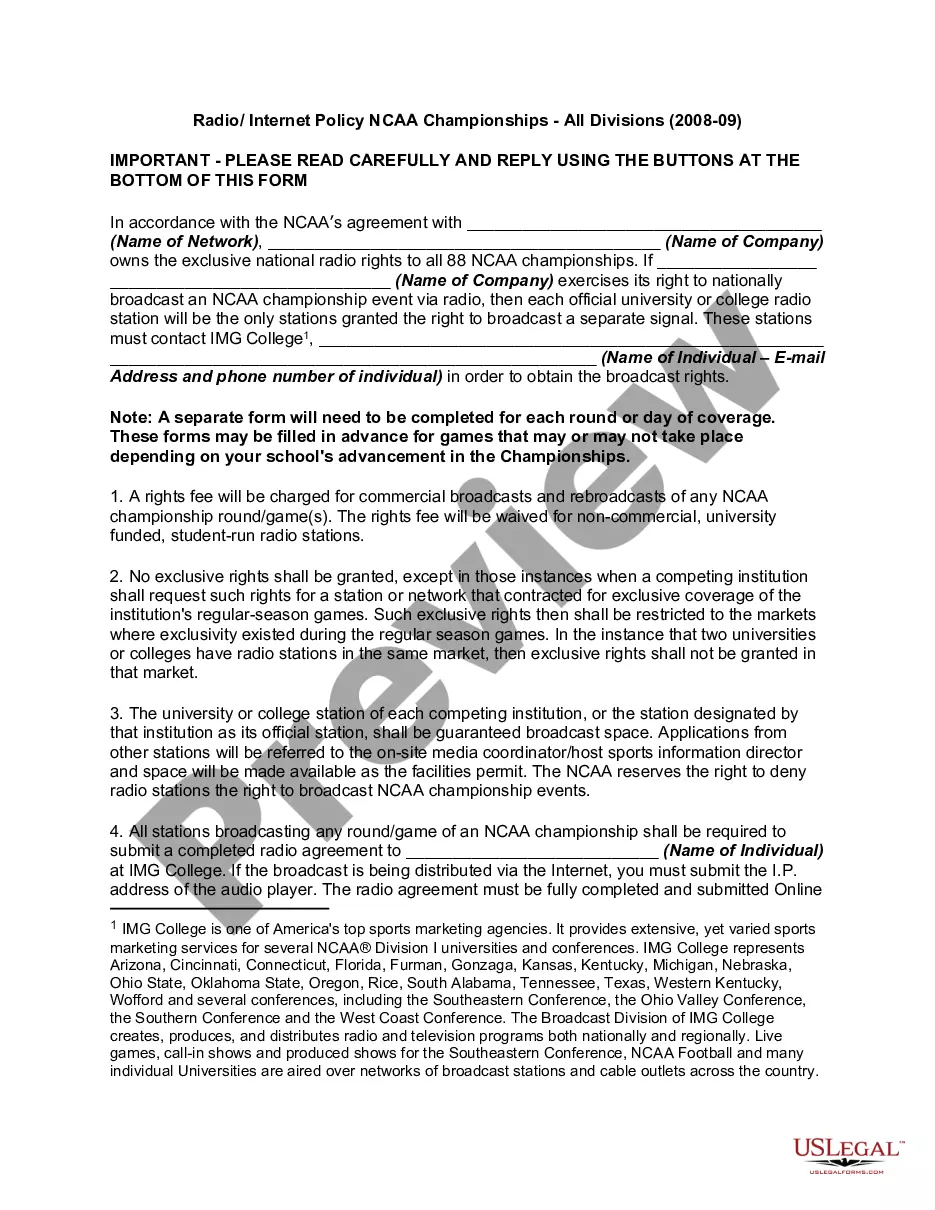
West Virginia Written Revocation of Will
What this document covers
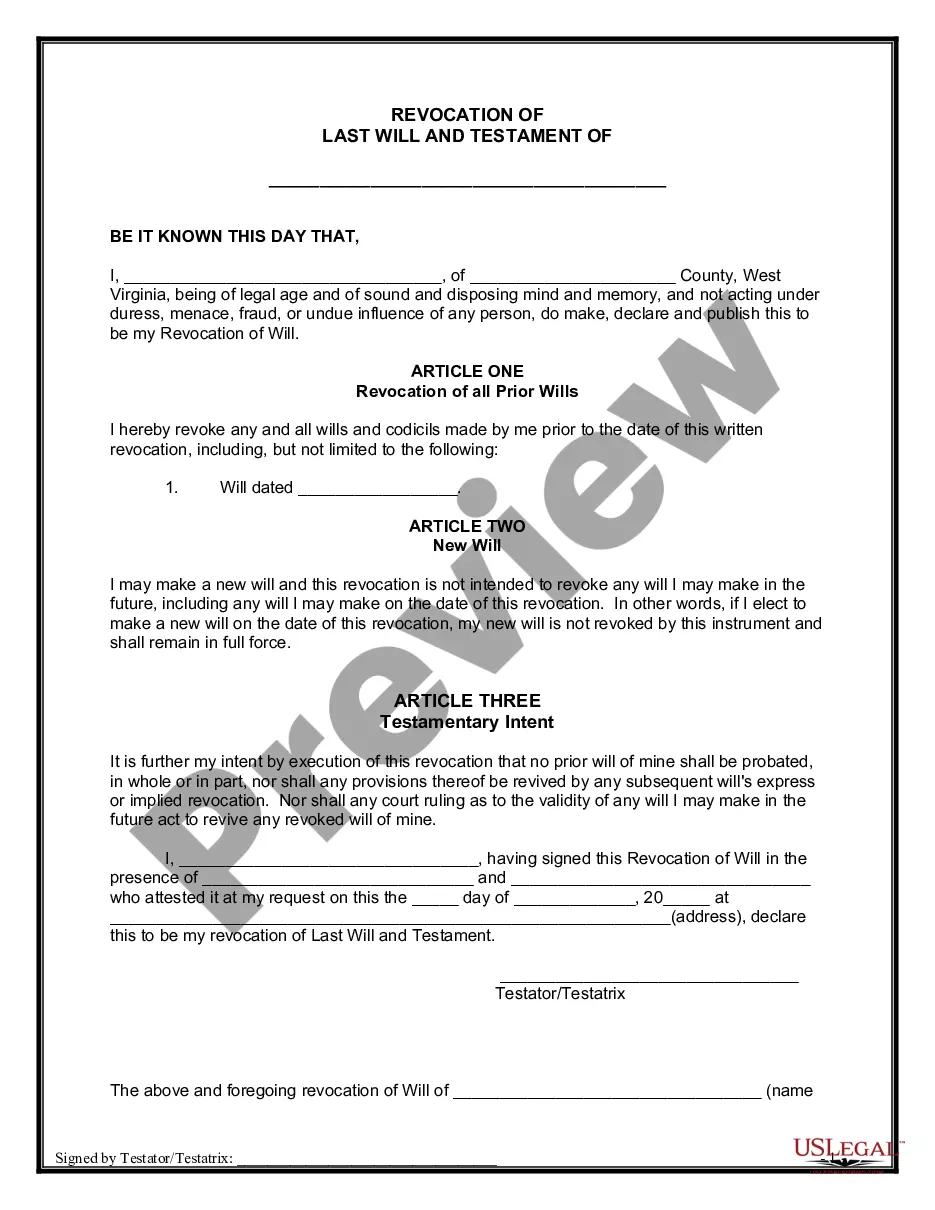
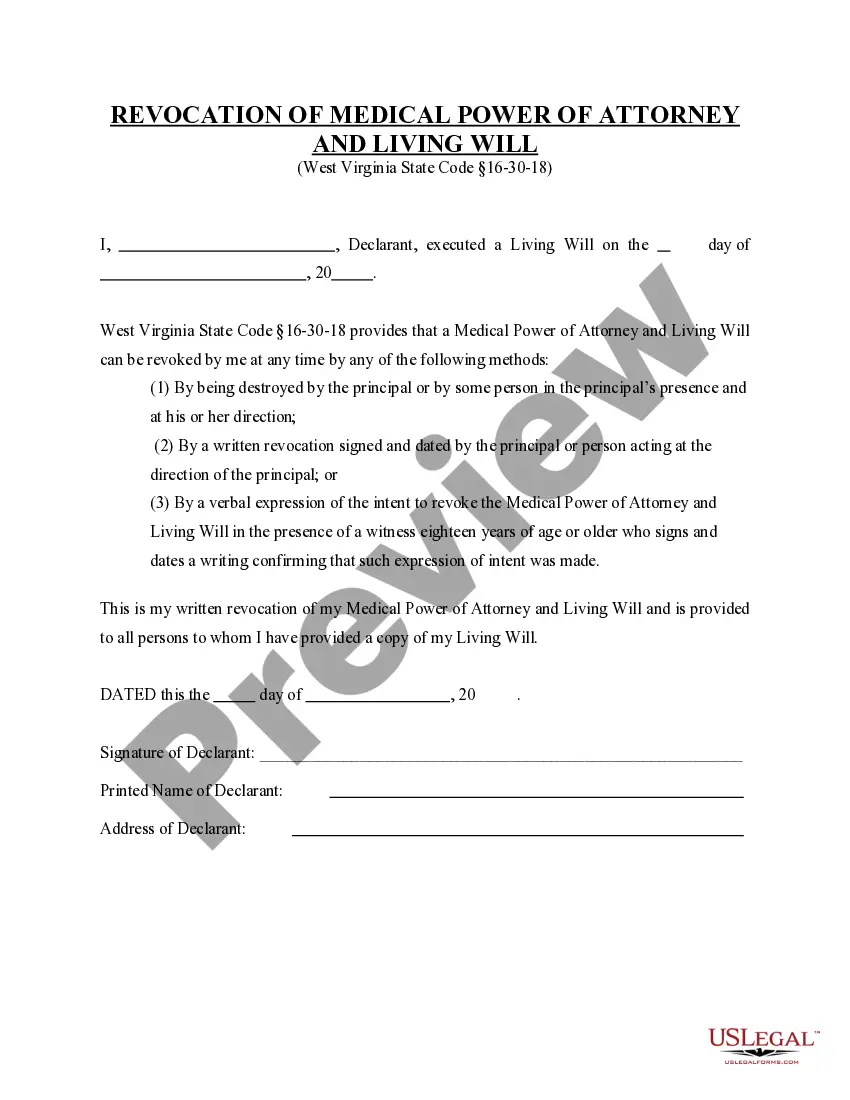
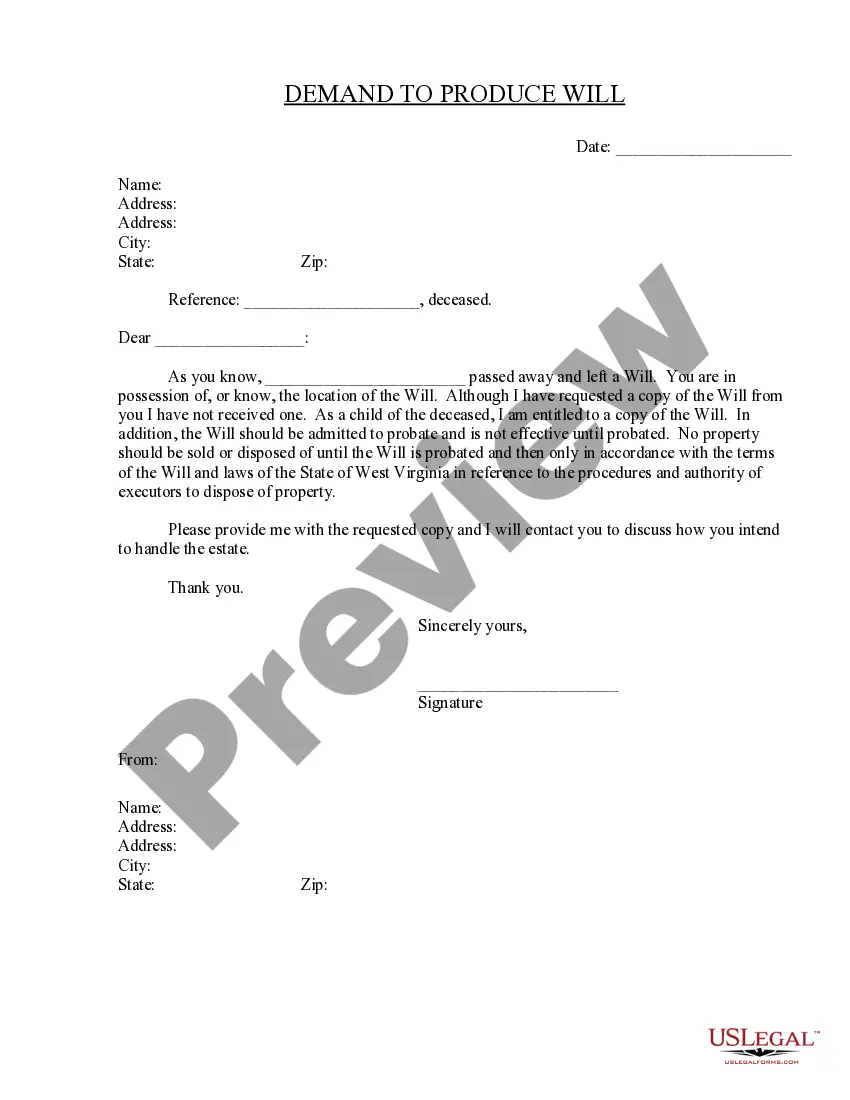
The Written Revocation of Will is a legal document designed to revoke any previously established wills. Unlike a new will that often includes a clause to cancel prior wills, this form provides clear evidence of your intent to annul earlier documents independently. This revocation ensures that no previous will is probated, thereby securing your final wishes in accordance with current desires or circumstances.
Main sections of this form
- Declares the intent to revoke all prior wills and codicils.
- Includes a section affirming that future wills are not affected by this revocation.
- States the testamentary intent regarding prior wills.
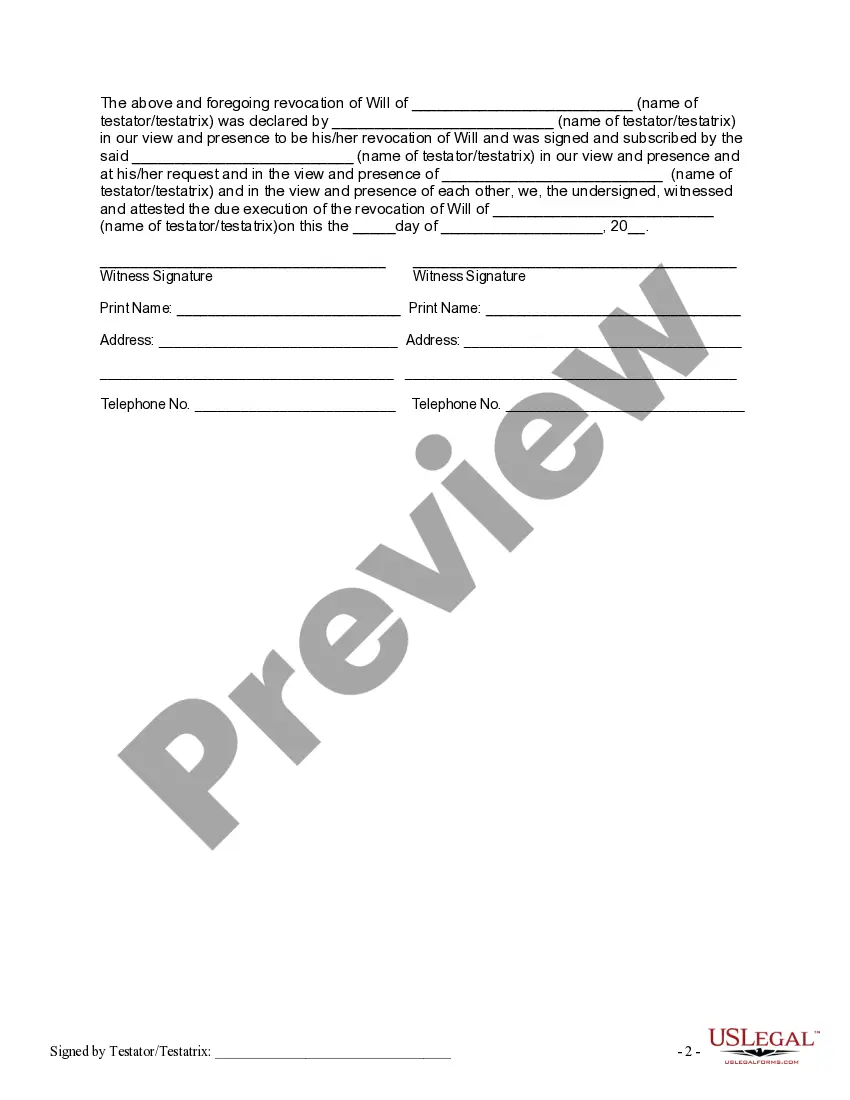
- Requires signatures of the testator/testatrix and two witnesses for validation.
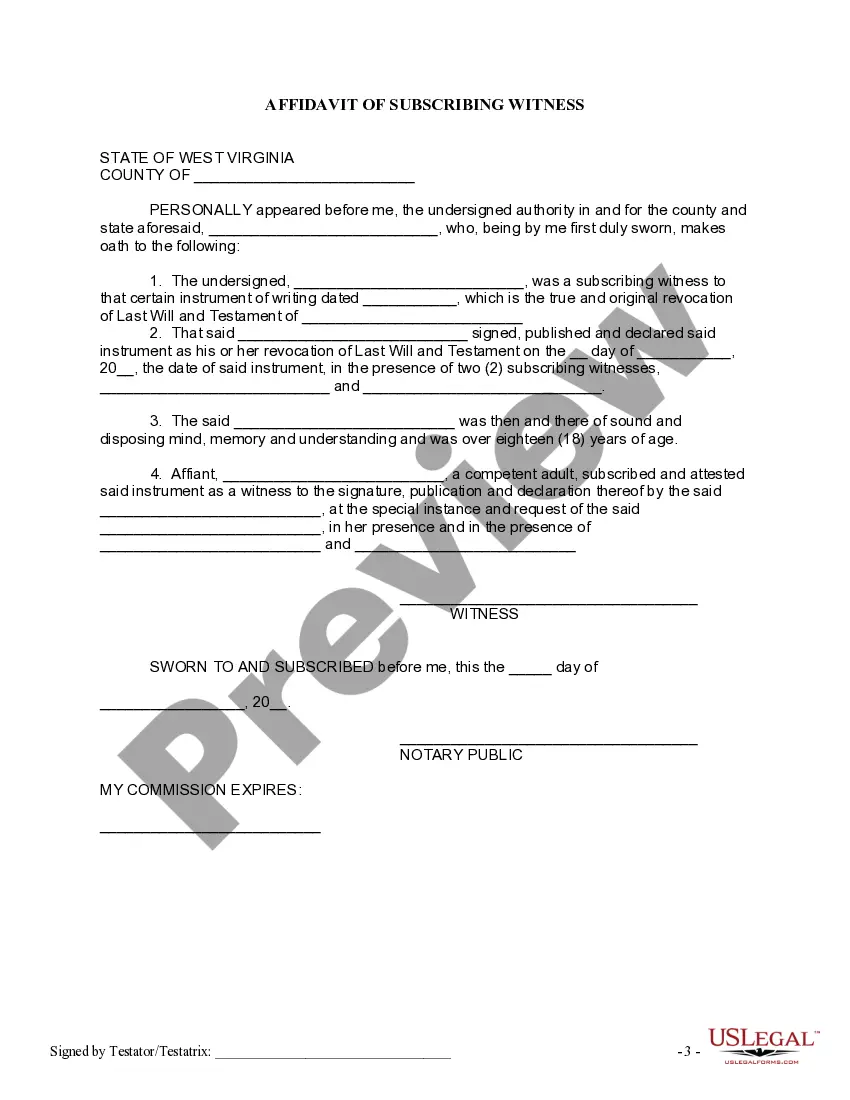
- Contains an affidavit for the subscribing witnesses confirming the execution of the revocation.
Situations where this form applies
This form is essential when you wish to formally withdraw a will that you no longer want to be executed. It is particularly useful if you do not intend to create a new will immediately, allowing your current wishes to be clearly understood. Additionally, if your heirs have access to an older will that you prefer to be disregarded, this document strengthens your intent to nullify that document.
Who needs this form
- Individuals who have an existing will they wish to revoke.
- Testators or testatrices wanting to clarify their last wishes.
- Persons seeking to avoid potential disputes among heirs regarding different versions of their will.
Completing this form step by step
- Enter your full name and county of residence at the top of the document.
- Clearly state the date of the will you are revoking in the first section.
- Sign the document in the presence of two witnesses who must also sign.
- Complete the affidavit section, which must be sworn before a notary public.
- Ensure that all witnesses provide their printed names, addresses, and phone numbers.
Does this form need to be notarized?
To make this form legally binding, it must be notarized. Our online notarization service, powered by Notarize, lets you verify and sign documents remotely through an encrypted video session.
Get your form ready online
Our built-in tools help you complete, sign, share, and store your documents in one place.
Make edits, fill in missing information, and update formatting in US Legal Forms—just like you would in MS Word.
Download a copy, print it, send it by email, or mail it via USPS—whatever works best for your next step.
Sign and collect signatures with our SignNow integration. Send to multiple recipients, set reminders, and more. Go Premium to unlock E-Sign.
If this form requires notarization, complete it online through a secure video call—no need to meet a notary in person or wait for an appointment.
We protect your documents and personal data by following strict security and privacy standards.

Make edits, fill in missing information, and update formatting in US Legal Forms—just like you would in MS Word.

Download a copy, print it, send it by email, or mail it via USPS—whatever works best for your next step.

Sign and collect signatures with our SignNow integration. Send to multiple recipients, set reminders, and more. Go Premium to unlock E-Sign.

If this form requires notarization, complete it online through a secure video call—no need to meet a notary in person or wait for an appointment.

We protect your documents and personal data by following strict security and privacy standards.
Common mistakes to avoid
- Failing to have the document signed by two witnesses.
- Not completing all required fields, leading to ambiguity about the will being revoked.
- Overlooking the need for notarization in certain cases.
Why use this form online
- Convenient access to the form anytime from anywhere.
- Edit and personalize the form easily to fit your specific needs.
- Reliable templates designed by licensed attorneys ensure legal adherence.
Looking for another form?



Form popularity
FAQ
Most people revoke one will by making another, which supersedes the old one. That's why most wills begin with a sentence like "I hereby revoke all previous wills and codicils." (A codicil is an addition to a will; they aren't very common these days.)
The individual's mental capacity in question at the time the will was executed. The document was not properly executed according to WV legal requirements. There is evidence of fraud, forgery, coercion, or deception. Need help bringing or defending a will contest in WV?
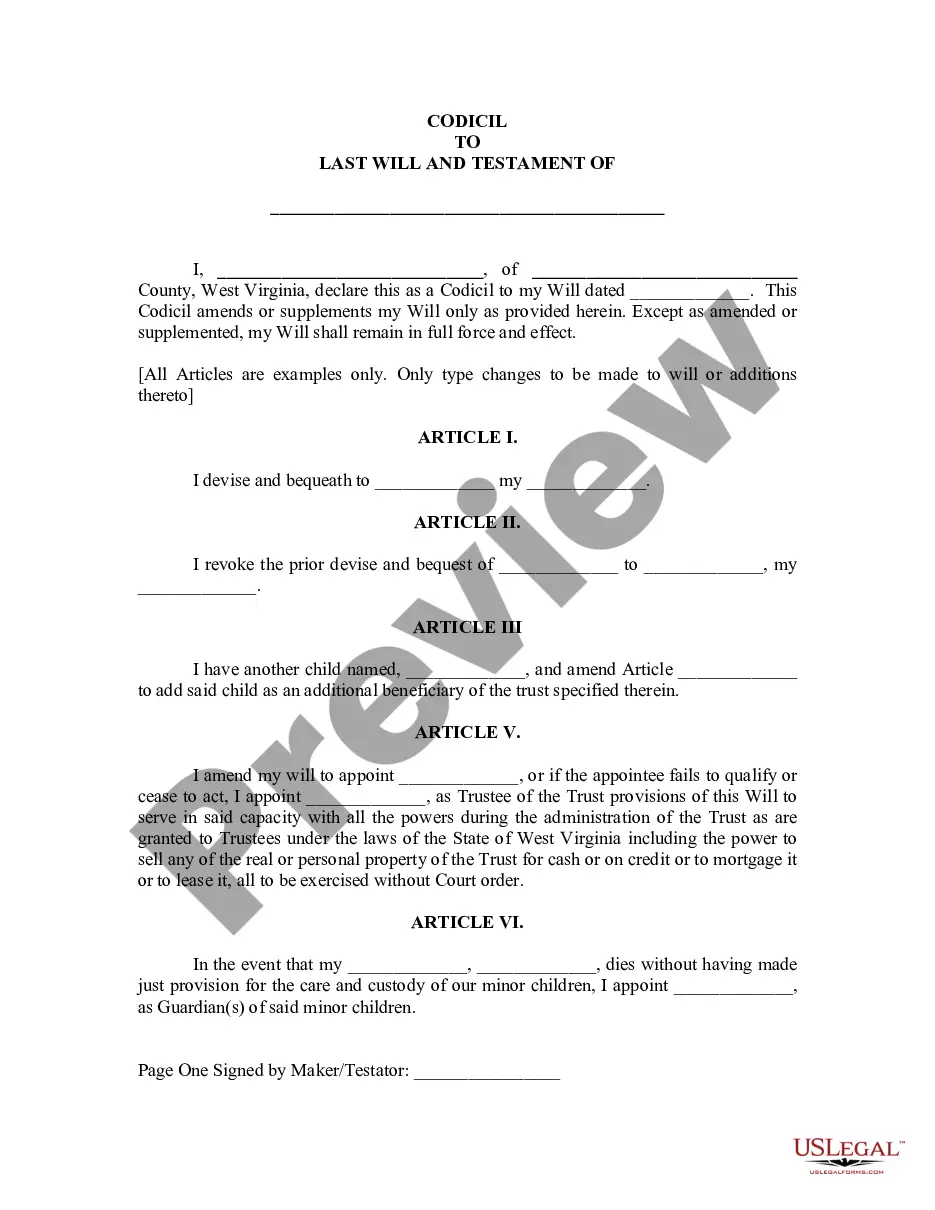
A will can be revoked by executing a subsequent will or codicil. The new will or codicil typically states that it revokes all prior wills and codicils. A codicil is a document that amends, adds to or revokes a portion of the existing will.
Your will is revoked automatically in certain situations: If you marry or enter into a civil partnership, your will is revoked, unless your will was unless the later will was made with the marriage or civil partnership clearly in mind If you make another will, the first will you made is revoked.
Revocation by another will or codicil. Most wills have a clause revoking prior wills, such as I revoke all former testamentary dispositions. Revocation by declaration in writing. Revocation by destruction. Revocation by marriage. Revocation by divorce.
Generally, you can revoke a will by (1) destroying the old will, (2) creating a new will or (3) making changes to an existing will. In some circumstances, simply giving away all or your property and assets before you die can have the effect of revoking a will (subject to estate tax penalties).
One in four people would mount a legal challenge against a loved one's will if they were unhappy with it, a survey reveals.
Alberta Wills can be changed at any time simply by visiting your lawyer.In some situations, wills are automatically revoked, such as when you get married. Consider making an entirely new will when you need to make major changes and using a codicil for small changes.
Can You Revoke a Will After the Death of the Testator? A will can only be canceled by the testator. A power of attorney does not grant the right to revoke a will. Therefore, no one else can cancel a will after the death of the testator.