West Virginia Mutual Wills Package for Married Couple with No Children
Overview of this form
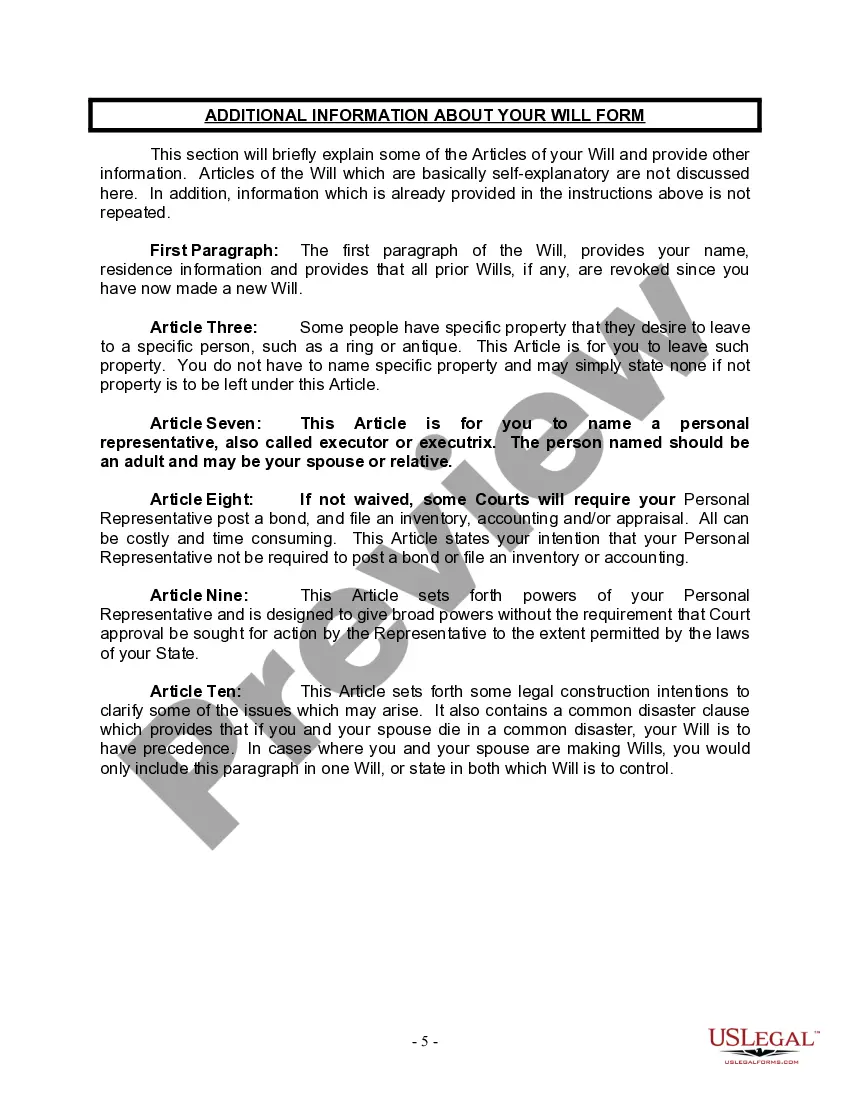
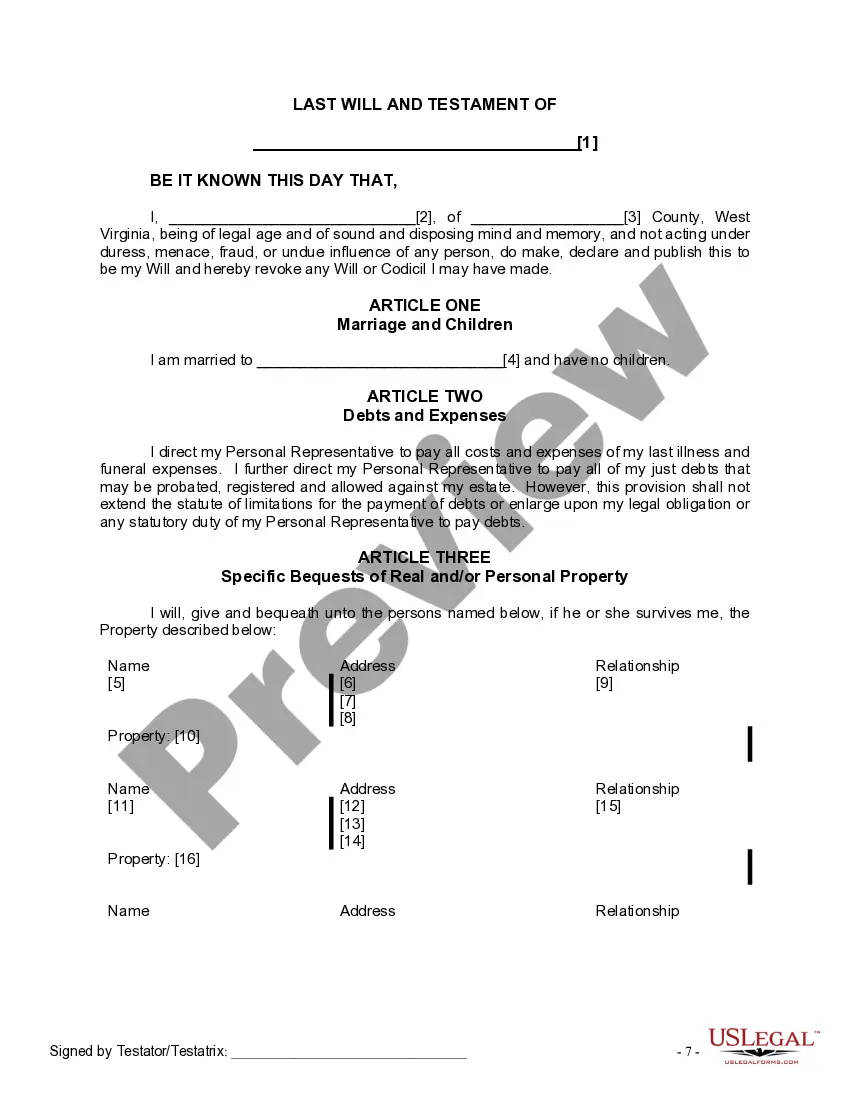
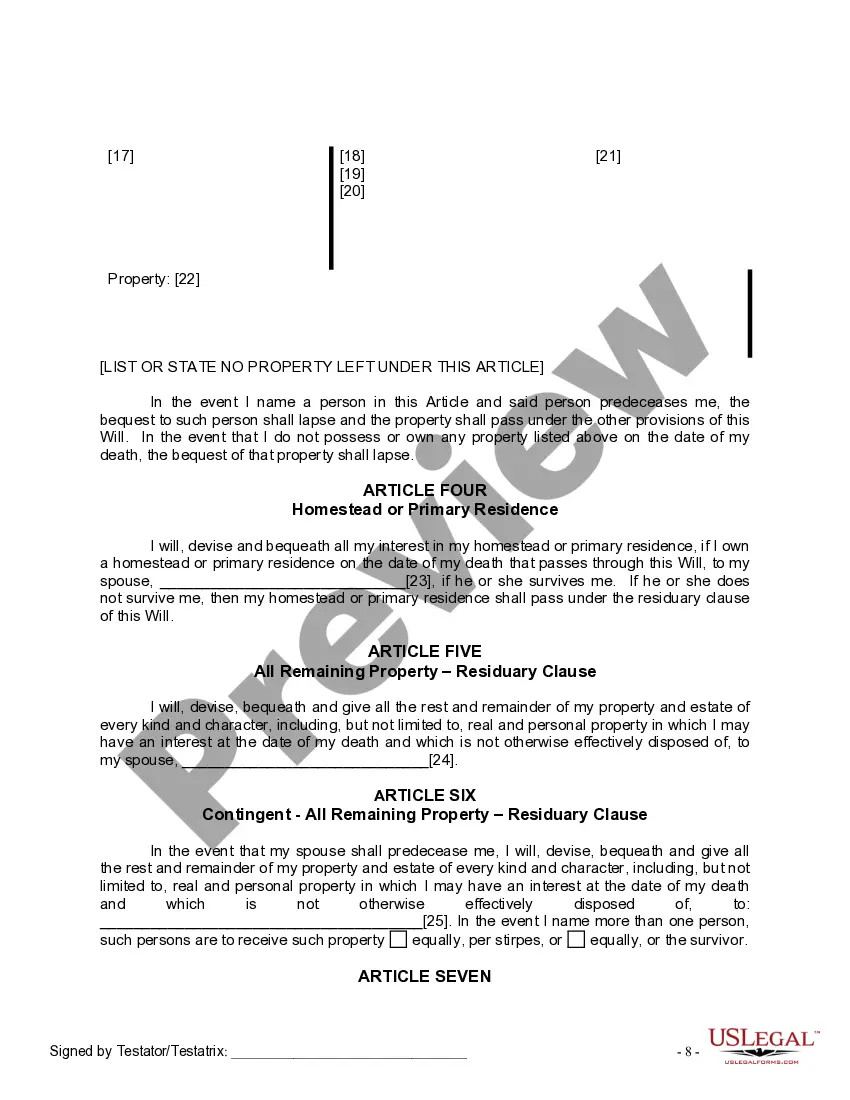
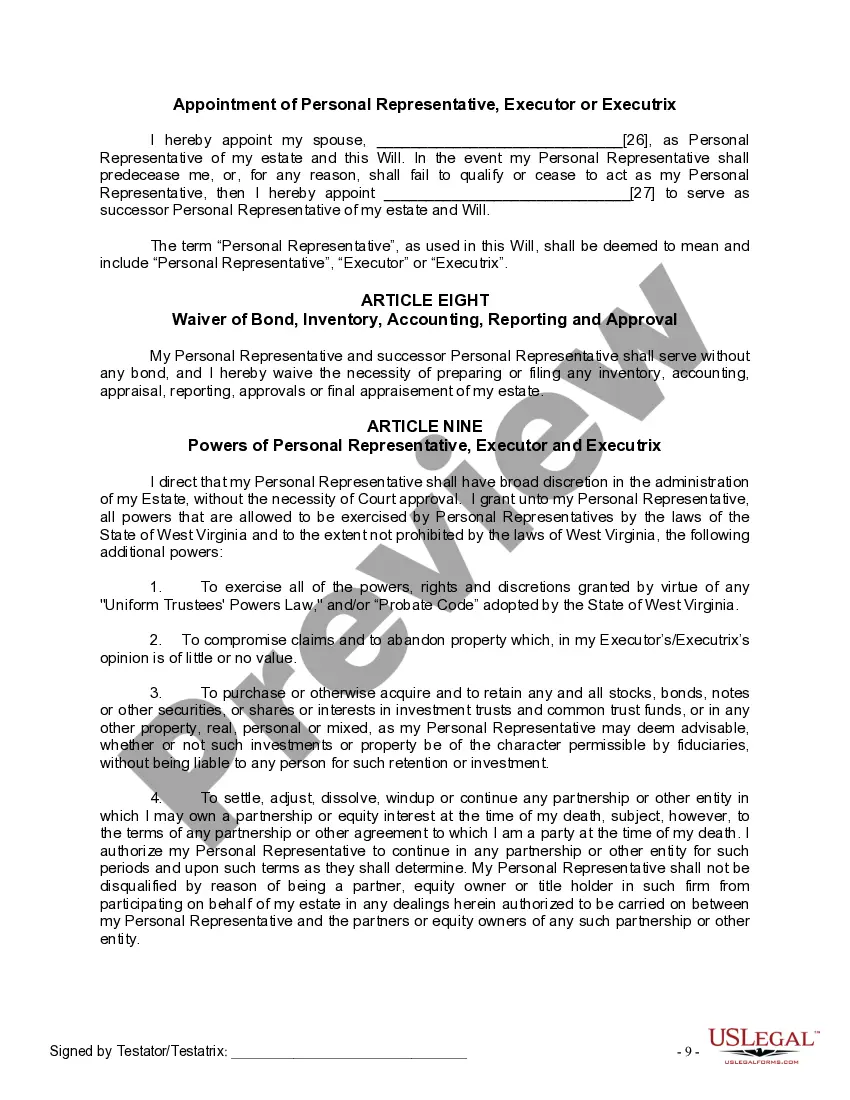
The Mutual Wills Package for married couples with no children is a legal document that allows each spouse to create a will that reflects their wishes regarding the distribution of their assets upon death. This package consists of two individual wills, one for each spouse, specifically designed to provide for each other's needs and stipulate how their joint property will be managed. Unlike regular wills, mutual wills create a binding agreement that can prevent either party from changing the terms after the first death without the consent of the survivor.
Key components of this form
- Appointment of a personal representative or executor to manage the estate.
- Designations of beneficiaries who will inherit property.
- Provisions for specific bequests of property to named individuals.
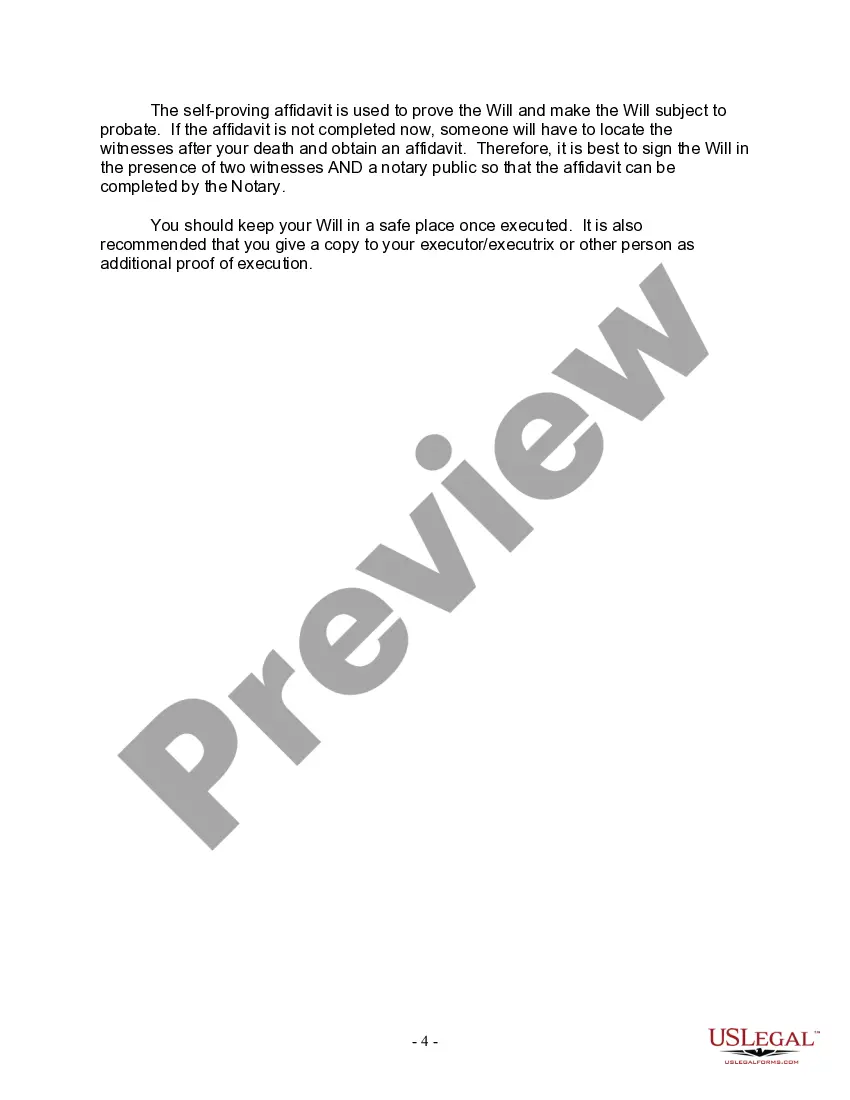
- Execution requirements, including signatures of two witnesses and a notary public if a self-proving affidavit is included.
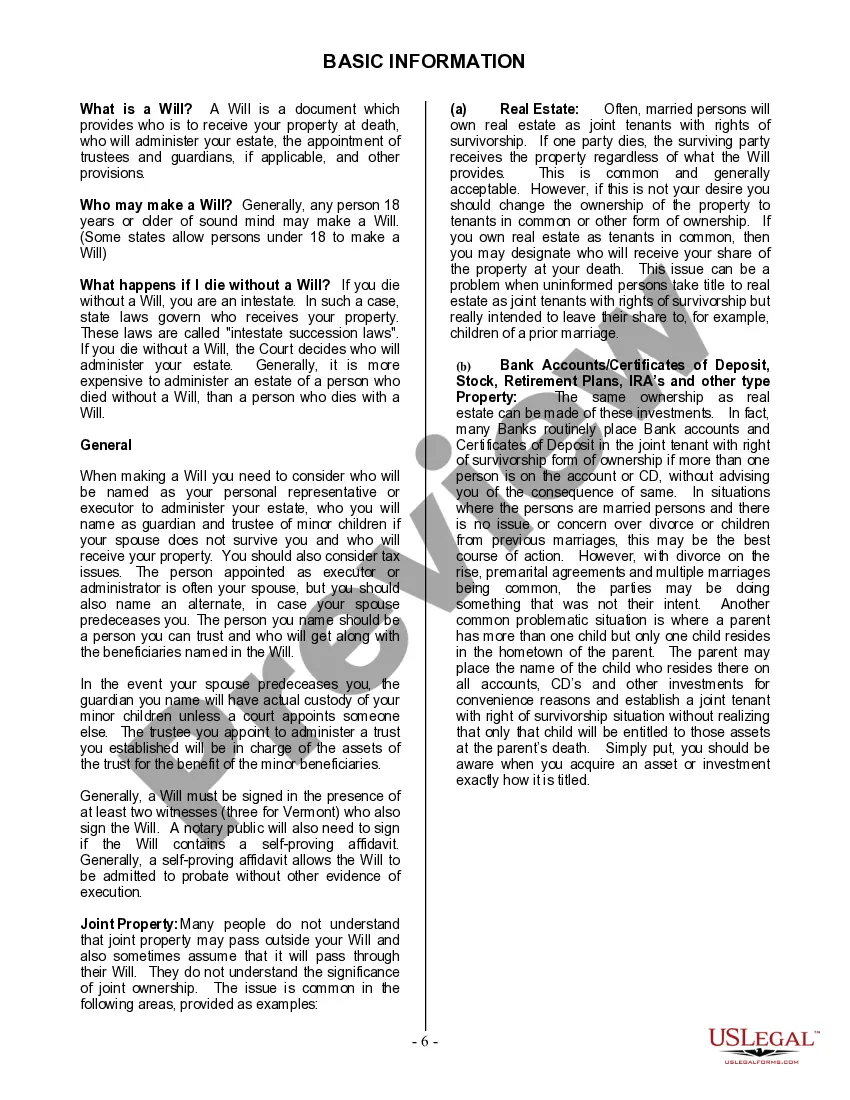
- Instructions for handling joint property and contingencies if both spouses pass away simultaneously.


Common use cases
This form should be used by married couples who wish to create legally binding wills that ensure their assets are distributed according to their mutual wishes. It is particularly useful for couples without children, as they can designate each other as primary beneficiaries without complications that might arise with children or other heirs. Additionally, it is applicable when couples want to ensure that neither can unilaterally change the will after one spouse's death.
Who should use this form
This form is intended for:
- Married couples without children who want to manage their inheritances comprehensively.
- Spouses looking for a way to ensure mutual consent in estate planning.
- Individuals seeking to minimize legal disputes after the death of one spouse.
Steps to complete this form
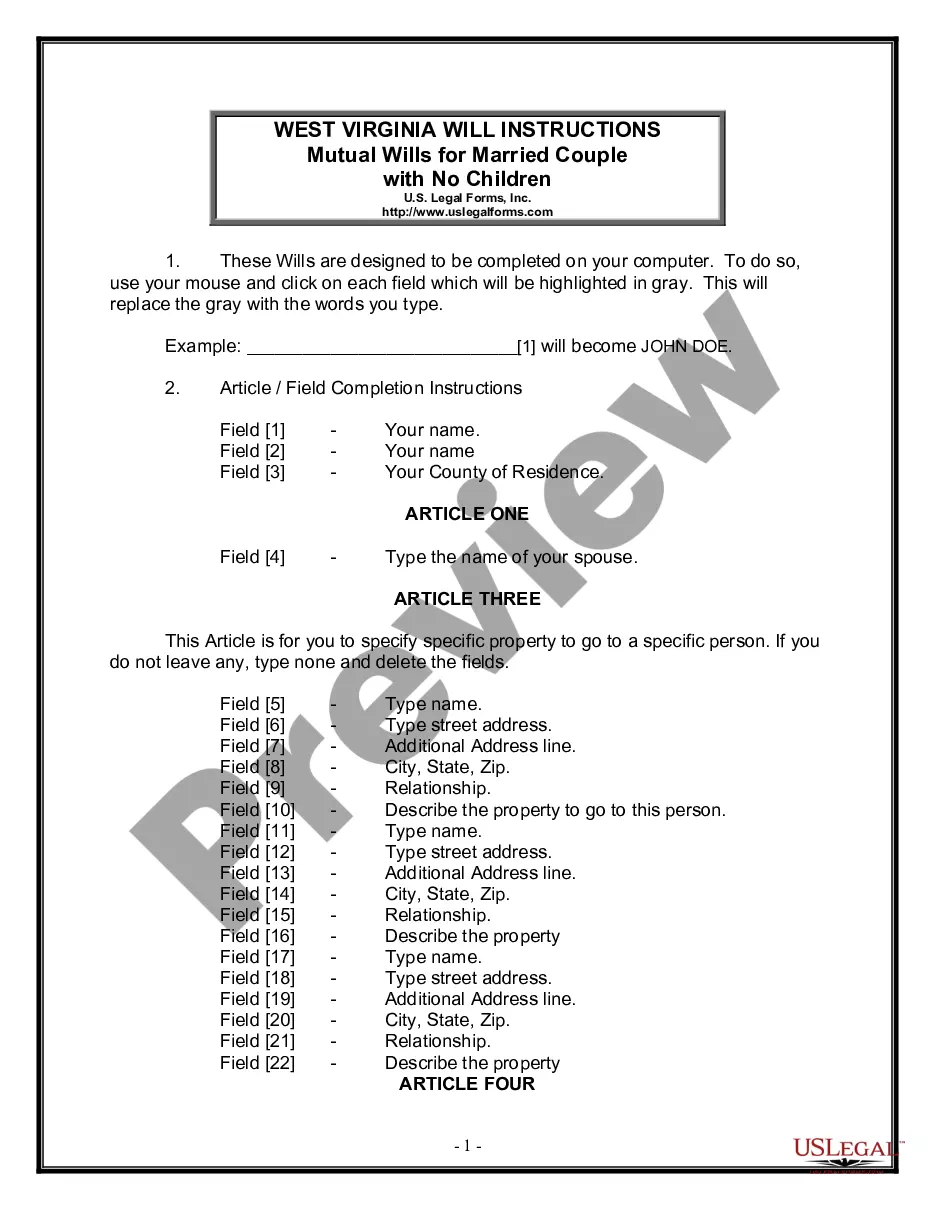
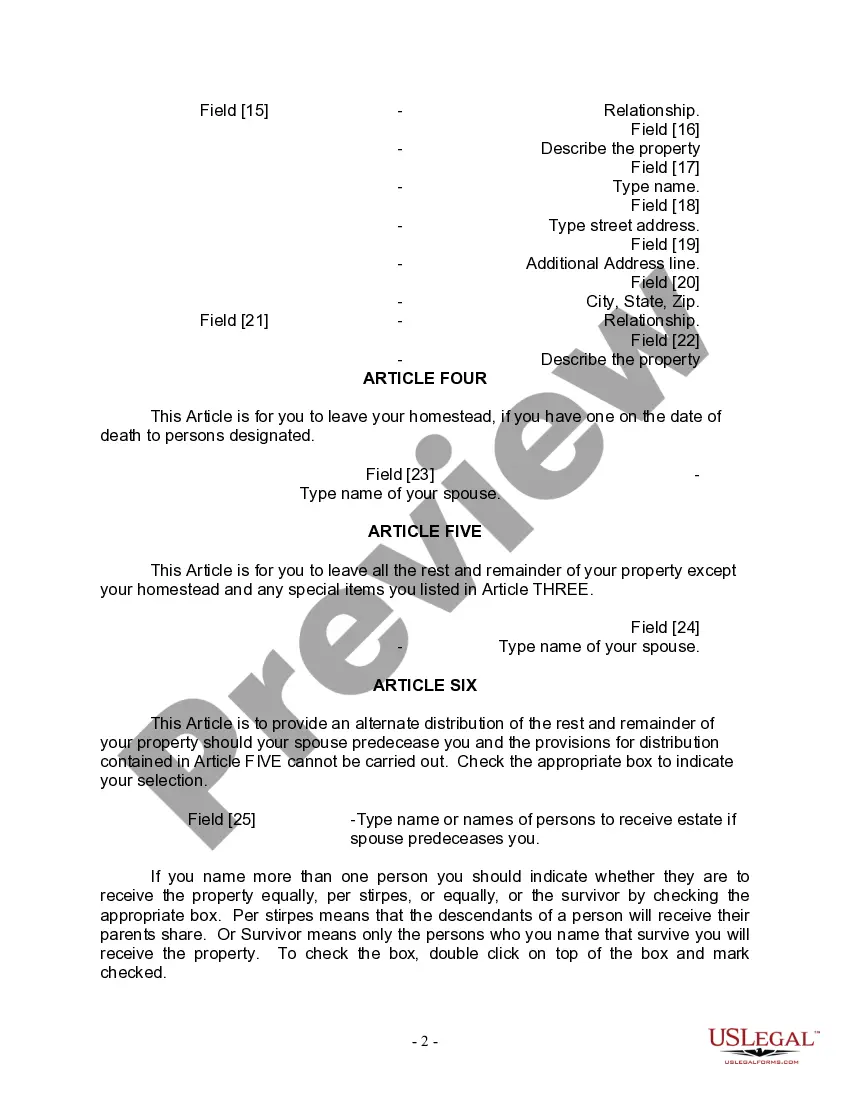
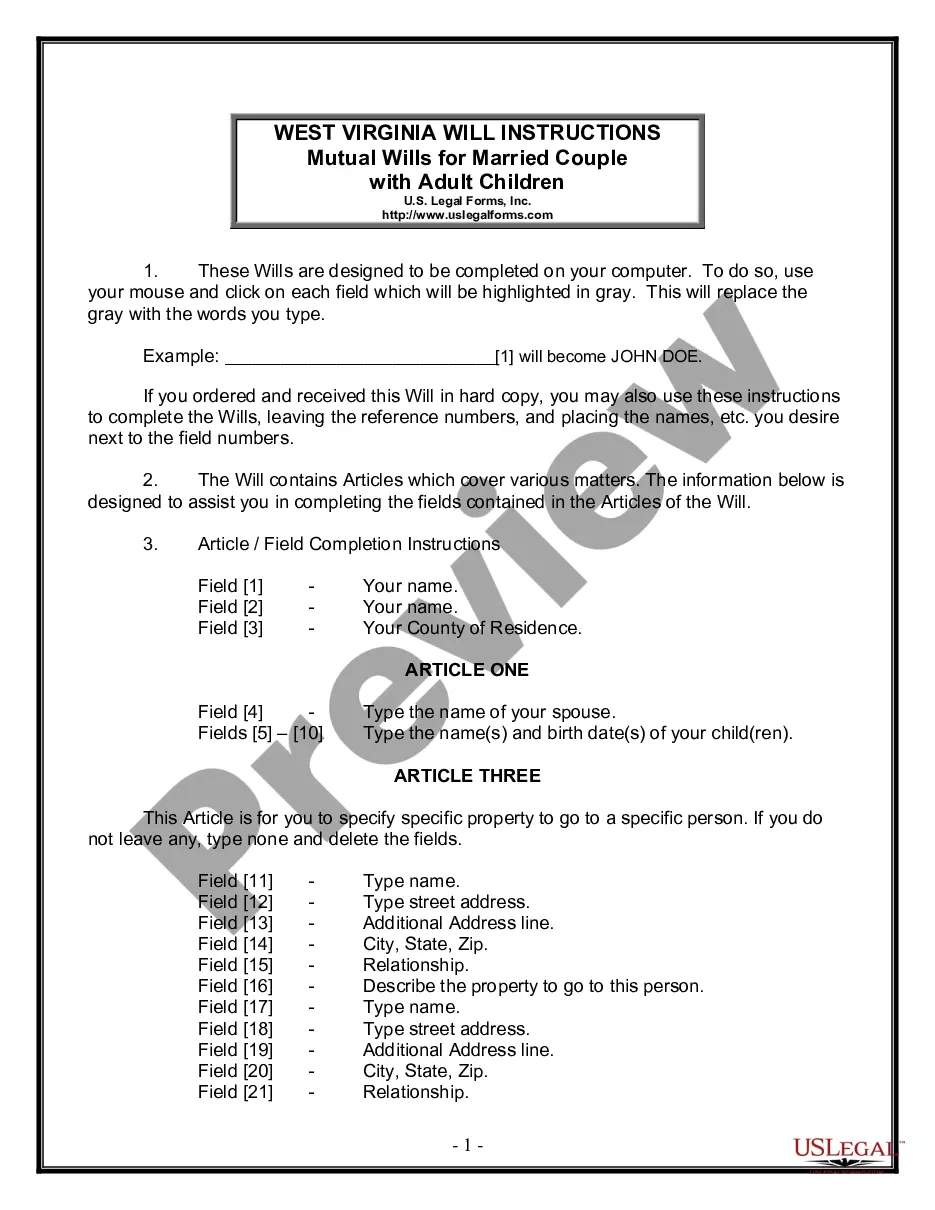
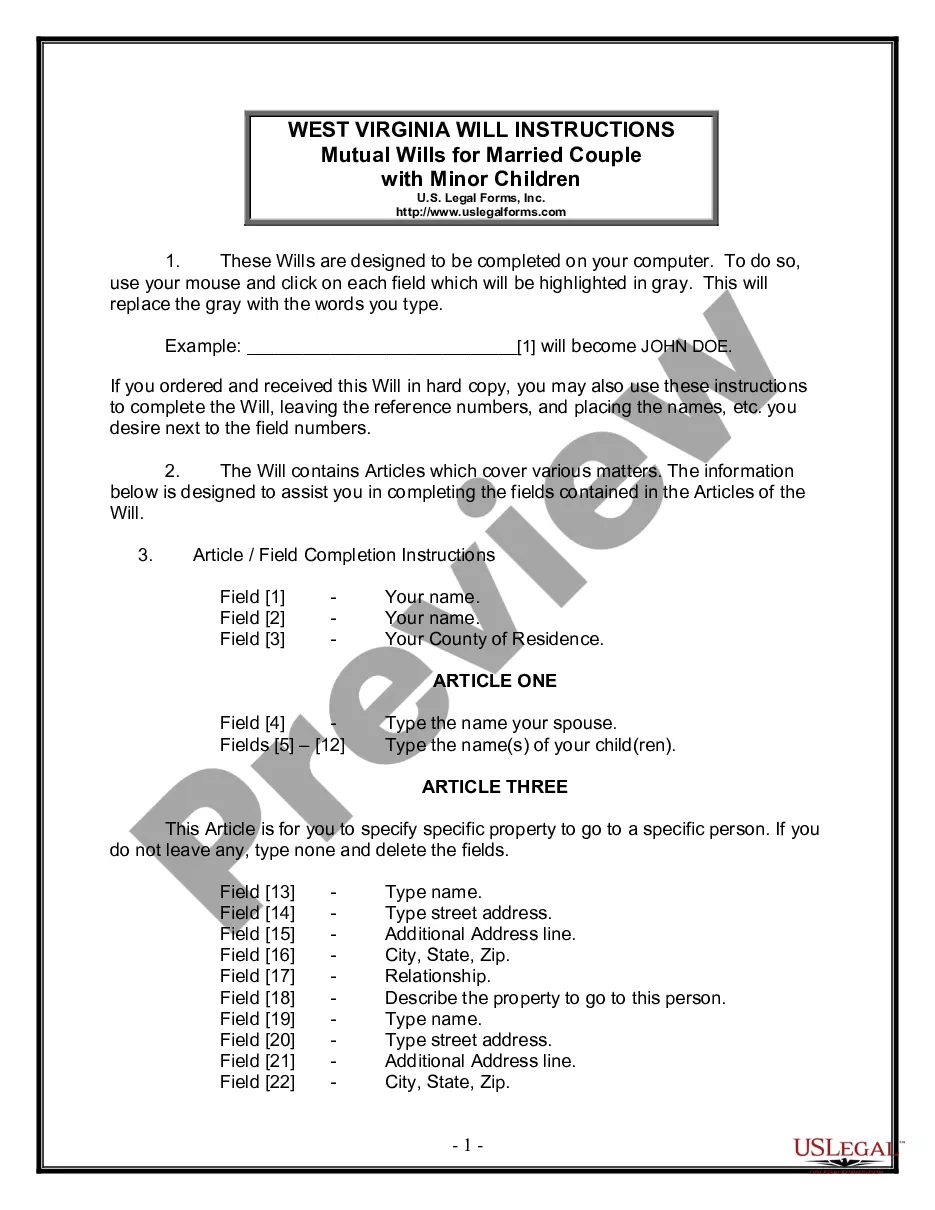
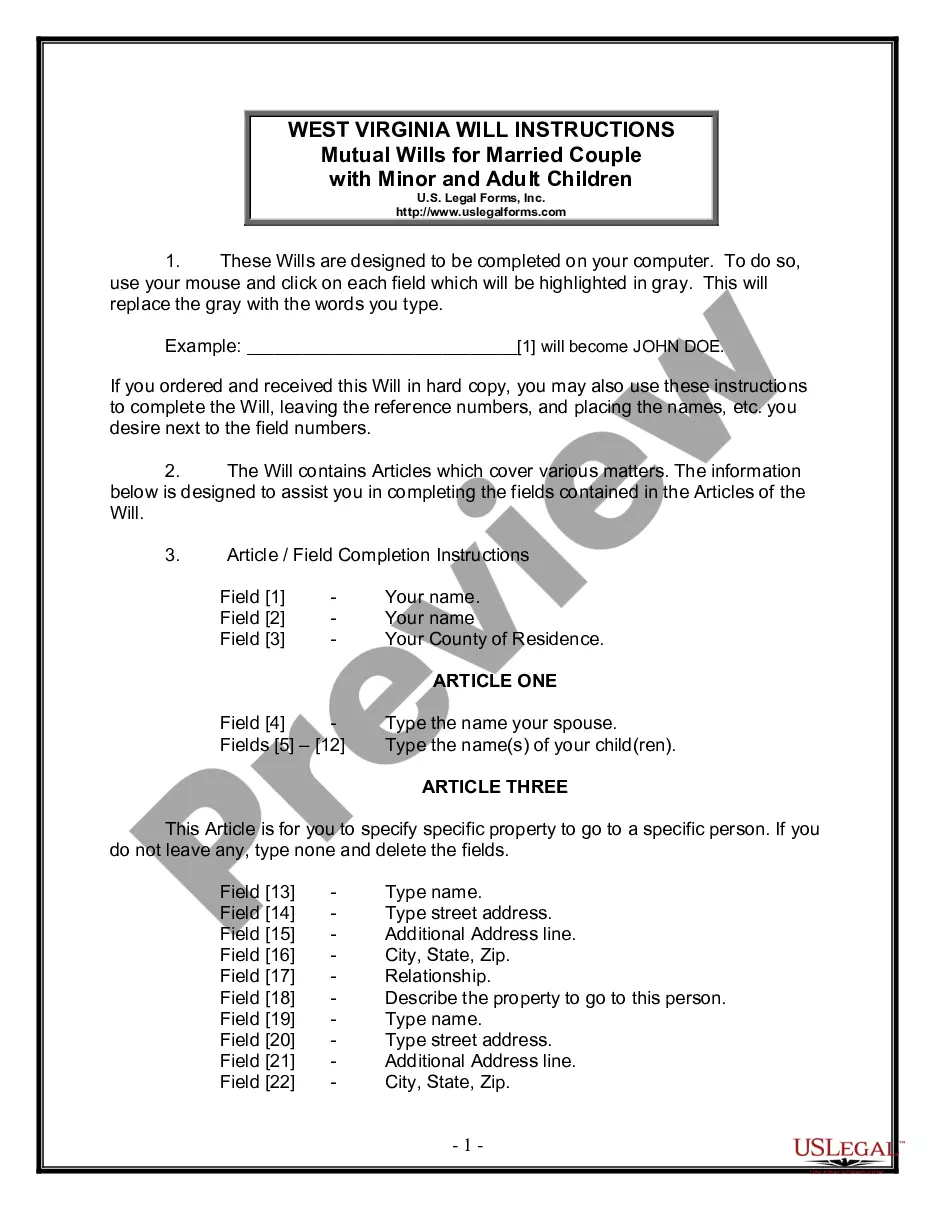
- Enter the names and residency details of both spouses at the top of the form.
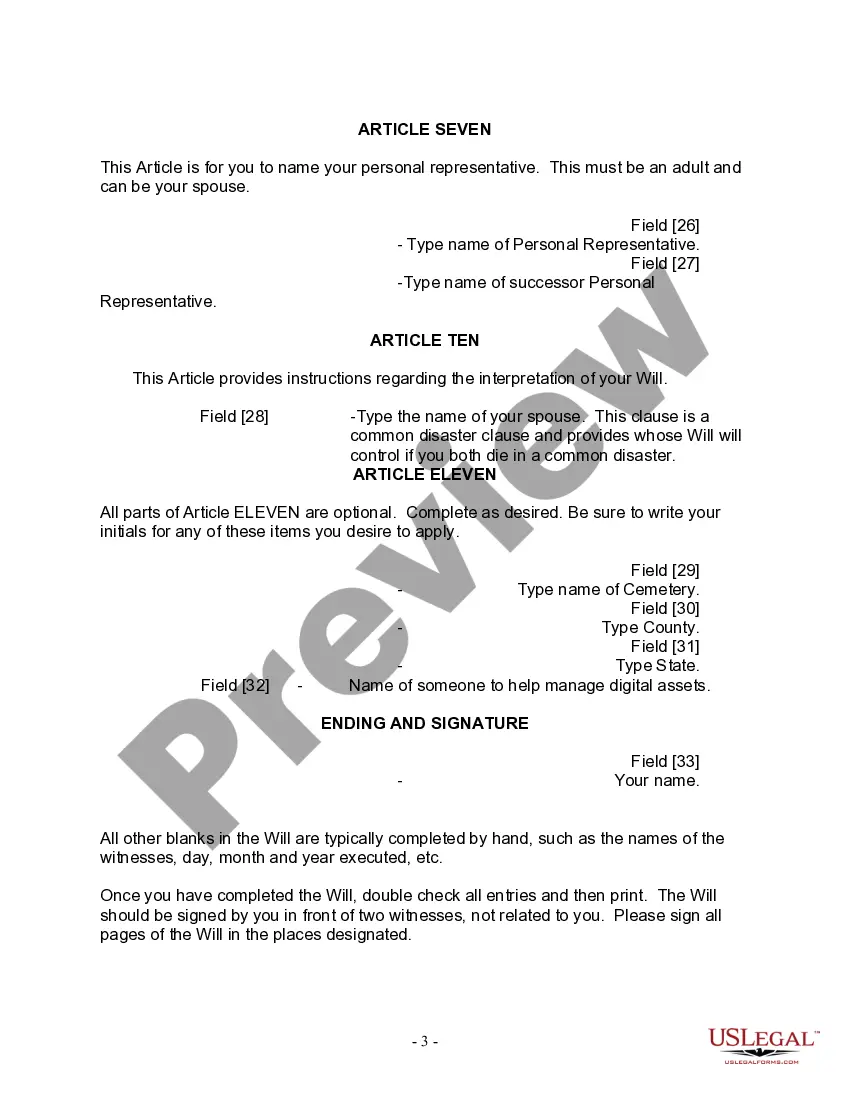
- Designate a personal representative who will manage the estate upon the death of either spouse.
- Specify any property you wish to bequeath to specific individuals in the designated fields.
- Ensure both spouses sign the wills in the presence of two witnesses, who are not related and are not beneficiaries.
- If applicable, complete the self-proving affidavit in the presence of a notary public to streamline probate.
Notarization guidance
This form needs to be notarized to ensure legal validity. US Legal Forms provides secure online notarization powered by Notarize, allowing you to complete the process through a verified video call, available anytime.
Get your form ready online
Our built-in tools help you complete, sign, share, and store your documents in one place.
Make edits, fill in missing information, and update formatting in US Legal Forms—just like you would in MS Word.
Download a copy, print it, send it by email, or mail it via USPS—whatever works best for your next step.
Sign and collect signatures with our SignNow integration. Send to multiple recipients, set reminders, and more. Go Premium to unlock E-Sign.
If this form requires notarization, complete it online through a secure video call—no need to meet a notary in person or wait for an appointment.
We protect your documents and personal data by following strict security and privacy standards.

Make edits, fill in missing information, and update formatting in US Legal Forms—just like you would in MS Word.

Download a copy, print it, send it by email, or mail it via USPS—whatever works best for your next step.

Sign and collect signatures with our SignNow integration. Send to multiple recipients, set reminders, and more. Go Premium to unlock E-Sign.

If this form requires notarization, complete it online through a secure video call—no need to meet a notary in person or wait for an appointment.

We protect your documents and personal data by following strict security and privacy standards.
Common mistakes
- Failing to sign the wills in the presence of appropriate witnesses.
- Not including a self-proving affidavit if required, leading to complications during probate.
- Overlooking state-specific laws that may affect the execution of the wills.
- Neglecting to regularly update the wills after significant life events.
Why complete this form online
- Convenient access to legally formatted documents that can be completed digitally.
- Editability allows for easy customization to fit individual needs.
- Reliability gained from documents drafted by licensed attorneys.
- Immediate downloads for use without the need for travel to a physical office.
Looking for another form?





Form popularity
FAQ
No, in West Virginia, you do not need to notarize your will to make it legal.A self-proving will speeds up probate because the court can accept the will without contacting the witnesses who signed it.
If you die without a will in West Virginia, your children will receive an intestate share of your property. The size of each child's share depends on how many children you have, whether or not you are married, and whether you or your spouse have children from another relationship.
The general statute of limitations for a will contest in West Virginia is currently six months.
The individual's mental capacity in question at the time the will was executed. The document was not properly executed according to WV legal requirements. There is evidence of fraud, forgery, coercion, or deception. Need help bringing or defending a will contest in WV?
No, in West Virginia, you do not need to notarize your will to make it legal.A self-proving will speeds up probate because the court can accept the will without contacting the witnesses who signed it.
Under probate law, wills can only be contested by spouses, children or people who are mentioned in the will or a previous will. When one of these people notifies the court that they believe there is a problem with the will, a will contest begins.
Yes. A will that you write yourself is called a holographic will. Holographic wills are not valid in every state, but they are valid in West Virginia, as long as they are written entirely in the author's handwriting.
It is typically very difficult to challenge a will. Approximately 99 percent of wills pass through probate without issue. Wills are seen by the courts as the voice of the testator, the person who wrote the will.
Yes, though the window of opportunity to overturn a will is limited. Each state has different probate laws. In California, the time limit for filing a motion to contest a will approved by probate is 120 days.You can challenge a will by proving some form of manipulation was at hand.