West Virginia Bill of Sale with Warranty for Corporate Seller
About this form
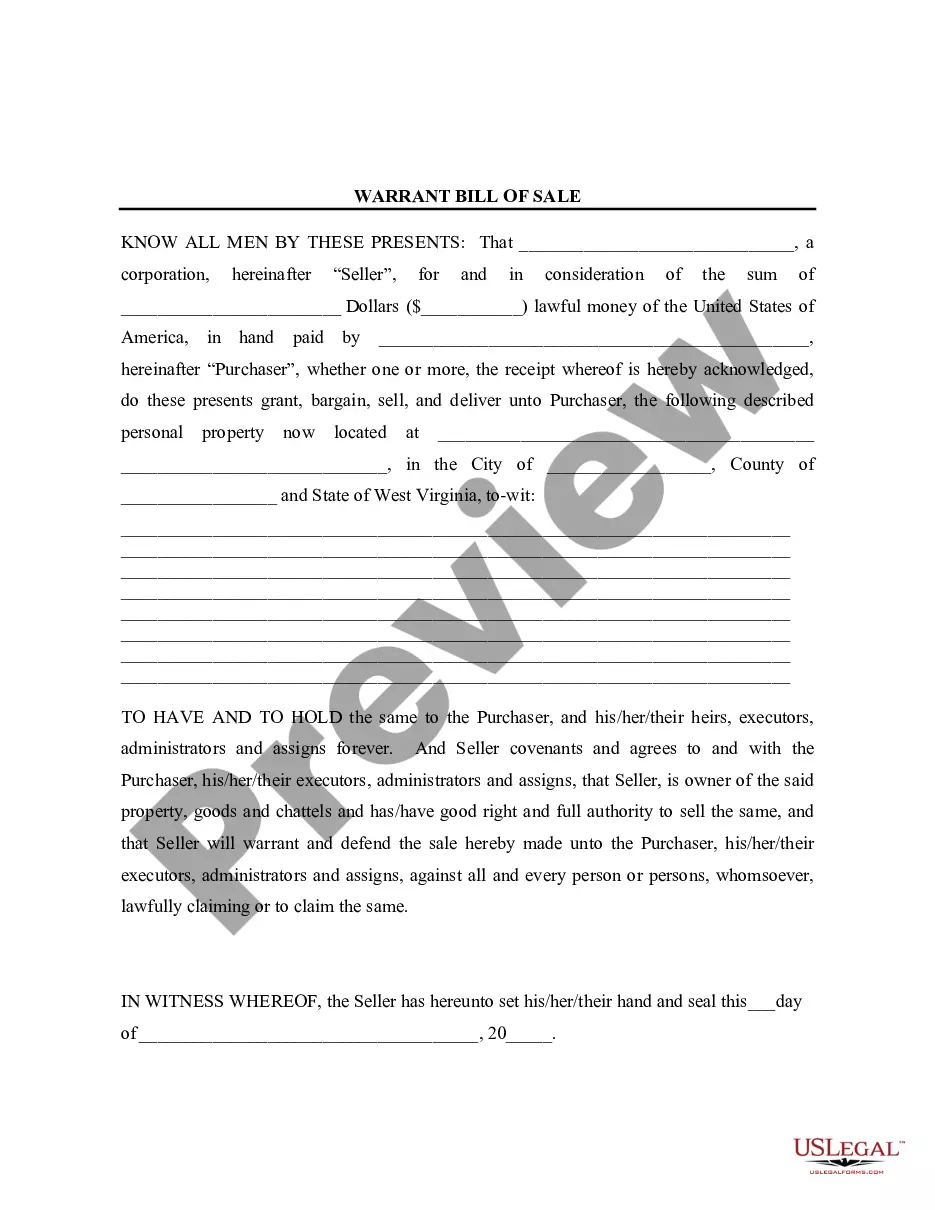
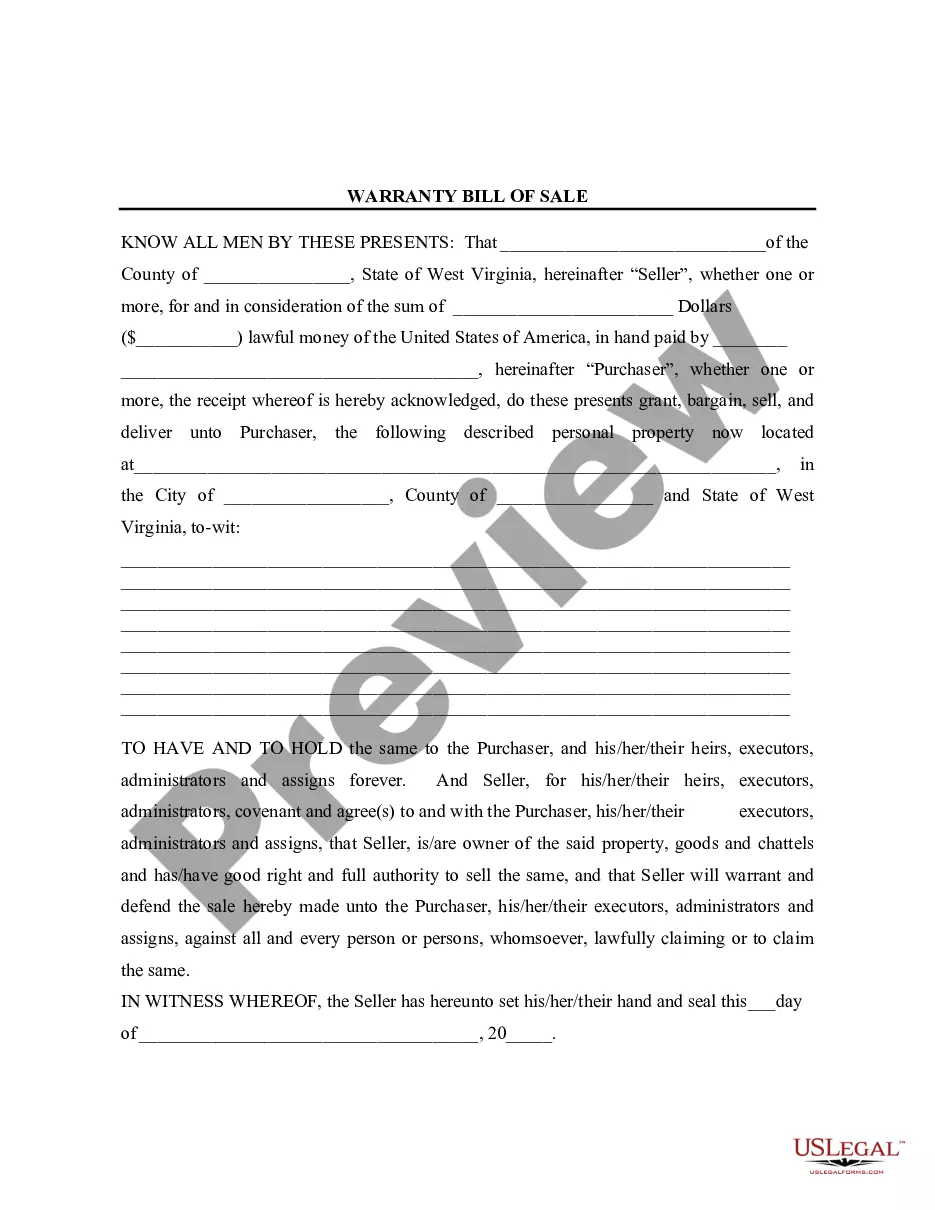
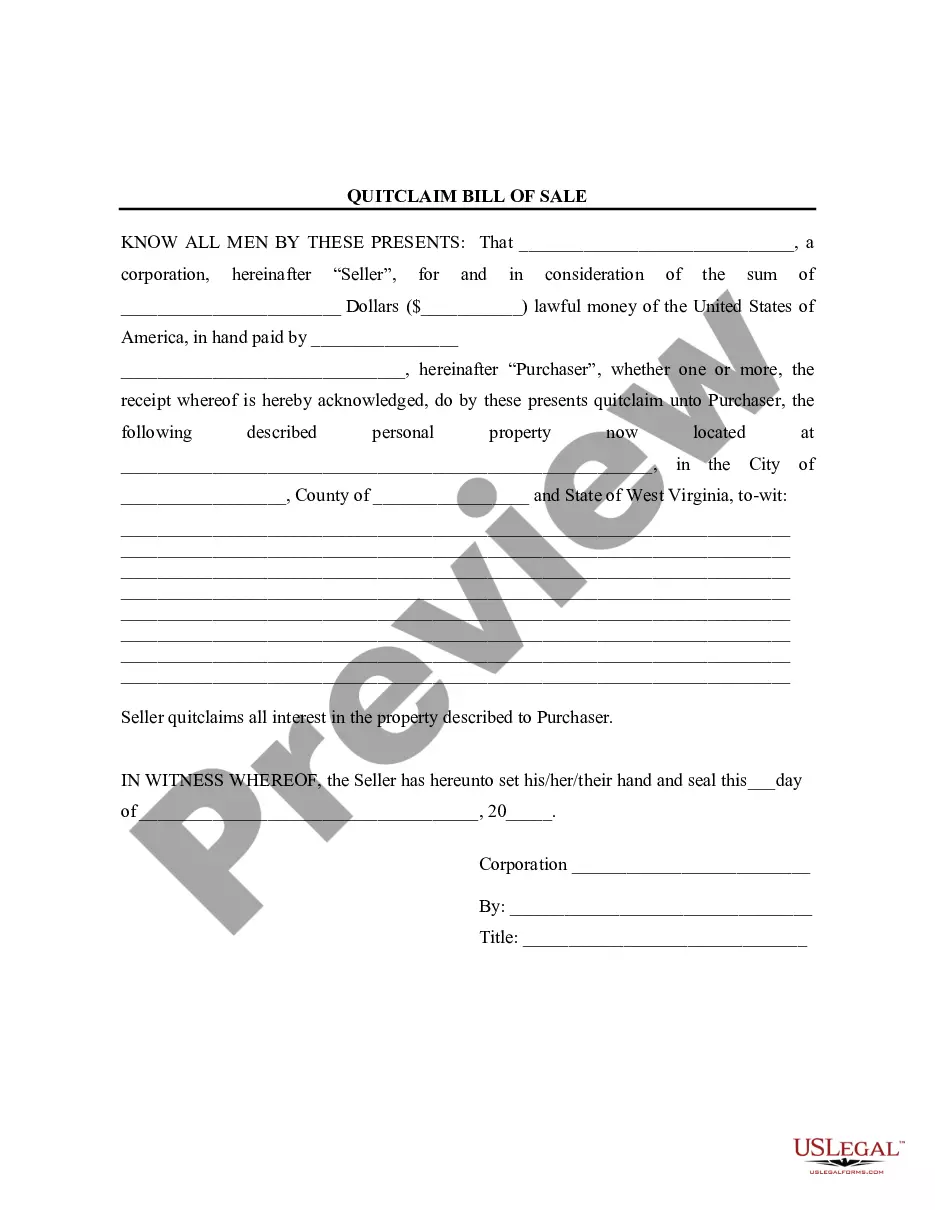
The Bill of Sale with Warranty for Corporate Seller is a legal document used to transfer ownership of personal property from a corporation to a purchaser. Unlike a quitclaim conveyance, this form provides a warranty, assuring the buyer that the seller has clear title to the property and the right to sell it. This form complies with state-specific laws and ensures that both parties have legal protections during the transaction.
Key parts of this document
- Details of the seller and purchaser, including names and addresses.
- Description of the personal property being sold, including location.
- Consideration amount (the sale price) agreed upon by both parties.
- Warranty clause assuring the purchaser of clear title and the right to sell.
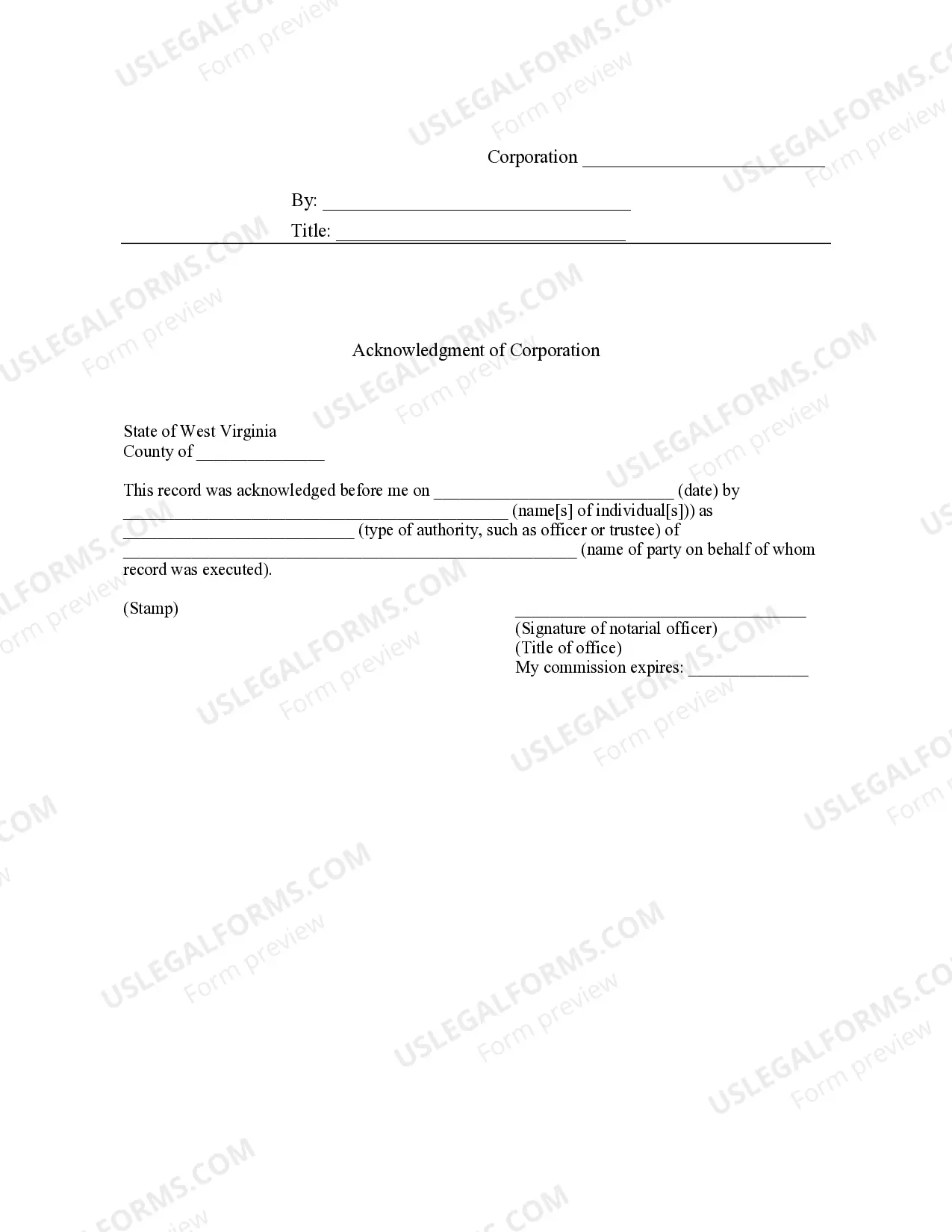
- Signature and acknowledgment by a corporate officer and a notary public.
Common use cases
This form should be used when a corporation is selling personal property and wishes to provide a warranty to the purchaser. Situations may include the sale of equipment, vehicles, inventory, or other business assets. It is essential when a corporation wants to assure the buyer that there are no hidden claims against the property.
Who needs this form
- Corporations intending to sell personal property.
- Purchasers who are acquiring property from a corporation.
- Legal representatives handling corporate transactions.
Steps to complete this form
- Identify the seller corporation and provide its official name.
- Enter the purchaser's name and address.
- Specify the sale price clearly in both written and numerical form.
- Describe the personal property being sold, including location and any relevant details.
- Have the corporate officer sign and date the document, then complete the acknowledgment section in front of a notary public.
Notarization guidance
Yes, this form must be notarized to be legally valid. The notary public will confirm the identity of the signing corporate officer and ensure that the document is properly executed according to state laws. US Legal Forms provides an integrated online notarization service for convenience, allowing you to complete the notarization process securely from anywhere.
Get your form ready online
Our built-in tools help you complete, sign, share, and store your documents in one place.
Make edits, fill in missing information, and update formatting in US Legal Forms—just like you would in MS Word.
Download a copy, print it, send it by email, or mail it via USPS—whatever works best for your next step.
Sign and collect signatures with our SignNow integration. Send to multiple recipients, set reminders, and more. Go Premium to unlock E-Sign.
If this form requires notarization, complete it online through a secure video call—no need to meet a notary in person or wait for an appointment.
We protect your documents and personal data by following strict security and privacy standards.

Make edits, fill in missing information, and update formatting in US Legal Forms—just like you would in MS Word.

Download a copy, print it, send it by email, or mail it via USPS—whatever works best for your next step.

Sign and collect signatures with our SignNow integration. Send to multiple recipients, set reminders, and more. Go Premium to unlock E-Sign.

If this form requires notarization, complete it online through a secure video call—no need to meet a notary in person or wait for an appointment.

We protect your documents and personal data by following strict security and privacy standards.
Common mistakes
- Failing to accurately describe the property being sold, leading to potential disputes.
- Not including the appropriate signatures, which can invalidate the form.
- Incomplete acknowledgment by the notary, which can render the document unenforceable.
Benefits of completing this form online
- Access a professionally drafted legal form that complies with state laws.
- Easy to download and fill out, allowing for quick completion of the transaction.
- Form can be customized to suit specific needs while ensuring legal protections.
Legal use & context
- This form acts as a legally enforceable agreement that protects both the Seller and Purchaser in the event of disputes.
- Warranties included in this form offer assurance to the Purchaser regarding the quality and ownership of the property sold.
- The presence of notarization adds credibility, making it more likely to withstand legal scrutiny if challenged.
Main things to remember
- The Bill of Sale with Warranty for Corporate Seller ensures a safe transfer of personal property with legal backing.
- Complete and accurate information is crucial for the document's validity.
- Always ensure notarization to fulfill legal requirements and prevent disputes.
Looking for another form?

Form popularity
FAQ
Louisiana. Maryland. Nebraska. New Hampshire. West Virginia. Montana.
In order to properly complete a West Virginia title upon sale, follow these instructions: SELLER / REGISTERED OWNER TITLE TRANSFER: If there is a lien on the front of the title, it must be completely released and notarized.
In simple situations where you own the vehicle outright and wish to transfer ownership to someone else, all you must do is complete a title certificate. Once you have filled out and signed the certificate, the buyer or recipient can take the title to a local DMV office and officially transfer ownership.
Typically, the Purchaser does not need to sign the Bill of Sale. However, some jurisdictions will require the Purchaser to sign the Bill of Sale for some or all forms of transactions. You should check your local laws to verify whether the Purchaser's signature is required for your specific sale.
In the State of West Virginia you'll need a completed Bill of Sale if you bought a vehicle for less than 50% of its NADA Clean Loan Book value and are attempting to title it within the state.
The completed signed original title. If the car is less than 10 years old, the odometer reading must be noted and both parties must sign. Your driver's license. Completed Application for Certificate of Title. Payment for title transfer fees and taxes. Complete lien information, if any.
Provide your information and signature on the title. Complete a title application. Complete an odometer certification (if applicable). Gather payment for your required title fees and sales tax. Bring all documents and payment to your local DMV office.
You can transfer it online if the previous owner has submitted the notice of disposal. If the notice of disposal has not been submitted by the seller you can still complete this transaction at a service centre within 14 days from the date of purchase to avoid a late transfer fee.
You not need both parties to be physically present at the time of notarization, but you can only notarize for the person who is appearing before you. The other person can have their signature notarized at another time. Kelle Clarke is a Contributing Editor with the National Notary Association.