West Virginia Apartment Rules and Regulations
What this document covers
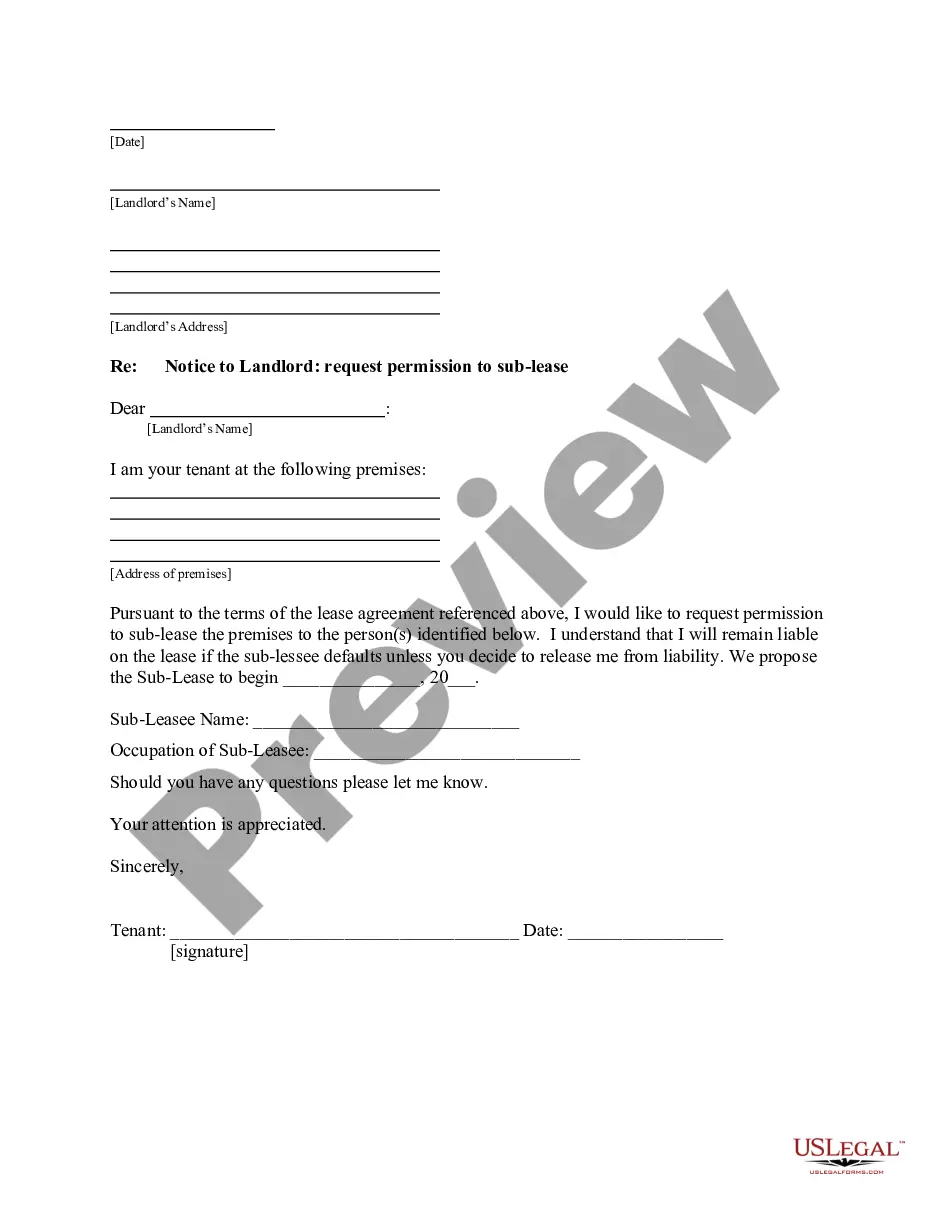
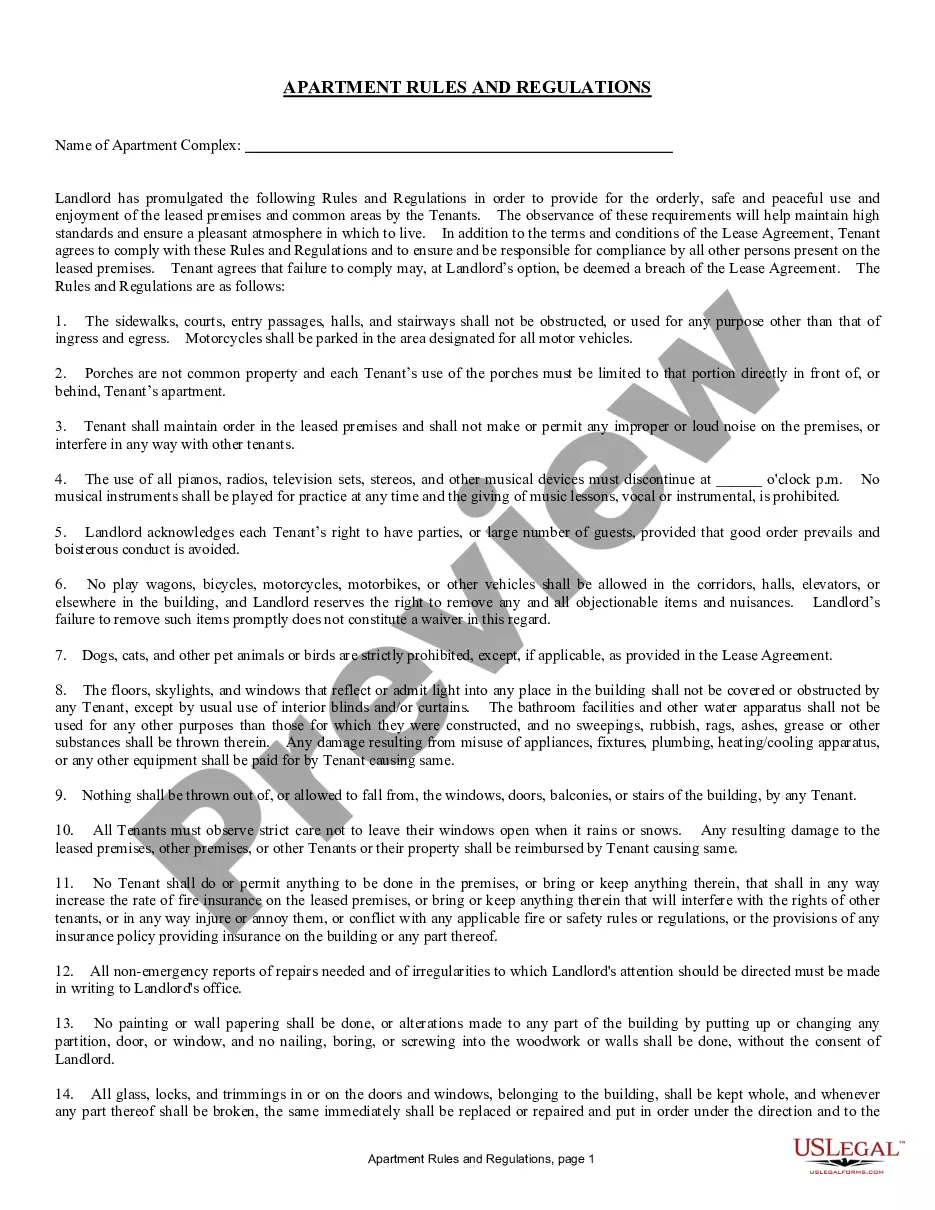
The Apartment Rules and Regulations form outlines the essential guidelines that tenants must follow while residing in an apartment complex. It is designed to promote a safe and peaceful living environment and addresses rules not typically covered in an apartment lease agreement. This document complements the Apartment Lease Agreement and emphasizes the importance of tenant compliance to maintain order and respect among residents.
Key components of this form
- Rules regarding the use of common areas and property management responsibilities.
- Restrictions on noise levels and use of musical instruments.
- Guidelines for maintaining cleanliness and safety within the premises.
- Provisions for pet ownership and property modifications.
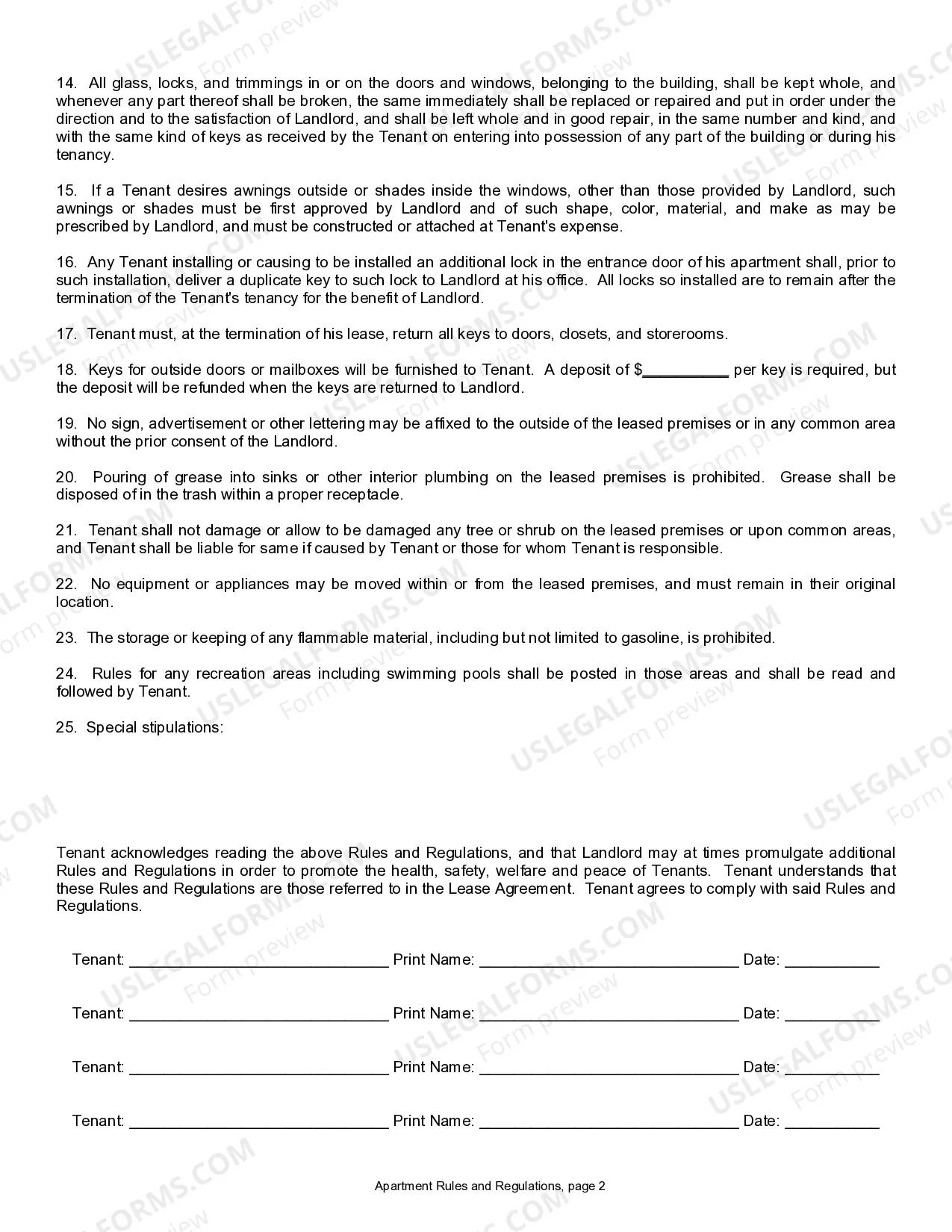
- Fees associated with key deposits and responsibilities for damages.
- Regulations related to the disposal of waste and flammable materials.
Common use cases
This form should be used whenever a landlord and tenant need to establish clear apartment rules and regulations. It is particularly useful in multi-unit housing settings, where shared spaces require additional guidelines to ensure all tenants respect each other's rights and property. Use this form during the initial lease signing or when updating existing rules to maintain a harmonious living environment.
Who should use this form
This form is intended for:
- Landlords or property managers who need to set clear rules for tenants.
- Tenants who want to understand their responsibilities while living in the apartment.
- Real estate professionals assisting landlords and tenants in lease agreements.
- Organizations that manage multiple rental properties and require standardized rules.
Completing this form step by step
- Enter the name of the apartment complex at the beginning of the form.
- Clearly list all apartment rules and regulations as outlined in the document.
- Specify any limitations regarding noise levels and property use.
- Fill in any fields related to key deposits and installation of locks, if applicable.
- Have all tenants sign and date the form to acknowledge their understanding and agreement.
Notarization guidance
Notarization is not commonly needed for this form. However, certain documents or local rules may make it necessary. Our notarization service, powered by Notarize, allows you to finalize it securely online anytime, day or night.
Get your form ready online
Our built-in tools help you complete, sign, share, and store your documents in one place.
Make edits, fill in missing information, and update formatting in US Legal Forms—just like you would in MS Word.
Download a copy, print it, send it by email, or mail it via USPS—whatever works best for your next step.
Sign and collect signatures with our SignNow integration. Send to multiple recipients, set reminders, and more. Go Premium to unlock E-Sign.
If this form requires notarization, complete it online through a secure video call—no need to meet a notary in person or wait for an appointment.
We protect your documents and personal data by following strict security and privacy standards.

Make edits, fill in missing information, and update formatting in US Legal Forms—just like you would in MS Word.

Download a copy, print it, send it by email, or mail it via USPS—whatever works best for your next step.

Sign and collect signatures with our SignNow integration. Send to multiple recipients, set reminders, and more. Go Premium to unlock E-Sign.

If this form requires notarization, complete it online through a secure video call—no need to meet a notary in person or wait for an appointment.

We protect your documents and personal data by following strict security and privacy standards.
Avoid these common issues
- Failing to have all tenants sign the document, which may lead to disputes later.
- Creating vague rules that are hard to enforce or understand.
- Overlooking to update the rules as state or local laws change.
- Not clearly communicating the consequences of rule violations.
Advantages of online completion
- Easy to download and print for immediate use.
- Allows for customization to fit specific apartment complex rules.
- Reduces the risk of errors through clear, professionally drafted content.
- Accessible anytime, facilitating timely updates when necessary.
Legal use & context
- The rules outlined in this form are enforceable as part of the rental agreement.
- Non-compliance with the rules can be treated as a breach of the lease agreement.
- Landlords may have legal grounds to take action against tenants who violate these regulations.
Main things to remember
- The Apartment Rules and Regulations form is essential for maintaining a pleasant living environment.
- Understanding and complying with these regulations can prevent conflicts between tenants and landlords.
- It's important for all tenants to acknowledge these rules for transparency and harmony within the complex.
Looking for another form?

Form popularity
FAQ
As a renter in Virginia, you have legal protections under the Virginia Residential Landlord and Tenant Act (VRLTA) that include the right to: A fair application fee. A fair security deposit. A decent and safe place to live.
State law prohibits landlords from entering rental housing without either the consent of the tenant or providing reasonable notice in advance, unless circumstances require the landlord to perform emergency repairs.
Uninhabitable conditions can include dangerous ones, such as holes in the floor, unsafe or exposed wiring, or non-working air conditioning in dangerously hot summer months. Gross infestations of roaches, fleas or other pests are also uninhabitable conditions.
When you rent a property from a landlord it becomes your home. They should only enter the property without you being present, if you have given permission for them to do so, or in a genuine emergency.
Your landlord or their representatives may be allowed reasonable access to carry out inspections or repairs, but must first get your permission. According to Section 11, from The Landlord and Tenant Act 1985, your landlord needs to give you at least 24 hour notice before they come around and visit for any reason.
Yes, West Virginia is an extremely landlord-friendly state because there are virtually no restrictions on evictions and there are no limits on rental pricing or increases.
The big take-away is that in most circumstances a landlord cannot enter a property without agreement from the tenant. And If the landlord ignores the law and enters the property without permission, the tenant may be able to claim damages or gain an injunction to prevent the landlord doing it again.
Apply to the Tribunal for orders: to stop the landlord/agent entering the premises. (Apply within 3 months after you become aware of the landlord's/agent's breach.) report trespass to the police. complain to NSW Fair Trading.
The legal definition of an unsanitary living condition can vary from state-to-state and even county-to-county. However, generally speaking, these definitions might include but are not limited to: excessive dirt or filth in the home. improper building construction or poor maintenance of living quarters.