West Virginia Warranty Deed from Individual to a Trust

What is this form?
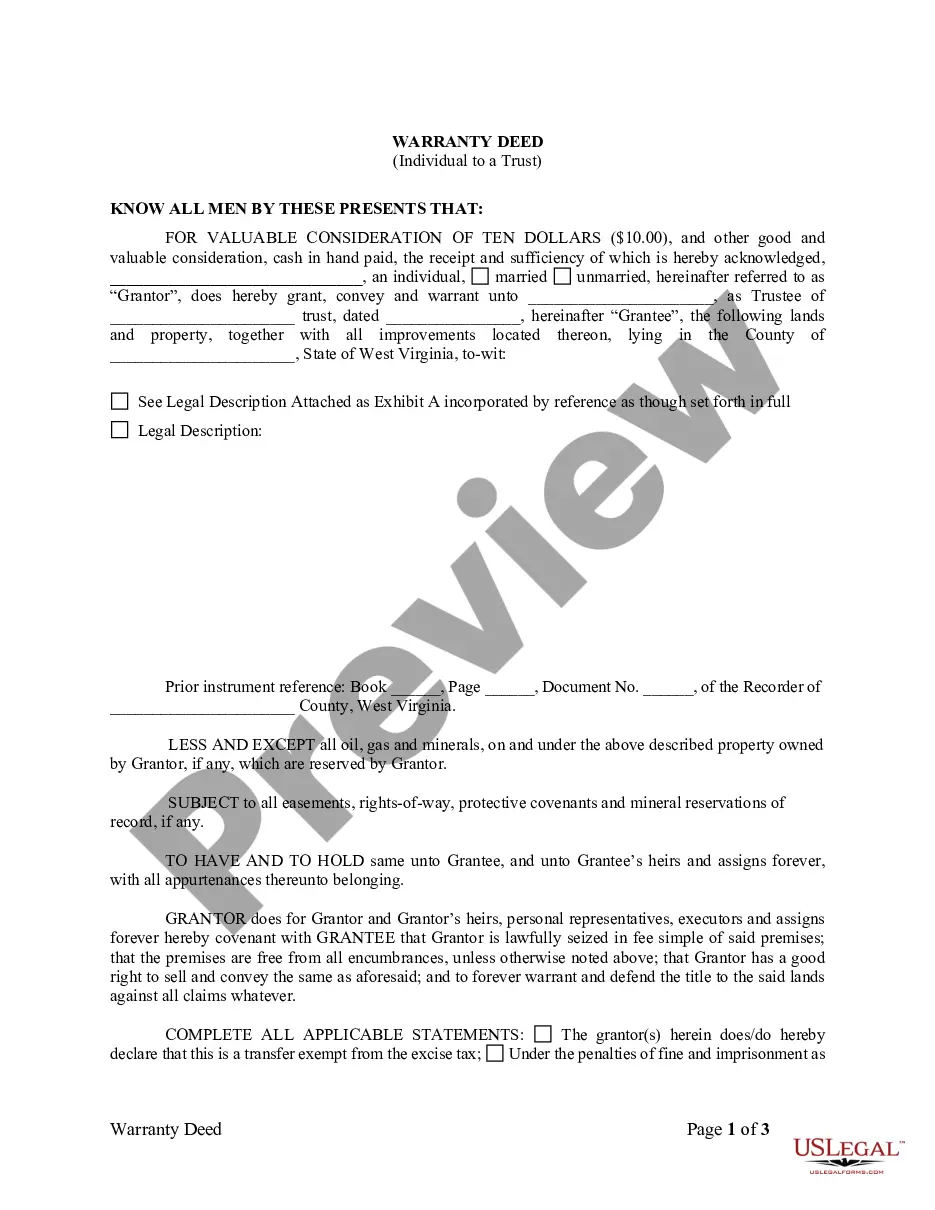
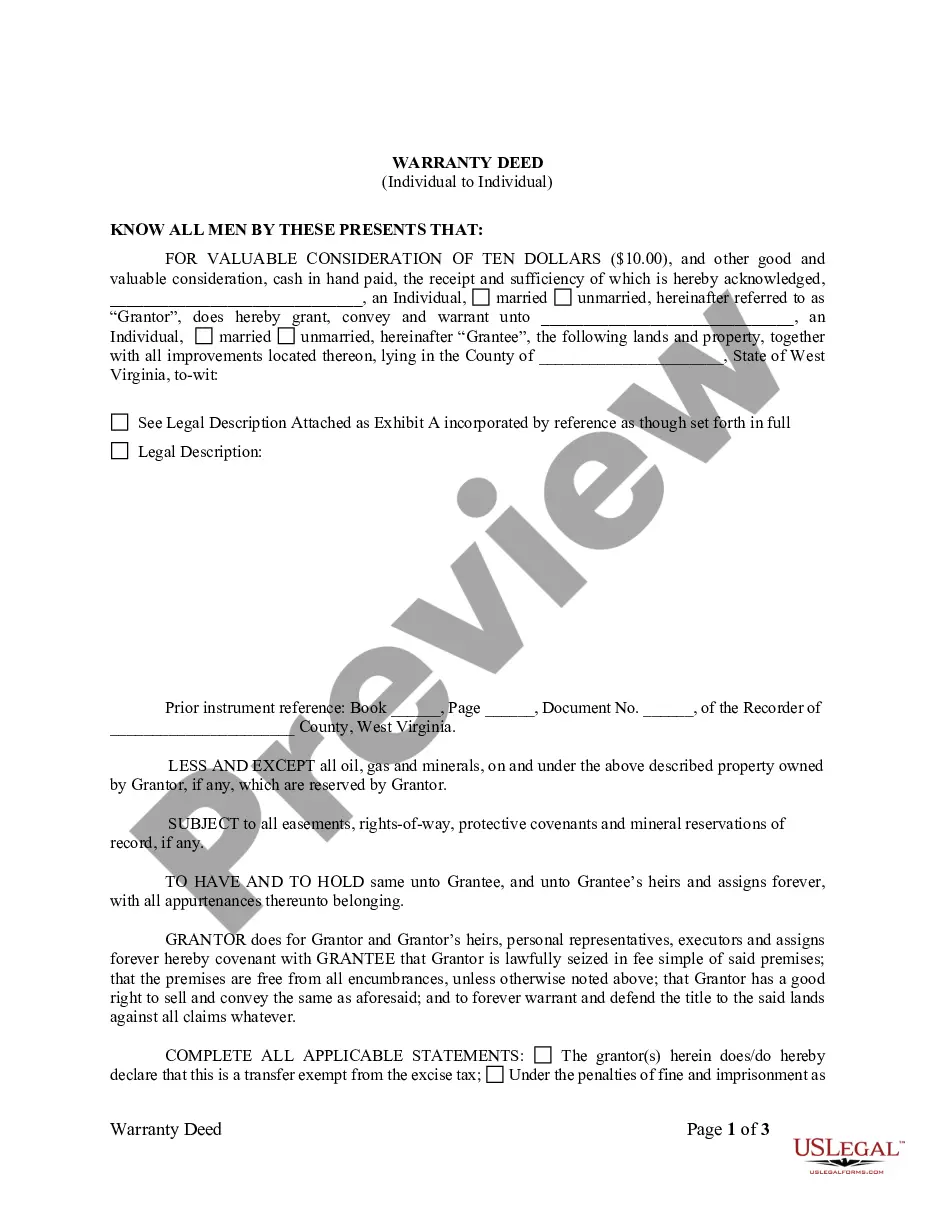
This Warranty Deed from Individual to a Trust is a legal document that facilitates the transfer of property from an individual (the grantor) to a trust (the grantee). This form ensures that the property is conveyed with a warranty, meaning the grantor guarantees a clear title free of encumbrances unless otherwise specified. It is essential for individuals wishing to transfer their property to a trust for estate planning or asset protection purposes, differing from other deed forms by specifically involving a trust as the recipient.
Key components of this form
- Parties involved: Identifies the grantor (individual) and the grantee (trust).
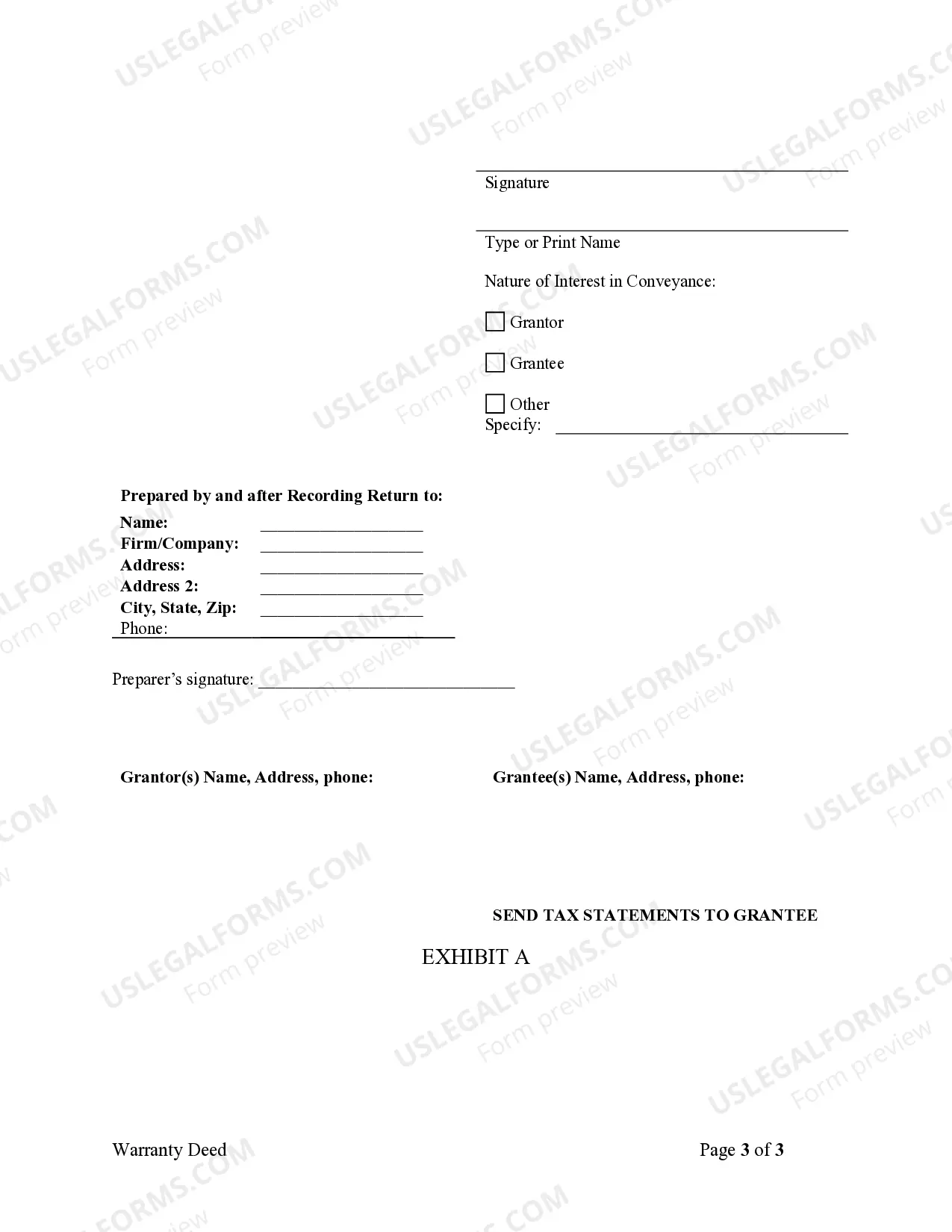
- Legal description of the property: Specifies the property being transferred and includes a legal description as an exhibit.
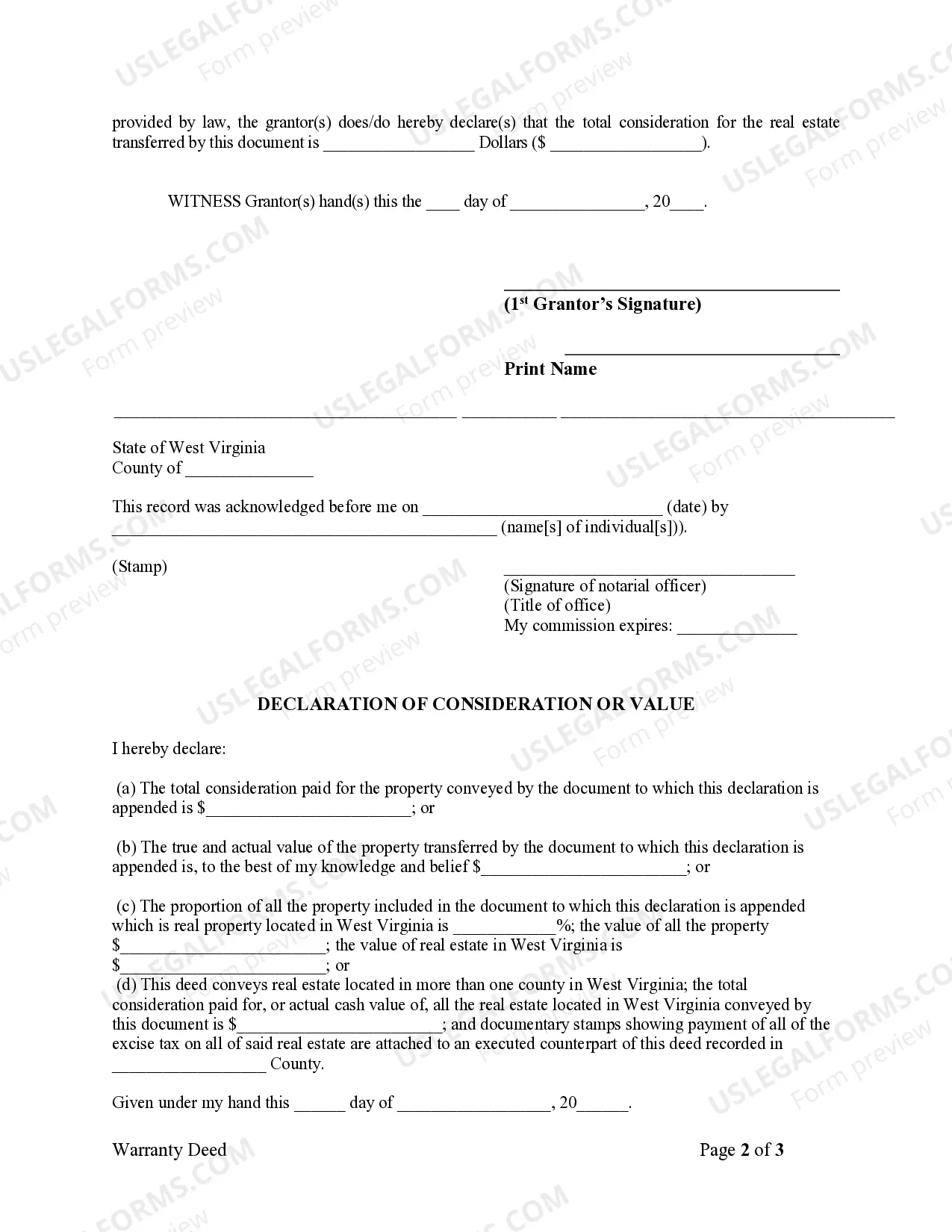
- Consideration declaration: States the value or consideration for the transfer.
- Warranties by the grantor: Ensures the grantor has the legal right to transfer the property and defends against any claims.
- Signatures: Requires the grantor's signature and date, along with notarization.

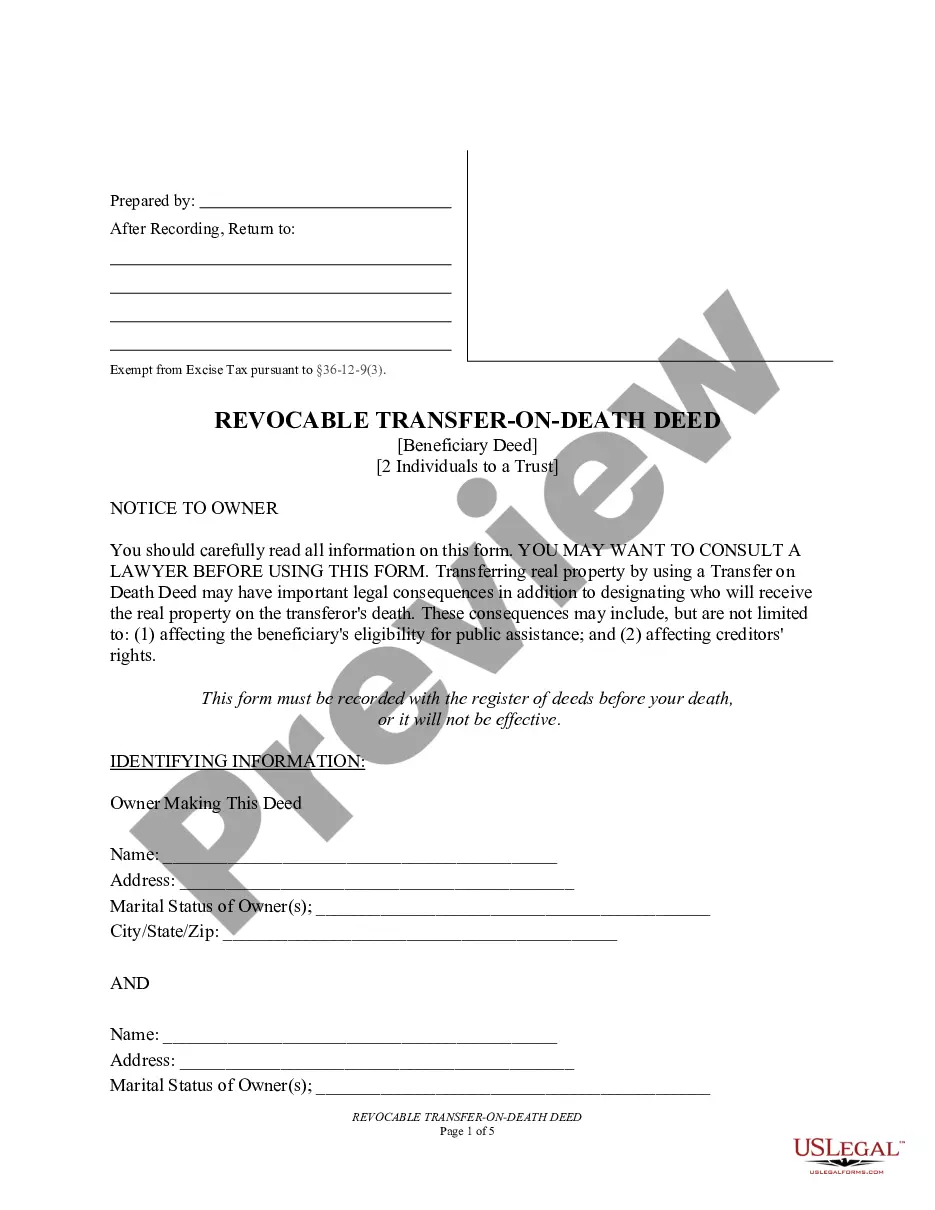
When this form is needed
This form should be used when an individual wishes to transfer real estate into a trust. This might occur during estate planning, when the individual wants to manage assets for beneficiaries or to protect property from probate. Using this form can be beneficial when the grantor wants to ensure that their property is handled according to their wishes after death.
Who can use this document
- Individuals looking to transfer property into a trust.
- Trustees who need to formalize the acceptance of property into a trust.
- Estate planners who wish to manage assets for beneficiaries.
- Property owners seeking to protect their real estate from probate.
Steps to complete this form
- Identify the parties: Clearly state the name of the grantor and the trust.
- Specify the property: Provide a complete legal description of the property being transferred.
- Enter the consideration: Fill in the dollar amount representing the transfer value.
- Sign the document: The grantor must sign and date the form in the presence of a notary.
- Notarization: Ensure the document is notarized to validate the transfer.
Does this form need to be notarized?
This form must be notarized to be legally valid. US Legal Forms provides secure online notarization powered by Notarize, allowing you to complete the process through a verified video call.
Get your form ready online
Our built-in tools help you complete, sign, share, and store your documents in one place.
Make edits, fill in missing information, and update formatting in US Legal Forms—just like you would in MS Word.
Download a copy, print it, send it by email, or mail it via USPS—whatever works best for your next step.
Sign and collect signatures with our SignNow integration. Send to multiple recipients, set reminders, and more. Go Premium to unlock E-Sign.
If this form requires notarization, complete it online through a secure video call—no need to meet a notary in person or wait for an appointment.
We protect your documents and personal data by following strict security and privacy standards.

Make edits, fill in missing information, and update formatting in US Legal Forms—just like you would in MS Word.

Download a copy, print it, send it by email, or mail it via USPS—whatever works best for your next step.

Sign and collect signatures with our SignNow integration. Send to multiple recipients, set reminders, and more. Go Premium to unlock E-Sign.

If this form requires notarization, complete it online through a secure video call—no need to meet a notary in person or wait for an appointment.

We protect your documents and personal data by following strict security and privacy standards.
Common mistakes to avoid
- Failing to provide a complete legal description of the property.
- Not having the deed notarized, which could invalidate the transfer.
- Leaving out essential information about the trust, such as its name and date of establishment.
- Not specifying any reservations, such as rights to minerals, if applicable.
Why complete this form online
- Convenience: Access and download the form anytime from any device.
- Editability: Easily fill out the form at your convenience without the need for paper copies.
- Reliability: The forms are drafted by licensed attorneys to ensure legal compliance.
Key takeaways
- The Warranty Deed from Individual to a Trust is essential for transferring property into a trust.
- It includes important components like property description and title warranties.
- Notarization is a critical step in ensuring the document's legality.
- Proper completion helps avoid common errors and facilitates smooth property transfers.
Looking for another form?

Form popularity
FAQ
Trustee's deeds convey real estate out of a trust.This type of conveyance is named for the person using the form the trustee who stands in for the beneficiary of the trust and holds title to the property.
A trustee deed offers no such warranties about the title.
A warranty deed guarantees that: The grantor is the rightful owner of the property and has the legal right to transfer the title.The title would withstand third-party claims to ownership of the property. The grantor will do anything to ensure the grantee's title to the property.
Typically, the lender will provide you with a copy of the deed of trust after the closing. The original warranty deeds are often mailed to the grantee after they are recorded. These are your original copies and should be kept in a safe place, such as a fireproof lockbox or a safe deposit box at a financial institution.
Contrary to normal expectations, the Deed DOES NOT have to be recorded to be effective or to show delivery, and because of that, the Deed DOES NOT have to be signed in front of a Notary Public. However, if you plan to record it, then it does have to be notarized as that is a County Recorder requirement.
A warranty deed protects property owners from future claims that someone else actually owns a portion (or all) of their property, while trustee deeds protect lenders when borrowers default on their mortgage loans.
A special warranty deed to real estate offers protection to the buyer through the seller's guarantee that the title has been free and clear of encumbrances during their ownership of the property. It does not guarantee clear title beyond their ownership.
Special warranties allow the transfer of property title between seller and buyer. The purchase of title insurance can mitigate the risk of prior claims to the special warranty deed.
The mortgage company usually prepares this deed as part of the loan package and delivers it to the title company for you to sign at closing. The title company is commonly the trustee to the deed and holds legal title to the property until the loan gets fully repaid.