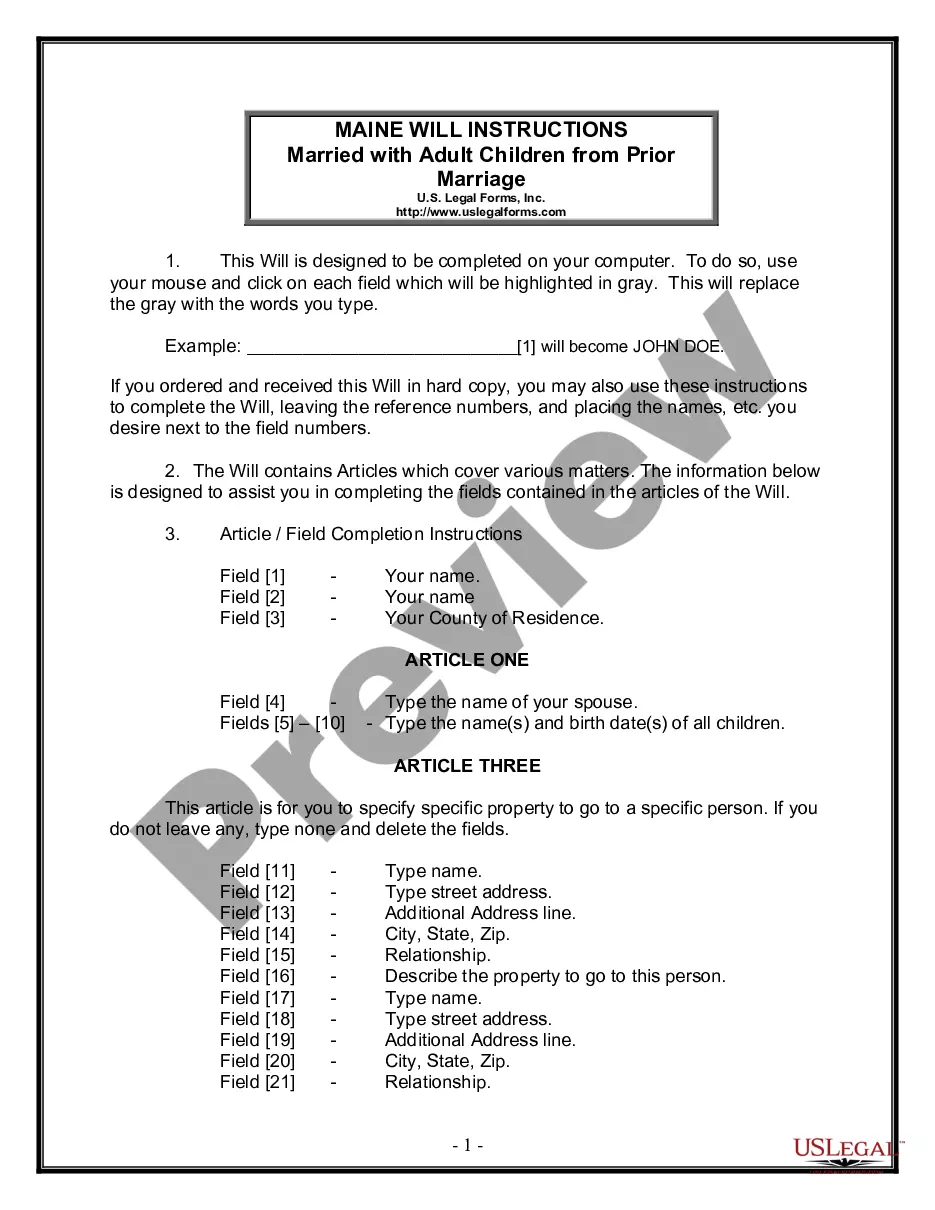
Maine Last Will and Testament
A Last Will and Testament outlines your wishes after death. Attorney-drafted templates are quick and easy to complete.

Similar documents: key differences
- Will vs. Trust — a will distributes assets after death; a trust manages them during life and after.
- Formal Will vs. Holographic Will — a formal will follows specific signing rules; a holographic will is handwritten and less formal.
- Mutual Will vs. Mirror Will — mutual wills bind both parties to the same terms; mirror wills are similar but not necessarily binding.
- Statutory Will vs. Standard Will — a statutory will follows a state-provided format; a standard will can be customized.
Search for more forms
Types of Will forms
With Minor Children (Prior Marriage)
Create a comprehensive will to protect your minor children and assets from a prior marriage, ensuring your wishes are honored after your passing.
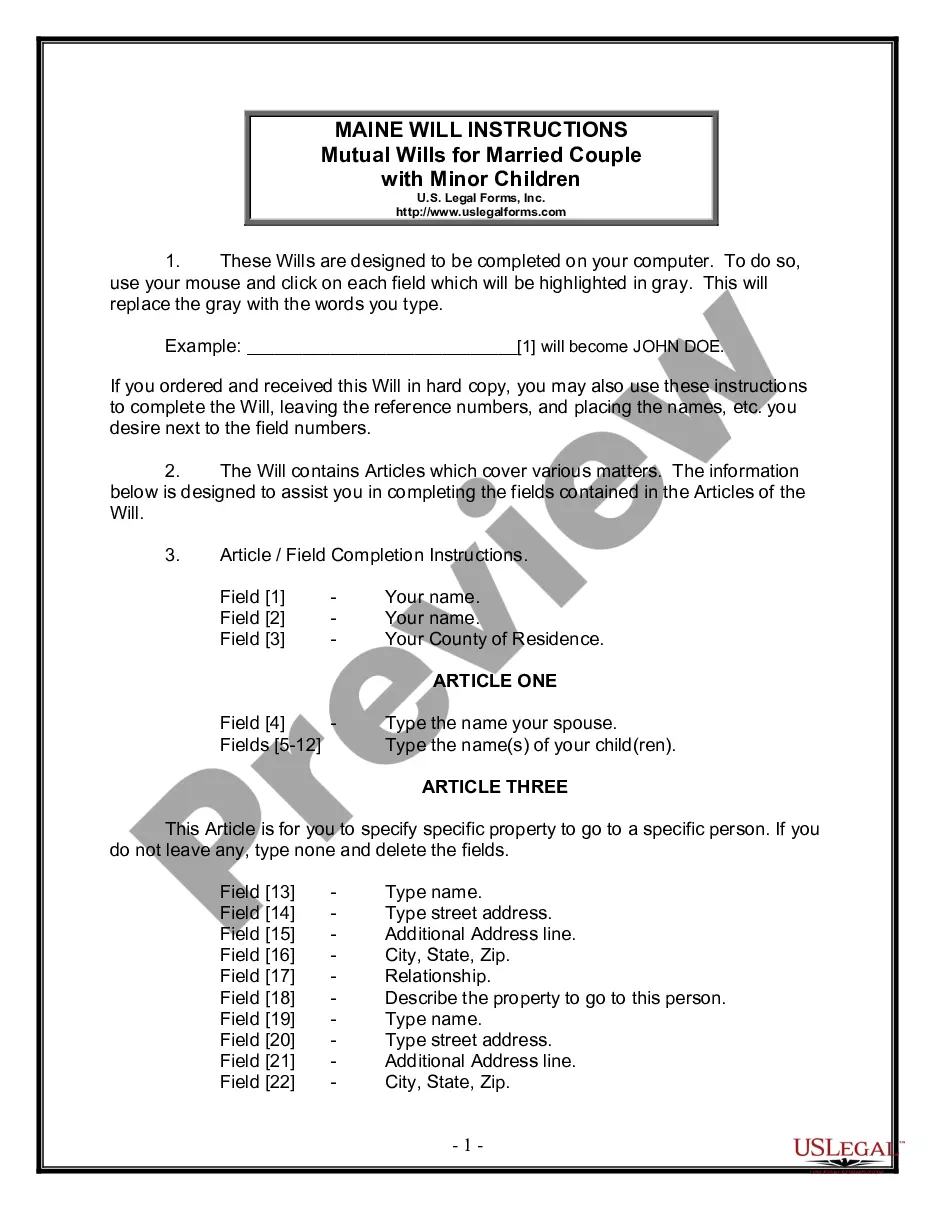
With Minor Children
Create a legally binding document to outline your wishes for asset distribution and guardianship of minor children, ensuring your family's future is secure.
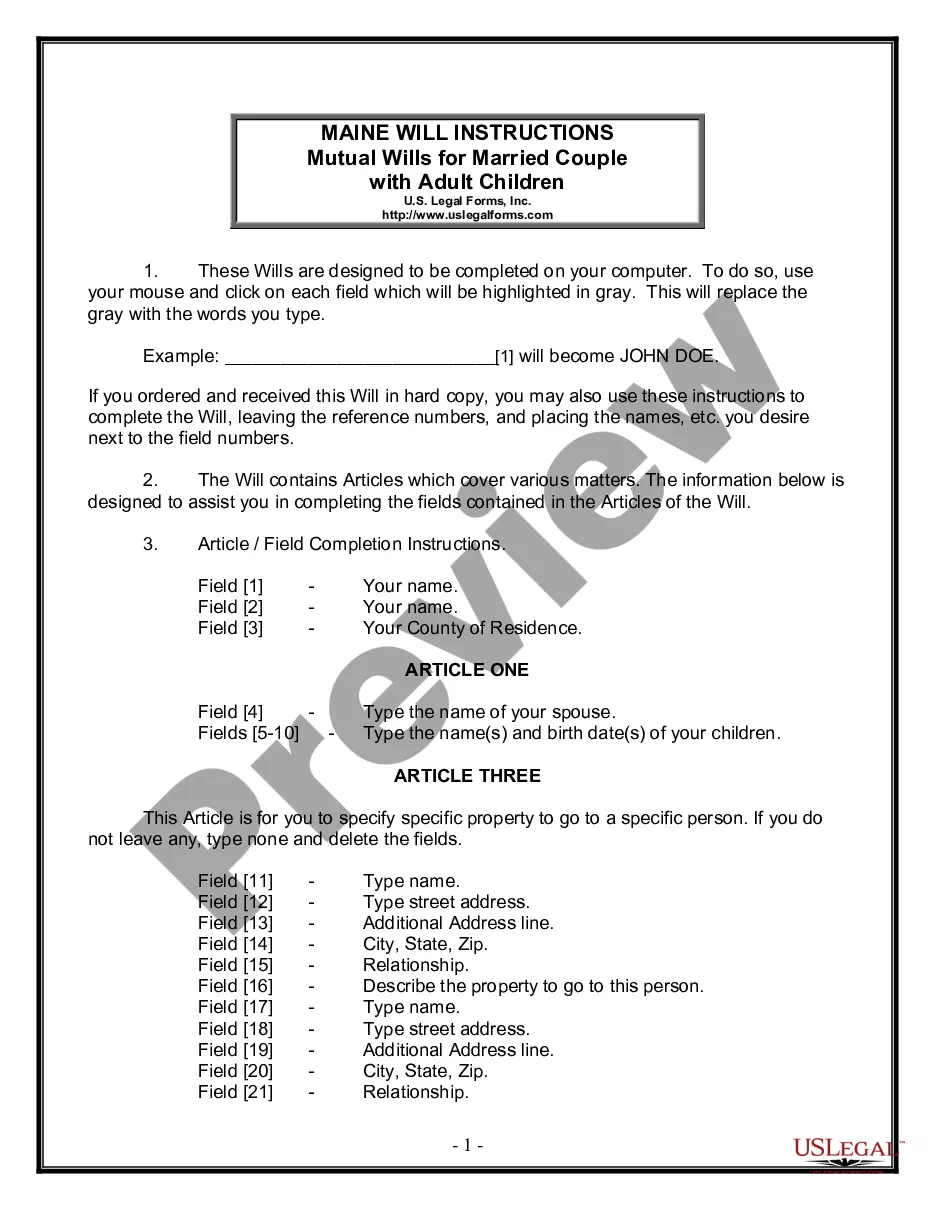
With Adult Children
Plan your estate with confidence, ensuring your spouse and adult children inherit as you intend.
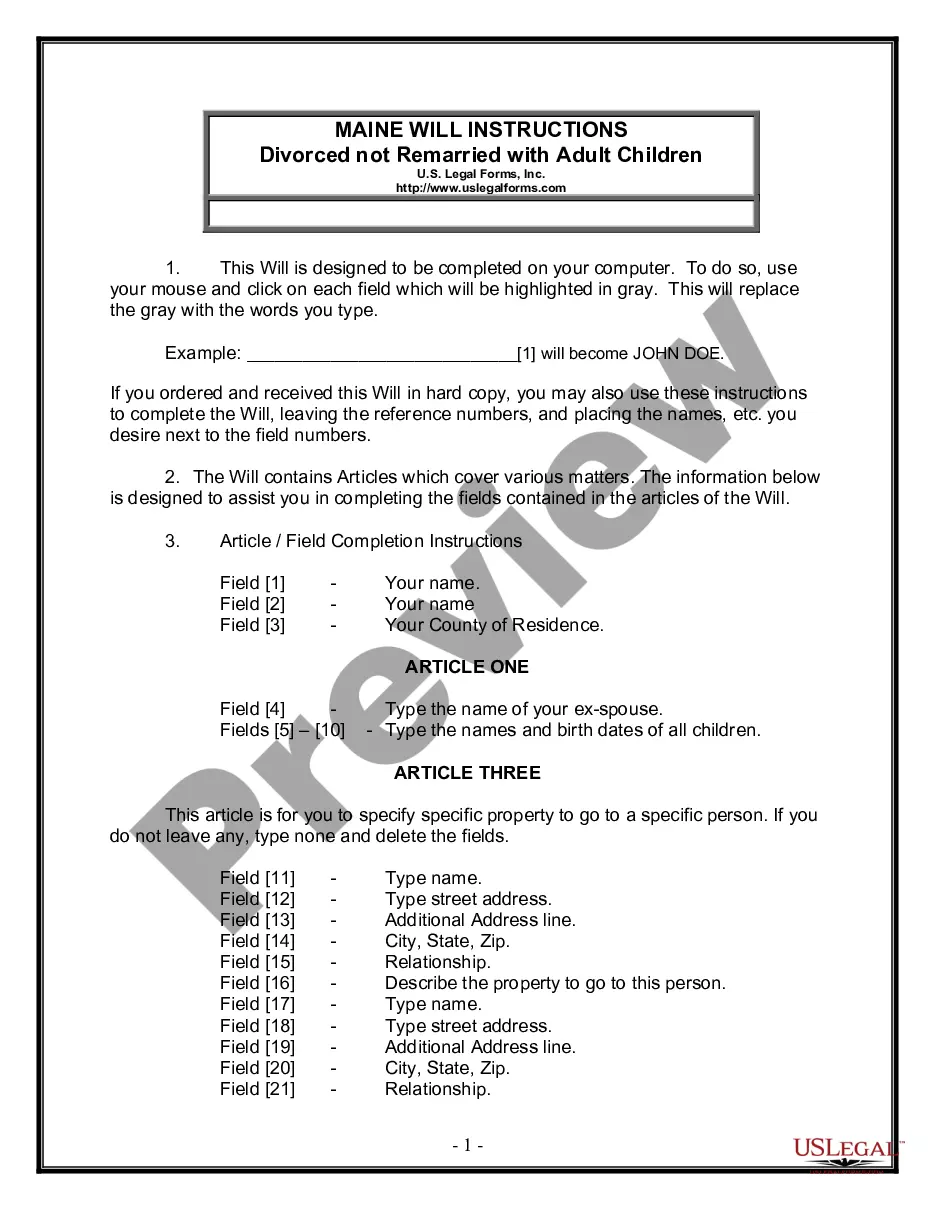
With Adult Children (Prior Marriage)
Create a customized will that ensures your spouse and adult children from a previous marriage are provided for, clarifying your wishes after death.
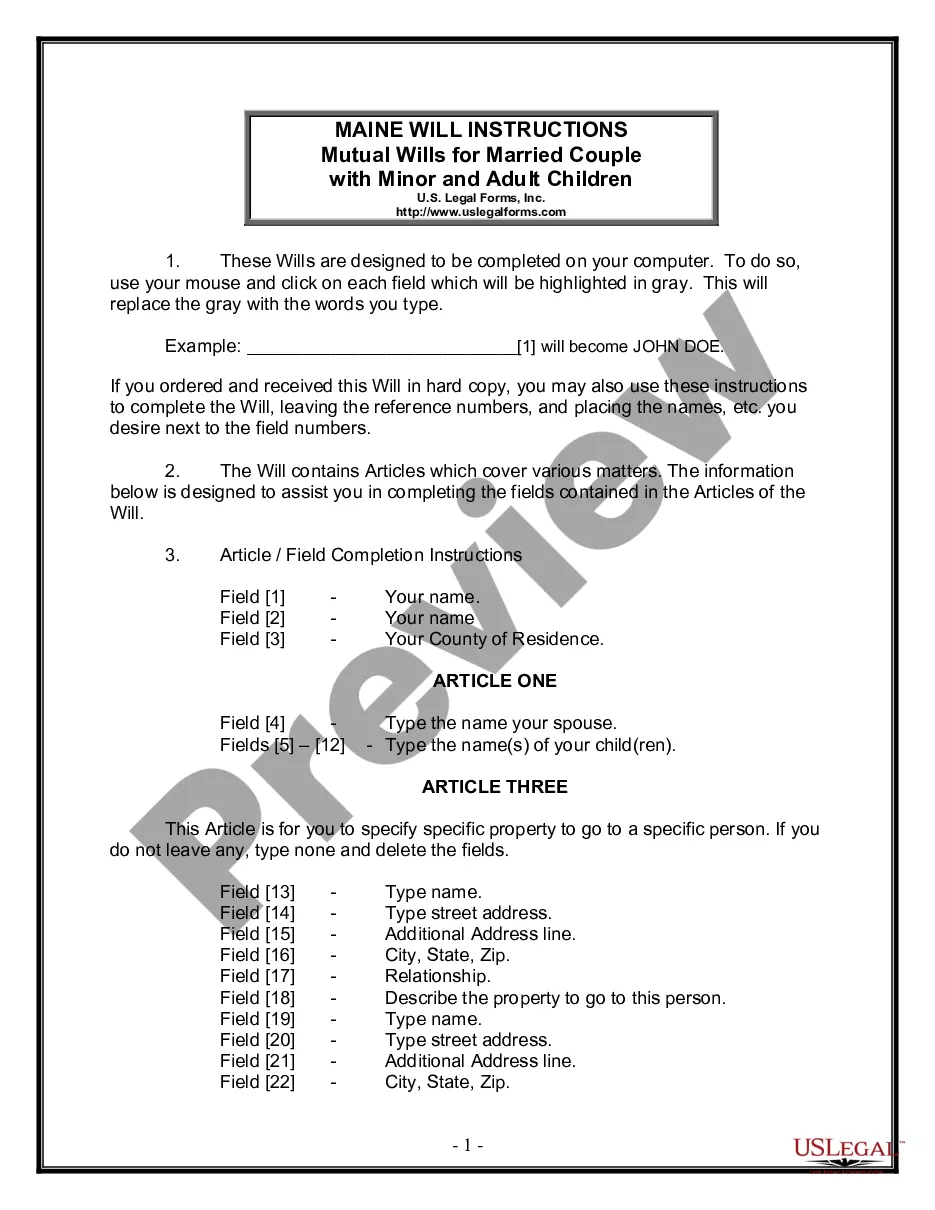
With Adult + Minor Children
Ensure your family's future with a legal document that clearly outlines your wishes for property distribution and guardianship.
With Adult + Minor Children (Prior Marriage)
Ensure your wishes are fulfilled after your death by specifying how your assets are distributed among your spouse and children from previous marriages.
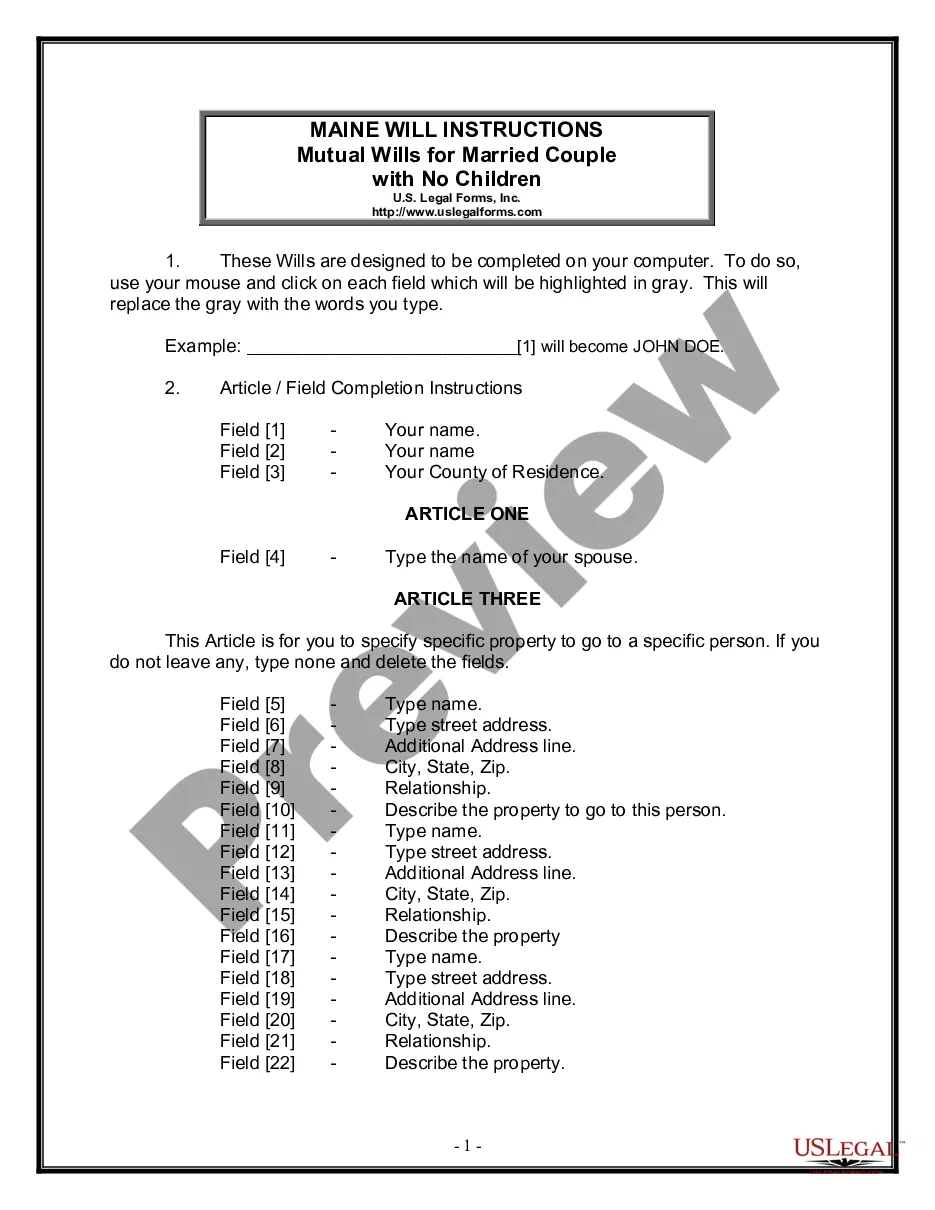
With No Children
Create a legally valid will to outline property distribution for married individuals without children.
Not Married with Minor Children
Create a legally binding will for unmarried partners with minor children to protect their family's future.
Not Married with No Children
Create legally binding wills for partners who want to designate their wishes and assets without being married.
Form for Domestic Partner with Minor Children
Ensure your minor children are cared for by designating guardians and distributing assets, tailored for domestic partners.
Domestic Partner with Adult Children
Create a legally binding document to outline asset distribution for your domestic partner and adult children.
Domestic Partner with Adult Children (Prior Marriage)
Ensure your wishes are honored regarding property distribution and guardianship for your adult children from previous relationships.
Domestic Partner with Adult + Minor Children
Create a comprehensive will that ensures your domestic partner and children are taken care of after your passing.
Domestic Partner with Adult + Minor Children (Prior Marriage)
Create a detailed plan for distributing your estate and caring for minor children after your death.
For a Domestic Partner with No Children
Create a legal document to specify how your assets will be distributed after your death without children involved.
Codicil / Amendment (General)
Make updates to your existing will easily and clearly, ensuring your wishes are accurately reflected.
Domestic Partner with Children (Prior Marriage)
Create a tailored estate plan to ensure your partner and children from previous marriages are provided for.
For Other Persons
Create a comprehensive last will to define how your assets will be distributed after your death, ensuring your wishes are honored.
Pour-Over Will (to Trust)
Create a will that ensures assets not in your trust are transferred to it upon your death, preventing intestate distribution.
With Minor Children
Protect your children's future with this essential will, ensuring they are cared for and your assets are distributed as you wish.
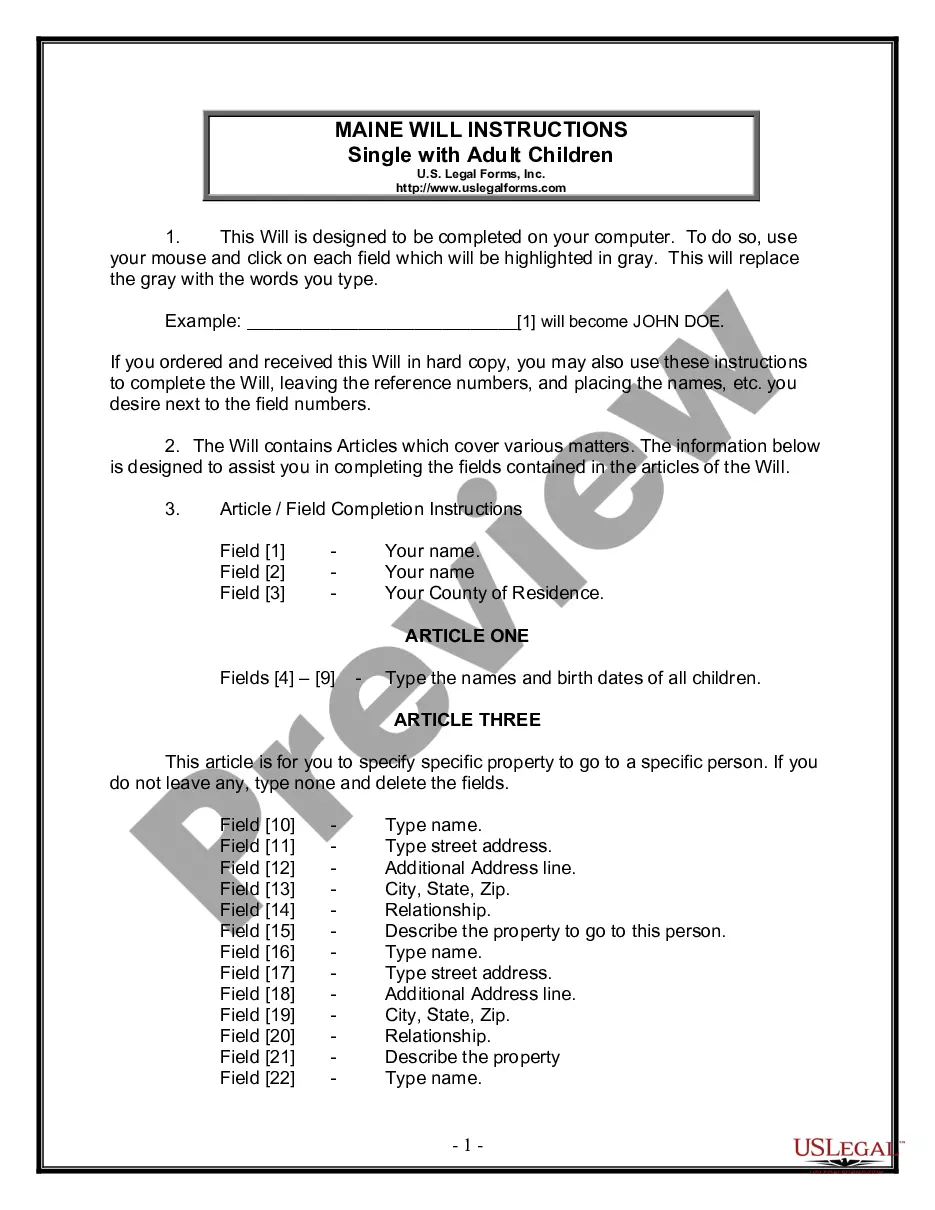
With Adult Children
Plan for the future by outlining who inherits your assets and major wishes after your passing. Ideal for single parents with adult children.
With Adult + Minor Children
Create a legally binding document to specify asset distribution, guardianship, and more for your children after your death.
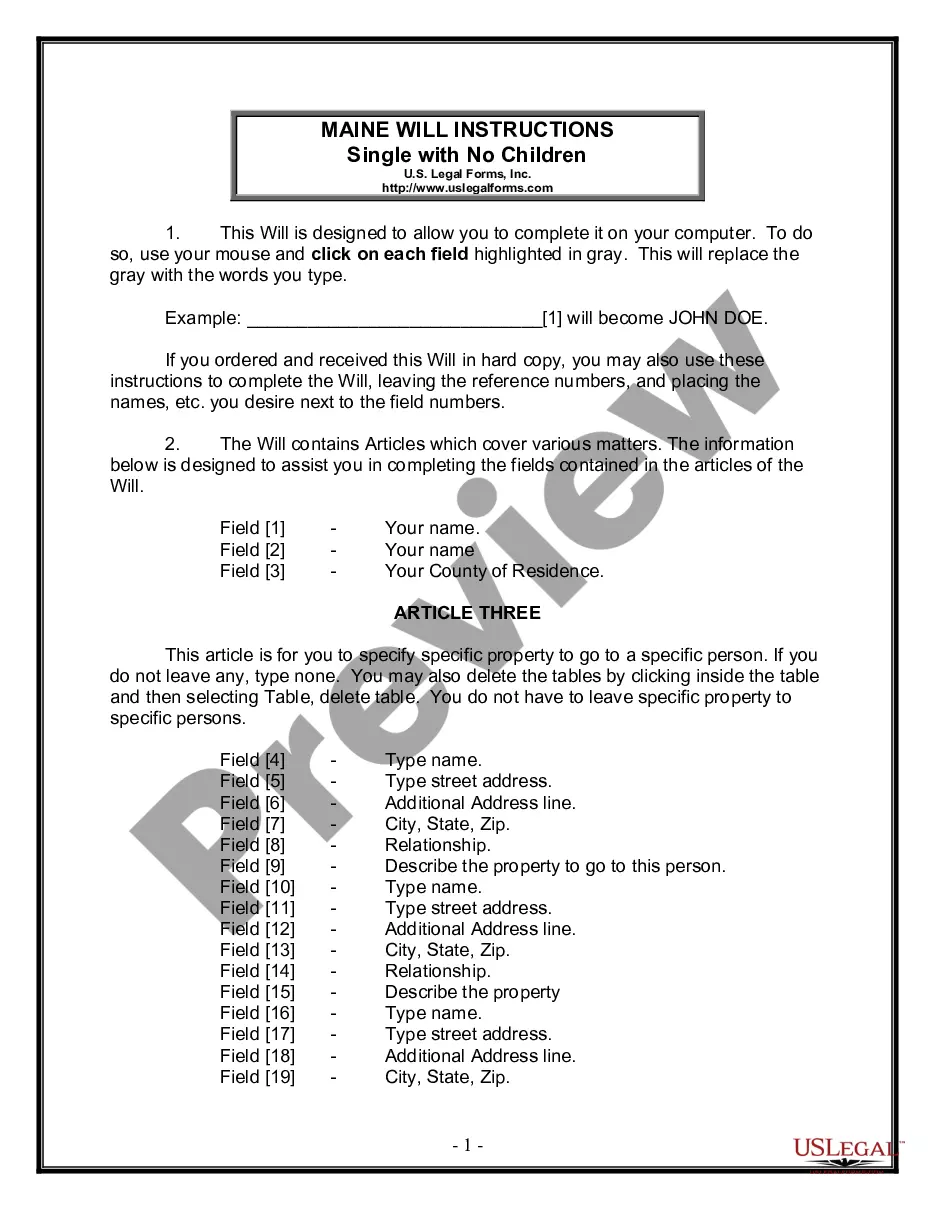
With No Children
Plan your estate clearly and ensure your assets are distributed according to your wishes.
With Minor Children
Create a legal document to specify how your assets should be distributed, especially for single parents with minor children.
With Adult Children
Plan your estate with a clear guide tailored for divorced individuals with adult children, ensuring your wishes are honored.
With Adult + Minor Children
Create a legally binding will that designates heirs for your property, especially important for divorced parents with children.
With Blended Children
Ensure your wishes are honored for your children and spouse with a detailed estate plan tailored for blended families.
With No Children
Create a clear plan for distributing your property after passing, especially important for those who are divorced, have no children, and want to prevent complications.
With Minor Children
Plan your estate and ensure your wishes are respected, especially if you have minor children.
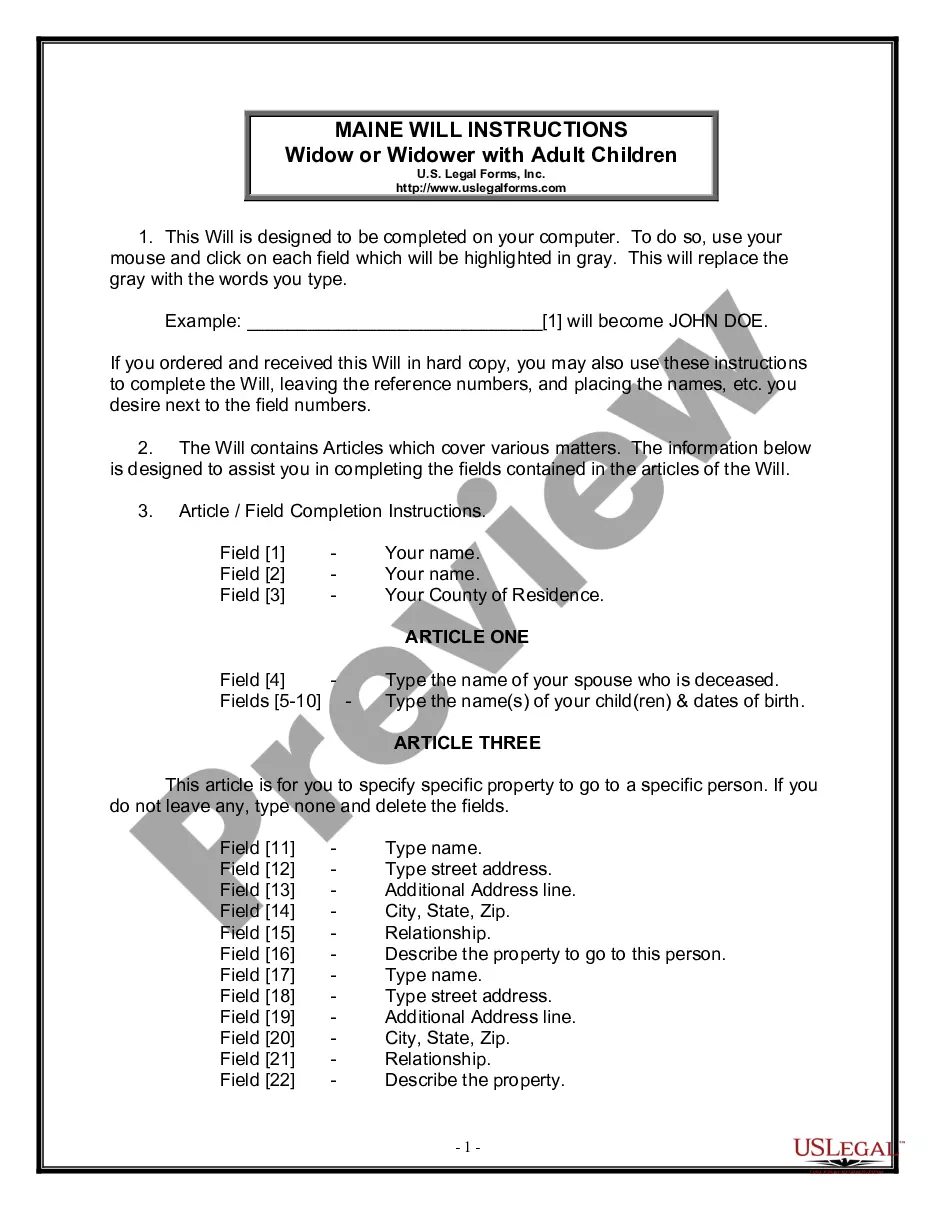
With Adult Children
Create a legally binding document to define how your assets will be distributed after your death, specifically designed for widows or widowers with adult children.
With Adult + Minor Children
Simplify estate planning for widows and widowers with both minor and adult children, ensuring assets are distributed according to your wishes.
With No Children
Create a legal document to outline your wishes regarding asset distribution after death, specifically for widows or widowers without children.
Common Maine Last Will and Testament documents
- Simple Will — a basic document for straightforward asset distribution.
- Mutual Will — documents for couples that ensure similar wishes are honored.
- Holographic Will — a handwritten will that can be valid without witnesses.
- Pour-Over Will — directs assets into a trust upon death.
- Attested Will — requires witnesses to validate the document.
FAQs
Not necessarily; a will covers asset distribution, while a trust can manage assets during life.
Without a will, state laws dictate asset distribution, which may not reflect your wishes.
Review your will every few years or after major life changes.
Beneficiary designations can override your will for specific accounts or assets.
Yes, you can designate different individuals for financial and healthcare decisions.
Key legal points
- A will takes effect only after death.
- Wills can be contested by heirs or beneficiaries.
- Witnesses or notarization may be required for validity.
- Beneficiaries can be individuals or organizations.
- Updating a will ensures it reflects current wishes.
How to get started
Begin your journey in just a few steps.
- Find a template that suits your needs.
- Review the template description and requirements.
- Obtain full access with a subscription.
- Fill out the template in the online editor.
- Export or send your will via various methods.
Practical tip
Consider drafting your will first, as it outlines immediate wishes, while trusts manage assets.