Wisconsin Claim for Public Improvement Lien by Corporation
About this form
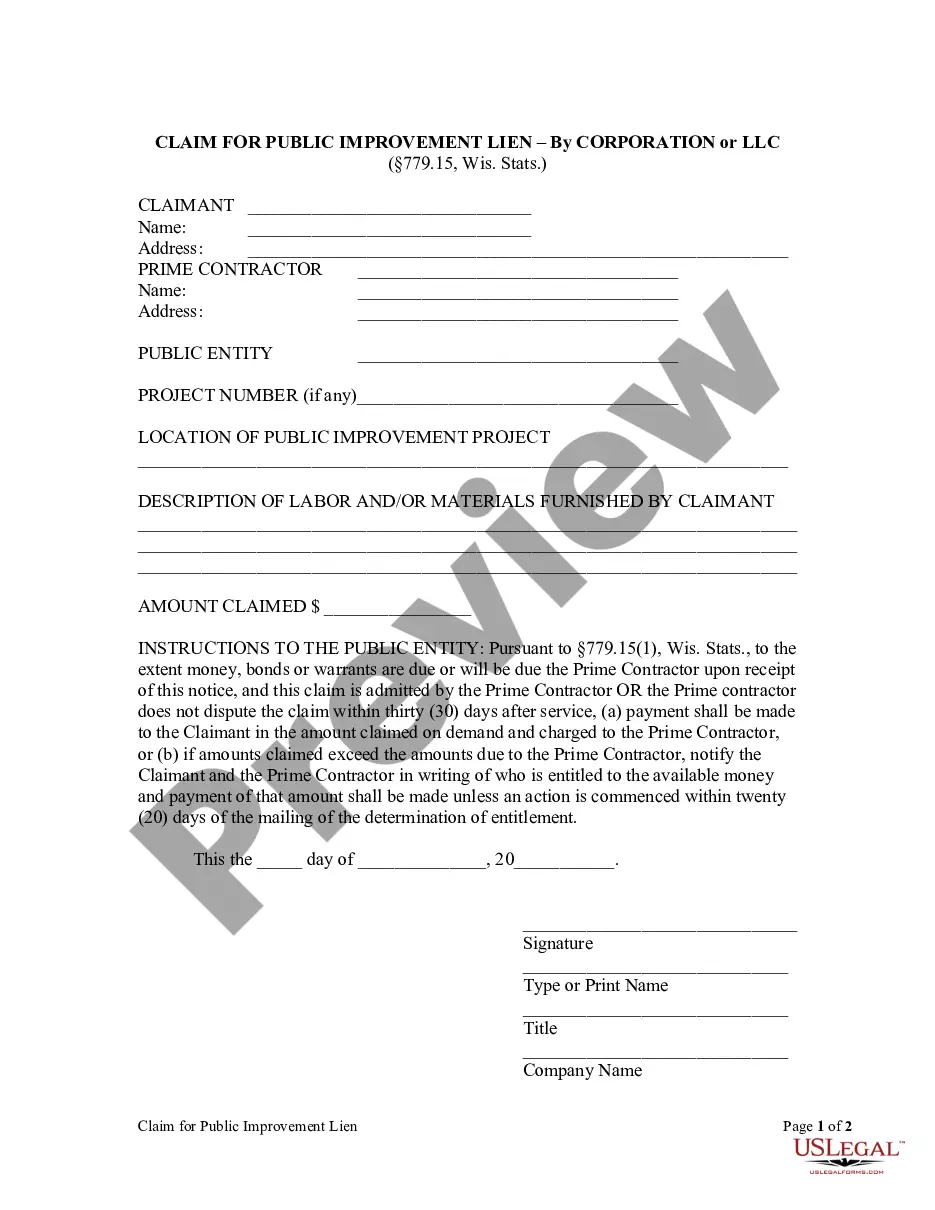
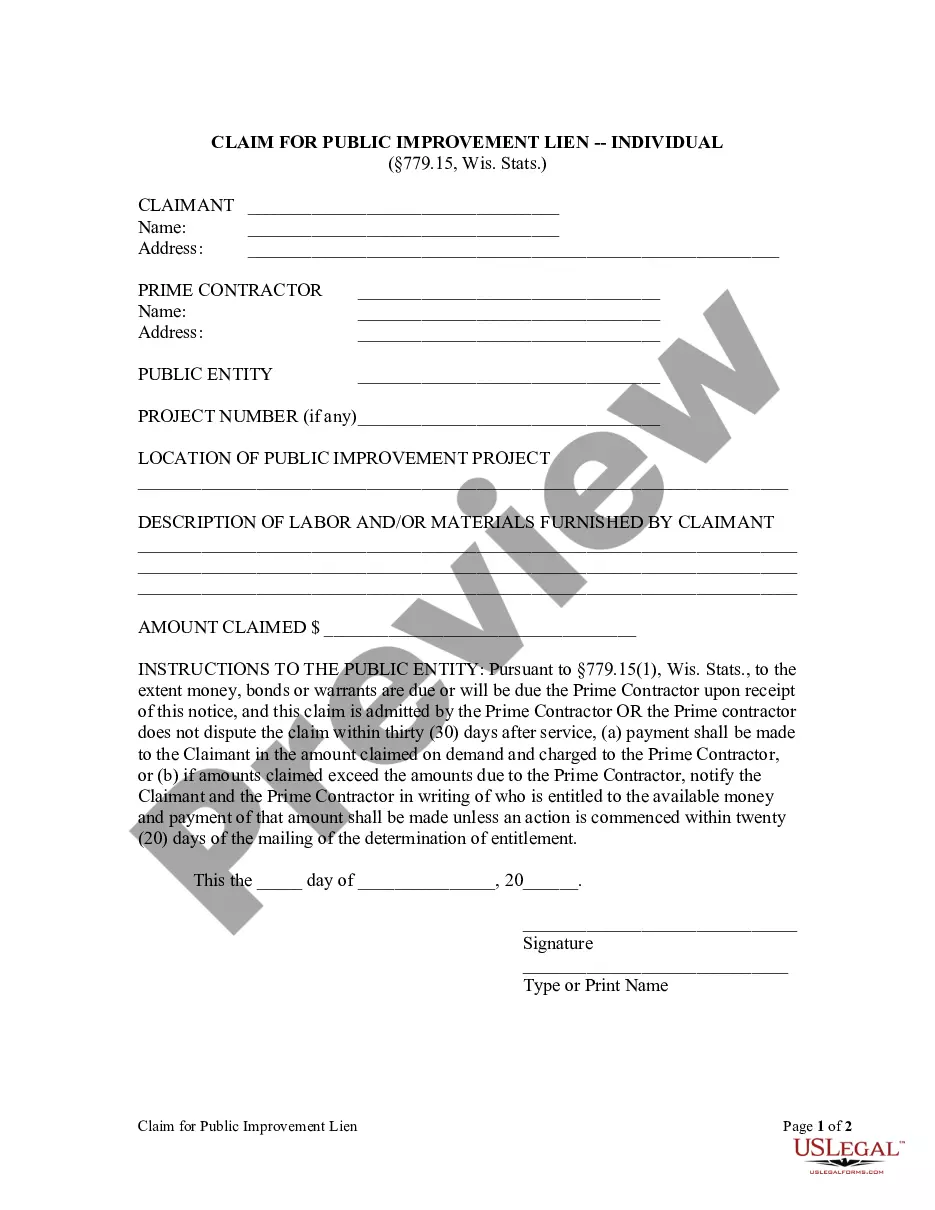
The Claim for Public Improvement Lien by Corporation is a legal document that allows corporations to assert their right to a lien for unpaid work or materials supplied for public improvement projects. This form stands apart as it is specifically tailored for corporations and is used to notify the relevant public entity of the claim, ensuring that the contractor or entity responsible for payment is informed before any payment is processed.
Form components explained
- Claimant's name and address
- Prime contractor's name and address
- Public entity and project number
- Location of the public improvement project
- Description of labor and/or materials furnished
- Amount claimed
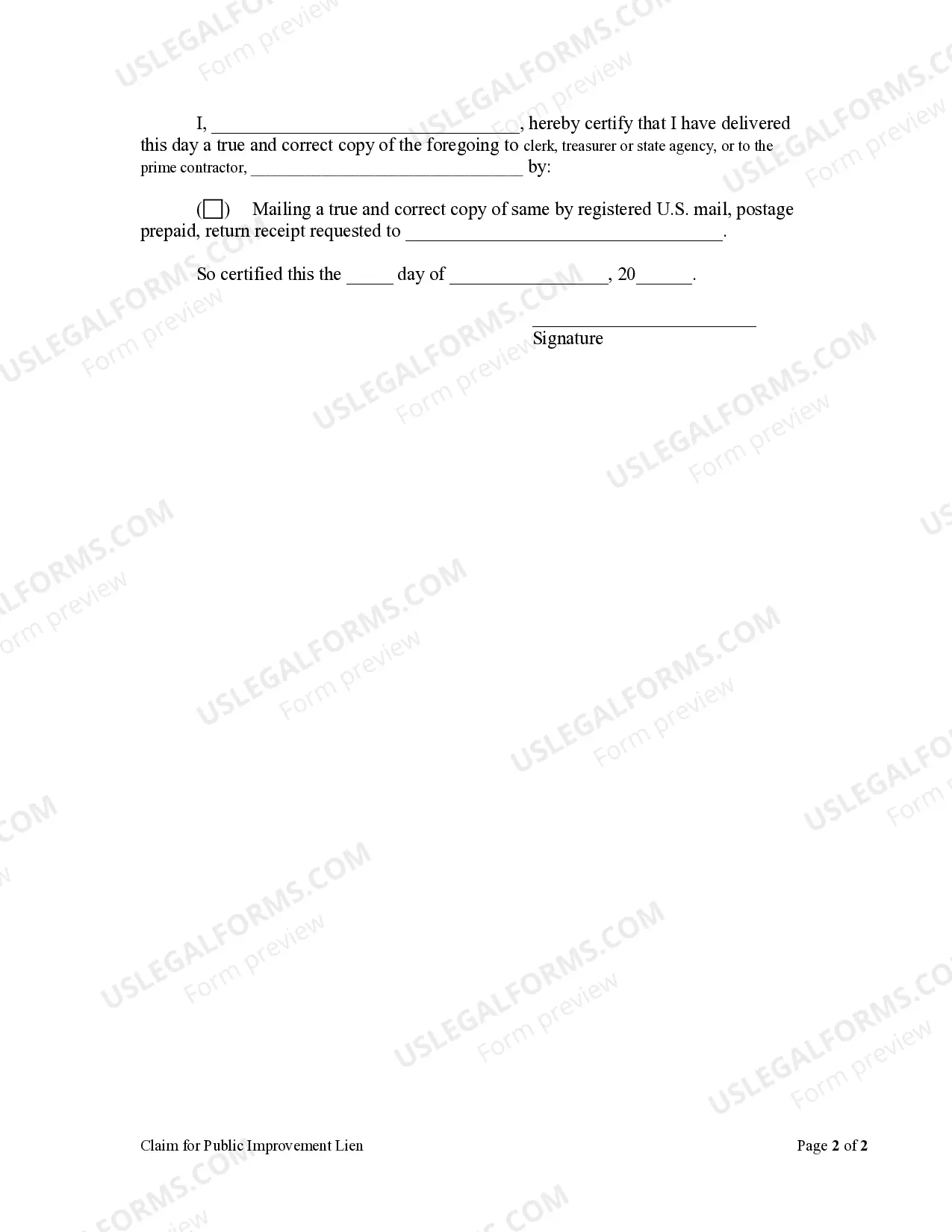
- Certifications regarding delivery of the claim
When to use this form
This form should be used when a corporation has provided labor or materials for a public improvement project and has not received payment. It is essential to file this claim before any payment is made to the prime contractor, thereby ensuring a claim on the funds available for the project. Situations may include construction projects, infrastructure improvements, and other public works undertaken by municipalities or governmental entities.
Who this form is for
- Corporations that have provided materials or services for public improvement projects
- Prime contractors who have not received payment for sub-contractor services
- Public entities overseeing a project that requires lien documentation
Steps to complete this form
- Identify and enter the claimant's name and address.
- List the prime contractor's name and address.
- Specify the public entity and project number, if applicable.
- Describe clearly the labor and/or materials provided.
- Fill in the amount being claimed.
- Sign the document and complete the certificate of delivery to verify submission.
Is notarization required?
This form usually doesn’t need to be notarized. However, local laws or specific transactions may require it. Our online notarization service, powered by Notarize, lets you complete it remotely through a secure video session, available 24/7.
Get your form ready online
Our built-in tools help you complete, sign, share, and store your documents in one place.
Make edits, fill in missing information, and update formatting in US Legal Forms—just like you would in MS Word.
Download a copy, print it, send it by email, or mail it via USPS—whatever works best for your next step.
Sign and collect signatures with our SignNow integration. Send to multiple recipients, set reminders, and more. Go Premium to unlock E-Sign.
If this form requires notarization, complete it online through a secure video call—no need to meet a notary in person or wait for an appointment.
We protect your documents and personal data by following strict security and privacy standards.

Make edits, fill in missing information, and update formatting in US Legal Forms—just like you would in MS Word.

Download a copy, print it, send it by email, or mail it via USPS—whatever works best for your next step.

Sign and collect signatures with our SignNow integration. Send to multiple recipients, set reminders, and more. Go Premium to unlock E-Sign.

If this form requires notarization, complete it online through a secure video call—no need to meet a notary in person or wait for an appointment.

We protect your documents and personal data by following strict security and privacy standards.
Typical mistakes to avoid
- Failing to provide sufficient detail in the description of labor or materials.
- Not delivering the claim to the appropriate public entity.
- Missing the deadline for filing the claim effectively.
Why use this form online
- Easy access and download for immediate use.
- Editable fields allow for customization and clarity.
- Reliable drafting supported by licensed attorneys.
Looking for another form?



Form popularity
FAQ
A claimant must file an original and 2 signed, copies of a Wisconsin "Claim for Lien" form with the clerk of circuit court in the county where the property is located, at least thirty (30) days after service of the notice of intent to file claim for lien, but within, and no later than, 6 months from the date that the
To place a lien, you must first demonstrate that you have a valid debt that has not been paid by the property holder for example if you performed construction work as a contractor or subcontractor at company headquarters and the business did not pay your bill.
In Wisconsin, a potential lien claimant must file a mechanics lien within 6 months after the last day on which labor and/or materials were furnished to the project, but at least 30 days after the filing of a Notice of Intention to File a Claim of Lien.
First, you must file the lien claim in the office of the Clerk of Circuit Court of the county where the property is located. After you've filed the lien claim, you must serve the property owner with a copy of the mechanics lien within 30 days from the date the lien was filed. That's it!
A claimant must file an original and 2 signed, copies of a Wisconsin "Claim for Lien" form with the clerk of circuit court in the county where the property is located, at least thirty (30) days after service of the notice of intent to file claim for lien, but within, and no later than, 6 months from the date that the
A construction lien is a claim made against a property by a contractor or subcontractor who has not been paid for work done on that property.A construction lien makes it difficult or impossible to sell or refinance a property because it makes its title unclear.
Someone who is owed money is generally not able to just put a lien on property without first securing a judgment. Securing a judgment requires the creditor to sue the debtor. This may be through circuit court in many jurisdictions. If under a certain dollar amount, this suit may be through the small claims court.