Washington Written Revocation of Will
Overview of this form
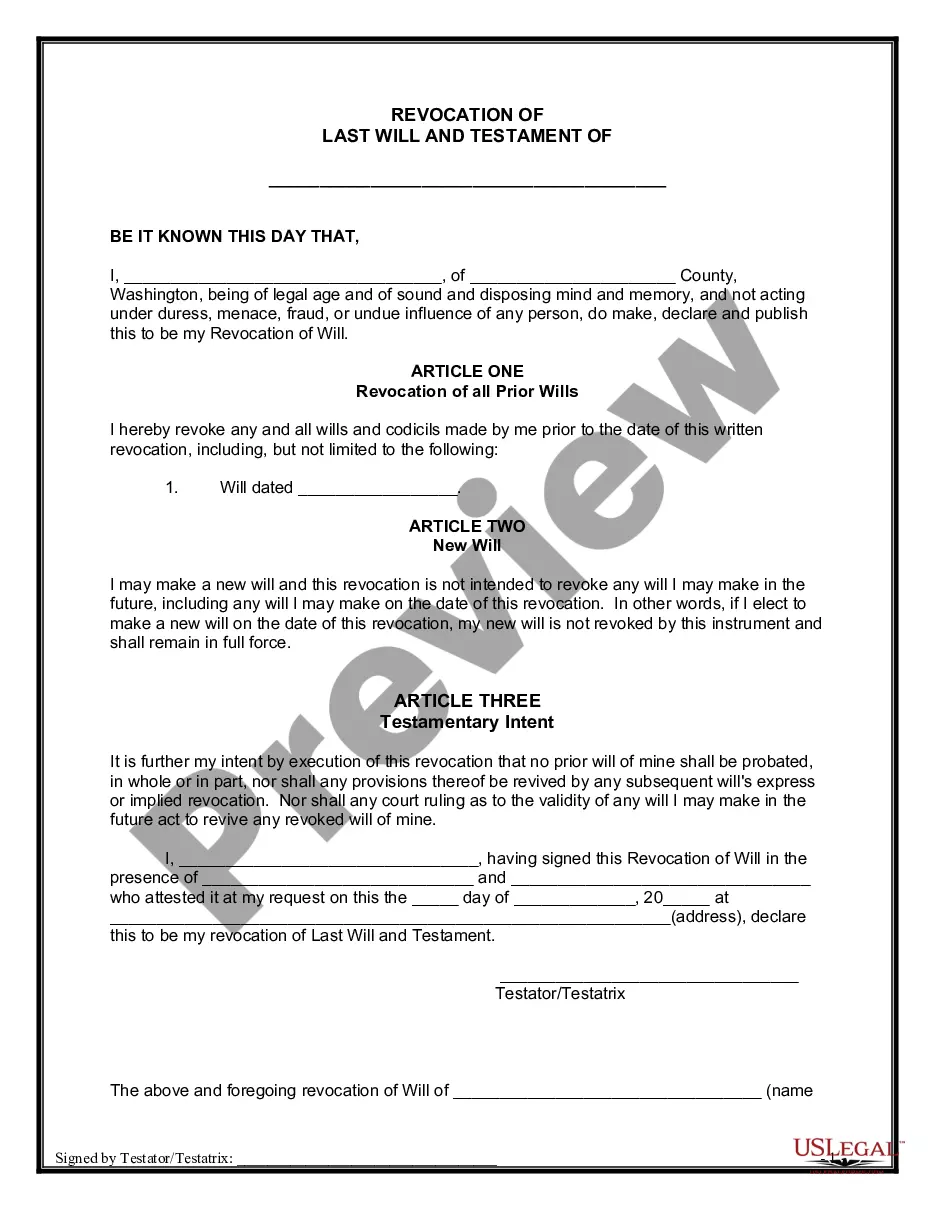
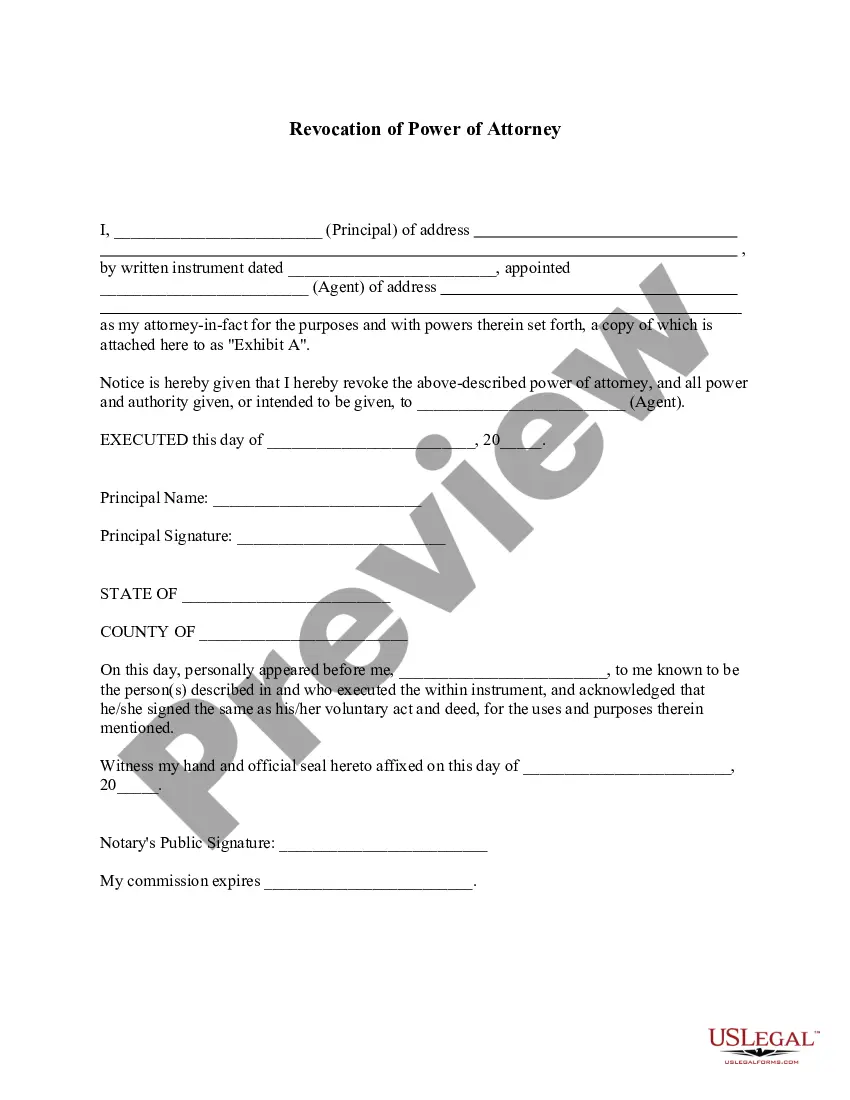
The Written Revocation of Will is a legal document used to formally revoke a prior will. Unlike a new will that typically includes a revocation clause, this separate instrument clarifies that no previous wills should be considered valid. This ensures your wishes are respected and prevents any ambiguity regarding your estate plans.
Form components explained
- Declaration of revocation of all prior wills and codicils.
- Provision for creating future wills without automatic revocation.
- Statement affirming intention that no prior wills shall be probated.
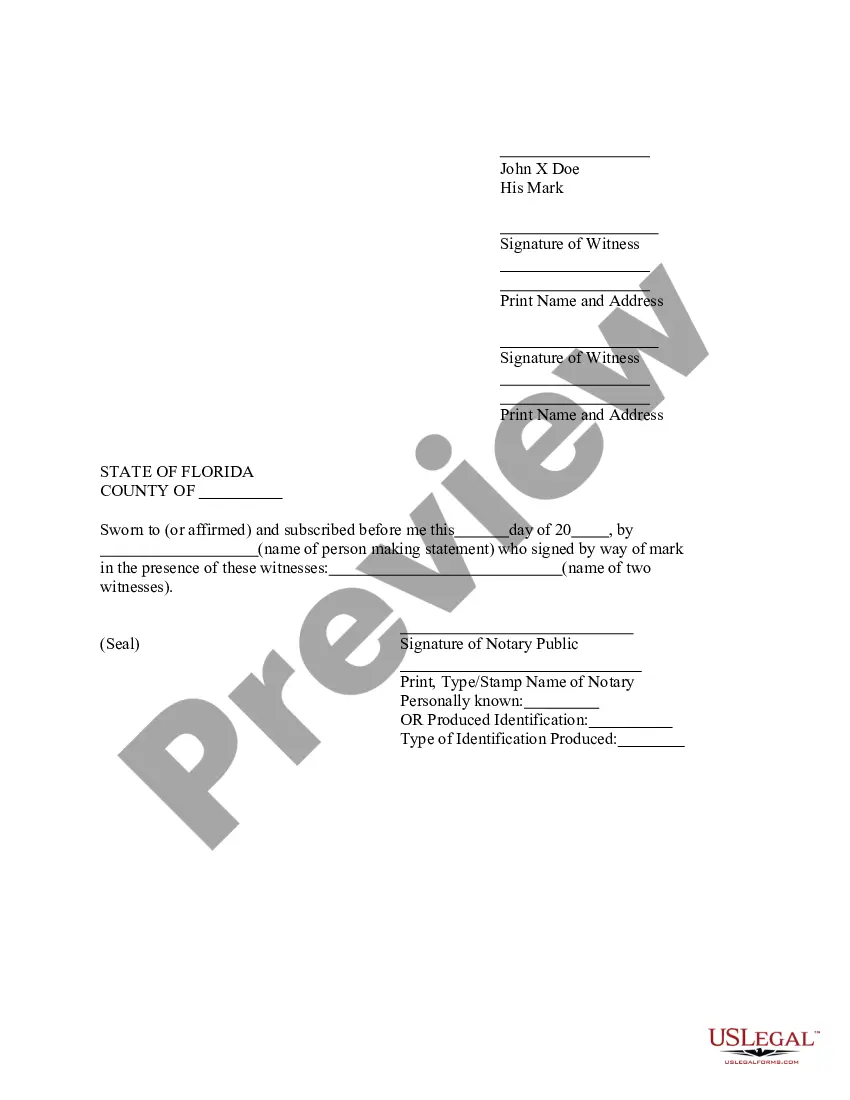
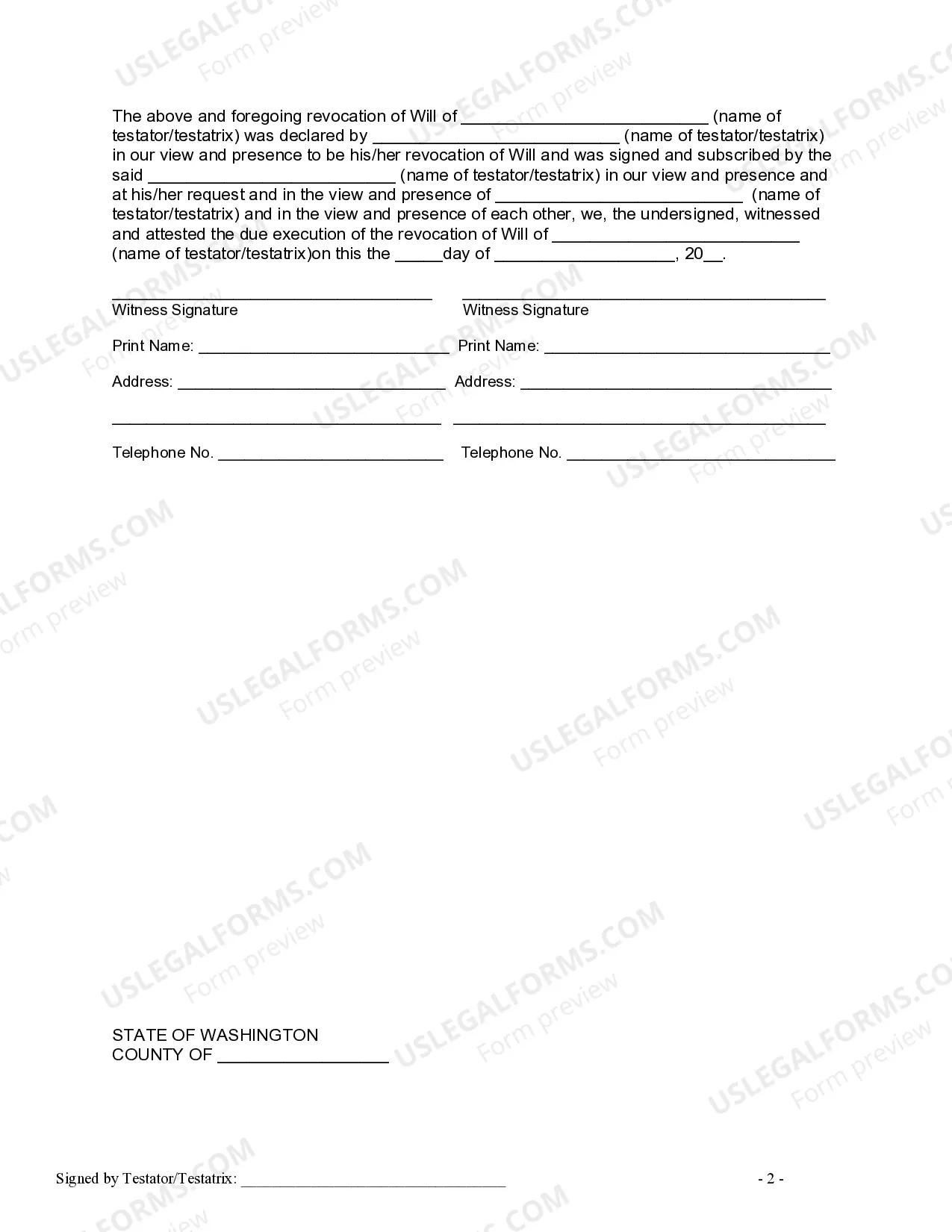
- Signatures of the testator/testatrix and witnesses to validate the document.
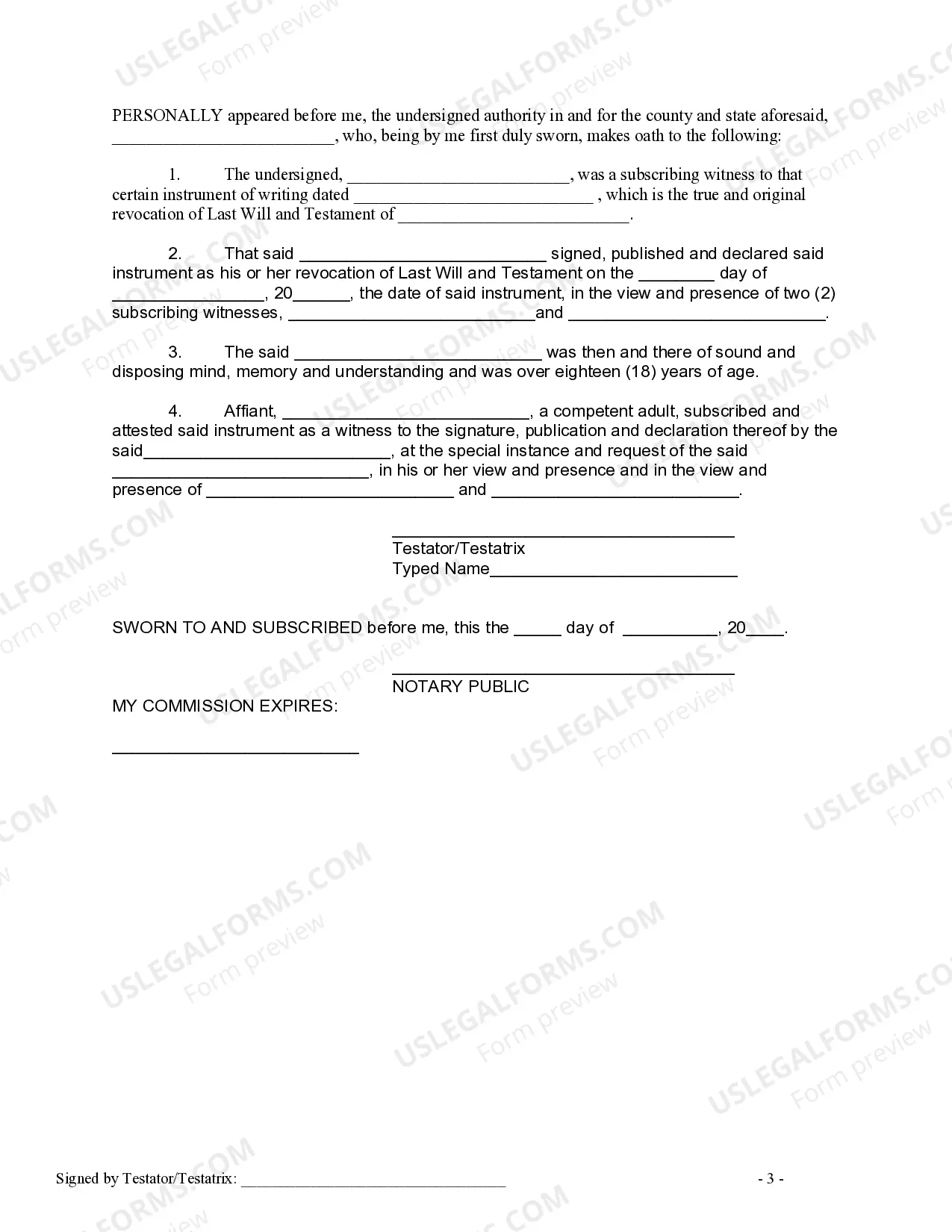
- Acknowledgment section for notarization, if applicable.
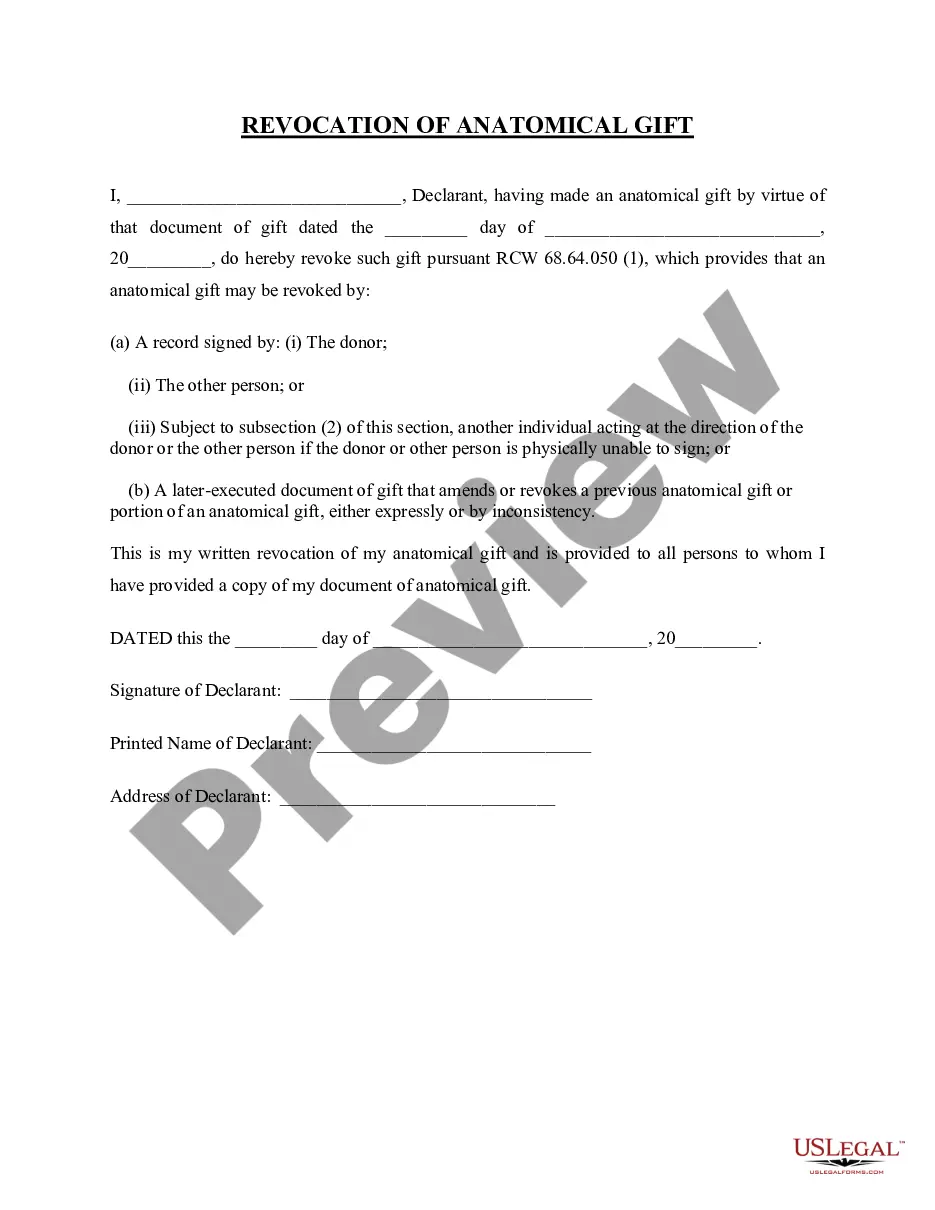
Situations where this form applies
You should use this form when you want to clearly revoke a previous will to ensure that it is no longer considered valid. This can arise in various situations, such as after significant life changes (like marriage, divorce, or the birth of a child) or if your estate planning goals have changed. This form serves to eliminate confusion for your heirs and ensures your current wishes are documented and respected.
Intended users of this form
This form is intended for individuals who have previously created a will and wish to revoke it in a clear and formal manner. It can be used by:
- Individuals needing to update their estate plan.
- Those experiencing changes in personal circumstances affecting their beneficiaries.
- Anyone wishing to ensure their estate is managed according to their latest wishes.
Steps to complete this form
- Enter your full name and the date of the revocation.
- Clearly state that you revoke all prior wills and list any specific wills being revoked.
- Provide your address and the county in which you reside.
- Sign the document in the presence of at least two witnesses.
- Ensure that the witnesses sign the document, including their printed names and addresses.
- If required, have the document notarized for additional legality.
Notarization guidance
This form does not typically require notarization unless specified by local law. However, notarization can enhance the documentâs validity, providing additional proof of your intent and the authenticity of the signatures.
Get your form ready online
Our built-in tools help you complete, sign, share, and store your documents in one place.
Make edits, fill in missing information, and update formatting in US Legal Forms—just like you would in MS Word.
Download a copy, print it, send it by email, or mail it via USPS—whatever works best for your next step.
Sign and collect signatures with our SignNow integration. Send to multiple recipients, set reminders, and more. Go Premium to unlock E-Sign.
If this form requires notarization, complete it online through a secure video call—no need to meet a notary in person or wait for an appointment.
We protect your documents and personal data by following strict security and privacy standards.

Make edits, fill in missing information, and update formatting in US Legal Forms—just like you would in MS Word.

Download a copy, print it, send it by email, or mail it via USPS—whatever works best for your next step.

Sign and collect signatures with our SignNow integration. Send to multiple recipients, set reminders, and more. Go Premium to unlock E-Sign.

If this form requires notarization, complete it online through a secure video call—no need to meet a notary in person or wait for an appointment.

We protect your documents and personal data by following strict security and privacy standards.
Avoid these common issues
- Failing to have the form signed in the presence of witnesses.
- Not including specific details about previously revoked wills.
- Omitting the notarization if mandated by local law.
- Inadvertently revoking future wills by misunderstanding the language used in the form.
Benefits of using this form online
- Convenience of downloading the form immediately after completing your purchase.
- Ability to customize the document to fit your personal situation.
- Access to professionally drafted templates that comply with legal standards.
- Time-saving by avoiding lengthy legal consultations for basic revocation needs.
Legal use & context
- This form is legally recognized as a formal way to revoke a previous will.
- Failure to properly execute this document could lead to confusion during probate.
- The document must be completed following state-specific requirements for it to be enforceable.
Summary of main points
- The Written Revocation of Will clearly invalidates any prior wills.
- Proper execution is critical for the document to hold up in court.
- Utilizing this form can prevent future disputes among heirs regarding estate distribution.
Looking for another form?
Form popularity
FAQ
For an estate to be administered in accordance with the terms of the final Will of the deceased, the original Will is sent to the Probate Registry who will then issue a Grant of Probate to the executors.In all these cases you can apply to Probate to prove a Copy Will.
Get legal advice. Make an application to administer an estate. Get a copy of a will from the High Court. Get a copy of a will from the deceased person's lawyer.
Show evidence the testator didn't revoke or intend to destroy the will; Prove the contents of the will; Prove the testator created and executed a will that is valid and met state law requirements; and/or. Prove the will can't be found after a thorough search.
Generally, you can revoke a will by (1) destroying the old will, (2) creating a new will or (3) making changes to an existing will. In some circumstances, simply giving away all or your property and assets before you die can have the effect of revoking a will (subject to estate tax penalties).
To be valid the document must: be referred to in the will; be in the handwriting of, or signed by, the testator; and describe the items and their recipients with reasonable certainty. Changes can also be addressed by executing a document called a codicil.
If an original will cannot be found, a copy can be admitted to probate under certain circumstances.If the court finds by clear and convincing evidence that the will copy is a replica of the testator's original will, the court will admit the will copy and the estate will be probated.
Alberta Wills can be changed at any time simply by visiting your lawyer.In some situations, wills are automatically revoked, such as when you get married. Consider making an entirely new will when you need to make major changes and using a codicil for small changes.
When a person (the 'Testator') makes a valid Will, section 20 of the Wills Act 1837 states that it can only be revoked in three ways: by the Testator making another Will or codicil; by them signing a revocation provision (a professionally drafted Will will always include this provision) or by destruction.
The most likely person to hold the document is the Executor selected in the Will. For example, a client names her adult daughter as the Executor of her Will. The client gives her adult daughter the original Will and tells her that she will need to bring this to the probate court upon her death.