Washington Last Will and Testament for a Married Person with No Children
Overview of this form
This Last Will and Testament is designed specifically for a married person without children. It allows you to appoint an executor, designate beneficiaries, and include provisions for your spouse, ensuring your assets are distributed according to your wishes after your death. Unlike simpler wills, this document takes into account the complexities that can arise from being married, providing clarity and direction in estate management.
Main sections of this form
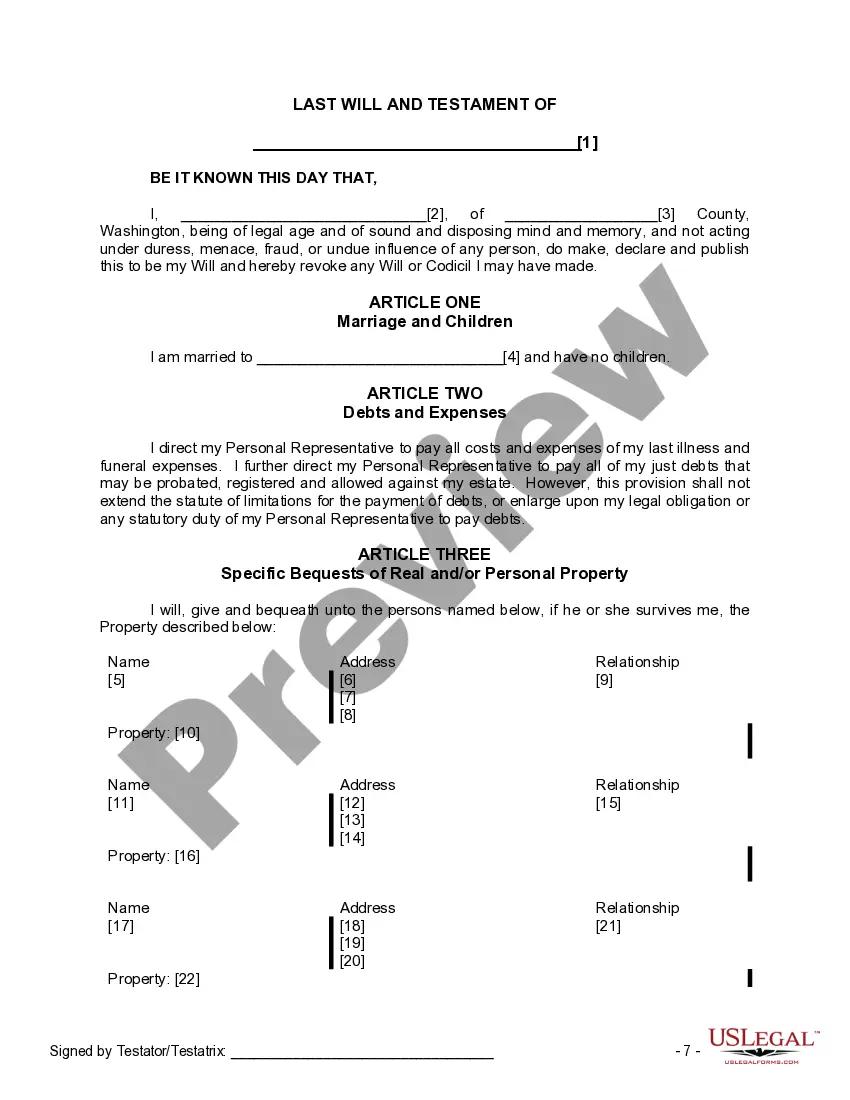
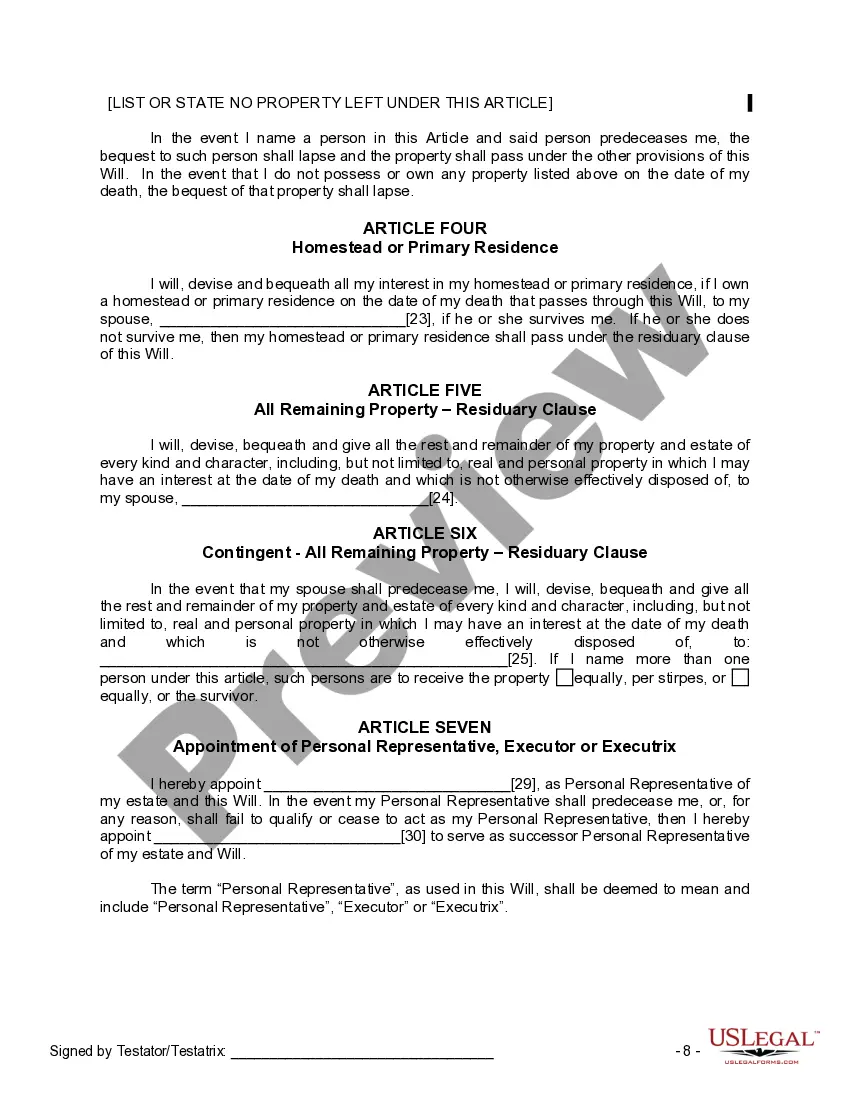
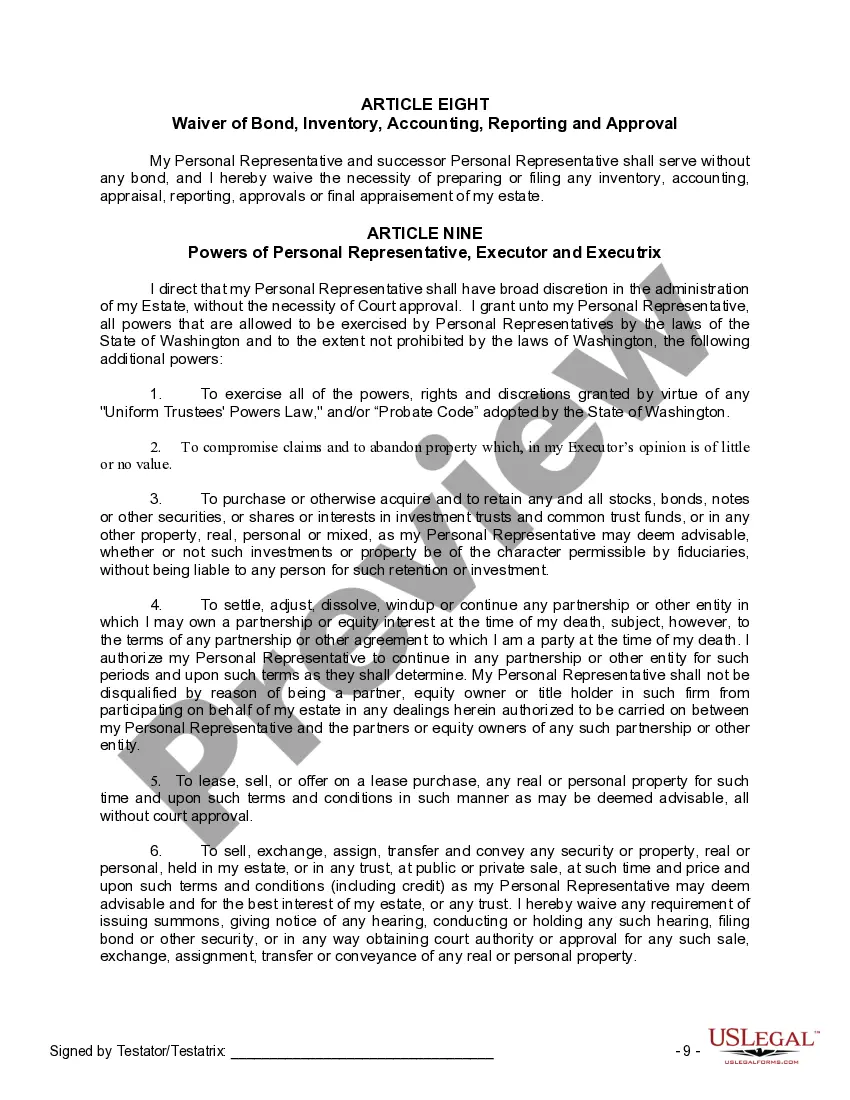
- Appointment of a personal representative (executor) to manage your estate.
- Specification of your spouse as the primary beneficiary.
- Provisions for specific bequests of property.
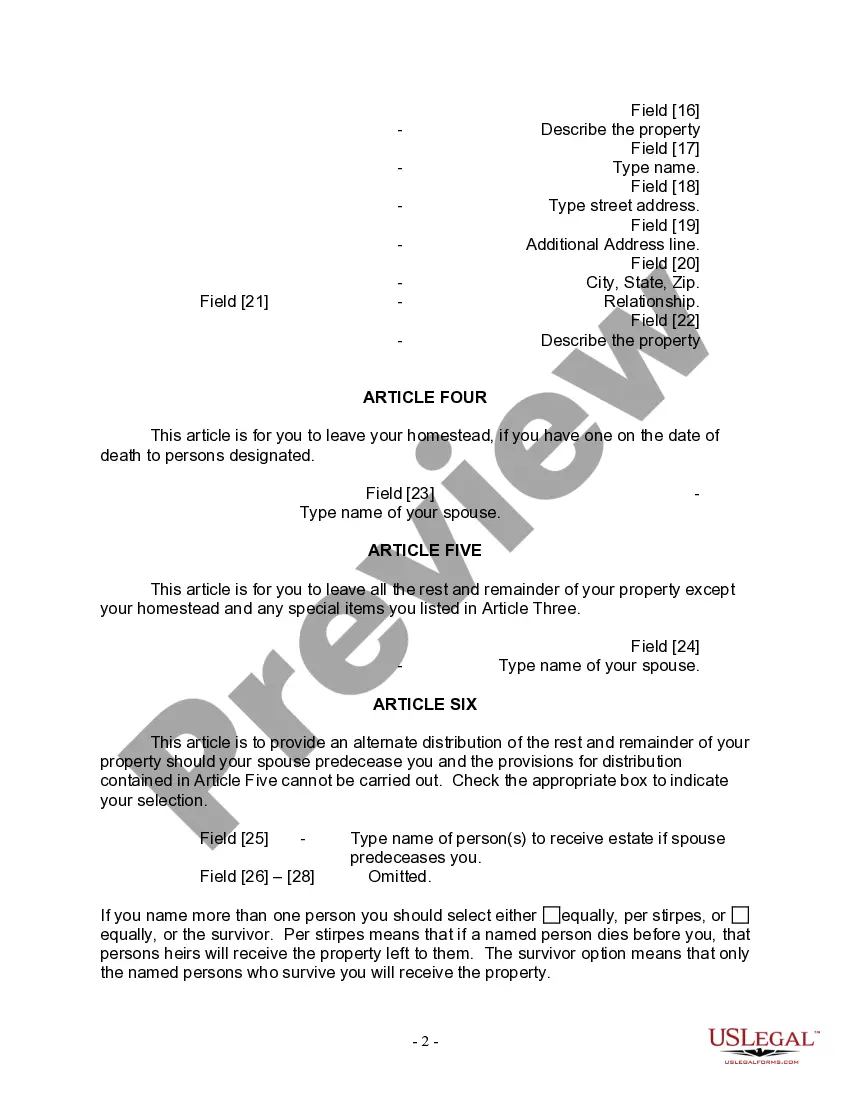
- Instructions for the disposition of your homestead or primary residence.
- Contingent provisions in case your spouse predeceases you.
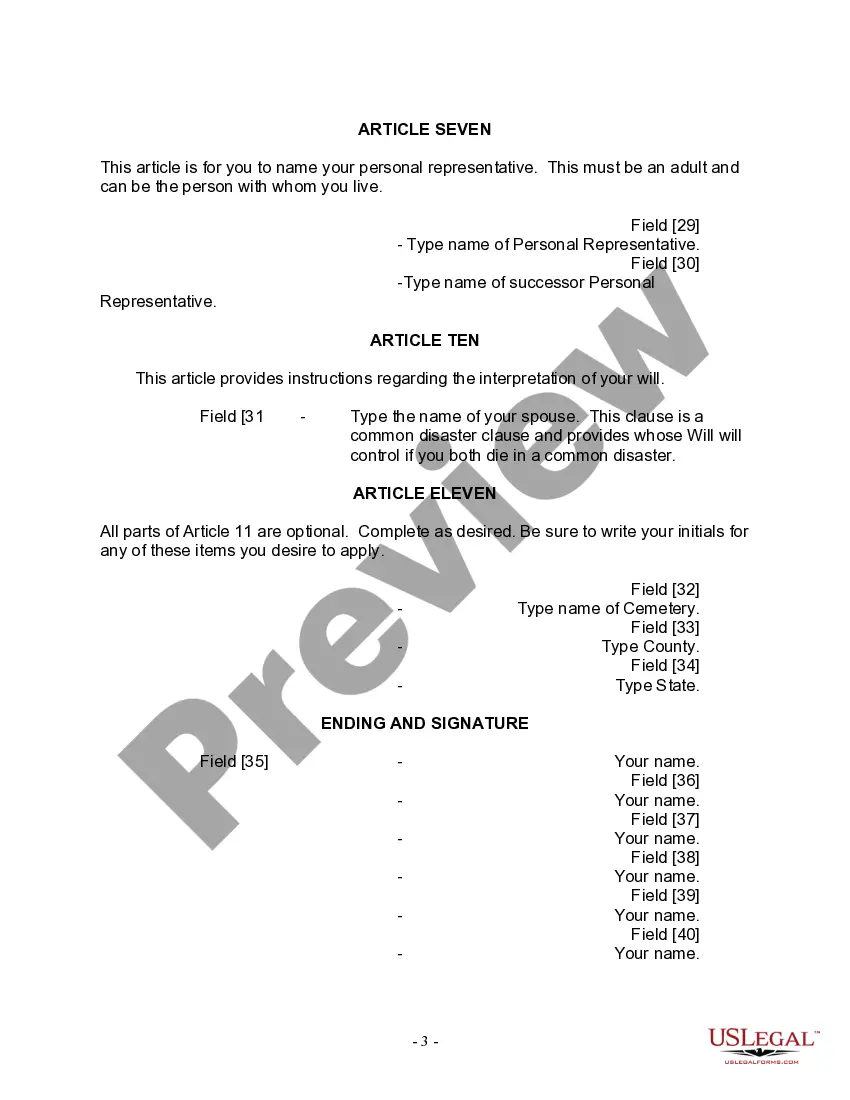
- Optional clauses regarding funeral wishes and personal preferences.





When to use this form
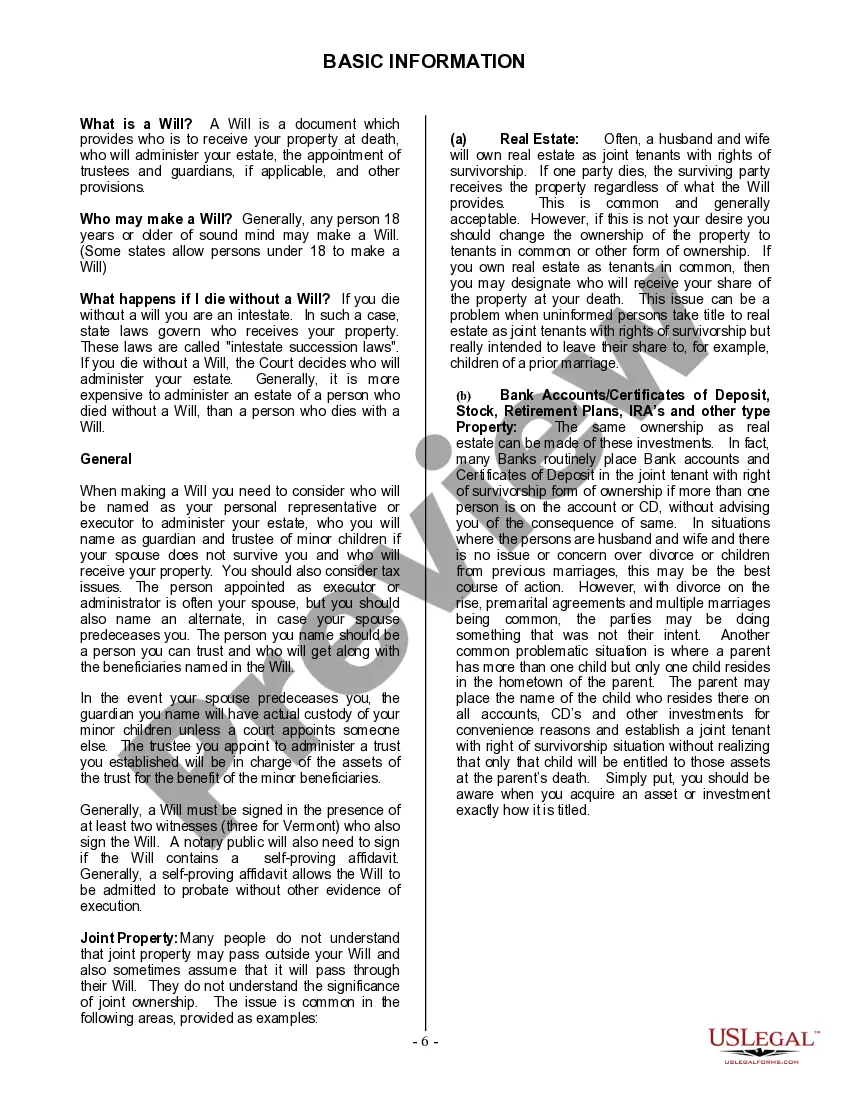
This form is necessary when a married individual without children wishes to establish clear directives for the distribution of their estate upon death. It is particularly useful if you want to ensure that your spouse is taken care of and that there are no disputes regarding the distribution of your assets. You may need this form if you have specific property you want to leave to your spouse or others.
Intended users of this form
This Last Will and Testament should be used by:
- Married individuals without children.
- Those looking to specify the distribution of assets posthumously.
- Anyone wishing to appoint a trusted executor for their estate management.
How to prepare this document
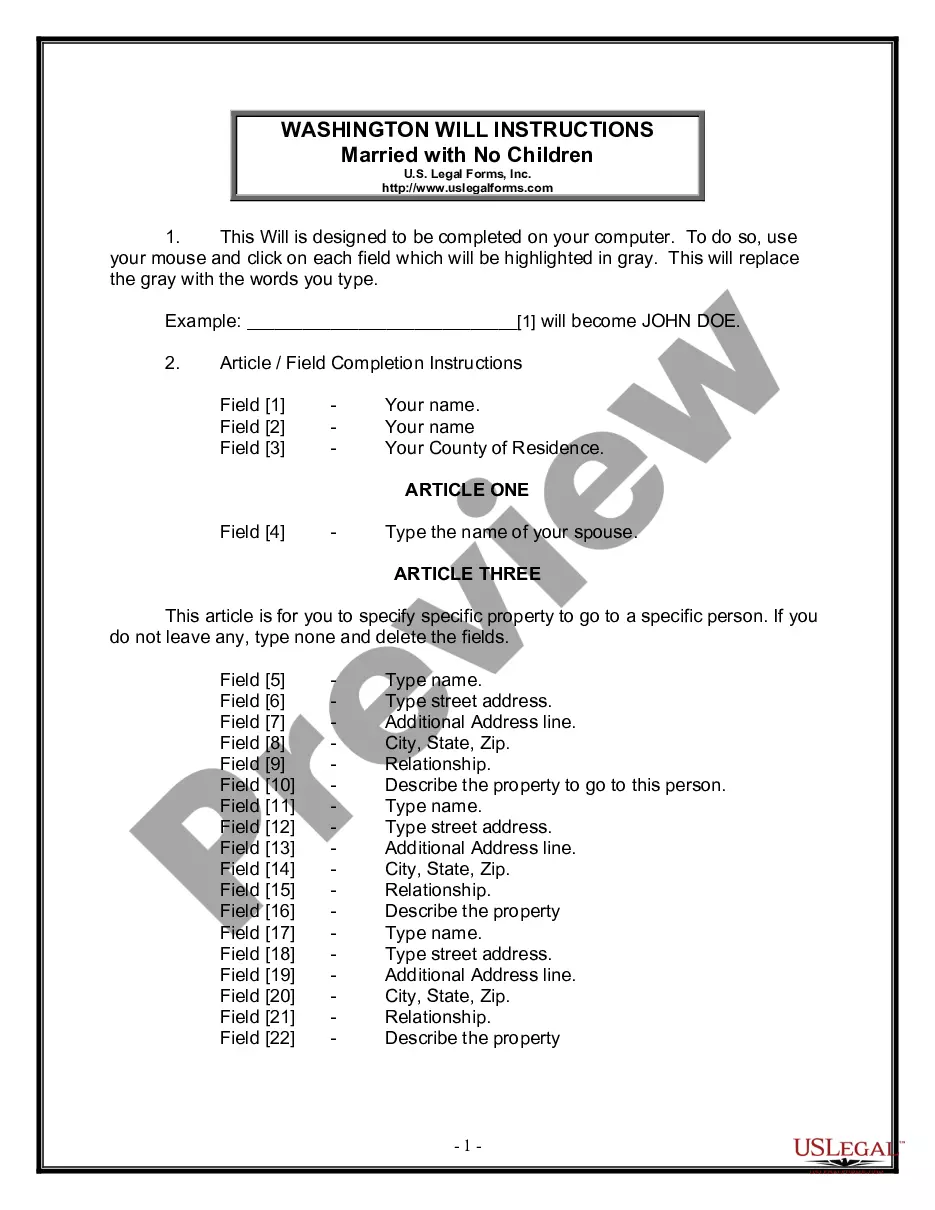
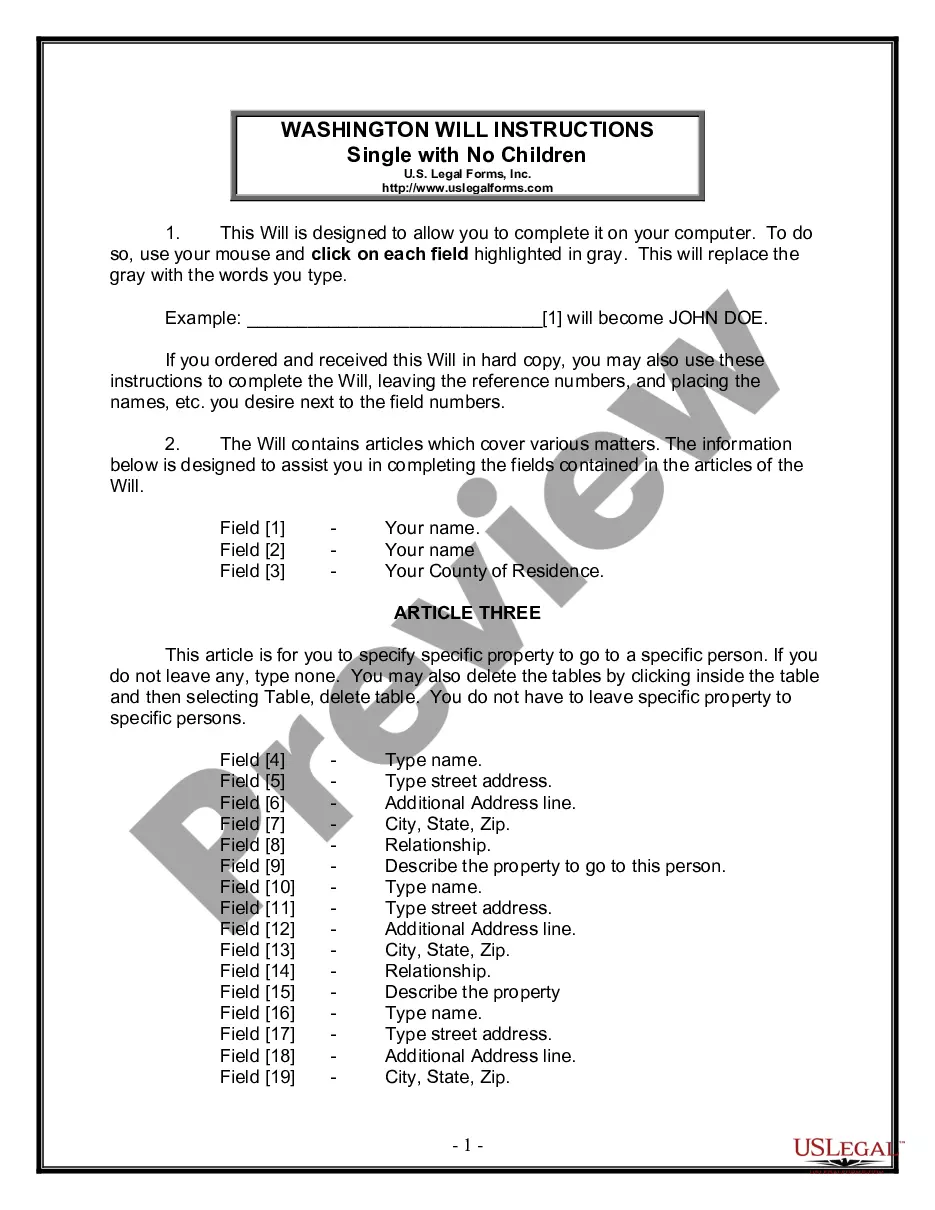
- Identify yourself and provide your county of residence.
- Designate your spouse as the primary beneficiary.
- List any specific property you wish to bequeath, or indicate 'none.'
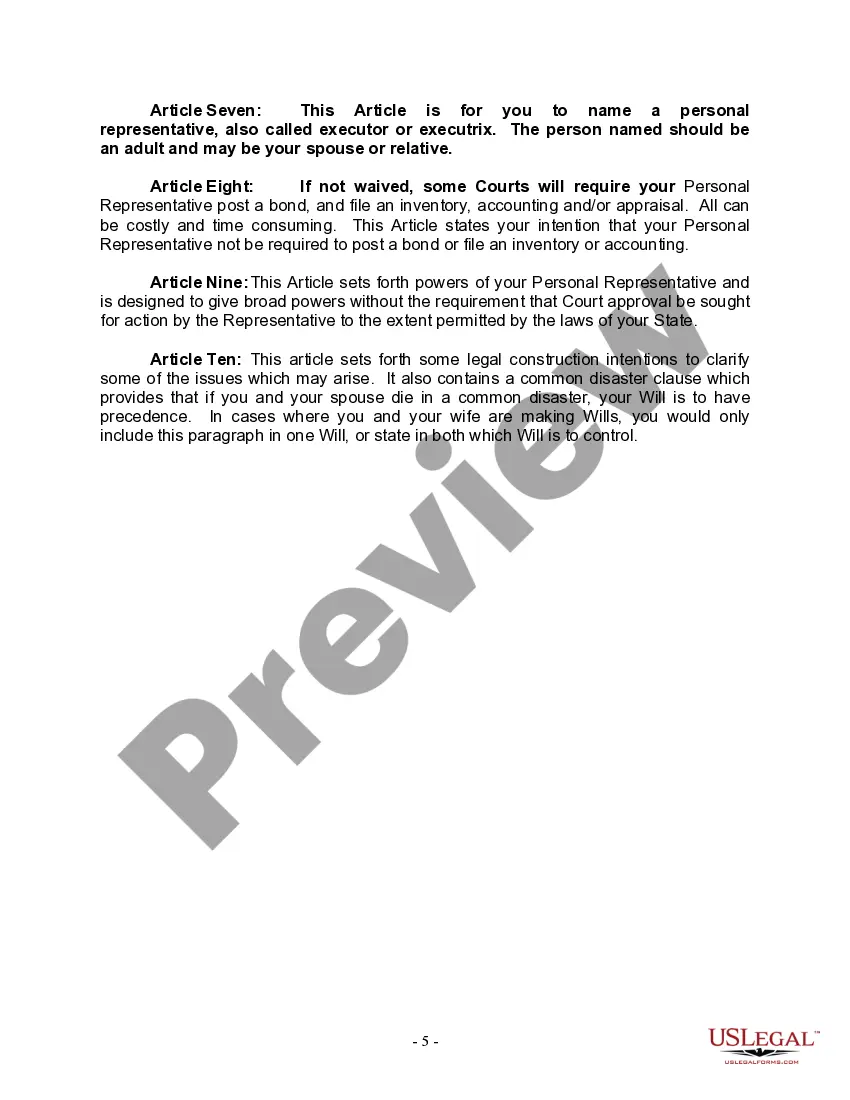
- Appoint a personal representative to oversee your estate.
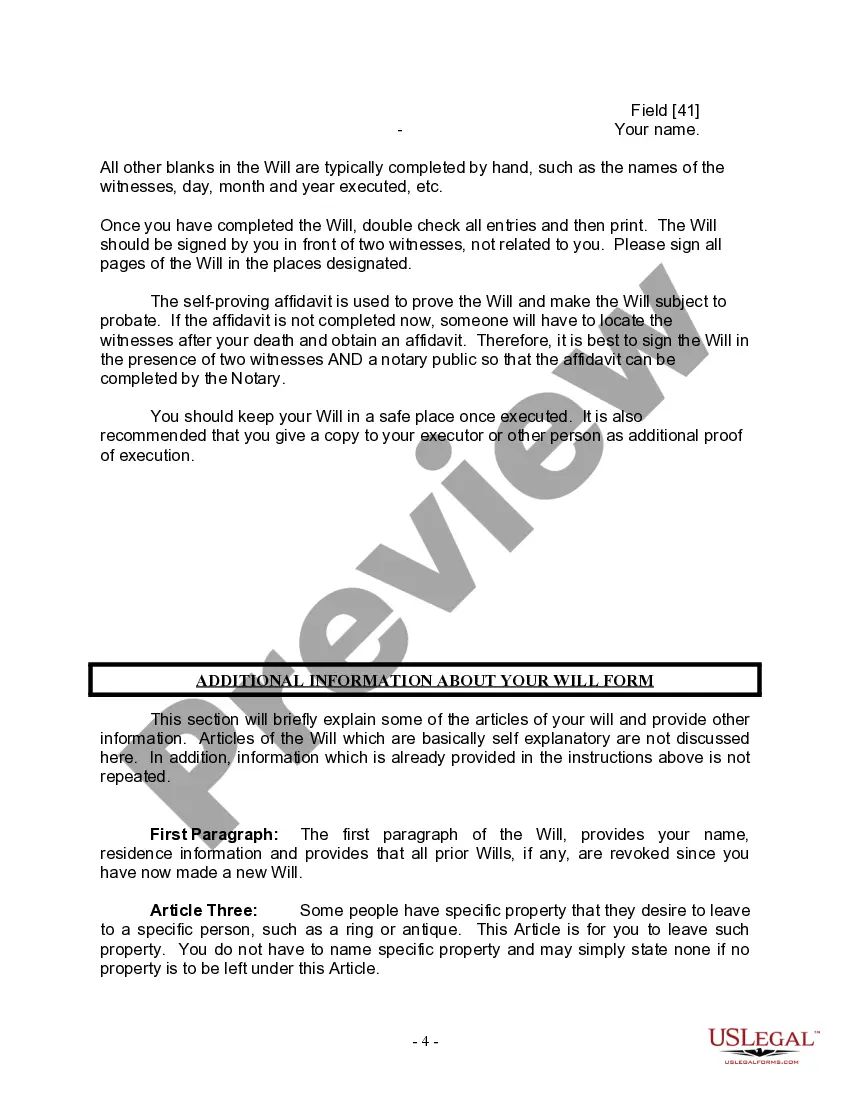
- Ensure the will is signed in front of two witnesses and, if required, a notary public.
Does this form need to be notarized?
Yes, this form must be notarized to be legally valid. This ensures that the document can be submitted for probate without further witness testimony. US Legal Forms offers integrated online notarization services, allowing you to complete this process securely and conveniently.
Get your form ready online
Our built-in tools help you complete, sign, share, and store your documents in one place.
Make edits, fill in missing information, and update formatting in US Legal Forms—just like you would in MS Word.
Download a copy, print it, send it by email, or mail it via USPS—whatever works best for your next step.
Sign and collect signatures with our SignNow integration. Send to multiple recipients, set reminders, and more. Go Premium to unlock E-Sign.
If this form requires notarization, complete it online through a secure video call—no need to meet a notary in person or wait for an appointment.
We protect your documents and personal data by following strict security and privacy standards.

Make edits, fill in missing information, and update formatting in US Legal Forms—just like you would in MS Word.

Download a copy, print it, send it by email, or mail it via USPS—whatever works best for your next step.

Sign and collect signatures with our SignNow integration. Send to multiple recipients, set reminders, and more. Go Premium to unlock E-Sign.

If this form requires notarization, complete it online through a secure video call—no need to meet a notary in person or wait for an appointment.

We protect your documents and personal data by following strict security and privacy standards.
Typical mistakes to avoid
- Failing to sign the will in front of the required witnesses.
- Not appointing a successor personal representative.
- Leaving out important details in the specific bequests section.
- Not updating the will after significant life changes.
Benefits of completing this form online
- Convenient access to legal documents at any time.
- Editable format allowing for personalized details without needing legal assistance.
- Cost-effective solution for drafting essential legal documents.
Looking for another form?
Form popularity
FAQ
As long as it was properly signed and witnessed by two adult independent witnesses who are present at the time you sign your will, it should be legally binding.Using the wrong wording could mean that your instructions aren't followed, or even that your will isn't valid.
At a minimum, the document itself must be: In writing; Signed by the testator (or by someone else at the testator's direction and in the testator's presence) in the presence of two competent witnesses; AND.
No, in Washington, you do not need to notarize your will to make it legal. However, Washington allows you to make your will "self-proving" and you'll need to go to a notary if you want to do that. A self-proving will speeds up probate because the court can accept the will without contacting the witnesses who signed it.
It must be in writing. Generally, of course, wills are composed on a computer and printed out. The person who made it must have signed and dated it. A will must be signed and dated by the person who made it. Two adult witnesses must have signed it. Witnesses are crucial.
In the state of Washington, handwritten wills may be accepted for probate, provided the handwritten will meets all other requirements under Washington law.
Washington doesn't recognize holographic, or handwritten Wills, signed only by the testator. A valid Will in Washington needs to be signed by the testator in the presence of two disinterested witnesses who also sign. The same if true of any changes that are later made to a Will.
In order for a will to be valid, it must be: made by a person who is 18 years old or over and. made voluntarily and without pressure from any other person and.signed by the two witnesses, in the presence of the person making the will, after it has been signed.
No, in Washington, you do not need to notarize your will to make it legal. However, Washington allows you to make your will "self-proving" and you'll need to go to a notary if you want to do that. A self-proving will speeds up probate because the court can accept the will without contacting the witnesses who signed it.