Washington Warranty Deed from Husband and Wife to an Individual
What this document covers
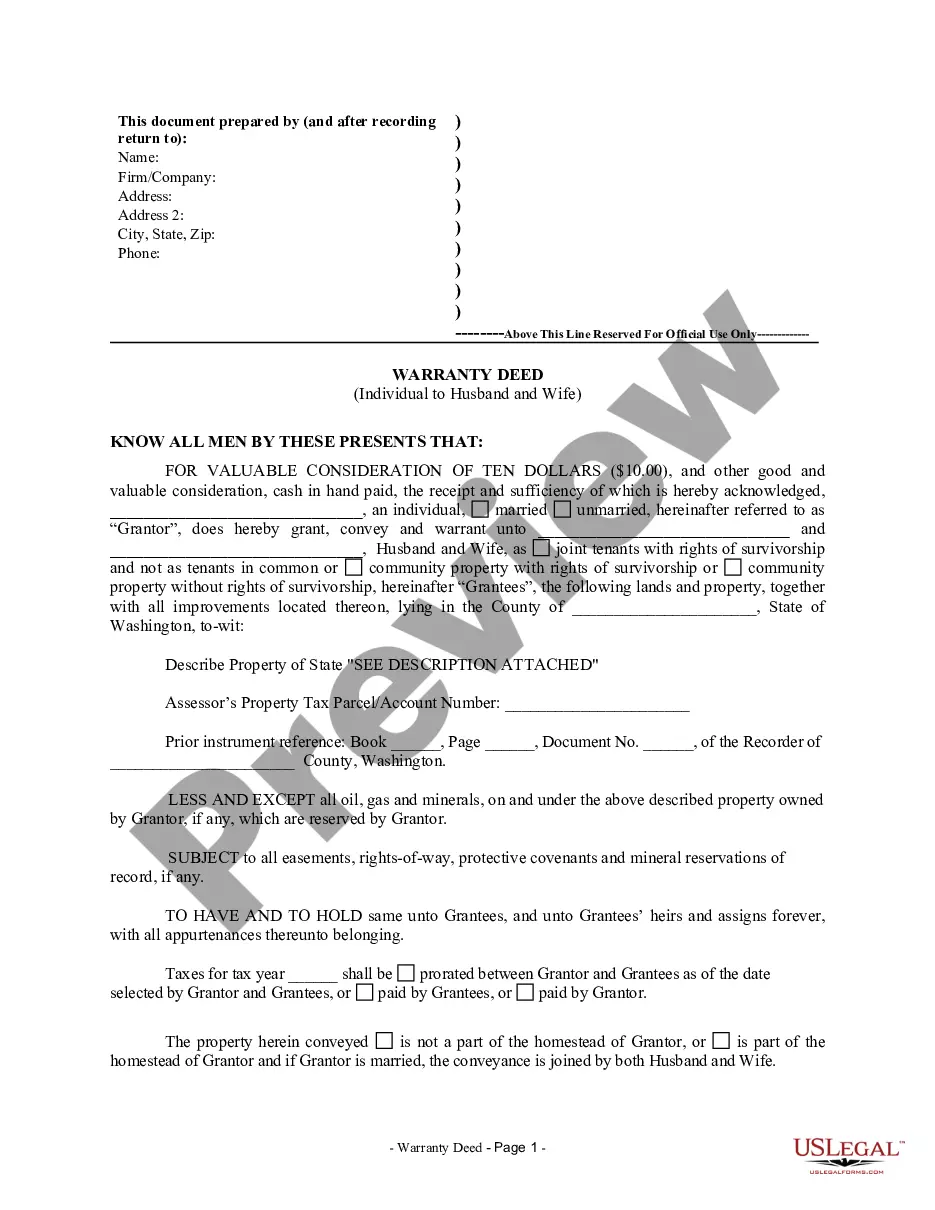
The Warranty Deed from Husband and Wife to an Individual is a legal document used to transfer property ownership from a married couple to a single individual. This form provides a warranty that the couple has clear title to the property and assures the grantee that the title is free from any encumbrances, except as noted. This deed is specifically meant for transfers between a husband and wife as grantors to an individual as grantee, differentiating it from other forms that may involve different parties or circumstances.
Form components explained
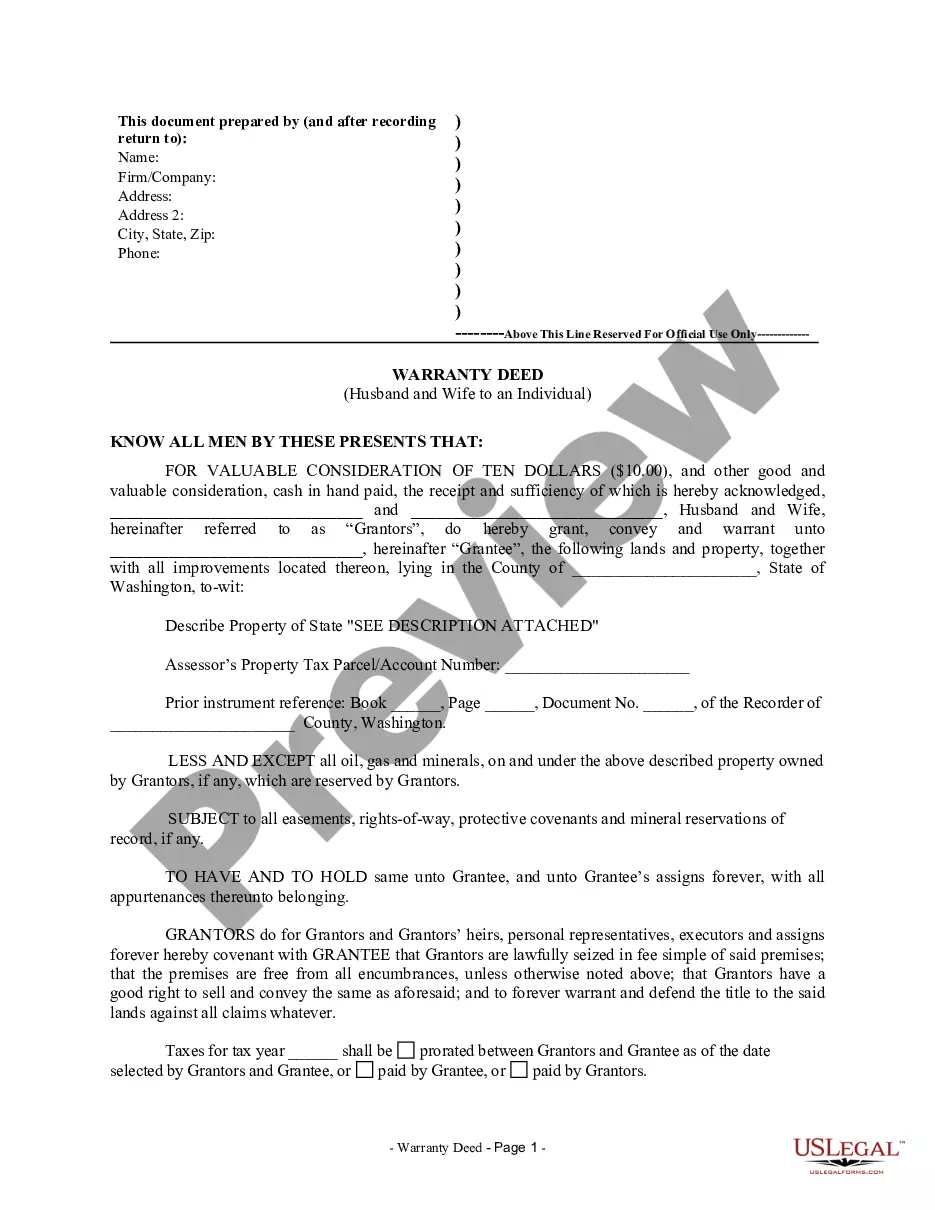
- Description of the property being transferred.
- Assessment details, including tax parcel or account number.
- Prior instrument reference for tracking the original ownership.
- Clauses reserving oil, gas, and mineral rights, if applicable.
- Warranties regarding the title and any encumbrances.
- Provisions for prorating taxes between the grantors and grantee.
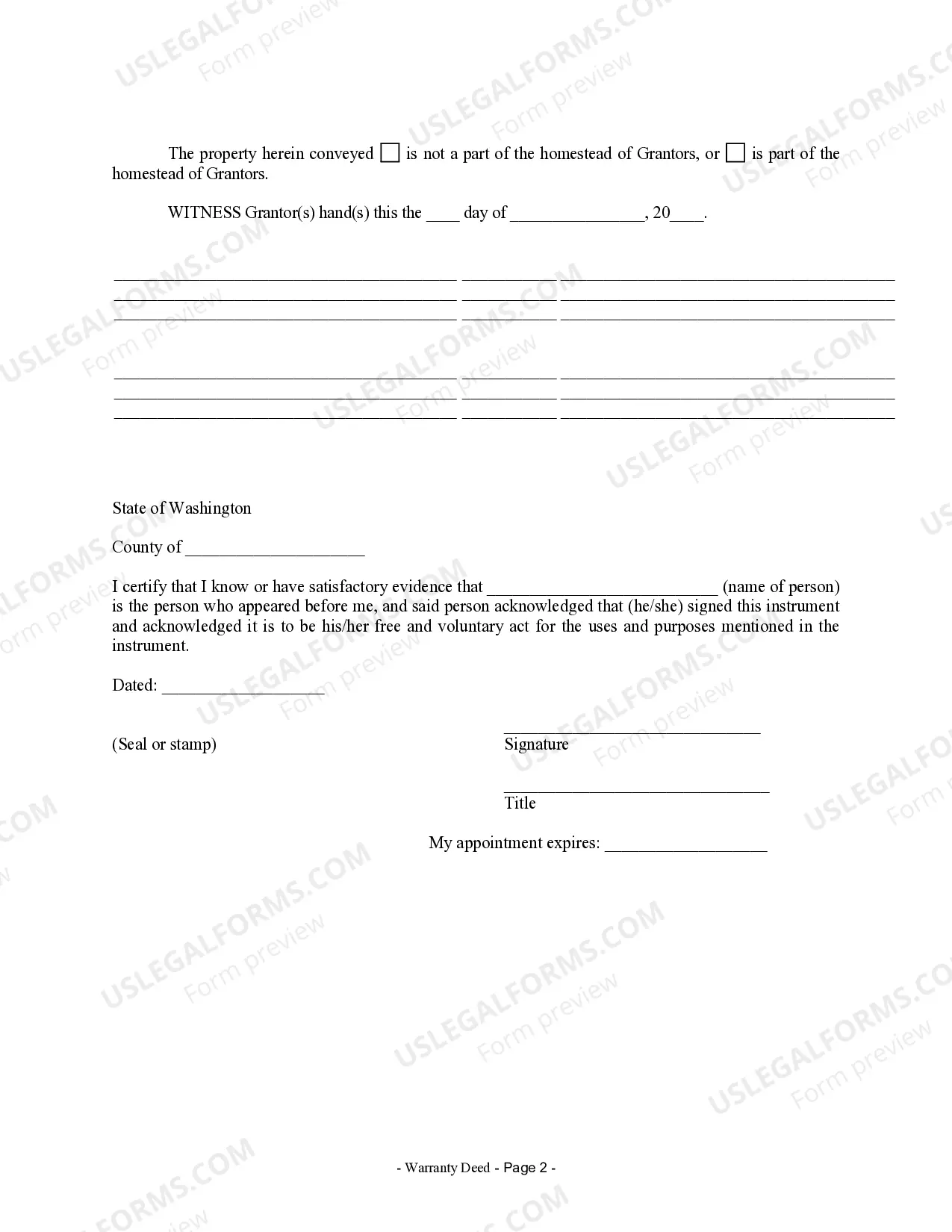
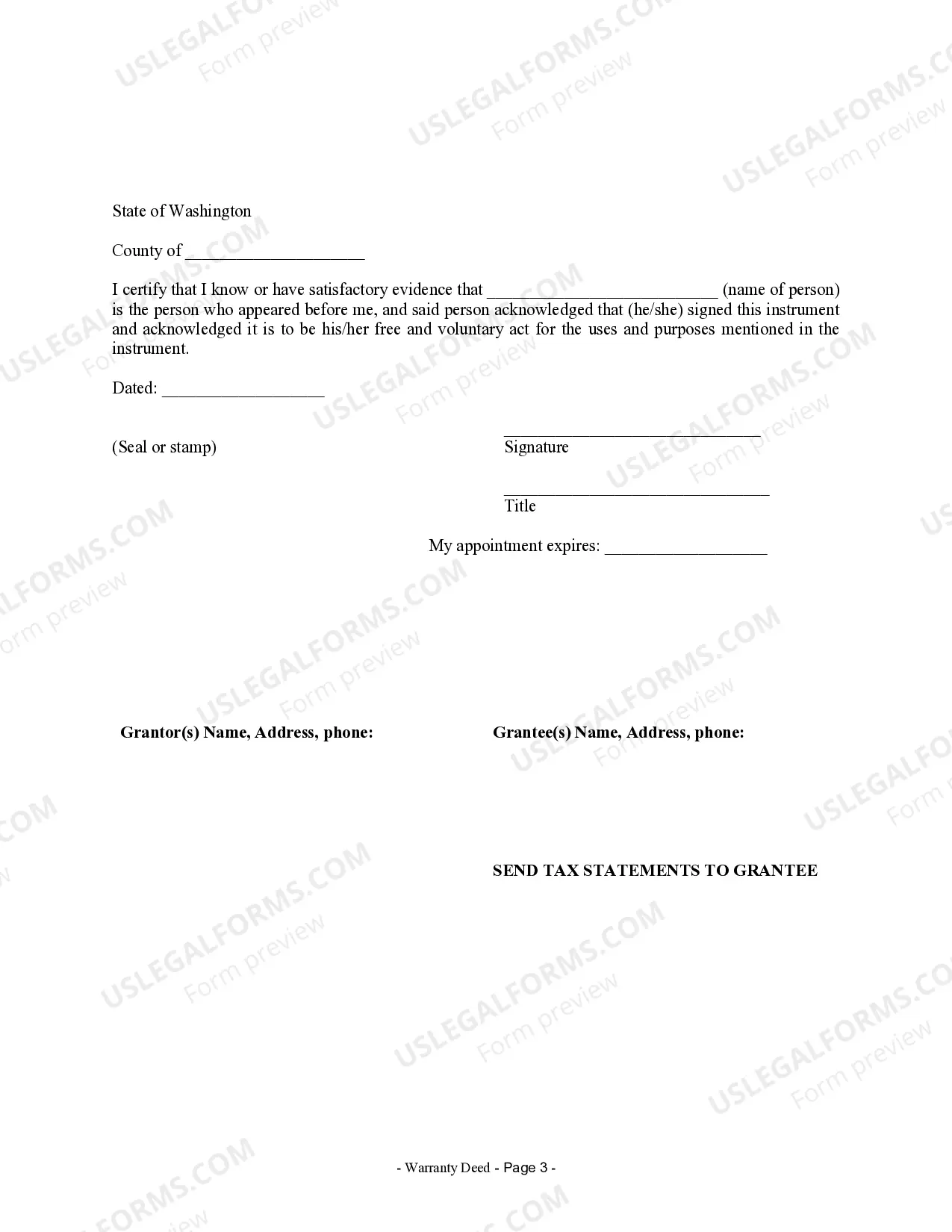
- Signature and notary acknowledgment sections.




Situations where this form applies
This form should be used when a married couple wishes to transfer property to an individual. It is commonly utilized during events such as divorce settlements, gift transfers, or estate planning, where the couple wants to clearly define the ownership and responsibilities associated with the property undergoing the transfer.
Who can use this document
This form is intended for:
- Married couples looking to transfer property to an individual.
- Individuals involved in real estate transactions that require a clear title transfer.
- Attorneys or legal representatives managing property transfers for clients.
How to prepare this document
- Identify the full names of the grantors (husband and wife).
- Provide the full name of the grantee (individual receiving the property).
- Clearly describe the property being transferred, including any necessary legal descriptions.
- Indicate any reservations, such as rights to minerals or existing easements.
- Complete the tax proration and other financial obligations as specified in the form.
- Sign the document in the presence of a notary public for legal validation.
Is notarization required?
This document requires notarization to meet legal standards. US Legal Forms provides secure online notarization powered by Notarize, allowing you to complete the process through a verified video call, available 24/7.
Get your form ready online
Our built-in tools help you complete, sign, share, and store your documents in one place.
Make edits, fill in missing information, and update formatting in US Legal Forms—just like you would in MS Word.
Download a copy, print it, send it by email, or mail it via USPS—whatever works best for your next step.
Sign and collect signatures with our SignNow integration. Send to multiple recipients, set reminders, and more. Go Premium to unlock E-Sign.
If this form requires notarization, complete it online through a secure video call—no need to meet a notary in person or wait for an appointment.
We protect your documents and personal data by following strict security and privacy standards.

Make edits, fill in missing information, and update formatting in US Legal Forms—just like you would in MS Word.

Download a copy, print it, send it by email, or mail it via USPS—whatever works best for your next step.

Sign and collect signatures with our SignNow integration. Send to multiple recipients, set reminders, and more. Go Premium to unlock E-Sign.

If this form requires notarization, complete it online through a secure video call—no need to meet a notary in person or wait for an appointment.

We protect your documents and personal data by following strict security and privacy standards.
Mistakes to watch out for
- Failing to accurately describe the property, leading to potential disputes.
- Not reserving necessary rights, such as mineral rights, that may be critical.
- Omitting signatures or date from the grantors, which can invalidate the deed.
- Forgetting to notarize the document, which is required for legal acceptance.
Benefits of using this form online
- Convenient access to professionally drafted templates from licensed attorneys.
- Easy to fill out with clear instructions for each section.
- Ability to download and print forms for immediate use.
- Online resources available to guide users through the completion process.
Looking for another form?

Form popularity
FAQ
California married couples generally have three options to take title to their community (vs separate) property real estate: community property, joint tenancy or Community Property with Right of Survivorship. The latter coming into play in California July of 2001.
In California, all property bought during the marriage with income that was earned during the marriage is deemed "community property." The law implies that both spouses own this property equally, regardless of which name is on the title deed.
A warranty deed guarantees that: The grantor is the rightful owner of the property and has the legal right to transfer the title.The title would withstand third-party claims to ownership of the property. The grantor will do anything to ensure the grantee's title to the property.
Contact all owners of the property. All vested owners currently on the title must sign a quitclaim deed. In order to share ownership with another person, you must get all other vested owners to consent and sign. Hire a Washington notary public.
' Spouses typically acquire title as tenants by the entireties, which only applies to spouses. Sometimes you will see a couple who acquired the property before marriage. In some states, a pre-marital joint tenancy automatically becomes tenants by the entireties upon marriage.
Since New Mexico is a Community Property state, a Sole and Separate agreement is used when a married person wishes to acquire title as their sole and separate property.Essentially, it allows a person to purchase a property independent of their spouse.
The most common of these methods of title holding are: Joint tenancy. Tenancy in common. Tenants by entirety.
A Married Man/Woman, as His/Her Sole and Separate Property: When a married man or woman wishes to acquire title as their sole and separate property, the spouse must consent and relinquish all right, title and interest in the property by deed or other written agreement.
In estate law, joint tenancy is a special form of ownership by two or more persons of the same property. The individuals, who are called joint tenants, share equal ownership of the property and have the equal, undivided right to keep or dispose of the property. Joint tenancy creates a Right of Survivorship.