Vermont Warranty Deed from two Individuals to Corporation
What this document covers
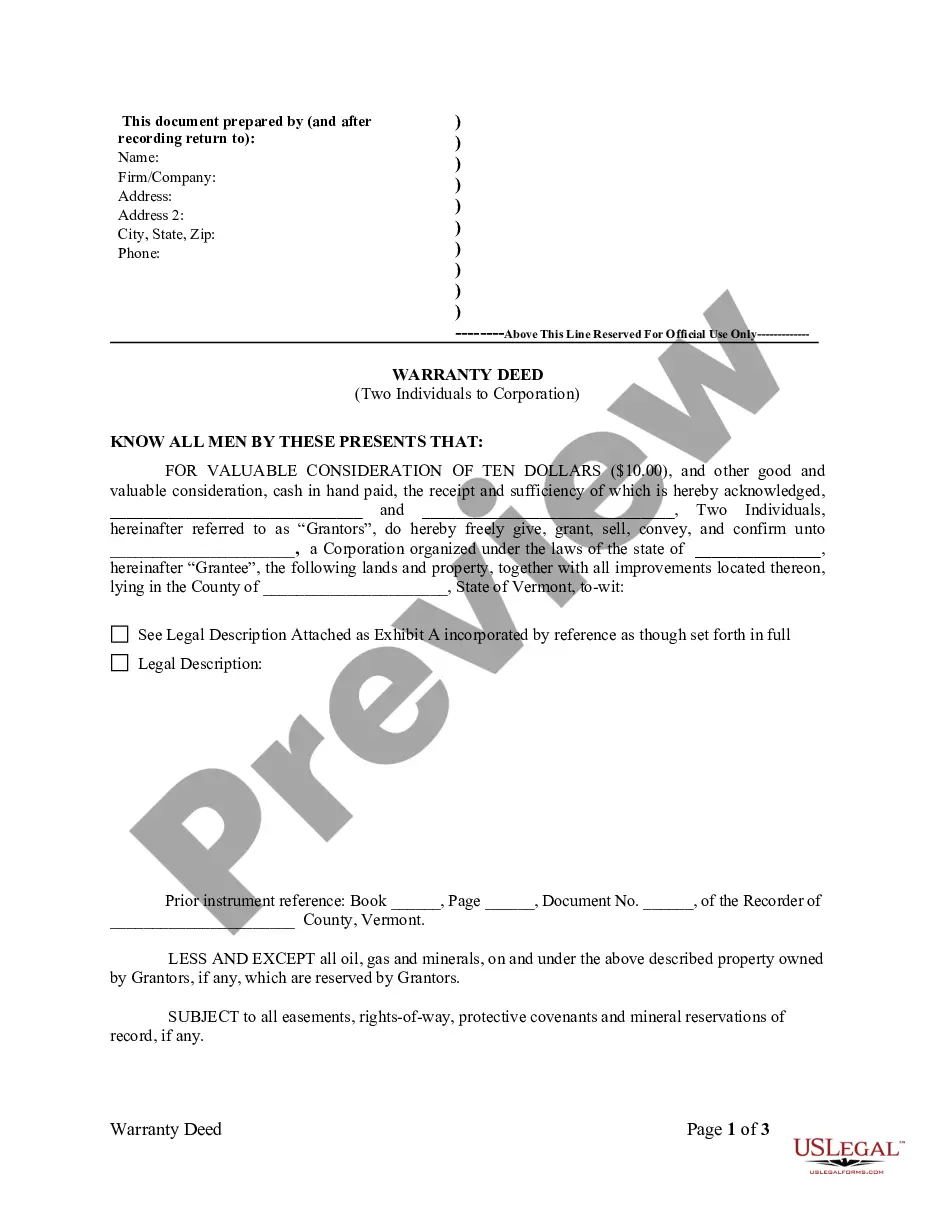
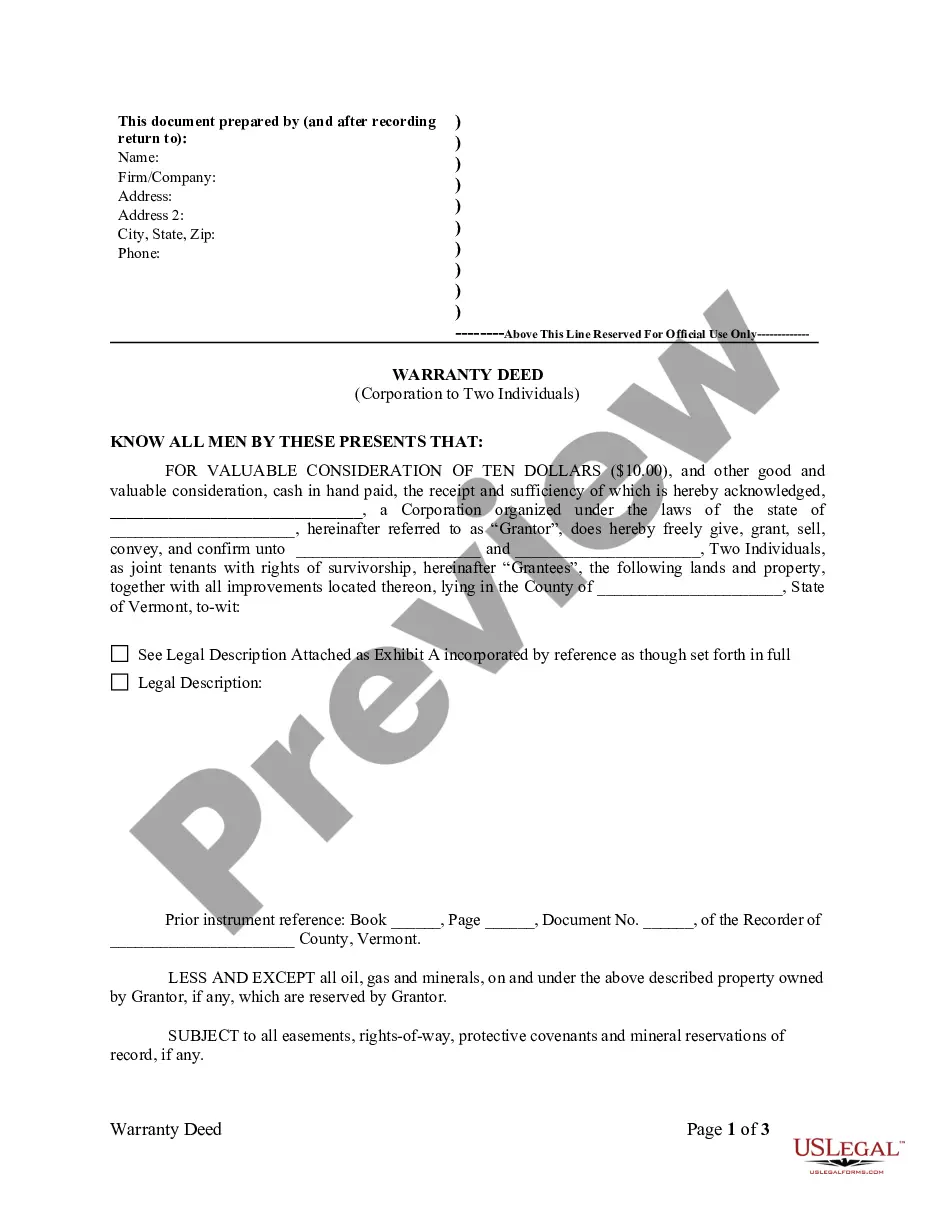
This Warranty Deed from two Individuals to Corporation is a legal document used to transfer ownership of real property from two Grantors, who are individual persons, to a Grantee, which is a corporation. This type of deed ensures that the title to the property is conveyed with certain assurances about its ownership and condition. Unlike other deeds, such as quitclaim deeds, a warranty deed provides a guarantee that the Grantors hold clear title to the property and have the right to sell it.
Key parts of this document
- Identification of the Grantors (two individuals) and Grantee (corporation).
- Legal description of the property, incorporating Exhibit A.
- Reservation of oil, gas, and mineral rights, if any exist beneath the property.
- Warranties ensuring the property is free from encumbrances, subject to stated exceptions.
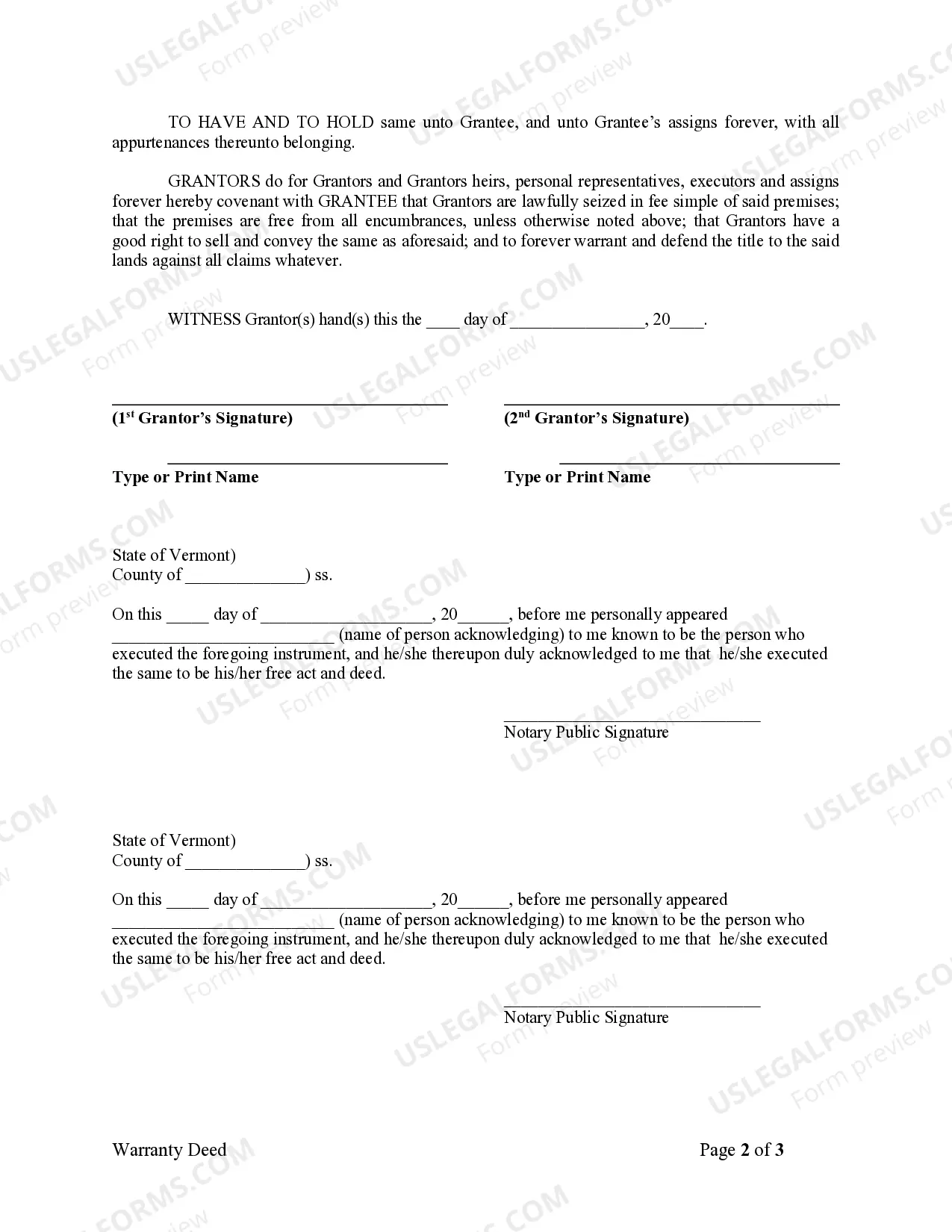
- Signatures of both Grantors and certification by a Notary Public.



Situations where this form applies
This warranty deed should be utilized when two individuals wish to transfer property ownership to a corporation. Common scenarios include individuals selling personal real estate to their business entity or transferring investment property into a corporate structure for asset protection and liability purposes.
Who this form is for
- Individuals looking to convey property they own to a corporation.
- Business owners who need to formalize property ownership within their corporate entity.
- Real estate investors transferring qualified property into a corporate structure.
- Property owners seeking to legally protect their assets from personal liability by holding property in a corporation.
Steps to complete this form
- Identify the parties: Clearly state the names of the two Grantors and the corporation as the Grantee.
- Specify the property: Include a detailed legal description of the property, referencing Exhibit A.
- State any reservations: Note any oil, gas, or mineral rights that are retained by the Grantors.
- Enter the date: Complete the date field when the deed is being executed.
- Sign the form: Both Grantors must sign in the designated areas, followed by notarization.
Notarization requirements for this form
This document requires notarization to meet legal standards. US Legal Forms provides secure online notarization powered by Notarize, allowing you to complete the process through a verified video call, available 24/7.
Get your form ready online
Our built-in tools help you complete, sign, share, and store your documents in one place.
Make edits, fill in missing information, and update formatting in US Legal Forms—just like you would in MS Word.
Download a copy, print it, send it by email, or mail it via USPS—whatever works best for your next step.
Sign and collect signatures with our SignNow integration. Send to multiple recipients, set reminders, and more. Go Premium to unlock E-Sign.
If this form requires notarization, complete it online through a secure video call—no need to meet a notary in person or wait for an appointment.
We protect your documents and personal data by following strict security and privacy standards.

Make edits, fill in missing information, and update formatting in US Legal Forms—just like you would in MS Word.

Download a copy, print it, send it by email, or mail it via USPS—whatever works best for your next step.

Sign and collect signatures with our SignNow integration. Send to multiple recipients, set reminders, and more. Go Premium to unlock E-Sign.

If this form requires notarization, complete it online through a secure video call—no need to meet a notary in person or wait for an appointment.

We protect your documents and personal data by following strict security and privacy standards.
Common mistakes
- Failing to include a complete legal description of the property.
- Not specifying any retained mineral rights, which could lead to disputes.
- Both Grantors not signing the document or missing the notarization requirement.
- Not checking local laws regarding the validity of property transactions.
Benefits of completing this form online
- Convenient access to downloadable form templates, ready for completion.
- Editable content allows users to customize the document for their specific needs.
- Reliability of documents drafted by licensed attorneys, providing peace of mind.
Looking for another form?
Form popularity
FAQ
The original deed is returned to the owner of the property from the office of the recorder after proper entry. The office of the Recorder of Deeds maintains a set of indexes about each deed recorded, for an easy search. Almost all states have a grantor-grantee index including a reference to all documents recorded.
A statutory warranty deed is different from a warranty deed because it is a shorter form made available through your state's statutes and it may not outright list the promise that the title is guaranteed to be clear. Instead, because it is a statutory form, this guarantee is implied and is still legally enforceable.
A warranty deed, also known as a general warranty deed, is a legal real estate document between the seller (grantor) and the buyer (grantee). The deed protects the buyer by pledging that the seller holds clear title to the property and there are no encumbrances, outstanding liens, or mortgages against it.
The mortgage company usually prepares this deed as part of the loan package and delivers it to the title company for you to sign at closing. The title company is commonly the trustee to the deed and holds legal title to the property until the loan gets fully repaid.
Corporate warranty deeds offer the seller's guarantee to the buyer in regards to the validity of the chain of title. Generally, special warranty deeds only protect against problems occurring since the seller purchased the property.
To sign over property ownership to another person, you'll use one of two deeds: a quitclaim deed or a warranty deed.
Typically, the lender will provide you with a copy of the deed of trust after the closing. The original warranty deeds are often mailed to the grantee after they are recorded. These are your original copies and should be kept in a safe place, such as a fireproof lockbox or a safe deposit box at a financial institution.
It's important to note that a warranty deed does not actually prove the grantor has ownership (a title search is the best way to prove that), but it is a promise by the grantor that they are transferring ownership and if it turns out they don't actually own the property, the grantor will be responsible for compensating
After your Warranty Deed has been recorded at the County Clerk's Office, it can be sent to the grantee. However, any person or corporation can be designated as the recipient of the recorded Warranty Deed.