Virginia Last Will and Testament for a Married Person with No Children
What this document covers
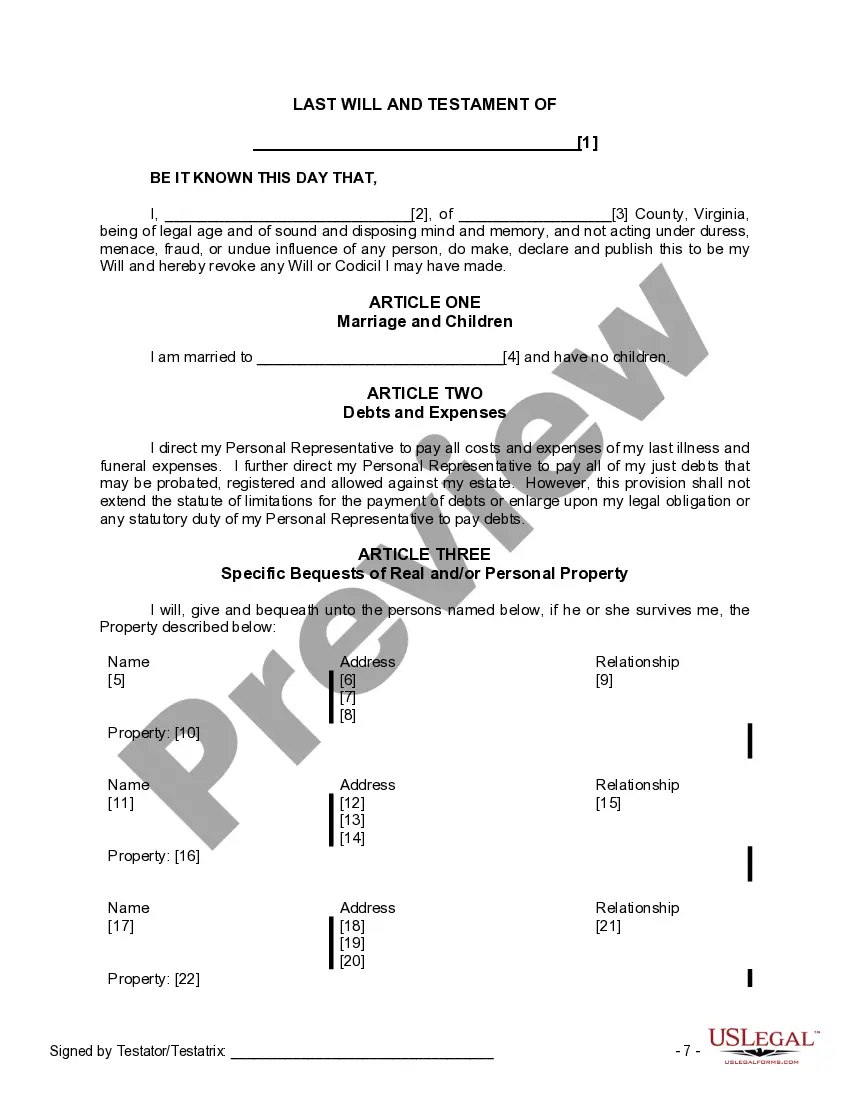
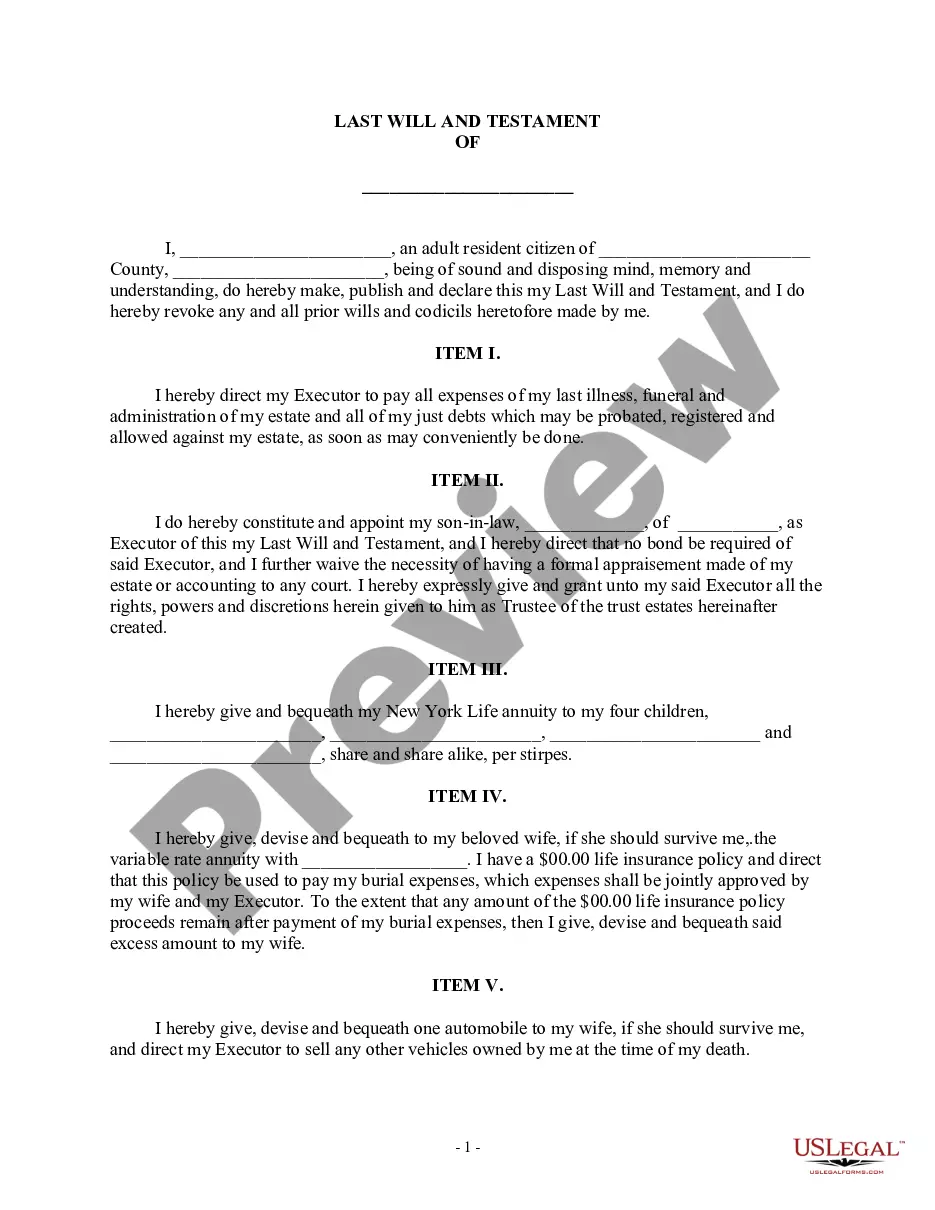
The Last Will and Testament for a Married Person with No Children is a legal document that details how a married individual wishes to distribute their property and assets after death. This form is specifically designed for those without children, making provisions for the spouse and appointing an executor to manage the estate. It differs from other will forms by addressing the unique aspects of married individuals with no offspring.
Key components of this form
- Identification of the testator and revocation of previous wills.
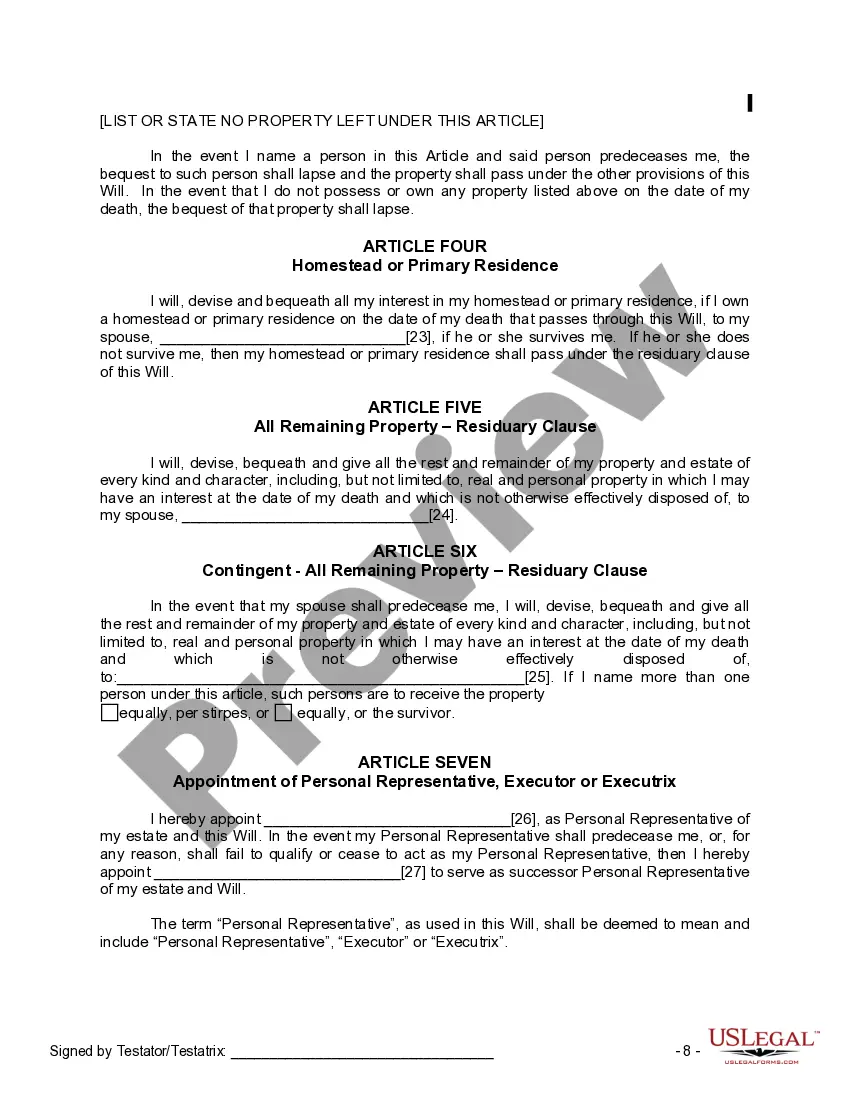
- Appointment of a personal representative to manage the estate.
- Specific bequests of property to designated individuals.
- Provisions for the homestead or primary residence.
- General distribution of remaining assets to the spouse.
- Clauses detailing the powers and responsibilities of the personal representative.







Common use cases
This form should be used by married individuals who do not have children and want to create a legally binding document for the distribution of their assets after death. It is especially useful in scenarios where one wants to ensure their spouse is taken care of and their wishes are clearly stated in case of an unforeseen event.
Who needs this form
- Married individuals without children.
- People looking to formalize their estate planning.
- Individuals who want to designate their spouse as the primary heir.
- Married persons seeking to appoint an executor for their estate.
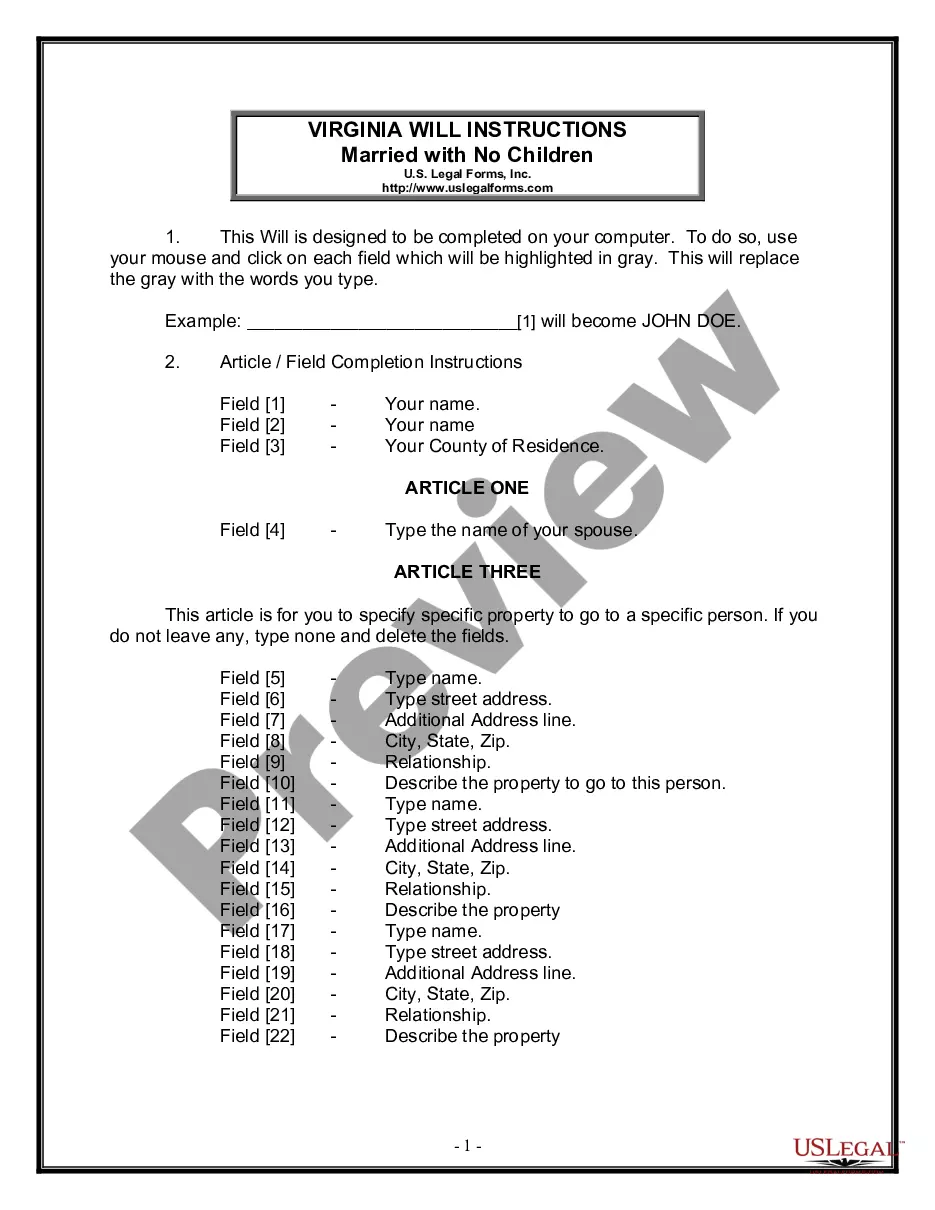
Instructions for completing this form
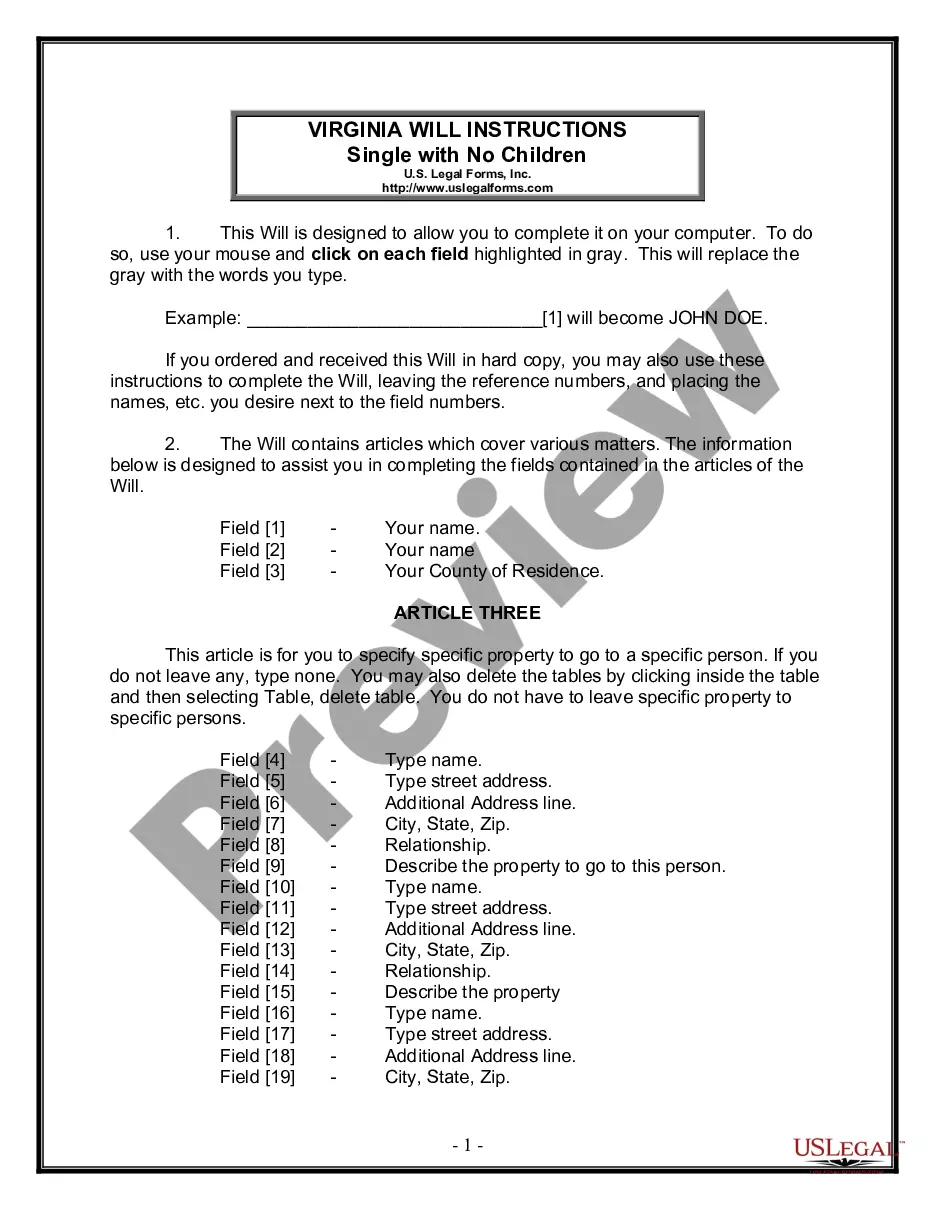
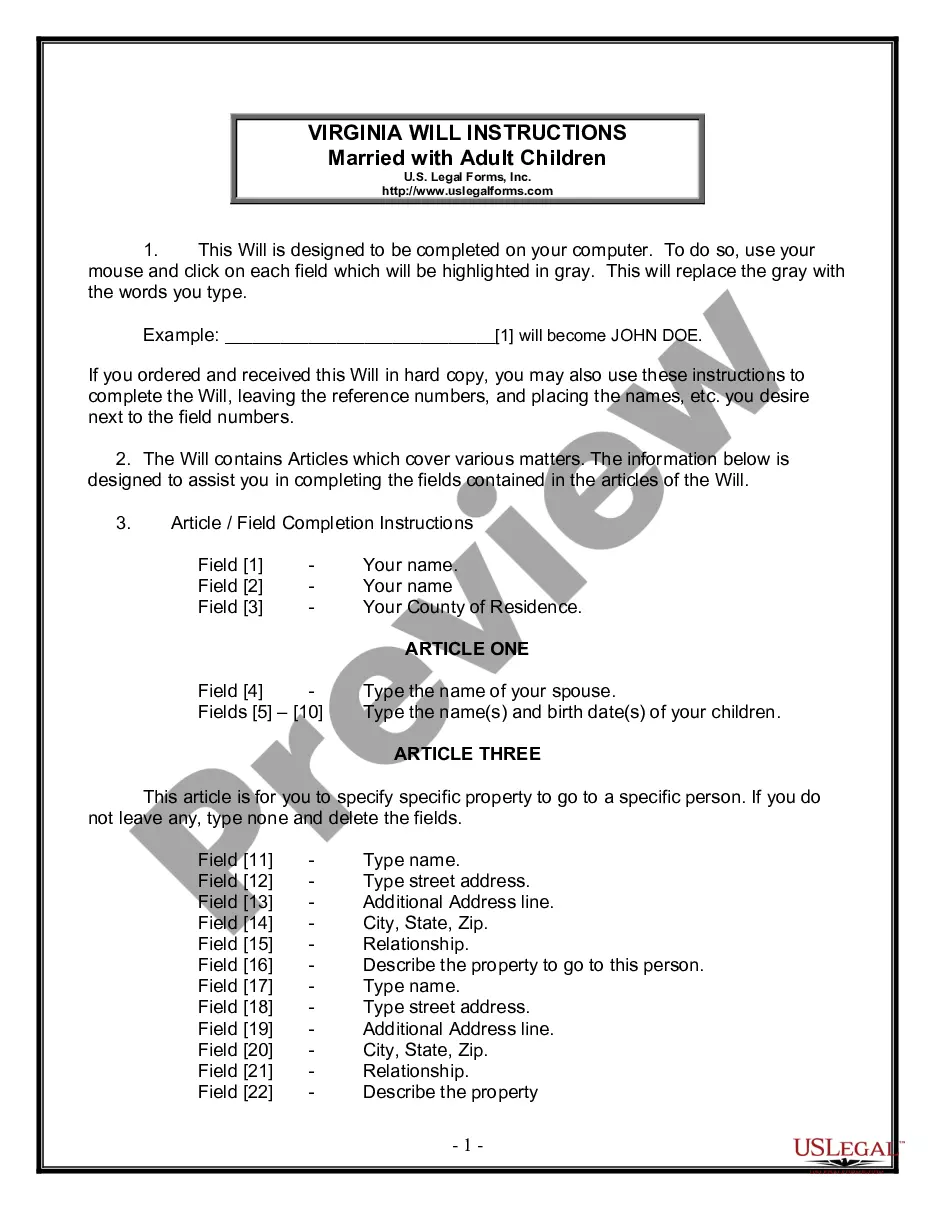
- Enter your full name and county of residence at the beginning of the document.
- Designate your spouse's name and any specific property to be bequeathed.
- List any remaining assets to be passed to your spouse in the residuary clause.
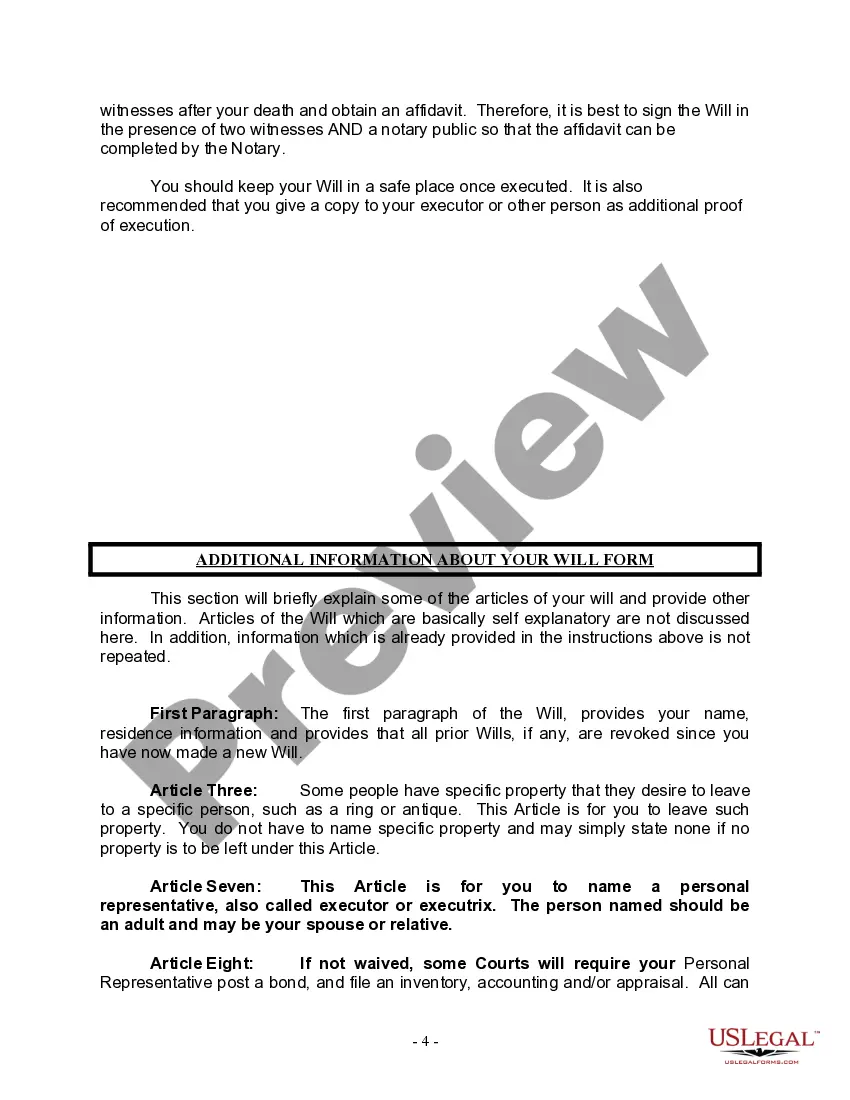
- Sign the document in the presence of two witnesses, ensuring they are not related or named in the will.
- Consider having the will notarized for additional legal assurance.
Is notarization required?
To make this form legally binding, it must be notarized. Our online notarization service, powered by Notarize, lets you verify and sign documents remotely through an encrypted video session.
Get your form ready online
Our built-in tools help you complete, sign, share, and store your documents in one place.
Make edits, fill in missing information, and update formatting in US Legal Forms—just like you would in MS Word.
Download a copy, print it, send it by email, or mail it via USPS—whatever works best for your next step.
Sign and collect signatures with our SignNow integration. Send to multiple recipients, set reminders, and more. Go Premium to unlock E-Sign.
If this form requires notarization, complete it online through a secure video call—no need to meet a notary in person or wait for an appointment.
We protect your documents and personal data by following strict security and privacy standards.

Make edits, fill in missing information, and update formatting in US Legal Forms—just like you would in MS Word.

Download a copy, print it, send it by email, or mail it via USPS—whatever works best for your next step.

Sign and collect signatures with our SignNow integration. Send to multiple recipients, set reminders, and more. Go Premium to unlock E-Sign.

If this form requires notarization, complete it online through a secure video call—no need to meet a notary in person or wait for an appointment.

We protect your documents and personal data by following strict security and privacy standards.
Avoid these common issues
- Not signing the will in the presence of required witnesses.
- Failing to update the will after major life changes.
- Omitting specific bequests that are important to the testator.
- Not providing clear instructions for the personal representative.
Advantages of online completion
- Convenient access to legal forms from anywhere, at any time.
- Ability to edit and customize the document easily on your computer.
- Templates drafted by licensed attorneys to ensure legal compliance.
- Time-saving compared to scheduling in-person consultations.
Looking for another form?
Form popularity
FAQ
In Virginia, the signing of a will must generally be witnessed by two competent persons, who also must sign the will in front of the testator.Although the law does not require a will to be notarized, it is a highly recommended practice followed by most lawyers.
In Virginia, no will is valid unless it is in writing and signed by the testator, or by some person in the testator's presence and by his direction. Essentially, this means that the will itself must be both in writing and signed by you or someone at your direction. Further, oral wills are not valid in Virginia.
A holographic will is a handwritten will which can be valid in Virginia as long that it is either entirely in the testator's sole handwriting and is proven by two disinterested witnesses or it is signed by the testator in the presence of two competent witnesses who countersign the document.
A notarized will does not need to be probated.When a person dies leaving behind a will that is not notarized, the law requires that its validity be ascertained by a notary or by a court. Similarly, any non-notarized modification made to a will must be probated, whether the will is notarized or not.
In Virginia, the signing of a will must generally be witnessed by two competent persons, who also must sign the will in front of the testator.Although the law does not require a will to be notarized, it is a highly recommended practice followed by most lawyers.
A holographic will is a handwritten will which can be valid in Virginia as long that it is either entirely in the testator's sole handwriting and is proven by two disinterested witnesses or it is signed by the testator in the presence of two competent witnesses who countersign the document.
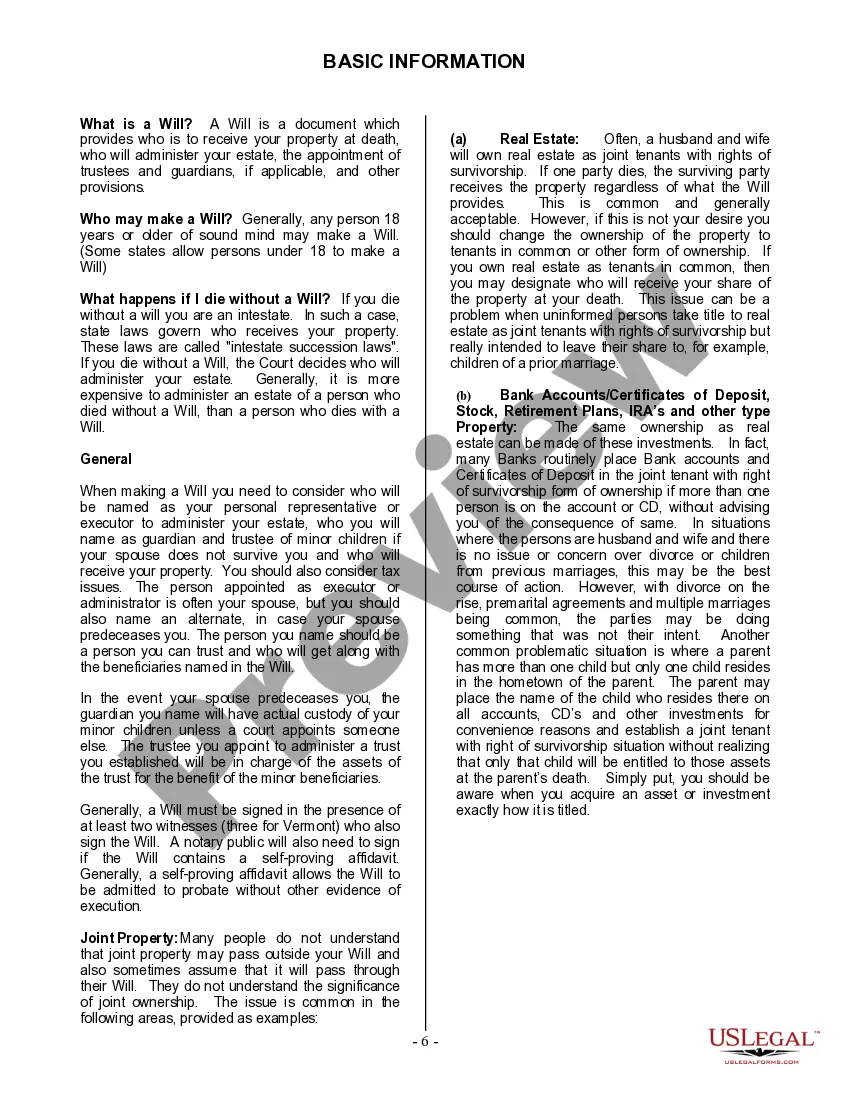
There are four requirements to make a valid will in Virginia. In order to successfully create a will you must be of the proper age, mental capacity, the will must be signed and in writing, and the signing must be witnessed by at least two individuals.
No, in Virginia, you do not need to notarize your will to make it legal. However, Virginia allows you to make your will "self-proving" and you'll need to go to a notary if you want to do that. A self-proving will speeds up probate because the court can accept the will without contacting the witnesses who signed it.