Virginia Mutual Wills Package for Married Couple with No Children
About this form
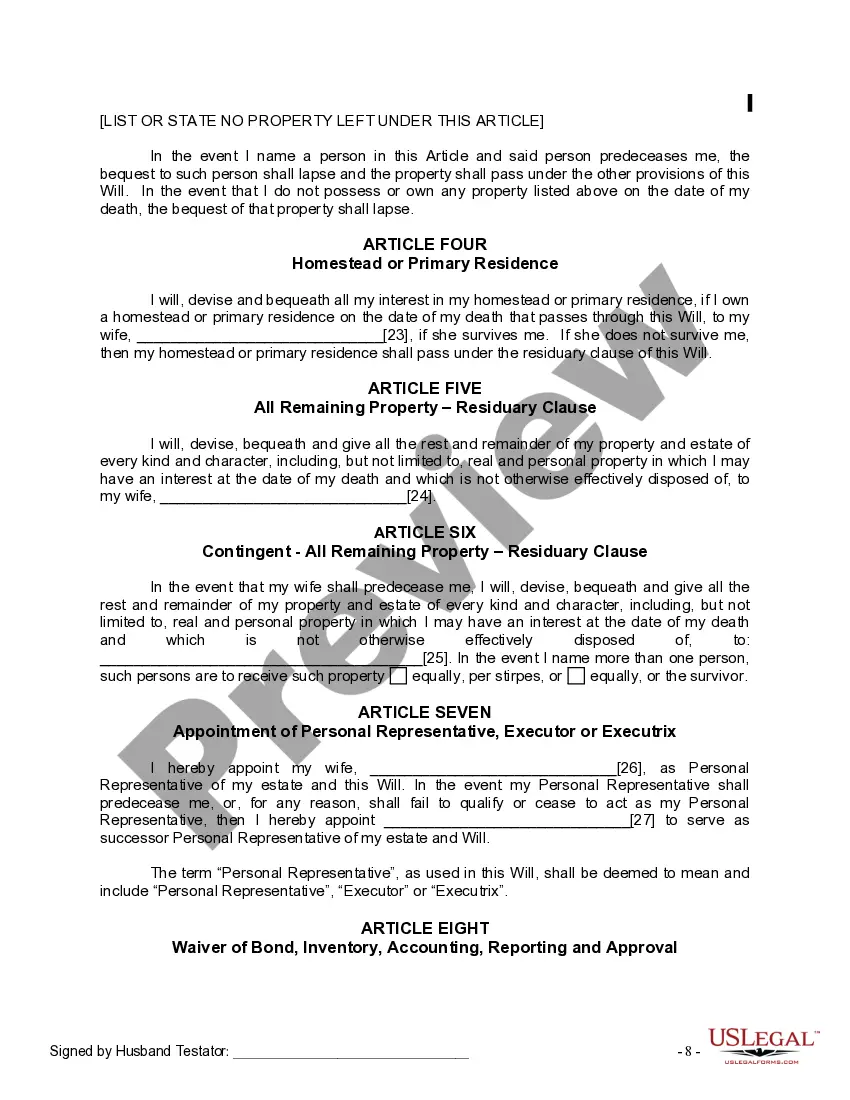
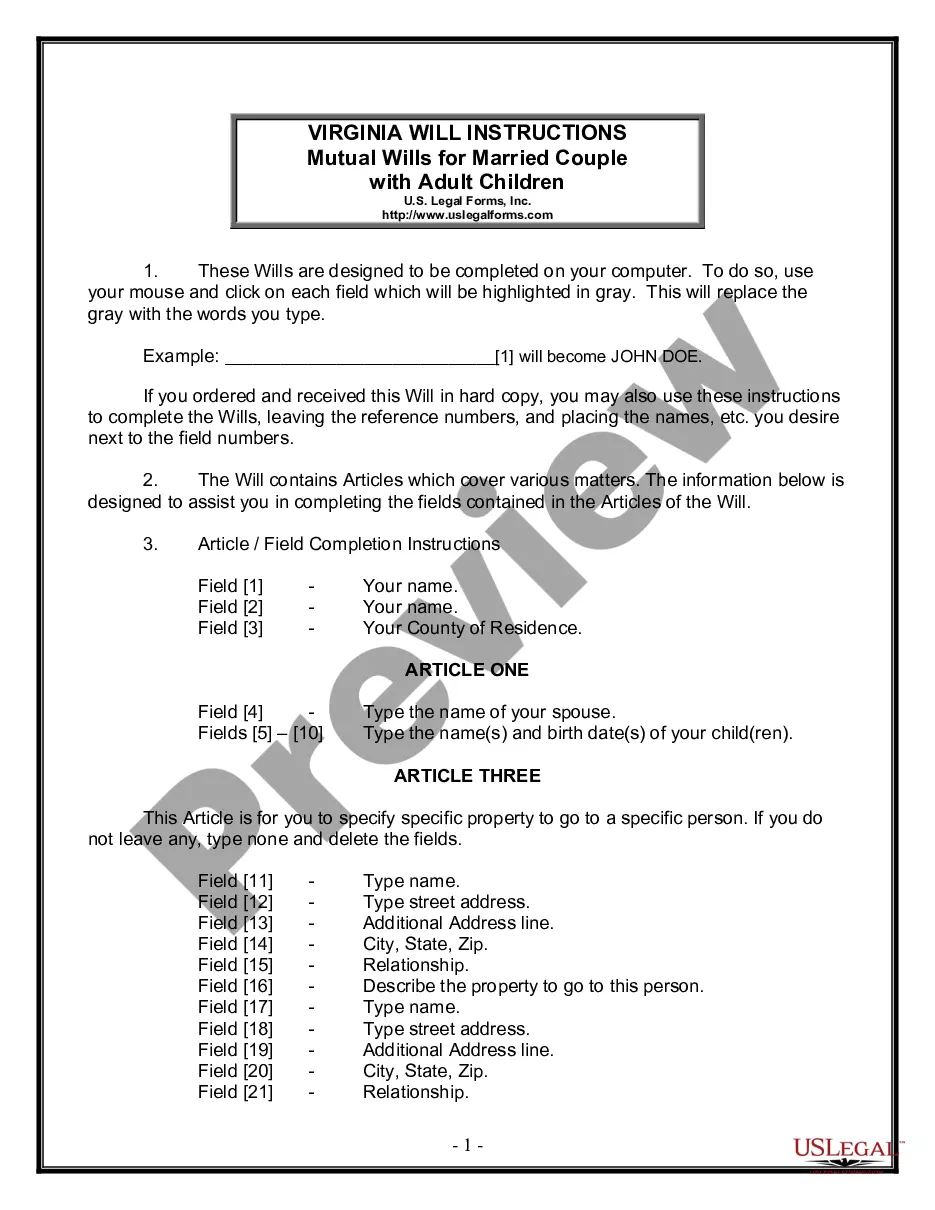
The Mutual Wills Package for Married Couples with No Children is a legal document that outlines how a couple wishes to distribute their assets upon death. This package includes two mutual last wills and testaments, allowing each spouse to designate the other as their primary beneficiary. Unlike standard wills, mutual wills create a binding agreement that restricts one spouse from altering the will without the other's consent, ensuring both partners' wishes are honored.
What’s included in this form
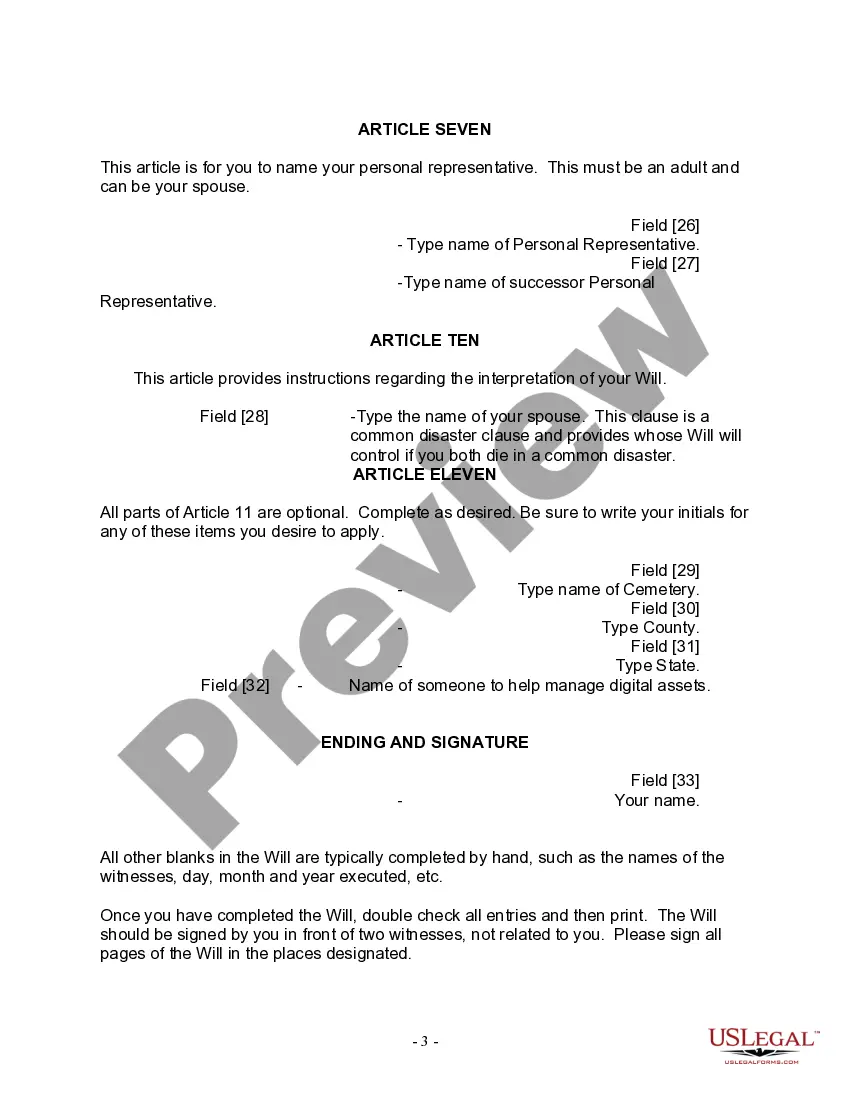
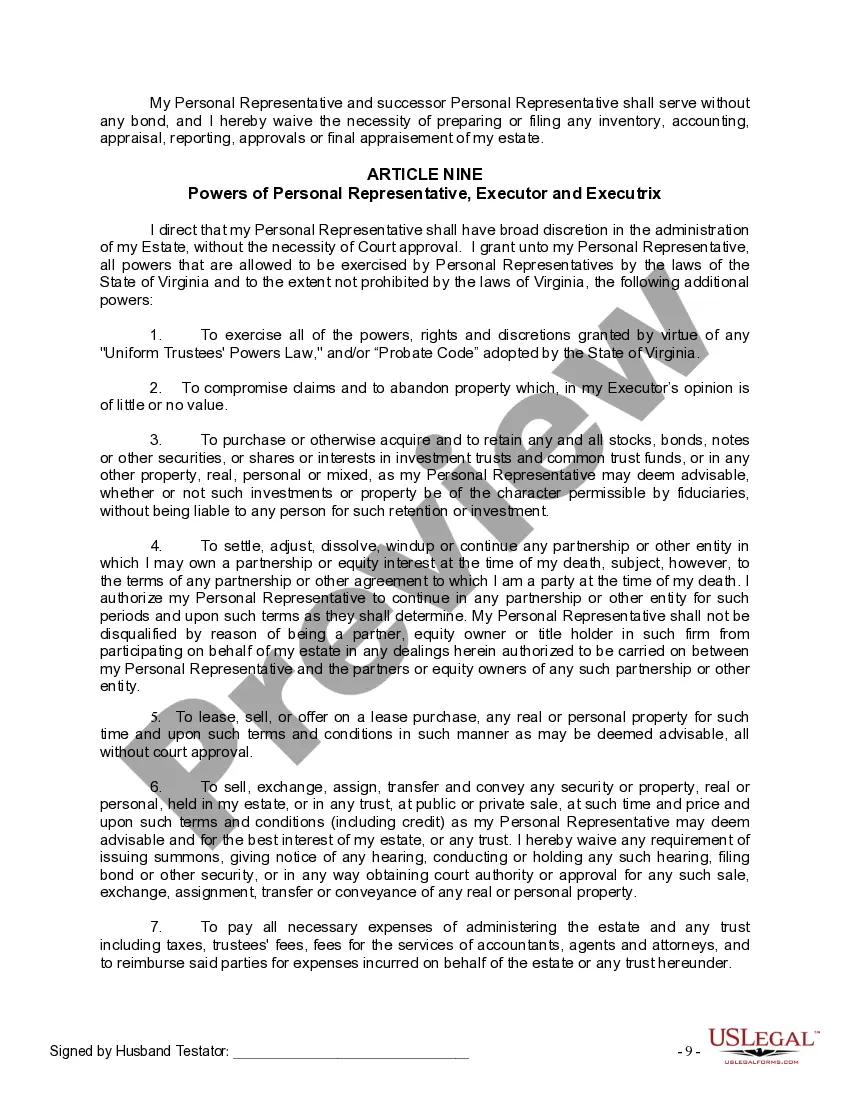
- Personal representative or executor designation for asset management.
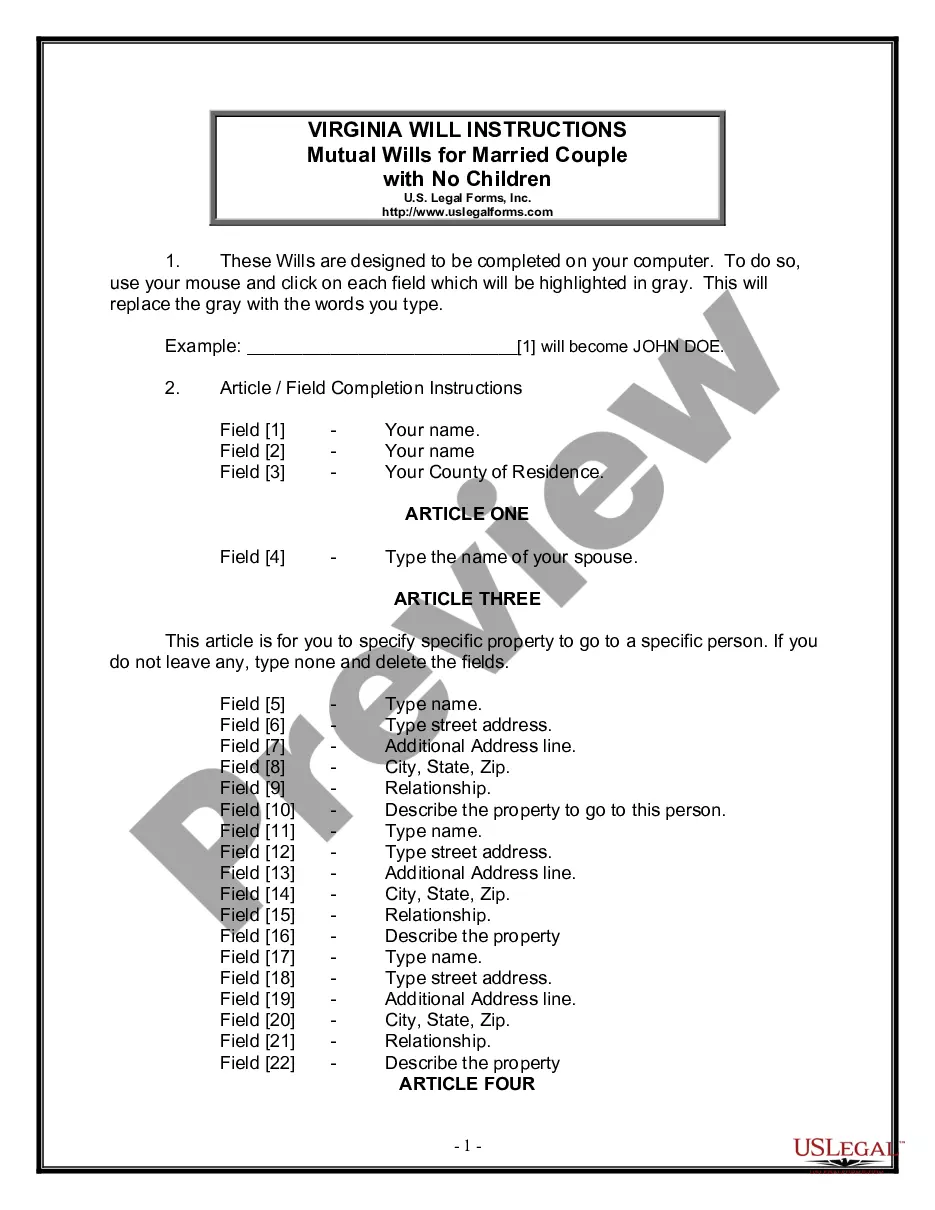
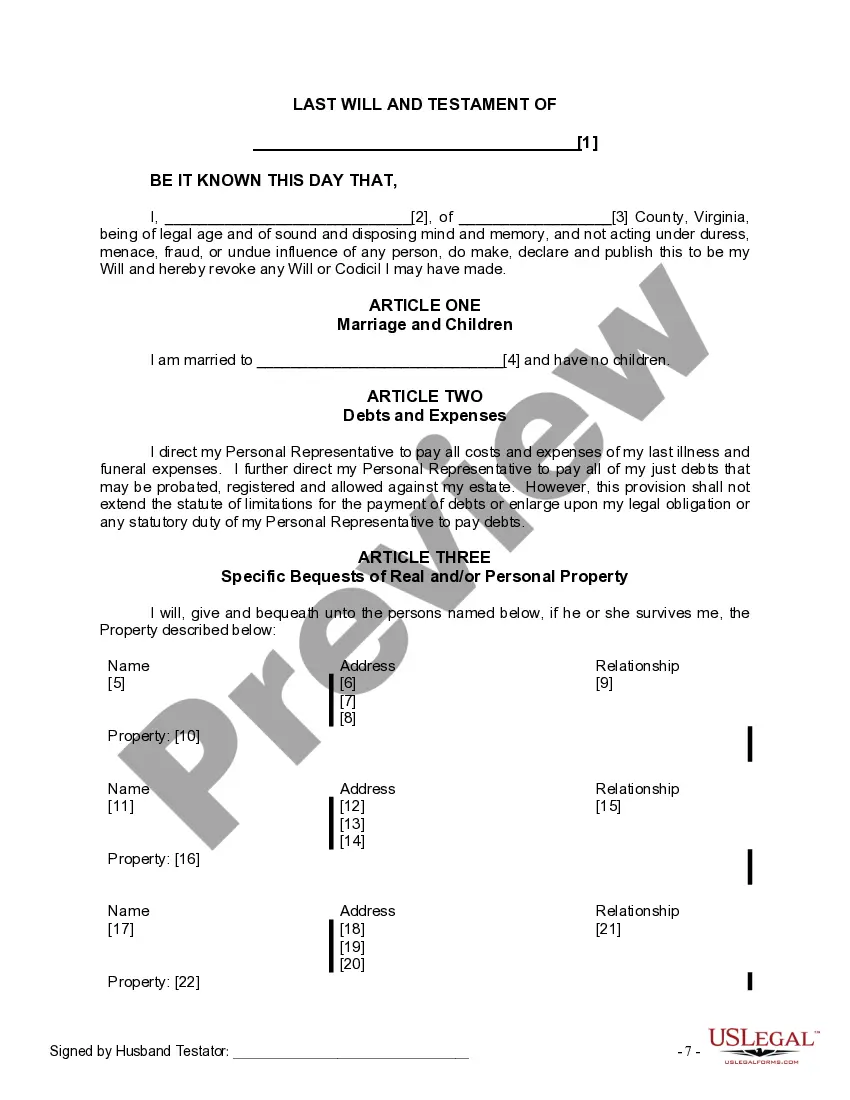
- Detailed instructions on bequests of specific property to named beneficiaries.
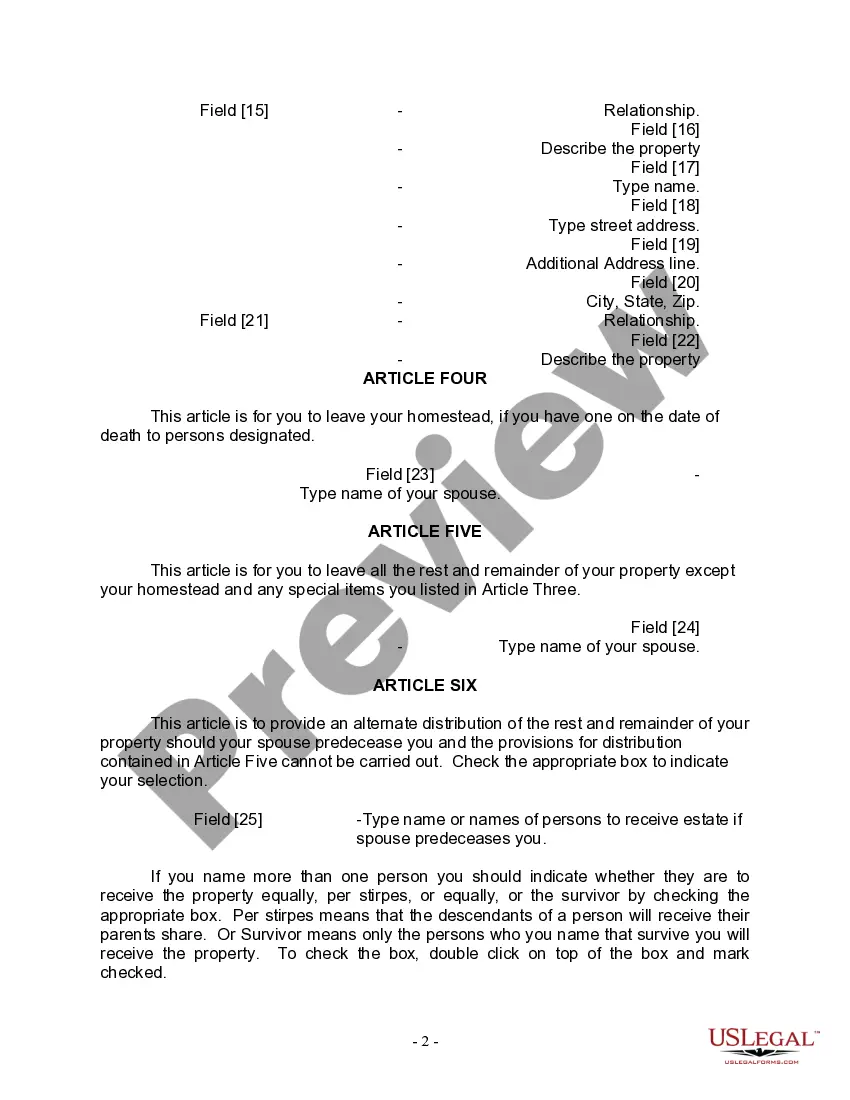
- Provisions for any homestead or primary residence owned at the time of death.
- Waiver of bond and inventory requirements for the personal representative.
- Clear directives for alternate distribution in case one spouse predeceases the other.
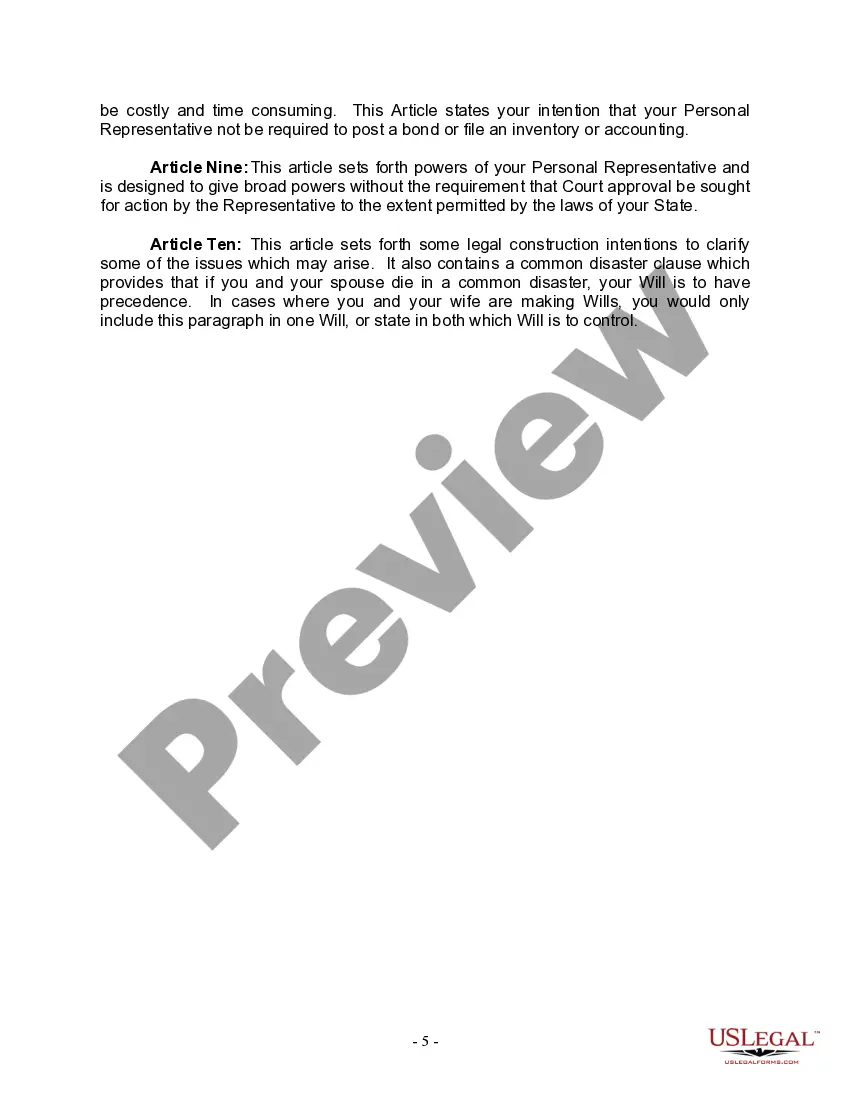
- Common disaster clause to determine the precedence of wills in a joint death scenario.



When this form is needed
This form is useful in situations where a married couple without children wants to ensure that their assets are passed to one another in a legally binding way. It should be used when both spouses agree on their asset distribution and want to prevent unilateral changes to the will after one of them passes away.
Who should use this form
- Married couples with no children who want to set clear terms for asset distribution.
- Couples looking for a legally binding arrangement to ensure mutual agreement on wills.
- Individuals who wish to provide for their spouse in the event of their death.
Steps to complete this form
- Gather personal information, including names, addresses, and the county of residence for both spouses.
- Specify the personal representative designated to manage your estate.
- List any specific bequests of property in the sections provided, or indicate if no specific property is to be left.
- Complete the articles regarding homestead distribution and alternate beneficiaries if necessary.
- Have the wills signed in the presence of two witnesses who are not mentioned in the wills.
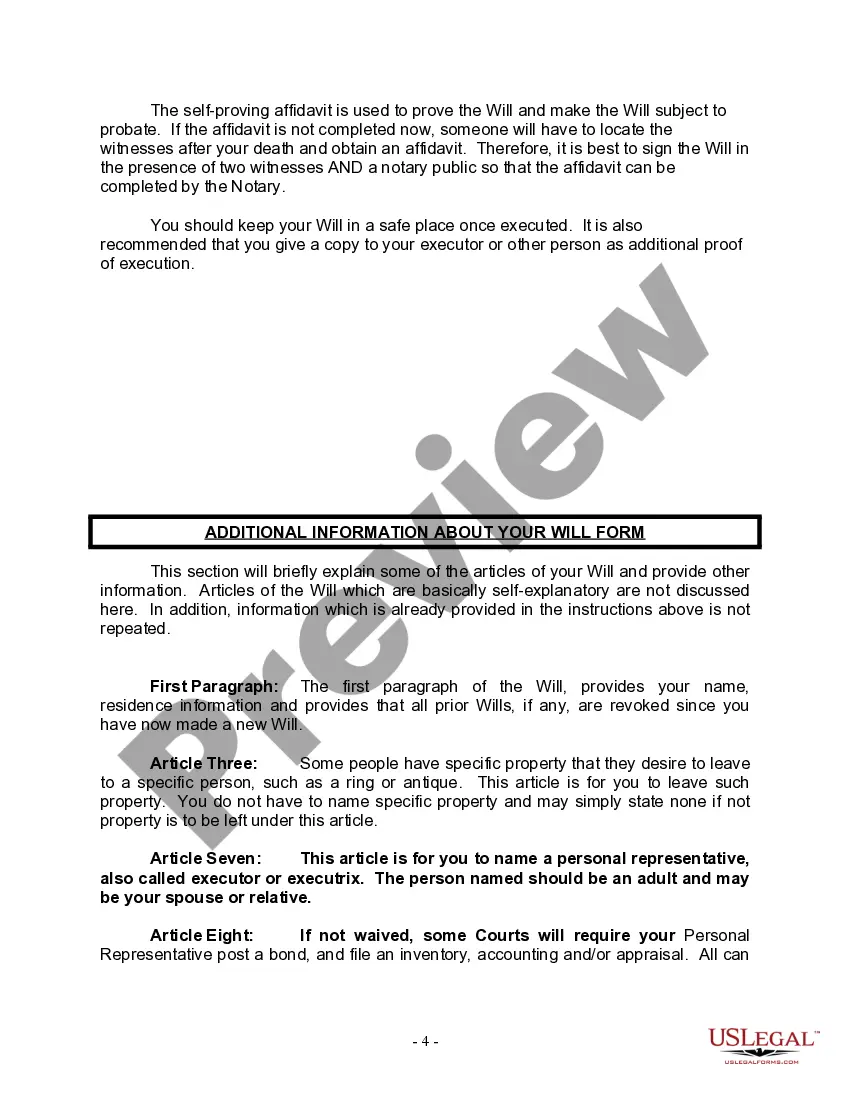
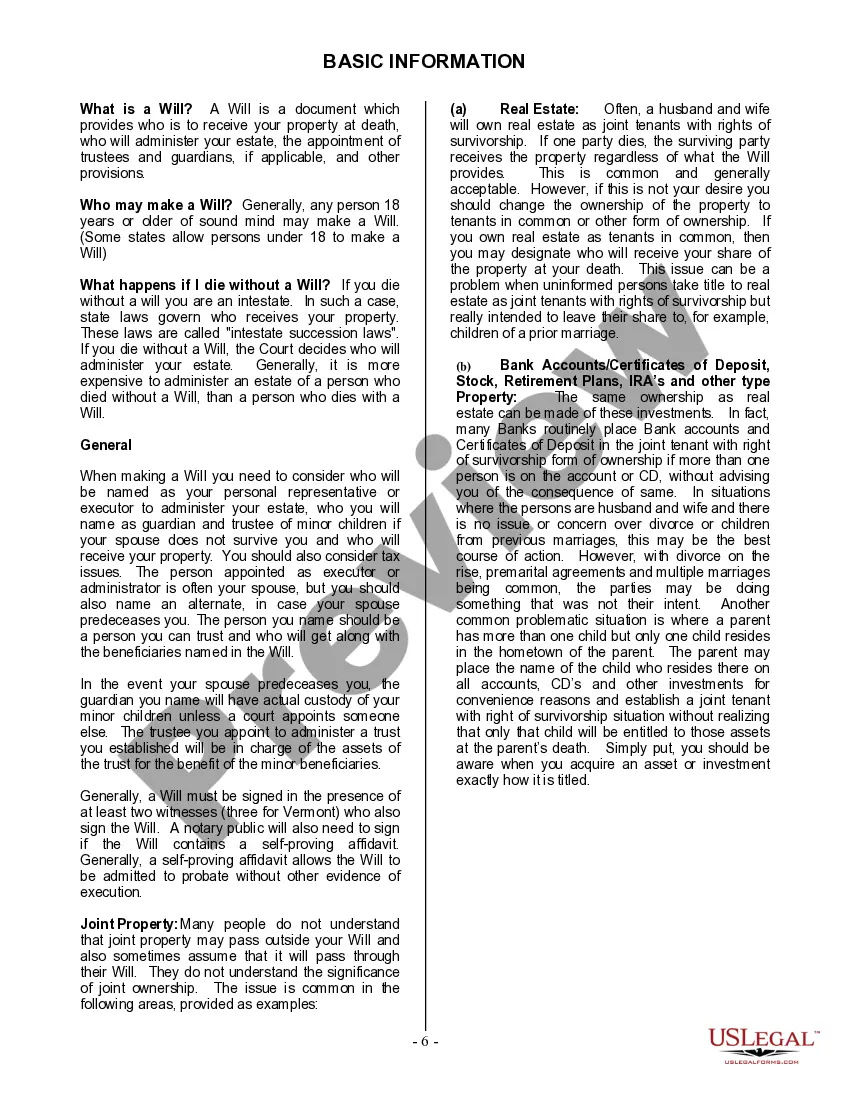
- If required by law, obtain notarization to create a self-proving affidavit for easier probate.
Does this document require notarization?
This form does typically require notarization unless specified by local law. Notarization provides added legal weight and can simplify the probate process by allowing the will to be admitted to probate without further evidence of execution.
Get your form ready online
Our built-in tools help you complete, sign, share, and store your documents in one place.
Make edits, fill in missing information, and update formatting in US Legal Forms—just like you would in MS Word.
Download a copy, print it, send it by email, or mail it via USPS—whatever works best for your next step.
Sign and collect signatures with our SignNow integration. Send to multiple recipients, set reminders, and more. Go Premium to unlock E-Sign.
If this form requires notarization, complete it online through a secure video call—no need to meet a notary in person or wait for an appointment.
We protect your documents and personal data by following strict security and privacy standards.

Make edits, fill in missing information, and update formatting in US Legal Forms—just like you would in MS Word.

Download a copy, print it, send it by email, or mail it via USPS—whatever works best for your next step.

Sign and collect signatures with our SignNow integration. Send to multiple recipients, set reminders, and more. Go Premium to unlock E-Sign.

If this form requires notarization, complete it online through a secure video call—no need to meet a notary in person or wait for an appointment.

We protect your documents and personal data by following strict security and privacy standards.
Typical mistakes to avoid
- Forgetting to sign the will in front of witnesses or notarize when required.
- Neglecting to properly identify beneficiaries, leading to confusion about asset distribution.
- Failing to communicate with the personal representative regarding their responsibilities.
Benefits of completing this form online
- Convenience of completing the form from home at your own pace.
- Editability allows for easy updates as your circumstances change.
- Access to legally vetted forms drafted by licensed attorneys.
Quick recap
- The Mutual Wills Package provides a legally binding way for married couples to express their final wishes.
- It includes detailed sections for asset distribution and allows for clear designation of a personal representative.
- Proper completion and notarization are essential to ensure the documentâs validity.
Looking for another form?


Form popularity
FAQ
WHO INHERITS THE PROPERTY OF AN INTESTATE? someone other than the surviving spouse in which case, one-third goes to the surviving spouse and the remaining two-thirds is divided among all children. f0a7 if no surviving spouse, all passes to the children and their descendants.
Virginia is a common law property state. This means that in cases of intestacy, the estate is automatically inherited by the spouse.Therefore, if there is a surviving spouse, the spouse will receive the deceased's portion of all marital properties.
A. Every will or authenticated copy admitted to probate by any circuit court or clerk of any circuit court shall be recorded by the clerk and remain in the clerk's office, except during such time as the same may be carried to another court under a subpoena duces tecum or as otherwise provided in § 17.1-213.
When real estate is in Virginia, but outside the county having jurisdiction of probate, the will is still recorded in the county having jurisdiction.A certified copy of the will list of heirs and probate order are prepared for the person presenting the will to record in the county where the real estate is located.
Next of kin under Virginia law generally means the closest living relatives of the decedent. The Virginia Supreme Court has stated that the term next of kin is a nontechnical term whose commonly accepted meaning is 'nearest in blood. ' Elmore v. Virginia Nat'l Bank, 232 Va.
WHO INHERITS THE PROPERTY OF AN INTESTATE? someone other than the surviving spouse in which case, one-third goes to the surviving spouse and the remaining two-thirds is divided among all children. f0a7 if no surviving spouse, all passes to the children and their descendants.
In Virginia, the signing of a will must generally be witnessed by two competent persons, who also must sign the will in front of the testator.If the will includes a notarized Self-Proving Affidavit, the will is presumed to be properly executed and is accepted by the court without testimony from the witnesses.
If a person does not have a will and they die, their assets pass according to Virginia's laws of intestate succession. If a person does not have any children, all of the assets pass to the spouse.If the person does not have a spouse or children, the assets pass to the decedent's parents.
Age. The testator must be at least 18 years old. In Writing. For a will to be valid in Virginia, it must be in writing. Signed by the Testator. Competent. Voluntarily and of Their Free Will. Minimum of Two Witnesses. Self-Proving Affidavit Not Required, but Recommended. Holographic Will, Exception.