Virginia Last Will and Testament for Divorced Person Not Remarried with No Children
Overview of this form
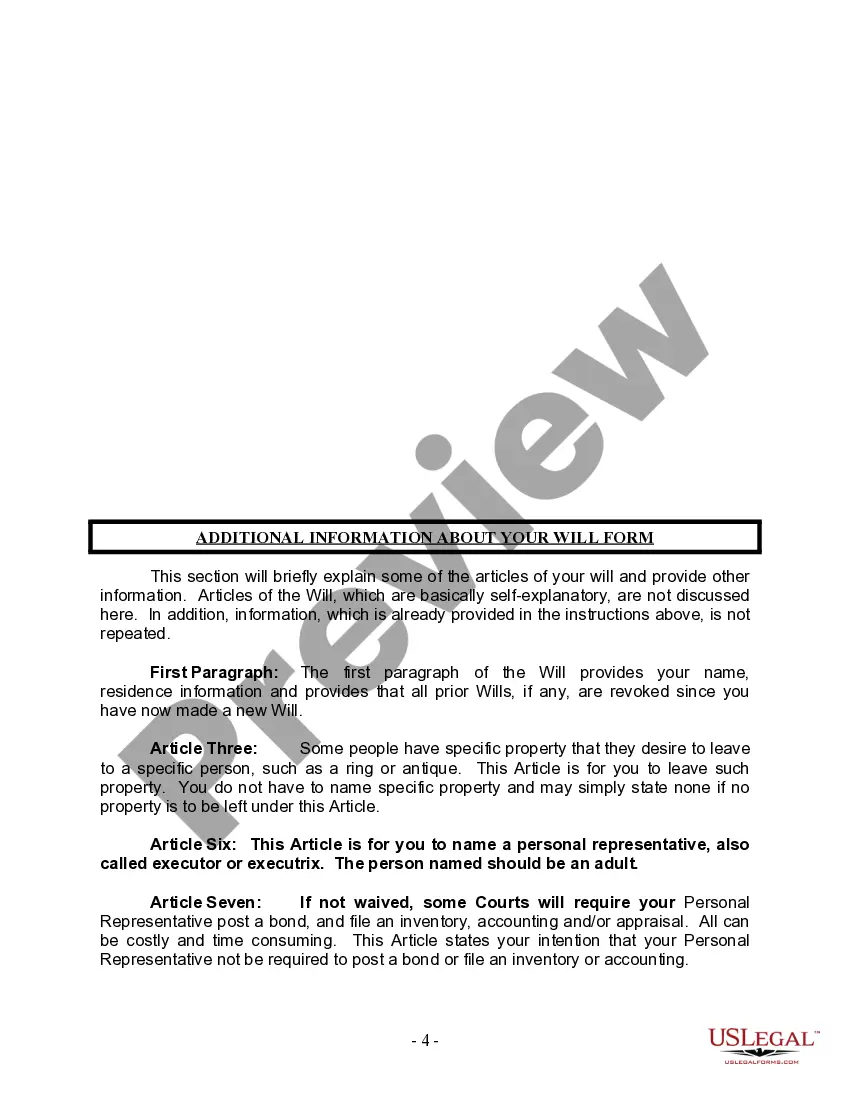
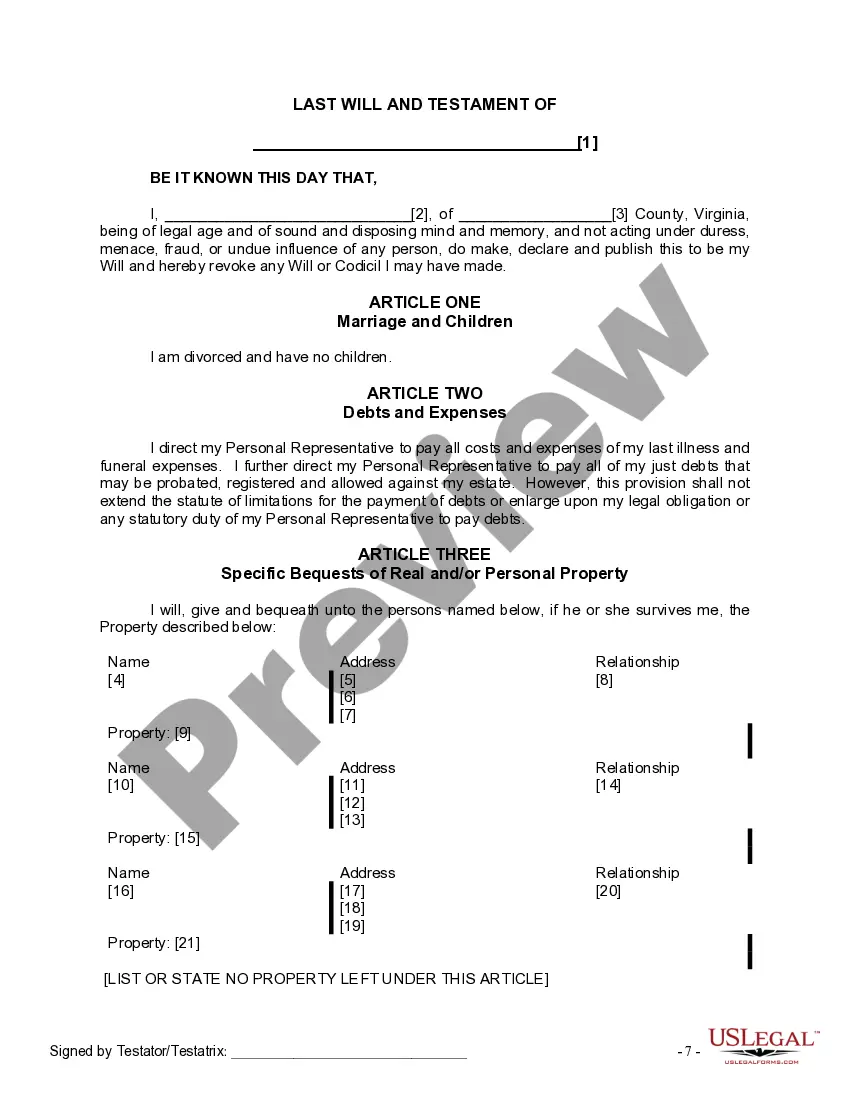
The Last Will and Testament for Divorced Person Not Remarried with No Children is a legal document that specifies how an individualâs assets will be distributed upon their death. This form is specifically tailored for those who are divorced, have no children, and are not remarried, setting it apart from more general wills. It allows you to appoint a personal representative for your estate and designate beneficiaries for your property and assets.
Key parts of this document
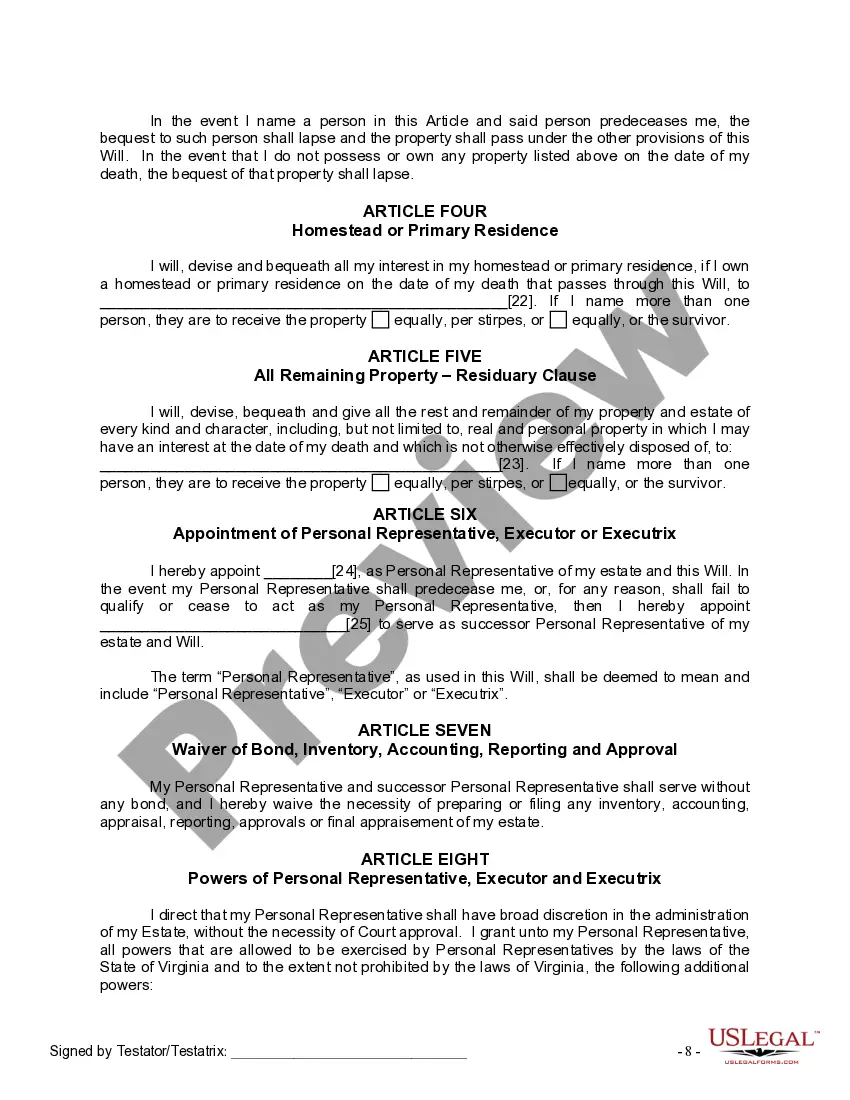
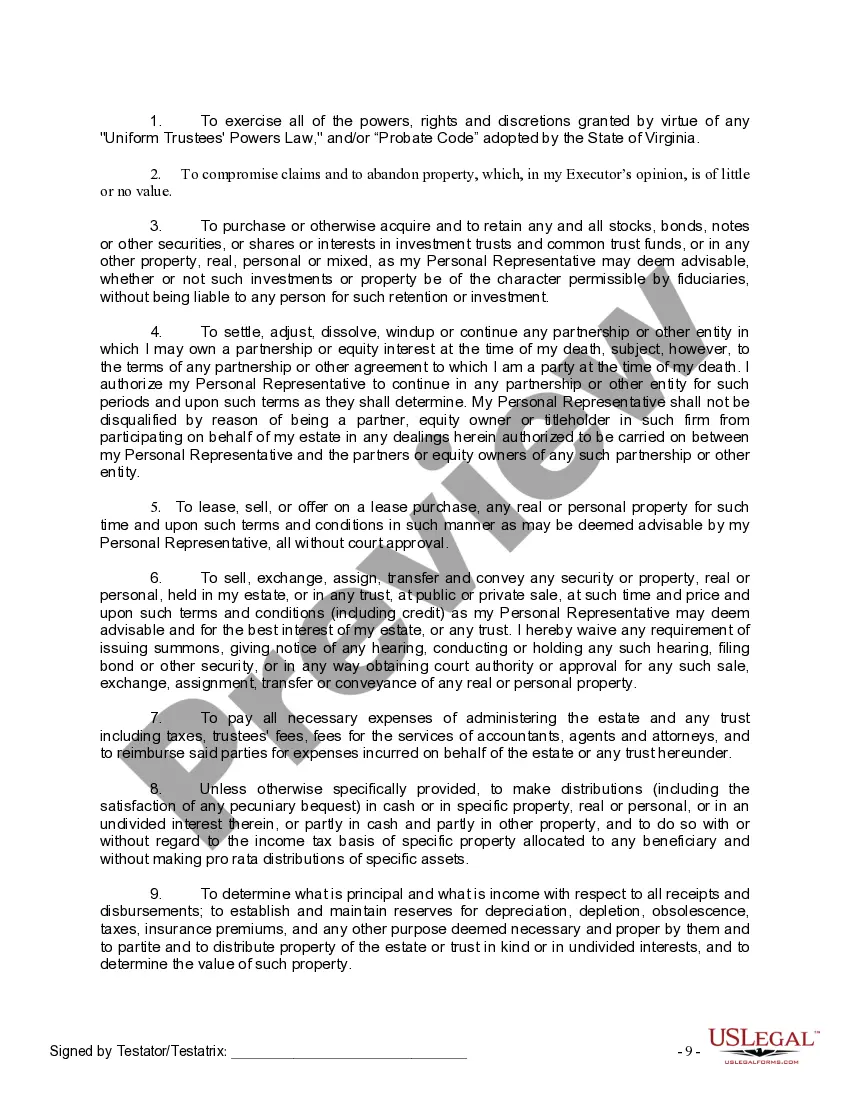
- Appointment of Personal Representative: Choose an individual to manage your estate after your death.
- Distribution of Property: Specify who will receive your assets, including real property and personal belongings.
- Homestead Provision: Detail your wishes regarding your primary residence, if applicable.
- Debts and Expenses: Outline how your debts and funeral expenses will be handled.
- Optional Clauses: Include additional wishes, such as burial preferences or waivers of bond for the personal representative.


When to use this form
This form should be used by individuals who are divorced, not remarried, and have no children. It is particularly useful in situations where the individual wishes to ensure their assets are distributed according to their own preferences rather than by state intestacy laws. Situations may include preparing for unforeseen circumstances or when one wants to clarify their final wishes regarding property and debts.
Who needs this form
- Individuals who are at least 18 years old and of sound mind.
- People who are divorced and not remarried.
- Individuals without children.
- Anyone wishing to explicitly state their wishes regarding the distribution of their property after death.
Instructions for completing this form
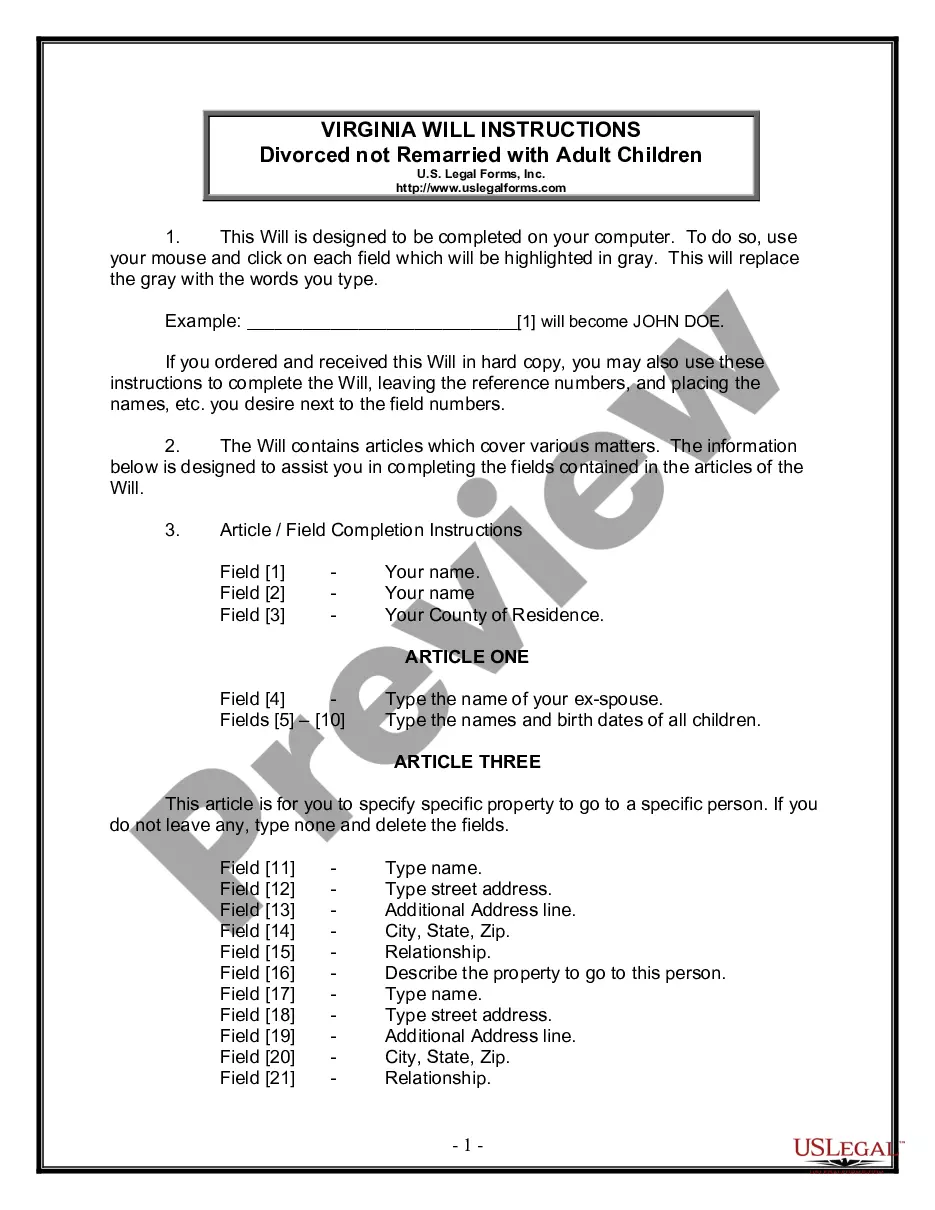
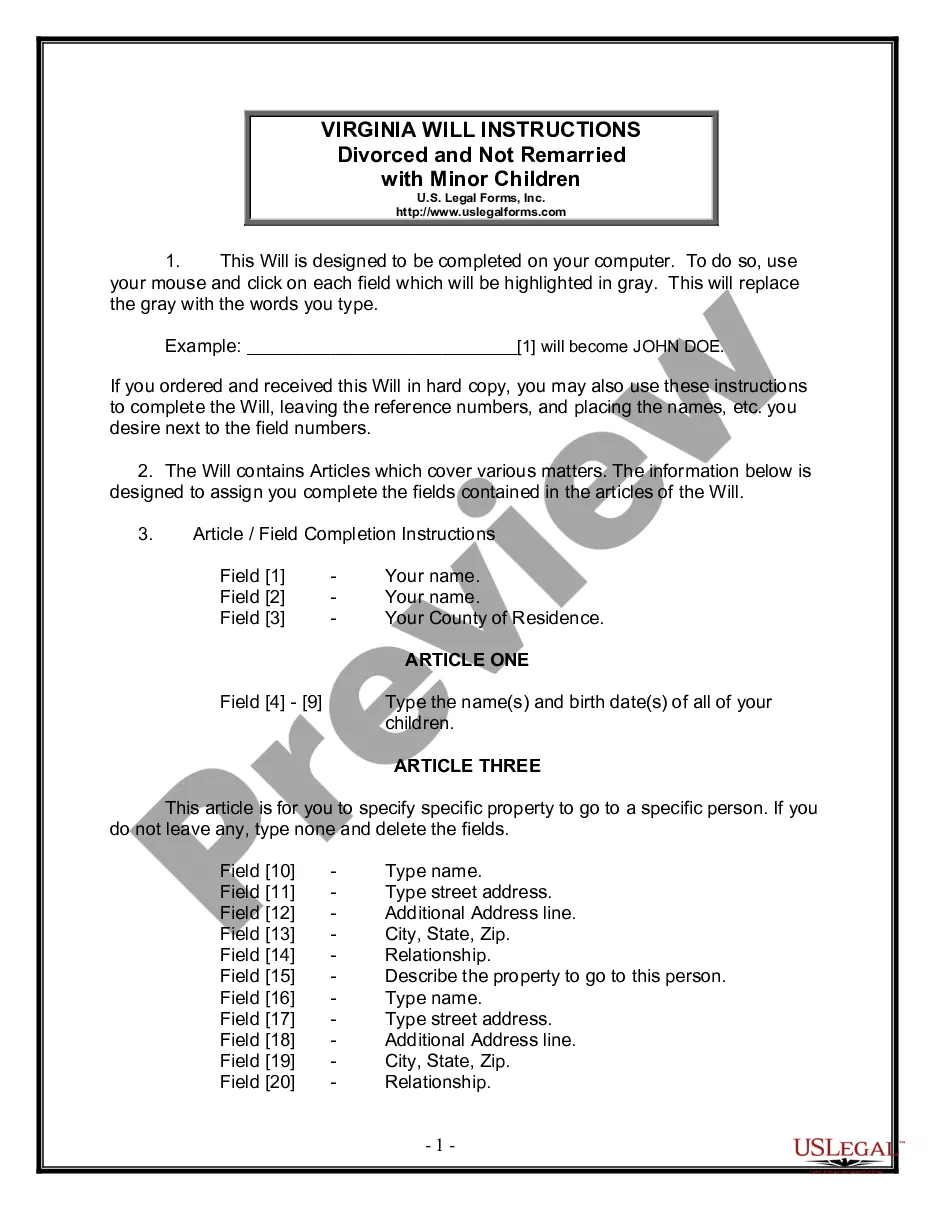
- Identify the parties: Input your name and county of residence at the beginning of the will.
- Specify property: Detail who receives specific assets and include necessary descriptions and addresses.
- Appoint a personal representative: Enter the name of the person you choose to manage your estate.
- Sign in front of witnesses: Ensure you and two witnesses sign the will where indicated, following local requirements.
- Consider notarization: It is advisable to complete a self-proving affidavit to simplify the probate process.
Does this document require notarization?
Yes, this form must be notarized to be legally valid. It is advisable to do so to facilitate the probate process, ensuring that your wishes are respected and upheld.
Get your form ready online
Our built-in tools help you complete, sign, share, and store your documents in one place.
Make edits, fill in missing information, and update formatting in US Legal Forms—just like you would in MS Word.
Download a copy, print it, send it by email, or mail it via USPS—whatever works best for your next step.
Sign and collect signatures with our SignNow integration. Send to multiple recipients, set reminders, and more. Go Premium to unlock E-Sign.
If this form requires notarization, complete it online through a secure video call—no need to meet a notary in person or wait for an appointment.
We protect your documents and personal data by following strict security and privacy standards.

Make edits, fill in missing information, and update formatting in US Legal Forms—just like you would in MS Word.

Download a copy, print it, send it by email, or mail it via USPS—whatever works best for your next step.

Sign and collect signatures with our SignNow integration. Send to multiple recipients, set reminders, and more. Go Premium to unlock E-Sign.

If this form requires notarization, complete it online through a secure video call—no need to meet a notary in person or wait for an appointment.

We protect your documents and personal data by following strict security and privacy standards.
Avoid these common issues
- Failing to sign the will in the presence of the required number of witnesses.
- Not appointing a successor personal representative.
- Omitting details about specific property, leaving ambiguity about asset distribution.
Benefits of using this form online
- Easy access and convenience to complete your will from home.
- Editable fields allow you to customize the document to fit your specific circumstances.
- Reliable templates created by licensed attorneys ensure legal compliance.
Key takeaways
Key takeaways:
- This Last Will and Testament is specifically for divorced individuals with no children.
- Clear instructions within the form help ensure your assets are distributed according to your wishes.
- Completion requires careful attention to detail, including the appointment of a personal representative.
- Notarization is necessary to validate the will in most jurisdictions.
Looking for another form?
Form popularity
FAQ
WHO INHERITS THE PROPERTY OF AN INTESTATE? someone other than the surviving spouse in which case, one-third goes to the surviving spouse and the remaining two-thirds is divided among all children. f0a7 if no surviving spouse, all passes to the children and their descendants.
Dying with a will made during marriage and before divorce It exists and is still valid. However, the effect of the divorce does change the way the former spouse is treated in law. These changes affect any gifts to the surviving spouse or the appointment of them as executors under the existing will.
In most states, if someone gets divorced after making a will, any gifts that the will makes to the former spouse are automatically revoked. For example, California law (Probate Code § 6122) states that:Later, they divorce.
Dying intestate means dying without a will. Virginia's laws of intestate succession state that when a person dies leaving a spouse and children, one-third of the person's assets pass to the spouse and two-thirds of the person's assets pass to the children.
Heirs/Heirs at Law: the persons who would inherit the decedent's estate if the decedent died intestate, as determined by law at the time of the decedent's death.
You can make your own will in Virginia, using Nolo's do-it-yourself will software or online will programs. However, you may want to consult a lawyer in some situations. For example, if you think that your will might be contested or if you want to disinherit your spouse, you should talk with an attorney.
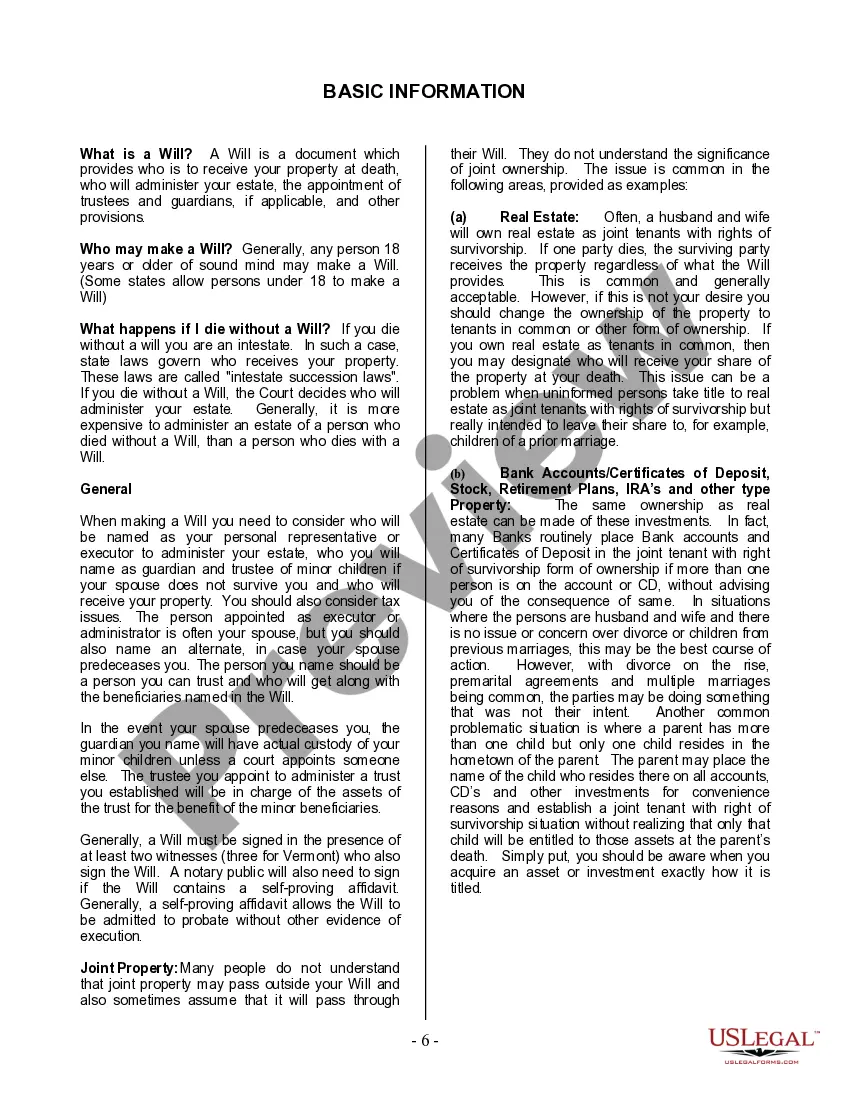
During probate, the court-supervised process of distributing the property of a deceased person, a "self-proving affidavit" could help prove your will is valid. To execute this affidavit, you and your witnesses must appear in front of a notary public to sign this sworn statement.
California is a community property state, which means that following the death of a spouse, the surviving spouse will have entitlement to one-half of the community property (i.e., property that was acquired over the course of the marriage, regardless of which spouse acquired it).
Virginia is a common law property state. This means that in cases of intestacy, the estate is automatically inherited by the spouse.Therefore, if there is a surviving spouse, the spouse will receive the deceased's portion of all marital properties.