Virginia Revocation of Advance Medical Directive
What is this form?
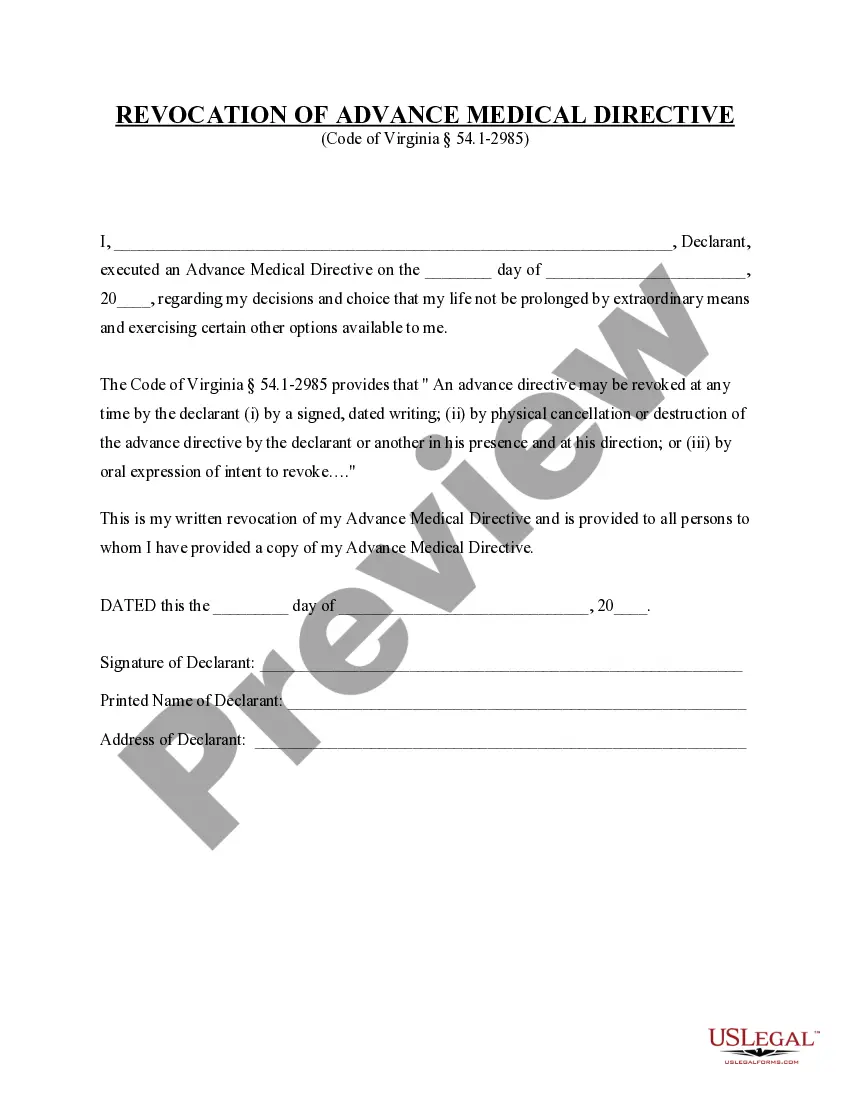
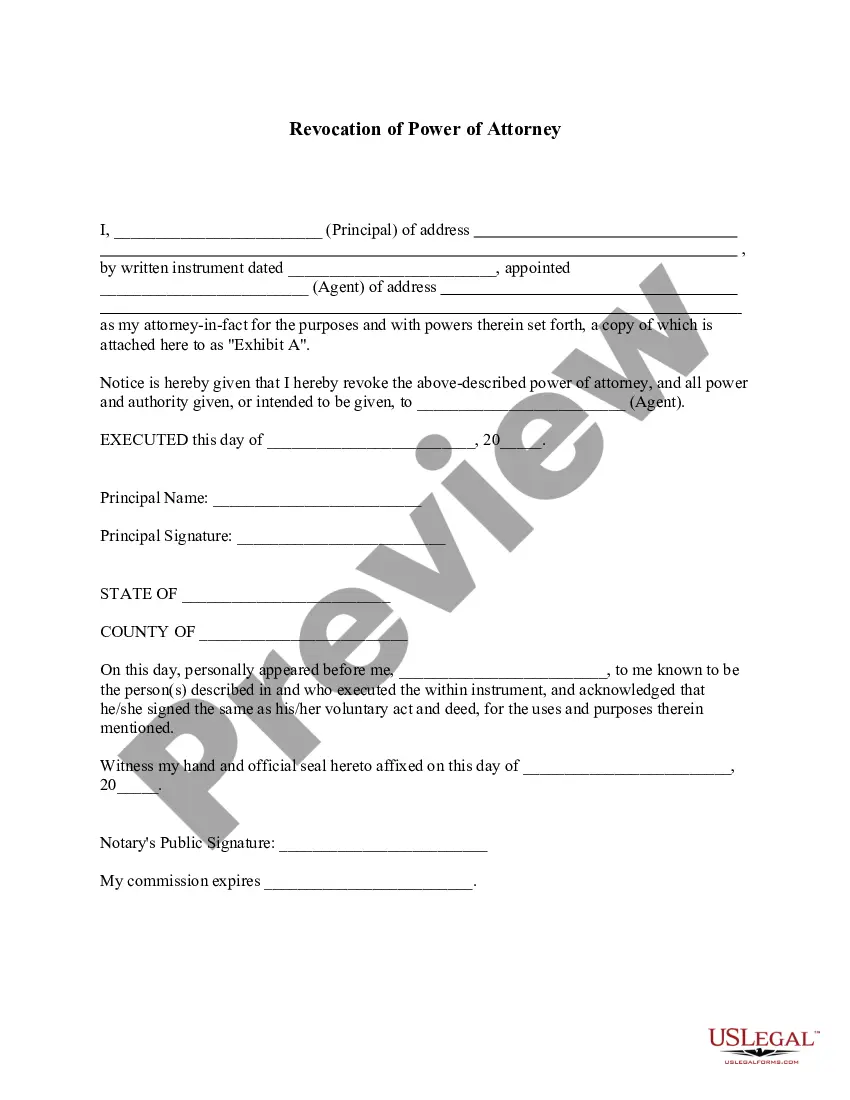
The Revocation of Advance Medical Directive is a legal document that allows an individual to formally cancel a previous advance medical directive. This form is essential for anyone who has previously set medical decision-making guidelines and now wants to revoke those instructions. Unlike the original advance medical directive, which outlines health care choices and appoints an agent, this revocation effectively communicates the decision to withdraw such powers.
Form components explained
- Declarant's Information: The individual revoking the directive must provide their name and address.
- Revocation Date: Space to indicate the date of the original advance medical directive.
- Signature of Declarant: A signature field that verifies the declarant's intent to revoke the directive.
- Notification Clause: A declaration that others who received the original directive will be informed of this revocation.
When to use this form
This form should be used when an individual decides to change their previously stated medical preferences or agent appointed under an advance medical directive. Common scenarios include changes in personal circumstances, such as a change in health status, a shift in personal beliefs, or when the previously appointed health care agent is no longer suitable for the role.
Who can use this document
- Individuals who have previously completed an Advance Medical Directive and wish to revoke it.
- Persons seeking to update or change their designated health care decisions.
- Anyone wanting to ensure their current medical preferences are accurately reflected.
How to prepare this document
- Identify the declarant by writing your full name at the top of the form.
- Enter the date when the original advance medical directive was executed.
- Sign the document to affirm your intent to revoke the advance directive.
- Print your name for clarity beneath your signature.
- Provide your address to complete the form.
Is notarization required?
This form does not typically require notarization to be legally valid. However, some jurisdictions or document types may still require it. US Legal Forms provides secure online notarization powered by Notarize, available 24/7 for added convenience.
Get your form ready online
Our built-in tools help you complete, sign, share, and store your documents in one place.
Make edits, fill in missing information, and update formatting in US Legal Forms—just like you would in MS Word.
Download a copy, print it, send it by email, or mail it via USPS—whatever works best for your next step.
Sign and collect signatures with our SignNow integration. Send to multiple recipients, set reminders, and more. Go Premium to unlock E-Sign.
If this form requires notarization, complete it online through a secure video call—no need to meet a notary in person or wait for an appointment.
We protect your documents and personal data by following strict security and privacy standards.

Make edits, fill in missing information, and update formatting in US Legal Forms—just like you would in MS Word.

Download a copy, print it, send it by email, or mail it via USPS—whatever works best for your next step.

Sign and collect signatures with our SignNow integration. Send to multiple recipients, set reminders, and more. Go Premium to unlock E-Sign.

If this form requires notarization, complete it online through a secure video call—no need to meet a notary in person or wait for an appointment.

We protect your documents and personal data by following strict security and privacy standards.
Avoid these common issues
- Failing to sign and date the revocation, which can render it invalid.
- Not informing individuals who received the original directive about the revocation.
- Using unclear language that may lead to misunderstandings about the revocation's intent.
Why use this form online
- Convenience: Complete the form from anywhere at any time without needing to visit a legal office.
- Editability: Easily make changes to ensure the document accurately reflects your current wishes.
- Efficient retrieval: Quickly download, print, and share the completed form with relevant parties.
Looking for another form?
Form popularity
FAQ
If a patient cannot make decisions and has created no advance directive, health care providers traditionally have turned to family members for treatment decisions. A close family member is allowed to exercise substituted judgment on behalf of the patient.
You can change your directives at any time. If you want to make changes, you must create a new form, distribute new copies and destroy all old copies. Specific requirements for changing directives may vary by state.
Advance care directives are legally enforceable in NSW. Although NSW does not have specific legislation on advance care directives, the Supreme Court has said that valid advance care directives must be respected (as an extension to a person's right to determine their own medical treatment).
An advance directive, alone, may not be sufficient to stop all forms of life-saving treatment.You retain the right to override the decisions or your representative, change the terms of your living will or POA, or completely revoke an advance directive.
In most cases, your health care documents will be honored in other states.Most states accept health care directives from other states as long as the documents are legally valid in the state where they were made -- but this is not always the case.
Advance Directives have an expiration date.Advance Directives do not expire, but can be invalidated if you create new Advance Directives. It is wise to review your Advance Directives periodically to be sure they still reflect your wishes.
When a patient who lacks decision-making capacity has no advance directive and there is no surrogate available and willing to make treatment decisions on the patient's behalf, or no surrogate can be identified, the attending physician should seek assistance from an ethics committee or other appropriate resource in
In order to be legally valid, a written Advance Directive must be signed and two witnesses must also sign. What is the Health Care Decisions Act?In Virginia, two witnesses over the age of 18 are required; if it is notarized, there must also be another witness' signature.
Some states combine a declaration and a durable power of attorney into a single form, called an "advance health care directive."If someone disputes the validity of your health care directive, it may be challenged in court.