Virginia Agreement for Payment of Unpaid Rent
What is this form?
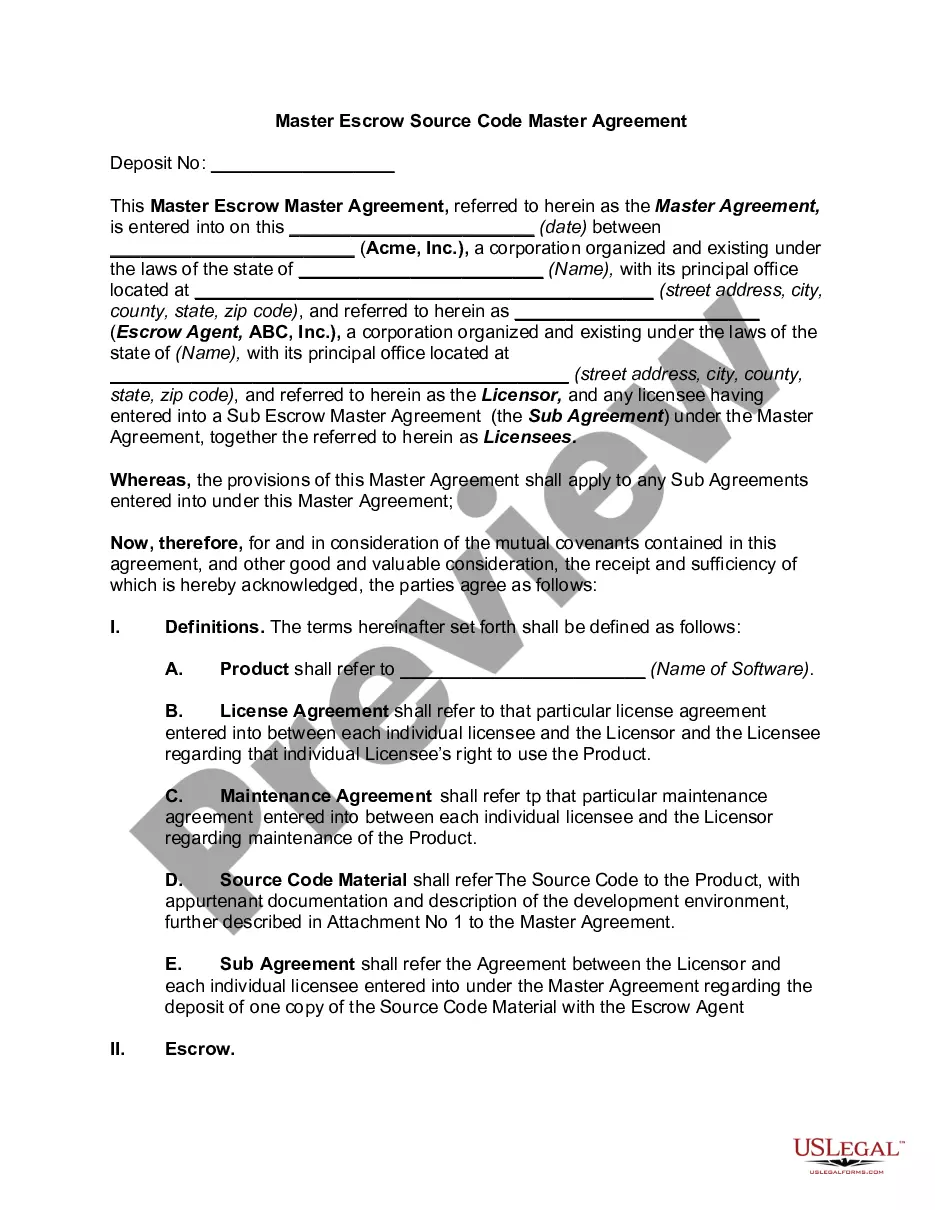
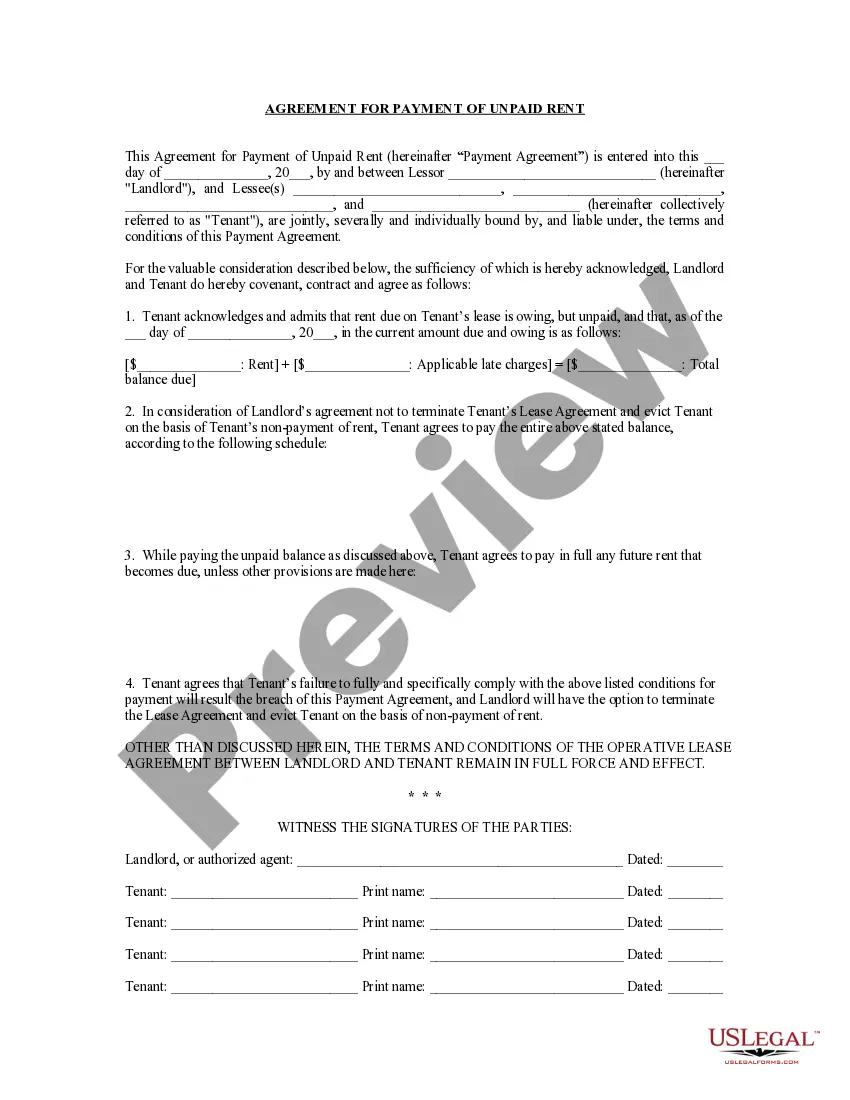
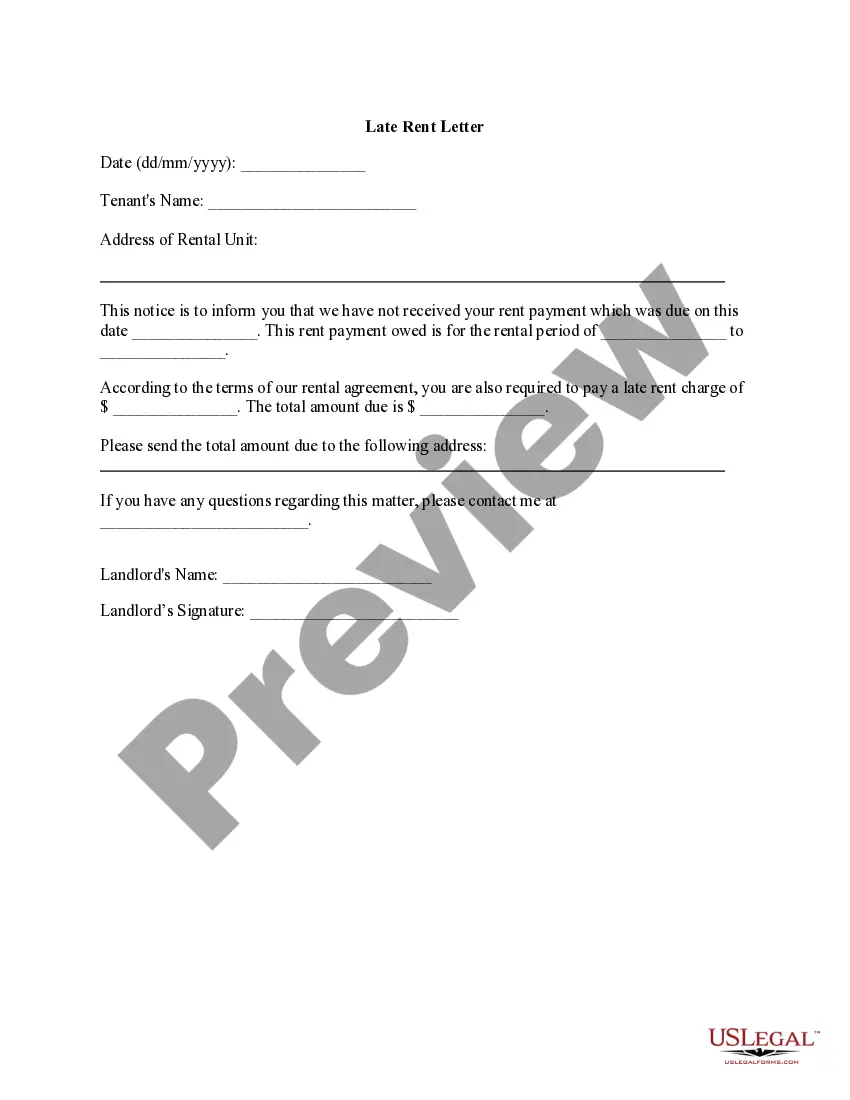
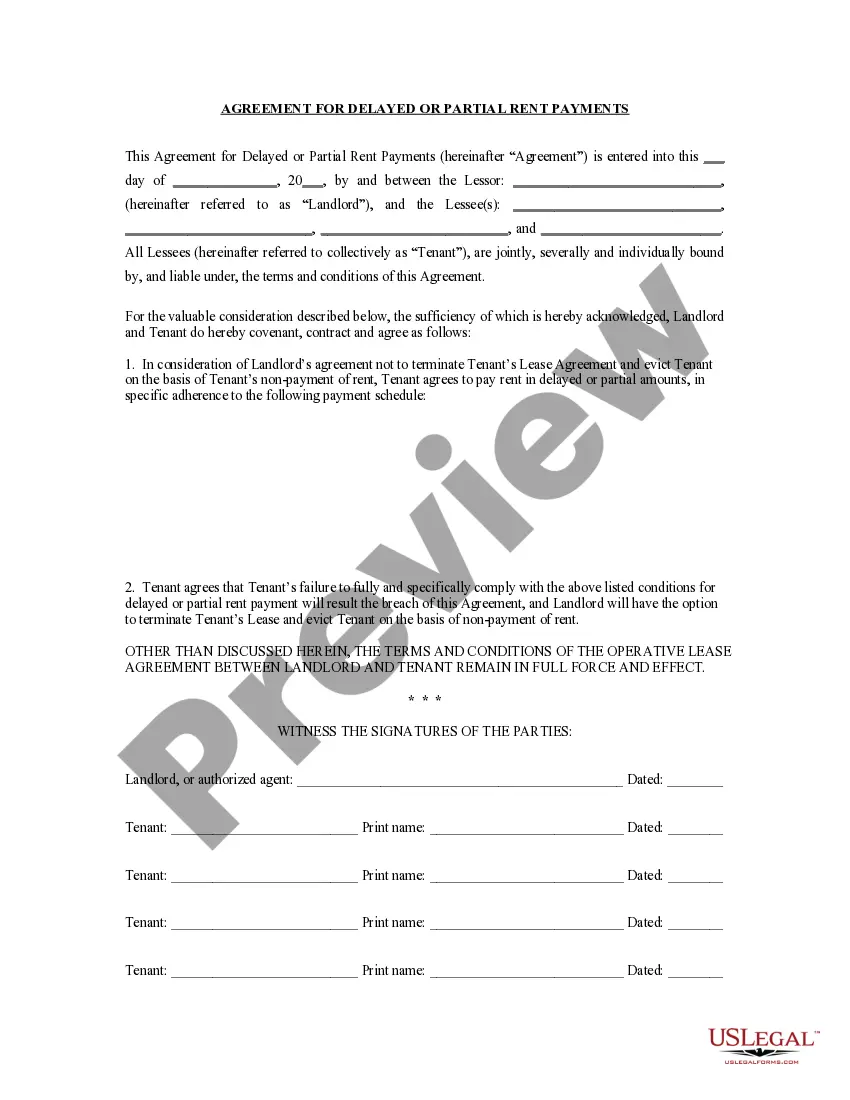
The Agreement for Payment of Unpaid Rent is a legal document designed for landlords and tenants. This form allows landlords to agree to a structured payment plan for overdue rent in exchange for not initiating eviction proceedings against the tenant. Unlike a traditional lease agreement, this document focuses specifically on addressing past due rent obligations, making it a crucial tool for maintaining tenant-landlord relations during financial challenges.
Form components explained
- Parties involved: Identifies the landlord and tenant(s) entering into the agreement.
- Payment details: Specifies the amount of overdue rent and any applicable late charges.
- Acknowledgment clause: Confirms that the tenant admits to the past due rent obligations.
- Conditions of the agreement: States that the original lease terms remain in effect unless modified within this agreement.
- Signature section: Requires signatures from both landlord and all tenants to validate the agreement.
When to use this form
This form is useful when a tenant is unable to pay rent on time and wishes to avoid eviction. It provides a formal structure for setting up a repayment plan for overdue amounts, which can help tenants regain financial stability while ensuring landlords receive the rent they are owed without resorting to eviction. It can be employed in situations where tenants face temporary financial hardships but are committed to settling their obligations.
Who needs this form
- Landlords seeking to provide flexibility to tenants facing financial difficulties.
- Tenants who have fallen behind on rent payments but wish to resolve the issue without eviction.
- Property management companies that deal with rent collection and tenant agreements.
Completing this form step by step
- Identify the parties: Clearly state the names of the landlord and tenant(s).
- Fill in the date: Enter the date when the agreement is being made.
- Specify the overdue amount: Clearly outline the total rent due and any late fees.
- Review original lease terms: Ensure that the conditions of the original lease are acknowledged to remain effective.
- Obtain signatures: Have all parties sign and date the agreement to validate it.
Is notarization required?
Notarization is not commonly needed for this form. However, certain documents or local rules may make it necessary. Our notarization service, powered by Notarize, allows you to finalize it securely online anytime, day or night.
Get your form ready online
Our built-in tools help you complete, sign, share, and store your documents in one place.
Make edits, fill in missing information, and update formatting in US Legal Forms—just like you would in MS Word.
Download a copy, print it, send it by email, or mail it via USPS—whatever works best for your next step.
Sign and collect signatures with our SignNow integration. Send to multiple recipients, set reminders, and more. Go Premium to unlock E-Sign.
If this form requires notarization, complete it online through a secure video call—no need to meet a notary in person or wait for an appointment.
We protect your documents and personal data by following strict security and privacy standards.

Make edits, fill in missing information, and update formatting in US Legal Forms—just like you would in MS Word.

Download a copy, print it, send it by email, or mail it via USPS—whatever works best for your next step.

Sign and collect signatures with our SignNow integration. Send to multiple recipients, set reminders, and more. Go Premium to unlock E-Sign.

If this form requires notarization, complete it online through a secure video call—no need to meet a notary in person or wait for an appointment.

We protect your documents and personal data by following strict security and privacy standards.
Common mistakes
- Failing to complete all fields, especially the amount owed.
- Not including signatures from all tenants involved.
- Omitting the acknowledgment of original lease terms, which can lead to conflicts.
Why complete this form online
- Easy access to customizable templates that meet legal requirements.
- Instant downloadable format saves time and facilitates quick preparation.
- Reliability of forms drafted by licensed attorneys ensures accuracy and legality.
Looking for another form?





Form popularity
FAQ
Dear (Name of landlord or manager), This letter constitutes my written (number of days' notice that you need to give based on your lease agreement)-day notice that I will be moving out of my apartment on (date), the end of my current lease. I am leaving because (new job, rent increase, etc.)
TERMINATING OR ENDING YOUR TENANCY If you have no written lease and you pay rent by the month, the tenancy can be terminated by either you or the landlord for any reason or no reason at all, by giving at least 30 days written notice before the next rental due date.
When you want to evict a tenant who is occupying the premises on a month-to-month basis, give the tenant a 30-day notice to quit, get a summons for unlawful detainer from the court, and appear at the hearing to argue the case. If you win, obtain a writ of possession and have the sheriff evict the tenants.
Restrictions on landlord's right to access rental property (Virginia landlords must provide 24 hours' notice of entry, but are not required to provide notice if the entry follows a tenant's request for maintenance) (Va.
Today's Date. Landlord's Name. Property Address and Unit Number. State Your Desire to Move Out of the Apartment. Include Desired Move-Out Date. That You Expect the Return of Your Security Deposit Under State Law. A Forwarding Address Where Your Security Deposit Can Be Sent.
This notice will inform the tenant that the tenant has 21 days to either remedy the violation or move out of the rental unit. If the tenant does not remedy the violation or move, then the landlord can file an eviction lawsuit against the tenant at the end of the 30 days. (Va. Code Ann.
To evict a tenant in California, a landlord must put his eviction notice in writing.If a landlord is evicting a tenant for a lease violation or to take control of the property, he must give the tenant 30-60 days notice.
Yes, in Virginia, you can evict unwanted family members from your home.However, in most cases, Virginia still considers them to be a tenant. The courts will most likely treat them as a month-to-month tenant even if they have no lease, and pay no rent.
As a renter in Virginia, you have legal protections under the Virginia Residential Landlord and Tenant Act (VRLTA) that include the right to: A fair application fee. A fair security deposit. A decent and safe place to live.