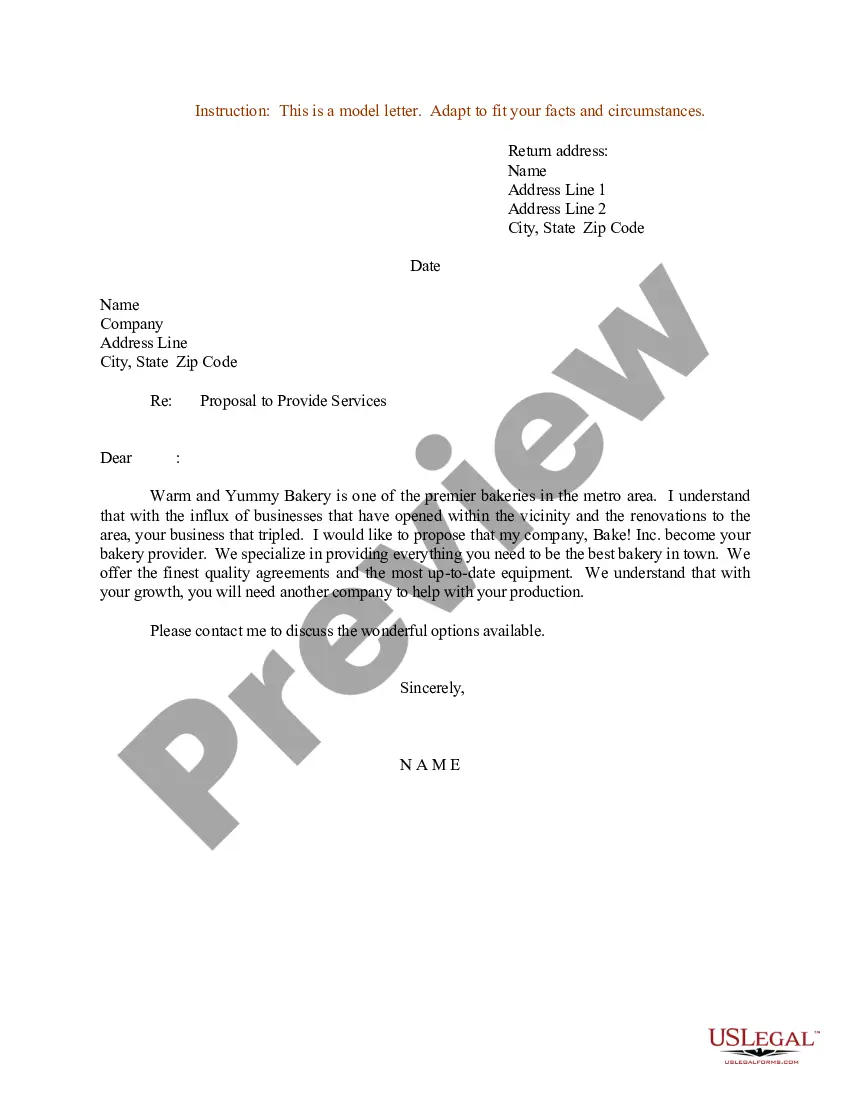
Virginia Letter from Tenant to Landlord containing Notice of termination for landlord's noncompliance with possibility to cure
Understanding this form
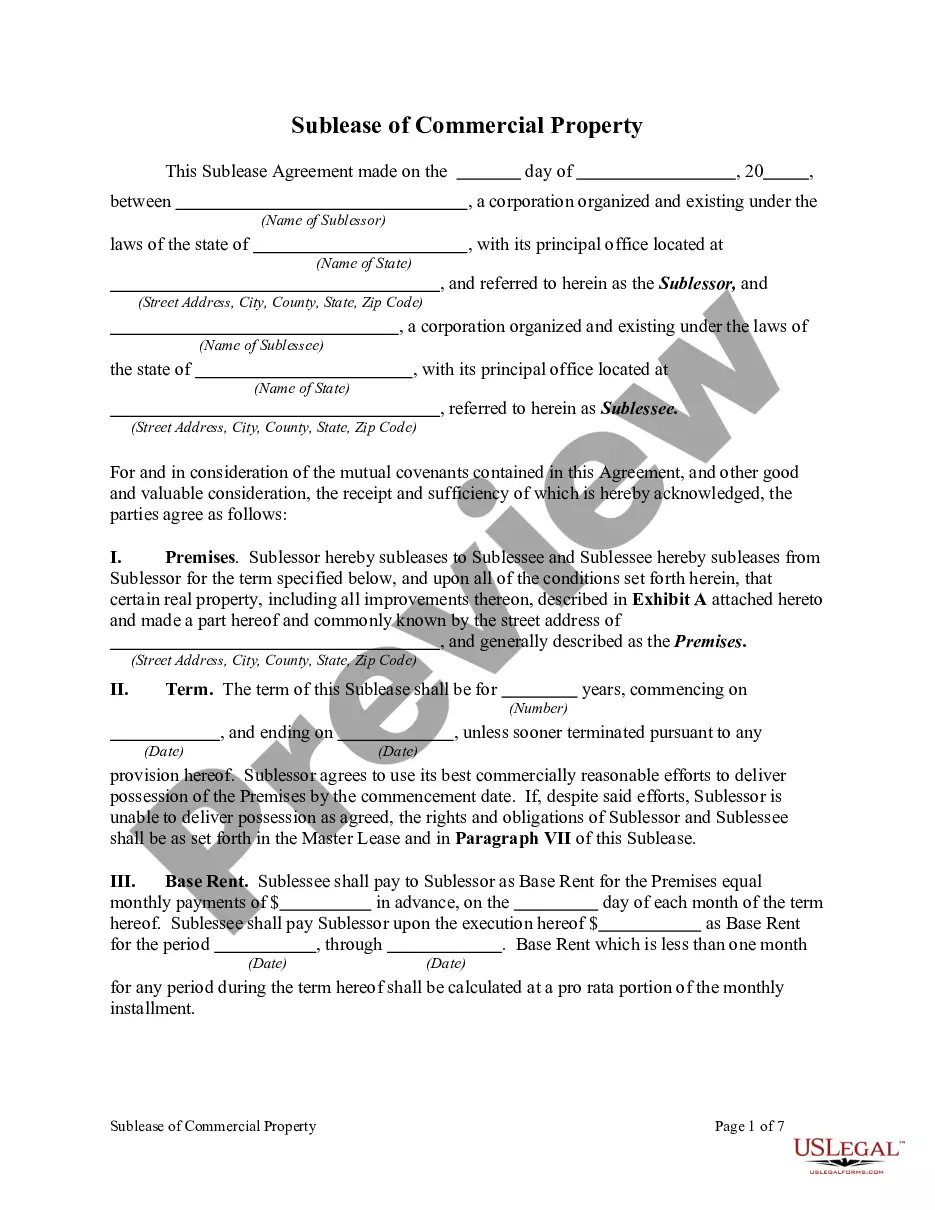
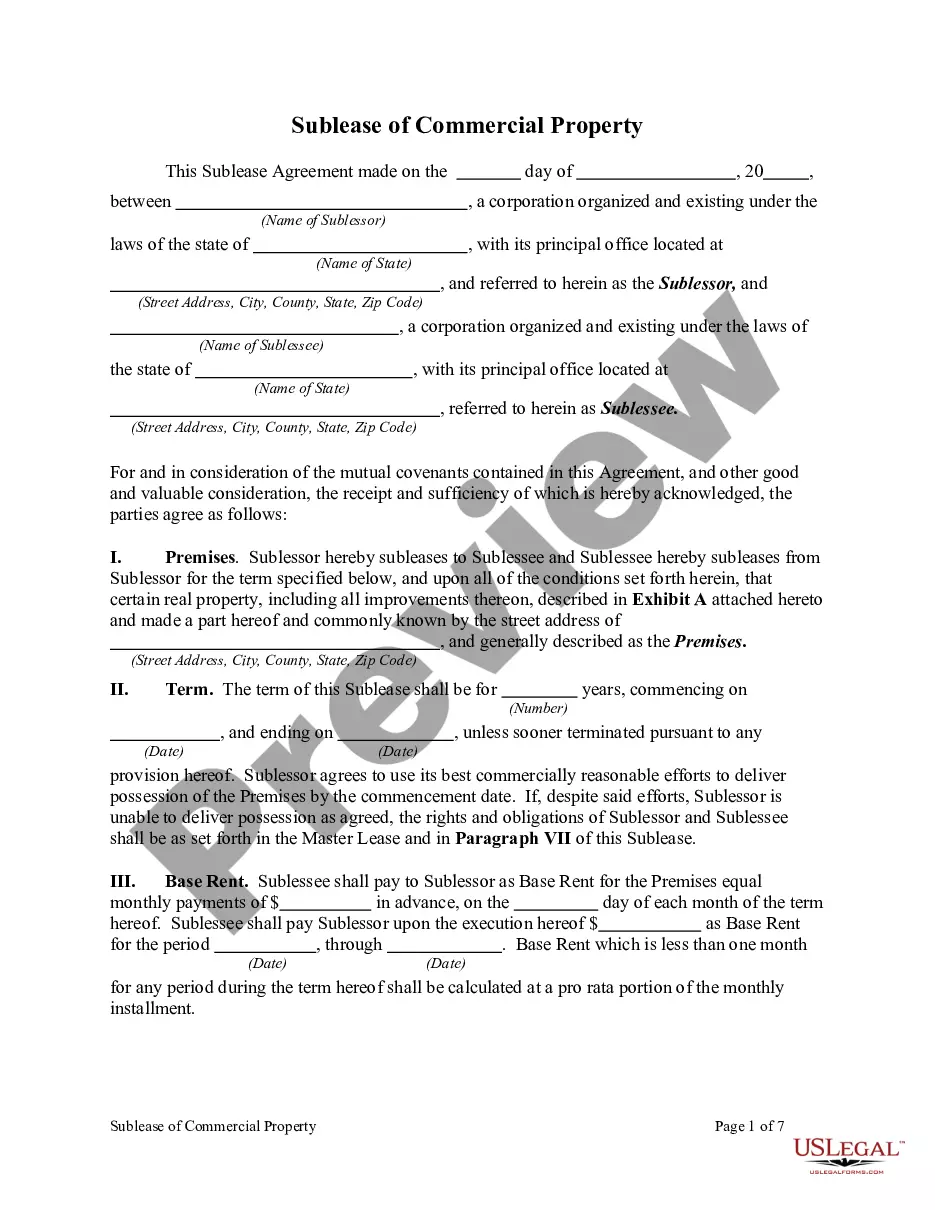
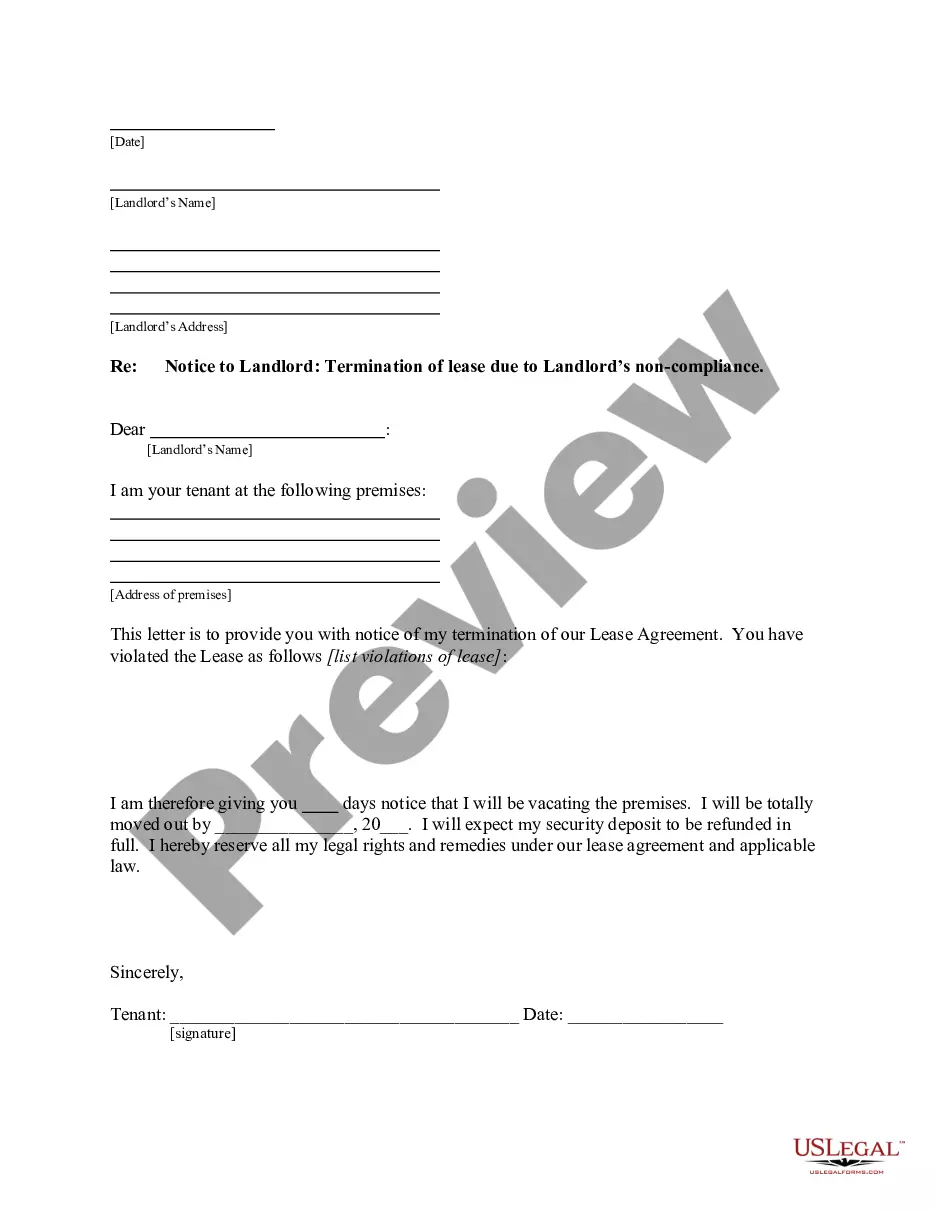
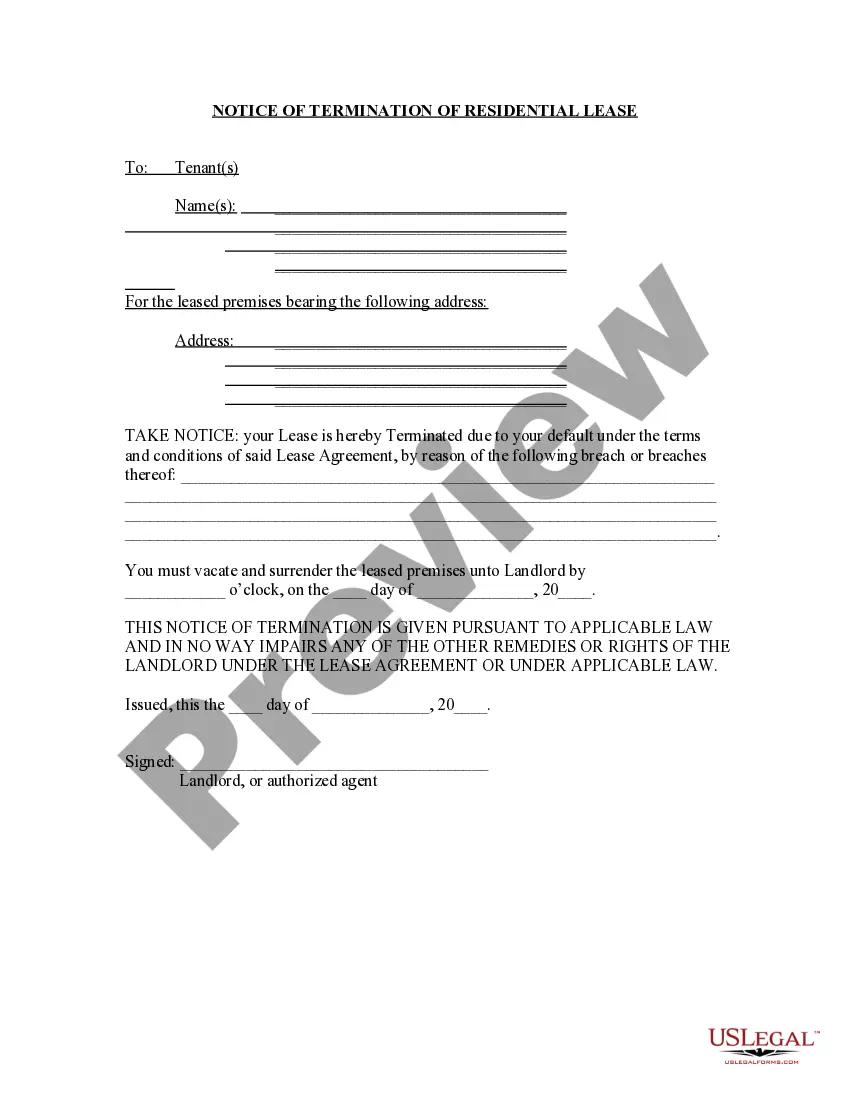
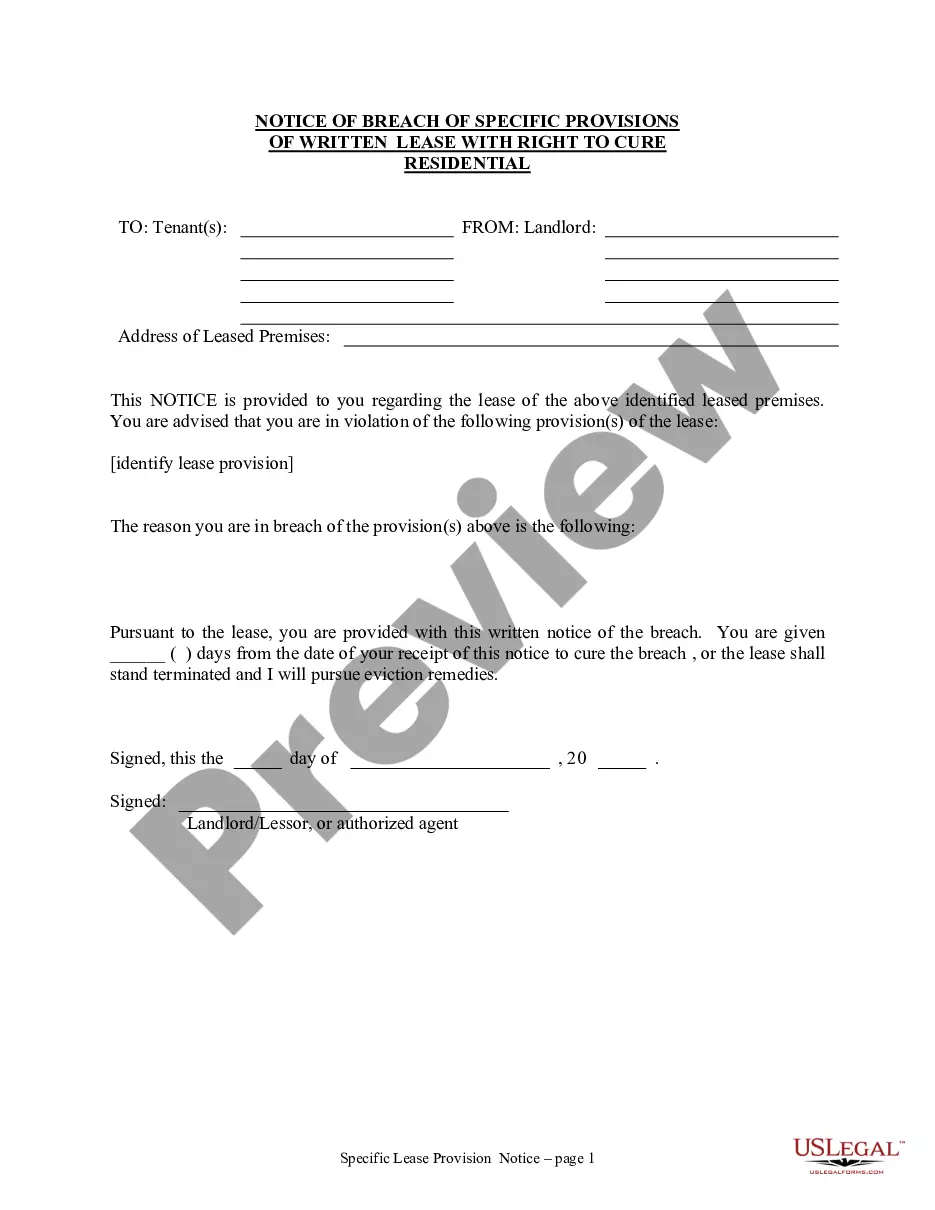
This letter from tenant to landlord serves as a formal notice of termination due to the landlord's noncompliance with the lease agreement. Unlike other notices, this letter specifically highlights the landlord's failure to meet lease obligations while providing them with an opportunity to address the issues before termination becomes effective. This form protects tenants' rights by documenting their grievances and intentions to vacate the premises.
What’s included in this form
- Tenant's name and address
- Landlord's name and address
- Date of termination
- Details of the lease violation by the landlord
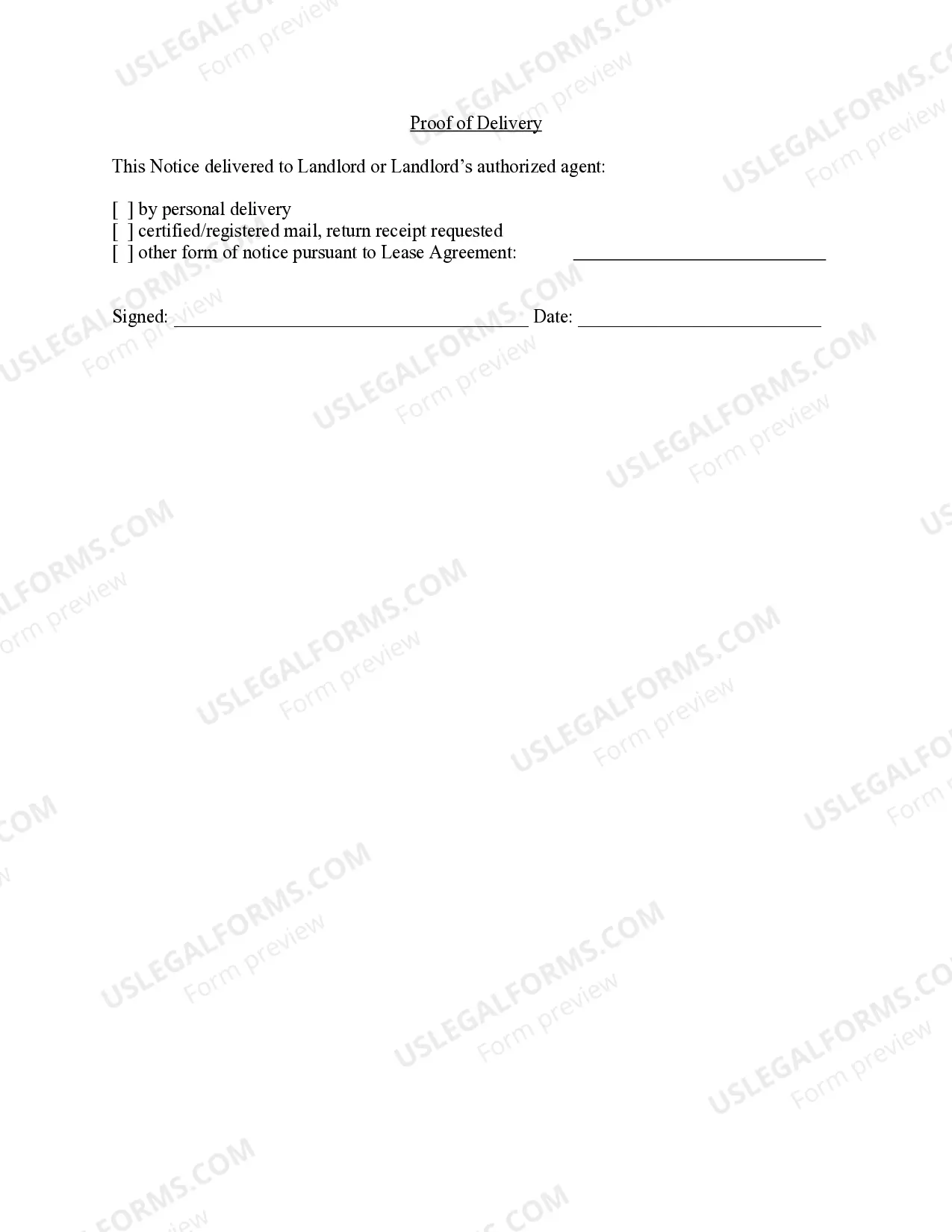
- Signature of the tenant and proof of delivery method


When to use this document
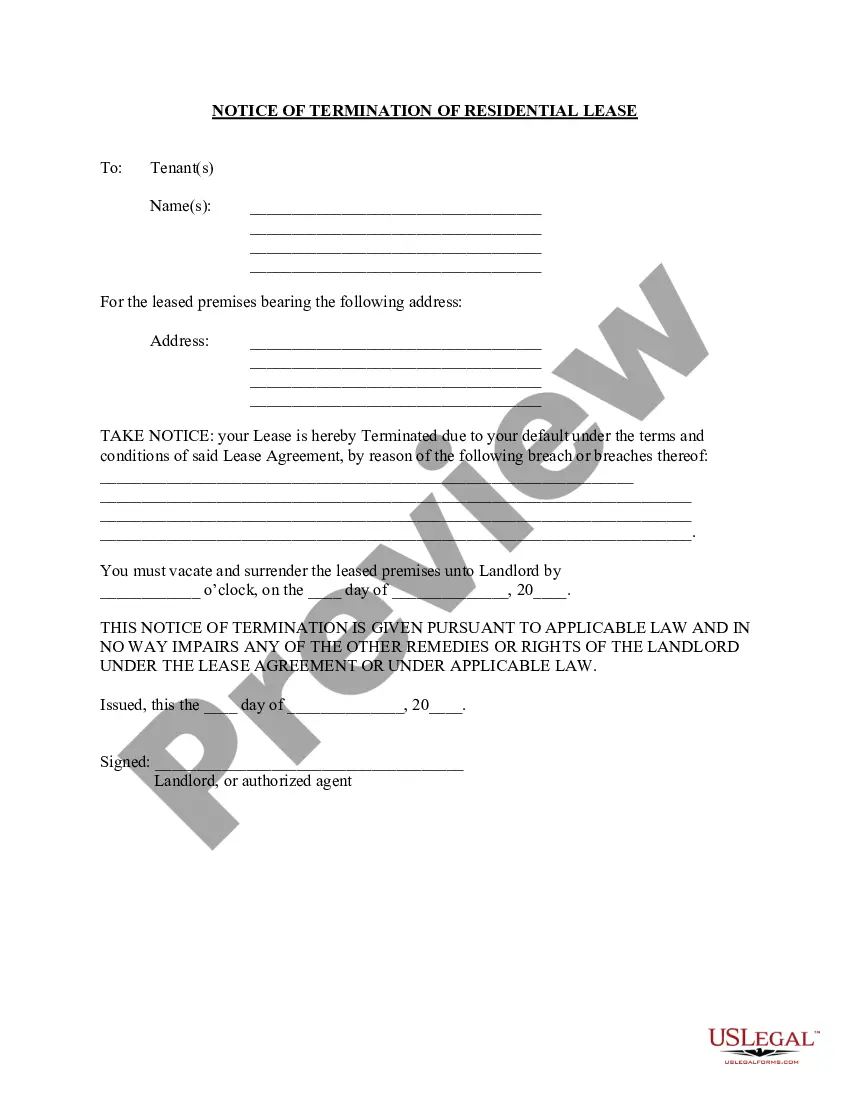
This form should be used when a tenant plans to vacate a rental property due to the landlord's failure to comply with lease terms. Examples include situations where the landlord neglects essential repairs, fails to provide necessary services, or violates any agreed-upon terms. By using this form, the tenant formally documents their intent and gives the landlord a chance to rectify the situation.
Who this form is for
This form is intended for:
- Tenants who are experiencing issues with their landlord related to lease violations.
- Individuals seeking to protect their rights before vacating a rental property.
- Those who want to ensure proper legal documentation is in place regarding their tenancy issues.
Steps to complete this form
- Identify and enter your name and address at the top of the letter.
- Include the landlord's name and address under your information.
- Specify the date you plan to terminate the lease.
- Describe the nature of the landlord's noncompliance and cite specific lease violations.
- Sign the letter and include the method of delivery to the landlord.
Is notarization required?
Notarization is generally not required for this form. However, certain states or situations might demand it. You can complete notarization online through US Legal Forms, powered by Notarize, using a verified video call available anytime.
Get your form ready online
Our built-in tools help you complete, sign, share, and store your documents in one place.
Make edits, fill in missing information, and update formatting in US Legal Forms—just like you would in MS Word.
Download a copy, print it, send it by email, or mail it via USPS—whatever works best for your next step.
Sign and collect signatures with our SignNow integration. Send to multiple recipients, set reminders, and more. Go Premium to unlock E-Sign.
If this form requires notarization, complete it online through a secure video call—no need to meet a notary in person or wait for an appointment.
We protect your documents and personal data by following strict security and privacy standards.

Make edits, fill in missing information, and update formatting in US Legal Forms—just like you would in MS Word.

Download a copy, print it, send it by email, or mail it via USPS—whatever works best for your next step.

Sign and collect signatures with our SignNow integration. Send to multiple recipients, set reminders, and more. Go Premium to unlock E-Sign.

If this form requires notarization, complete it online through a secure video call—no need to meet a notary in person or wait for an appointment.

We protect your documents and personal data by following strict security and privacy standards.
Avoid these common issues
- Failing to provide all required details about the lease violation.
- Not including the date of termination or signing the letter.
- Delivering the notice improperly, which can affect its validity.
Why use this form online
- Convenient access to the form allows for quick editing and customization.
- Ensures you have the latest legal language provided by licensed attorneys.
- Simplifies delivery options with clear instructions for recommended methods.
Legal use & context
- This letter serves to formally notify the landlord of noncompliance issues.
- It creates a record that may be useful if disputes arise regarding the lease termination.
- It is advisable to keep a copy of the signed letter and proof of delivery for personal records.
Main things to remember
- Using this form is essential for tenants facing landlord violations of lease agreements.
- Always provide a clear description of lease violations to strengthen your position.
- Ensure to follow local laws regarding notice periods and delivery methods.
Looking for another form?
Form popularity
FAQ
If you don't move out by the day in the notice, the landlord can ask the NSW Civil and Administrative Tribunal (NCAT) for a termination order. A termination order means the rental agreement is ended. The order will state the day when you must give vacant possession that is, you move out and return the keys.
If you refuse access, the landlord/agent can apply to the Tribunal for an order that authorises them or any other person to enter the premises.
If the landlord/agent wants to end your agreement at the end of the fixed term, they must give you at least 30 days notice that includes the last day of the term. If the landlord/agent applies for a termination order, the Tribunal must terminate the agreement.
Be calm, objective, and rational. Keep written records of everything. Teach tenants how they should treat you. Try to get your tenants on your side. Ask the terrible tenants to leave. Begin the eviction process.
The landlord verification form is a document used by a landlord when verifying the previous rental information of an applicant for tenancy. The requesting landlord must send the form to the applicant's current or past landlord in order to obtain all details related to the tenancy of the individual.
If the tenant refuses, you are permitted to send them a notice to agree or quit the property. The tenant refusing you access constitutes a breach in the lease agreement, so they could be evicted if they continue to deny access.
Leaving without giving notice Your tenancy won't have ended and you'll still have to pay your rent until you end your tenancy in the right way. You might also have to pay other bills - for example, council tax. Your landlord can get a court order to make you pay the rent you owe.
While tenants cannot unreasonably deny access to a landlord, landlords must also follow all of the state and local rules regarding access to tenants' apartments. Roughly half of states have rules governing landlord entry into tenants' apartments.
Yes, your tenant is within their rights to refuse you access to the property. In a lot of cases, tenants will refuse because the date and time isn't convenient for them and will suggest an alternative date or ask you to rearrange. However, some tenants will persistently try to obstruct you from entering the property.