Virginia Quitclaim Deed from Individual to Corporation
What this document covers
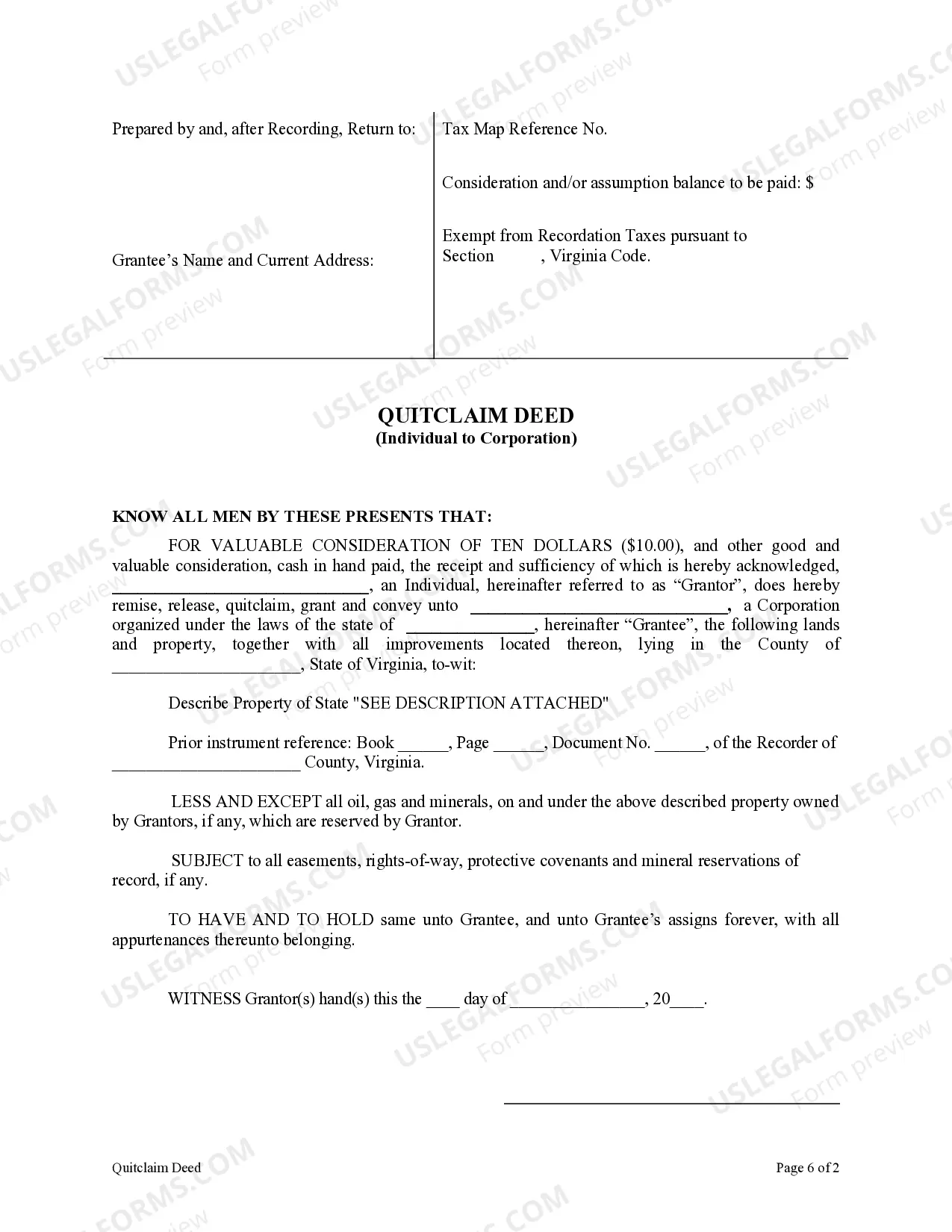
The Quitclaim Deed from Individual to Corporation is a legal document that allows an individual (the grantor) to transfer property rights to a corporation (the grantee). This type of deed differs from other deeds, like warranty deeds, as it does not provide any guarantees about the title; instead, it simply conveys whatever rights the grantor has. This form is particularly useful for granting property without warranties against claims from third parties.
Key parts of this document
- Identification of the grantor (individual) and grantee (corporation).
- Description of the property being transferred.
- Legal language that reserves any mineral rights owned by the grantor.
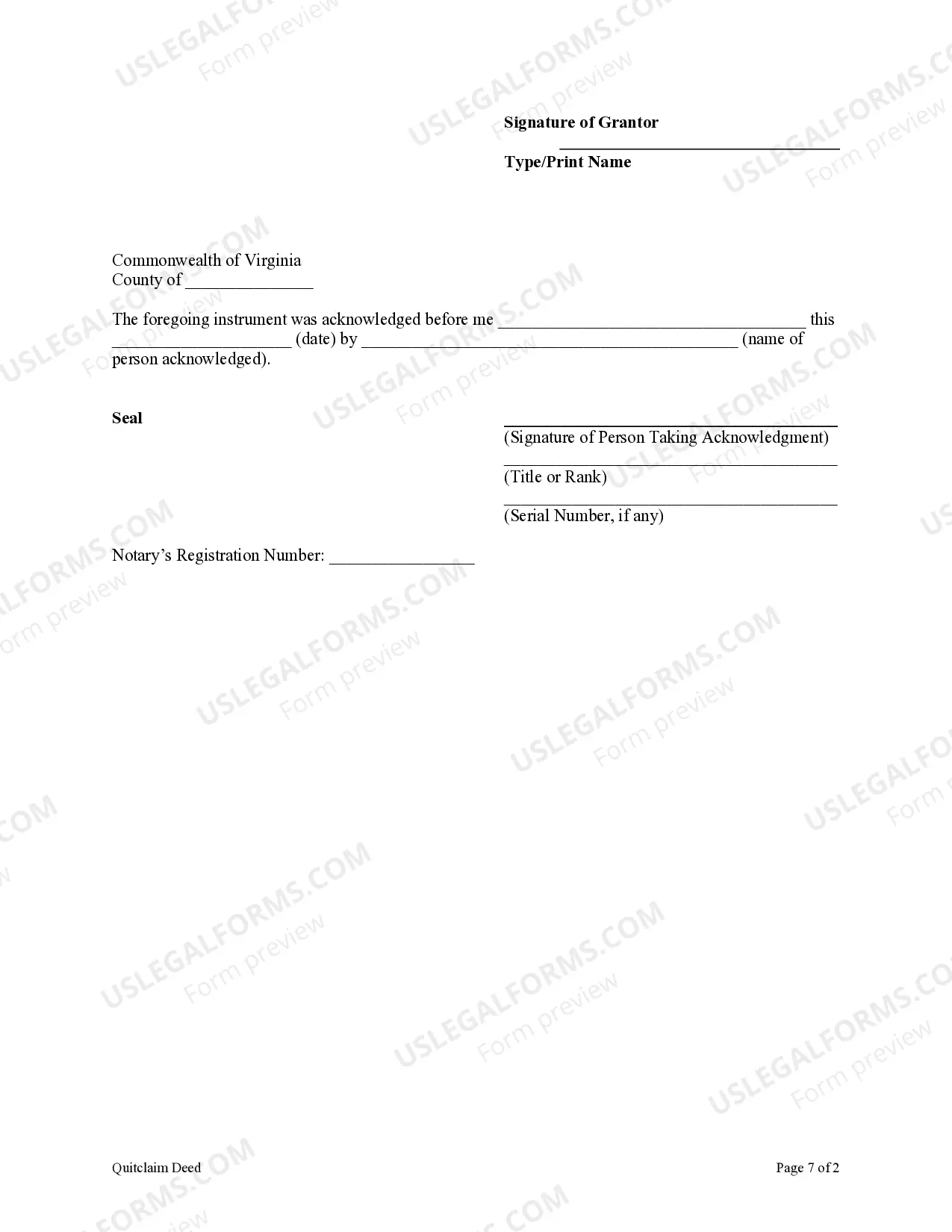
- Signature line for the grantor to execute the deed.
- Space for recording information related to prior instruments.


Situations where this form applies
This form is needed when an individual wants to transfer ownership of real estate to a corporation, especially in cases where the grantor does not wish to retain any future claims on the property. It is common in business transactions, especially during mergers, acquisitions, or other situations requiring simple property transfers.
Who needs this form
- Individuals transferring property to a corporation.
- Business owners engaged in real estate transactions.
- Anyone needing to execute a property transfer quickly without the complexities of a warranty deed.
How to prepare this document
- Identify and enter the names of the grantor (individual) and grantee (corporation).
- Provide a detailed description of the property being transferred.
- Specify the date of the transaction and sign the document as the grantor.
- Fill in any required information regarding prior instruments referencing the property.
- Ensure that you check the box to reserve mineral rights if applicable.
Does this form need to be notarized?
This document requires notarization to meet legal standards. US Legal Forms provides secure online notarization powered by Notarize, allowing you to complete the process through a verified video call, available 24/7.
Get your form ready online
Our built-in tools help you complete, sign, share, and store your documents in one place.
Make edits, fill in missing information, and update formatting in US Legal Forms—just like you would in MS Word.
Download a copy, print it, send it by email, or mail it via USPS—whatever works best for your next step.
Sign and collect signatures with our SignNow integration. Send to multiple recipients, set reminders, and more. Go Premium to unlock E-Sign.
If this form requires notarization, complete it online through a secure video call—no need to meet a notary in person or wait for an appointment.
We protect your documents and personal data by following strict security and privacy standards.

Make edits, fill in missing information, and update formatting in US Legal Forms—just like you would in MS Word.

Download a copy, print it, send it by email, or mail it via USPS—whatever works best for your next step.

Sign and collect signatures with our SignNow integration. Send to multiple recipients, set reminders, and more. Go Premium to unlock E-Sign.

If this form requires notarization, complete it online through a secure video call—no need to meet a notary in person or wait for an appointment.

We protect your documents and personal data by following strict security and privacy standards.
Typical mistakes to avoid
- Failing to provide a complete and clear description of the property.
- Not specifying the retention of mineral rights when applicable.
- Leaving the signature line blank or not having the grantor sign.
- Not recording the deed with the appropriate county office post-completion.
Why complete this form online
- Easy and convenient download for immediate use.
- Editable fields allow customization to fit your specific requirements.
- Access to legally vetted documents prepared by licensed attorneys.
Quick recap
- The Quitclaim Deed allows for the quick transfer of property from an individual to a corporation.
- It is essential to provide accurate information regarding the grantor, grantee, and property description.
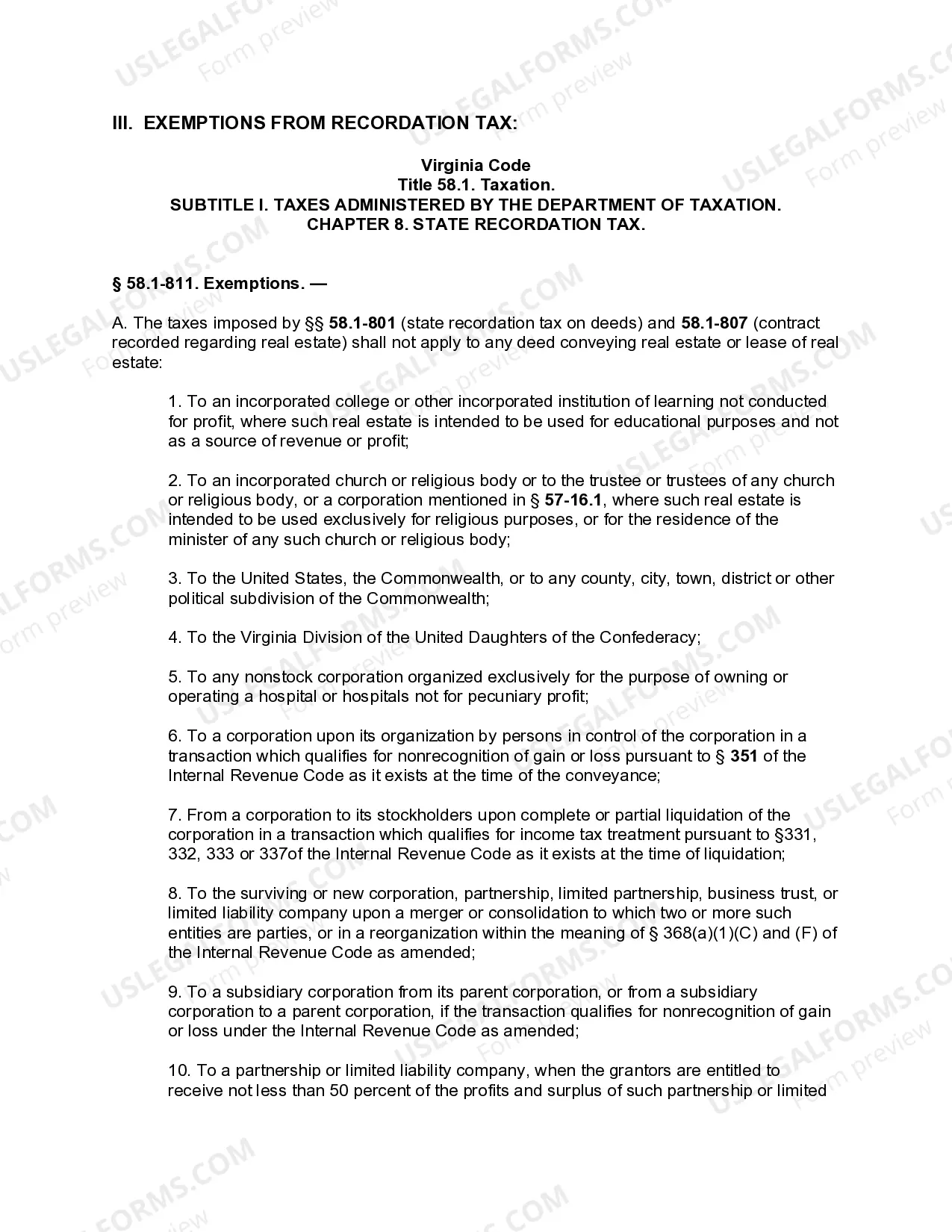
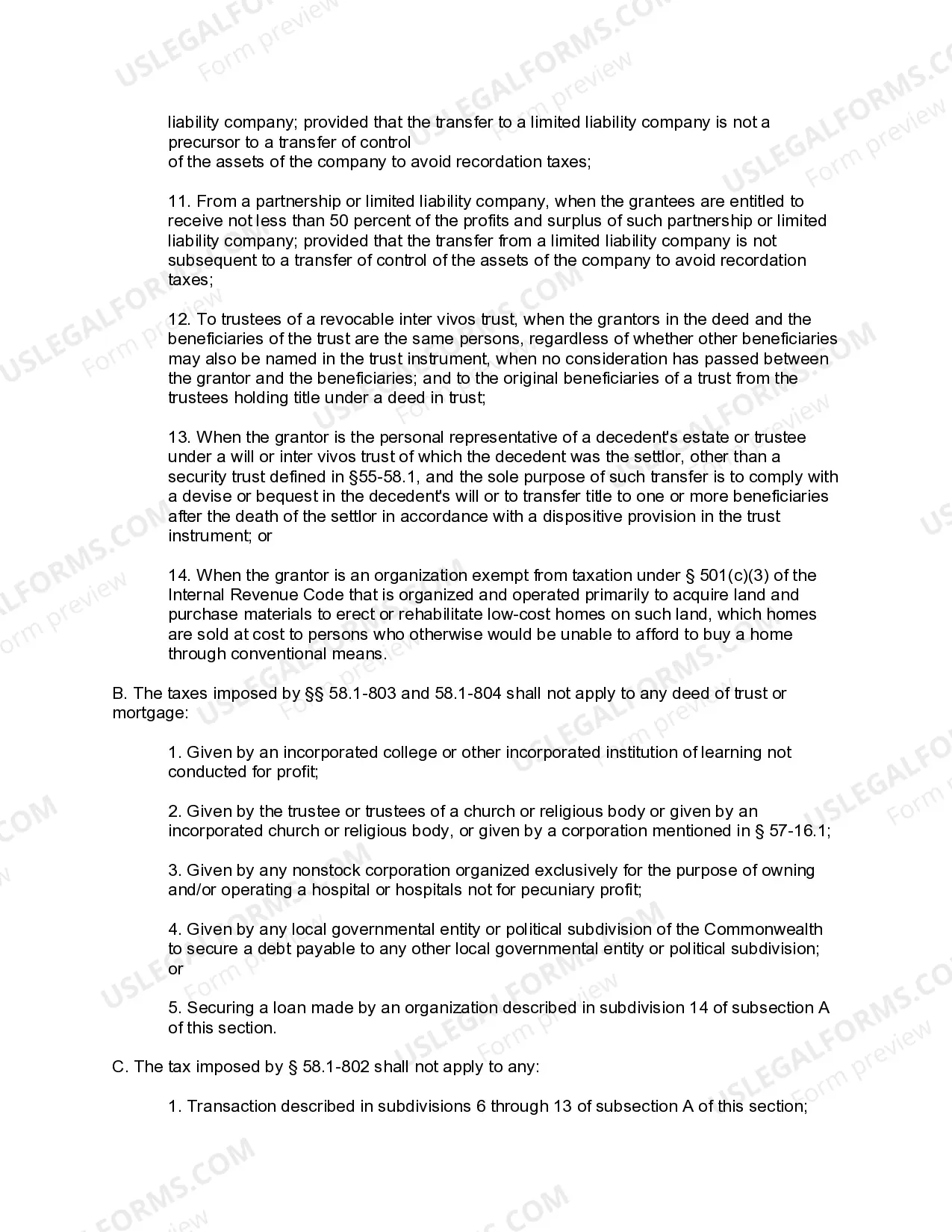
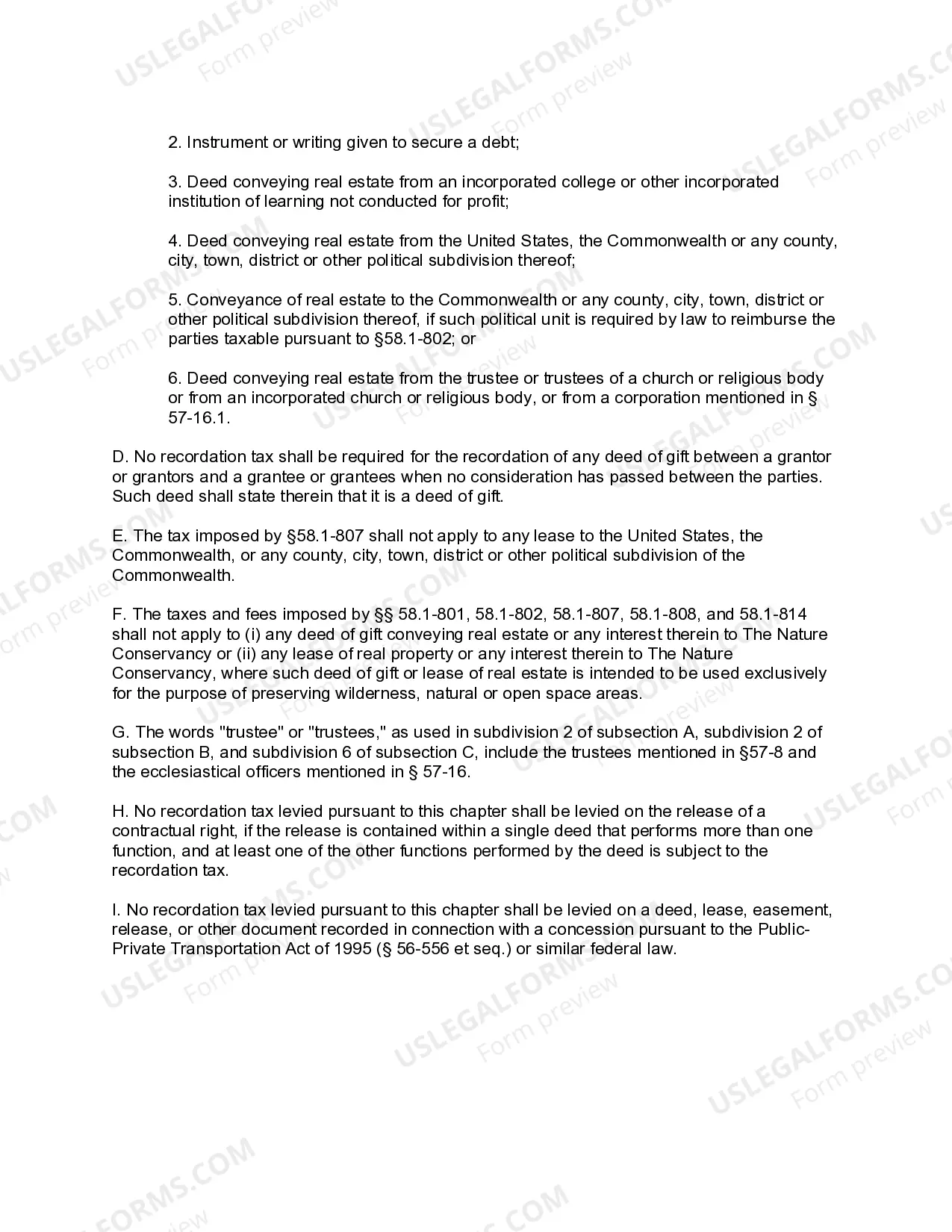
- Understanding exemptions from recordation tax is crucial for compliance in Virginia.
- Always consider the implications of retaining any property rights, such as minerals, during the transfer.
Looking for another form?





Form popularity
FAQ
Virginia Requirements for Quit Claim Deeds A legal description of the property must be included, and there should be a statement regarding how the grantor came to be in possession of the property. The deed should be notarized both parties must sign the deed in the presence of a notary public, who will also sign it.
It usually takes four to six weeks to complete the legal processes involved in the transfer of title.
Fill out the quit claim deed form, which can be obtained online, or write your own using the form as a guide. The person giving up the interest in the property is the grantor, and the person receiving the interest is the grantee.
But you might be wondering if an owner can transfer a deed to another person without a real estate lawyer. The answer is yes. Parties to a transaction are always free to prepare their own deeds.A quitclaim deed, for example, is far simpler than a warranty deed.
The only way to forcibly change the ownership status is through a legal action and the resultant court order. However, if an owner chooses to be removed from the deed, it is simply a matter of preparing a new deed transferring that owner's interest in the property.
The only way to forcibly change the ownership status is through a legal action and the resultant court order. However, if an owner chooses to be removed from the deed, it is simply a matter of preparing a new deed transferring that owner's interest in the property.
Quitclaim deeds are most often used to transfer property between family members. Examples include when an owner gets married and wants to add a spouse's name to the title or deed, or when the owners get divorced and one spouse's name is removed from the title or deed.
A quitclaim deed will remove the out-spouse (or departing spouse) from the title to the property, effectively relinquishing their equity or ownership in the home. The execution of a quitclaim deed is typically a requirement of a divorce settlement in order to complete the division of assets.
It will depend what state the property is in. For example, the minimum fee payable when changing the title to have someone removed from a property title in NSW is $133.48. This fee must be paid to the NSW Government Land & Property Information Department.