Virginia Warranty Deed from two Individuals to LLC
About this form
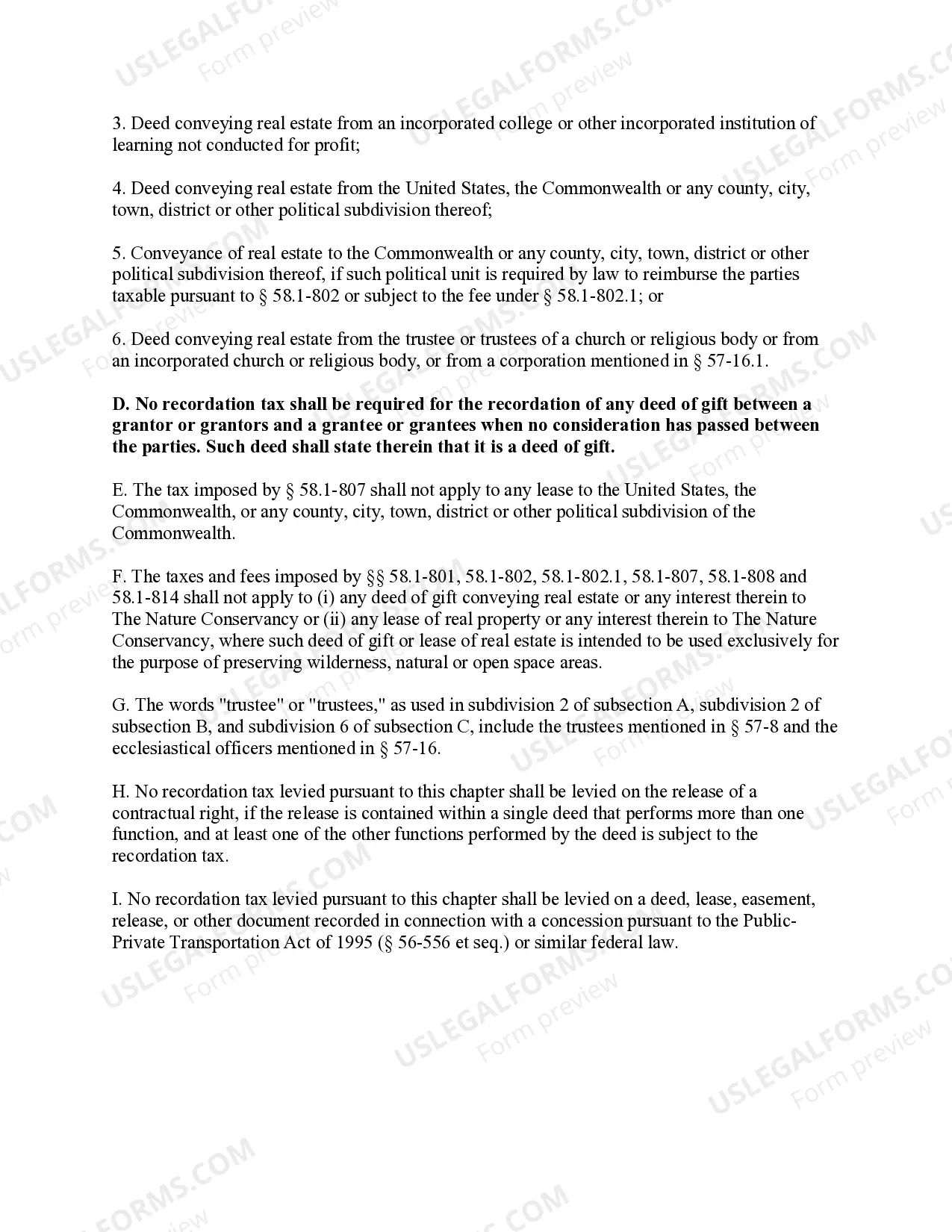
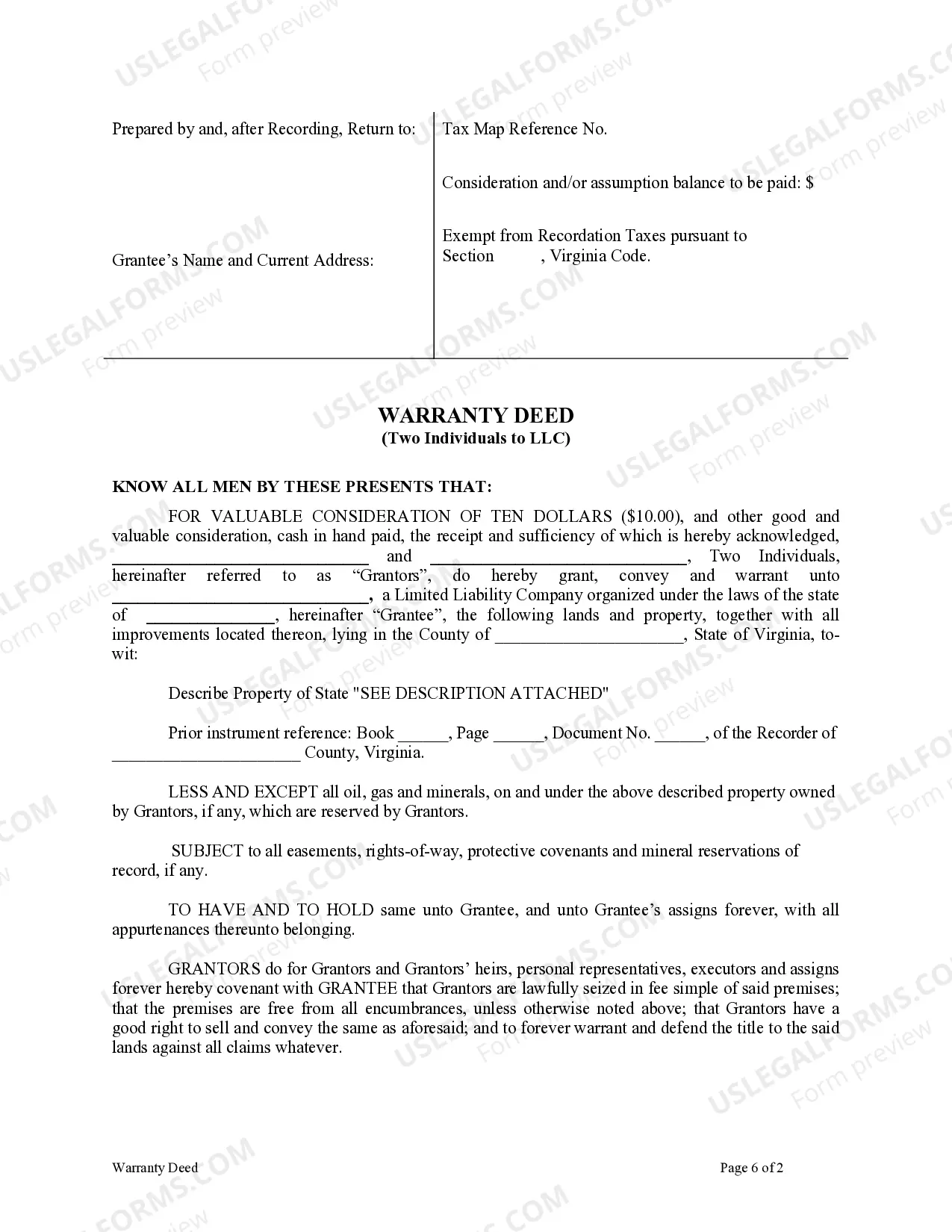
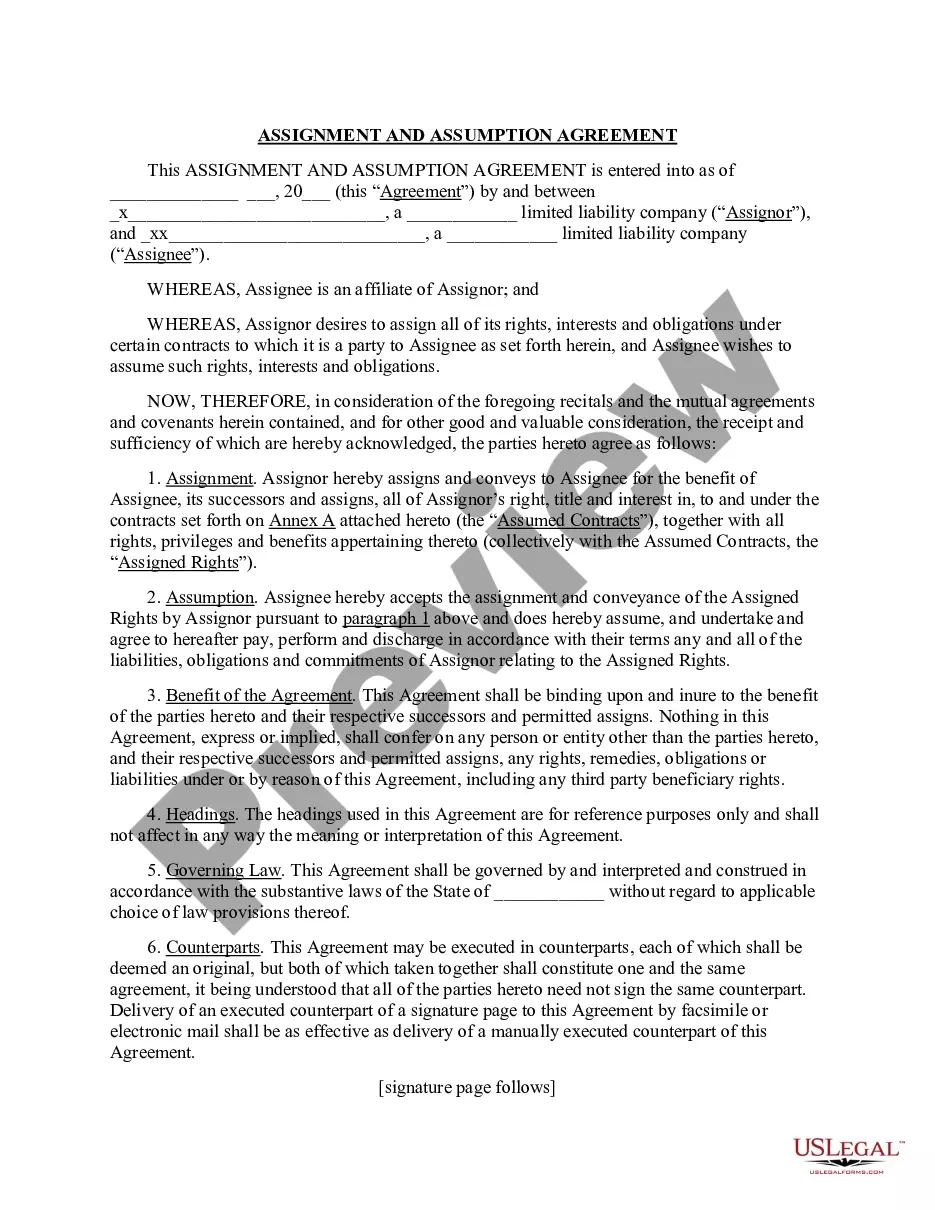
The Warranty Deed from two Individuals to LLC is a legal document that transfers property ownership from two individuals (the Grantors) to a limited liability company (the Grantee). This deed includes warranties from the Grantors regarding the property's title, ensuring that they have the right to sell the property and that it is free from encumbrances. This form is essential for individuals looking to formally convey property into an LLC structure, differing from a standard deed by specifically addressing the nature of the recipient entity.
Key components of this form
- Identification of the Grantors and Grantee.
- Description of the property being transferred.
- Covenant assuring the Grantee of the Grantors' legal right to convey the property.
- Exclusion of certain rights, such as oil, gas, and mineral rights.
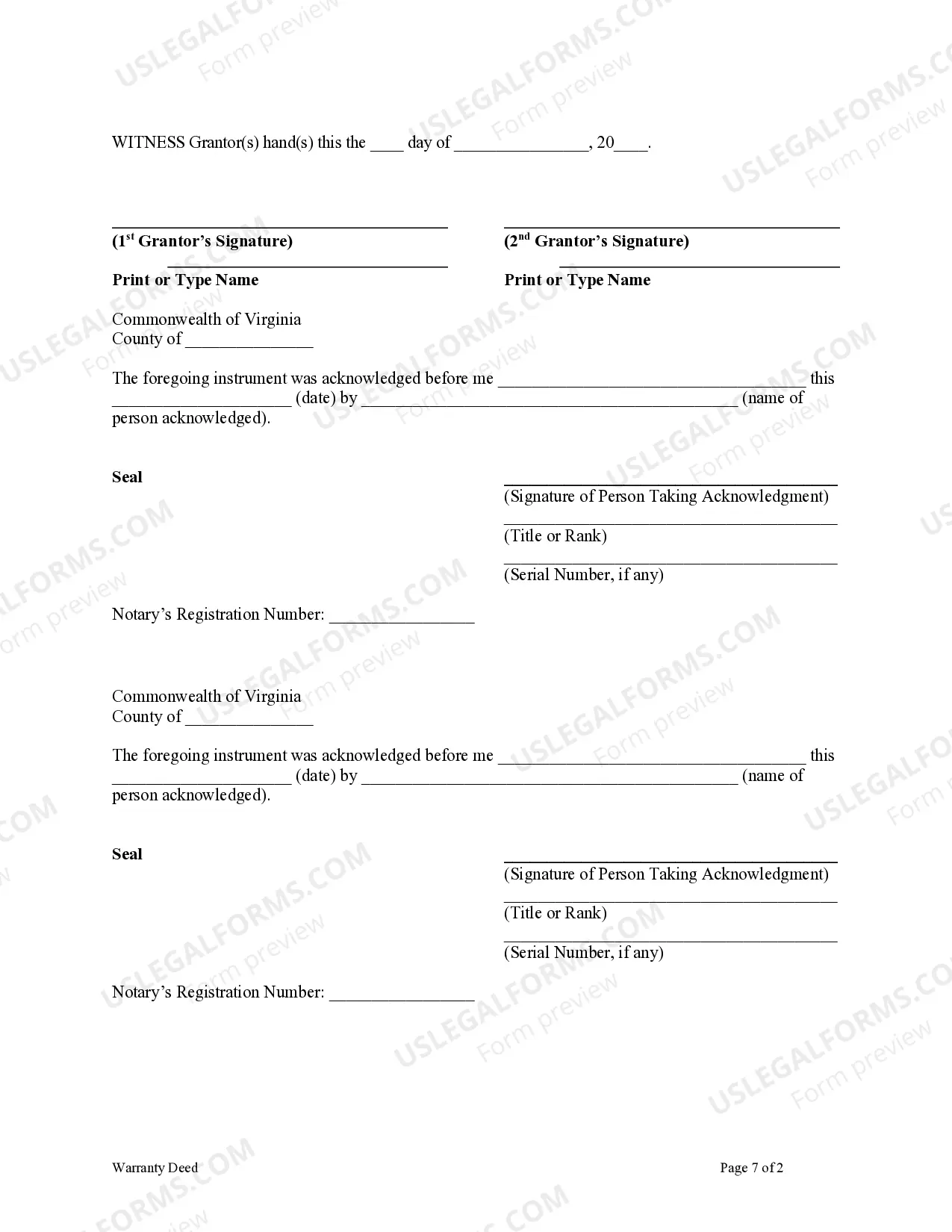
- Signatures of both Grantors, confirming their intent to transfer ownership.


When this form is needed
This form is used when two individuals wish to transfer real estate to a limited liability company, particularly in situations where the property will serve as an asset of the business. It may also be applicable when the individuals want to limit personal liability related to the property through the LLC structure.
Intended users of this form
- Individuals looking to transfer property into a limited liability company.
- Members of an LLC who are also property owners and wish to formalize assets within the business entity.
- Property owners who want to limit personal liability associated with the property asset.
Steps to complete this form
- Identify and enter the names of the Grantors (the individuals transferring the property).
- Specify the name of the Grantee (the LLC receiving the property).
- Provide a clear and detailed description of the property being transferred.
- State any exclusions related to oil, gas, and mineral rights, if applicable.
- Both Grantors must sign and date the form for it to be valid.
Is notarization required?
This form does not typically require notarization unless specified by local law. However, it is recommended to check local regulations to ensure compliance.
Get your form ready online
Our built-in tools help you complete, sign, share, and store your documents in one place.
Make edits, fill in missing information, and update formatting in US Legal Forms—just like you would in MS Word.
Download a copy, print it, send it by email, or mail it via USPS—whatever works best for your next step.
Sign and collect signatures with our SignNow integration. Send to multiple recipients, set reminders, and more. Go Premium to unlock E-Sign.
If this form requires notarization, complete it online through a secure video call—no need to meet a notary in person or wait for an appointment.
We protect your documents and personal data by following strict security and privacy standards.

Make edits, fill in missing information, and update formatting in US Legal Forms—just like you would in MS Word.

Download a copy, print it, send it by email, or mail it via USPS—whatever works best for your next step.

Sign and collect signatures with our SignNow integration. Send to multiple recipients, set reminders, and more. Go Premium to unlock E-Sign.

If this form requires notarization, complete it online through a secure video call—no need to meet a notary in person or wait for an appointment.

We protect your documents and personal data by following strict security and privacy standards.
Mistakes to watch out for
- Failing to accurately describe the property, which can lead to future disputes.
- Not including required exclusions, such as mineral rights, leading to unintended retention of rights.
- Neglecting to sign the form, invalidating the deed.
Benefits of completing this form online
- Convenience of completing the form at any time from your own device.
- Editability allows for correction of errors before finalizing the document.
- Access to templates drafted by licensed attorneys, ensuring legal reliability.
Looking for another form?

Form popularity
FAQ
Locate the most recent deed to the property. Create the new deed. Sign and notarize the new deed. Record the deed in the land records of the clerk's office of the circuit court in the jurisdiction where the property is located.
Locate the most recent deed to the property. Create the new deed. Sign and notarize the new deed. Record the deed in the land records of the clerk's office of the circuit court in the jurisdiction where the property is located.
The only way to forcibly change the ownership status is through a legal action and the resultant court order. However, if an owner chooses to be removed from the deed, it is simply a matter of preparing a new deed transferring that owner's interest in the property.
Retrieve your original deed. Get the appropriate deed form. Draft the deed. Sign the deed before a notary. Record the deed with the county recorder. Obtain the new original deed.
A special warranty deed is a common form of conveyance in Virginia that is used to transfer title to real estate. Unless an exception is made in the deed, all appurtenances, buildings, and privileges belonging to the land being conveyed will be included in the conveyance (55.1-303).
After your Warranty Deed has been recorded at the County Clerk's Office, it can be sent to the grantee. However, any person or corporation can be designated as the recipient of the recorded Warranty Deed.
You will need to have the quitclaim deed notarized with the signatures of you and your spouse. Once this is done, the quitclaim deed replaces your former deed and the property officially is in both of your names. You must record the deed at your county office.
Typically, the lender will provide you with a copy of the deed of trust after the closing. The original warranty deeds are often mailed to the grantee after they are recorded. These are your original copies and should be kept in a safe place, such as a fireproof lockbox or a safe deposit box at a financial institution.
The original deed is returned to the owner of the property from the office of the recorder after proper entry. The office of the Recorder of Deeds maintains a set of indexes about each deed recorded, for an easy search. Almost all states have a grantor-grantee index including a reference to all documents recorded.