Virginia Warranty Deed from Individual to Husband and Wife
Overview of this form
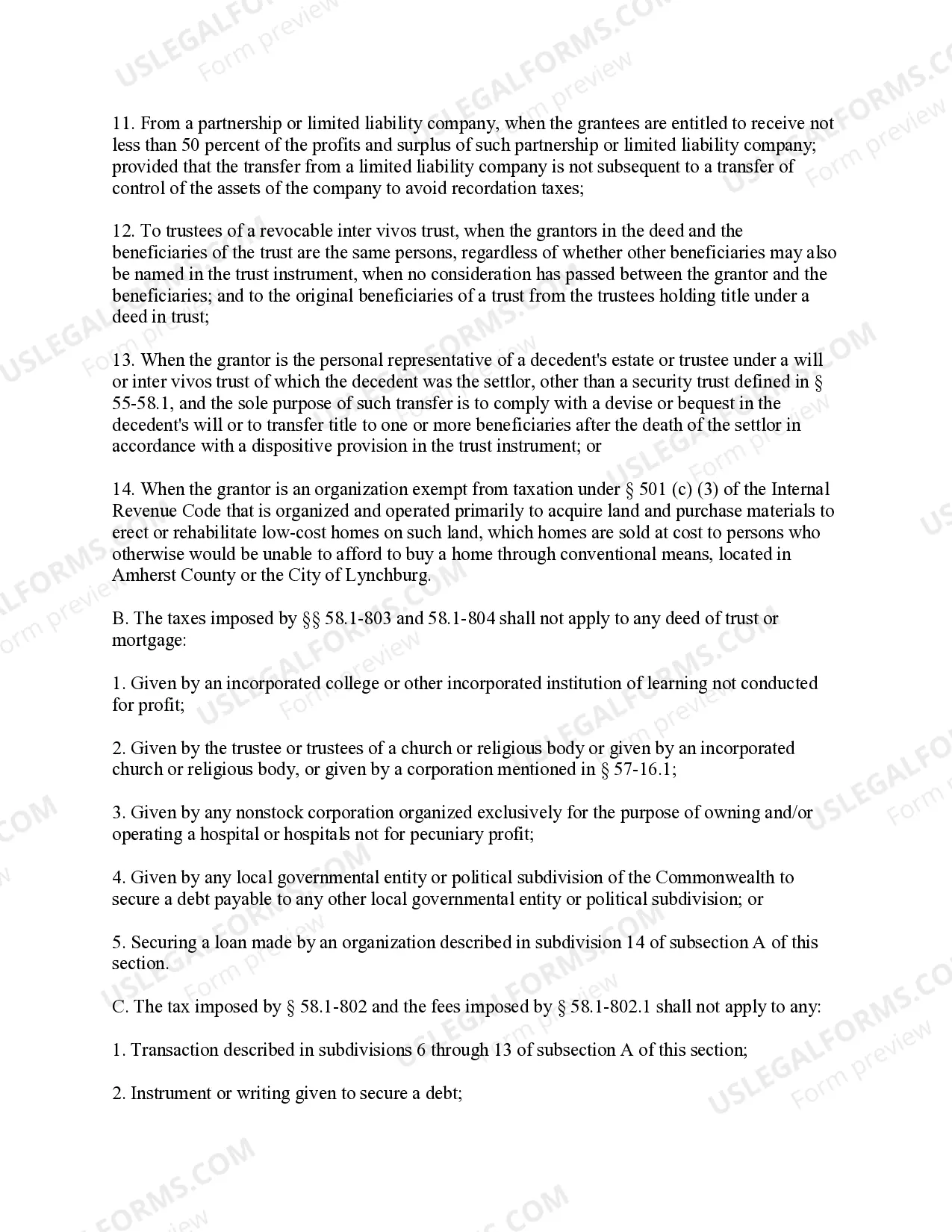
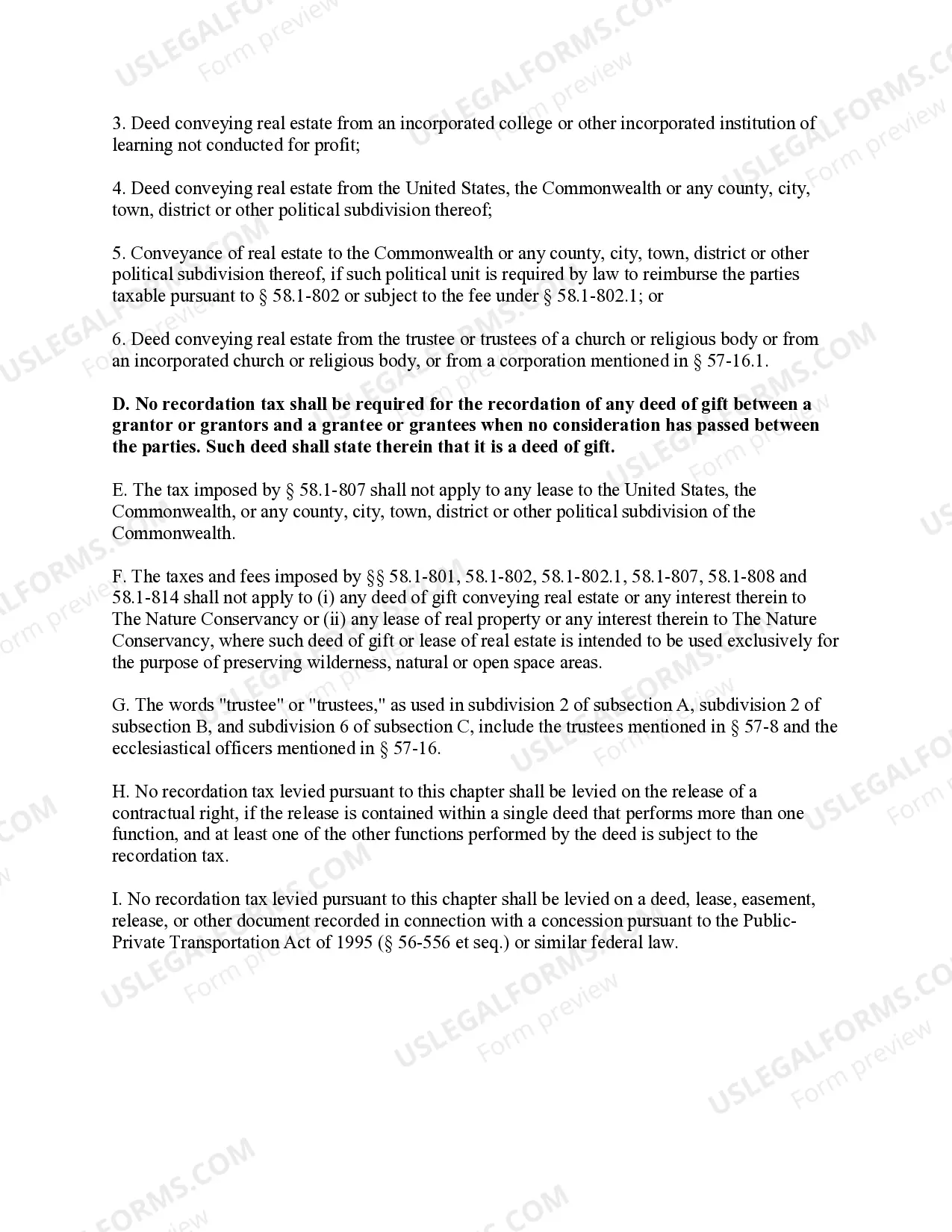
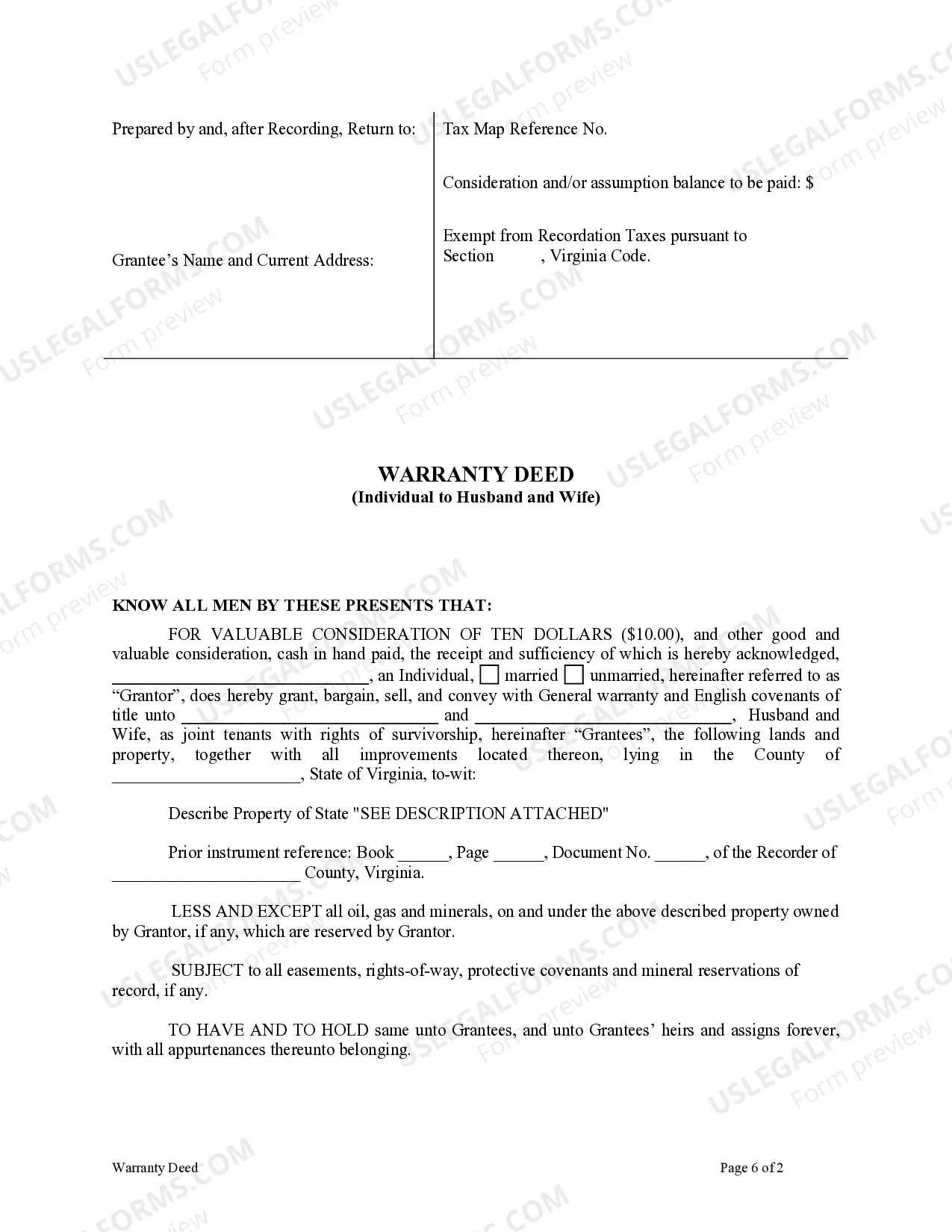
The Warranty Deed from Individual to Husband and Wife is a legal document that transfers property ownership from an individual (the Grantor) to a married couple (the Grantees). This deed provides a guarantee that the Grantor has the right to convey the property and that it is free of encumbrances unless otherwise noted. It is specifically designed for situations where the property is being transferred to a married couple, making it distinct from other types of warranty deeds.
What’s included in this form
- Grantor details: Information about the individual transferring the property.
- Grantee details: Information about the husband and wife receiving the property.
- Property description: A detailed description of the property being conveyed.
- Covenant clause: Guarantees the Grantor is legally able to transfer the property.
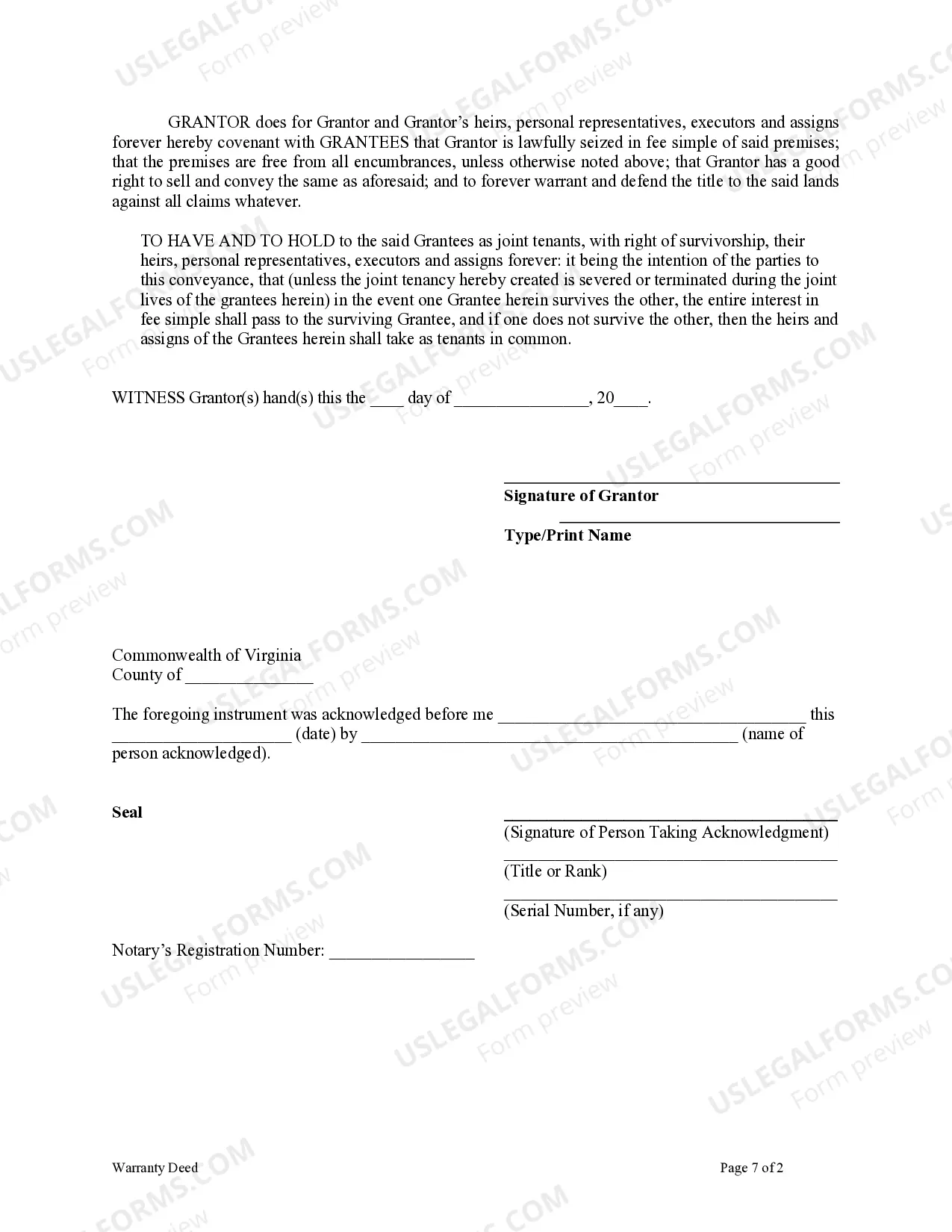
- Survivorship clause: Specifies rights of survivorship between spouses, ensuring ownership passes to the surviving spouse.




When to use this document
This form is needed when an individual wants to transfer property to a married couple as joint tenants. It is commonly used in family transactions, such as when parents convey property to their children who are married, or when one spouse is transferring interest in property to the other directly.
Who should use this form
- Individuals wishing to transfer ownership of real estate to a married couple.
- Married couples acquiring property from an individual.
- Real estate professionals facilitating a transfer of property between spouses.
Steps to complete this form
- Identify the parties: Fill in the names and addresses of the Grantor and Grantees.
- Specify the property: Enter a clear description of the property being transferred.
- Outline reservation: Include any reservations regarding oil, gas, and minerals if applicable.
- Sign the form: The Grantor must sign the deed to validate the transfer.
- Consider notarization: Depending on local requirements, have the deed notarized to ensure legal enforceability.
Does this form need to be notarized?
This form does not typically require notarization unless specified by local law. It is advisable to check local regulations to ensure compliance and validity of the deed.
Get your form ready online
Our built-in tools help you complete, sign, share, and store your documents in one place.
Make edits, fill in missing information, and update formatting in US Legal Forms—just like you would in MS Word.
Download a copy, print it, send it by email, or mail it via USPS—whatever works best for your next step.
Sign and collect signatures with our SignNow integration. Send to multiple recipients, set reminders, and more. Go Premium to unlock E-Sign.
If this form requires notarization, complete it online through a secure video call—no need to meet a notary in person or wait for an appointment.
We protect your documents and personal data by following strict security and privacy standards.

Make edits, fill in missing information, and update formatting in US Legal Forms—just like you would in MS Word.

Download a copy, print it, send it by email, or mail it via USPS—whatever works best for your next step.

Sign and collect signatures with our SignNow integration. Send to multiple recipients, set reminders, and more. Go Premium to unlock E-Sign.

If this form requires notarization, complete it online through a secure video call—no need to meet a notary in person or wait for an appointment.

We protect your documents and personal data by following strict security and privacy standards.
Mistakes to watch out for
- Failing to clearly describe the property, which can lead to disputes.
- Not including required signatures, making the deed invalid.
- Omitting specific conditions or reservations on the property being transferred.
Why use this form online
- Convenience: Download and complete the form from home at your own pace.
- Editability: Make necessary changes easily before finalizing the document.
- Reliability: Access to templates created by licensed attorneys ensures legal compliance.
Looking for another form?
Form popularity
FAQ
Locate the most recent deed to the property. Create the new deed. Sign and notarize the new deed. Record the deed in the land records of the clerk's office of the circuit court in the jurisdiction where the property is located.
Locate the most recent deed to the property. Create the new deed. Sign and notarize the new deed. Record the deed in the land records of the clerk's office of the circuit court in the jurisdiction where the property is located.
Yes you can. This is called a transfer of equity but you will need the permission of your lender. If you are not married or in a civil partnership you may wish to consider creating a deed of trust and a living together agreement which we can explain to you.
When it comes to reasons why you shouldn't add your new spouse to the Deed, the answer is simple divorce and equitable distribution. If you choose not to put your spouse on the Deed and the two of you divorce, the entire value of the home is not subject to equitable distribution.
The Virginia general warranty deed is a form that warrants property conveyed from a Seller (the Grantor) to a Buyer (the Grantee).Afterwards, the deed may be filed with the Circuit Court in the jurisdiction of where the property is located.
How do I add someone or remove someone from my deed? To make changes to ownership of property, a new deed will need to be prepared and recorded in the Clerk's Office where the property is located. The Commonwealth of Virginia does not provide any forms for deed transfers.
All deeds must be prepared by the owner of the property or by an attorney licensed to practice in Virginia. The requirements are listed below in the code section. Click here to read about e-Recording. § 17.1-223.
If you live in a common-law state, you can keep your spouse's name off the title the document that says who owns the property.You can put your spouse on the title without putting them on the mortgage; this would mean that they share ownership of the home but aren't legally responsible for making mortgage payments.
You will need to have the quitclaim deed notarized with the signatures of you and your spouse. Once this is done, the quitclaim deed replaces your former deed and the property officially is in both of your names. You must record the deed at your county office.