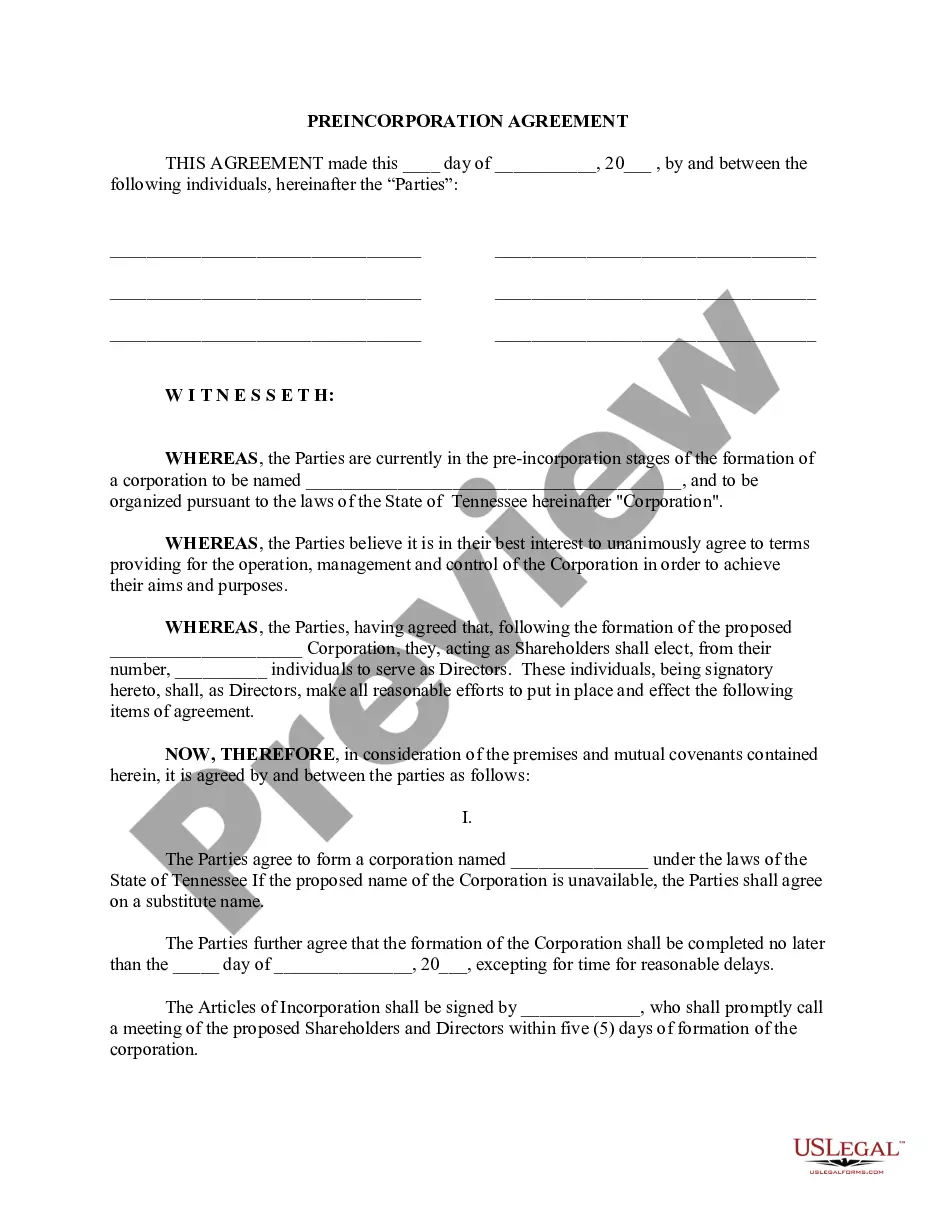
Utah Letter from Tenant to Landlord responding to Notice to Terminate for Noncompliance - Noncompliant condition caused by Landlord's own deliberate or negligent act
Overview of this form
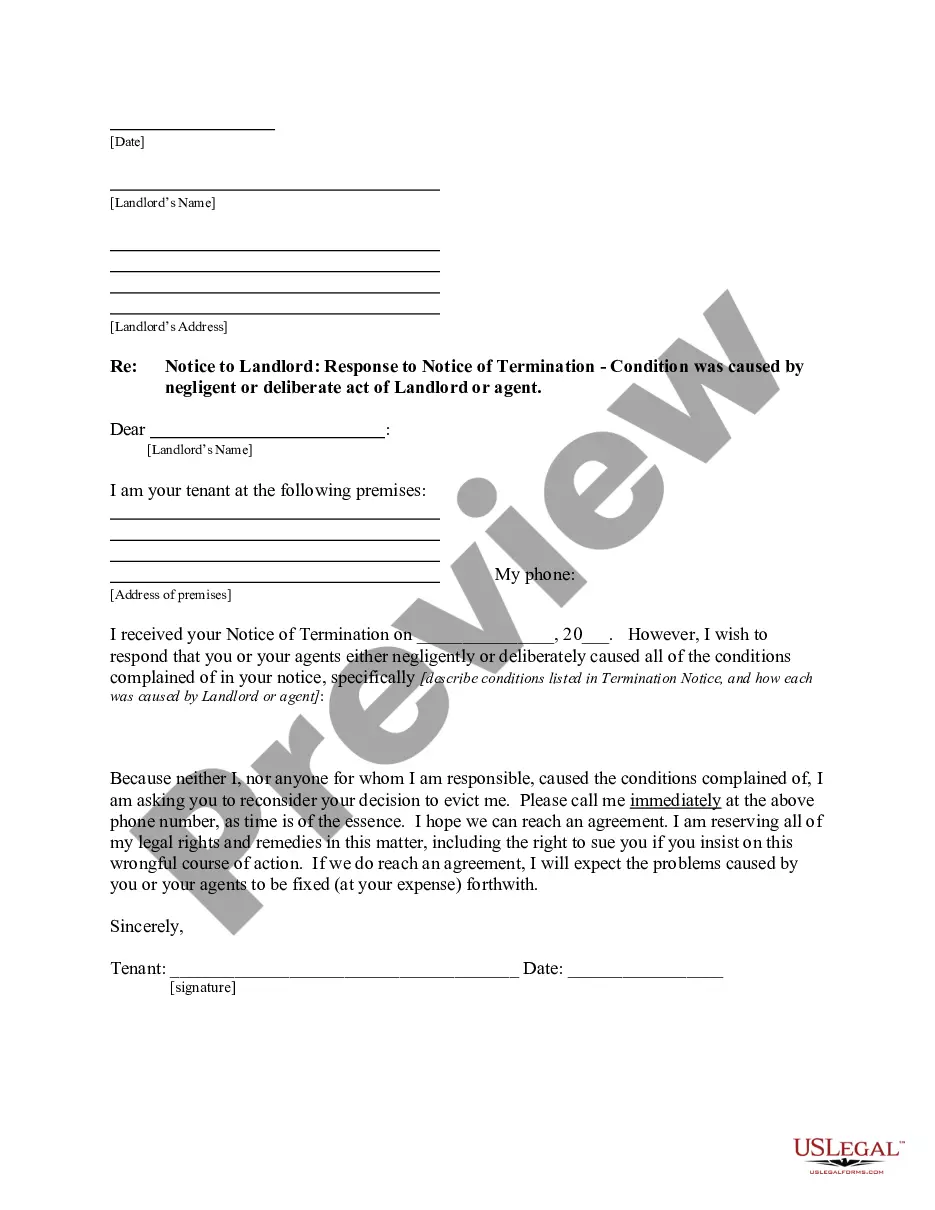
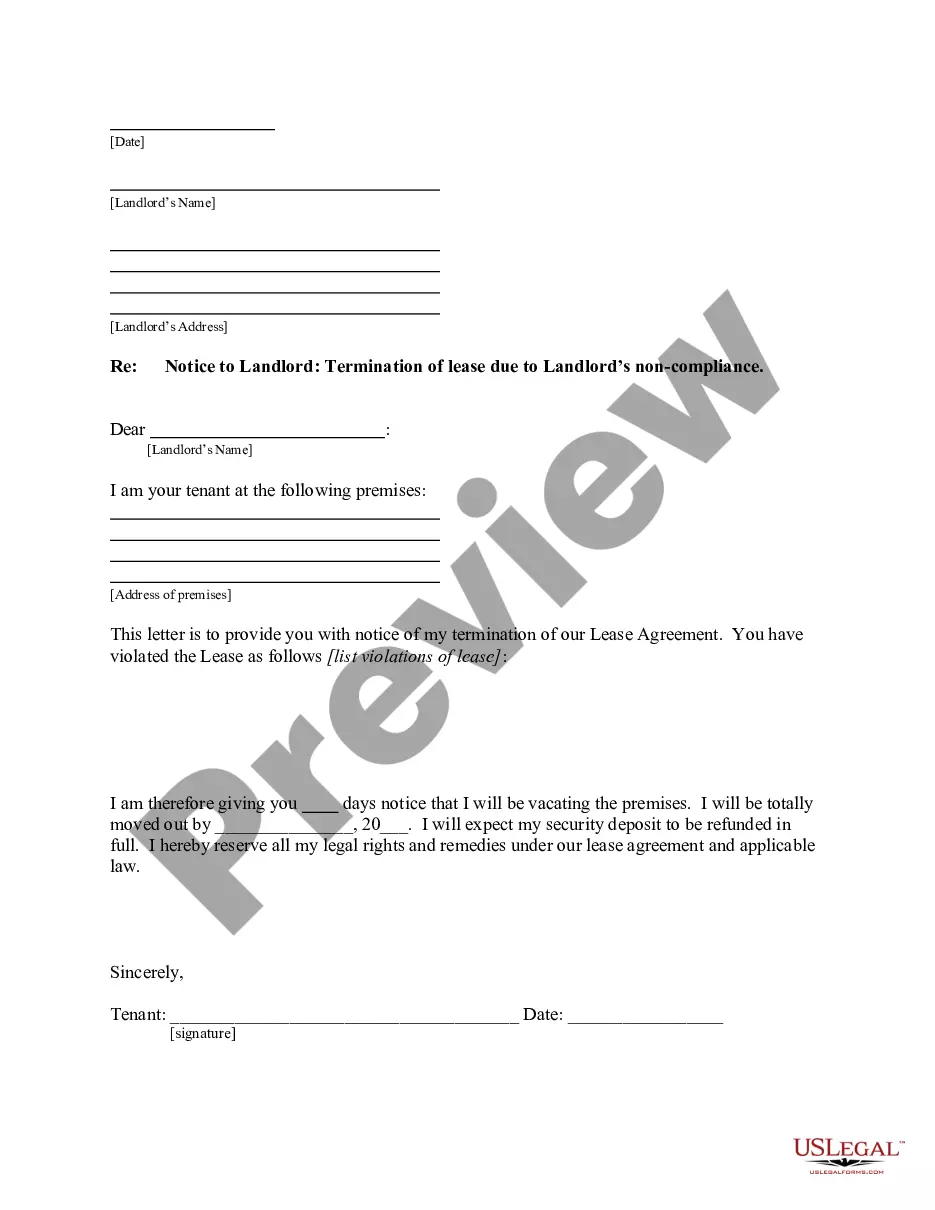
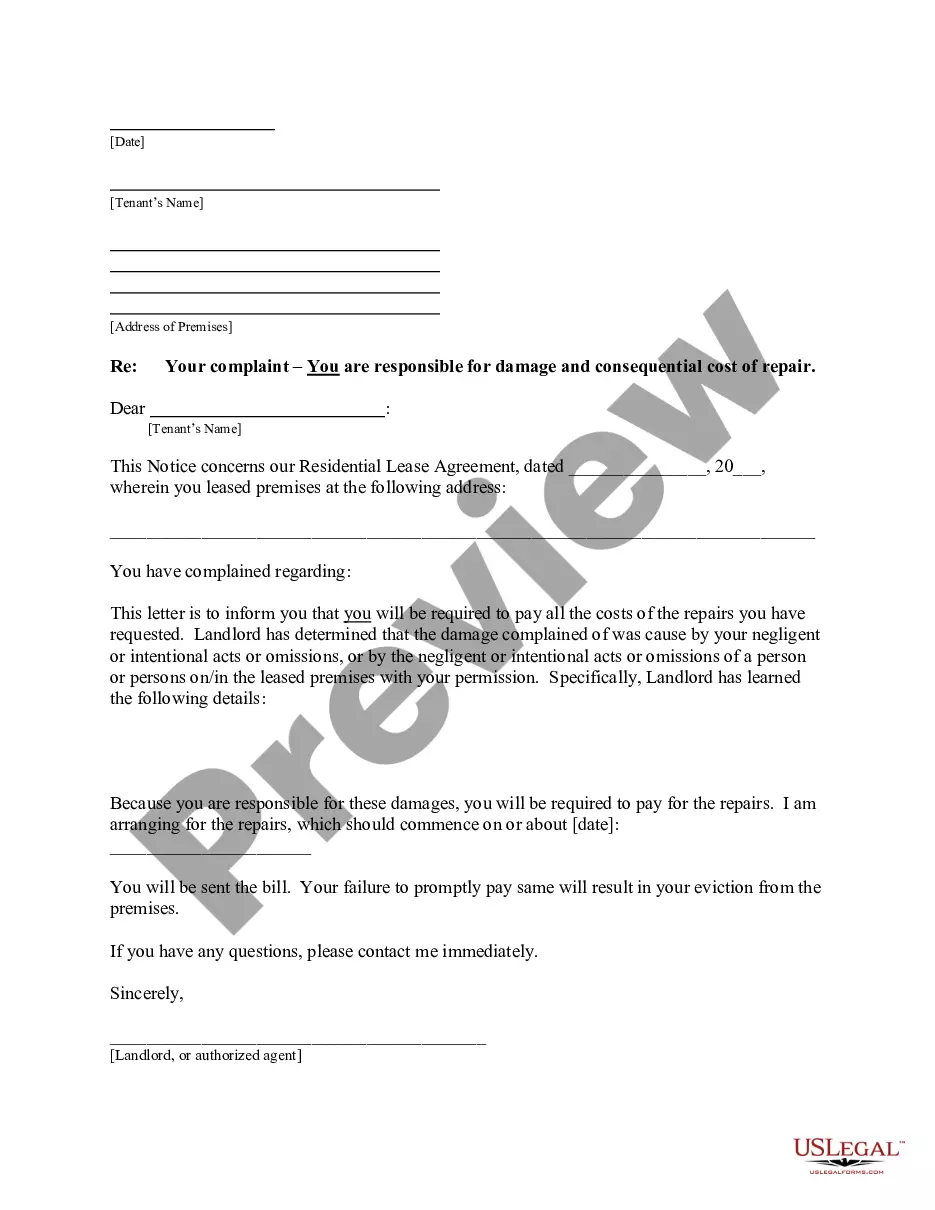
This form is a response from a tenant to a landlord's notice to terminate a lease for noncompliance. It specifically addresses situations where the condition leading to the eviction stems from the landlord's own deliberate or negligent actions. Unlike other eviction response letters, this form asserts the tenant's rights while requesting immediate repairs and non-eviction, emphasizing the landlord's responsibility in the matter.
Key components of this form
- Tenant's assertion of noncompliance due to the landlord's actions.
- Request for repairs to be made immediately.
- Reservation of legal rights for potential future claims.
- Signature and date of the tenant.
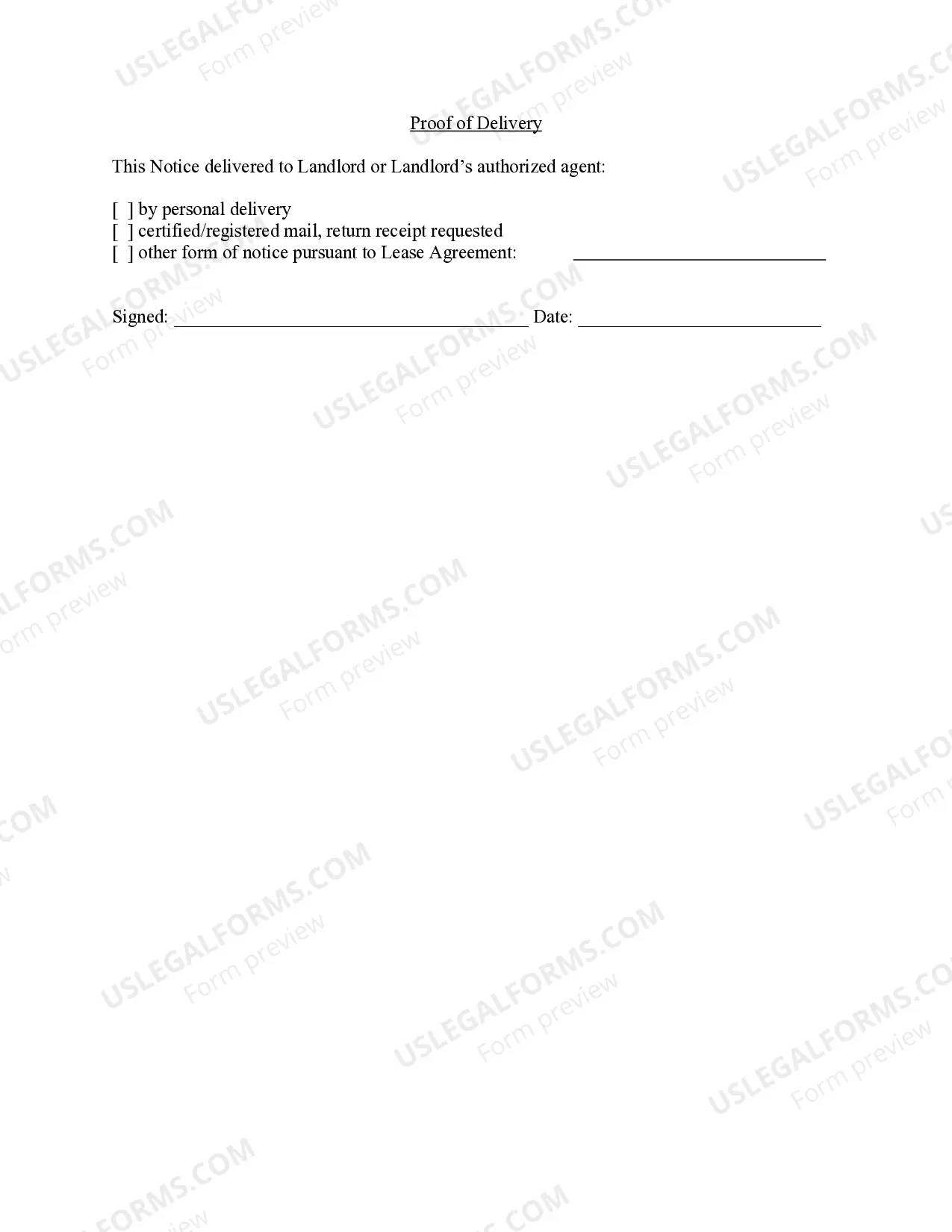
- Proof of delivery method to the landlord or agent.



When to use this form
You should use this form when you receive a notice from your landlord regarding eviction for noncompliance and believe that the issue was caused by the landlord's actions. It is important to communicate this effectively to prevent eviction and to ensure that necessary repairs are addressed promptly.
Who can use this document
This form is intended for:
- Residential tenants facing eviction notices.
- Tenants who believe the eviction is due to the landlord's failure to maintain the property.
- Individuals seeking to assert their rights in a rental situation.
Instructions for completing this form
To complete this form, follow these steps:
- Identify and fill in the tenant's information at the top of the letter.
- Clearly state the reasons for contesting the eviction, referencing the landlord's actions.
- Request the landlord to make necessary repairs immediately.
- Sign and date the letter to validate the response.
- Choose a method for delivering the notice to the landlord and follow the selected procedure.
Notarization requirements for this form
This form does not typically require notarization unless specified by local law. However, it is advisable to check any specific state regulations for additional requirements.
Get your form ready online
Our built-in tools help you complete, sign, share, and store your documents in one place.
Make edits, fill in missing information, and update formatting in US Legal Forms—just like you would in MS Word.
Download a copy, print it, send it by email, or mail it via USPS—whatever works best for your next step.
Sign and collect signatures with our SignNow integration. Send to multiple recipients, set reminders, and more. Go Premium to unlock E-Sign.
If this form requires notarization, complete it online through a secure video call—no need to meet a notary in person or wait for an appointment.
We protect your documents and personal data by following strict security and privacy standards.

Make edits, fill in missing information, and update formatting in US Legal Forms—just like you would in MS Word.

Download a copy, print it, send it by email, or mail it via USPS—whatever works best for your next step.

Sign and collect signatures with our SignNow integration. Send to multiple recipients, set reminders, and more. Go Premium to unlock E-Sign.

If this form requires notarization, complete it online through a secure video call—no need to meet a notary in person or wait for an appointment.

We protect your documents and personal data by following strict security and privacy standards.
Typical mistakes to avoid
- Failing to provide specific details about the noncompliant conditions.
- Not signing the letter, which may invalidate the response.
- Using incorrect delivery methods that do not provide proof of receipt.
Advantages of online completion
- Convenience of completing the form from home.
- Editable formats allowing for customization as needed.
- Reliable templates drafted by licensed attorneys ensuring legal compliance.
- The letter serves as a formal legal notice to the landlord, documenting tenant concerns.
- Using this form can help protect the tenantâs rights in future legal proceedings.
- It reinforces the need for landlords to maintain safe and habitable living conditions.
Looking for another form?
Form popularity
FAQ
Pay any delinquent rent that is due to the landlord within the allotted time of the notice. Move out of the premises within the allotted time of the notice. File an answer with the judicial court. File a motion to stay with the court.
The California eviction process can be long, frustrating and expensive. Landlords often feel like they get the short end of the stick. So, how long does it take to evict someone in California? Short answer: It can take anywhere between 45 to 75 days to evict someone in California, on average.
In California, a landlord may be able to evict a tenant if the tenant: Fails to pay the rent on time; Breaks the lease or rental agreement and will not fix the problem (like keeping your cat when pets are not allowed); Damages the property bringing down the value (commits "waste");
Once a notice to quit expires, there is no longer a landlord and tenancy relationship. By law, even though he is no longer regarded as a tenant to the landlord, the tenant is still expected to pay the rent he owes to the landlord whether he has been given a notice to quit or not.
Notice for Termination With Cause. A landlord can terminate a California tenancy early and evict the tenant for a variety of reasons, including failure to pay rent, violating the lease or rental agreement, or committing an illegal act. Before terminating the tenancy, the landlord must give the tenant written notice.
The landlord should always provide a minimum of two months between the dates. If the tenancy runs on a weekly basis there must be a notice period of eight weeks. It will be valid for 12 months from the end date. When they expire, the landlord must serve a new section 21, before they go to court.
Unconditional quit notices are used to order the tenant to leave the premises without the chance to remedy the situation. This is used for a serious breach of the lease agreement or chronic late rent payment.
Unfortunately that is not the case. Once a break notice has been served is cannot be unilaterally withdrawn. Even if both parties agree that the notice is withdrawn, service of the notice terminates the existing lease and creates a new tenancy by implication. There are a number of consequences that flow from this.
An eviction notice must state a reason why you are being evicted, otherwise it is invalid.For tenants who lived in the property for more than 12 months, the landlord must provide at least 60 days prior notice to vacate, under California Civil Code 1946.