Utah Warranty Deed from Corporation to Corporation
Overview of this form
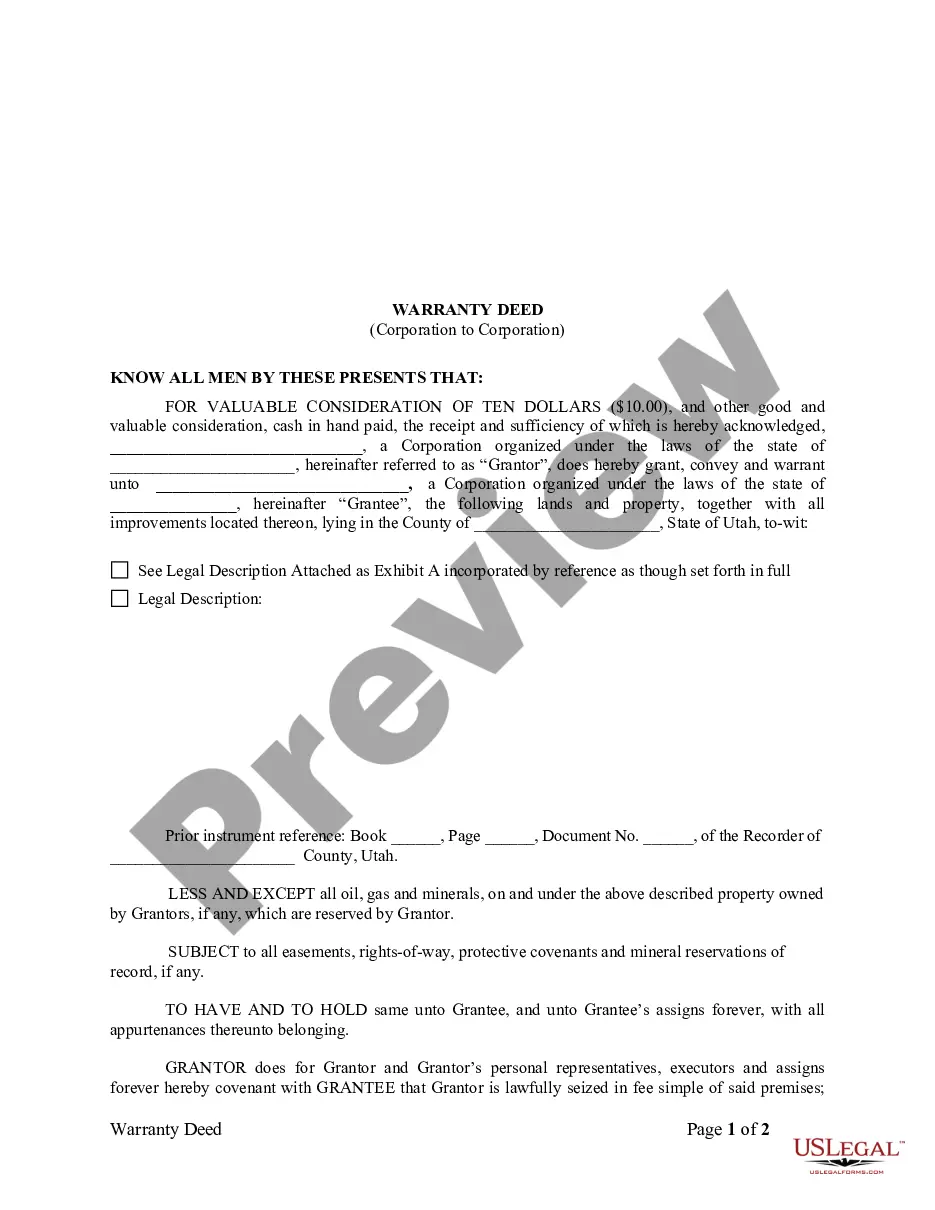
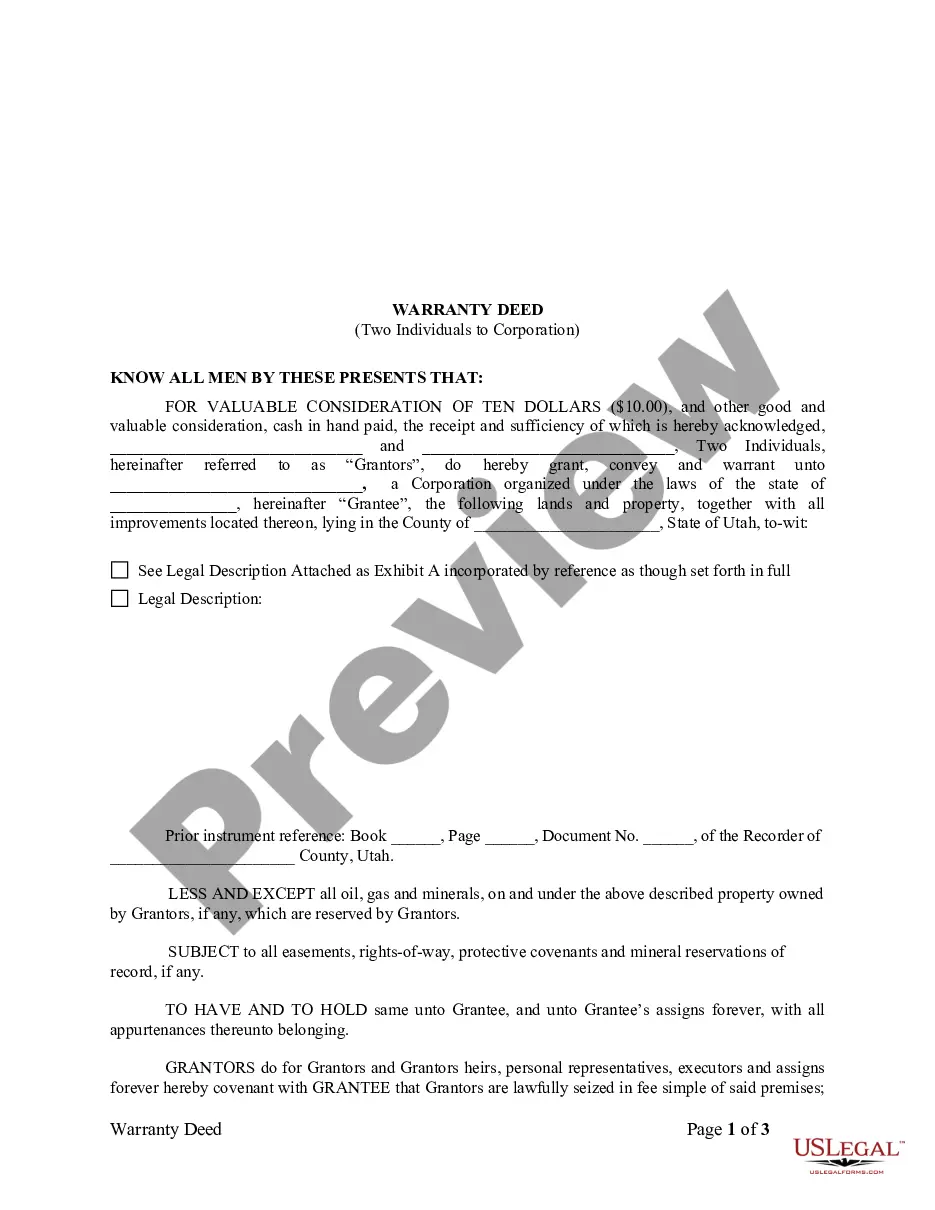
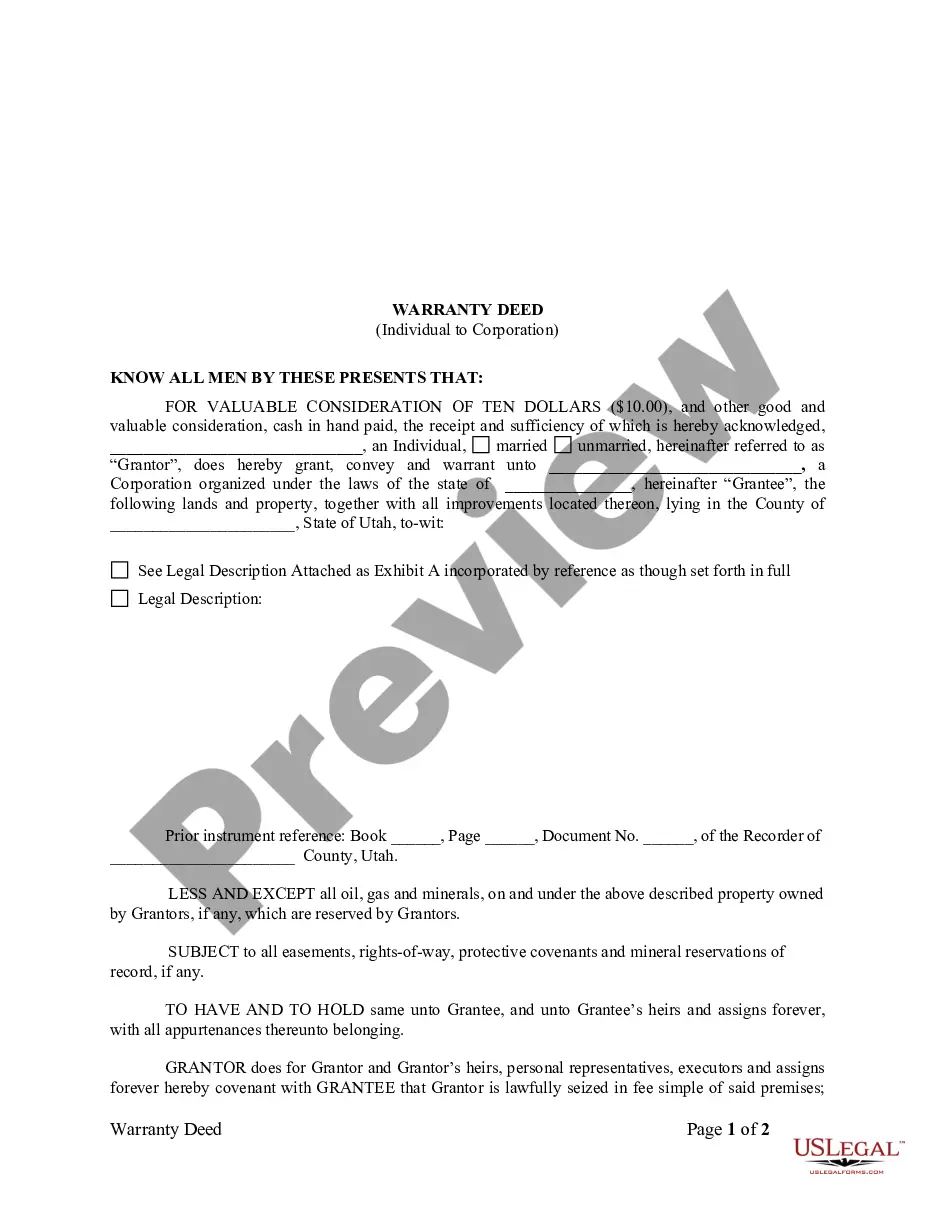
The Warranty Deed from Corporation to Corporation is a legal document used to transfer property ownership between two corporations. This form ensures that the Grantor (the transferring corporation) conveys and warrants the described property to the Grantee (the receiving corporation) with specific reservations, such as oil, gas, and mineral rights. Unlike other property transfer documents, this warranty deed provides assurances regarding the title, making it a secure way for corporations to handle transactions involving real estate.
What’s included in this form
- Names and details of the Grantor (selling corporation) and Grantee (receiving corporation).
- Legal description of the property being transferred.
- Statement of consideration received for the property.
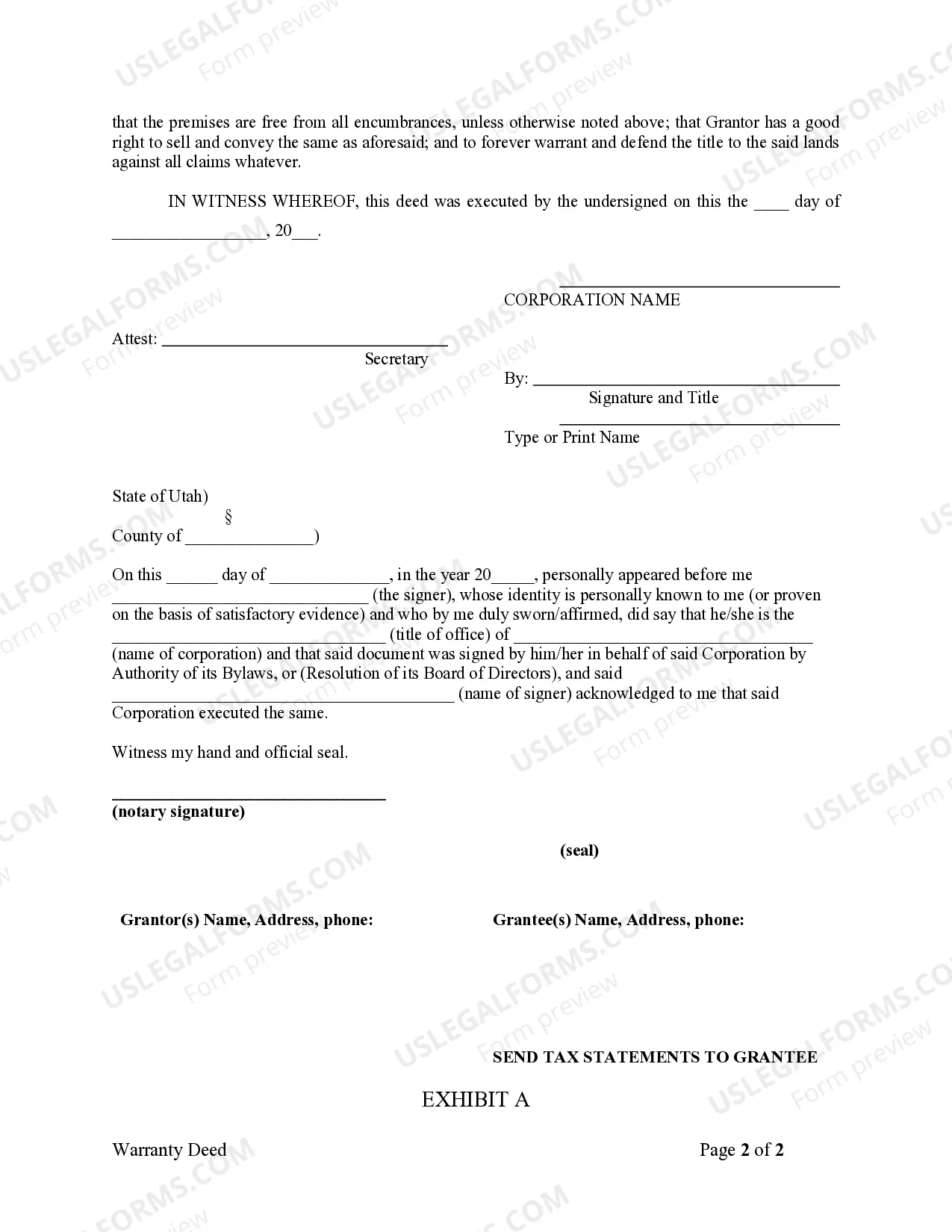
- Covenant regarding the Grantor's ownership and the absence of encumbrances, unless otherwise stated.
- Signatures of authorized representatives from both corporations along with the date of execution.

When to use this form
This form is essential when a corporation is selling or transferring real estate to another corporation. Common scenarios include mergers, company acquisitions, or property donations where corporate entities are involved. Utilizing this warranty deed ensures that all parties have clear title and legal backing on the property transfer, protecting their rights in the process.
Intended users of this form
- Corporations engaged in real estate transactions.
- Legal representatives of companies managing property sales.
- Businesses looking to formalize ownership transfers within corporate structures.
How to complete this form
- Identify the names and basic information of both the Grantor and Grantee corporations.
- Provide a complete legal description of the property being conveyed.
- Enter the amount of consideration being exchanged for the property.
- Ensure all corporate representatives sign and date the document.
- Review the deed for accuracy before filing with local authorities, if required.
Does this form need to be notarized?
This document requires notarization to meet legal standards. US Legal Forms provides secure online notarization powered by Notarize, allowing you to complete the process through a verified video call, available 24/7.
Get your form ready online
Our built-in tools help you complete, sign, share, and store your documents in one place.
Make edits, fill in missing information, and update formatting in US Legal Forms—just like you would in MS Word.
Download a copy, print it, send it by email, or mail it via USPS—whatever works best for your next step.
Sign and collect signatures with our SignNow integration. Send to multiple recipients, set reminders, and more. Go Premium to unlock E-Sign.
If this form requires notarization, complete it online through a secure video call—no need to meet a notary in person or wait for an appointment.
We protect your documents and personal data by following strict security and privacy standards.

Make edits, fill in missing information, and update formatting in US Legal Forms—just like you would in MS Word.

Download a copy, print it, send it by email, or mail it via USPS—whatever works best for your next step.

Sign and collect signatures with our SignNow integration. Send to multiple recipients, set reminders, and more. Go Premium to unlock E-Sign.

If this form requires notarization, complete it online through a secure video call—no need to meet a notary in person or wait for an appointment.

We protect your documents and personal data by following strict security and privacy standards.
Mistakes to watch out for
- Failing to include a complete legal description of the property.
- Not verifying the authority of the individuals signing on behalf of the corporations.
- Omitting the necessary reservations or encumbrances in the deed.
- Using outdated formats or templates that do not comply with current state laws.
Benefits of using this form online
- Convenience of downloading and completing the form from anywhere.
- Editable templates that allow you to customize the deed to fit specific needs.
- Access to forms drafted by licensed attorneys, ensuring legal validity.
Key takeaways
- The Warranty Deed from Corporation to Corporation facilitates property transfers between corporate entities.
- This deed provides a warranty of title, ensuring the grantor is the legal owner of the property.
- Follow the outlined steps carefully to complete the form accurately and avoid common mistakes.
Looking for another form?
Form popularity
FAQ
DEED: A written instrument by which one party, the Grantor, conveys the title of ownership in property to another party, the Grantee. A Warranty Deed contains promises, called covenants, that the Grantor makes to the Grantee.It is even possible that the Grantor does not have any title or ownership interest at all!
Corporate warranty deeds offer the seller's guarantee to the buyer in regards to the validity of the chain of title. Generally, special warranty deeds only protect against problems occurring since the seller purchased the property.
After your Warranty Deed has been recorded at the County Clerk's Office, it can be sent to the grantee. However, any person or corporation can be designated as the recipient of the recorded Warranty Deed.
In a Non-Warranty Deed, the seller gives no warranties.In a Non-Warranty or Quitclaim Deed, the seller merely is giving the buyer whatever rights, if any, that the seller has in the property and the seller makes no warranties of any nature about the seller's rights in the property.
A warranty deed, also known as a general warranty deed, is a legal real estate document between the seller (grantor) and the buyer (grantee). The deed protects the buyer by pledging that the seller holds clear title to the property and there are no encumbrances, outstanding liens, or mortgages against it.
A statutory warranty deed is different from a warranty deed because it is a shorter form made available through your state's statutes and it may not outright list the promise that the title is guaranteed to be clear. Instead, because it is a statutory form, this guarantee is implied and is still legally enforceable.
The Utah warranty deed is a form of deed that provides an unlimited warranty of title. It makes an absolute guarantee that the current owner has good title to the property.
A warranty deed is a higher level of protection produced by the seller upon the real estate closing. It includes a full legal description of the property, and confirms the title is clear and free from all liens, encumbrances, or title defects. Most property sales make use of a warranty deed.Our title agents can help.