Waiver and Release From Liability For Adult for Land for Individual Burning
About this form
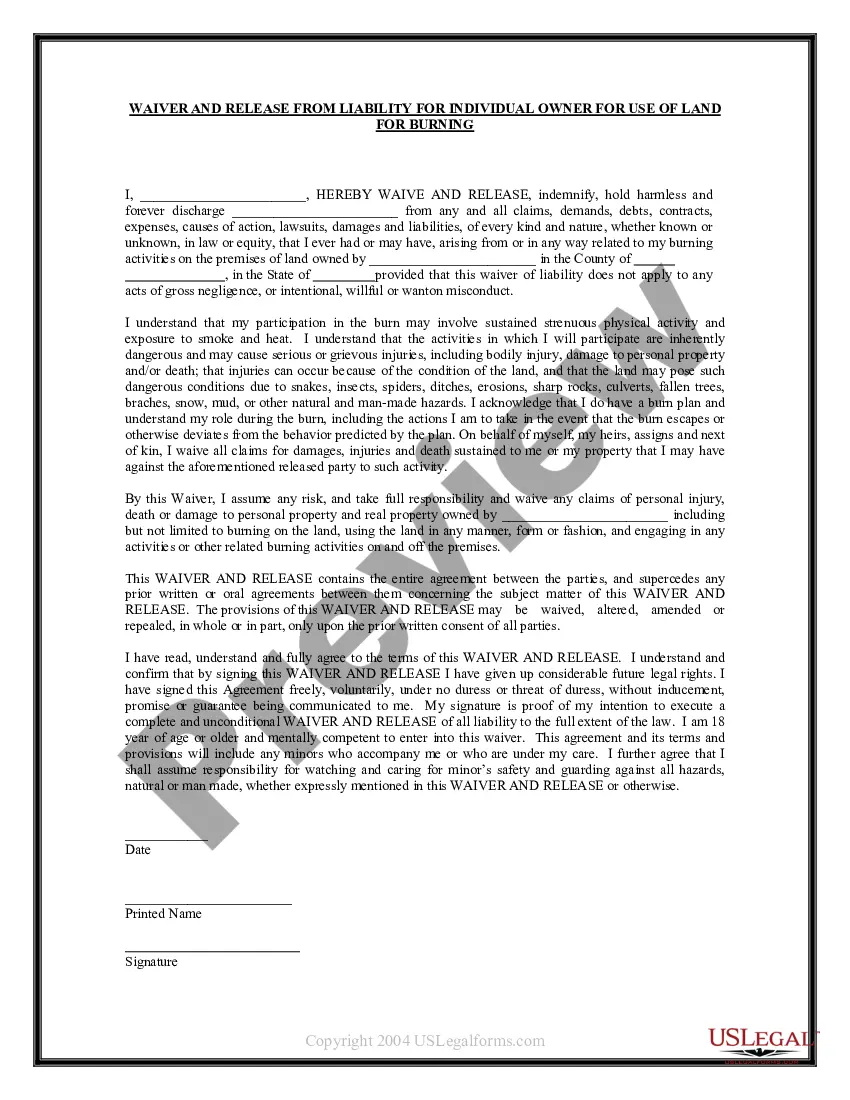
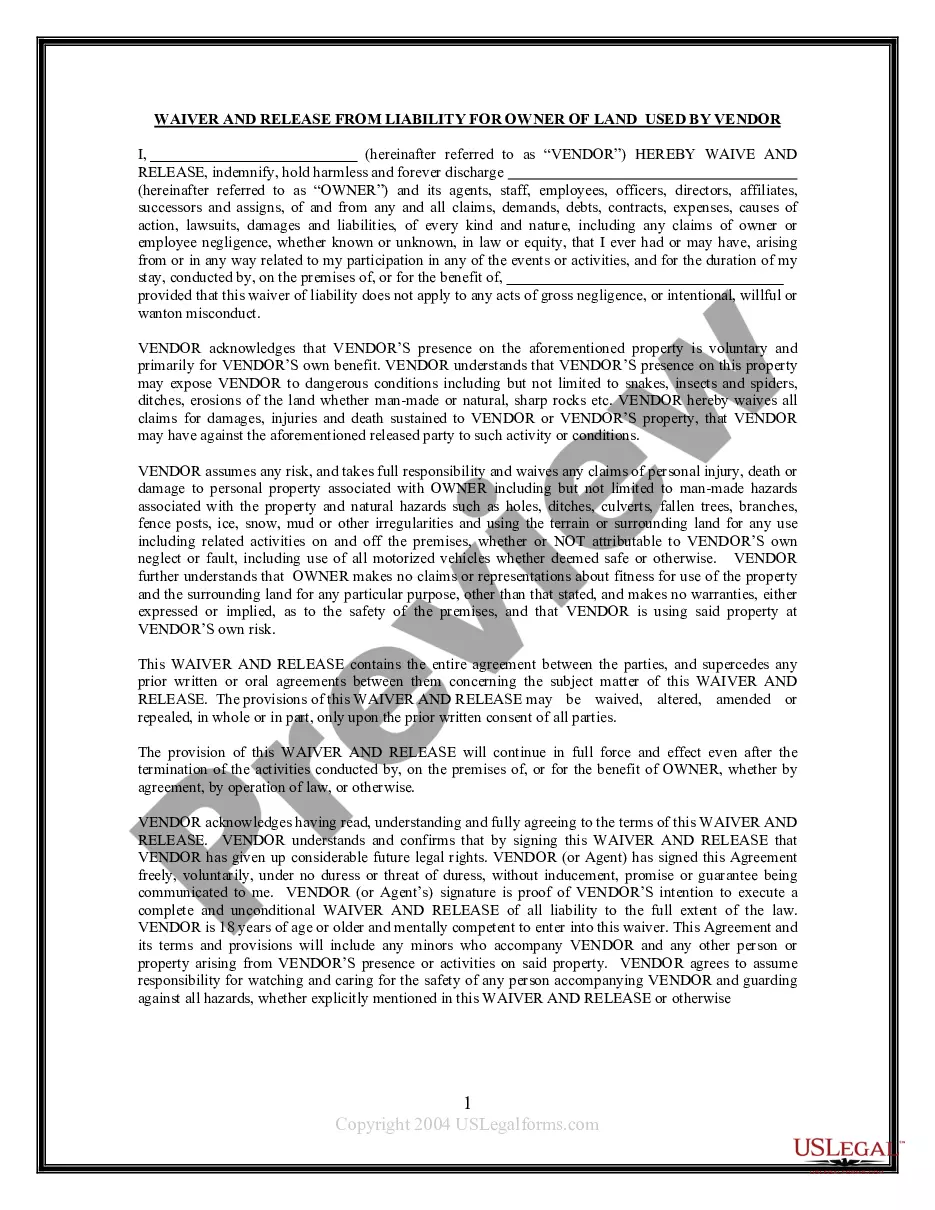
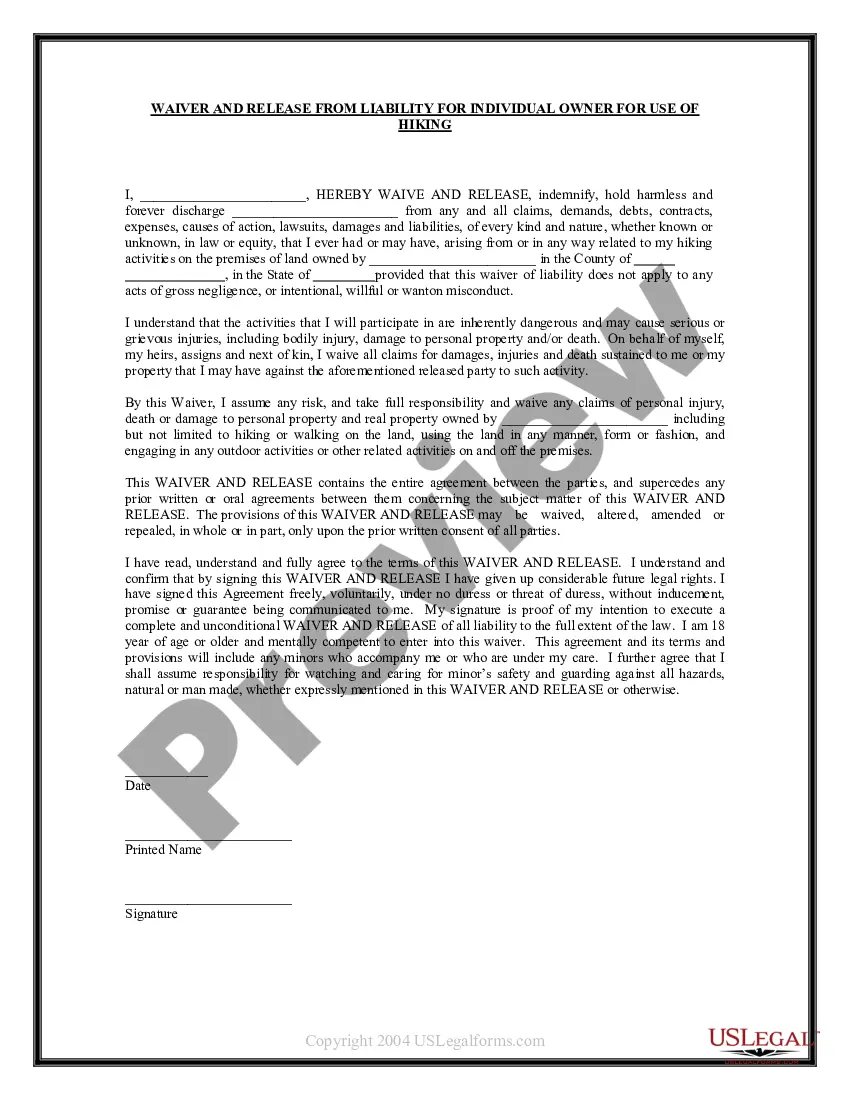
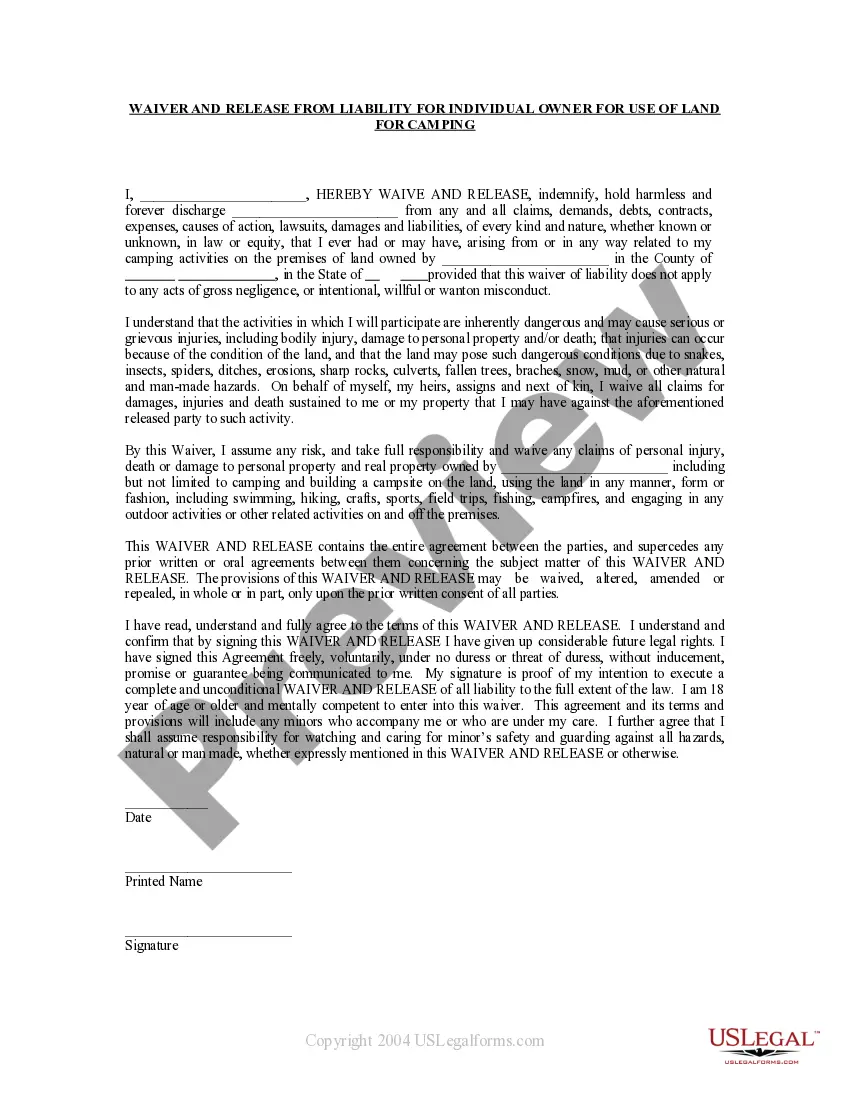
The Waiver and Release From Liability for Adult for Land for Individual Burning is a document that releases a property owner from legal liability when an individual engages in burning activities on their land. This form distinguishes itself from other liability waivers by specifically addressing the risks associated with burning and the inherent dangers present on the property, ensuring that participants acknowledge and assume these risks.
Key parts of this document
- Identification of the participant and property owner.
- A clear statement of understanding regarding the dangers of burning activities.
- Assumption of risks associated with physical activities and potential injuries.
- Waiver of claims for injuries, damages, or death associated with the burning.
- Confirmation of the individual's age and mental competence to sign.
- Signature, date, and printed name of the participant.
When to use this form
This form should be used when an individual plans to conduct burning activities on someone else's property. It is essential for ensuring that the property owner is protected from legal claims arising from injuries or damages that occur as a result of the activity. This is particularly important for activities that may expose individuals to hazardous conditions such as smoke, heat, or uneven terrain.
Who can use this document
This waiver is intended for:
- Property owners allowing individuals to burn on their land.
- Adults aged 18 or older participating in burning activities.
- Those involved in managing or supervising controlled burns.
- Individuals who require protection from liability associated with burning on their property.
Steps to complete this form
- Identify the parties involved, including the property owner and the participant.
- Read and understand the risks and hazards associated with burning activities.
- Document any specific details about the property where the burning will occur.
- Fill in the date, printed name, and signature of the participant.
- Ensure all parties review the waiver and understand its implications before signing.
Does this form need to be notarized?
This form does not typically require notarization unless specified by local law. It is advisable to check state-specific regulations for any additional requirements regarding the validation of waivers.
Get your form ready online
Our built-in tools help you complete, sign, share, and store your documents in one place.
Make edits, fill in missing information, and update formatting in US Legal Forms—just like you would in MS Word.
Download a copy, print it, send it by email, or mail it via USPS—whatever works best for your next step.
Sign and collect signatures with our SignNow integration. Send to multiple recipients, set reminders, and more. Go Premium to unlock E-Sign.
If this form requires notarization, complete it online through a secure video call—no need to meet a notary in person or wait for an appointment.
We protect your documents and personal data by following strict security and privacy standards.

Make edits, fill in missing information, and update formatting in US Legal Forms—just like you would in MS Word.

Download a copy, print it, send it by email, or mail it via USPS—whatever works best for your next step.

Sign and collect signatures with our SignNow integration. Send to multiple recipients, set reminders, and more. Go Premium to unlock E-Sign.

If this form requires notarization, complete it online through a secure video call—no need to meet a notary in person or wait for an appointment.

We protect your documents and personal data by following strict security and privacy standards.
Avoid these common issues
- Failing to read the waiver thoroughly before signing.
- Not providing accurate information regarding the property being used.
- Overlooking the inclusion of minors and their responsibilities.
- Not ensuring all parties involved understand the waiver's implications.
Why complete this form online
- Convenience of completing the form anytime and anywhere.
- Instant availability of the form for download and printing.
- Editability allows for customization to suit specific needs.
- Access to legal forms drafted by licensed attorneys to ensure compliance.
Legal use & context
- This waiver is legally binding, provided it is filled out correctly and signed by competent adults.
- Users should be cautious as waivers may not protect against negligence or gross misconduct.
- The enforceability of liability waivers can vary by jurisdiction; therefore, local laws should be reviewed.
Main things to remember
- The Waiver and Release protects property owners from liability during burning activities.
- Participants must acknowledge and accept the risks associated with burns.
- Always ensure the waiver is signed and dated to be legally binding.
- This form may need to be adjusted to meet specific state regulations.
Looking for another form?
Form popularity
FAQ
Liability waivers are enforceable in California solely to the extent they shift to the customer the risk of ordinary negligence. Under California law, a liability waiver cannot excuse an injury caused by a defendant's gross negligence, recklessness or intentional wrongful act.
In many cases, the waiver is not enforceable.If you've been injured due to negligent actions, you can sue even if you signed a waiver. Winning a lawsuit concerning negligence is not uncommon. Many celebrities have sued for negligence even though they signed documents stating they understood the risks.
In California, a liability waiver must be clear, unambiguous, and explicit. In other words, waivers cannot be printed in faded ink, in small font, on the back of a paper, or in an otherwise ambiguous form. If the waiver that you sign is not represented clearly, it may not hold up in the event of a lawsuit.
Simply put, waivers don't always protect against a lawsuit. Different states have different laws regarding waivers and their ability to completely protect against litigation. Whether a waiver is sufficient to provide protection against a trainer's liability varies from state to state and, often, case to case.
In California, a liability waiver must be clear, unambiguous, and explicit. In other words, waivers cannot be printed in faded ink, in small font, on the back of a paper, or in an otherwise ambiguous form. If the waiver that you sign is not represented clearly, it may not hold up in the event of a lawsuit.
A property damage loss waiver (PDLW ) program is a damage liability option that provides multifamily property owners and managers financial protection if a participating resident negligently causes damages or losses to the community or building.
In many cases, the waiver is not enforceable.If you've been injured due to negligent actions, you can sue even if you signed a waiver. Winning a lawsuit concerning negligence is not uncommon. Many celebrities have sued for negligence even though they signed documents stating they understood the risks.
Under California law, a liability waiver cannot excuse an injury caused by a defendant's gross negligence, recklessness or intentional wrongful act.Additionally, to be enforceable in California a waiver of liability must be clear, unambiguous, and explicit in expressing the parties' intent.
A waiver is a legal agreement the primary purpose of which is to let you or another party modify or relinquish a right, privilege, or claim. The agreement can be a separate document on its own, such as if you sign a waiver form, or added to a contract as a waiver clause.