Waiver and Release From Liability For Minor Child for Pool
Overview of this form
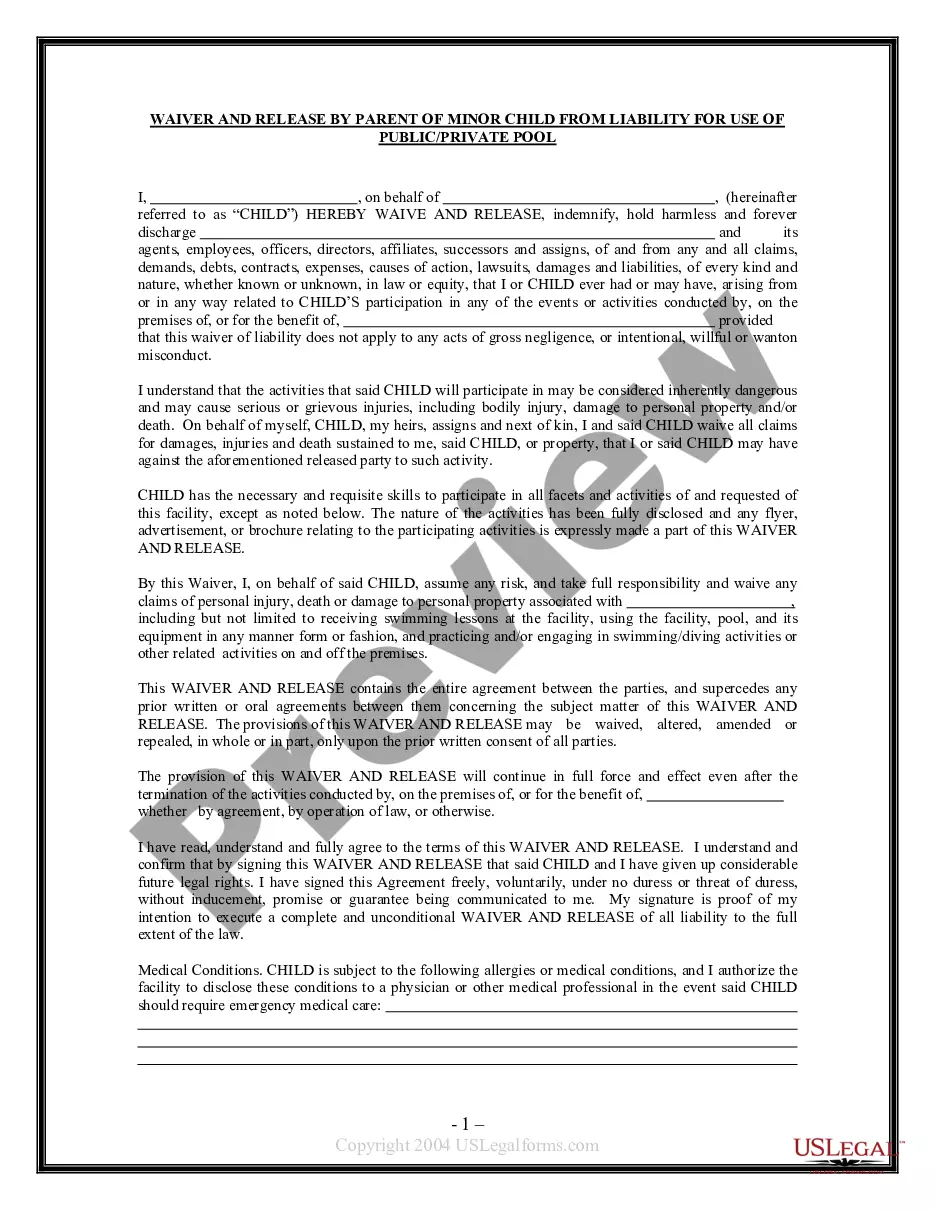
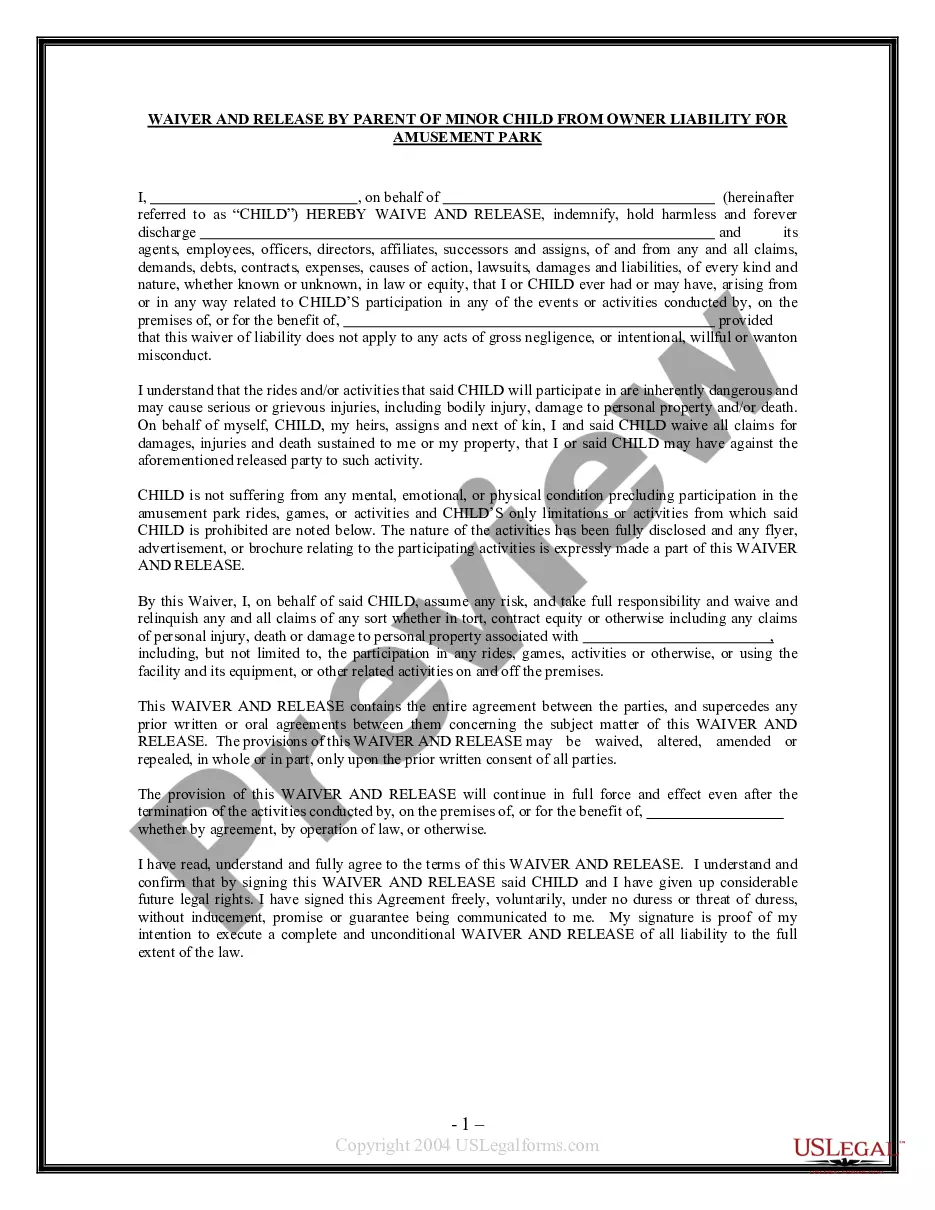
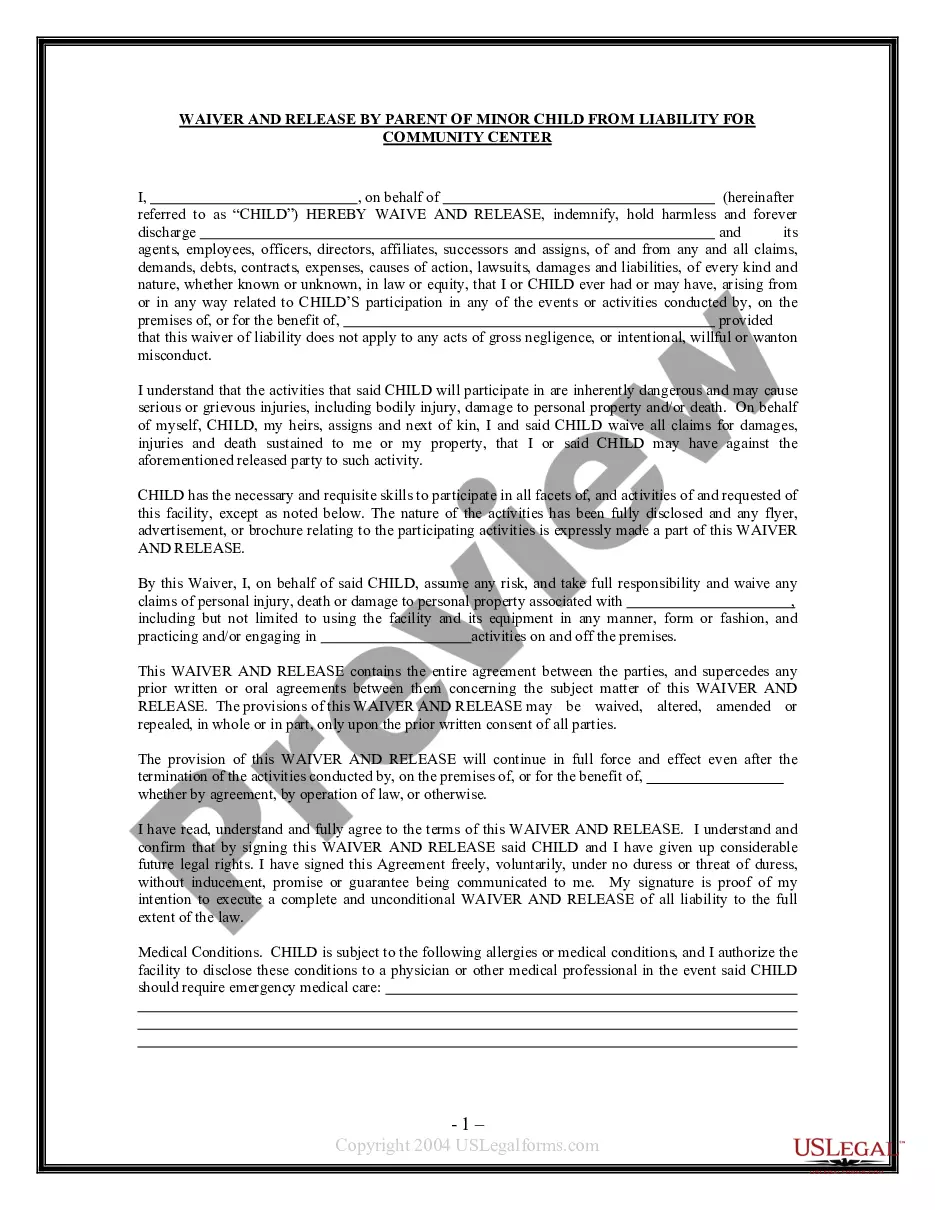
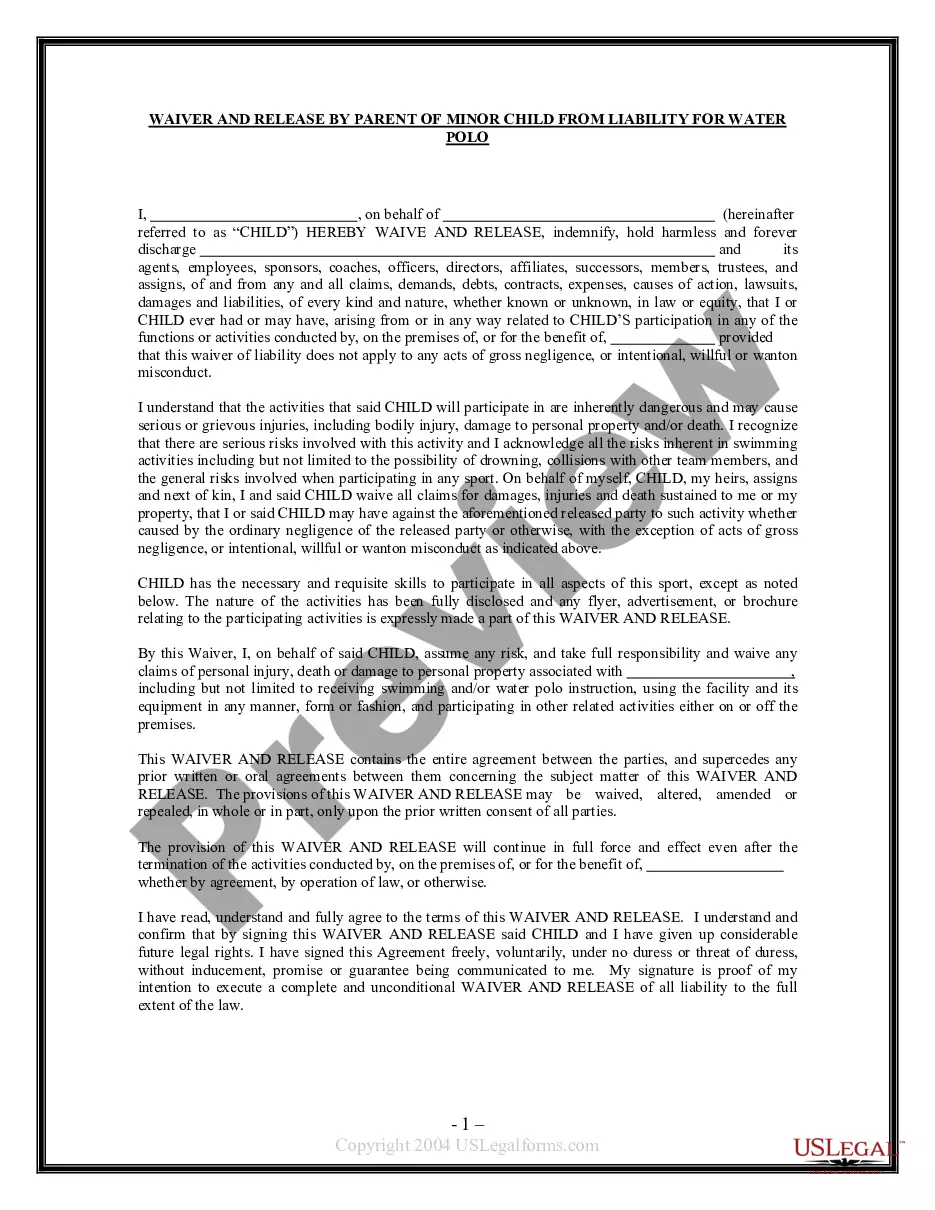
The Waiver and Release From Liability For Minor Child for Pool is a legal document that allows a parent or guardian to release a public or private pool from liability for any injuries that a minor child may sustain while participating in activities at the pool. This form is essential for ensuring that the pool is not held responsible for accidents or injuries that may occur during these activities, thus distinguishing it from other types of liability waivers that are not specifically designed for minors or recreational facilities.
Key components of this form
- Identification of the minor child and the parent or guardian signing the waiver.
- Clear acknowledgment of the inherent risks associated with pool activities.
- Release of liability for injuries, property damage, or death.
- Assurances that the child is capable of participating in outlined activities.
- Statement regarding the entire agreement and the superseding of prior agreements.
When to use this document
This form should be used whenever a minor child is going to participate in any activities at a public or private pool. It is particularly important when registering for swimming lessons, pool parties, or any recreational events where risks of injury may be present. By signing this waiver, a parent or guardian protects the facility from liability claims, ensuring a smoother experience for both the facility and the participating minors.
Intended users of this form
The following individuals should use this form:
- Parents or legal guardians of minor children who will engage in pool activities.
- Operators or owners of public or private pools seeking to minimize liability risks.
- Participating organizations or clubs that provide pool-related events for minors.
How to prepare this document
- Identify the parties involved, including the minor child and the parent or guardian.
- Clearly state the activities the minor will participate in at the pool.
- Acknowledge the inherent risks associated with those activities.
- Complete the section on the childâs skills relevant to pool activities.
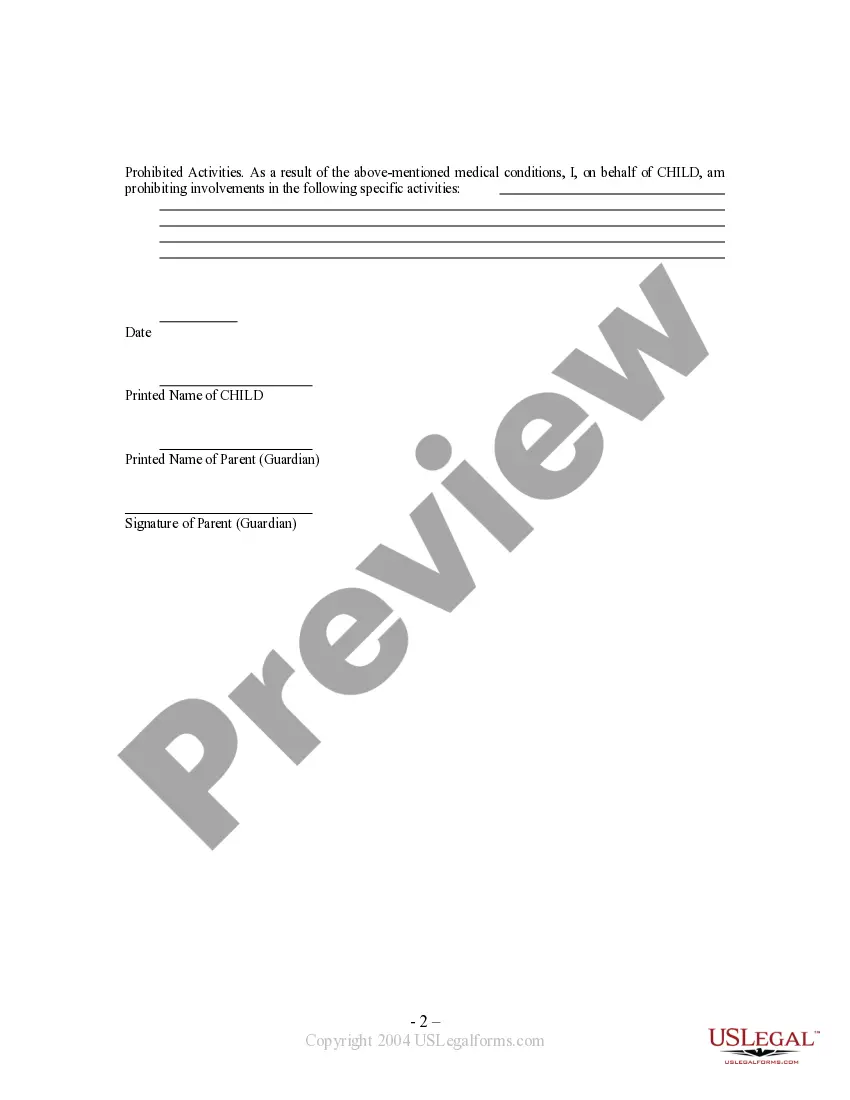
- Sign and date the document, ensuring all parties understand the terms.
Is notarization required?
This form does not typically require notarization unless specified by local law. It is advisable to check local regulations to ensure compliance, but generally, a signature by the parent or guardian is sufficient for the waiver to be legally binding.
Get your form ready online
Our built-in tools help you complete, sign, share, and store your documents in one place.
Make edits, fill in missing information, and update formatting in US Legal Forms—just like you would in MS Word.
Download a copy, print it, send it by email, or mail it via USPS—whatever works best for your next step.
Sign and collect signatures with our SignNow integration. Send to multiple recipients, set reminders, and more. Go Premium to unlock E-Sign.
If this form requires notarization, complete it online through a secure video call—no need to meet a notary in person or wait for an appointment.
We protect your documents and personal data by following strict security and privacy standards.

Make edits, fill in missing information, and update formatting in US Legal Forms—just like you would in MS Word.

Download a copy, print it, send it by email, or mail it via USPS—whatever works best for your next step.

Sign and collect signatures with our SignNow integration. Send to multiple recipients, set reminders, and more. Go Premium to unlock E-Sign.

If this form requires notarization, complete it online through a secure video call—no need to meet a notary in person or wait for an appointment.

We protect your documents and personal data by following strict security and privacy standards.
Typical mistakes to avoid
- Failing to fully disclose all activities the child will engage in at the pool.
- Not clearly identifying the parties involved, particularly the minor child.
- Omitting signature or date, making the waiver invalid.
- Not understanding the implications of waiving liability, leading to confusion.
Why complete this form online
- Convenient access to the form from any device, allowing for easy download and printing.
- Editability of the form means you can customize it to fit specific needs before finalizing.
- Reliability in that the forms are drafted by licensed attorneys to ensure legal soundness.
- Easy storage and duplication when multiple copies are needed for various events or facilities.
Looking for another form?
Form popularity
FAQ
It is a legal document that lets a parent or guardian release a pool from liability for injuries to a minor child during pool activities. Use it whenever a minor participates in activities at a public or private pool—such as swimming lessons, parties, or events—to protect the facility from liability claims while acknowledging the risks involved.
A pool waiver is a document that releases a pool facility from certain legal claims in connection with injuries or damages that may occur during pool activities. The Waiver and Release From Liability For Minor Child For Pool identifies the minor and the parent or guardian, acknowledges inherent risks, and states that the agreement is the entire contract between the parties.
Terms like 'minor' are used in this form, and no specific age is set. Age definitions vary by state, but the document is intended for any minor participating in pool activities. A parent or guardian signs to acknowledge risks and release liability on behalf of the child.
Key provisions include identifying the minor and the parent or guardian, an acknowledgment of inherent pool risks, a release of liability for injuries, property damage, or death, a statement that the child is capable of participating, and a clause that the agreement is the entire contract and supersedes prior agreements.
To write a simple waiver using this form, fill in the minor’s name and the guardian’s contact information, confirm awareness of inherent pool risks, and sign to release the pool from liability for injuries or damages related to pool activities. The form also notes that the agreement represents the entire understanding between the parties.
This form is tailored specifically to pool environments and minor participation. It concentrates on pool-related risks, identifies both the minor and the parent or guardian, and requires the release of liability for injuries, property damage, or death arising from pool activities, with the entire agreement clause; general minor releases do not focus on pools.