Unilateral Nondisclosure Agreement for Use in Technology Transactions
Overview of this form
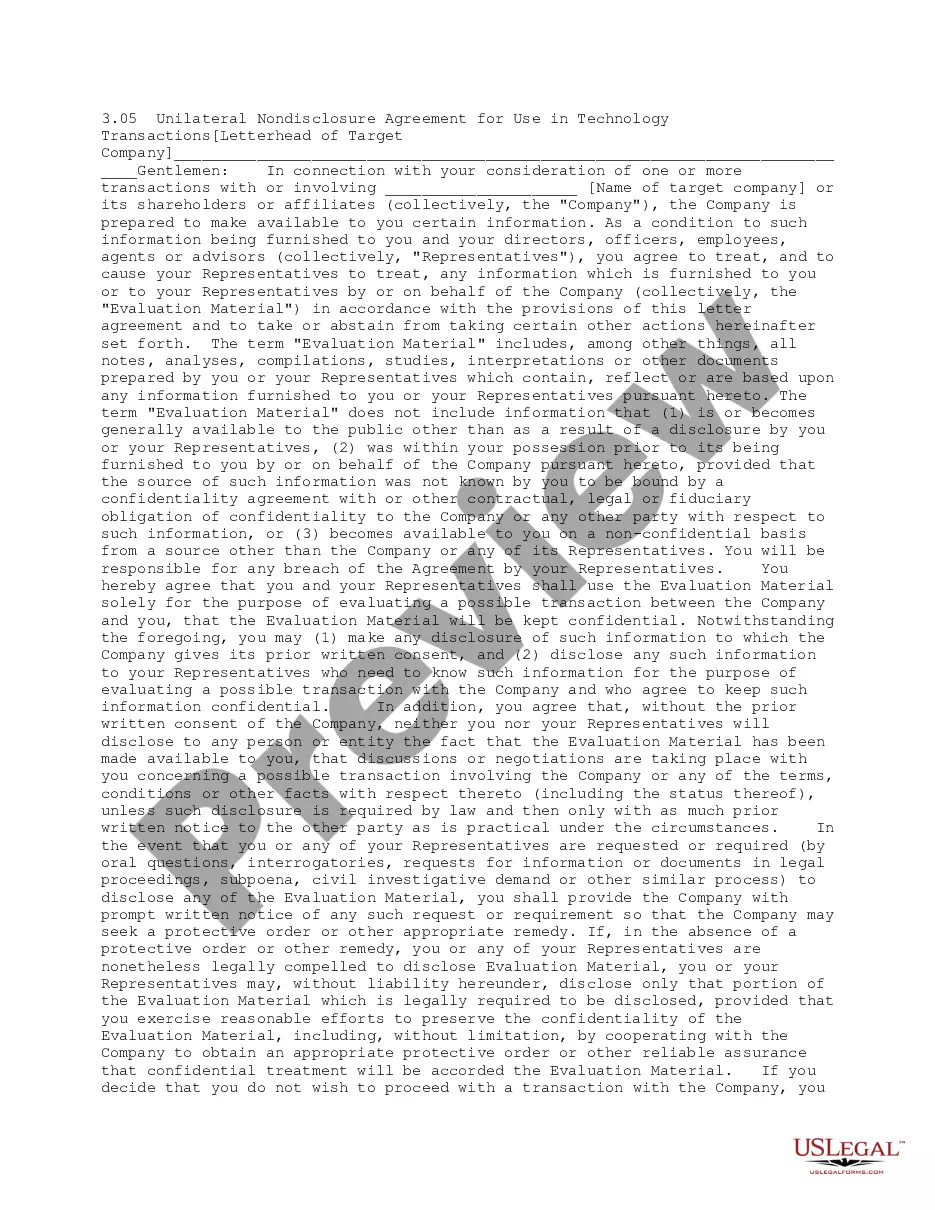
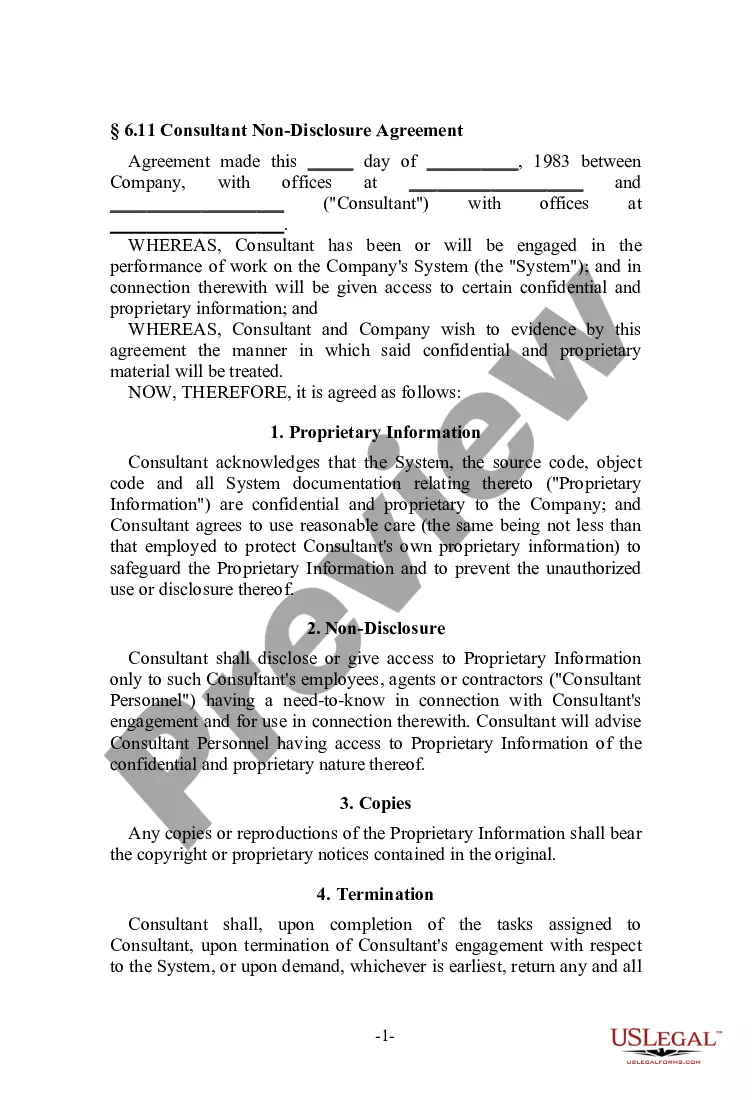
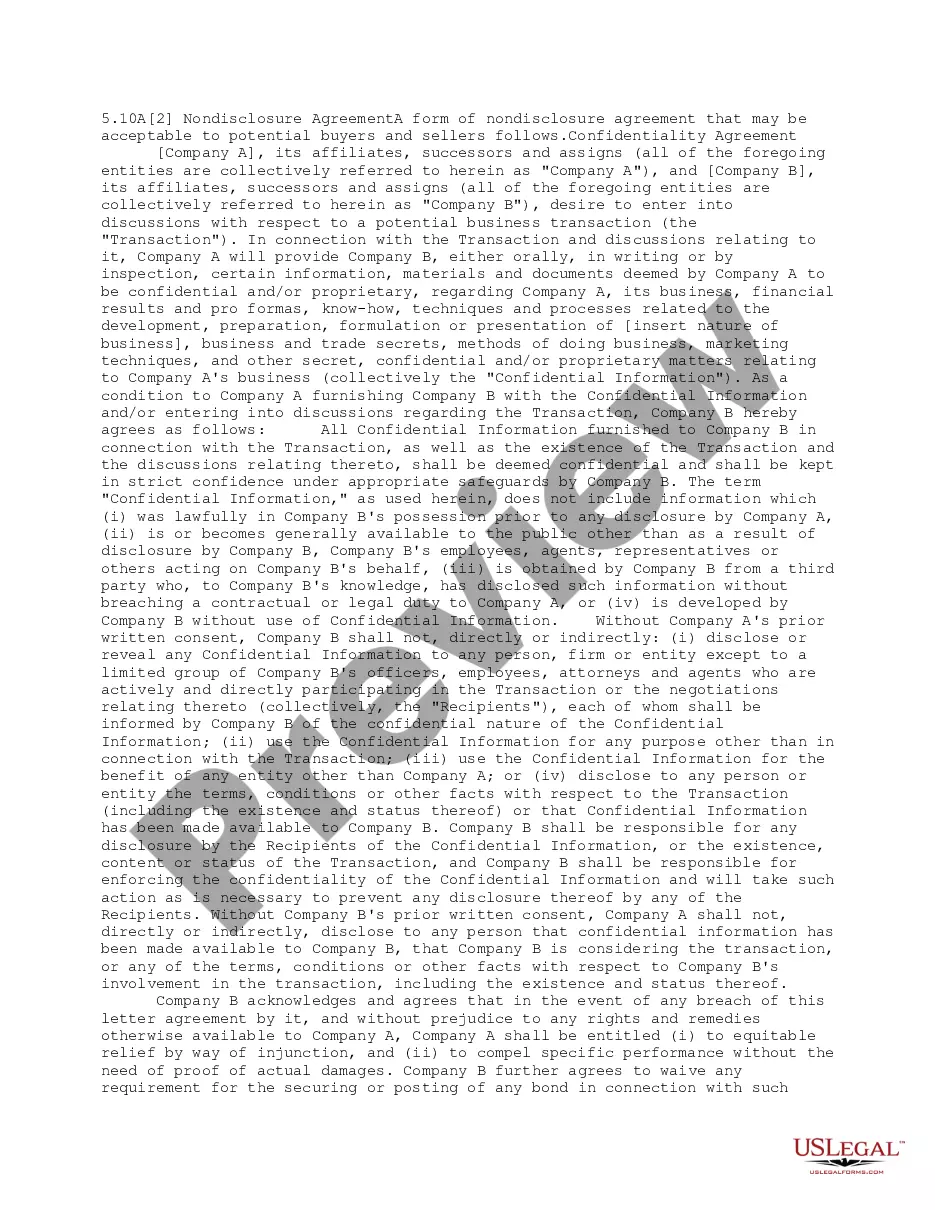
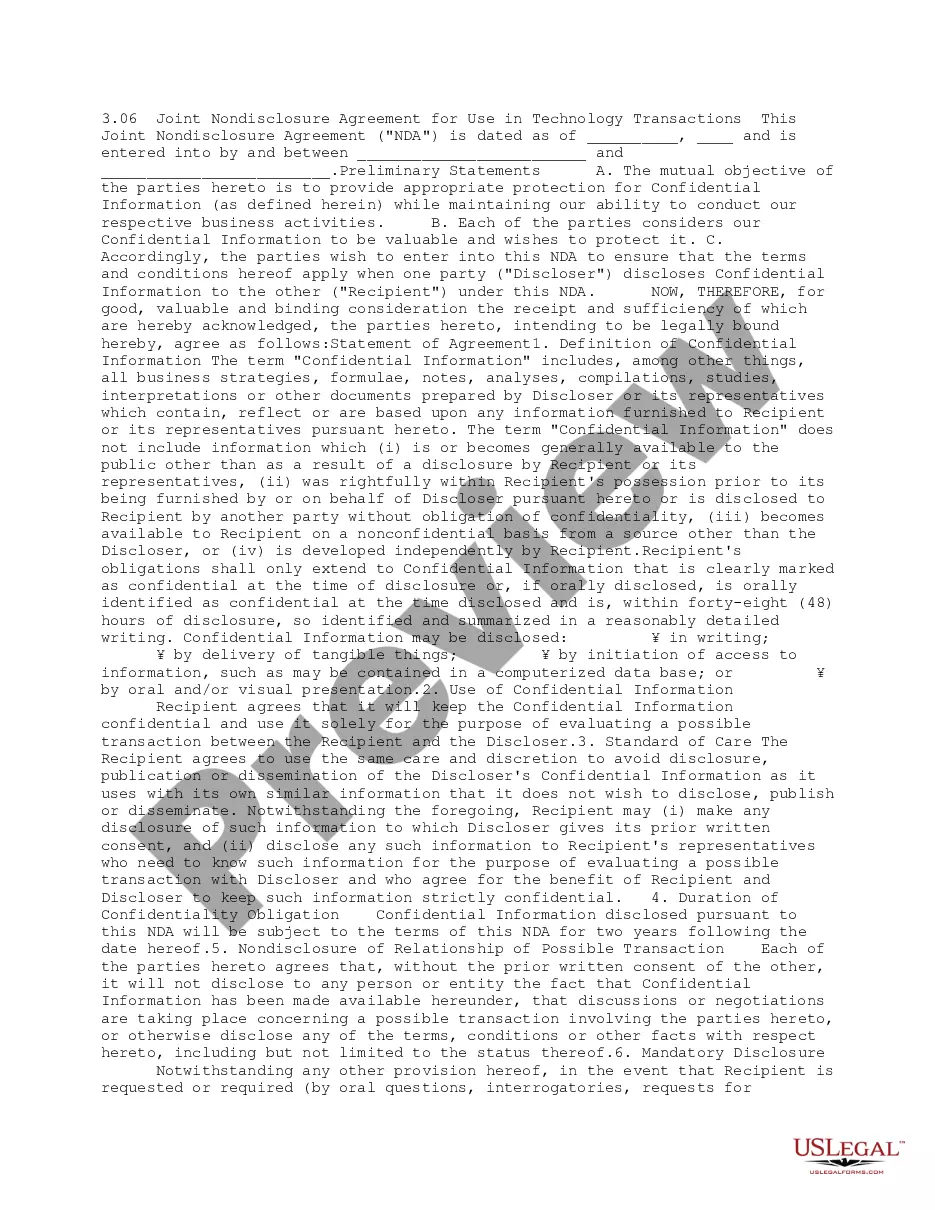
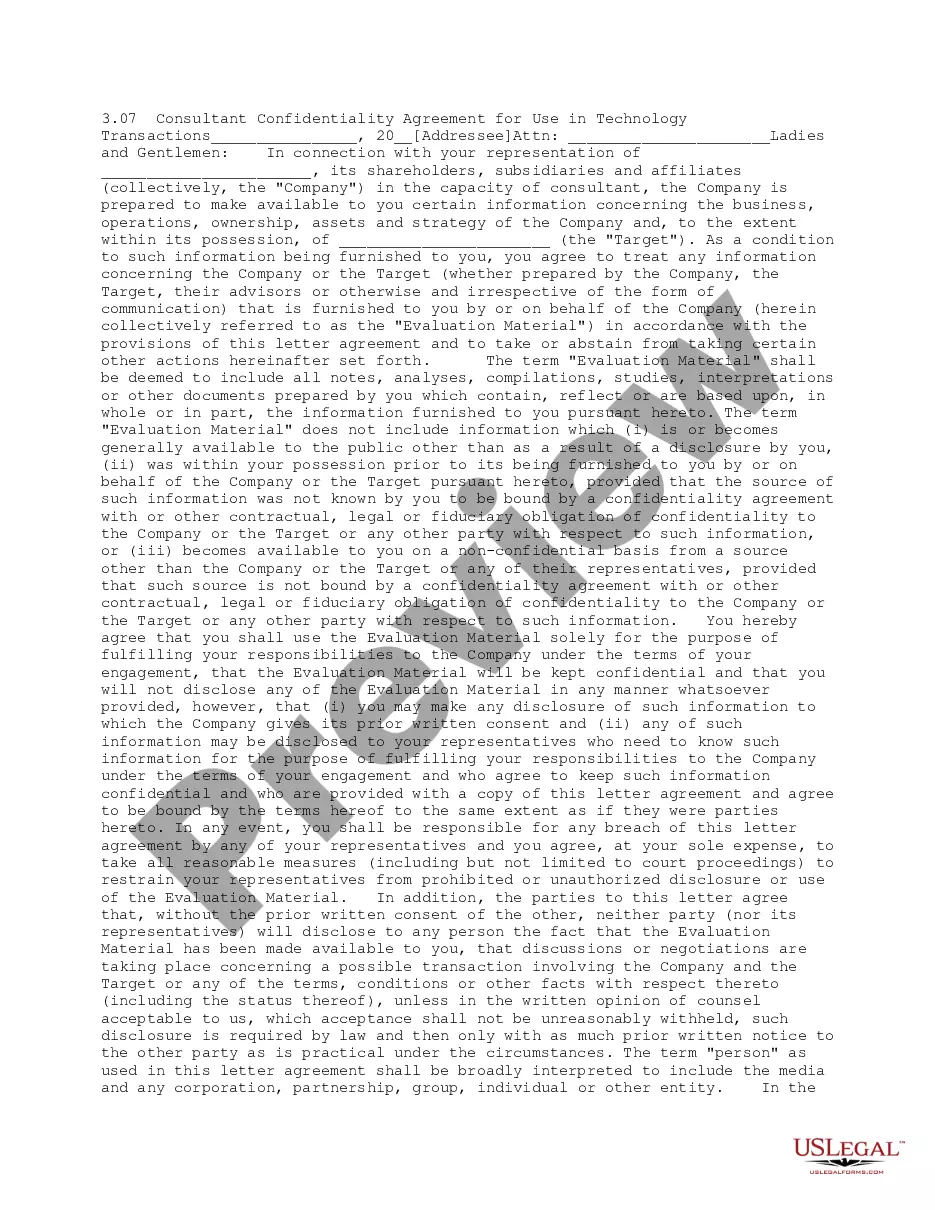
The Unilateral Nondisclosure Agreement for Use in Technology Transactions is a legal document designed to protect confidential information shared during technology-related discussions between a company and a potential partner. This form ensures that all evaluation materials provided remain confidential and outlines the obligations of the parties involved. Unlike mutual nondisclosure agreements, this form emphasizes the responsibilities of one party to maintain confidentiality, making it ideal for situations where only one side is disclosing sensitive information.
Main sections of this form
- Identification of the parties involved, including the target company and the prospective partner.
- Definition of "Evaluation Material" and exceptions to confidentiality.
- Obligations of the receiving party regarding the use and safeguarding of confidential information.
- Conditions for permissible disclosures, including disclosures to representatives and legal requirements.
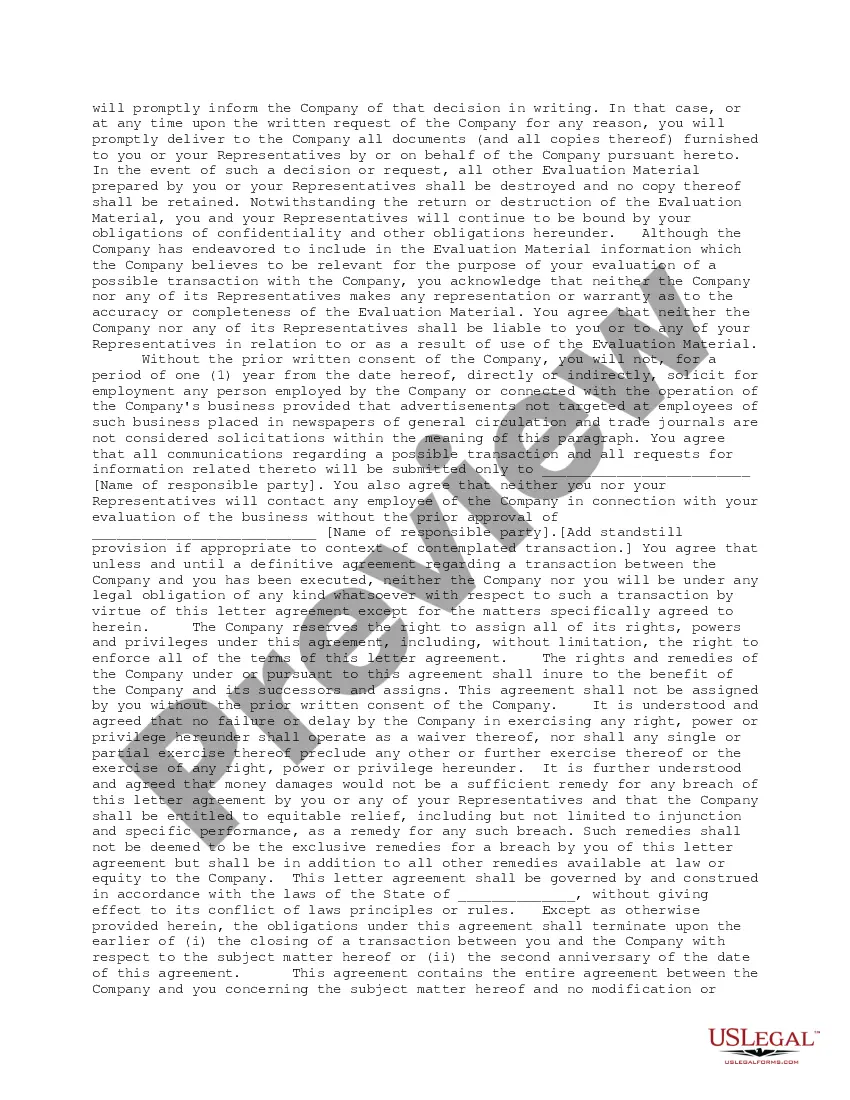
- Provisions for return or destruction of materials if the transaction does not proceed.
- Legal jurisdiction and binding nature of the agreement.
When to use this document
This form is typically used when a company is exploring potential transactions with other companies and needs to share sensitive information for evaluation purposes. It is applicable in various technology sectors where proprietary information, trade secrets, or development processes are involved. Businesses should use this agreement to ensure that their confidential information remains protected during discussions regarding mergers, acquisitions, partnerships, or investments.
Who should use this form
This form is best suited for:
- Companies looking to engage in technology transactions with other entities.
- Investors assessing technology firms for potential investments or acquisitions.
- Startups negotiating partnerships that require data sharing.
- Businesses seeking to protect proprietary information during discussions with potential clients or partners.
How to complete this form
- Identify the parties involved, including the name of the target company and the prospective partner.
- Clearly define the Evaluation Material and include any specific exceptions to confidentiality.
- Include any necessary provisions regarding the return or destruction of materials after evaluation.
- Specify the contact person for communication and any required approvals for disclosures.
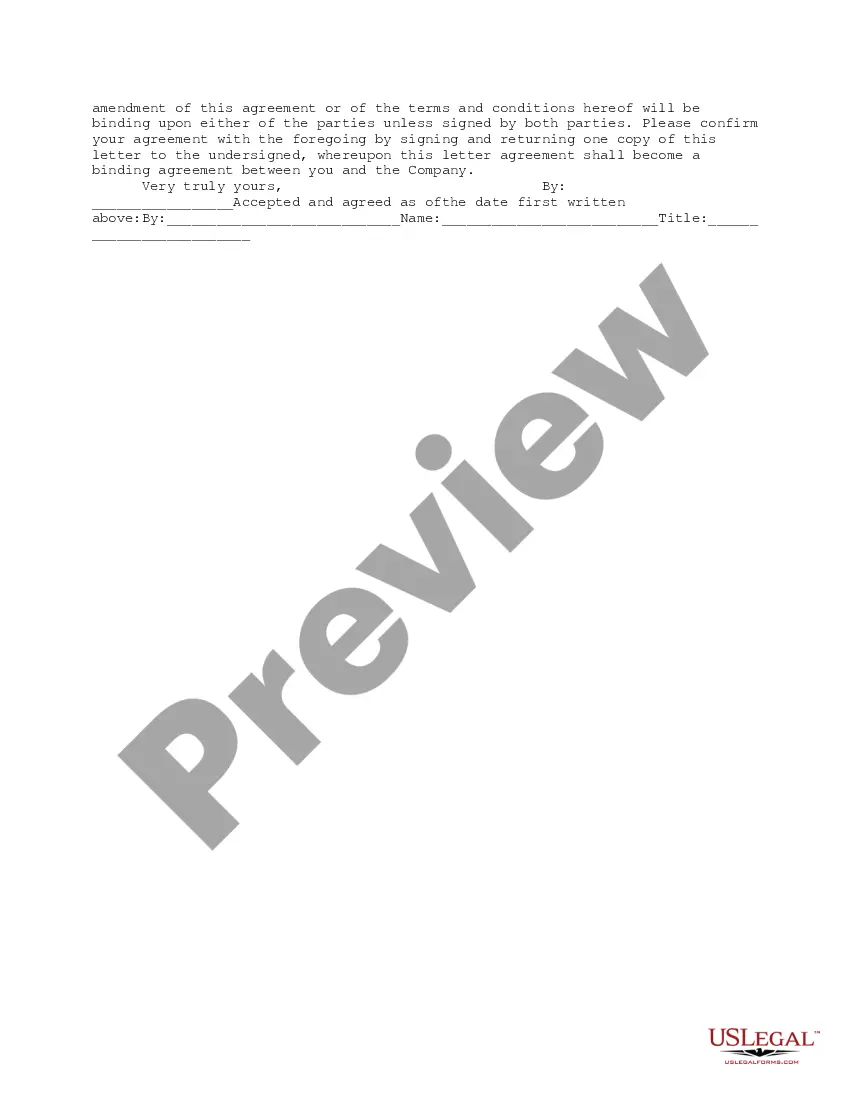
- Ensure that both parties sign and date the agreement to make it enforceable.
Notarization guidance
Notarization is not commonly needed for this form. However, certain documents or local rules may make it necessary. Our notarization service, powered by Notarize, allows you to finalize it securely online anytime, day or night.
Get your form ready online
Our built-in tools help you complete, sign, share, and store your documents in one place.
Make edits, fill in missing information, and update formatting in US Legal Forms—just like you would in MS Word.
Download a copy, print it, send it by email, or mail it via USPS—whatever works best for your next step.
Sign and collect signatures with our SignNow integration. Send to multiple recipients, set reminders, and more. Go Premium to unlock E-Sign.
If this form requires notarization, complete it online through a secure video call—no need to meet a notary in person or wait for an appointment.
We protect your documents and personal data by following strict security and privacy standards.

Make edits, fill in missing information, and update formatting in US Legal Forms—just like you would in MS Word.

Download a copy, print it, send it by email, or mail it via USPS—whatever works best for your next step.

Sign and collect signatures with our SignNow integration. Send to multiple recipients, set reminders, and more. Go Premium to unlock E-Sign.

If this form requires notarization, complete it online through a secure video call—no need to meet a notary in person or wait for an appointment.

We protect your documents and personal data by following strict security and privacy standards.
Common mistakes to avoid
- Failing to specify all parties involved, which may lead to misunderstandings.
- Neglecting to define exceptions to confidentiality clearly.
- Not collecting the appropriate signatures before sharing confidential information.
- Overlooking the return or destruction clause, which is critical for protecting sensitive data.
Advantages of online completion
- Convenience of downloading and printing the form at any time.
- Editable format allows for customization based on your specific needs.
- Access to professionally drafted documents ensures legal compliance.
- Simple instructions guide you throughout the completion process.
Looking for another form?




Form popularity
FAQ
An employee can be required to sign an NDA or NDA-like agreement with an employer, protecting trade secrets. In fact, some employment agreements include a clause restricting employees' use and dissemination of company-owned confidential information.
The party to be charged must have signed the contract. Since the NDAs benefit you, so long as the other party has signed, that ishould be sufficient.
Set the date of the agreement. Describe the two parties, sometimes called the Disclosing Party and the Receiving Party.7feff Include names and identification, so there can be no misunderstanding about who signed the agreement.
No, it is not necessary for the nondisclosure agreement to be "notarized", nor is it necessary under California law for the signatures on such an agreement to be "witnessed".
Identify each party in the first section of the form. The NDA form will start by declaring it to be an agreement and identifying who the agreement is between. Whoever is disclosing the information to be protected is the "disclosing party"; write his or her name on this space.
NDA documents can now be written, completed, and signed online by all the relevant parties in real-time, regardless of where they reside. Security There is no safe way of avoiding NDA documents to be intercepted, destroyed, or tampered with while on transit than using electronic NDA forms.
Identification of the parties. Definition of what is deemed to be confidential. The scope of the confidentiality obligation by the receiving party. The exclusions from confidential treatment. The term of the agreement.
NDAs are legally enforceable contracts, but they're now coming under increased scrutiny from lawmakers, attorneys and legal experts.Companies often use them as part of an employment contract or settlement agreement to protect sensitive information like trade secrets.
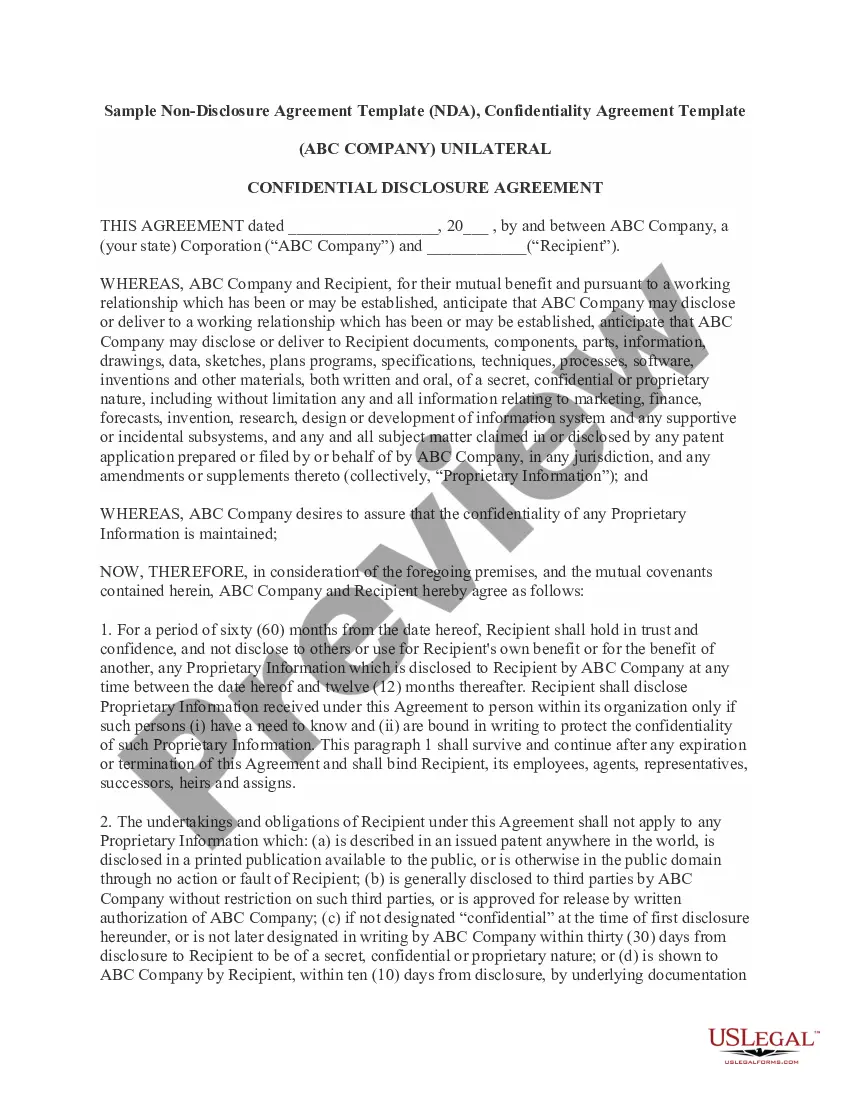
The unilateral non-disclosure agreement, also known as a 1-way NDA, is an agreement between two (2) parties in which the first party (the Company) is the sole owner of the information and they're releasing it to a second party (the Recipient).