Right of First Refusal and Co-Sale Agreement
Overview of this form
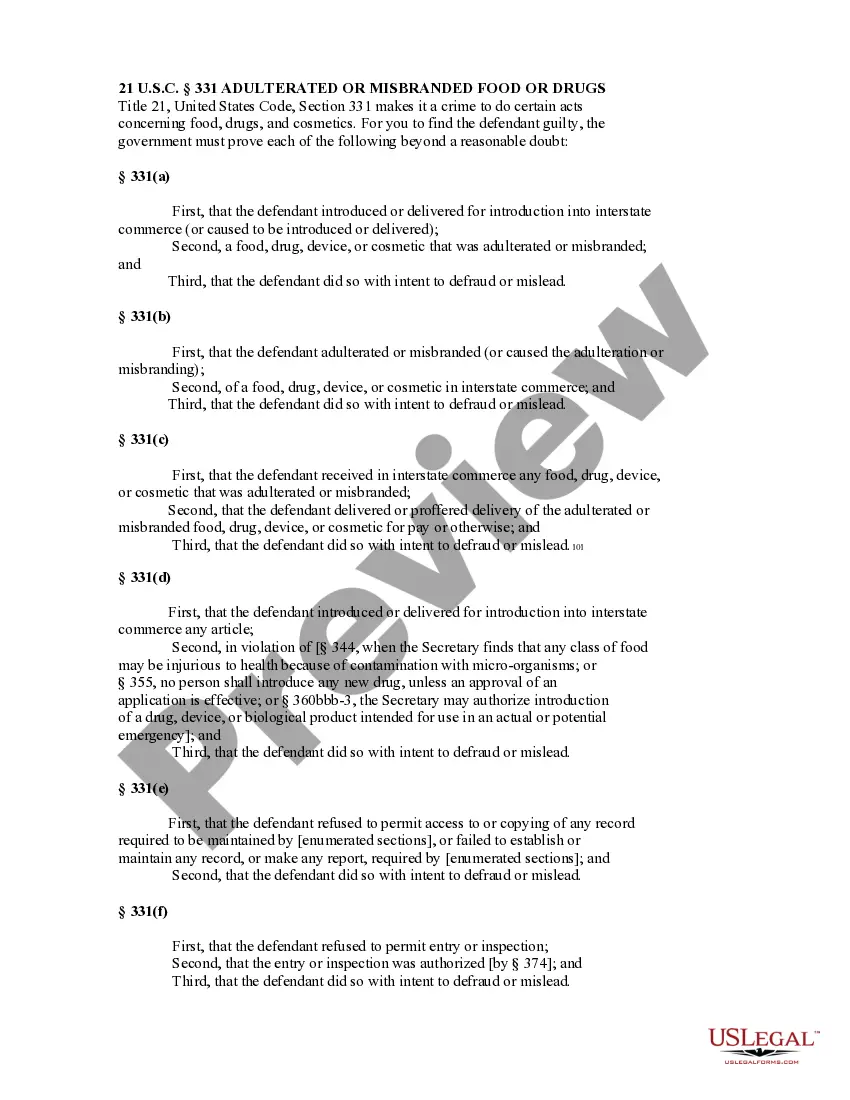
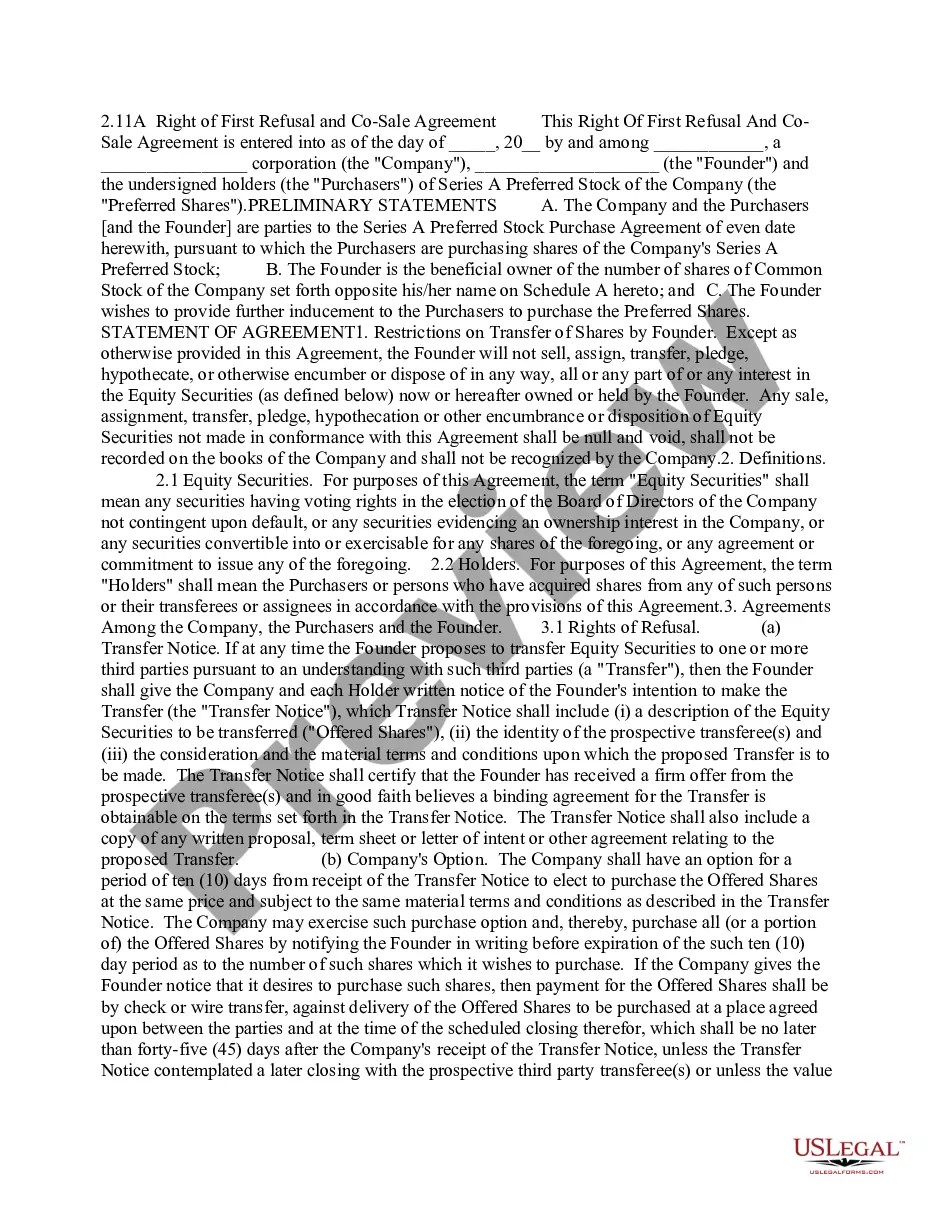
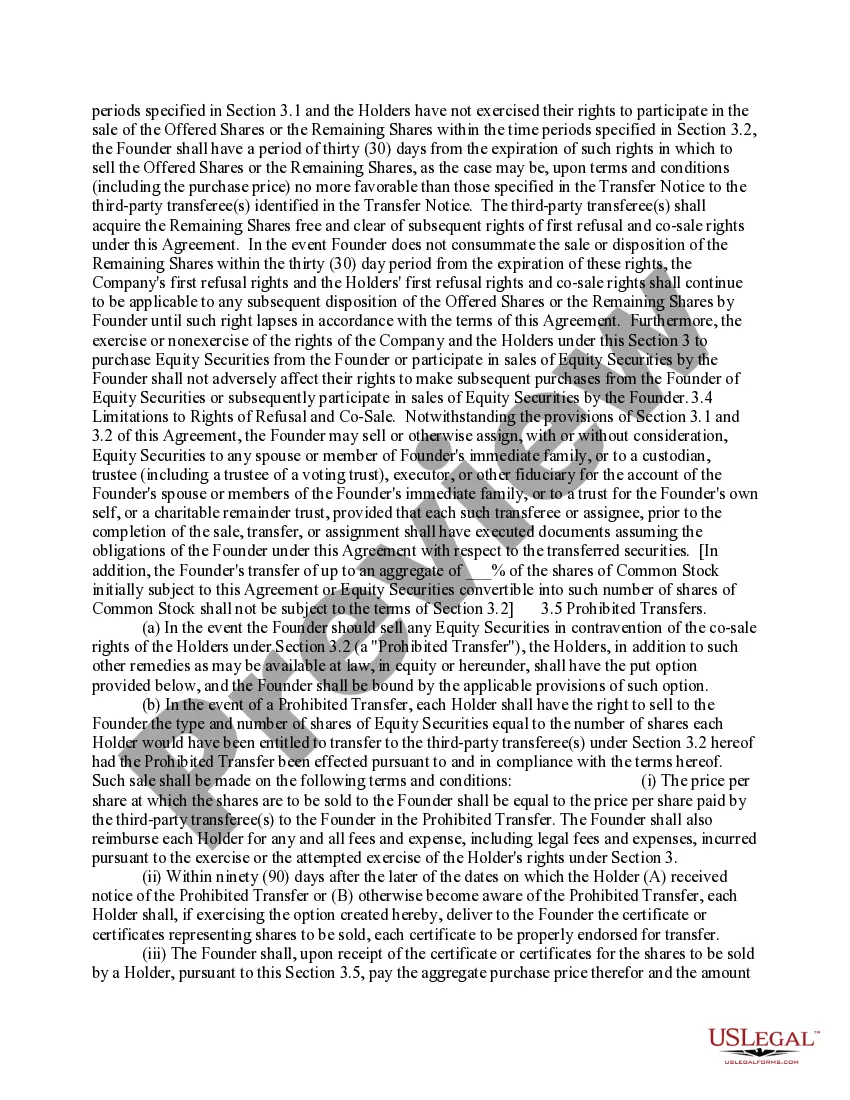
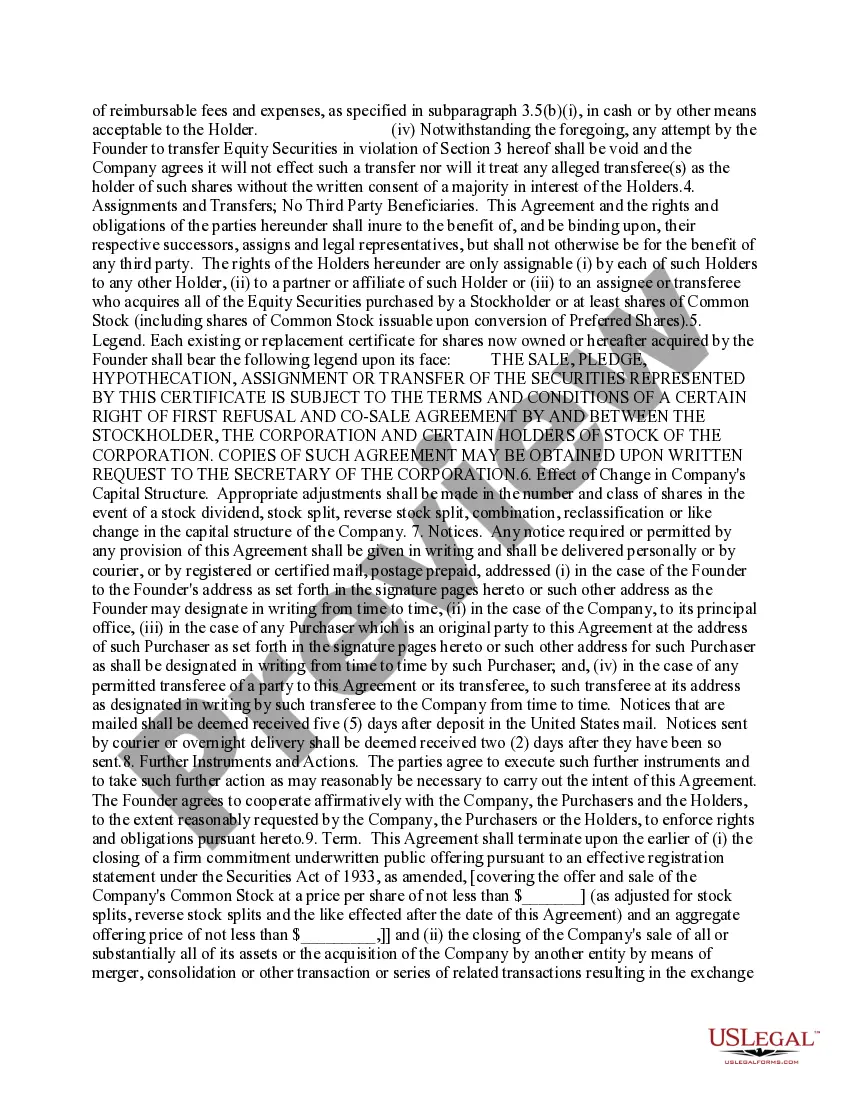
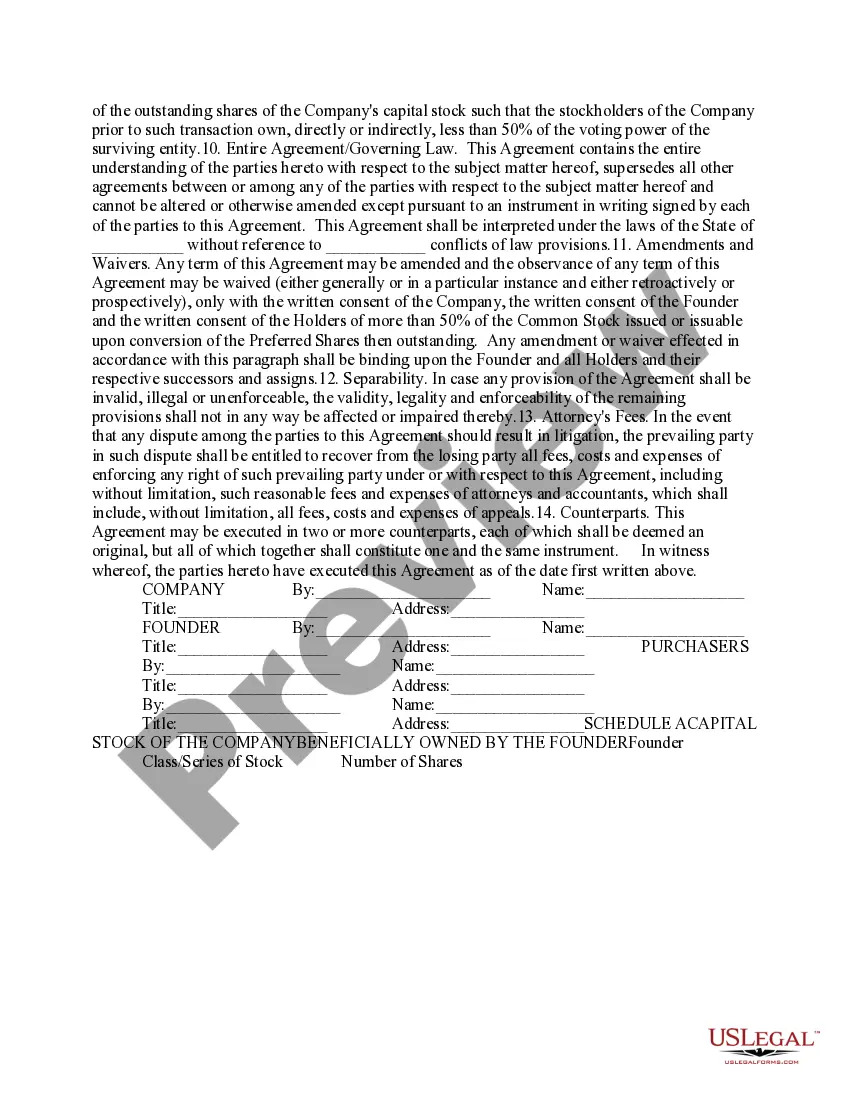
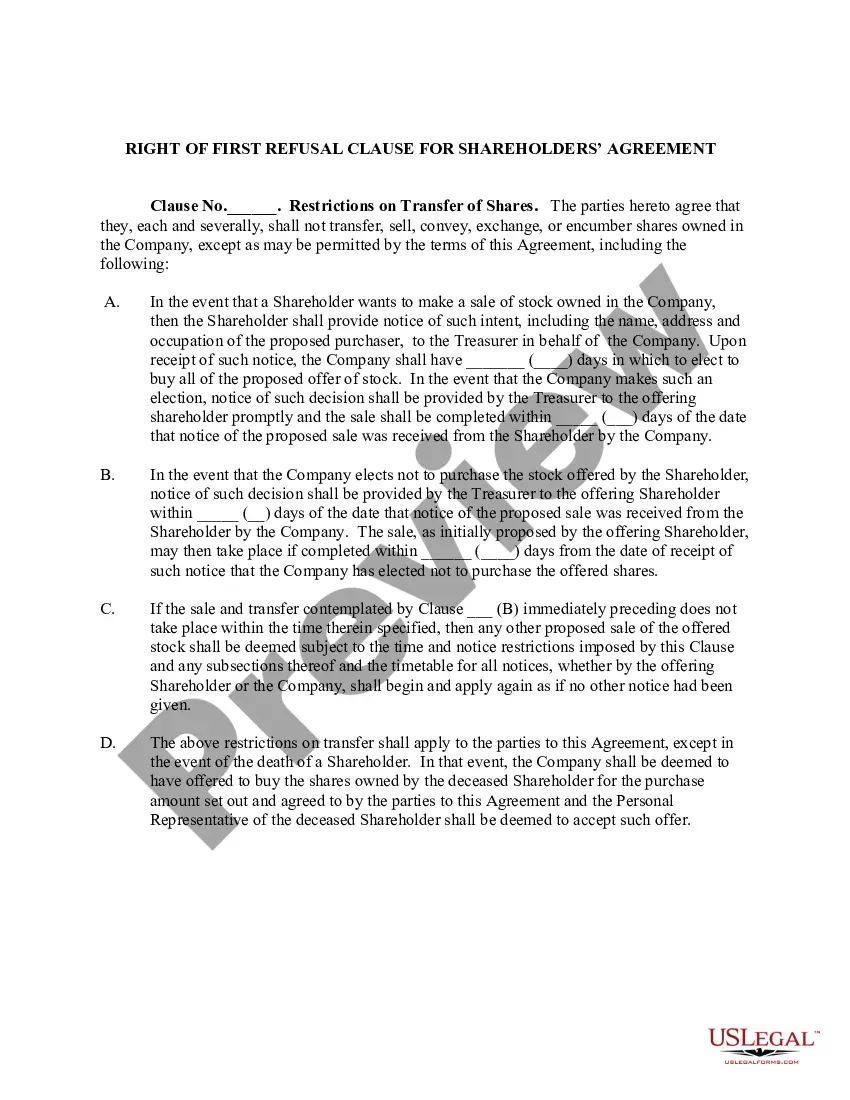
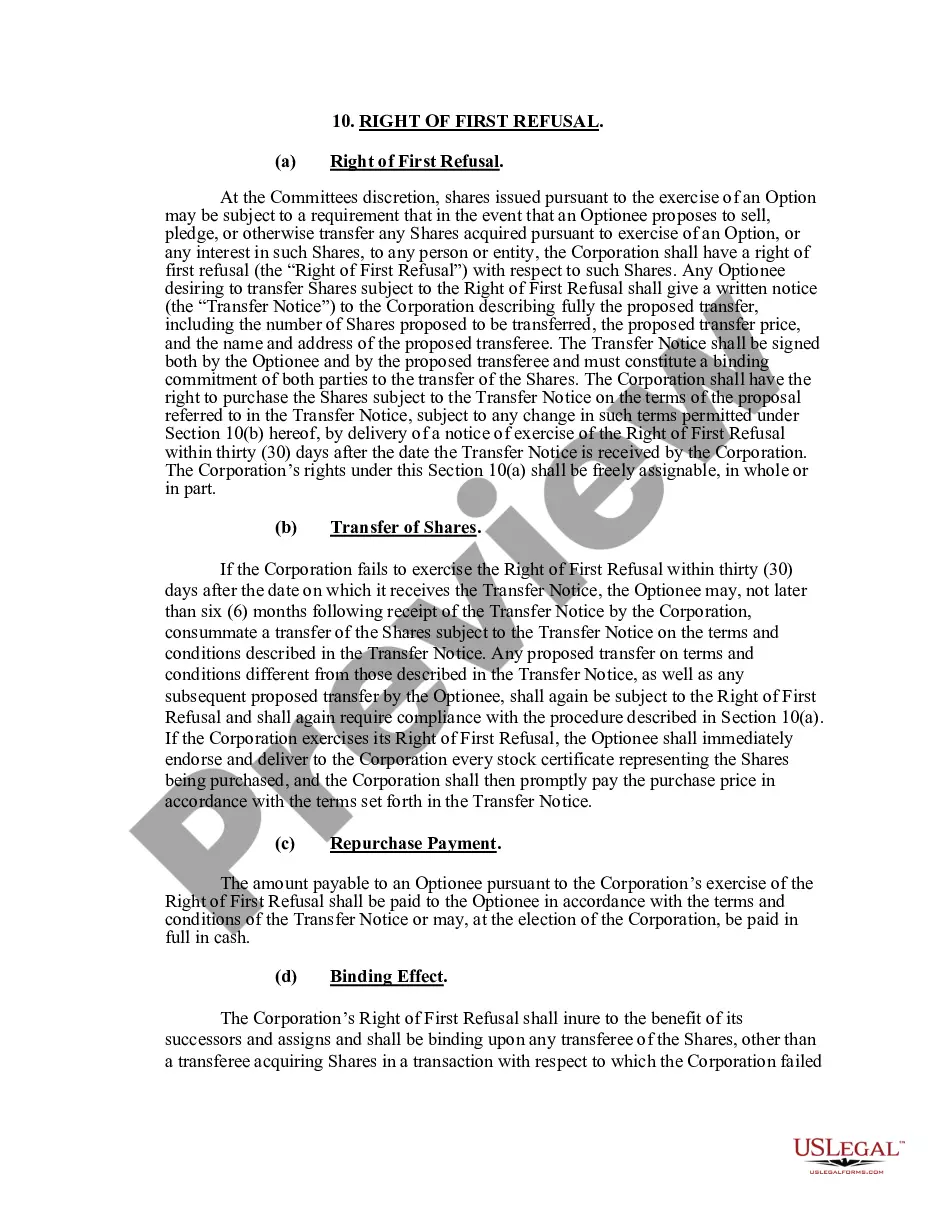
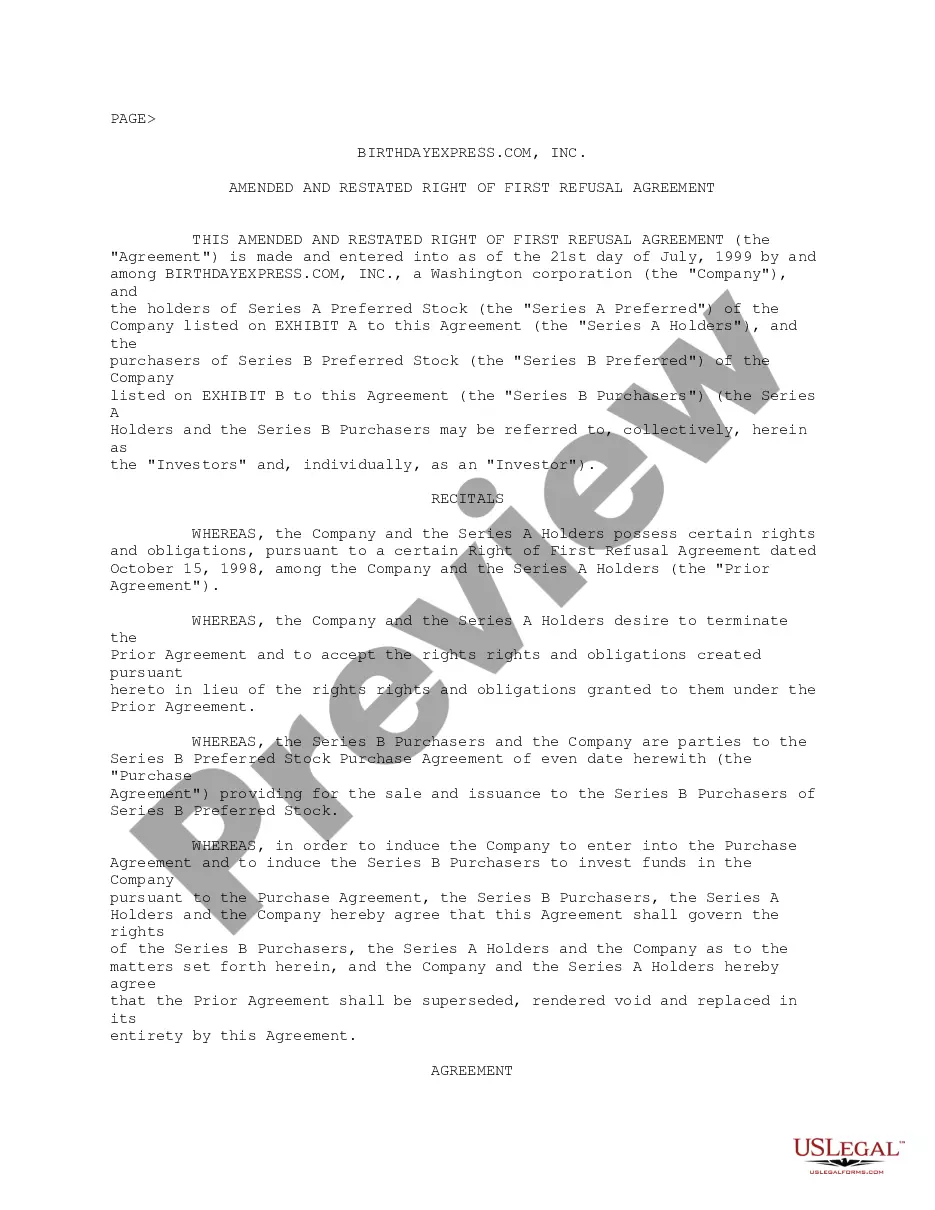
The Right of First Refusal and Co-Sale Agreement is a legal document that outlines the rights of a corporation and purchasers of preferred stock regarding stock transfers. Primarily, it grants these parties the right to refuse or co-sell shares before the founder can transfer stock to third parties. This ensures that existing shareholders have the opportunity to maintain their ownership stake or sell their shares in coordination with the founder, safeguarding their interests in the corporation.
Form components explained
- Restrictions on stock transfer by the founder.
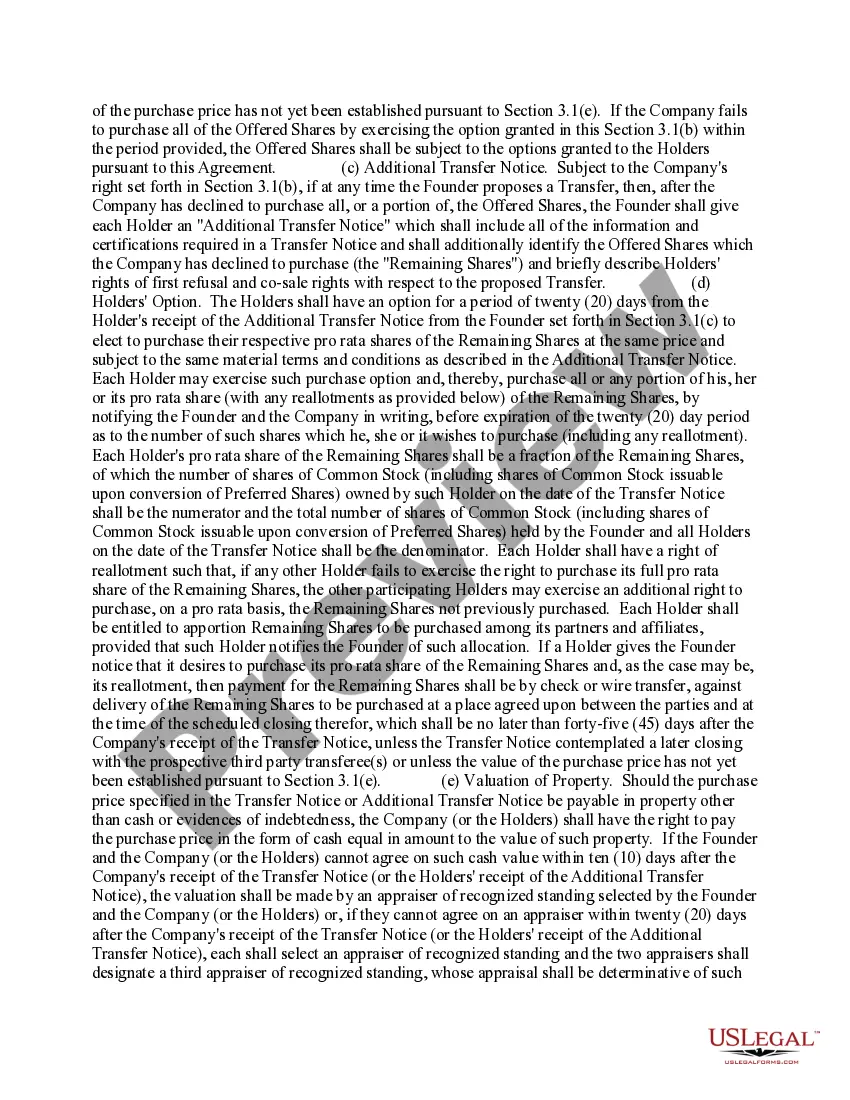
- Rights of refusal for the company and holders of preferred stock.
- Procedures for providing notice of stock transfer intentions.
- Valuation processes for determining purchase prices.
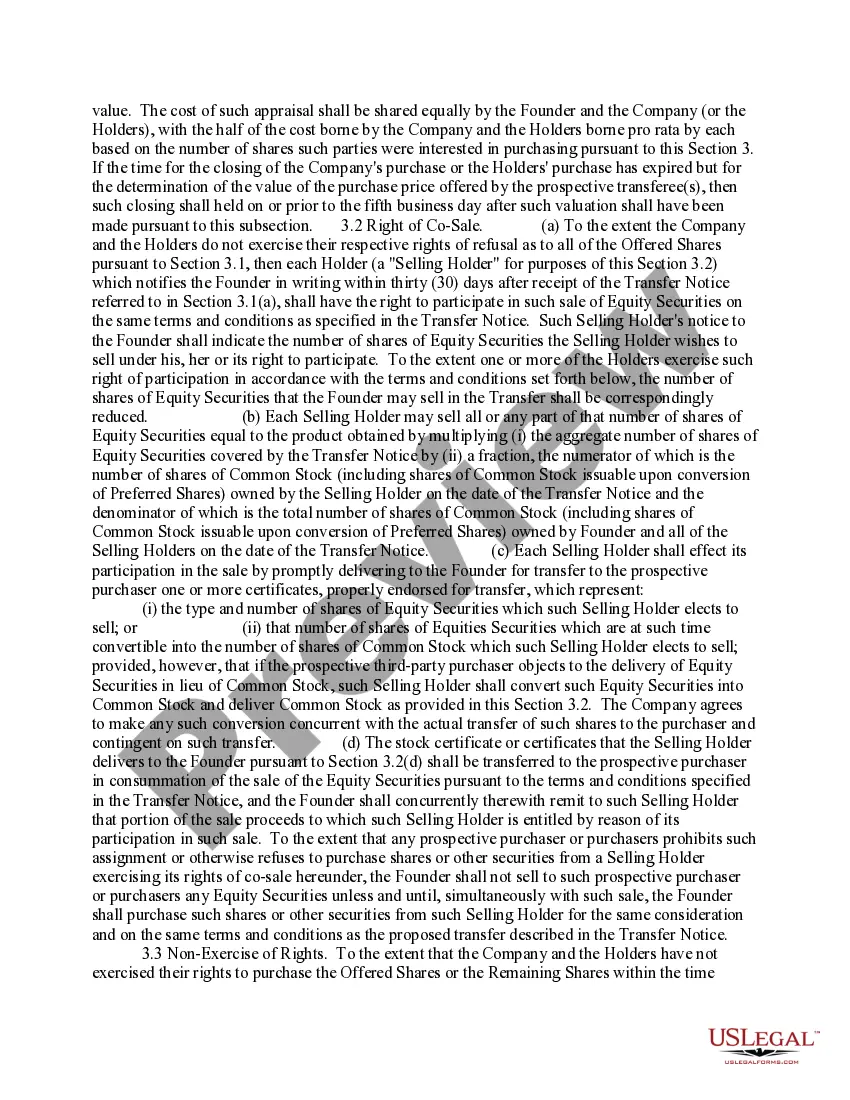
- Rights of co-sale for holders if they choose not to exercise their right of first refusal.
- Limitations on transfer rights and the implications of prohibited transfers.
When to use this form
This form is essential when a founder intends to transfer their equity securities to third parties. Using this agreement can prevent unwanted changes in ownership and protect existing investors by giving them the first chance to buy shares or participate in any sales involving equity interests. It is especially relevant for startups or corporations that have issuance of preferred stock and want to maintain control over ownership transitions.
Who can use this document
- Founders of corporations seeking to facilitate stock transactions while protecting existing shareholders.
- Holders of preferred stock who want the security of first refusal rights when shares are sold.
- Companies issuing preferred stock that require formal agreements to govern stock transfers.
How to complete this form
- Identify the parties involved: the company, the founder, and the preferred stockholders.
- Enter the date of the agreement and relevant shareholder information on Schedule A.
- Specify the restrictions on transferring shares and the process for notifying other parties of any proposed transfers.
- Detail the rights of refusal, including the timing and method for execution.
- Include any clauses about valuation methods and procedures for co-sale rights.
Notarization requirements for this form
This form does not typically require notarization unless specified by local law. Check your jurisdiction's requirements to confirm if notarization is needed for this agreement to be legally valid.
Get your form ready online
Our built-in tools help you complete, sign, share, and store your documents in one place.
Make edits, fill in missing information, and update formatting in US Legal Forms—just like you would in MS Word.
Download a copy, print it, send it by email, or mail it via USPS—whatever works best for your next step.
Sign and collect signatures with our SignNow integration. Send to multiple recipients, set reminders, and more. Go Premium to unlock E-Sign.
If this form requires notarization, complete it online through a secure video call—no need to meet a notary in person or wait for an appointment.
We protect your documents and personal data by following strict security and privacy standards.

Make edits, fill in missing information, and update formatting in US Legal Forms—just like you would in MS Word.

Download a copy, print it, send it by email, or mail it via USPS—whatever works best for your next step.

Sign and collect signatures with our SignNow integration. Send to multiple recipients, set reminders, and more. Go Premium to unlock E-Sign.

If this form requires notarization, complete it online through a secure video call—no need to meet a notary in person or wait for an appointment.

We protect your documents and personal data by following strict security and privacy standards.
Common mistakes
- Failing to provide required notices to all parties involved in a proposed stock transfer.
- Not defining the valuation process clearly, leading to disputes over stock prices.
- Overlooking necessary signatures from all parties before finalizing the agreement.
- Neglecting to confirm that the agreement adheres to specific state laws.
Why use this form online
- Convenience of completing the form at your own pace without needing physical meetings.
- Editability of the document to suit specific needs before finalizing.
- Access to legal forms drafted by licensed attorneys, ensuring reliability.
Legal use & context
- This agreement is legally binding once signed by all parties.
- Enforcement may vary based on state laws, particularly regarding shareholder rights.
- It is essential to understand the implications of not exercising the rights specified in the agreement, which can affect investment outcomes.
Quick recap
- The Right of First Refusal and Co-Sale Agreement protects existing shareholders by allowing them to purchase shares before they are sold to outsiders.
- Clear terms and conditions are critical for effective operation of the agreement.
- Consult with legal professionals to ensure compliance with relevant laws and regulations.
Looking for another form?



Form popularity
FAQ
Depending on your needs, the cost of negotiating a right of first refusal for your transaction can vary signficantly. Hourly rates for corporate lawyers in the Priori network with experience negotiating ROFRs can vary from $150 per hour to $550 per hour.
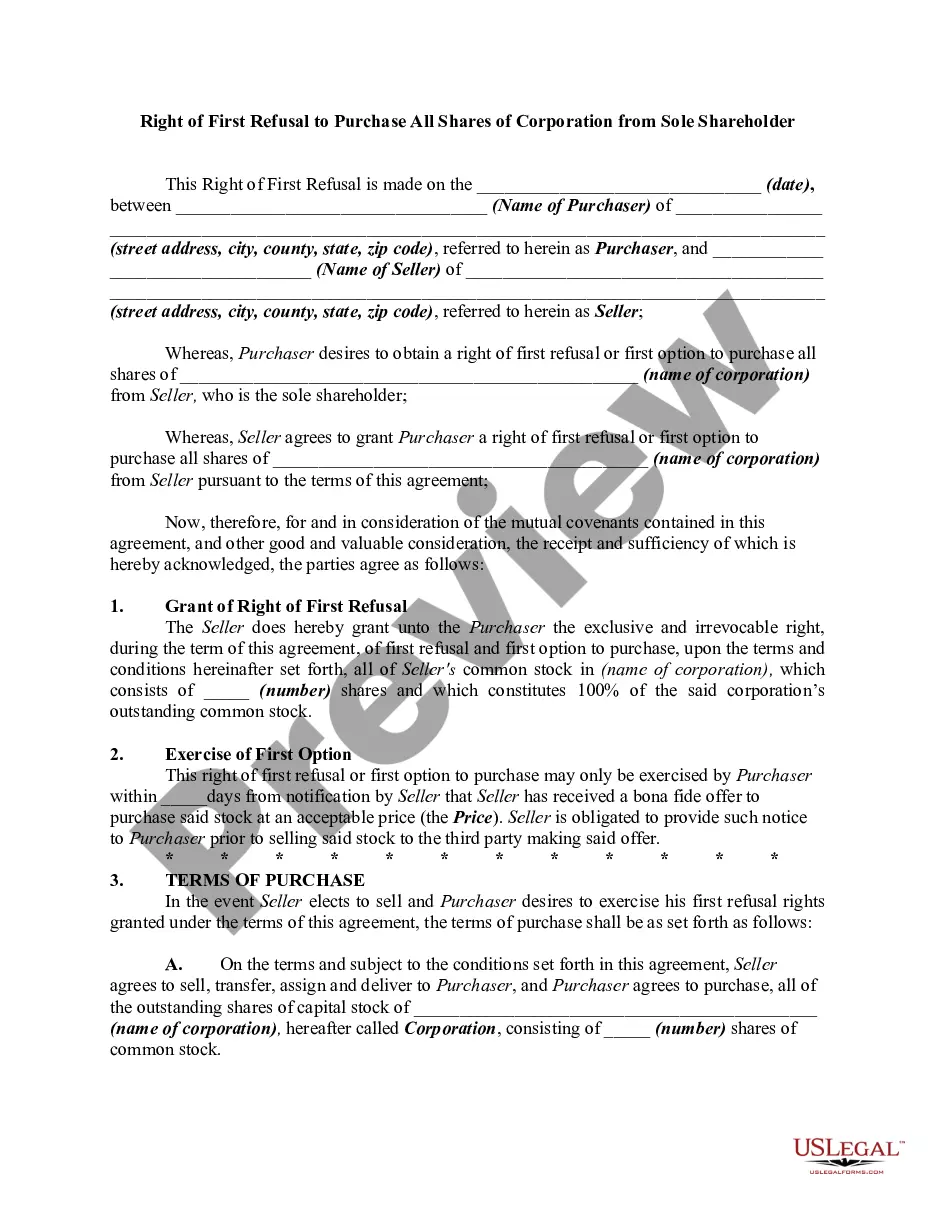
A right of first refusal agreement allows a buyer and seller to enter into an arrangement by which the potential buyer is given the first crack at a property when it goes up for sale.
A right of first refusal agreement allows a buyer and seller to enter into an arrangement by which the potential buyer is given the first crack at a property when it goes up for sale.
The right of first refusal and co-sale (ROFR/Co-sale) work together to prevent a founder or major common shareholder for selling shares without the company and the investors being allowed to purchase the shares or participate in the sale of the shares.
Every RFR should be drafted as either an agreement or a contract (in which the holder gives some consideration, or pays for, the right). It may bind the current owner alone or run with the land. In either case, I would advise having it recorded.
A person holding a right of first refusal has the option to accept a business offer before anyone else. This right covers most assets, including business transactions and real estate. For example, a business owner may have the first right to consider buying or selling a supplier's goods.
The right of first refusal is usually triggered when a third party offers to buy or lease the property owner's asset. Before the property owner accepts this offer, the property holder (the person with the right of first refusal) must be allowed to buy or lease the asset under the same terms offered by the third party.
The right of first refusal applies to sales as well as rentals. And with any sale or rental, the board has the opportunity to exercise its right of first refusal or to waive that right.The bylaws state that if the board does not exercise its rights within a certain period, it is deemed waived.