Employee Restricted Stock Purchase Agreement
Overview of this form
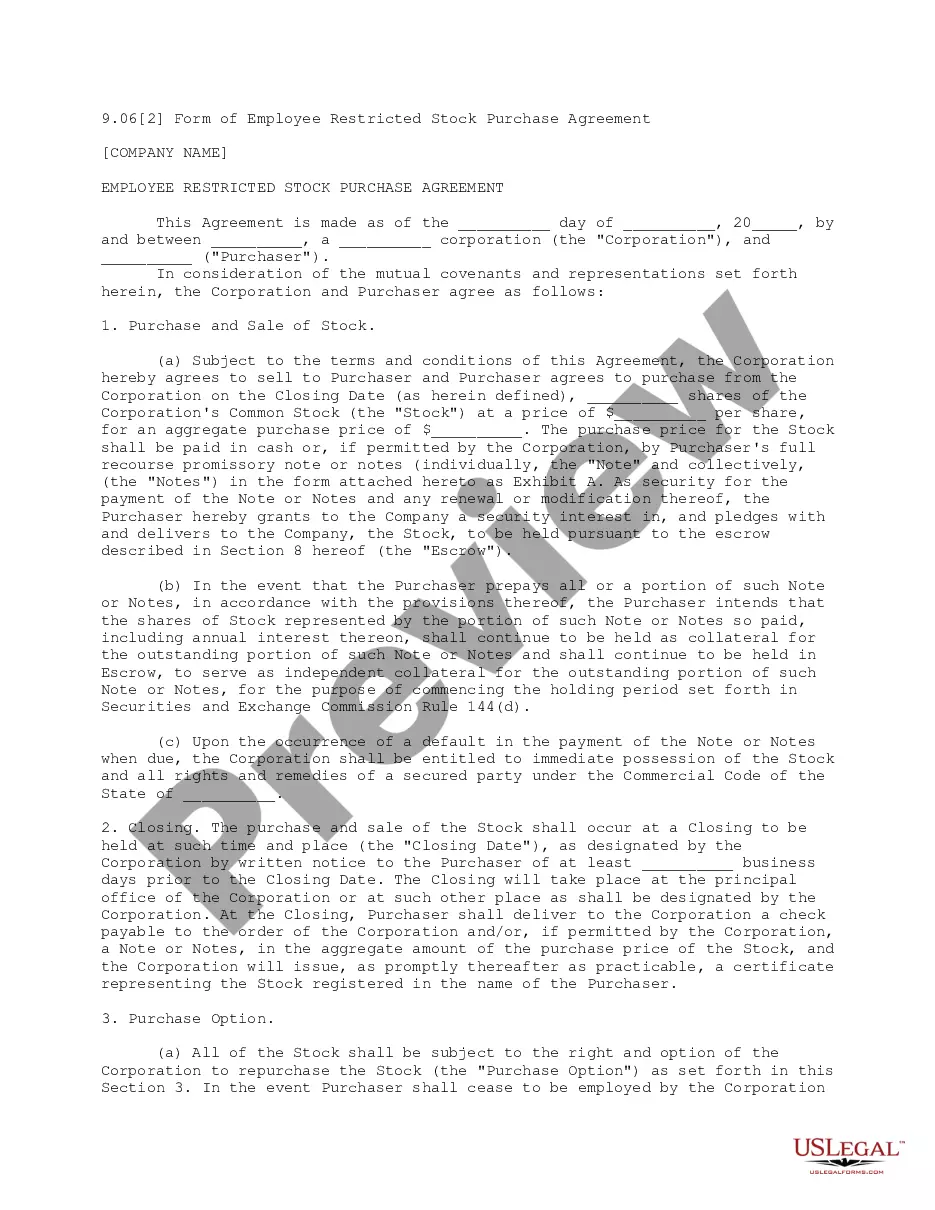
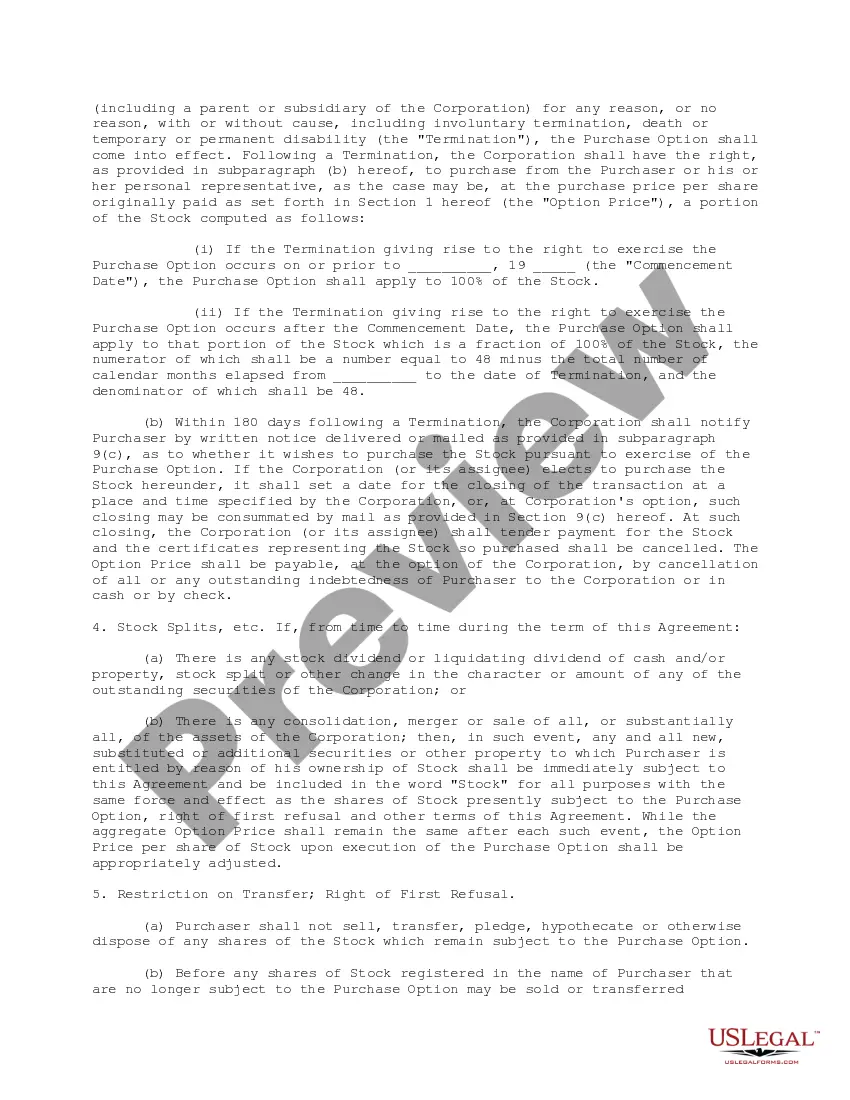
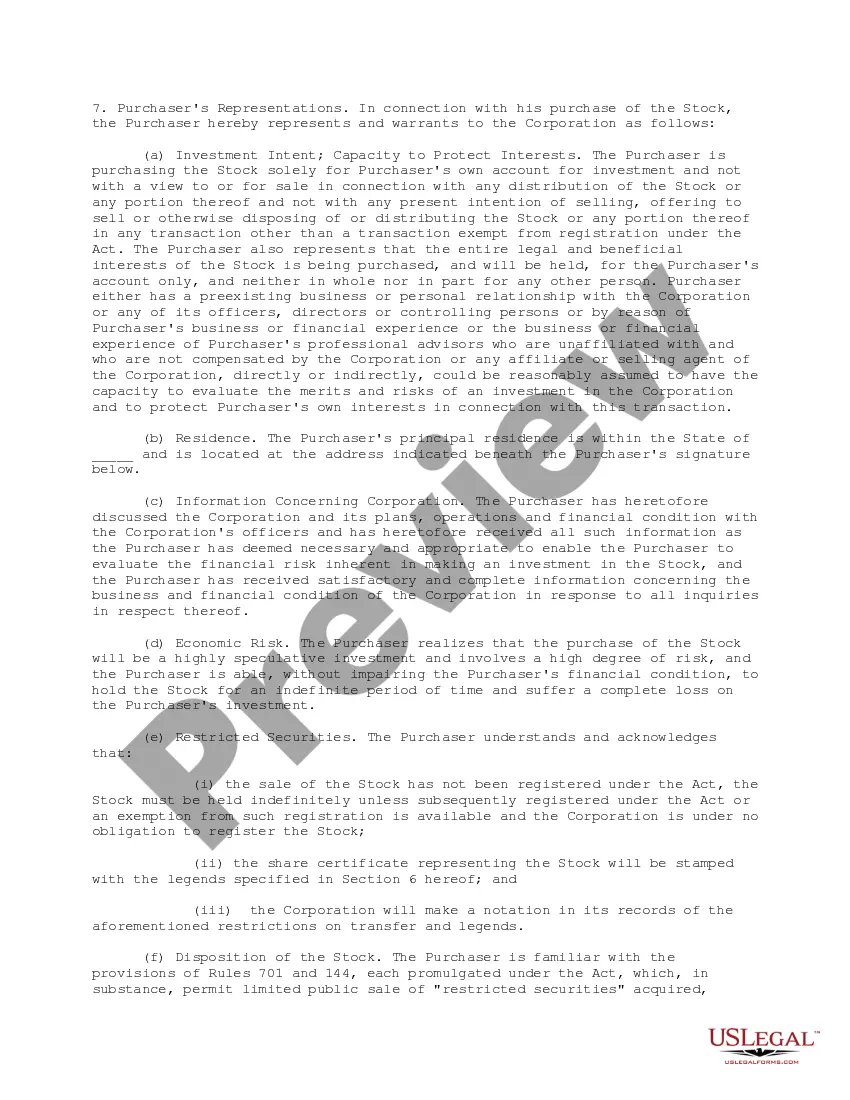
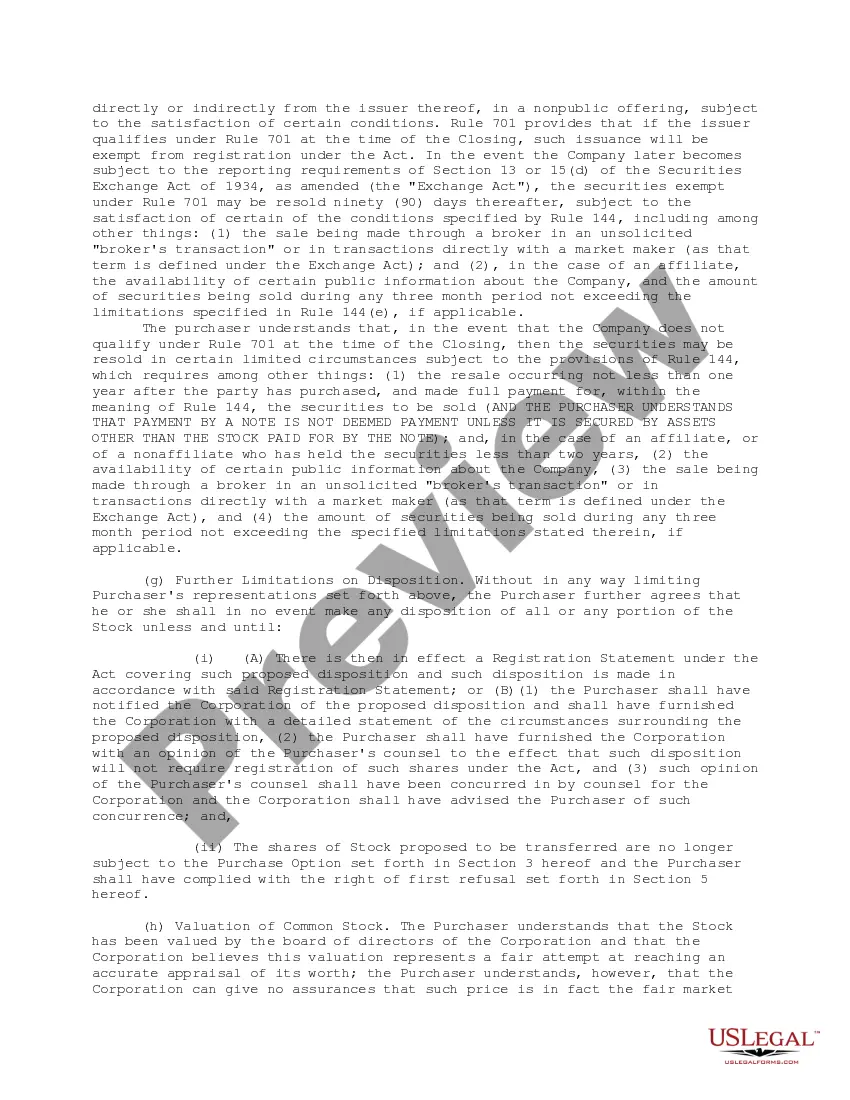
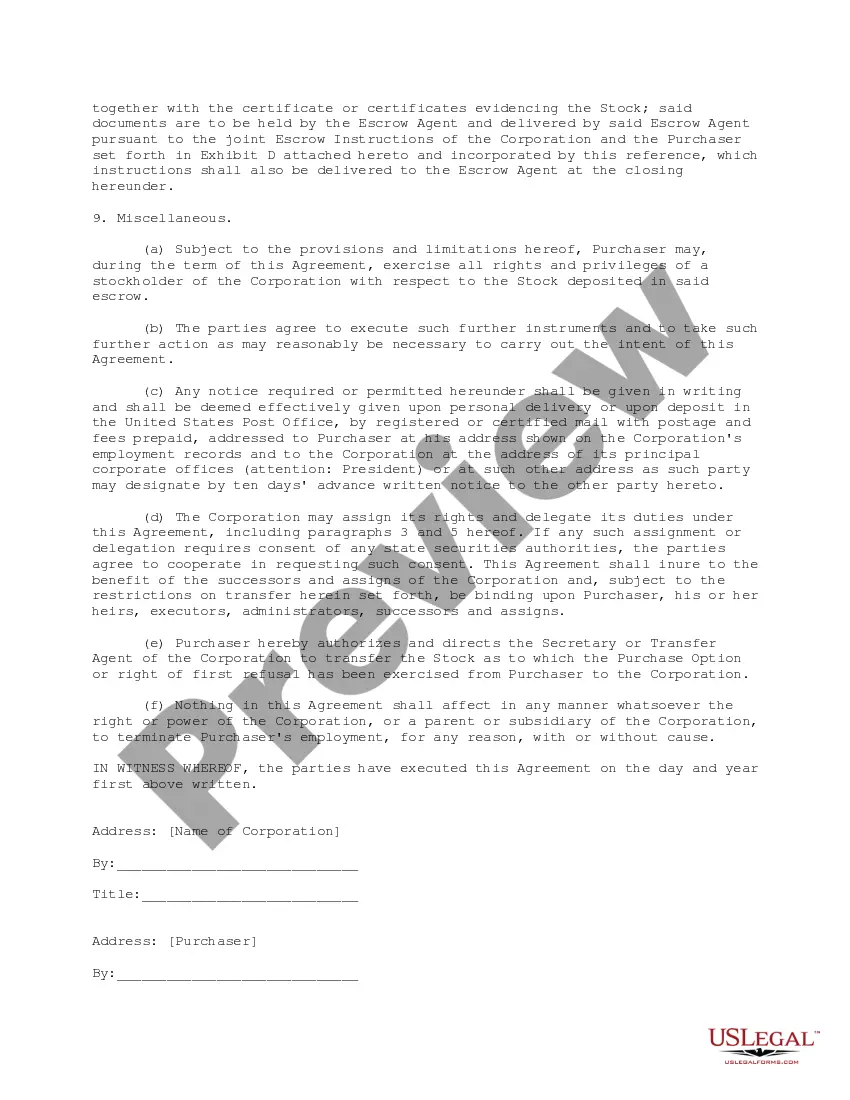
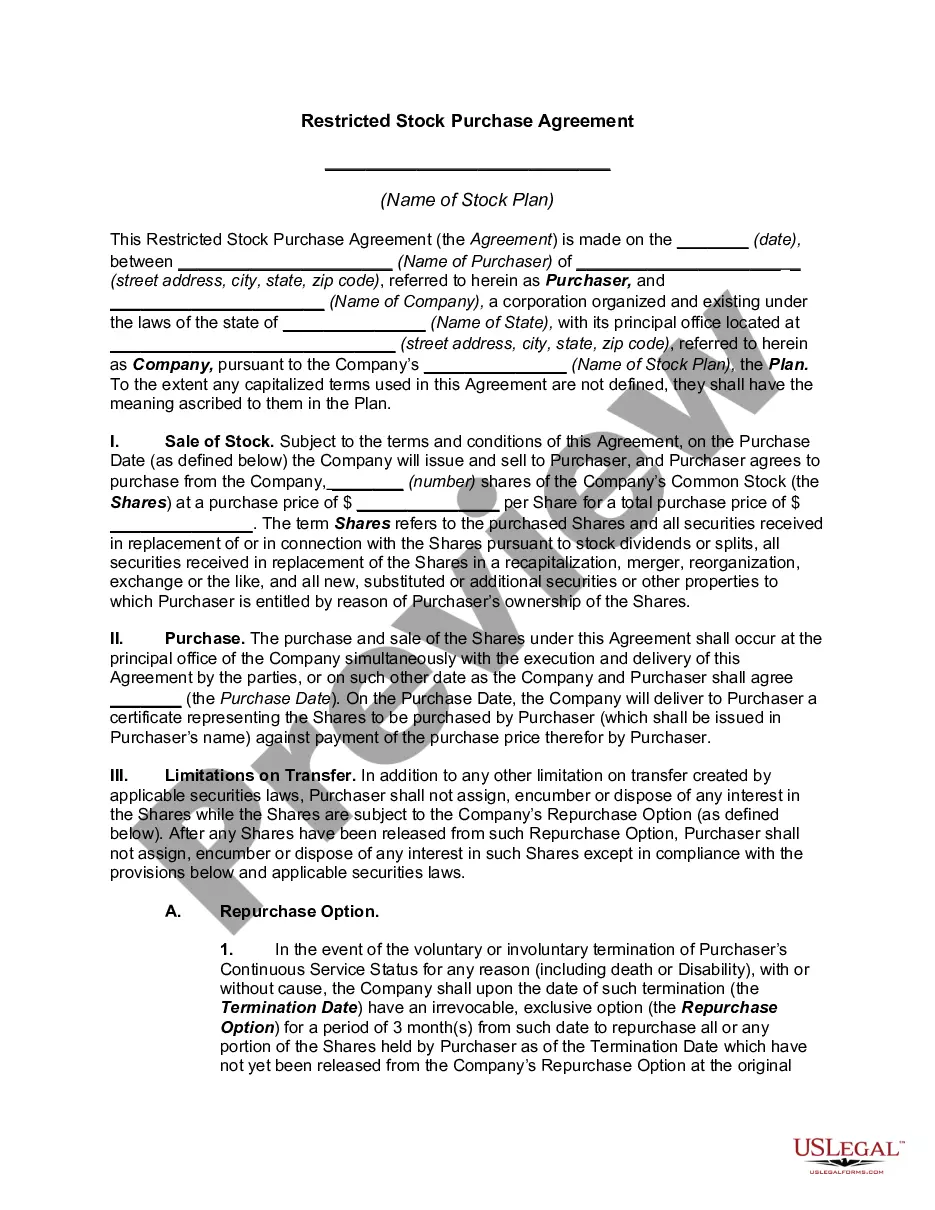
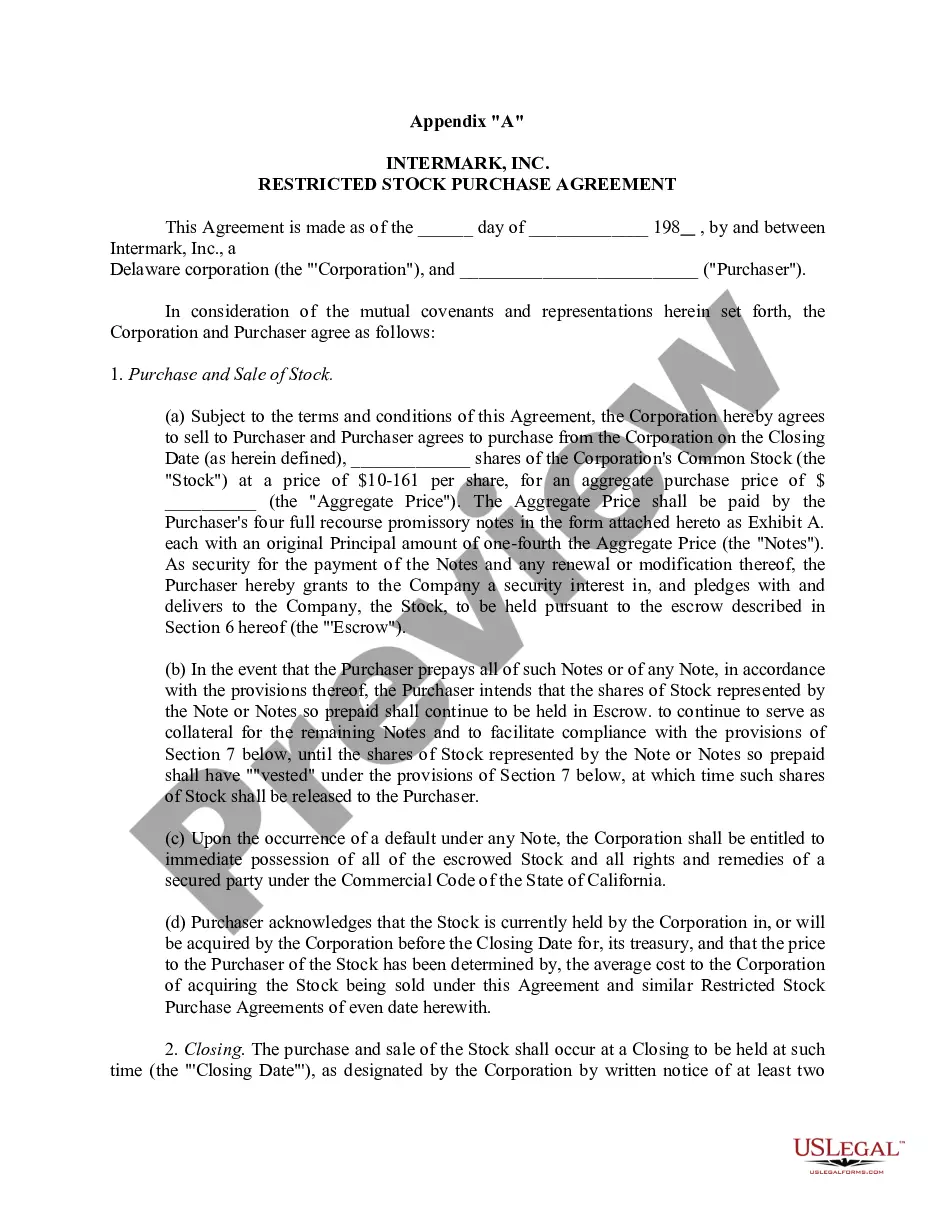
The Employee Restricted Stock Purchase Agreement is a legal document used by corporations to outline the terms under which employees can purchase restricted stock. This agreement is particularly beneficial for startups looking to incentivize employees with equity while providing clear guidelines on stock ownership and repurchase rights. Unlike standard stock purchase agreements, this form includes specific provisions to protect the corporation's interests in case of employment termination or other changes in status.
Key parts of this document
- Purchase and sale of stock: Details the number of shares, purchase price, and payment method.
- Closing: Specifies the time and place for the transfer of shares.
- Purchase option: Outlines the corporation's right to repurchase shares under certain conditions.
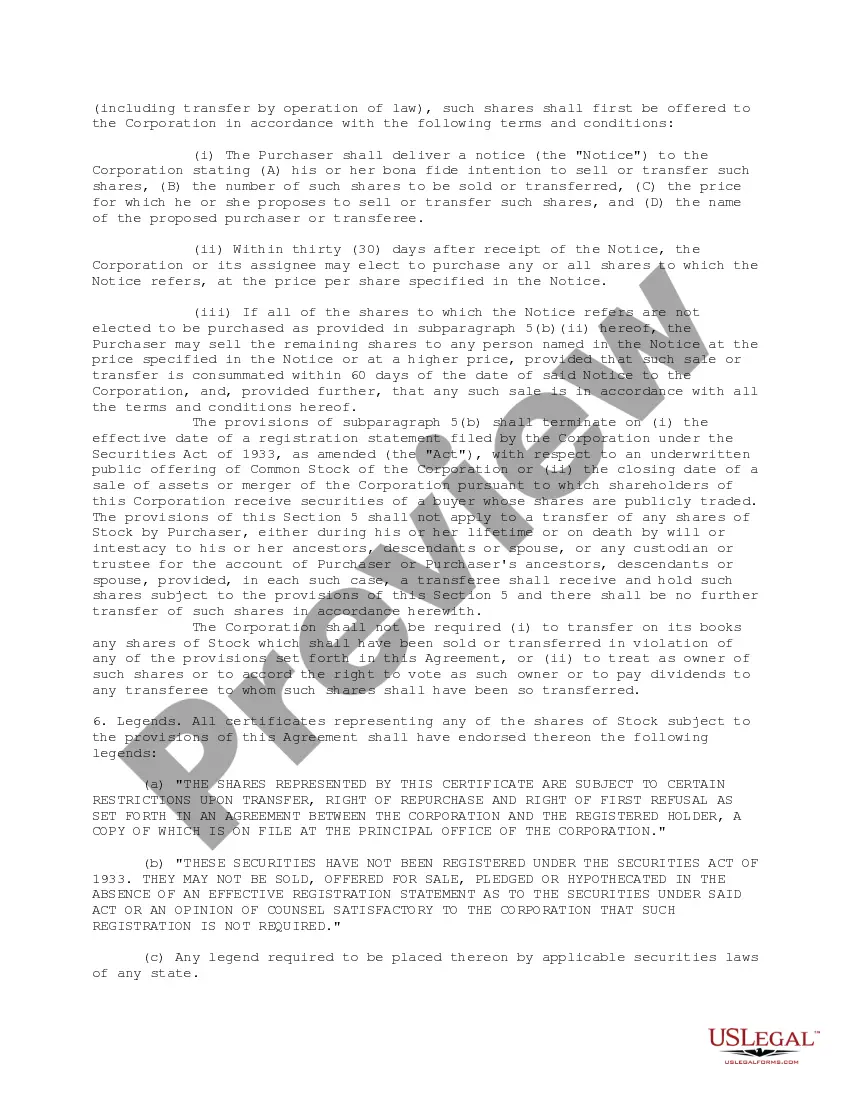
- Restrictions on transfer: Sets conditions under which the employee can sell or transfer stock.
- Legends: Includes information that must be noted on stock certificates.
- Escrow: Establishes how stock certificates will be held and released.

When to use this form
This form is essential when a corporation wants to offer restricted stock to its employees as part of their compensation package. It is particularly useful in situations where the corporation aims to align the employees' interests with that of the business, especially during initial growth phases. Use this agreement when negotiating stock options or when an employee is about to purchase stock as part of their employment agreement.
Who needs this form
- Corporations looking to offer stock options to employees.
- Startup companies aiming to attract talent through equity compensation.
- Human resources professionals managing employee contracts and equity plans.
- Legal representatives drafting agreements for stock purchases.
How to complete this form
- Identify the parties involved: Enter the corporation's name and the employee's name.
- Specify the number of shares and the purchase price per share in the designated sections.
- Detail the payment method: Indicate if payment will be in cash or through promissory notes.
- Set the closing date and specify any significant details relevant to the stock issuance.
- Ensure all parties sign the agreement at the designated signatures section to validate it.
Notarization requirements for this form
This form does not typically require notarization unless specified by local law. However, it is advisable to double-check your state's requirements to ensure compliance.
Get your form ready online
Our built-in tools help you complete, sign, share, and store your documents in one place.
Make edits, fill in missing information, and update formatting in US Legal Forms—just like you would in MS Word.
Download a copy, print it, send it by email, or mail it via USPS—whatever works best for your next step.
Sign and collect signatures with our SignNow integration. Send to multiple recipients, set reminders, and more. Go Premium to unlock E-Sign.
If this form requires notarization, complete it online through a secure video call—no need to meet a notary in person or wait for an appointment.
We protect your documents and personal data by following strict security and privacy standards.

Make edits, fill in missing information, and update formatting in US Legal Forms—just like you would in MS Word.

Download a copy, print it, send it by email, or mail it via USPS—whatever works best for your next step.

Sign and collect signatures with our SignNow integration. Send to multiple recipients, set reminders, and more. Go Premium to unlock E-Sign.

If this form requires notarization, complete it online through a secure video call—no need to meet a notary in person or wait for an appointment.

We protect your documents and personal data by following strict security and privacy standards.
Avoid these common issues
- Failing to specify the purchase price or number of shares clearly.
- Not including the proper closing date or location for the transaction.
- Overlooking state-specific approval requirements or necessary filings.
- Ignoring the need for the employee to understand tax implications associated with stock purchases.
Why complete this form online
- Convenient access to the form from anywhere at any time.
- Easy to edit and customize to fit specific corporate needs.
- Reliable templates drafted by licensed attorneys ensuring legal compliance.
- Quick download and printing options for immediate use.
Looking for another form?

Form popularity
FAQ
Restricted stock is treated like any other issued and outstanding stock when it comes to entitlement to voting and dividend rightsthe major difference is the existence of restrictions on sale or transfer until the stocks vest.
IPO Lock-Up Period and Long Term Capital Gains In most scenarios when your RSUs vest you can sell them immediately and there is almost no tax impact.However, if the stock reverts to the original IPO/Vesting date price, don't hesitate to sell since there will be no additional tax benefit.
If you measure 1 RSU against 1 stock option, RSUs are pretty much always going to win. Because an RSU is basically just a stock option with a $0 strike price, and a stock option is always going to have a strike price higher than $0.Companies know this and generally will offer you more options than they would RSUs.
What are restricted share rights (RSRs)? An RSR is a right to receive a share of Wells Fargo common stock at a future date, provided certain vesting requirements and other conditions are satisfied.The potential value of an RSR is the value of the underlying Wells Fargo common stock.
RSUs give an employee interest in company stock but they have no tangible value until vesting is complete. The restricted stock units are assigned a fair market value when they vest. Upon vesting, they are considered income, and a portion of the shares is withheld to pay income taxes.
Restricted stocks have particular conditions that must be fulfilled before they can be transferred or sold, whereas unrestricted stocks have no such conditions.However, restricted stocks may be sold privately at any time, though such transactions are strictly regulated.
Restricted stock units are a way an employer can grant company shares to employees. The grant is "restricted" because it is subject to a vesting schedule, which can be based on length of employment or on performance goals, and because it is governed by other limits on transfers or sales that your company can impose.
While restricted shares are transferred to the owners on the grant date, RSUs act as a promise to transfer shares subject to meeting specific conditions, and they are units rather than shares so are not included in the shares outstanding.
Restricted stock units are a way an employer can grant company shares to employees. The grant is "restricted" because it is subject to a vesting schedule, which can be based on length of employment or on performance goals, and because it is governed by other limits on transfers or sales that your company can impose.