Resume for Technical Writer
Understanding this form
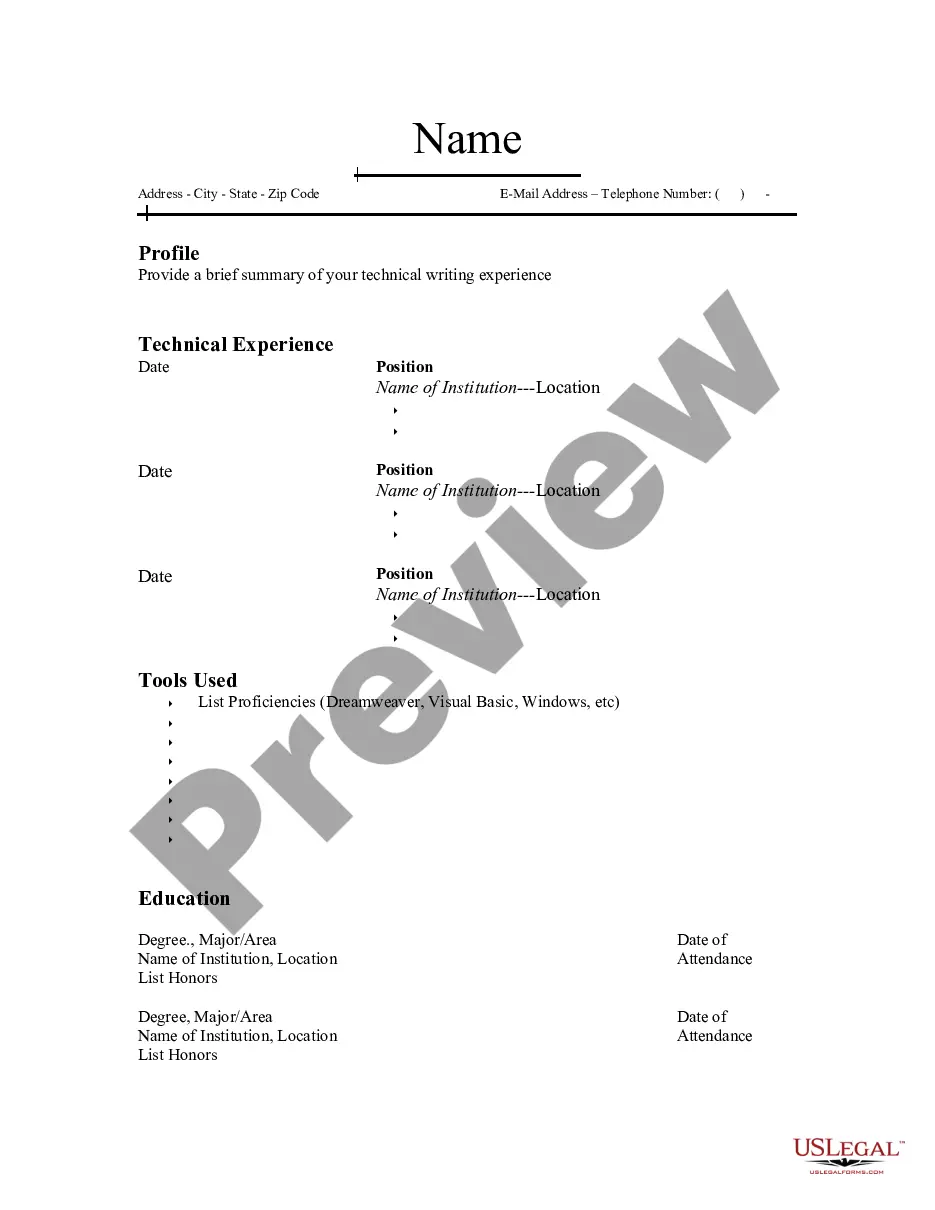
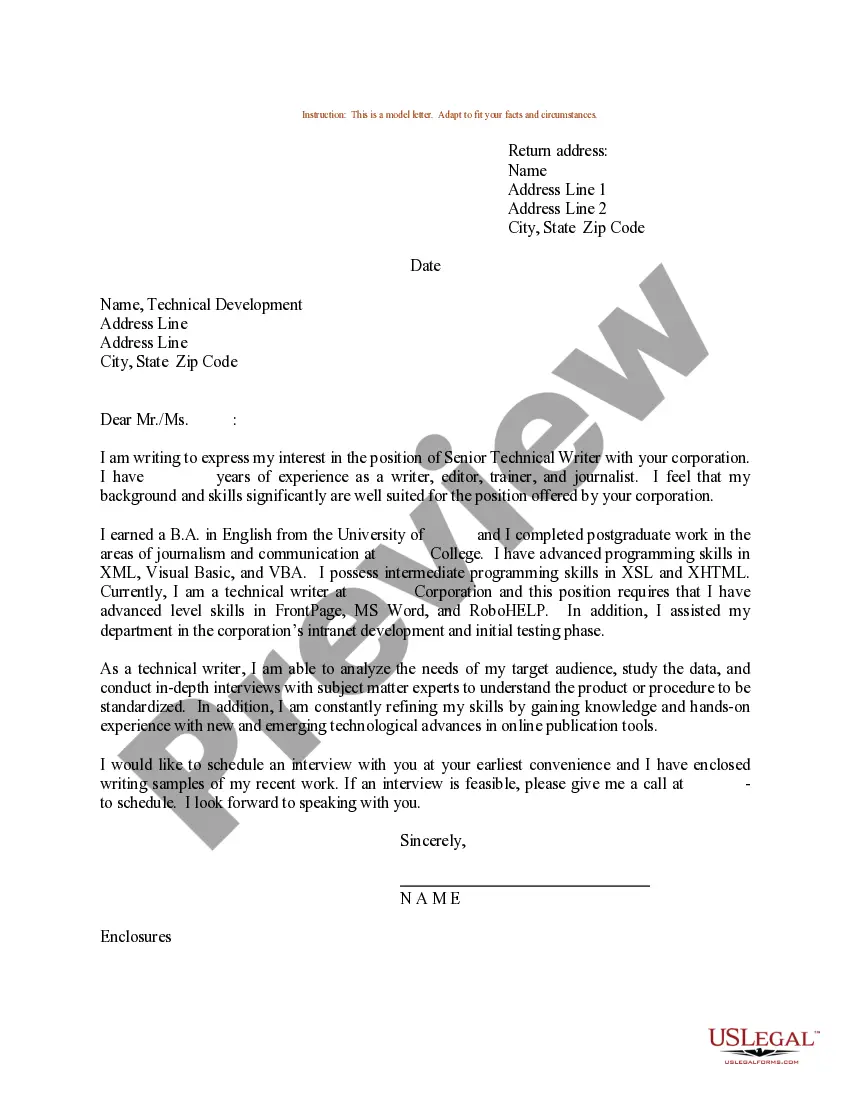
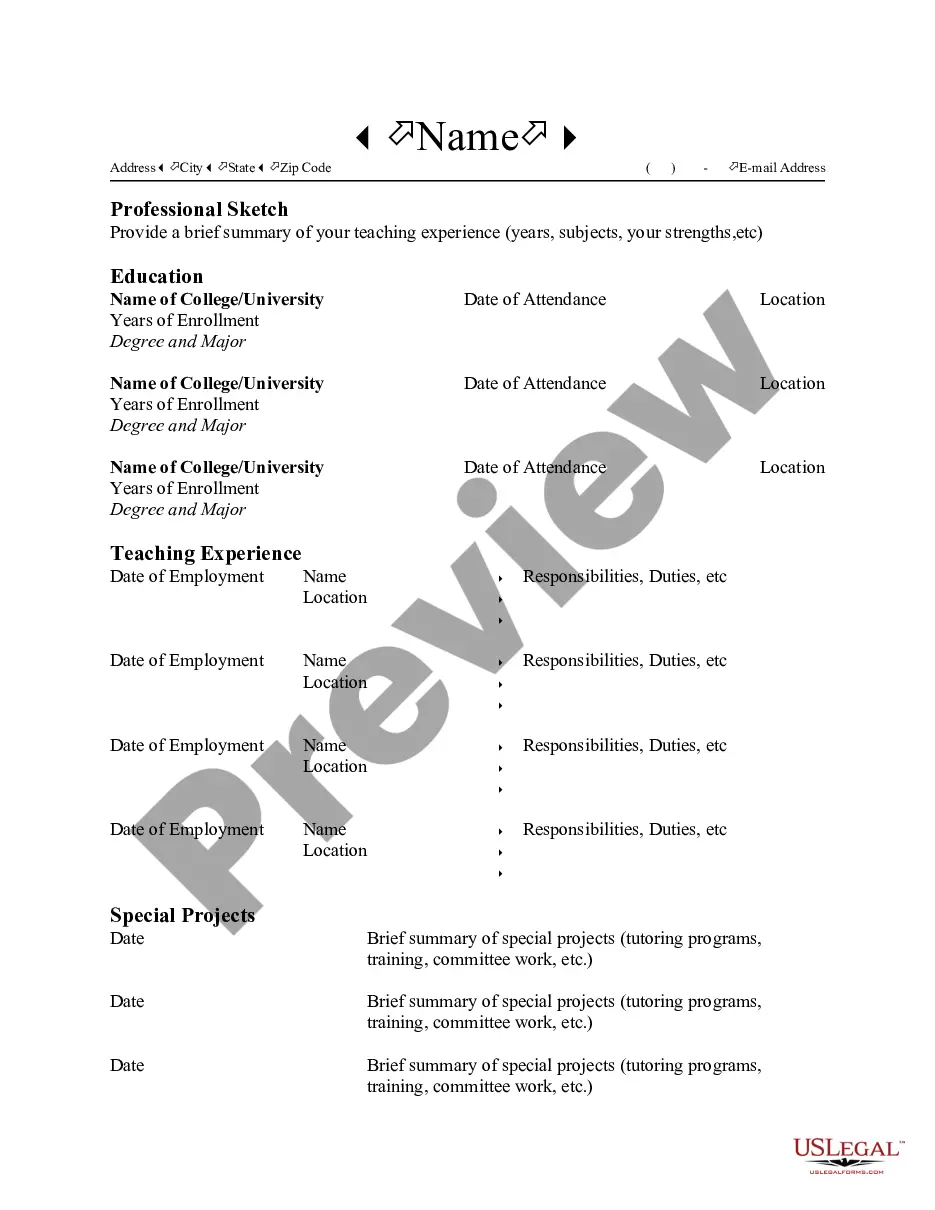
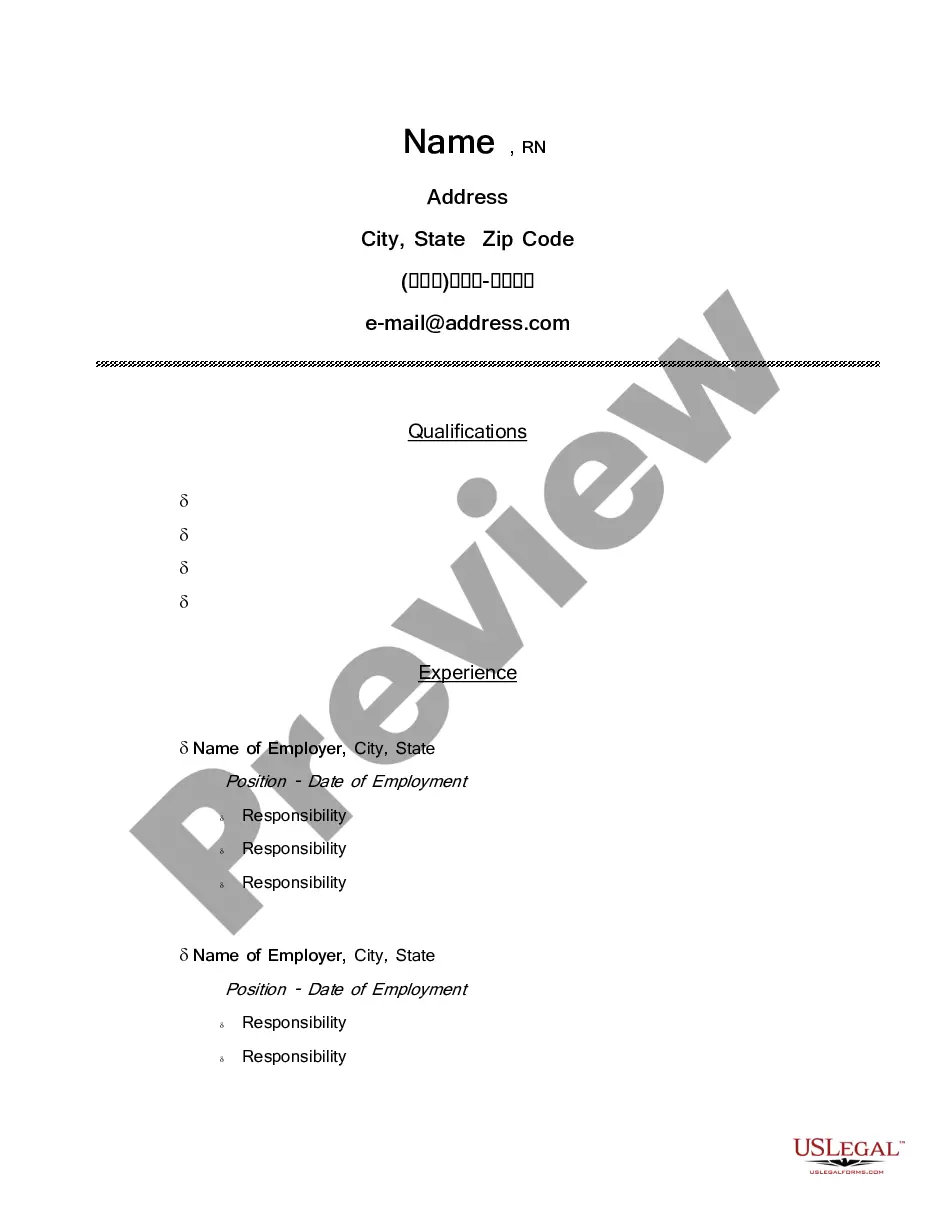
The Resume for Technical Writer is a structured document designed to showcase your skills, education, and experiences relevant to a technical writing position. This form helps users create a polished resume that meets industry standards, differentiating it from general resume templates by focusing on technical writing expertise and qualifications.
Key components of this form
- Name of institution and location
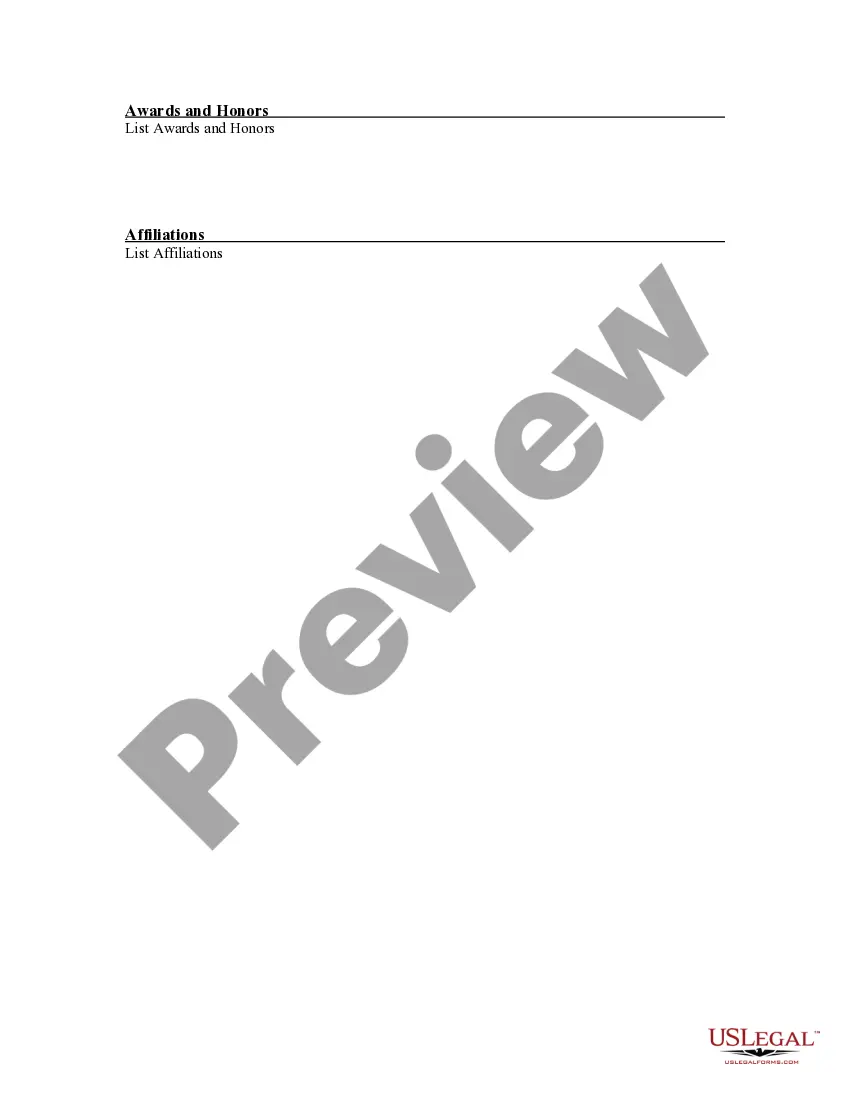
- Honors and awards related to academic achievements
- Degree and major/area of study
- Dates of attendance for each institution
- List of relevant affiliations
Common use cases
This form is useful when applying for a technical writing position, whether in a corporate setting, freelancing, or other related fields. It can also be beneficial when compiling a portfolio for relevant certifications or workshops in technical writing.
Who this form is for
- Individuals seeking employment as technical writers
- Recent graduates with relevant degrees in technical communication, journalism, or related fields
- Professionals transitioning into technical writing from other fields
- Freelancers looking to formalize their qualifications and experiences in technical documentation
Steps to complete this form
- Enter your personal information, including your name and contact details.
- List the names and locations of institutions you attended, along with any honors received.
- Specify your degree and major, including area of study.
- Provide the dates of attendance for each institution.
- Include any relevant professional affiliations and certifications.
Notarization requirements for this form
In most cases, this form does not require notarization. However, some jurisdictions or signing circumstances might. US Legal Forms offers online notarization powered by Notarize, accessible 24/7 for a quick, remote process.
Get your form ready online
Our built-in tools help you complete, sign, share, and store your documents in one place.
Make edits, fill in missing information, and update formatting in US Legal Forms—just like you would in MS Word.
Download a copy, print it, send it by email, or mail it via USPS—whatever works best for your next step.
Sign and collect signatures with our SignNow integration. Send to multiple recipients, set reminders, and more. Go Premium to unlock E-Sign.
If this form requires notarization, complete it online through a secure video call—no need to meet a notary in person or wait for an appointment.
We protect your documents and personal data by following strict security and privacy standards.

Make edits, fill in missing information, and update formatting in US Legal Forms—just like you would in MS Word.

Download a copy, print it, send it by email, or mail it via USPS—whatever works best for your next step.

Sign and collect signatures with our SignNow integration. Send to multiple recipients, set reminders, and more. Go Premium to unlock E-Sign.

If this form requires notarization, complete it online through a secure video call—no need to meet a notary in person or wait for an appointment.

We protect your documents and personal data by following strict security and privacy standards.
Mistakes to watch out for
- Failing to tailor the resume to the job description.
- Including irrelevant work experience or education.
- Not proofreading for spelling or grammatical errors.
- Overloading the resume with jargon or technical terms without explanations.
Why complete this form online
- Convenience of downloading and customizing your resume from home.
- Editability allows you to quickly adapt the form for different job applications.
- Access to professionally drafted content ensures that your resume meets industry standards.
Legal use & context
- This resume serves as a professional representation of qualifications and skills.
- It is not a legally binding document, but an essential tool for job applications.
- Employers may use this information for hiring purposes based on its content.
Summary of main points
- The Resume for Technical Writer is crucial for job seekers in this field.
- Use this structured format to present qualifications clearly.
- Avoid common mistakes to enhance effectiveness and readability.
- The resume should be tailored for each job application to increase chances of success.
Looking for another form?
Form popularity
FAQ
Contact your local STC chapter. Call local businesses and ask them if they need help creating an instructional manual or technical document. Work on an open source project. Draw from your own learning experience to write something original.
Do you need a degree in technical writing? No! While there are many valuable programs in this discipline, there are no direct requirements for a degree or diploma. Practical experience and a writing portfolio will be just as useful to winning jobs or impressing employers.
Technical writing is a highly valuable skill. It is crucial for anyone working in a tech-related business, for engineers and scientists communicating their knowledge, and for people looking for rewarding, full-time work as writers.
As long as you're willing to learn the technical stuff and have the ability to translate that technical information for your target audience, you'll likely not have a hard time finding a job, especially with a specific Tech Writing degree.
The most common examples of technical writing are: User manuals; software installation guides; Standard Operating Procedures (SOP); Service Level Agreements (SLA); Request for Proposal (RFP); legal disclaimers; company documents; annual reports; and Help files.
In addition to their core writing skills, technical writers should also have the ability to visually assess technical documents and make adjustments as required. This includes everything from breaking up long paragraphs for better readability to including bulleted lists that provide actionable takeaways.
Include your personal information. Start by including an informative header with details about yourself. Write a personal summary. Include hobbies and interests. Customize your resume. List your relevant work experience. Social media. Education. Certifications and awards.
A college degree is usually required for a position as a technical writer. In addition, experience with a technical subject, such as computer science, Web design, or engineering, is important. Employers generally prefer candidates with a bachelor's degree in journalism, English, or communications.
Writing Skills. The first and foremost, technical writers are supposed to excel at writing itself. Ability to Work with Technical Writing Tools. Technology keeps moving forward. Research and Exploration Skills. Being Systematic. Teamwork. Being Good at Single-Sourcing. Sociology. Critical Thinking.